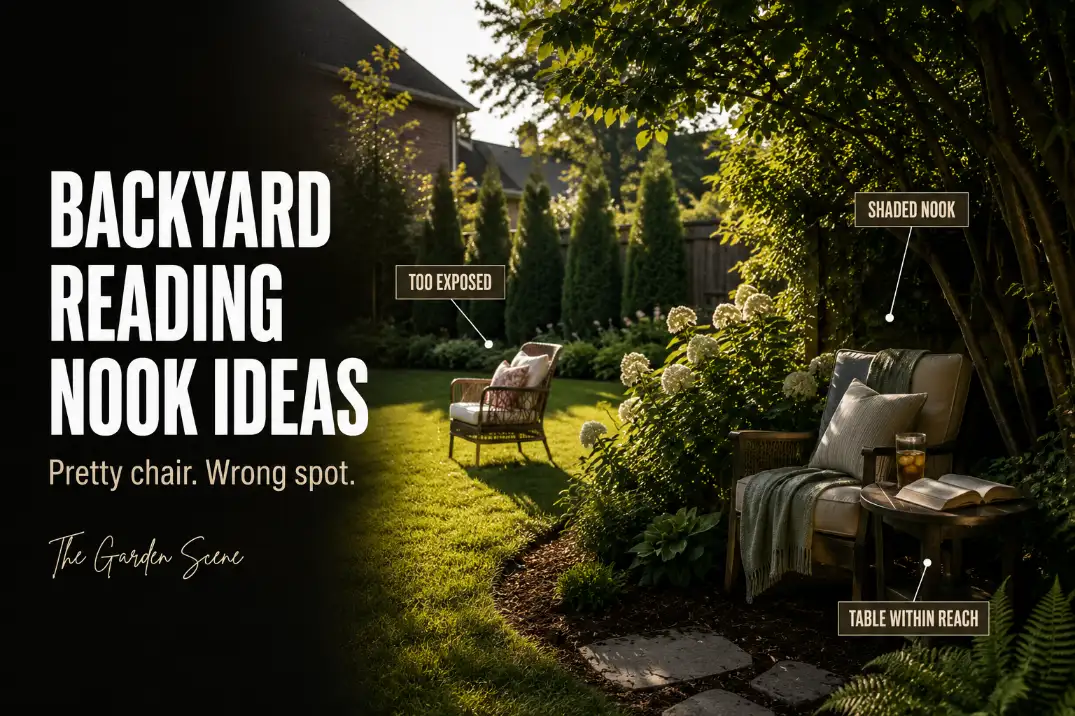
A backyard reading nook works when the seat feels lightly sheltered, shaded at the right hour, and easy to stay in for more than a few minutes. The usual failure is not the wrong cushion. It is a chair placed in open glare, beside a cut-through path, or too far from a useful table.
Start with three checks: a 4 by 5 ft chair zone, at least 30 inches of clear walking space nearby, and a table within 12 to 18 inches of the chair arm.
Then sit there for 20 minutes during the hour you actually plan to read. A general lounge corner can survive deep cushions, open sun, and a larger furniture group.
A reading nook needs steadier back support, shade on the page, one protected side, and a calm view forward.
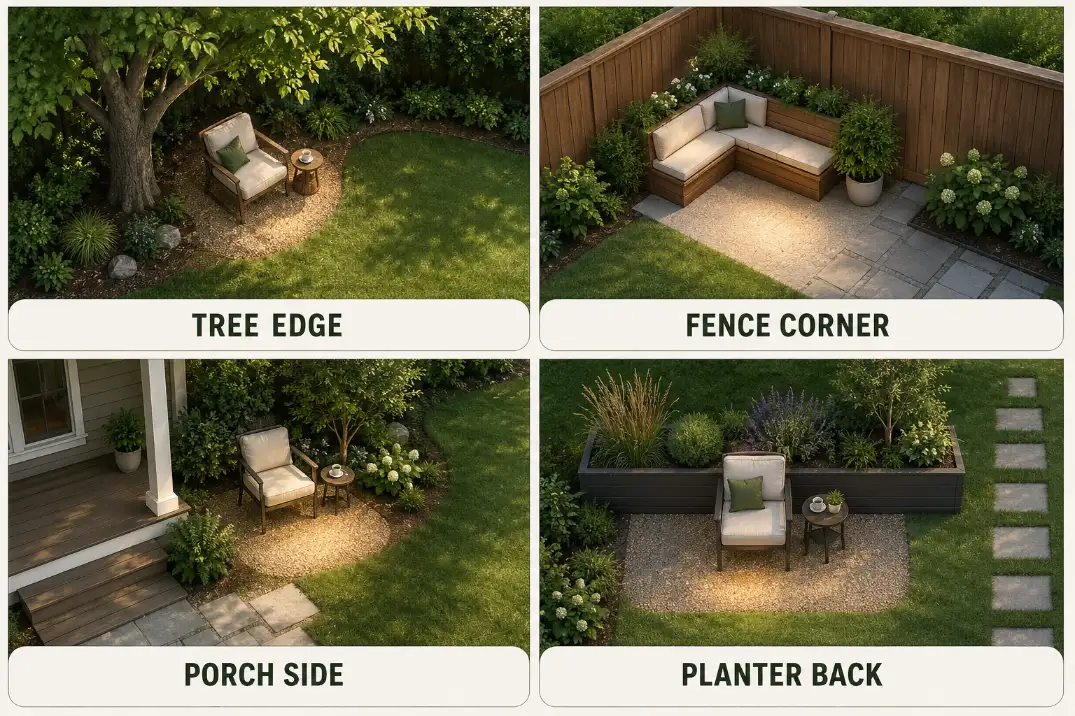
Best Backyard Reading Nook Types
Tree-edge chair
A tree-edge nook is often the strongest choice because it gives filtered overhead shade without making the reader feel boxed in. It works best when the trunk, planting bed, or canopy sits behind or beside the chair, not directly in front of the view.
The limit is root pressure and uneven ground. If the chair rocks, the table tilts, or the path dips more than about 1/2 inch, fix the landing first. Shade alone does not make a reading spot comfortable.
Fence-corner bench
A fence-corner bench can feel settled because it gives the reader a defined back edge. It works when the bench still has an open view into the yard and a side table or ledge nearby.
The mistake is treating the fence as a wall for privacy. A tight bench pushed into a hot corner can feel private for five minutes and stale after thirty, especially in humid climates where airflow matters.
Porch-side chair
A porch-side reading nook is good when the house already provides partial shelter. It usually needs less planting and less furniture. The risk is traffic. If people pass behind the chair every time they move from the house to the yard, the nook will feel like a waiting area instead of a retreat.
Planter-backed nook
A planter-backed nook is useful when you need movable shelter, renter-friendly screening, or seasonal adjustment. Keep the planter behind one shoulder or slightly diagonal to the chair. Do not build a planter wall around the reader unless the main problem is a direct view line.
Umbrella reading spot
An umbrella reading nook works when afternoon glare is the real problem. The umbrella should shade the reader, the book, and the table surface during the main reading window. If it only shades the chair back while the page stays bright, it is solving the wrong thing.
Swing or hammock nook
A swing or hammock can be beautiful, but it is not always the best reading choice. Gentle movement is relaxing, yet it can make book position and neck support harder to control. Use this type for casual reading or short sessions. For longer reading, a stable chair usually wins.
| Nook type | Works best when | Minimum working clearance | Usually fails when |
|---|---|---|---|
| Tree-edge chair | You need filtered shade and an open view | 4 by 5 ft chair zone | Roots or uneven ground tilt the setup |
| Fence-corner bench | You want a settled back edge | 30 inches to nearby route | The corner traps heat and feels boxed in |
| Porch-side chair | The house already gives shelter | 36 inches near busy doors | People keep passing behind the seat |
| Planter-backed nook | You need flexible screening | 24 inches behind chair | Plants crowd the chair within 1–2 seasons |
| Umbrella spot | Afternoon glare is the main issue | Shade covers page and table | Only the chair back is shaded |
| Swing or hammock | You read casually, not for long sessions | Clear swing arc or hammock span | Motion weakens book and neck support |
The Seat Needs Shelter
Choose the edge before the chair
The best backyard reading nook usually starts at an edge: beside a planting bed, near a tree, along a porch side, or slightly off a fence line. A chair floating in the open lawn may look calm in a photo, but it often feels exposed in real use.
Back and side protection matter more than softness. A fence, hedge, raised planter, porch column, tree trunk, or house wall can quiet one side of the seat. The goal is not enclosure. The goal is to remove movement from one direction so the reader can relax into the view.
Support beats deep softness
Very deep lounge seating can pull the reader backward, lower the book too far, and make the neck do the work. For reading, a chair with a stable back, usable arms, and a seat height around 16 to 18 inches is usually easier to live with than a low slouch chair.
If you are comparing chair styles for this exact use, Best Outdoor Reading Chairs for Patio Corners is a better next step than buying a full outdoor lounge set. For a nook, one supportive chair usually beats two decorative chairs that no one chooses for more than ten minutes.
When a new chair is not the fix
A new chair will not solve glare, exposure, or an awkward route. If people have to step around the chair, if the book page catches direct sun after 3 p.m., or if the nearest table is across the patio, the chair is only the visible symptom. The weak zone is the real problem.
Morning Light vs Afternoon Glare
Test the hour you will actually read
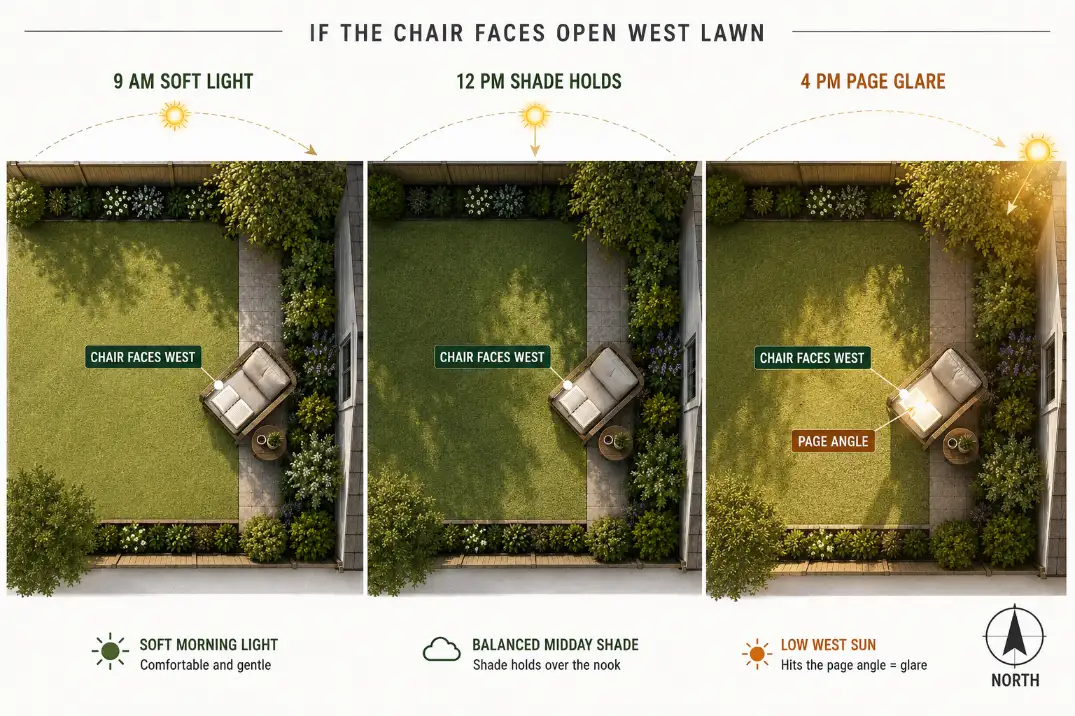
Morning light can make a reading nook feel calm. Afternoon glare can make the same nook feel sharp and tiring. A chair that works beautifully at 9 a.m. may be uncomfortable at 4 p.m., especially on west-facing patios, pale concrete, gravel, or light pavers that bounce brightness upward.
Do not judge the spot at the wrong hour. Check it at 9 a.m., 1 p.m., and 4 p.m. If your eyes narrow within 5 minutes or you keep angling the book away from the sun, the issue is glare, not lack of shade.
Shade has to cover the page
Part shade can still mean several hours of direct sun, and that sun may be gentle or harsh depending on timing. A nook with 3 to 6 hours of sun is not automatically wrong. It only fails if the bright period lands during your reading window.
The useful shade zone should cover the upper body, the book, and the table surface. In dry hot climates, shade without airflow can still feel heavy. In humid regions, dense planting behind the chair can trap warmth and mosquitoes if the air has nowhere to move.
If the reading window needs movable shade instead of permanent planting, Best Patio Umbrellas for Shade in Small Backyards can help you avoid an oversized umbrella that fixes glare but overwhelms the nook.
Shade Check: Hold a book where you will actually read. If the page flashes bright while your shoulders stay shaded, the shade source is in the wrong position.
Keep the Path Soft
The path should arrive, not cut through
A reading nook needs access, but it should not sit inside the route. The path should lead to the chair and then soften. If it cuts behind the reader, the nook will feel restless even when the chair and planting look right.
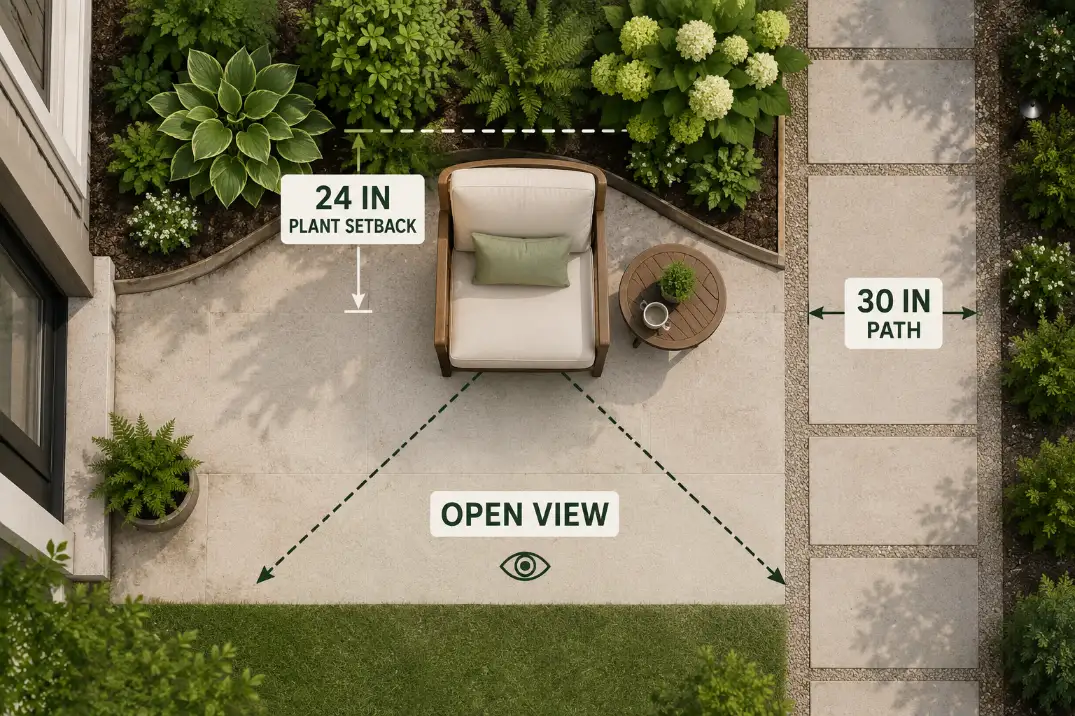
A 30-inch path is enough for occasional use. A 36-inch route is better if people carry coffee, books, cushions, or garden tools through the area. The problem starts when that route steals space from the chair zone.
Soft does not mean unstable
Mulch, stepping stones, decomposed granite, pavers, or a short grass route can all work if the foot placement feels predictable. Loose material that shifts more than about 1/2 inch after rain may look relaxed but feel weak underfoot.
This matters most near doors and patios. If the nook sits close to a main entry, Keep the Patio Entry Clear is worth checking before you add planters, a second chair, or a larger table. A reading nook should borrow calm from the yard, not create a new pinch point.
Angle the chair away from traffic
If the only good shade spot sits near a route, rotate the chair 15 to 30 degrees. That small angle can put the reader’s back toward the pressure and open the view toward the calmer part of the yard. It is a better fix than adding a screen that blocks both movement and airflow.
Small Tables Matter
The table decides whether the nook gets used
A reading nook without a table usually becomes a short-sit chair. The reader has nowhere natural to put glasses, a phone, a drink, sunscreen, or the book itself. A small table 18 to 24 inches wide is usually enough.
Height matters too. The table should sit close to the chair arm, often around 18 to 22 inches high. If the reader has to lean forward every time, the nook becomes annoying in small repeated ways.
Reach beats symmetry
Do not center the table just because it looks balanced in a photo. Put it on the side where the reader naturally reaches. If two people use the nook, two small surfaces often work better than one shared table in the middle.
The standard fix stops making sense when the table starts blocking the path or pushing the chair backward. At that point, use a narrow side table, nesting table, stump-style table, or small wall ledge instead of a larger coffee table.
Planting Around the Chair
Plant behind the reader, not into the reader
Plants should create shelter and texture, not swallow the chair. The most useful planting is usually behind the chair, diagonally behind one shoulder, or along the outside edge of the nook. Planting directly in front can block the view and make the nook feel hidden instead of calm.
Mature spread matters more than plant height on planting day. A small shrub can look harmless now and still crowd the chair in two growing seasons. Keep most shrubs at least 18 to 24 inches behind the chair back and 24 to 30 inches from the walking route unless they are clipped or naturally narrow.
Do not let privacy planting eat the nook
Homeowners often overestimate how much screening they need and underestimate how fast plants steal usable space. A chair that feels generous in spring can feel squeezed by late summer growth.
The same pattern shows up in Backyard Plants Crowding Paths and Seating, especially when small plants are placed too close because the bed looks empty at first.
Leave one open view
A strong reading nook usually has protection on one or two sides and openness in front. Full enclosure can feel cozy for a few minutes and closed-in after thirty. A reader needs a place for the eye to rest between pages, even if that view is only a lawn panel, planting gap, birdbath, or open side yard.
Quiet Without Feeling Hidden
Soften one pressure line
Quiet does not require sealing off the whole backyard. Most reading nooks only need one pressure line softened: a neighbor window, a street noise path, movement from a side gate, or exposure from the main patio.
Once that line is handled, extra screening often adds maintenance without adding comfort. This is where privacy can become a wasted fix. If the real problem is glare, poor table reach, or movement behind the chair, a taller screen will not solve it.
Keep air and awareness
A 6 ft screen, tall hedge, or dense planter row can make the nook private, but it can also block airflow, trap heat, and make the reader feel tucked away from the rest of the yard. That is useful only when the main problem is a direct view line.
A better reading nook usually faces a calm view while the back or side handles the pressure. For more ways to shape that kind of protected but open seating pocket, Outdoor Quiet Zone Ideas pairs well with this layout because it focuses on sound paths, sightlines, and calm edges rather than just furniture.
The best backyard reading nook is not the most decorated corner. It is the spot where shelter, shade, path, table, planting, and view all stop fighting each other. Start with the seat edge, protect the page from glare, keep the route out of the chair zone, and leave one open view forward.
For broader official guidance on shade levels and shade planting, see the University of Minnesota Extension guide to gardening in the shade.