Last updated: June 18, 2026
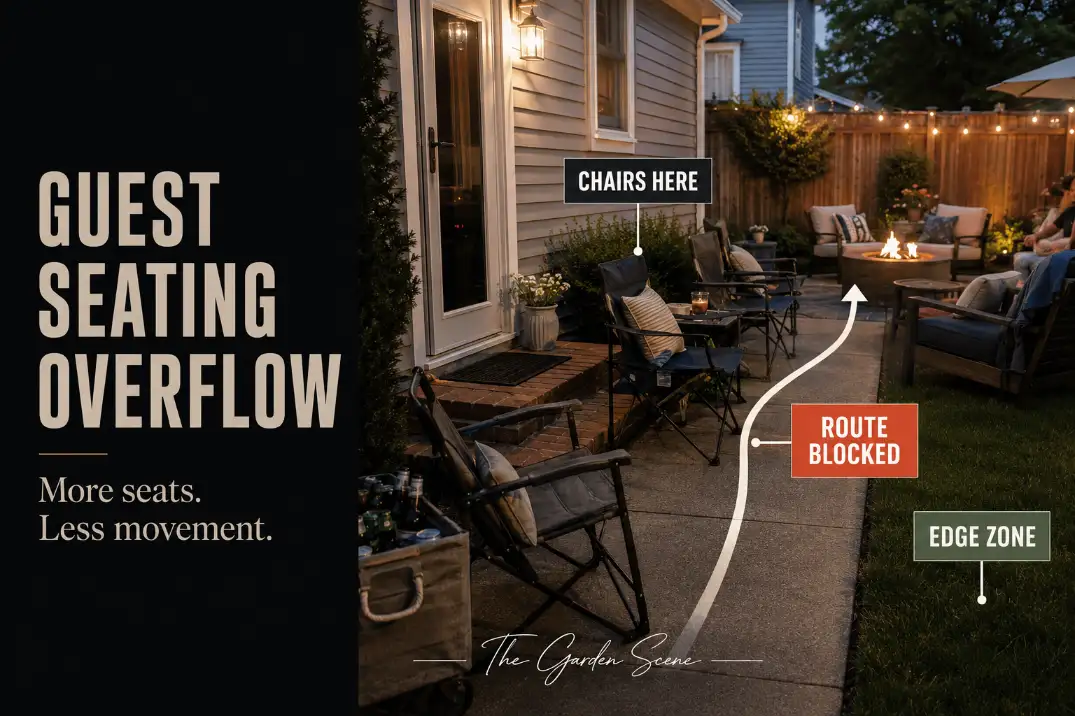
Guest seating overflow for small patios is usually a movement-pressure problem before it is a seat-count problem. The patio may technically fit more chairs, but the layout starts to fail when those chairs block the back door route, dining pullback space, drink stop, or path to the yard.
Quick answer: protect a 36-inch walking route first, keep temporary chairs out of the first 3 feet outside the doorway, and place 2 to 4 extra seats along a quiet edge before guests arrive.
If a chair has to be moved during the first 30 minutes of use, it is not working as overflow seating. It is becoming movable clutter.
For small patio hosting, the goal is not to seat every guest at once. It is to give people enough obvious places to sit, stand, pass, and set things down without creating a doorway jam.
That is different from a normal “small patio furniture” issue. The problem is not simply that the patio needs smaller furniture. It needs a seating plan that separates sitting, passing, stopping, and serving.
Extra Chairs Change Everything
Treat every extra chair as a moving footprint, not a small object. A folding chair may look harmless when it is tucked flat against a wall, but it becomes much larger once someone sits down, turns toward the conversation, stretches a foot out, or sets a drink beside it.
The Chair Is Not the Real Footprint
Most spare chairs are about 18 to 22 inches wide, but that number is misleading. In real use, the seated person often needs closer to 30 inches of depth, especially if the chair faces a table, fire pit, or conversation area.
That is why a compact patio can look open before guests arrive and feel blocked 10 minutes later. The furniture did not change. The occupied footprint changed.
A stronger layout starts with the space people use after sitting down. If the everyday setup already feels tight before guests arrive, Patio Furniture Layout by Size can help reset expectations before overflow seating is added.
Test the Occupied Patio, Not the Empty Patio
The quickest way to spot a bad overflow layout is not by counting chairs. It is by watching where guests hesitate.
If people pause at the door, step around chair legs, or stand behind seated guests because there is no obvious path, the overflow plan is already working against the patio.
A layout that looks balanced from above may still fail once chairs are pulled back and people start carrying plates through the space.
Small Patio Overflow Formula: permanent seats handle everyday use, temporary seats handle guests, and the walking route should never be borrowed by either one.
Keep the Main Route Open
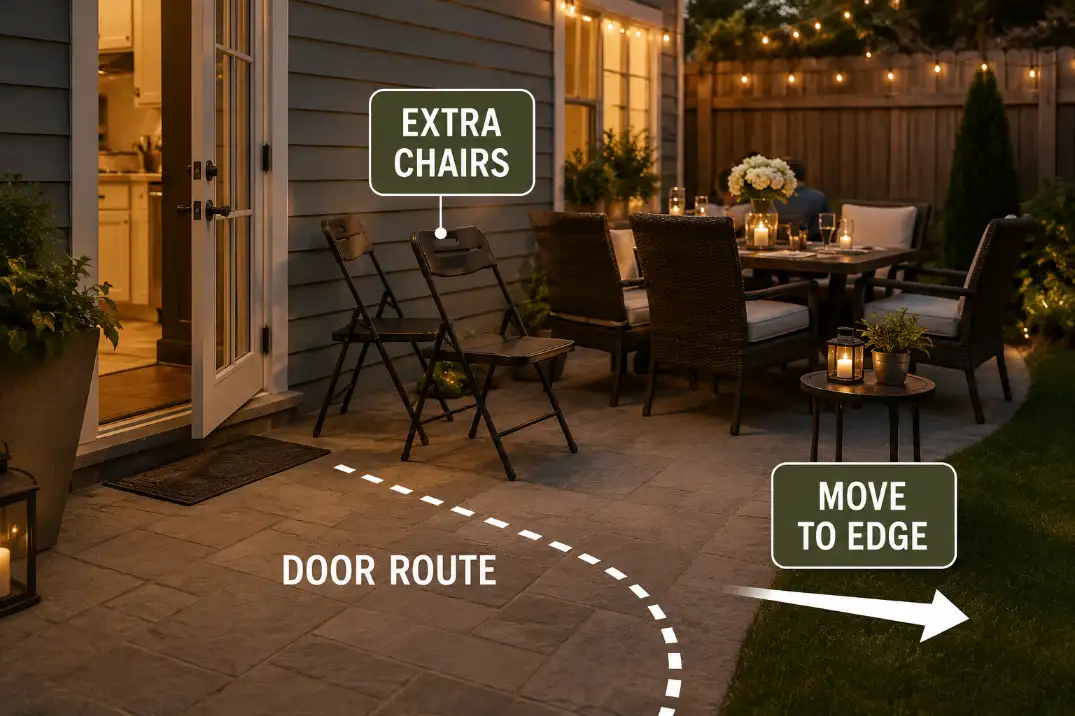
Protect the route before adding even one more seat. On a small patio, the main route usually runs from the back door to the yard, grill, side gate, trash station, or dining area. If that route gets borrowed by guest seating, the whole patio starts to feel smaller.
Use 36 Inches as the Practical Floor
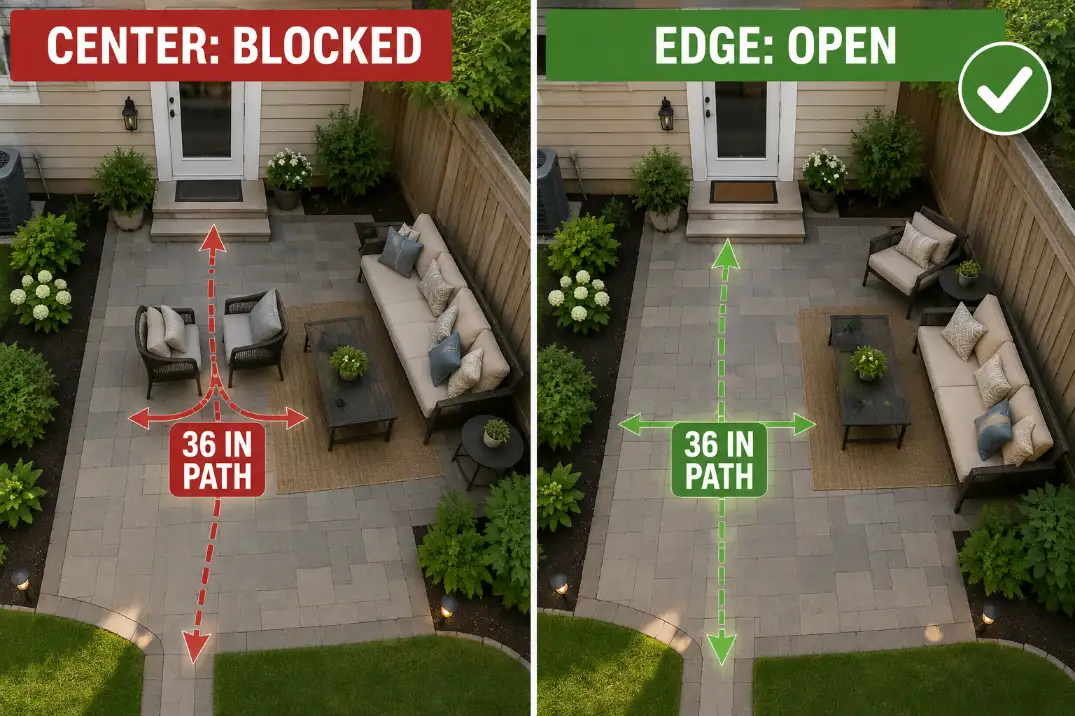
A 36-inch clear route is a useful minimum for most small patio gatherings. It gives guests enough space to pass with food, move around seated people, and avoid turning sideways.
A narrower gap may seem acceptable when the patio is empty, but it often fails once someone pulls out a chair or stands near the door with a drink.
The healthier condition is a route that stays open while people are seated, not just while the chairs are pushed in.
If the back door is already competing with furniture, Keep Patio Entry Clear should come before adding more guest chairs.
Door Clearance Beats Symmetry
A symmetrical patio can still be uncomfortable if the door behaves like an obstacle course. The first 3 feet outside the back door should work as a transition zone, not a lounge edge, cooler spot, bag drop, or spare-chair corner.
This is where many tight patios fail during parties. One guest pauses at the door, another pulls a chair sideways, and a third person tries to carry food through the same strip. The issue looks like crowding, but the underlying mechanism is zone overlap.
Pro Tip: Walk the patio route with a full plate and drink before guests arrive. If you turn your shoulders to pass, the route is too tight.
Use Edges Before Centers
Edges should absorb overflow. Centers should absorb movement. That one distinction prevents most small patio seating mistakes.
Edges Create Seating Without Trapping People
A fence line, house wall, planter edge, or lawn-side border can often hold overflow seating better than the center of the patio. Edge seats let guests stay included without turning into obstacles.
Benches can work especially well here because they create a stable seating line. A 48- to 60-inch bench can seat two people without four separate chair legs drifting into the walking route.
That does not mean benches are always better, but when chair drift is the real problem, Bench Seating vs Patio Chairs is usually the better comparison than simply buying more loose chairs.
Centers Should Stay Flexible
The center of a small patio should not carry too many jobs. It should not hold the main table, extra chairs, drink cooler, serving tray, and walking route at the same time.
A center chair often feels logical because it fills an empty spot. In use, it becomes the chair everyone walks around. If it has to be shifted every 5 to 10 minutes, it is not solving the seating problem. It is announcing that the wrong part of the patio was used.
Temporary Seating Needs a Zone
Temporary seating needs a destination before guests arrive. If the chairs are only stored nearby, guests or hosts will open them wherever the patio still appears empty, which is often the doorway, center route, or food area.
Separate Stay Zones From Stop Zones
Seating zones are stay zones. Coolers, serving tables, trash stations, grills, and doors are stop zones. When a small patio asks one corner to do both jobs, guest seating starts to feel like clutter.
This matters most during the first 15 minutes of a gathering, when people arrive, set things down, ask where drinks are, and decide where to sit. If the overflow chairs are already placed along an edge, guests understand the layout without needing instructions.
A patio party usually works better when the repeat stops are separated from the places people sit. If drinks, serving, trash, and seating are fighting for the same corner, Outdoor Entertaining Flow Ideas is the stronger layout fix.
Choose the Right Temporary Seat Type
The best overflow seat is not always the smallest one. It is the one that supports the way guests will actually use the patio.
| Overflow Seating Choice | Best For | Avoid When |
|---|---|---|
| Folding chairs | Occasional guests and quick setup | They drift into the main route |
| Stackable stools | Short casual visits | Guests need back support |
| Edge bench | Stable overflow along a fence or wall | It narrows the walkway |
| Storage bench | Seating plus cushion storage | The box depth crowds the patio |
| Poufs or ottomans | Casual lounge overflow | Guests are eating full meals |
| Built-in edge seating | Frequent hosting | The layout may need to change later |
A folding chair is useful when it opens in the right zone. A storage bench is useful when it stays shallow enough to protect the walkway. A pouf is fine for casual lounging, but it is usually weak for dining because people need more posture and stability.
Ground conditions matter too. Temporary chairs on damp lawn can sink within 20 to 30 minutes, especially with narrow legs.
If the surface drops more than 1 to 2 inches across the chair footprint, guests may avoid the seat even if it technically adds capacity.
Avoid the Doorway Pileup
The doorway must stay a transition zone, not an overflow seating edge. It is the place where people arrive, pause, turn, carry food, and move between indoors and outdoors.
The First Open Space Is Often the Wrong Space
The area just outside the back door often looks available because it is visually open before guests arrive. But that space has a job. It absorbs movement.
Once a chair sits there, the patio loses its pressure release. The door opens, someone steps out with a plate, another guest shifts a chair, and the space suddenly feels more crowded than its actual size.
Slimmer Chairs Do Not Fix Bad Placement
Buying narrower chairs can help when the walking line is already protected. It does not solve a chair placed in the wrong zone.
A chair that is 3 inches slimmer still blocks the route if it sits in the doorway path. A better first move is to remove one route-blocking piece, open the main line of travel, and then decide where overflow seating belongs.
If the patio feels cramped before guests even sit down, Remove Patio Furniture From a Cramped Space may do more than adding new seating.
More Seats, Less Pressure
The best overflow plan often adds fewer seats than expected, but places them better. A small patio does not need to seat everyone in the center. It needs obvious places to sit without making movement feel awkward.
When Another Chair Makes the Patio Worse
Do not add another chair if it does one of four things: narrows the main route below 36 inches, blocks a dining chair from pulling back about 24 inches, sits inside the doorway zone, or has to be moved during normal use.
That is the point where the standard fix stops making sense. More seating should reduce social pressure, not create movement pressure.
Quick Overflow Check
Before guests arrive, check the patio in this order:
- Can someone walk from the back door to the yard without squeezing past chair legs?
- Can dining chairs pull back about 24 inches without hitting overflow seating?
- Are temporary chairs outside the first 3 feet of the doorway?
- Are food, drinks, trash, and seating in separate zones?
- Can the overflow seats stay in place for 30 minutes without being moved?
- Is the center open enough for people to turn, pass, and carry plates?
If the layout fails at the route, fix the route first. If it fails only at seat count, then add seating. That distinction keeps a small patio from turning into a chair storage problem during every gathering.
Questions People Usually Ask
How many extra chairs can a small patio handle?
Most small patios can handle 2 to 4 extra chairs if they sit along an edge and the main route stays open. Once chairs push into the doorway path or center route, the usable number drops quickly.
Are folding chairs good for small patio parties?
Folding chairs are useful when they have a planned zone before guests arrive. They become a problem when they are opened near the door, food table, grill route, or drink station.
Is a bench better than extra patio chairs?
A bench can be better when the main problem is chair drift. Loose chairs are more flexible, but they also move into routes more easily. For overflow control, an edge bench often creates less pressure.
When should I stop adding seats?
Stop adding seats when one more chair blocks the main walking line, limits chair pullback, or has to be moved repeatedly during the first 30 minutes of use.
For broader official guidance on clear route width, see the 2010 ADA Standards for Accessible Design.