Last updated: July 6, 2026
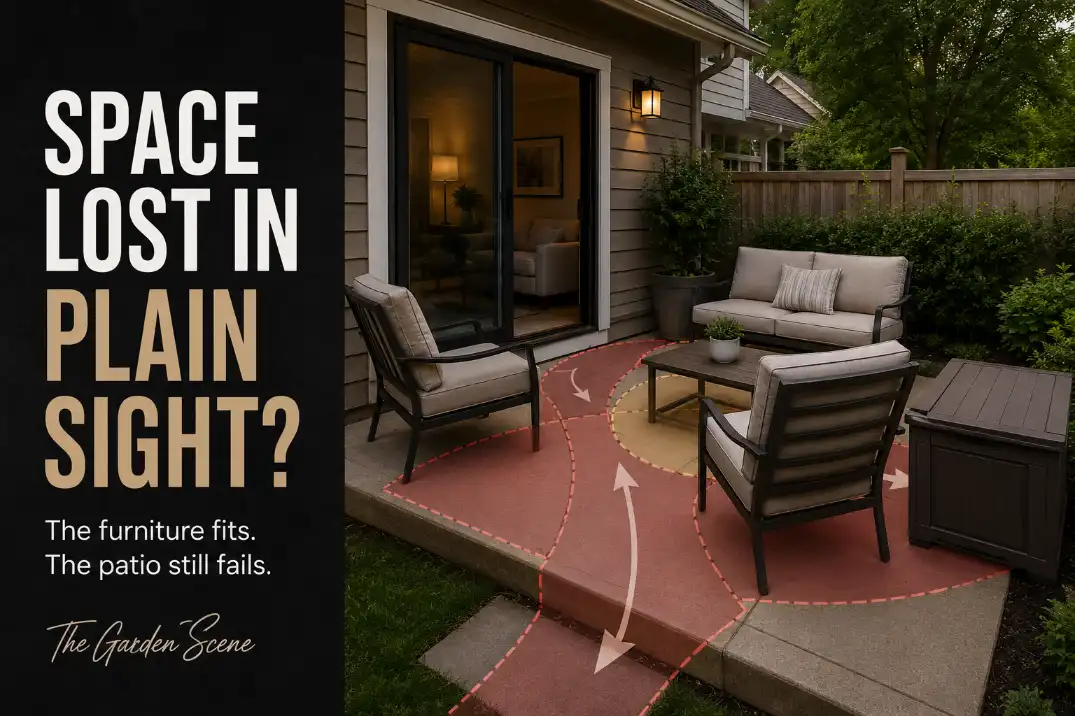
A small patio usually does not waste space because it is small. It wastes space because the layout spends the usable area before real use begins.
The slab may look open when it is empty. The furniture may technically fit. The table may be centered. A planter may look harmless in the corner. Then someone opens the door, pulls out a chair, carries drinks outside, or tries to pass behind the seating, and the patio suddenly feels smaller than its actual footprint.
That is the real design mistake: treating total patio size as usable patio size.
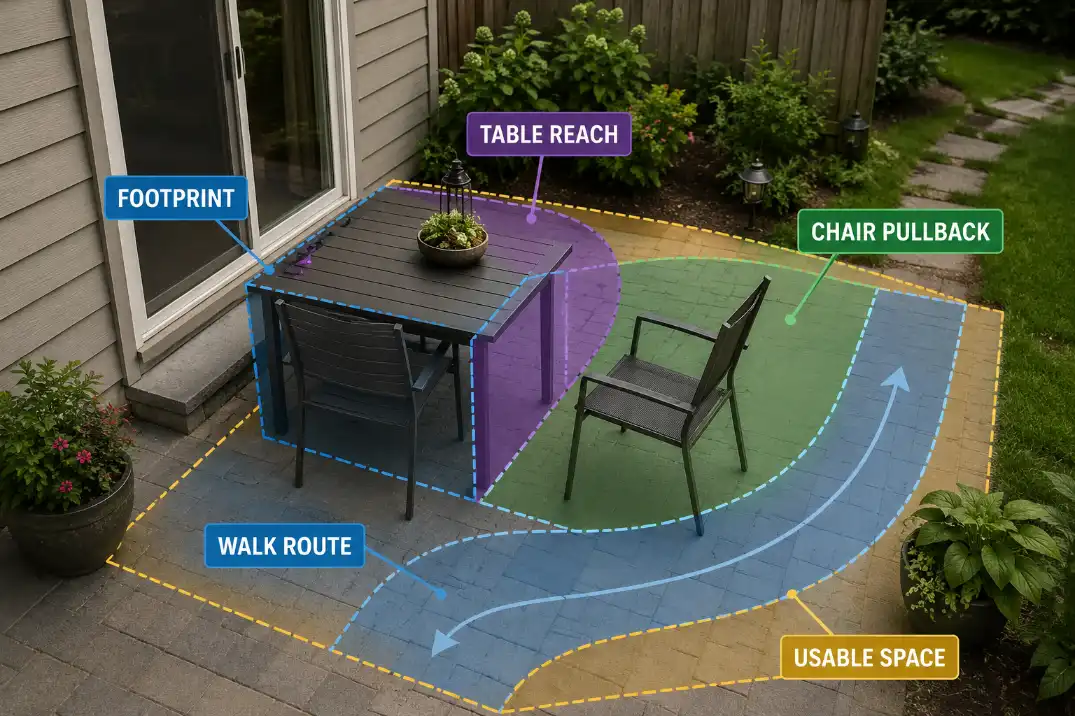
This is not a furniture-by-size guide. A smaller chair, slimmer table, or compact bench can still waste space if it lands in the wrong route. The better question is whether the layout protects the spaces that have to stay active: the door route, chair pullback zone, walking path, table reach area, working edges, and small reset spot where real-life items end up.
Why a Small Patio Feels Smaller Than Its Actual Size
A small patio has two sizes: the space you can measure and the space that still works after people start using it.
That second size is the one homeowners feel.
A patio can look roomy with all the chairs tucked in. But if every chair needs to move backward before someone can sit down, the layout changes. A table that looks centered may become a detour.
A planter that seems harmless near the door may steal the first step outside. A storage box may look tidy against the wall until cushions, toys, or garden tools start landing in front of it.
The useful patio is not just the open floor between objects. It is the space needed to enter, sit, stand, reach, turn, clean, and reset the area after use.
That is why a layout can be technically “full” before it becomes functional. The patio may have a seat, a table, a side piece, a plant, and a small storage item. But if each object borrows from the same walking path, the patio does not gain function. It loses it.
The first design decision is simple: decide which space must remain empty on purpose. On a small patio, empty space is not leftover space. It is often the most valuable part of the layout.
Mistake 1: Measuring Furniture Footprint Instead of Use Clearance
Furniture footprint is the wrong first measurement if the patio will be used by real people instead of photographed empty.
A chair footprint is not the same as chair use. A dining chair needs room to pull back. A lounge chair needs room for legs, side access, and a way to stand up without stepping into another object.
A loveseat may fit along a wall, but the space in front of it still has to support feet, table reach, and movement around the seating.
This is where a patio starts to waste space quietly. The objects fit, but the layout does not.
A basic chair pullback zone often needs roughly 24 to 30 inches behind the chair to work without constant bumping. A comfortable main walking route often wants about 30 to 36 inches when the patio can give it.
Those are not rigid design laws, and tight patios may compromise. But they are useful because they force the right question: what happens when the furniture is actually being used?
The layout test that matters
Place the furniture where you think it should go. Then pull every chair out as if people are sitting down. Open the door. Walk from the house to the seat. Walk from the seat back to the door. Try carrying a plate, a drink, or a cushion through the same route.
If that test requires everyone to turn sideways, lift a chair, step over a table leg, or ask someone to move, the footprint was not the real problem. The use clearance was.
Smaller furniture can help, but it is not the automatic fix. A smaller set placed across the same walking path will still waste space. The stronger move is to protect one route first, then let the furniture fit around that route.
Mistake 2: Letting the Door Route Become Leftover Space
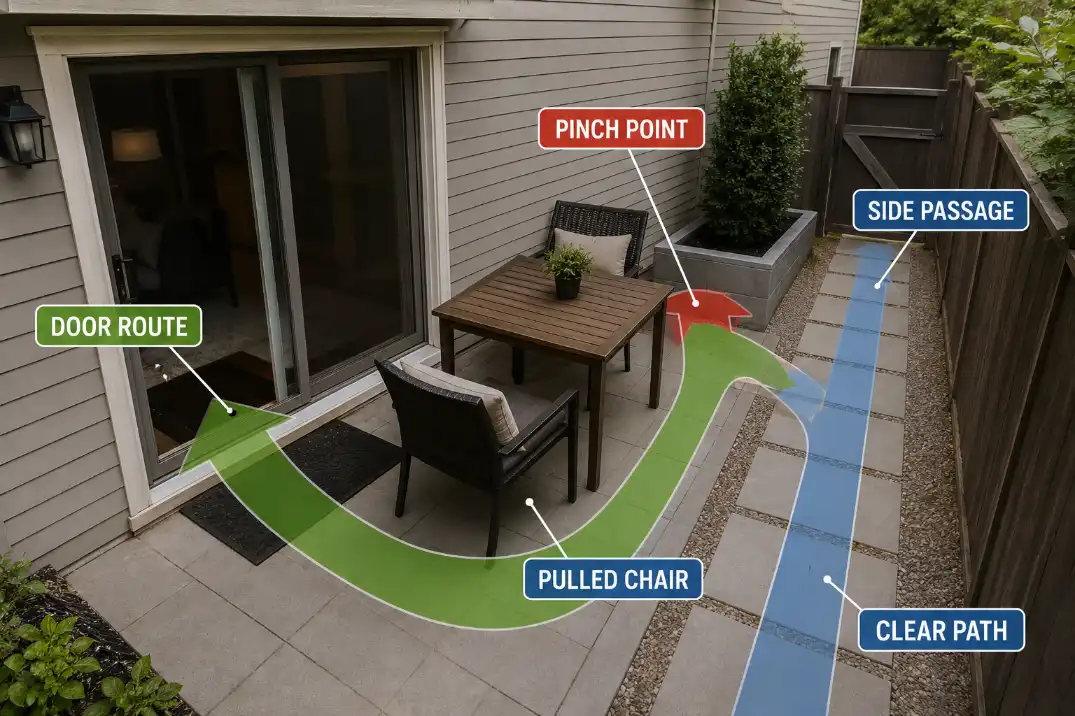
The door route should be planned before the seating, table, grill, planter, or storage piece. If it is treated as whatever gap remains, the patio starts with friction.
The first few steps outside set the tone. If the sliding glass door opens onto a chair back, a table corner, a planter, or a storage bin, the patio feels crowded before anyone sits down.
A route that narrows immediately at the door also makes every repeated use more annoying: carrying food outside, bringing cushions in, walking to the yard, checking the grill, or letting guests move between house and patio.
A sliding door still needs a landing moment. Even though it does not swing outward like a hinged door, the person stepping through still needs a clear arrival zone. If that landing area is treated as free storage or display space, the patio starts by wasting its most important movement point.
This is also where small patio problems often connect to the larger yard. When the patio route does not connect cleanly to the lawn, grill, side gate, or seating zone, the issue may be part of backyard zoning mistakes that interrupt outdoor flow, not just a patio furniture problem.
Draw the route before placing the extras
Before deciding where the “extra” pieces go, mark the path from the door to the main seat. Then mark the path from the door to the yard or grill if that route matters. Those lines are not decoration zones. They are working space.
Once the route is protected, the layout becomes easier. A chair can shift slightly to one side. A table can move off center. A planter can sit where it defines an edge instead of narrowing the entry. The patio may look less perfectly centered, but it will work better.
The mistake is assuming the route will take care of itself. On a small patio, it rarely does.
Mistake 3: Giving the Center to an Object That Does Not Earn It
The center of a small patio should not be filled just because it looks empty. It has to earn that space through use.
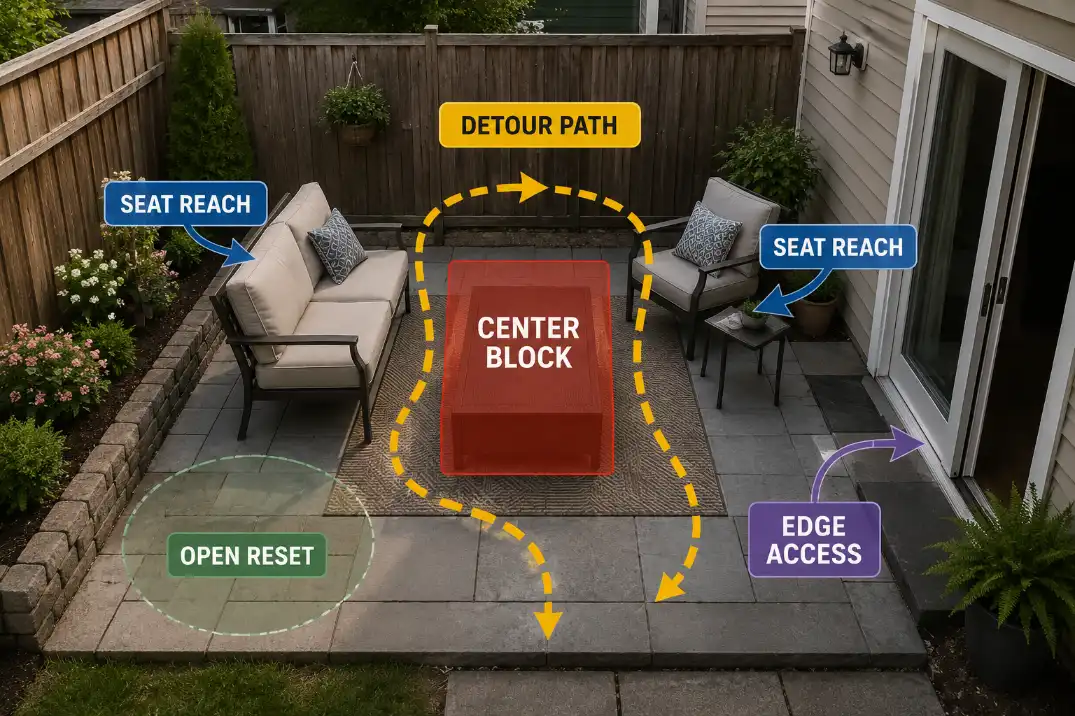
A coffee table, ottoman, fire feature, large planter, or decorative object can make the patio look finished in a photo. But if that object does not support the way the patio is actually used, it becomes a permanent detour.
A center object earns its place only when it improves use more than it interrupts movement. A small table can work if people can reach it without blocking the route. A low ottoman can work if it supports seating without forcing everyone to step around it. A planter can work if it defines the layout without cutting off chair access.
The center becomes wasteful when every movement has to bend around it. Someone sits down and the table is in the way. Someone stands up and the ottoman blocks the step. Someone walks from the door to the edge and the object turns a direct route into a shuffle.
The better small patio layout often leaves part of the center open. That open space may look unfinished at first, but it lets the patio breathe during use. It gives people a place to stand, turn, set something down briefly, or move between seats without rearranging the whole area.
A centered object should not win because the patio has a center. It should win only if it makes the patio easier to use.
Mistake 4: Filling Every Edge and Corner
Edges and corners are not automatically free space. On a small patio, they often carry the access that keeps the layout usable.
A planter goes in one corner. A small shelf goes on the wall. A storage bin sits near the door. A side table fills the gap by a chair. A decorative piece lands along the edge because it feels harmless. Individually, each object may make sense. Together, they turn the patio into a tight box.
Edges are working zones. A patio edge may need to support chair movement, cleaning access, watering, storage access, or a side step around seating. If every edge is filled, the only remaining open area is the center. Then the center has to do everything: movement, table reach, leg room, standing space, and visual breathing room.
One strong edge use is usually better than several weak ones. A single planted corner may help soften the patio. A clean storage location may solve reset clutter. A narrow side table may support seating. But when every edge tries to do something, the patio loses flexibility.
The key distinction is a working edge versus a display edge. A working edge supports movement or use. A display edge only fills a blank spot. On a small patio, display edges should be limited because they often borrow space from the parts of the patio that need to move.
If the patio is part of a larger tight yard, this is where broader small backyard fix priorities matter. Sometimes the patio is being asked to hold seating, storage, plants, serving, and circulation because the rest of the yard has not been assigned a job.
That does not mean the patio should stay bare. It means every edge object needs a reason stronger than “there was room.”
Mistake 5: Forgetting Storage, Serving, and Reset Space
A small patio may look well designed when it is freshly arranged. The real test comes after normal use starts leaving things behind.
Cushions need somewhere to land. A watering can gets left near the door. Grill tools migrate to a side table. A folding chair stays out because it is annoying to move. Kids’ items, garden gloves, drink trays, plant supplies, and outdoor pillows all start collecting in the easiest open spot.
That spot is usually the route.
This is storage creep. It is one of the quietest ways a small patio loses space because it does not look like a design mistake at first. It looks like normal use. But when normal use has no planned landing zone, the patio slowly fills the path that was supposed to make it functional.
The fix is not always more storage. It is better placement of the reset zone.
A reset zone should be close enough that people actually use it, but not so central that it blocks movement. A cushion location that sits behind the chair pullback zone will fail. A serving surface that sits in the door route will fail. A storage bench that requires someone to move a chair before opening it will become dead weight.
When storage is the main pressure point, the next decision is not simply adding more containers. It is choosing storage that keeps a small patio route open so the solution does not become another obstacle.
Keep the reset zone near use, not inside the path
The best reset space is boring in the right way. It catches the objects that always appear, but it does not demand attention every time someone walks outside.
That might mean one controlled wall-side zone instead of three small scattered items. It might mean placing serving support near the seating but outside the pulled-chair route. It might mean leaving a small open corner for temporary items instead of filling that corner with decor.
A patio that has no reset space will create one by accident. The goal is to choose that space before clutter chooses it for you.
The Small Patio Space-Loss Test Before You Rearrange
Before buying anything, removing everything, or redesigning the patio, test the layout as a working space. Do it with the furniture in its real position, not tucked in for a photo.
Use this field check:
- Open the patio door and confirm the first step outside is clear.
- Pull out every chair as if people are seated.
- Walk the main route while one chair is pulled back.
- Check whether the table or center object forces a detour.
- Stand where someone would carry food, drinks, or cushions.
- Leave at least one edge working for access, cleaning, or movement.
- Place storage and reset items where they will actually land.
- Remove one object before adding another.
The important question is not whether the patio looks full. It is whether the layout still works after movement begins.
A small patio can handle less furniture than people want, but it can often handle more use than people expect. The difference is layout discipline. Protect the route first. Give seating enough use clearance. Make the center earn its place. Keep at least one edge active. Give storage a controlled landing zone.
When those pieces are handled, the patio does not need to feel large. It just needs to stop wasting the space it already has.
For broader residential landscape planning, the University of Georgia Extension notes that outdoor living areas and traffic patterns need careful planning in an overall landscape design: University of Georgia Extension.