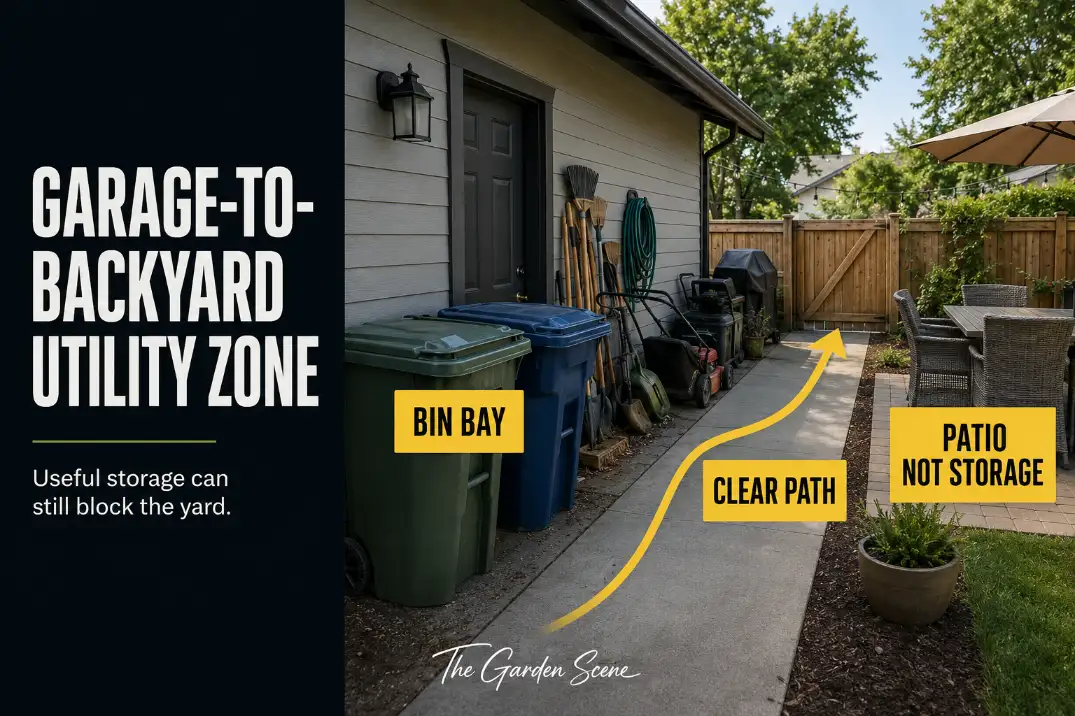
A good garage-to-backyard utility zone starts with the route, not the storage. The strongest setups usually keep a 36–48 inch service path open, park bins along one edge, lift tools off the ground, use a dry base, and screen only the view that actually bothers you.
That order matters. A utility zone can look tidy in a photo and still fail when a trash cart scrapes the fence, a hose drags across the walkway, or a bag of soil has nowhere to land except the patio.
Check three things first: whether bins can roll out cleanly, whether someone can carry supplies through the space, and whether the ground stays wet longer than 24–48 hours after normal rain.
This is different from ordinary garage organization. The garage-to-backyard edge has to handle weather, weekly bin movement, door swings, wet surfaces, and the everyday route between the garage, gate, patio, and yard.
The Space Behind the Garage
The area behind or beside a garage often becomes the natural utility edge because it is already close to bins, tools, side gates, hoses, and backyard work. That makes it useful. It also makes it easy to overload.
Build the route before the storage wall
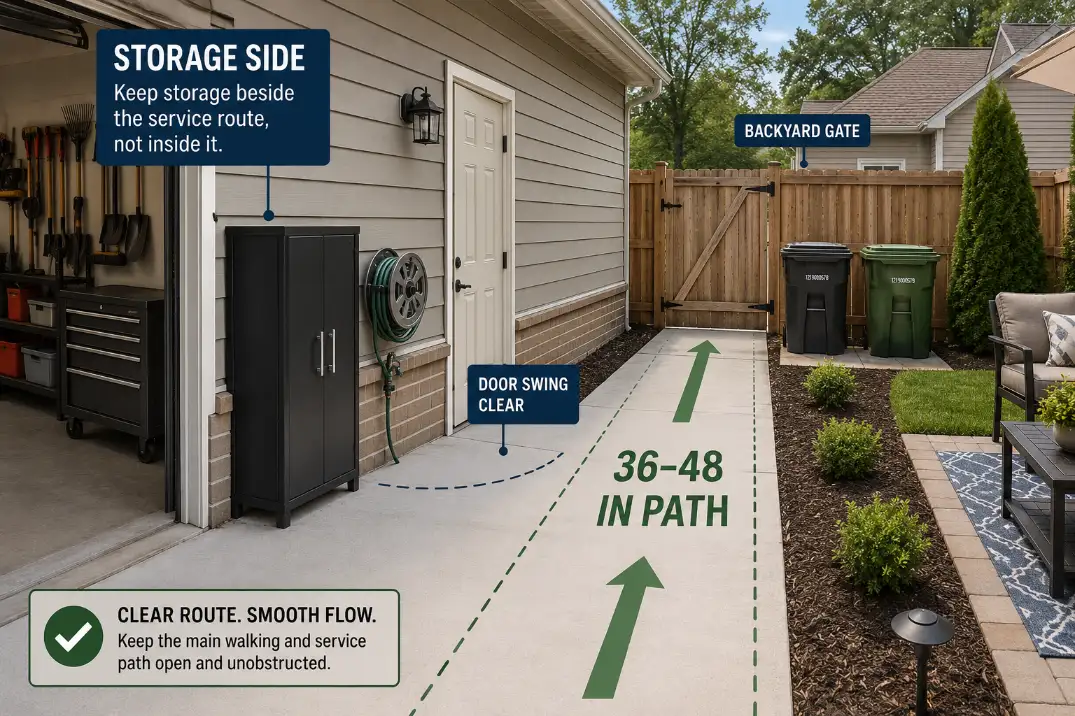
The best garage utility zones have one clear service spine: the walking and rolling route from the garage door or side gate toward the backyard. Storage belongs beside that spine, not inside it.
A 36-inch clear lane is the practical minimum for walking and carrying smaller items. If the route also needs to handle rolling trash carts, a mower, or a wheelbarrow, 42–48 inches is safer.
Less space may still look passable when the strip is empty, but it starts to fail once bin handles, hose loops, cabinet doors, or stored planters enter the picture.
A 6-foot-wide strip behind the garage can sound generous. After a 28-inch trash cart, a hose reel, and a narrow cabinet take one side, the working lane may be much tighter than expected.
Plan from the movement path outward, not by filling the wall first.
For yards where every square foot has to earn its place, the same route-first logic appears in Best Backyard Storage Layouts for Small Spaces, where storage placement matters most when it protects daily movement.
Do not force storage into a passage strip
If the garage-backyard strip is less than about 5 feet wide, it may be better used as a passage zone with only shallow wall hooks or very slim storage.
Trying to fit bins, cabinets, and screens into that width often creates a long outdoor closet that looks organized but feels miserable to use.
Keep roughly the first 3 feet near active doors, side doors, and gate swings clear. That small step-out zone matters. When bins or storage boxes sit too close to the door, the whole route feels awkward even if the rest of the strip is technically open.
Tools, Bins, and Equipment
This area works best when items are grouped by how often they move. Weekly-use items deserve the cleanest access. Seasonal supplies can sit higher, farther back, or behind a light screen.
Give weekly items the cleanest pull-out path
Trash bins, recycling carts, hose reels, pruning tools, gloves, and pet cleanup gear should not be trapped behind seasonal storage. If a trash cart rolls out every week, give it a straight pull-out lane.
Most outdoor carts need more than their own width to turn comfortably, so a 24–30 inch bin can still need a 36–48 inch working zone.
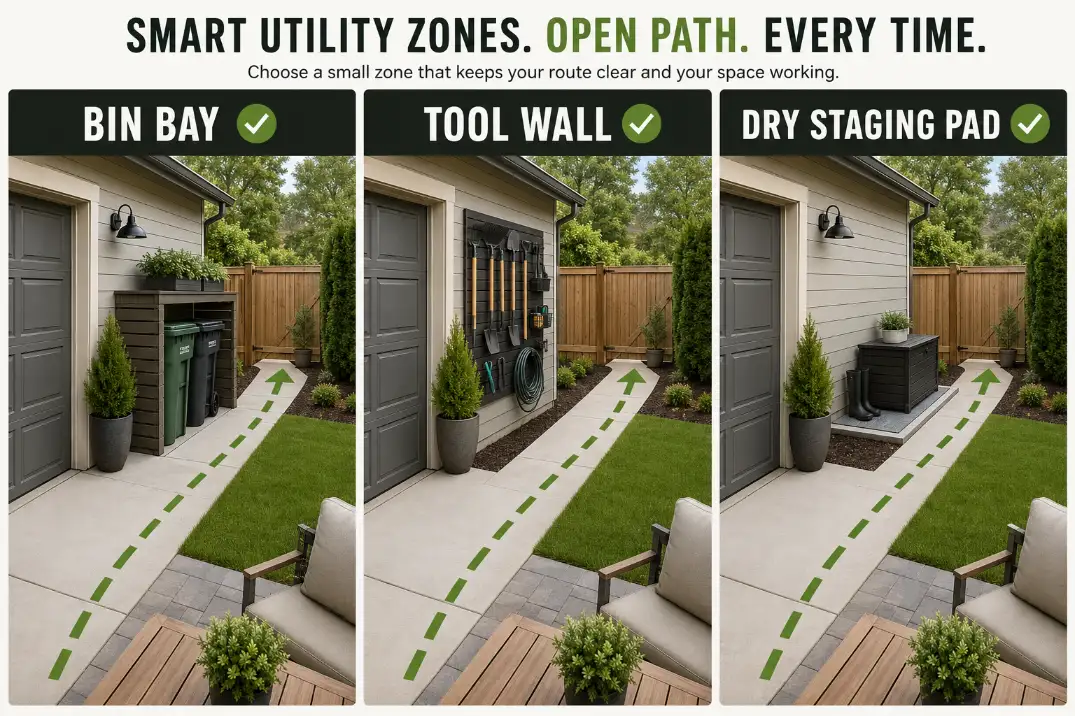
A dedicated bin bay is often better than a full enclosure. A bay gives the carts a predictable parking spot while keeping the front open enough to roll them out.
If your garage edge connects to a tight side yard, the same cart-routing issue appears in Trash Bins in Narrow Side Yard: the storage location only works if the cart path works too.
Hoses need the same judgment. A hose reel tucked into a back corner may look neat, but it fails if the hose has to drag across bins, tools, or patio furniture. Place the reel near the faucet and the direction the hose naturally pulls.
Pro Tip: Keep the most-used outdoor tools within 10–15 steps of the work area, but not directly in the doorway or bin path.
Small utility ideas beat one bulky fix
A garage-to-backyard utility zone usually works better with a few smaller decisions than with one oversized storage solution:
- A bin parking bay along one side of the route.
- A wall-mounted tool rail for rakes, brooms, and garden tools.
- A hose reel station near the faucet and pull direction.
- A narrow vertical cabinet for gloves, pruners, seed packets, and small supplies.
- A dry 2-by-3-foot staging pad for soil bags, folded chairs, or weekend project items.
- A partial slatted screen facing the patio, not a full enclosure around the bins.
The point is not to hide everything. The point is to keep movement and storage from fighting each other. A tool rail works when handles do not project into the lane. A narrow cabinet works when its door can open without blocking the path. A staging pad works only if it stays small enough to remain temporary.
For hose-heavy yards, Side Yard Hose Reel and Faucet Zone Ideas is a useful companion because the hose path often matters more than the reel itself.
Keep the Service Path Open
The service path is the easiest space to steal because it looks empty. In reality, that empty strip is doing the hardest work.
It lets bins roll out. It lets a mower pass. It gives someone room to carry cushions, soil, pruning waste, or a small ladder without stepping into planting beds.
Once that strip gets squeezed, the backyard starts to feel harder to use even when the storage itself looks neat.
Measure the path under real conditions
Do not measure the route before storage is installed. Measure it with bins parked, cabinet doors closed, hose reel mounted, and gate or garage doors fully accounted for.
| Layout condition | Better fix | Avoid |
|---|---|---|
| Bin route feels tight | Straight pull-out bay with 42–48 inches of working room | Full enclosure with a narrow front opening |
| Tools lean into the path | Wall rail or narrow cabinet | Loose tool pile beside the door |
| Hose crosses the walkway | Reel near faucet and pull direction | Back-corner reel that drags across storage |
| Mower route is awkward | Keep the spine clear and store along one side | Alternating bins and boxes on both sides |
| Patio collects overflow | Add a small dry staging pad near the garage | Moving more storage onto the patio |
The useful distinction is between a path that is open and a path that works under load. A 30-inch gap may let one person slip through empty-handed. It will not feel the same with a wet bag of mulch, a mower handle, or a rolling trash cart.
If this utility route also connects side yard access to the backyard, Side Yard Access for Mowers and Wheelbarrows is a good reminder that the path should fit the largest thing that regularly moves through it.
Screen the view, not the working face
Screens help when they block the view from the patio or neighbor side. They become a problem when they block the side where bins roll, tools lift, cabinet doors open, or equipment needs service.
A short L-shaped screen often works better than a full enclosure. It hides the mess from the main sitting area while leaving the working face open.
Most utility zones do not need to disappear from every angle. They need to disappear from the view that actually bothers you.
Storage Without Patio Spillover
A garage-to-backyard utility zone succeeds when the patio stops acting like the backup storage area. If cushions, tools, empty planters, soil bags, toys, and folded chairs keep landing near the seating area, the patio is not the real problem. The utility edge is missing a usable drop point.
Add a landing spot, not another pile
Not everything needs permanent storage. Some items only need a short-term landing spot: a bag of mulch waiting for Saturday, folded chairs before guests arrive, or hand tools during planting.
A 2-by-3-foot dry staging pad near the garage can prevent patio spillover without becoming a full storage zone. Keep it flat, visible, and limited.
If the same item sits there longer than about 7 days, it is no longer staging. It needs a permanent home or it needs to leave the yard.
This is the clutter pattern that gets underestimated. The mess rarely comes from one dramatic storage failure. It usually comes from temporary items that are “just there for now” until the patio becomes the catchall.
For patio-heavy yards, Store Off the Patio to Free Up Outdoor Space supports the same decision: storage should be close enough to use, but not so close that it competes with seating, dining, or the back-door route.
Use wall height before stealing floor space
Behind a garage, wall hooks, narrow cabinets, and tall shelving often beat wide boxes. They keep the floor open and make the edge easier to sweep, rinse, and reset.
A wide deck box can work when it sits outside the service lane and has room for the lid to open. But a 24-inch-deep box can need closer to 36 inches of working depth once someone stands in front of it. If that depth comes from the path, the box is too wide for the zone.
Pro Tip: If an item is used less than once a month, it should not occupy the easiest ground-level spot in the utility zone.
Drainage Around the Utility Edge
Drainage is what separates a useful utility strip from a dirty storage corner. The garage edge often collects roof runoff, fence shade, compacted soil, and hard-surface runoff in one narrow place. If water sits there, storage will not stay clean for long.
Treat slow drying as the warning sign
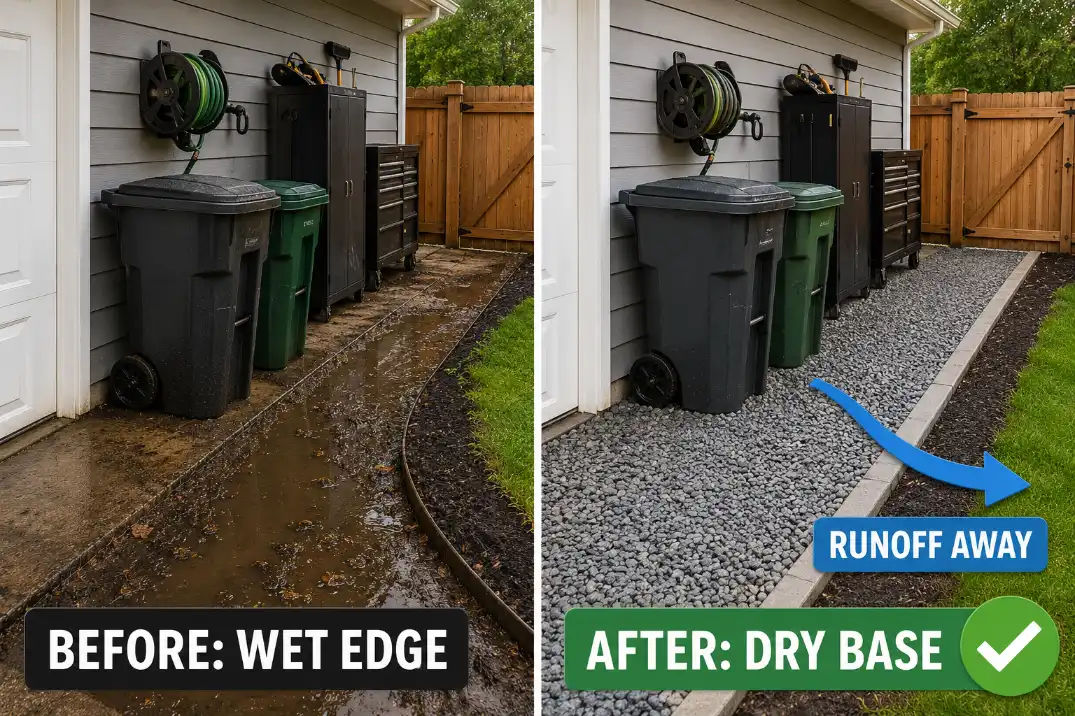
A healthy utility edge should not stay muddy, slick, or puddled for days after ordinary rain. If the area is still wet 24–48 hours later, fix the water movement before adding cabinets, gravel, screens, or storage boxes.
The symptom is muddy storage. The mechanism is usually trapped runoff, a low spot, compacted soil, or water moving off the roof and hardscape with nowhere to go.
A slight slope away from the garage is usually better than a perfectly flat pad. Around hard surfaces, a 1–2% slope can help water move without making bins unstable.
That equals about 1/8 to 1/4 inch of fall per foot. More slope is not automatically better; too much can make carts roll poorly or storage sit unevenly.
Gravel cannot rescue a bad water path
Gravel helps when the base and slope already work. It disappoints when water has nowhere to drain. In that case, gravel hides the problem for a while, then mixes with soil, catches leaves, and becomes harder to clean.
This is where the routine fix stops making sense. If puddles return after every storm, another bag of gravel is not solving the underlying issue. Redirect the downspout, correct the low spot, stabilize the base, or move storage away from the wet edge.
If runoff is already moving across the backyard or collecting near hardscape, the broader priorities in Yard Drainage Problems From Soil, Slope, and Runoff matter more than the storage layout itself.
Organized Without Feeling Built-In
The best garage-to-backyard utility zones look intentional without becoming rigid. That distinction matters because utility needs change. Bin sizes change. Tools change. A mower gets replaced. Kids’ gear appears. Patio use shifts.
Do not build around today’s bin size
A fully built-in enclosure can look clean on day one and fail as soon as one item changes size. A more durable setup is about 80% assigned and 20% adaptable.
That might mean a defined bin bay, a tool wall, a dry staging pad, and one partial screen rather than a permanent outdoor closet. It gives messy functions a clear place while leaving enough flexibility for seasonal changes.
Leave a few inches of tolerance around carts and doors. If every inch is locked into a custom enclosure, the first new item breaks the system.
Keep the patio view clean and the work side open
The utility zone does not need to look equally polished from every angle. The patio-facing side deserves the cleanest view. The working side needs access.
That means screens, planting, or storage walls should usually block the view from the sitting area while keeping the garage side open enough to work. Trying to hide both sides is what creates cramped enclosures, blocked bin routes, and awkward tool access.
For many homes, the best final arrangement is simple: bins on a dry base, tools lifted off the ground, a 36–48 inch service path, one small staging spot, and a partial screen only where the patio sees the mess.
Quick Utility Zone Checklist
Use this before buying storage or building a screen:
- Keep the main service path at least 36 inches wide, or 42–48 inches if bins, mowers, or wheelbarrows use it.
- Leave about 3 feet clear near garage doors, side doors, and gate swings.
- Put weekly-use items closer than seasonal items.
- Fix any area that stays wet longer than 24–48 hours after normal rain.
- Add one small 2-by-3-foot staging pad instead of letting temporary items spread onto the patio.
- Use vertical storage before adding wide boxes.
- Screen the patio view, not the working face.
Questions People Usually Ask
Should a garage utility zone be fully hidden?
Usually no. A fully hidden zone often becomes harder to use. It is better to hide the view from the patio while keeping the working side open for bins, tools, hose access, and cleaning.
Is a deck box a good solution behind the garage?
Only if it does not steal the service lane. A wide deck box can help with cushions or seasonal items, but it needs enough room for the lid to open and for someone to stand in front of it.
How do I stop the patio from becoming the overflow area?
Create a closer utility drop point near the garage. If temporary items keep landing on the patio, add a small dry staging pad and assign permanent homes for anything that stays out longer than about 7 days.
What should not go in this zone?
Avoid bulky rarely used items in the easiest access spots. Also avoid anything that narrows the service path, traps water against the garage, blocks bin movement, or forces patio furniture to become storage.
Final Takeaway
A garage-to-backyard utility zone works best when it behaves like a working edge, not an outdoor closet. The route stays open. The base stays dry. The most-used items stay easy to reach. The patio stops absorbing the overflow.
The best version is not the most hidden or the most built-in. It is the one that lets everyday yard work happen without making the backyard feel like a service alley.
For homeowner runoff basics that support this kind of dry utility edge, see the EPA’s Soak Up the Rain guidance.