
Front porch privacy is not about hiding the whole porch. It is about making the chair, bench, or small sitting corner feel less exposed while the entry still looks open from the street.
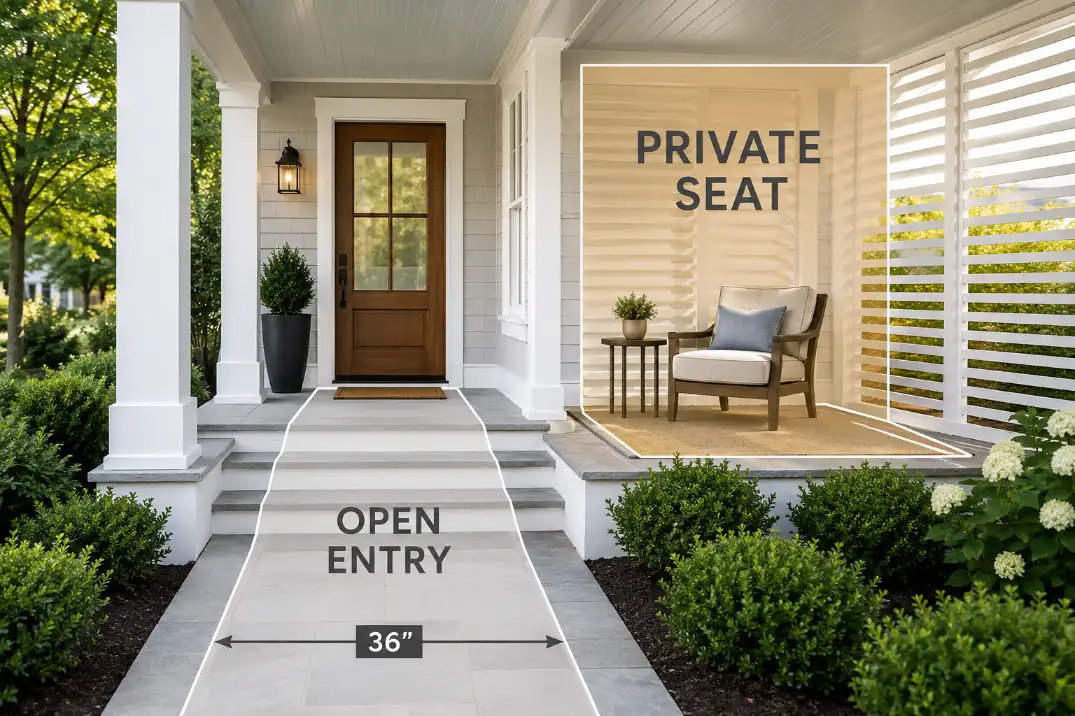
The first checks are simple: can someone see directly into the seat, is the front door still visible from 20–30 feet away, and is there at least one clear 36-inch path to the door?
The common mistake is treating the porch like a backyard patio. A full screen across the front may create privacy, but it can also make the home feel closed, crowded, or harder to approach.
Better porch privacy usually blocks 30–60% of the uncomfortable viewline, especially around seated eye level, while leaving light, airflow, steps, and the door visually open.
Best Front Porch Privacy Ideas
The best ideas below are meant for the porch itself: the seat, the rail, the steps, the side opening, and the immediate entry zone. They should not turn into a full front yard privacy plan. The porch needs precision more than volume.
Tall Planters Beside the Steps
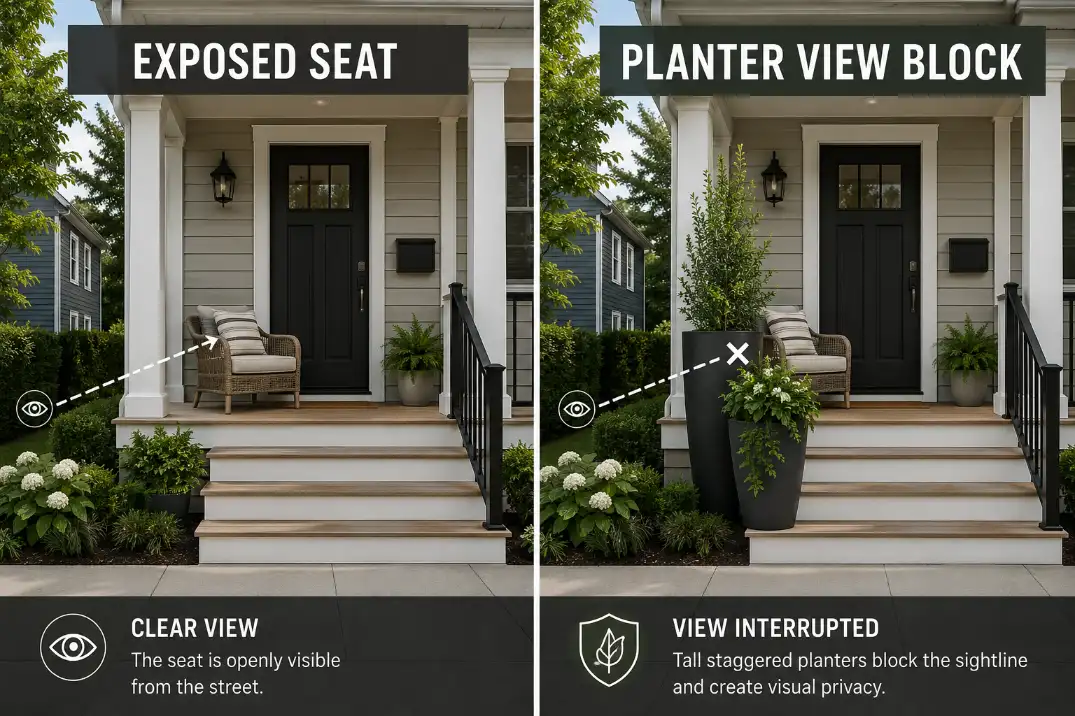
Tall planters are the easiest front porch privacy idea because they create a soft view block without construction. They work especially well beside the steps, near the exposed corner, or just outside the seating zone.
Think of the planter as a privacy object, not decoration. A small flowerpot beside the door may look nice, but it will not change the viewline.
For real effect, use containers about 18–24 inches wide with plants that reach 4–6 feet tall. That height helps protect the seated eye line, which is usually around 3–4 feet above the porch floor.
The better layout is often slightly staggered. One planter sits closer to the steps, and another sits closer to the chair or bench. This interrupts the view more naturally than two matching pots pressed flat against the wall.
Side Screen Panel With Soft Planting
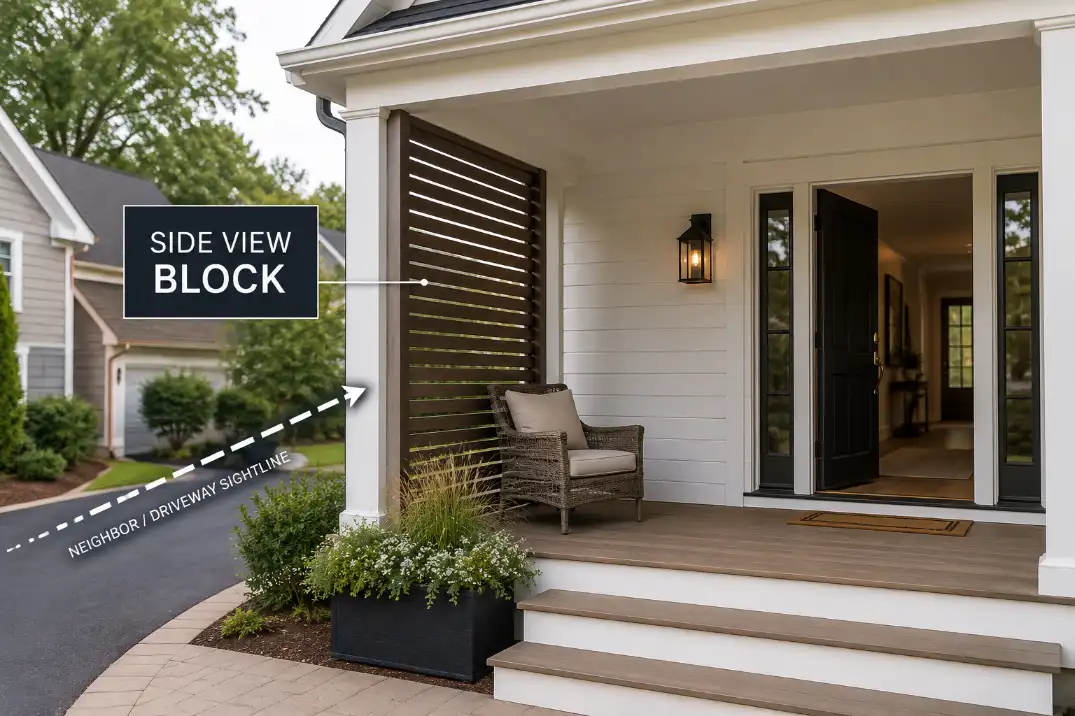
A side screen panel is best when the porch feels exposed from one clear direction: a neighbor window, a driveway, or the side angle of the street. The screen should sit beside the seating area, not across the entire front of the porch.
The strongest version is a slatted or patterned panel with a planter at the base. A panel with about 30–50% open space feels lighter than a solid wall and still gives the seat a more protected edge. The planting matters because it softens the screen so it looks designed, not defensive.
This is one of the most useful porch privacy ideas because it solves the problem without hiding the entry. A full-width front barrier is usually too blunt. A one-sided screen is more selective, more attractive, and often more effective.
Porch Rail Planter Boxes
Porch rail planter boxes add softness where the porch feels too exposed from the street. They do not create full privacy, and they should not be sold as a complete screen. Their value is visual filtering.
Most rail boxes add about 12–24 inches of plant height above the rail. That can make a raised porch feel less bare, especially when someone is sitting behind it.
The effect is subtle, but useful. Rail planters blur the edge of the porch and make the seating area feel more layered.
The mistake is expecting rail flowers to block a standing person’s view. They usually cannot. Use them as the middle layer, then add a taller planter, screen, or trellis where the view is strongest.
Layered Pots Around the Seating Area
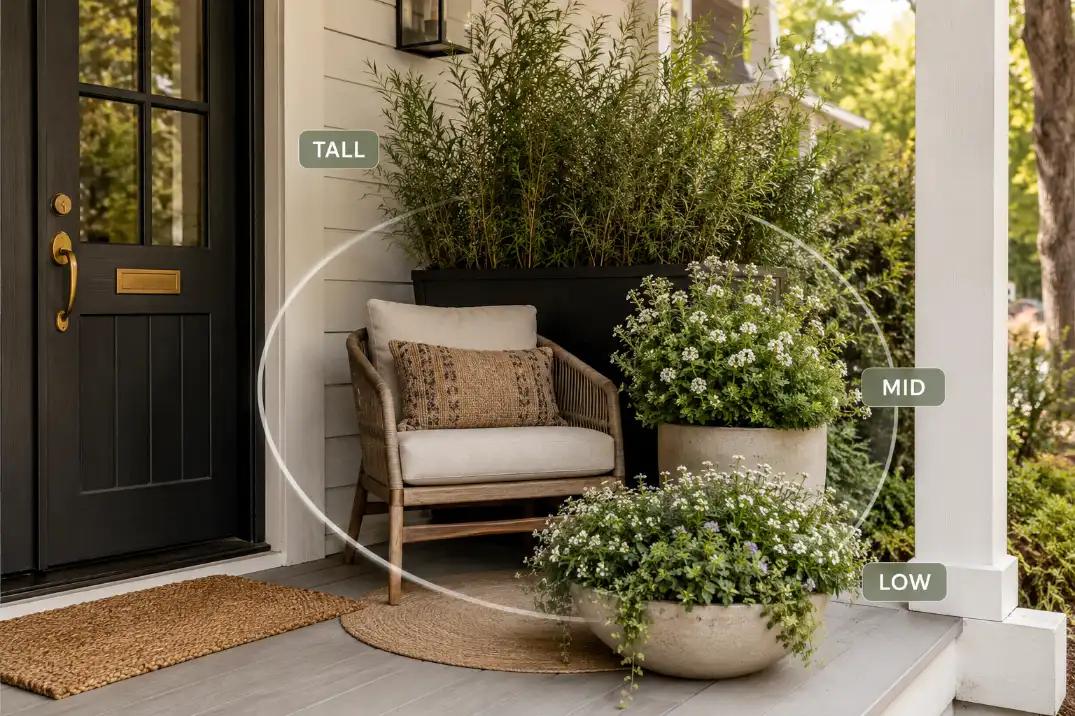
Layered pots work when the porch needs privacy but a fixed screen would feel too heavy. The layout should form a loose privacy arc around the chair or bench: one tall plant near the exposed side, one medium container beside the seat, and one low plant near the floor.
Depth matters more than quantity. If every pot is lined against the wall, the porch may look decorated but still feel exposed. Pulling one container 12–18 inches forward can change the seated view more than adding several small pots behind the chair.
This idea is especially good for small porches because it stays flexible. You can widen the layout when guests come over, tighten it around the seat during evening use, or change the plants seasonally.
Vine Trellis on One Side
A vine trellis is a strong choice for narrow porches because it adds vertical privacy without taking much floor space. It works best on one side of the seating area, especially where a neighbor window or side driveway creates the most exposure.
A lattice panel or slim trellis should frame the porch, not cover the front door. The best placement is beside the chair, near the porch edge, or along the open side of a covered porch.
Annual vines can create a soft screen in one growing season, while perennial vines need sturdier support and regular pruning. The structure should come first. A delicate trellis may look charming at first but can bend or look messy once the plant fills in.
Pro Tip: Use the trellis to shape the privacy zone first, then choose the vine based on maintenance and local climate.
Outdoor Curtains for Covered Porches
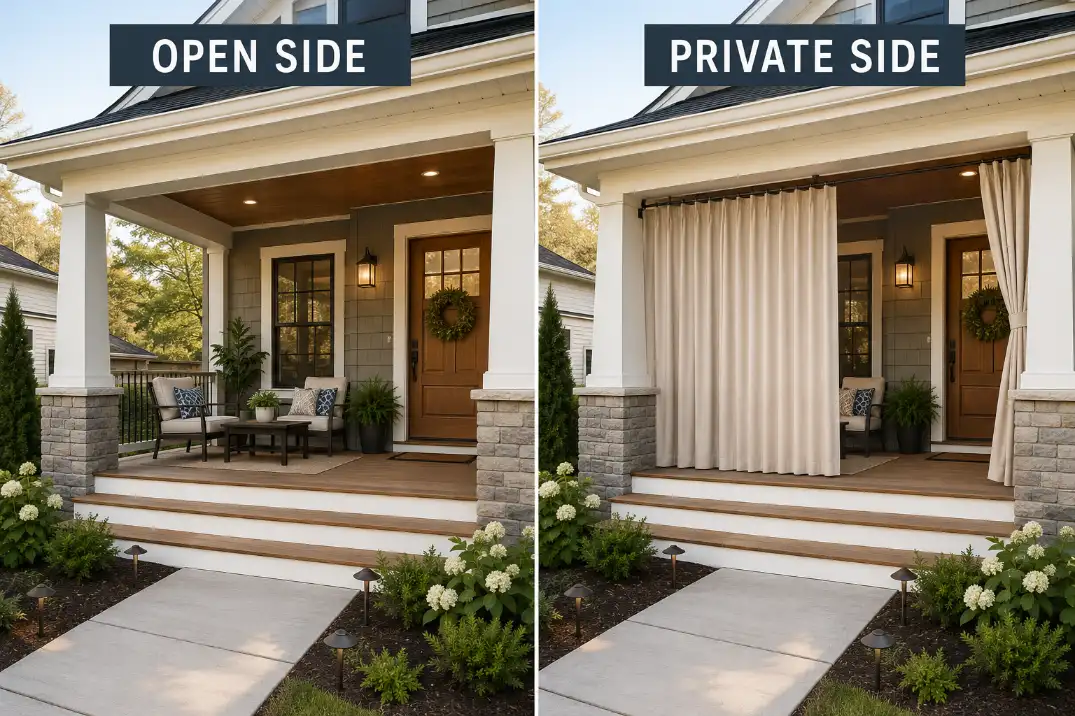
Outdoor curtains can make a covered front porch feel more relaxed, but only when they are used as adjustable privacy. The best version is a side curtain that opens and ties back, not a curtain wall that stays closed across the whole porch.
Curtains work well when privacy changes by time of day. A porch may feel fine in the morning but exposed in the evening when interior lights and porch lights make the seating area more visible. A side curtain lets you close the exposed angle without hiding the front door.
Airflow is the boundary. In humid regions, fabric that stays damp for more than 24–48 hours can start to feel musty or develop mildew. In windy areas, curtains need tiebacks, side hooks, or weights so they do not become more annoying than useful.
Seating Angle Privacy
Sometimes the best privacy idea is simply turning the chair. If the seat faces straight toward the sidewalk, every passerby feels like part of the porch. Angling the chair 30–45 degrees away from the street can reduce direct eye contact immediately.
This is the fix people often underestimate because it does not look like a product. But porch privacy is often a viewline issue before it is a material issue. If the person sitting down no longer faces the street head-on, the porch can feel calmer even before plants or screens are added.
This also helps prevent overbuilding. Before adding a screen, planter, or curtain, test the chair angle. If the porch already feels 50% better, you may only need one light privacy layer instead of a heavier solution.
Small Tree Near the Porch Viewline
A small tree near the porch viewline can soften the street view without crowding the porch floor. This works only when the tree supports the porch, not when it becomes a separate front yard privacy project.
The goal is to interrupt the view toward the seating area. A small ornamental tree with a canopy beginning around 4–6 feet high can filter the porch while keeping the walkway, house number, and front door visible.
If low branches hide the entry, the tree is solving one problem and creating another.
For porches where the entry feels exposed because the whole front approach is open, Small Front Yard Privacy Ideas can help extend the same soft-screening logic beyond the porch without turning this porch plan into a full yard redesign.
Front Porch Privacy Ideas by Situation
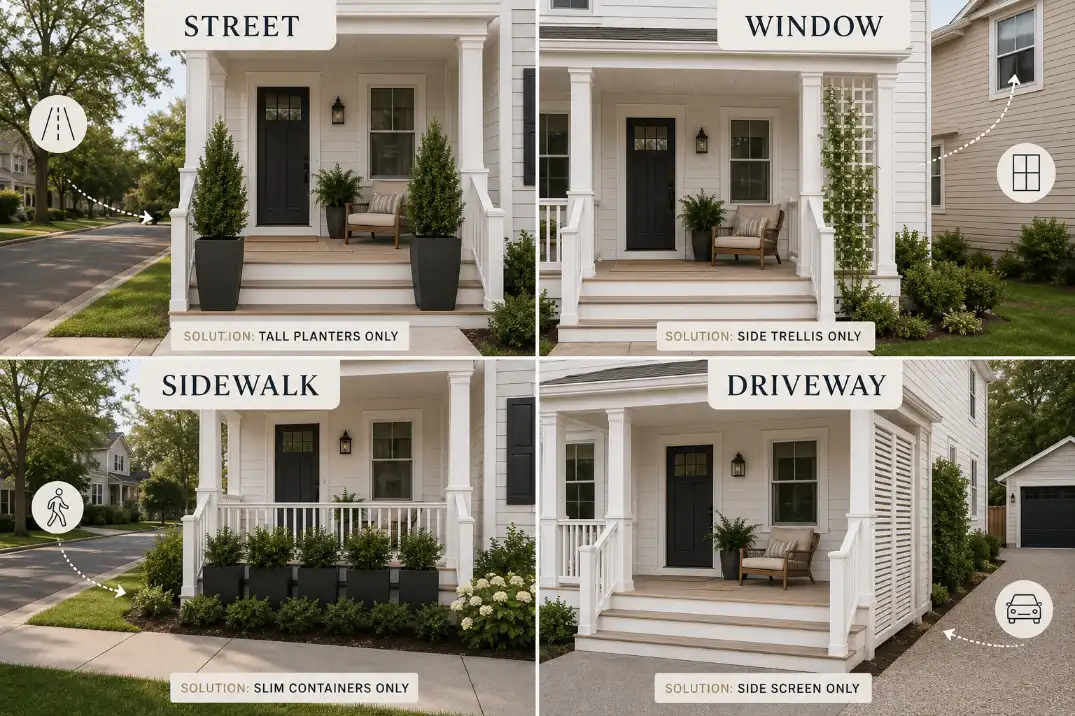
The right privacy idea depends on where the exposure comes from. A porch facing the street needs a different move than a porch beside a driveway or neighbor window.
| If Your Porch Feels Exposed By… | Best-Looking Privacy Move | Why It Works | Avoid This Look |
|---|---|---|---|
| Street view | Tall planters plus angled seating | Softens the seat while keeping the door visible | A full wall across the porch front |
| Neighbor window | Side trellis or slatted panel | Blocks one specific sightline | Decorating the rail only |
| Close sidewalk | Narrow upright containers | Adds height without taking floor space | Wide pots crowding the steps |
| Open driveway | Side screen with planter base | Protects the seated side view | Low plants that do not reach eye level |
| Tiny porch | One tall element plus chair angle | Creates privacy without clutter | Too many small pots |
Porch Facing the Street
A street-facing porch needs filtered privacy, not concealment. The door should still read clearly from the curb. Tall planters, angled seating, and a soft rail layer usually look more welcoming than a solid panel across the front.
A good test is whether the door is still obvious from 20–30 feet away. If guests would hesitate before knowing where to enter, the privacy treatment is too heavy.
Porch Facing Neighbor Windows
Neighbor-window privacy should be directional. You do not need to screen the whole porch if the uncomfortable view comes from one window. A side trellis, partial screen, or vertical planter placed directly on that sightline is usually enough.
This is where a targeted idea looks better than a bigger one. Screen the view between the chair and the window, then stop.
Porch Close to the Sidewalk
A porch close to the sidewalk needs slim vertical privacy. Wide plants, bulky furniture, and deep containers can quickly make the entry feel squeezed.
Keep the path to the door at least 36 inches wide where possible. If containers force people to step around them, the privacy layer has started to work against the porch.
Porch Beside an Open Driveway
A porch beside an open driveway usually needs side privacy more than front privacy. People move beside the porch, park near it, or pass the seating area at standing height. Rail flowers or low pots rarely solve that view.
Use a 4–6 foot vertical layer near the seating side. A slatted panel with a planter, a vine trellis, or a tall container grouping will do more than adding decorative pieces across the front.
Small Porch With Limited Space
A small porch needs fewer, stronger moves. One angled chair, one tall privacy element, and one low soft layer can feel more intentional than six separate pots.
The routine fix stops making sense when the porch becomes harder to use. If planters reduce the walking path below about 30–36 inches or make the chair awkward to reach, the design is no longer improving the entry.
What Makes Porch Privacy Look Closed Off
The title promise matters: privacy without closing off the entry. These are the mistakes that usually break that balance.
A Screen Across the Whole Front
A full-width screen can make the porch look blocked from the street. It may solve exposure, but it often removes the welcoming quality that makes a front porch work.
Use full-front screening only when the porch is deep enough to keep the door, steps, and seating visually separate. Most small and medium front porches look better with one-sided screening.
Plants That Hide the Door
Plants should frame the entry, not swallow it. If tall containers cover the door from the sidewalk, they are too wide, too close to the center, or too symmetrical in the wrong place.
Move the tallest pieces toward the seating side instead of placing them directly in front of the entry.
Curtains That Stay Closed All Day
Curtains look best when they appear flexible. If they stay closed across the porch every day, the entry can look shut down. Side curtains, tiebacks, and partial coverage usually feel more residential and less like a closed room.
Too Many Small Pots
Many small pots can make a porch feel busy without making it private. One strong vertical element usually does more for privacy than a cluster of small containers scattered around the floor.
If the porch feels exposed but a fence would make the entry look too closed, the better move is usually a lighter front-layer approach.
Ideas like staggered containers, open trellis panels, and low-to-tall planting transitions can support the porch without turning it into a barrier; that same no-fence logic is explored more fully in Front Yard Privacy Ideas No Fence.
How to Add Porch Privacy Without Hiding the Front Door
A porch privacy plan should protect the sitting zone and preserve the arrival zone. Those are different jobs.
Screen the Seating Area, Not the Whole Entry
The seating area is where privacy matters most. Aim privacy layers around the chair, bench, or swing rather than across the entire porch opening.
This keeps the door visually clear and saves space. A smaller screen in the right place often looks more expensive than a larger screen in the wrong place.
Keep One Clear Approach Line
The path from the walkway to the door should feel obvious. A 36-inch clear route is a useful minimum, especially if people carry packages, groceries, or strollers through the entry.
Containers can sit beside the path, but they should not make guests weave through the porch. Privacy that interrupts arrival will feel inconvenient even if it looks pretty in photos.
Use One-Sided Screening
Most porch privacy problems have one dominant source. It might be the street, a neighbor window, a driveway, or a sidewalk angle. Solve that one first.
One-sided screening also keeps light and air moving through the porch. That matters on covered entries, where heavy privacy layers can make the space feel dark.
Leave Light and Airflow Open
A good privacy layer should still let the porch breathe. Slatted screens, open trellises, spaced containers, and side curtains usually work better than solid barriers on a front entry.
After rain, cushions and curtains should dry within about 24–48 hours in warm weather. If the porch stays damp longer, the setup may be trapping too much moisture or blocking too much airflow.
For a porch that needs to coordinate with the planting closer to the house, Front Yard Landscaping Privacy Ideas can help keep the larger approach layered without shifting this porch design into a closed-off entry.
Best Plants and Features for Front Porch Privacy
Choose porch privacy features that stay narrow, controlled, and attractive up close. Anything near the front door is seen from only a few feet away, so messy growth or awkward proportions show quickly.
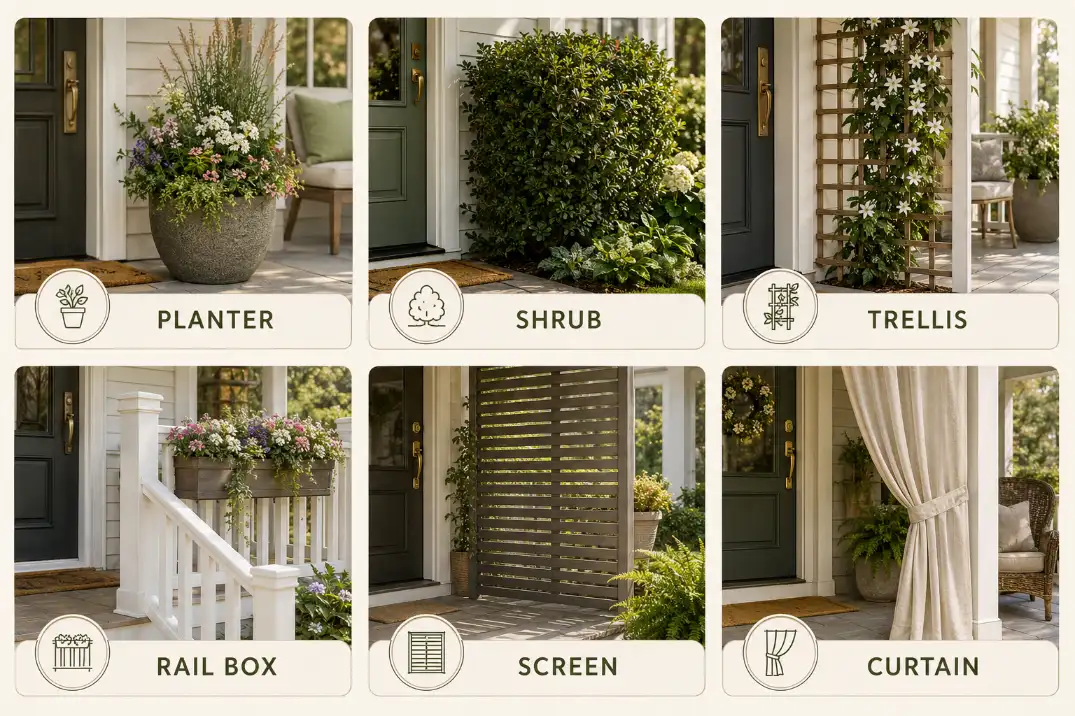
Tall Containers
Best for movable privacy, renters, and seasonal porch changes. Use heavier containers in windy spots, especially near open steps or exposed corners.
Upright Shrubs
Best for structure without a built screen. Compact hollies, narrow evergreens, dwarf arborvitae, and upright flowering shrubs can work when sized correctly. Mature width matters. A shrub that reaches 3 feet wide can overwhelm a tight porch edge.
Climbing Vines
Best for narrow vertical privacy. Use them on a trellis or lattice panel beside the seating area. Annual vines are useful for seasonal coverage; perennial vines need stronger support and pruning.
Rail Planters
Best for softening a raised porch rail. They add color, texture, and partial visual filtering, but they should not be expected to replace a taller privacy layer.
Decorative Screens
Best for instant privacy. Choose slatted or patterned designs for most front porches so the entry still feels light.
Outdoor Curtains
Best for covered porches where privacy changes during the day. Use them on the exposed side, not as a permanent wall across the front.
Quick Porch Privacy Checklist
- Can the front door still be seen clearly from 20–30 feet away?
- Is there at least one 36-inch clear path to the door?
- Does the privacy layer protect the seated viewline at about 3–4 feet high?
- Is the main exposure from one direction rather than every side?
- Will curtains, cushions, and plants still dry within 24–48 hours after rain?
- Are plants chosen by mature size, not just nursery size?
Questions People Usually Ask
What is the easiest front porch privacy idea?
Tall planters are usually the easiest because they do not require construction and can be moved. They work best when placed to block the seated viewline, not just to decorate the door.
How do I make my porch private without making it look closed off?
Keep the front door, steps, and walkway visible. Add privacy to one side of the seating area with planters, a slatted panel, a trellis, or an adjustable curtain.
Are outdoor curtains good for front porch privacy?
Yes, on covered porches where they can open, tie back, and dry properly. They are best as side privacy, not as a full-time curtain wall across the entry.
What should I avoid on a small front porch?
Avoid full-width screens, oversized furniture, and too many small pots. A small porch usually needs one clear vertical privacy layer and one open path to the door.
Front porch privacy works when the entry still feels like an entry. The best ideas do not hide the house or turn the porch into a wall.
They protect the seat, soften the exposed side, and leave the door easy to see. Start with the strongest viewline, add one targeted privacy layer, and stop before the porch loses its welcome.
For broader official guidance on choosing landscape plants, see the University of Minnesota Extension trees and shrubs guide.