Last updated: June 28, 2026
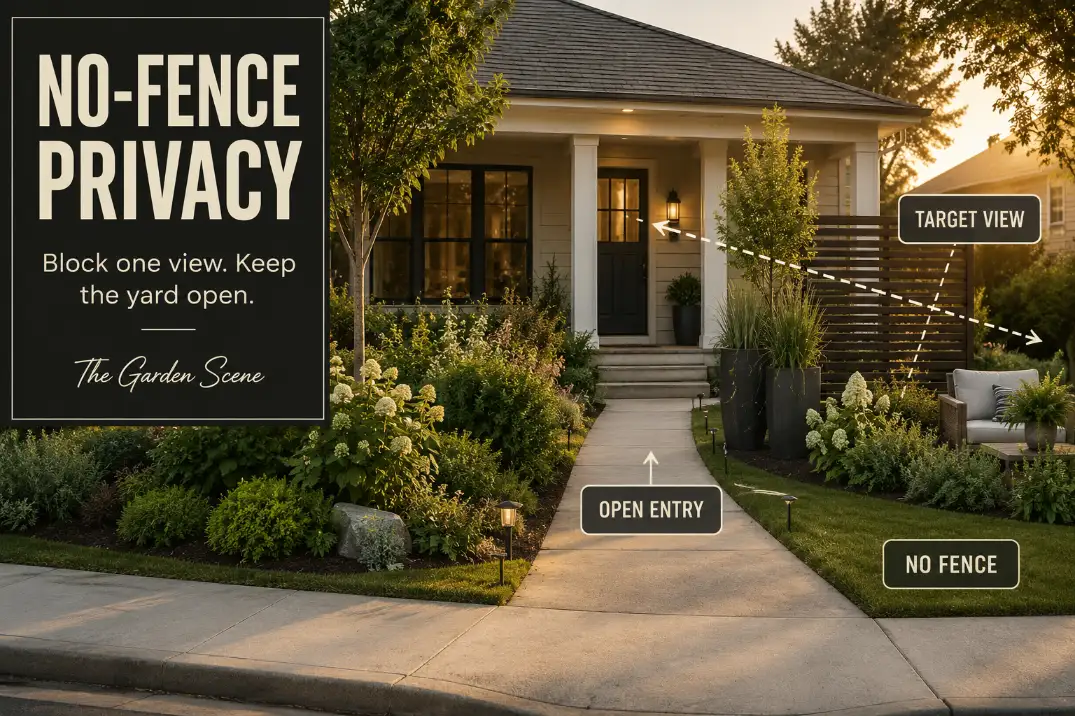
Front yard privacy without a fence is not about hiding the whole property. It is about interrupting the specific view that makes the front of the home feel exposed.
That distinction matters. A porch that feels watched from the sidewalk does not need the same solution as a front window facing parked cars. A driveway edge open to the street does not need the same treatment as a neighbor’s angled view into a small sitting area. When the fix is too broad, the front yard can start to look defensive, crowded, or awkward from the curb.
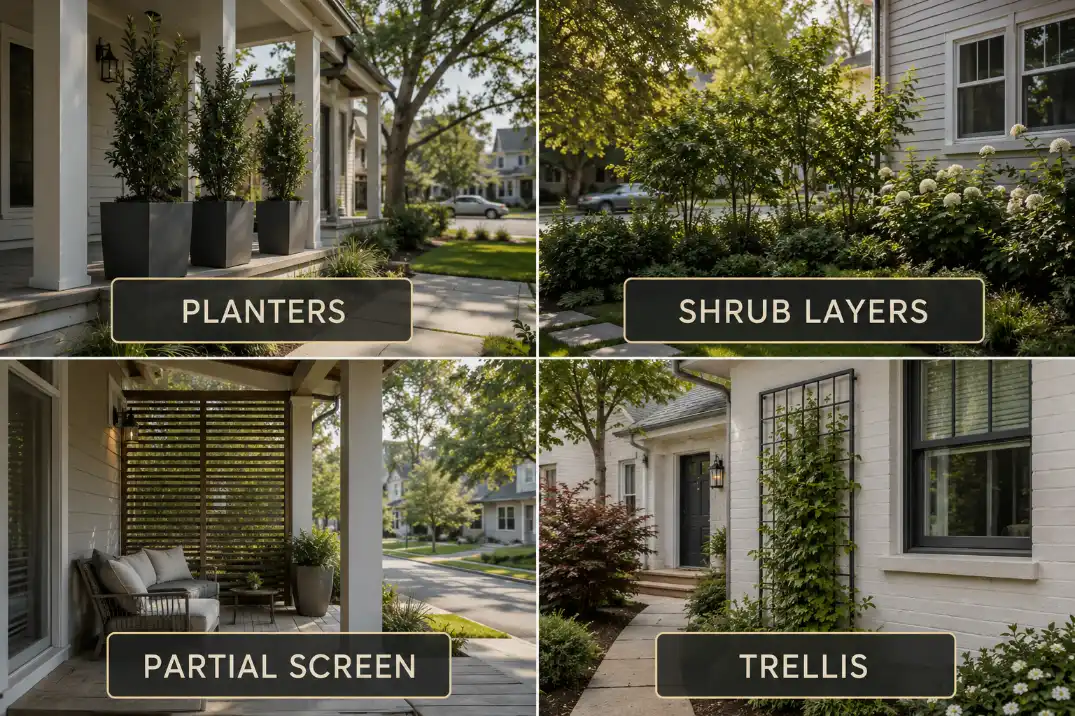
The better approach is to choose the lightest privacy idea that solves the exposed view. That might be planters, layered shrubs, a porch screen, a low panel, a trellis, or a partial screen. The right choice depends on where the view comes from, how close it is to the house, and how open the front entry still needs to feel.
Start With the View You Actually Need to Block
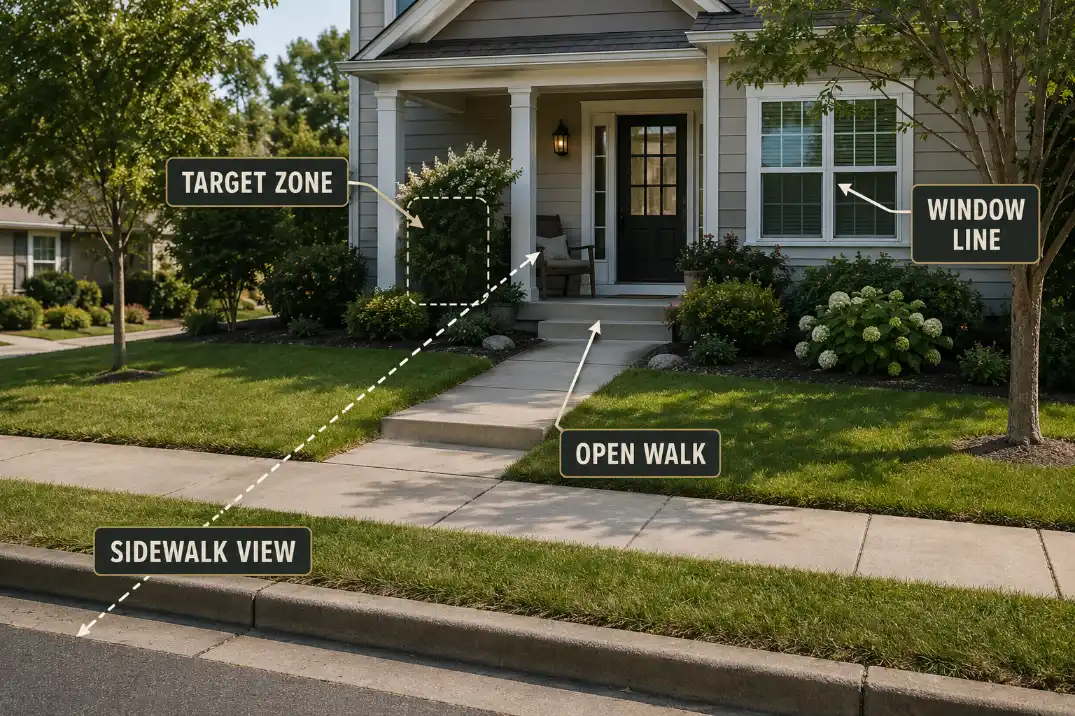
Before choosing a privacy idea, stand in the exact spot where the front yard feels exposed. That might be the porch chair, the front window, the walkway, the driveway edge, or the small patch of lawn near the entry.
Look toward the source of the exposure. Is the view coming from the street, a sidewalk, a neighbor’s front window, parked cars, a raised porch across the road, or people walking close to your house?
That simple test tells you what the privacy idea actually has to do.
If the view is low and direct, you may need width more than height. If the view comes from an angle, a partial screen may work better than a row of plants. If the problem is a window, the fix may need to sit closer to the house rather than at the property edge. If the exposure is from passing pedestrians, a softer layered screen may be enough.
A broader guide like front yard landscaping for privacy can help when the whole yard needs a larger privacy plan. For this no-fence version, stay tighter: identify the single view that needs to be interrupted first.
The decision is not “How do I make my front yard private?” It is “Which view is making the front yard feel too exposed?”
The Main No-Fence Privacy Models and When They Fit
Most no-fence privacy ideas fall into a few working models. They are not interchangeable. Each one solves a different kind of exposure.
| No-fence model | Best use | Privacy strength | Flexibility | What to avoid |
|---|---|---|---|---|
| Planters | Porch edges, low windows, sidewalk glance lines | Light to medium | High | Unstable containers or plants that narrow the walkway |
| Layered shrubs | Softer long-term street or neighbor screening | Medium | Low once planted | A flat hedge wall that closes off the front elevation |
| Porch screens | Close exposure at seating, stoops, or entry areas | Medium to strong | Medium | Blocking the front door or making the porch feel boxed in |
| Low panels | Short targeted screening near walks or driveway edges | Light to medium | Medium | Creating a fence-like row across the yard |
| Trellis | One vertical view near a window, porch side, or seating angle | Medium | Medium | Using several trellises as a fake fence line |
| Partial screens | Angled views from neighbors, sidewalks, or parked cars | Medium | Medium to high | Overscreening areas that only need one blocked angle |
The strongest no-fence plan is usually not the tallest one. It is the one that matches the exposure with the least visual weight.
A planter can soften a sidewalk glance without making the house disappear. A trellis can interrupt one tall view without building a boundary. Layered shrubs can calm the street side over time, but they can also become too heavy if placed like a hedge. Porch screens can make a sitting area feel calmer, but they can also make the entry feel hidden if they cover too much.
Treat each idea as a privacy tool, not a decoration.
Use Planters When You Need Flexible Privacy Near a Porch, Walk, or Window
Planters are the best no-fence option when the privacy problem is close to the house and you do not want to commit to a permanent planting bed yet.
They work especially well near a porch edge, a low front window, a small sitting area, or a walkway that feels too open to the sidewalk. The planter gives you a controlled base, while the plant material provides the actual screening. That makes the idea useful for renters, HOA-limited homes, seasonal changes, or front yards where you want to test privacy before planting in the ground.
The fit is strongest when the exposed view is narrow. One tall rectangular planter near the side of a porch may do more than several scattered containers across the yard. A pair of planters can soften a front window without covering the whole facade. A planter near a walkway can filter a pedestrian glance while still keeping the path readable.
The trade-off is stability and maintenance. Tall planters can tip in wind if they are too light. Dense plants can spill into the walking route. Containers also dry out faster than in-ground beds in many U.S. climates, so the setup has to be realistic for how often you will water.
For a deeper planter-specific treatment, keep that detail in a focused guide like privacy planters for front yards and patios. In this parent plan, the main rule is simple: use planters when you need movable privacy close to the activity, not broad screening across the whole yard.
Planters are the wrong choice when you need a wide, permanent buffer or when the only available placement would squeeze the front walk.
Use Layered Shrubs When the Yard Needs Softer Long-Term Privacy
Layered shrubs are the better choice when the front yard needs privacy that feels like part of the landscape instead of an added screen.
This works best for street-facing yards, open lawns, wide front beds, and homes where a visible panel would look too harsh. Instead of planting one tall row, use a low layer in front, a mid-height layer behind it, and one taller filter only where the view actually needs height.
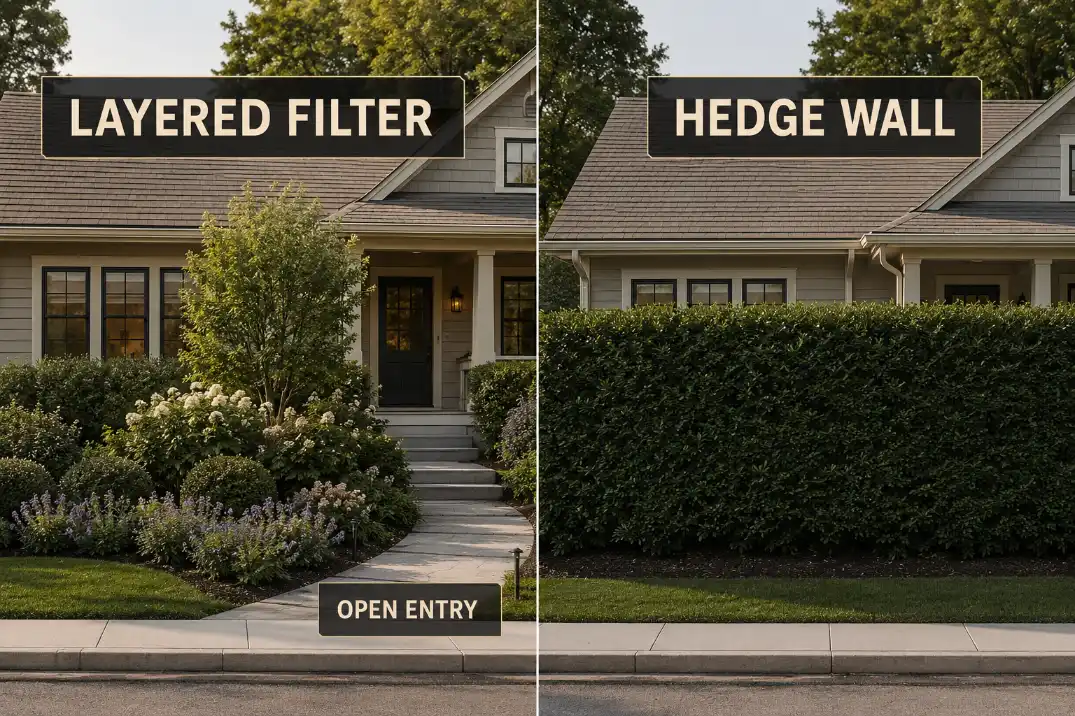
The goal is not to create a hedge wall. A flat hedge often makes the front yard look smaller and can make the house feel shut down from the street. A staggered arrangement usually looks more natural because the eye sees depth rather than a single blocking line.
Mature size is the detail that decides whether this idea ages well. A shrub that looks perfect in a nursery container can become too wide near a walkway, too tall under a window, or too dense in front of the house. Before planting, check the mature spread and picture the plant at full size, not purchase size.
Layered planting also needs room to breathe. Keep windows from being swallowed. Keep the entry route open. Leave enough separation from the house so maintenance does not become a fight every season.
If the article needs to go deep into layered planting patterns, that belongs in a child guide such as front yard privacy layering without a fence. Here, the decision is whether the privacy problem needs a softer permanent filter rather than a movable object.
Use layered shrubs when the front yard has enough space for growth and the exposure is ongoing. Avoid them when the area is tight, the view is very specific, or you need privacy this season.
Use Porch Screens or Partial Panels When the Exposure Is Close to the House
Some front yard privacy problems happen too close to the house for yard-edge planting to solve well. A porch chair that faces the sidewalk, a stoop beside a busy walkway, or a small front sitting area often needs privacy right where people use the space.
That is where porch screens and partial panels make sense.
A porch screen does not need to cover the whole porch. Often, one side panel or one slatted section near the exposed edge is enough. The same is true for low panels near a front walk or driveway edge. Their job is to break the direct view, not hide the entire entry.
Partial coverage usually feels better in a front yard because it keeps the house readable. Visitors can still see where to go. The front door still feels like the front door. The yard gains a sense of separation without looking closed off.
The best fit is a close, repeated exposure: people walking past the porch, a neighbor looking across at an angle, or a sitting area that feels too visible from the street. The wrong fit is a large open yard where a small panel floats with no relationship to the house. In that case, planting or a wider landscape layer may feel more natural.
For porch-specific privacy ideas, route the detail to front porch privacy ideas. This article only needs the decision rule: use house-adjacent screening when the privacy problem happens at the porch, stoop, or entry zone itself.
A good partial screen should still let the front of the home explain itself. If guests have to guess where the door is, the screen is doing too much.
Use a Trellis When You Need Height Without a Fence Line
A trellis is useful when the front yard needs vertical privacy in one focused spot. It can interrupt a taller view without creating a full boundary.
This works near a front window, a porch side, a driveway edge, or a seating angle where the exposure comes from above normal shrub height. The trellis gives structure, while open lattice or vine coverage controls how much privacy the area gets.
Open lattice feels lighter and keeps more daylight. Dense vine coverage gives more privacy but can feel heavier, especially near the front entry. Seasonal vines may leave the area more exposed in winter, while evergreen or dense planting can require more maintenance and stronger support.
The main mistake is using several trellises in a row as a fence substitute. That often looks more awkward than an actual fence because the pieces feel disconnected from the architecture. A trellis works best as a vertical accent tied to a real privacy target.
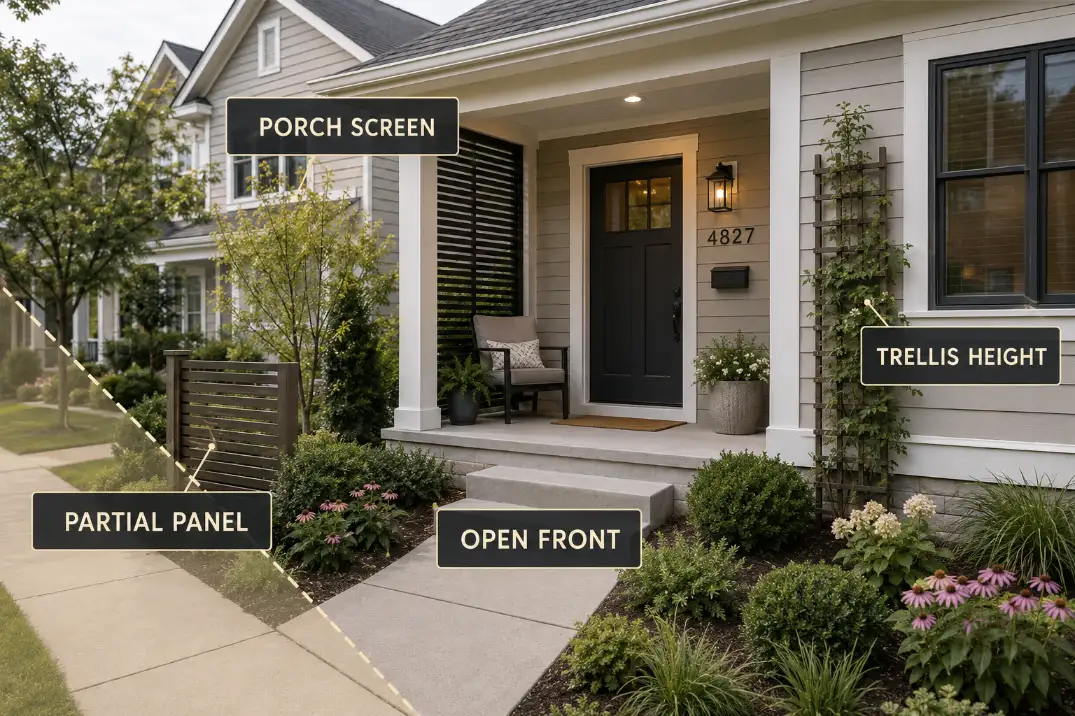
Use a trellis when the yard needs height in one place. Avoid it when the real issue is a long street-facing exposure, a wide open lawn, or a low sidewalk glance. Those problems usually need layering, planters, or partial panels instead.
Keep the Front Yard Open Enough to Still Look Welcoming
No-fence privacy can fail when the homeowner tries to make it behave like a fence. The front yard becomes filled with objects, tall plants, panels, and screens, but the exposed view still does not feel solved.
The better question is how much privacy is enough.
A front yard still needs visible entry logic. People should be able to identify the front door, walkway, porch, house number, and safe route from the street. Drivers still need clear sightlines near the driveway. Windows still need daylight. Planting still needs room to mature without pressing into the house.
When plant-based privacy is part of the plan, choose plants for their mature size, not their nursery-container size. The University of Maryland Extension’s right plant, right place guidance supports matching plants to the site so they do not outgrow sidewalks, driveways, windows, or structures.
Local rules also matter. HOA guidelines, corner-lot visibility rules, utility access, and municipal front-yard restrictions vary widely, so avoid treating any one privacy setup as universally allowed.
Design Caution
Do not use no-fence privacy to hide the entire front of the house.
Use it to soften the exposed angle while keeping the entry readable.
When in doubt, check the view from the sidewalk before adding more height.
Common mistake box: trying to rebuild a fence without calling it one
- Too many panels can look more defensive than one clear privacy move.
- Dense shrubs under windows can darken the house and create maintenance problems.
- Tall planters near a narrow walk can make the entry feel cramped.
- Screens that hide the door, house number, or driveway view solve privacy at the expense of usability.
A no-fence front yard should feel edited, not barricaded. For this reason, privacy and curb appeal need to be judged together. A guide like front yard privacy mistakes that hurt curb appeal fits this stage better than another list of ideas, because the risk is usually overcorrection.
Where Child Pages Fit Into the Plan
This article helps choose the privacy model. The child pages should handle the deeper tactics.
Use a planter-focused guide when the question is container placement, plant habit, or movable screening. Use a shrub-focused guide when the decision involves layering, mature spread, and long-term front-yard screening without a fence. Use a porch privacy guide when the exposure is mostly at the sitting area, railing, stoop, or entry side.
A trellis guide should handle vertical support, vine behavior, and placement near windows or porch edges. A low-panel guide should handle panel height, spacing, and how to keep the result from looking like a broken fence line. A small-yard guide should handle tight setbacks, narrow beds, and homes close to the sidewalk.
For narrow lots or tight front setbacks, front yard privacy for small yards without a fence is the more specific route. For window exposure, use a front-window privacy guide rather than trying to solve the whole yard at once.
This parent page should not replace those details. Its job is to help you choose the right direction before you go deeper.
Choose the Lightest Privacy Idea That Solves the View
The best no-fence front yard privacy idea is usually the smallest move that interrupts the exposed view.
Start with the sightline. Decide whether the problem is street-facing, sidewalk-close, porch-based, window-level, driveway-related, or angled from a neighbor. Then choose the model that solves that view with the least visual weight.
Use planters for flexible close-range privacy. Use layered shrubs for softer long-term screening. Use porch screens or partial panels when the exposure is right at the house. Use a trellis when one vertical view needs height. Use low or partial screens only where they solve a clear angle without turning into a fence line.
Block the view, not the whole yard. That is the rule that keeps no-fence privacy useful, attractive, and believable from the street.