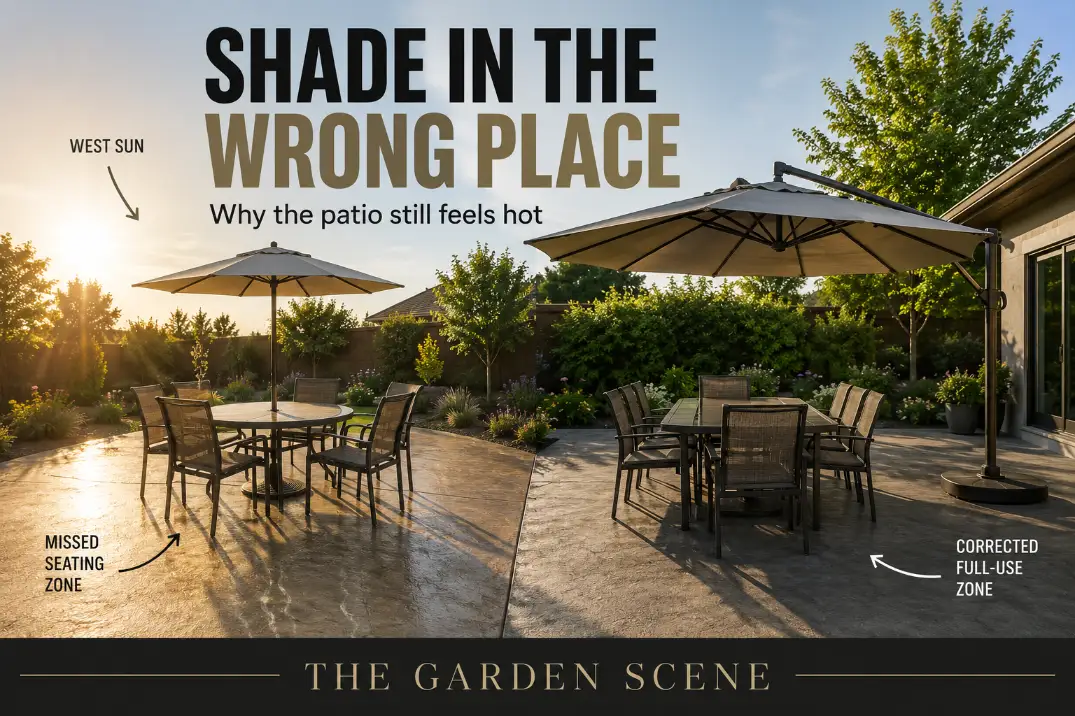
The best backyard shade ideas for patios that get too hot are not always the biggest structures.
For most hot patios, the smartest first choice is a tilting cantilever umbrella, retractable awning, or angled shade sail placed for the 2 p.m. to 6 p.m. heat window.
If the patio faces west, add side-angle shade before adding more overhead cover.
Start with three checks: where the afternoon shadow lands, whether air can move through the shaded area, and whether bases, posts, or sail lines still leave at least 36 inches of clear walking space.
The mistake is treating shade as a coverage problem. It is usually a placement, heat, and airflow problem.
A patio can look shaded at noon and still feel miserable at 4 p.m. if low western sun hits the chairs, concrete keeps radiating heat for 60 to 90 minutes, or a solid cover traps warm air under the roof.
Best Patio Shade Ideas by Problem
| Patio problem | Best shade idea | Why it works | Watch-out |
|---|---|---|---|
| West-facing afternoon sun | Tilting cantilever umbrella or side screen | Blocks low-angle sun at body height | Flat overhead shade may miss chairs |
| Small patio | Wall-mounted awning or offset umbrella | Keeps the floor and walking path clearer | Avoid bases in door routes |
| Hot dining area | Rectangular sail or large umbrella | Covers chair pull-out space, not just the table | Needs solid anchors or a heavy base |
| Stuffy covered patio | Open-sided shade, fan, or vented pergola | Improves air movement | More enclosure can make heat worse |
| Budget fix | Market umbrella plus light outdoor rug | Fast and movable | Weak in wind if undersized |
| Long-term cooling | Shade tree plus temporary shade | Cools ground and surrounding air over time | Meaningful shade may take 5 to 10 years |
The 12 Shade Ideas Worth Considering First
1. Tilting cantilever umbrella
A cantilever umbrella is often the best first upgrade for a patio that gets hot after lunch. Because the pole sits outside the seating area, it can shade chairs, lounge seating, or a dining table without blocking the middle of the layout.
This works especially well when the patio has one hot zone rather than a whole-yard heat problem. Look for tilt and rotation, not just canopy size. A 10- or 11-foot cantilever umbrella is usually more useful than a larger fixed umbrella that cannot follow the sun.
2. Wall-mounted retractable awning
A retractable awning is a strong choice for a patio attached to the house, especially near sliding doors. It keeps the floor clear, shades the door-side seating area, and can be pulled back during storms or winter weather.
This is usually a better solution than adding freestanding posts to an already narrow patio. It also gives more coverage than a single umbrella when the seating sits close to the house.
3. Rectangular shade sail
A rectangular shade sail can cover a dining or lounge zone more efficiently than a small round umbrella. It works best when you have strong anchor points and a clear plan for slope, tension, and runoff.
The sail should shade the area people use, not just the center of the patio. If the low corner drains toward the house or hangs over the walking path, the layout needs to be adjusted before installation.
4. Slim west-side screen
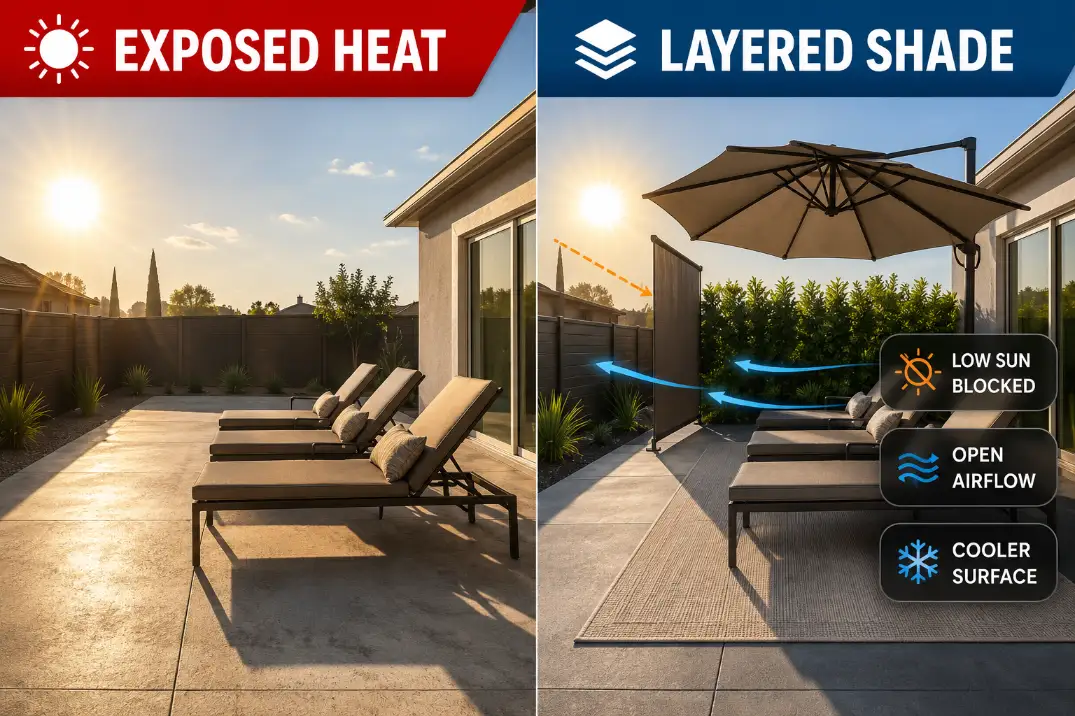
Low western sun is one of the biggest reasons shaded patios still feel hot. A narrow vertical screen, roller shade, slatted panel, or outdoor curtain can block glare and body-level heat without covering the entire patio.
This is one of the most underestimated fixes. A 4- to 6-foot-wide side screen placed correctly can outperform another overhead umbrella when the problem is late-afternoon sun angle.
5. Pergola with real shade coverage
A pergola only works as summer shade when it includes a canopy, shade cloth, vines, louvers, or closely spaced angled slats. Open decorative beams may look finished but often allow too much sun through during peak heat.
The best pergola for a hot patio is not the heaviest one. It is the one that blocks the right sun while leaving the sides open enough for airflow.
6. Pergola plus movable side shade
A pergola with one movable side layer is much stronger than a pergola alone. Add outdoor curtains, a drop shade, or a slatted side panel on the hot edge rather than enclosing the entire structure.
This keeps the patio flexible. You can block low sun at 4 p.m. without making the space feel closed in at breakfast or on cooler evenings.
7. Light outdoor rug under shade
A rug does not create shade, but it can make shade feel more effective. If concrete or pavers stay hot after the sun moves, a light outdoor rug can reduce glare, soften underfoot heat, and define the usable seating zone.
This works best under an umbrella, awning, or sail. A dark rug can make the problem worse, especially on a patio already surrounded by hot hardscape.
8. Open-sided cover with a ceiling fan
For humid climates, airflow can matter as much as shade. An open-sided cover with a fan over the seating area can make a covered patio feel noticeably better, especially in Florida, the Gulf Coast, and humid parts of the Southeast.
The fan should move air across people, not just spin above an empty center point. If the seating is offset, the fan placement should follow the seating.
9. Shade tree plus temporary cover
A shade tree is the best long-term cooling layer, but it is not a quick fix. A young tree may take 5 to 10 years to make a major difference over a patio, depending on species, size, and climate.
Use a temporary sail, umbrella, or awning while the tree matures. This gives you comfort now and better cooling later.
10. Corner sail nook
Many patios have one unusable hot corner. A small corner sail can turn that dead edge into a reading chair, café table, or lounge nook without covering the whole patio.
This is especially useful in small backyards where a full shade structure would feel too bulky.
11. Outdoor curtain on the hot side
Outdoor curtains work best as side-angle shade, not as a full patio solution. Use them to block one sun path, create short-term privacy, or reduce glare under an existing cover.
They should be easy to tie back. A curtain that stays closed all day can trap heat and make the patio feel smaller.
12. Louvered or adjustable roof system
A louvered roof is the premium option when the patio needs real control over sun, light rain, and airflow. It makes the most sense for patios used daily, outdoor kitchens, and larger lounge spaces.
The drawback is cost and commitment. This is usually not the first move for a small patio unless the space is central to everyday outdoor living.
Umbrella vs Sail vs Awning vs Pergola
| Shade type | Best for | Typical U.S. cost range | Main limitation |
|---|---|---|---|
| Market umbrella | Small dining tables, quick shade | $50–$300 | Center pole can block use |
| Cantilever umbrella | Lounge zones, flexible shade | $250–$1,500+ | Needs a heavy, stable base |
| Shade sail | Broad coverage, modern look | $100–$1,000+ | Anchor points decide success |
| Manual awning | Door-side patios | $500–$2,500+ | Wall mounting must be solid |
| Motorized awning | Larger house-attached patios | $2,000–$6,000+ installed | Wind exposure and fabric wear |
| Pergola or louvered cover | Permanent outdoor living areas | $3,000–$25,000+ | Can trap heat if poorly designed |
These ranges vary by size, materials, labor, wind rating, electrical work, and local installation costs. The important point is not the exact number. It is the commitment level. A $200 umbrella can be a smart test. A $15,000 cover should solve the sun angle, airflow, and layout problem all at once.
Start With Shade That Moves With the Sun
Adjustable shade usually beats fixed shade first
For most hot patios, adjustable shade is the safest first move. A tilting umbrella, retractable awning, or properly angled sail can respond to the sun in a way fixed structures often cannot.
This matters most when the patio is used after work. A 9-foot umbrella may look generous at noon, but by late afternoon its shadow can move several feet away from the seating. If the sun hits chair backs or people’s faces after 3 p.m., side-angle control matters more than canopy diameter.
On compact patios, the support system matters as much as the fabric. A center-pole umbrella can work over a small dining table, but it often becomes the wrong solution when the base steals the main route through the patio.
That is why shade for tight layouts should be chosen around real clearance, not product photos alone, as shown in Best Patio Umbrellas for Shade in Small Backyards.
Dining patios need shade beyond the tabletop
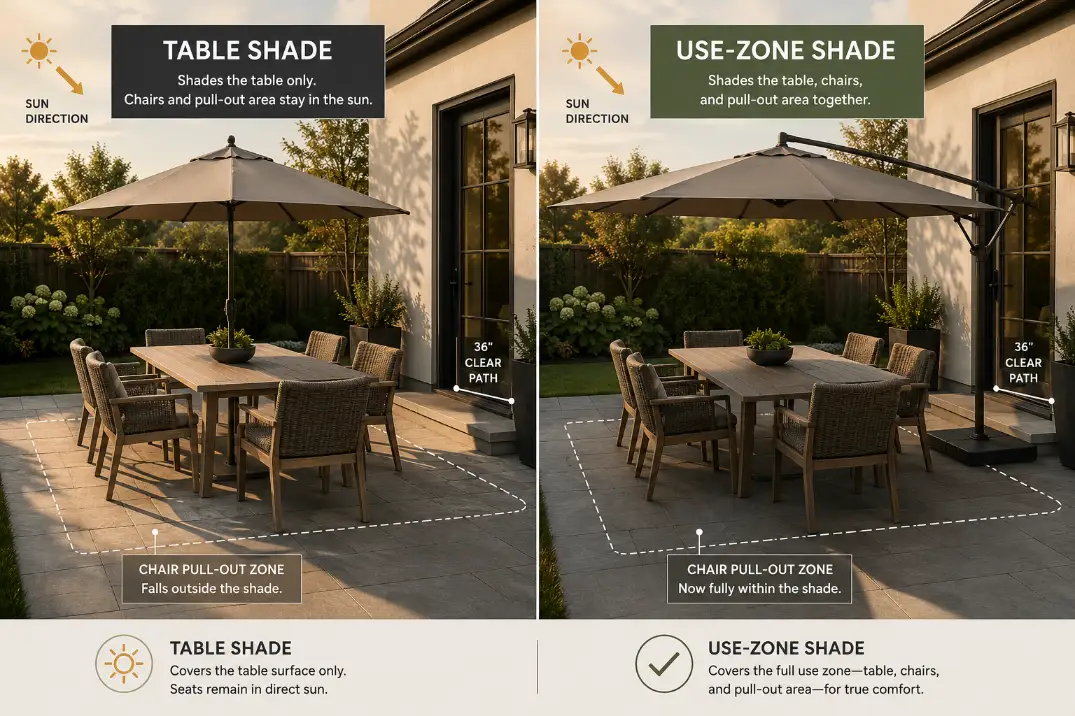
A dining table is not the full use area. Chairs slide back about 18 to 24 inches when people sit down, and a 6-person rectangular set may need a shaded footprint closer to 10 by 12 feet if the chairs are going to stay comfortable.
This is where many round umbrellas underperform. They shade the center of the table while the outer chairs sit in direct sun. A rectangular sail, offset umbrella, or wider awning usually fits dining layouts better because it shades the pull-out zone.
4 Smart Shade Ideas That Fix Common Patio Layout Problems
Some shade ideas look good in isolation but fail once chairs move, doors open, or the sun drops lower. These four are better because each one solves a specific patio problem without making the space harder to use.
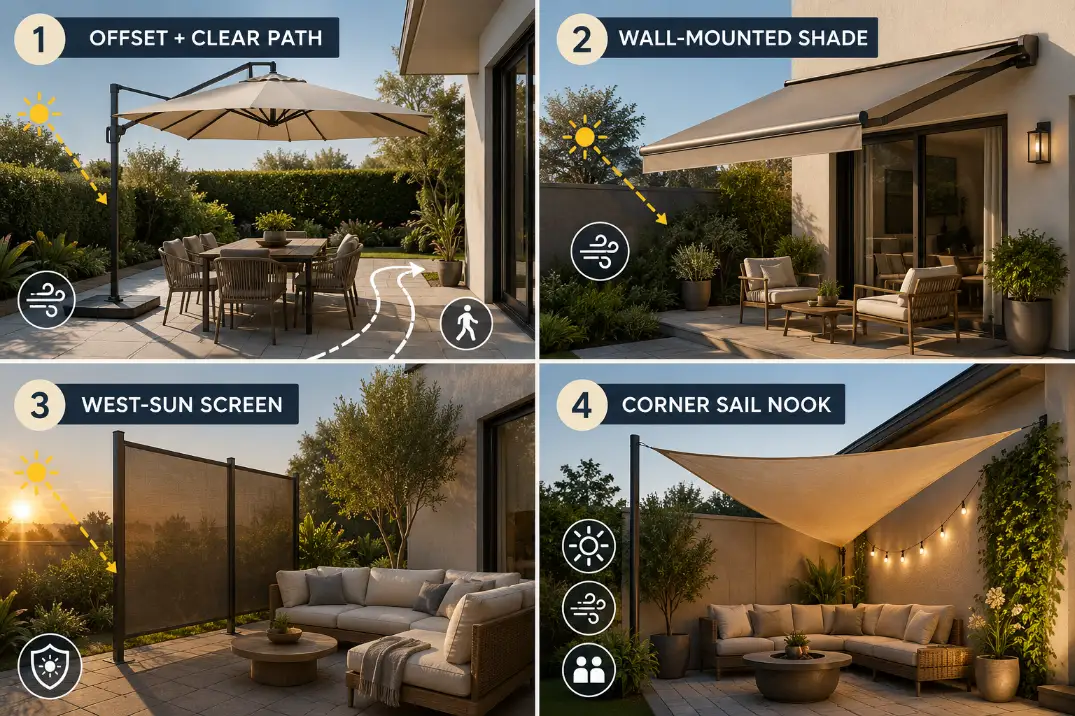
Offset umbrella outside the dining zone
This is one of the cleanest fixes for a patio where the chairs get hot but the umbrella base keeps ending up in the way. By pushing the support off to the side, you keep the dining footprint shaded while preserving a 36-inch walking path.
Wall-mounted shade over a door-side patio
When a patio sits tight against the house, a wall-mounted awning often works better than a freestanding umbrella. It keeps the floor open, reduces clutter near the door, and gives more usable coverage over compact dining or café seating.
Slim west-side screen for low sun
Low afternoon sun is where many patios fail. A narrow vertical screen, usually about 4 to 6 feet wide, can block glare and body-level heat much more effectively than adding more overhead cover. It is one of the smartest fixes when the patio already has some top shade.
Corner sail that creates a usable nook
Many patios have one hot corner that stays empty in summer. A properly tensioned corner sail can turn that dead edge into a lounge nook, reading spot, or morning coffee seat without crowding the main patio route.
Fabric, Color, and UV Performance Matter More Than Style
Breathable shade often feels cooler than waterproof fabric
Waterproof fabric sounds better, but it can hold heat if mounted low or stretched over a patio with poor airflow. Breathable shade cloth often feels better in dry heat because it blocks sun while still letting warm air escape.
Look for outdoor-rated fabric with strong UV resistance, not just a decorative textile. In high-sun regions such as Arizona, Nevada, inland California, and parts of Texas, weak fabric can fade or become brittle surprisingly fast.
Dark shade is often overestimated
Dark sails and umbrellas can look sharp, but they may visually weigh down a small patio and absorb more heat than lighter fabrics. A light or medium-toned canopy often feels better above dining or lounge furniture because it reduces glare without making the space feel boxed in.
The same logic applies below the canopy. If the patio still feels hot more than 90 minutes after the sun leaves, the surface and surrounding materials are part of the problem too.
Why Pretty Shade Often Fails in Real Use
Open pergola slats can miss the real sun angle
Open pergolas are one of the most overestimated shade ideas. They cast attractive striped shadows, but those shadows may not protect faces, cushions, or dining chairs during the late afternoon. If the sun drops below the beam line, the pergola can look shaded from above while people still sit in direct heat.
That does not mean pergolas are a bad idea. It means they usually need the right second layer: a canopy, adjustable louvers, vines, curtains, or a side screen. The fix depends on where the sun enters, not on making the structure heavier.
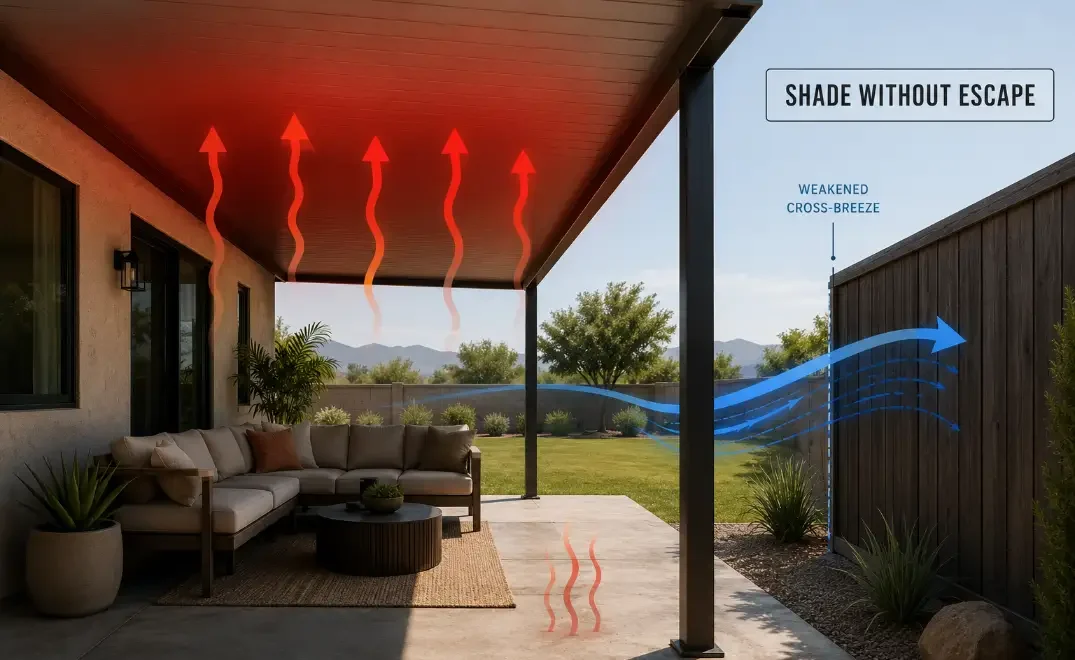
More roof can make the patio hotter
A covered patio can block direct sun and still feel stuffy when the roof is low, the sides are enclosed, or a fence sits close to the seating area. The symptom is shade. The mechanism is trapped heat.
The easiest comparison is nearby tree shade. If the patio feels hotter under a solid cover than under open tree shade, the structure is probably restricting air movement or holding radiant heat close to the seating area.
Before adding more panels or enclosure, it helps to understand why covered patios can trap heat.
Pro Tip: If a covered patio only feels usable with a fan running constantly, improve cross-breeze or reduce radiant heat before adding more enclosure.
The Anchor Points Decide Whether a Shade Sail Works
A sail is only as good as its tension
Shade sails are useful when you need broad coverage without a pole in the middle of the patio. They work especially well over narrow patios, dining zones, and side-yard seating areas. But a sail is not just fabric stretched between convenient corners.
It needs strong anchor points, proper tension, and enough slope to shed rain. A loose sail flaps in wind, sags after storms, and can dump water in the wrong place. Fence boards, weak fascia, and decorative posts are often not enough.
Wind exposure changes the recommendation
In windy yards, coastal areas, and open lots, retractable or rigid shade can be safer than large loose fabric. Lightweight umbrellas should be closed during gusts, and larger sails need hardware that matches the load.
This is where a routine DIY fix stops making sense. A small temporary sail for seasonal shade is one thing. A large sail stretched over a dining patio with house-mounted hardware, new posts, and regular wind exposure is closer to a structural project.
How to Choose Shade Without Making the Patio Harder to Use
Protect the walking route before adding coverage
Shade that blocks movement is not a successful fix. Umbrella bases, posts, guy lines, and low sail corners can make a patio feel more crowded than the heat ever did.
Keep the main route from the house to the yard clear. A 30-inch passage can work occasionally, but 36 inches is a better everyday minimum near sliding doors, steps, grills, and dining chairs.
If the shade base lands where people carry food or open the door, the setup will feel annoying even if it blocks sun. That is exactly why adding patio shade without blocking walkways matters more than many homeowners expect.
Use one strong shade move instead of several weak ones
A patio can become visually smaller when every problem gets its own object: one umbrella for the table, a screen for the west side, a curtain for glare, and a fan stand for airflow. The result may technically add shade but still make the patio feel cluttered.
For small backyards, one well-placed shade element usually beats three partial fixes. A properly sized cantilever umbrella, a retractable awning, or a clean sail layout can make the space feel calmer and more usable than a patchwork of temporary parts.
What Changes in Different U.S. Summer Conditions
Dry desert heat needs deeper shade and lighter surfaces
In desert climates, the patio may stay uncomfortable because the hardscape and walls store heat. Deep shade, light-colored surfaces, planted edges, and UV-rated fabric matter more than decorative coverage.
Misters can help in dry air, but they are not a universal fix. If wind blows mist away or hard water leaves residue on furniture, shade and surface cooling will matter more.
Humid heat needs airflow more than enclosure
In Florida, the Gulf Coast, and other humid parts of the Southeast, shade without air movement can feel heavy. Open-sided shade, ceiling fans, breathable fabric, and mildew-resistant materials usually outperform low enclosed covers.
Windy and coastal yards need stronger hardware
In exposed plains, mountain foothills, and coastal yards, wind should shape the shade choice. Retractable awnings, louvered pergolas, and properly engineered posts are often smarter than large loose sails or lightweight umbrellas left open all day.
Cold-winter regions need seasonal planning
In northern states, fabric may need to come down before snow and ice arrive. A shade idea that works beautifully in July can become a maintenance problem by January if it was never designed for winter loads.
4 Premium Shade Ideas That Make Hot Patios Feel Cooler, Not Just Darker
The best ideas do more than cast a shadow. They reduce stored heat, improve comfort during the late afternoon, or solve a problem that standard shade usually misses.
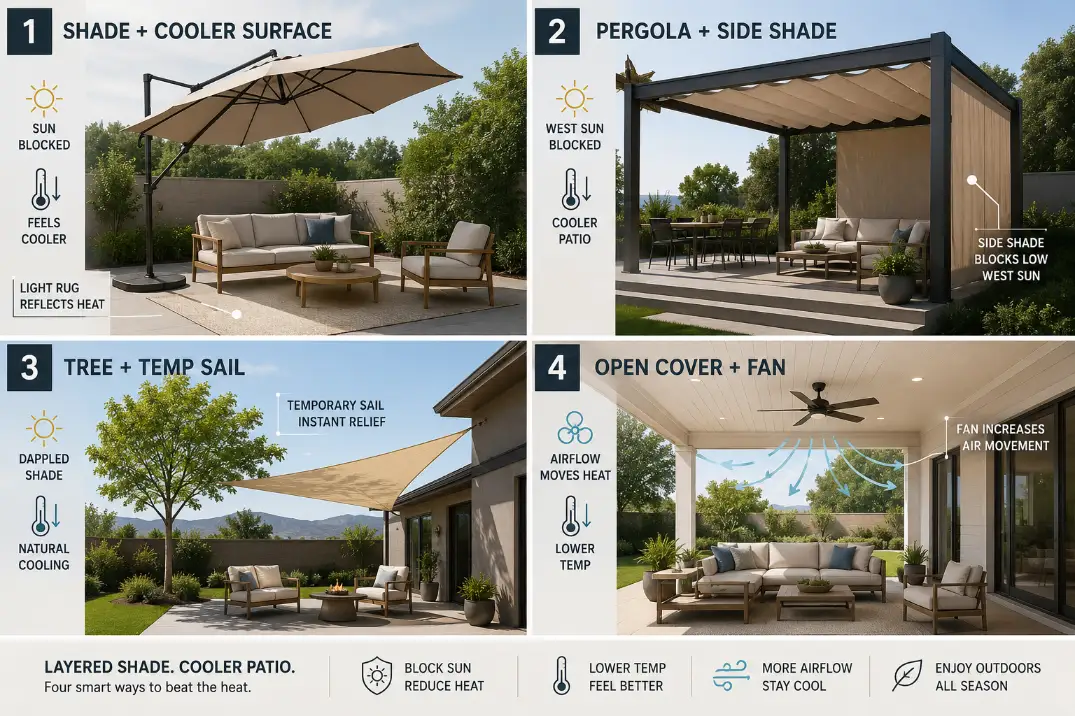
Shade plus a lighter surface reset
Sometimes the patio stays hot even after the sun moves because the slab is still radiating warmth. Pairing a cantilever umbrella with a light outdoor rug is a simple upgrade that reduces glare, softens underfoot heat, and makes the shaded zone feel more complete.
Pergola plus one movable side layer
A pergola alone often misses late-day sun. A better version adds a retractable canopy or louvers overhead and a movable side curtain or drop shade on the hot west edge. That combination gives flexibility without fully enclosing the patio.
Young tree plus temporary sail bridge
This is one of the most practical long-view ideas. Plant the tree where it can eventually cool the patio, then use a temporary sail or umbrella while it matures. It solves the “I need shade this summer, but I want real cooling long term” problem better than choosing only one approach.
Open cover plus fan over the lounge zone
On covered patios that feel stuffy, the smarter move is often not more roof but better airflow. An open-sided cover with a fan placed directly over the lounge zone can make the patio feel noticeably better in humid heat, especially when the seating is otherwise already shaded.
Best Overall Choices by Priority
| Priority | Best choice | Why it ranks first |
|---|---|---|
| Best overall for most hot patios | Tilting cantilever umbrella | Fast, adjustable, and avoids a center pole |
| Best for west-facing sun | Side screen plus overhead shade | Blocks low sun that overhead shade misses |
| Best for small patios | Wall-mounted awning | Keeps the patio floor clear |
| Best budget fix | Market umbrella plus light rug | Solves shade and surface glare quickly |
| Best permanent upgrade | Pergola with canopy or louvers | Adds structure and real shade when designed well |
| Best long-term cooling | Shade tree plus temporary cover | Improves the whole microclimate over time |
The most common wrong choice is jumping straight to a pergola because it looks permanent. For hot patios, the best first choice is usually the one that solves the actual sun angle with the least bulk.
When Standard Shade Stops Working
The patio is surrounded by heat sources
If the patio is boxed in by a stucco wall, privacy fence, dark pavers, artificial turf, and gravel beds, shade alone may not create comfort. The sun is only one heat source. Reflected and stored heat can keep the space uncomfortable into evening.
A practical threshold: if the seating area still feels hot more than 90 minutes after direct sun leaves, the problem is broader than canopy coverage.
Add cooling through lighter materials, planted buffers, open edges, and better air movement. If the setup is already starting to feel crowded, it is worth seeing how some patio shade setups make a patio feel smaller.
The afternoon sun is low and direct
Low western sun is the hardest patio condition because it slips under rooflines and pergola beams. In that case, overhead shade is not enough. You need a vertical or angled layer: outdoor curtains, roller shades, a slatted screen, tall planters, or a tilted sail.
Do not block the whole view if only one sun angle is the problem. A 4- to 6-foot-wide side screen placed correctly can do more than enclosing the entire patio.
The patio needs long-term cooling, not just a temporary shadow
Trees are the strongest long-term cooling layer because they shade the ground, nearby walls, and surrounding air. But they are not a fast fix. A young shade tree may take 5 to 10 years to make a major difference over a patio, depending on species, climate, and starting size.
Quick Shade Decision Checklist
- Mark the sun edge at 3 p.m., 4 p.m., and 5 p.m. before buying shade.
- Shade chair backs, lounge seats, and leg areas, not just table centers.
- Keep at least 36 inches open for doors, steps, and main walkways.
- Use side-angle shade when west sun hits below the roofline.
- Avoid low solid covers if the patio already lacks cross-breeze.
- Choose breathable, UV-rated fabric for hot exposed patios.
- Stop adding portable fixes when bases, poles, and screens start crowding daily use.
Questions People Usually Ask
What is the fastest shade fix for a hot patio this summer?
A tilting cantilever umbrella is usually the fastest useful fix because it can shade the seating area without putting a pole in the middle of the table. For narrow patios, a temporary side screen or small sail may work better if the afternoon sun comes in low.
Is a pergola enough shade for a hot summer patio?
A pergola is enough only when the slats, canopy, vines, or louvers block the sun during the hours the patio is used. Open slats often look attractive but still allow late-day sun to hit chairs and cushions.
Should shade cover the whole patio?
Not always. It is usually smarter to shade the dining and lounge zones first, then leave enough open space for airflow, plants, and movement. Full coverage can be expensive and may feel hotter if it traps air.
Are trees better than umbrellas or awnings?
Trees are better for long-term cooling, but they are slow. Use umbrellas, sails, or awnings for this season, then plant trees where they can eventually shade hard surfaces and reduce stored heat.
For broader official guidance on reducing heat with shade and vegetation, see the U.S. Environmental Protection Agency.