
A covered patio traps heat when the cover blocks sunlight but the layout blocks heat release. The usual failure pattern is a low solid roof, one or more closed sides, dark hardscape, and furniture or screens interrupting the breeze path.
Before adding another fan, shade panel, or misting line, check three things: whether air moves at seated height, whether warm air has a high exit path, and whether the floor stays warm more than 2 hours after direct sun leaves.
A patio that feels 8–15°F hotter than the nearby yard in late afternoon is usually dealing with stored heat and stalled air, not just “too much sun.” That distinction matters because extra shade can make the problem worse if it closes the space even more.
Why Covered Patios Trap Heat
Shade solves one problem: direct solar exposure. It does not automatically solve radiant heat, poor ventilation, or hot air collecting under a low roof. A covered patio can look comfortable and still perform badly because the uncomfortable part is often invisible.
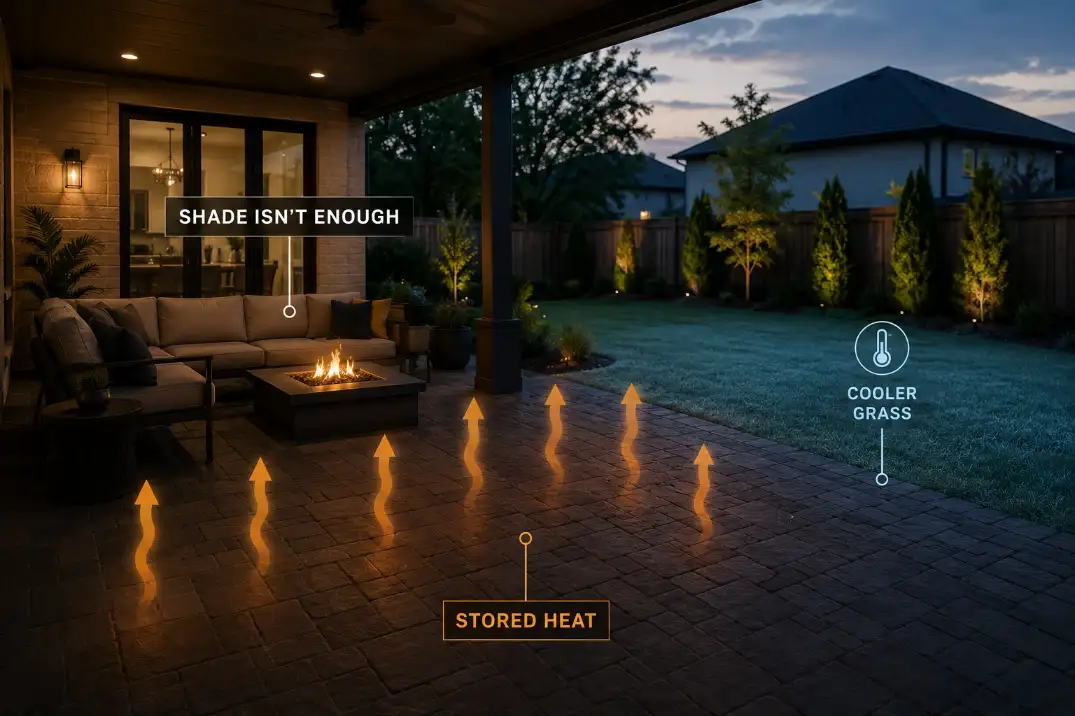
Shade Reduces Sun, Not Stored Heat
Concrete, brick, stone, porcelain pavers, dark composite decking, and nearby walls can absorb heat for hours. Once the sun angle changes, those surfaces release heat back into the covered zone.
If the roof prevents direct sun but the floor and walls are already warm, the patio still feels heavy and slow to cool.
This is why a shaded patio can feel worse than an open patch of lawn nearby. Grass and planting beds cool faster. Dense hardscape holds heat longer.
If the patio floor still feels warm to the back of your hand 2–3 hours after sunset, the surface is part of the heat problem.
The Bigger Issue Is Often Side Blockage
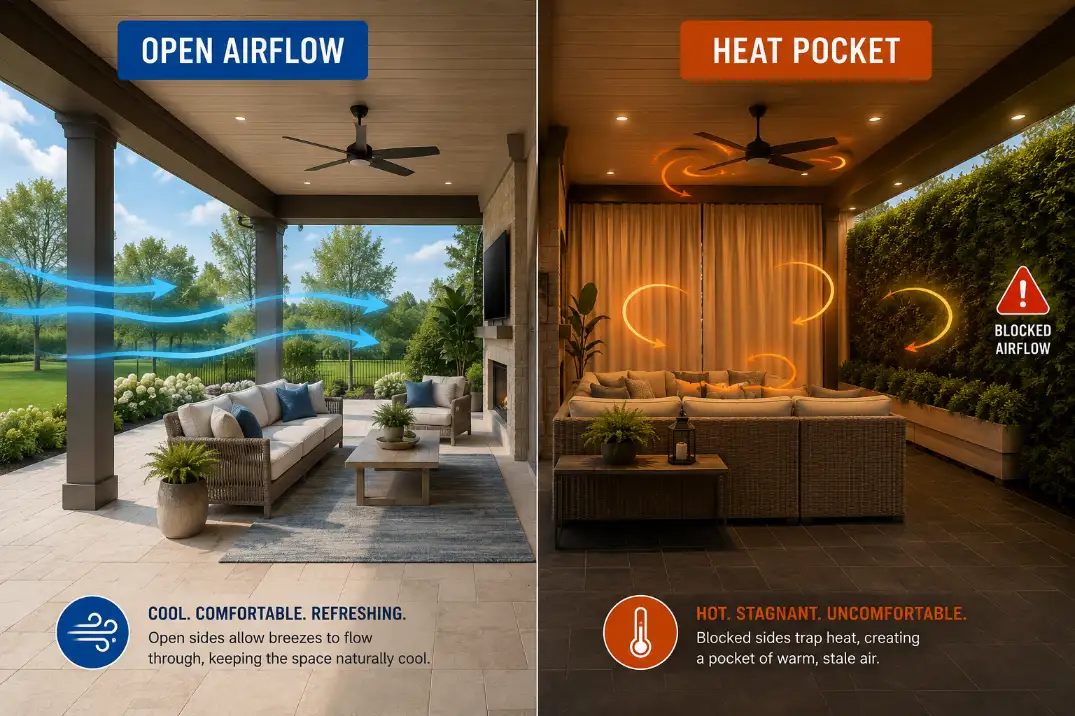
A solid roof is not automatically the villain. The more common failure is a covered patio with only one weak air path. A house wall on one side, a fence on another, tall hedges on the third, and curtains across the opening can turn a shaded outdoor room into a heat pocket.
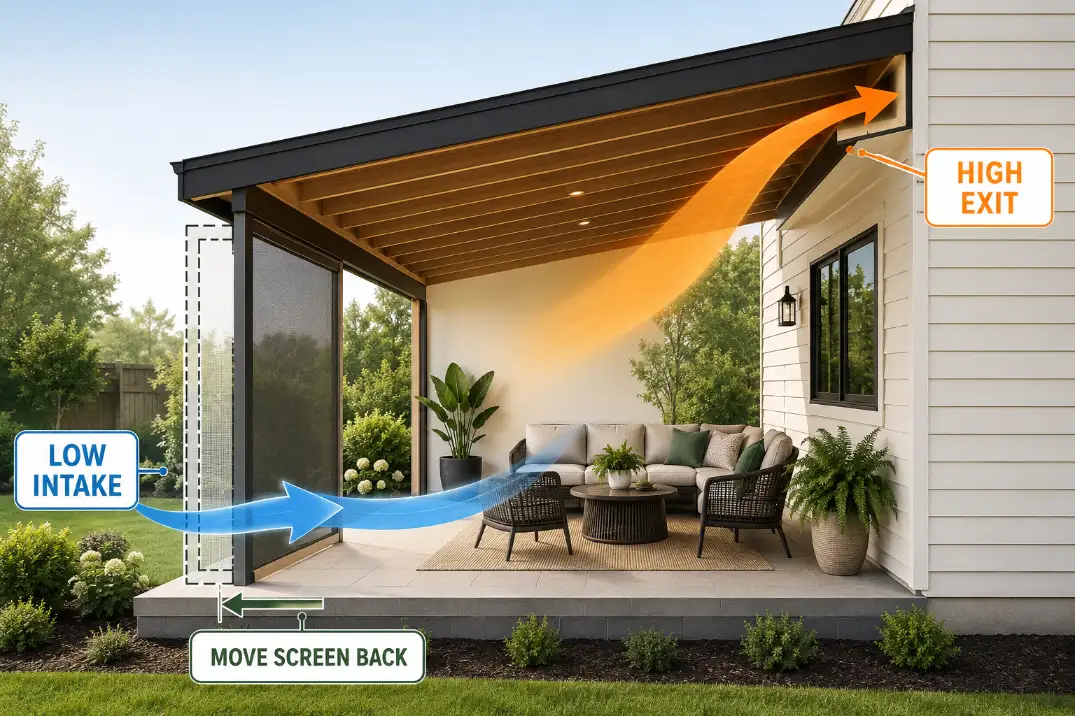
A healthier setup usually has at least two open sides or one open side plus a higher escape path for warm air.
The same principle shows up in broader backyard layout shade and seating airflow decisions: shade and comfort only work together when the seating, wind path, and surrounding barriers are planned as one system.
Quick Diagnostic: Which Heat Problem Do You Have?
Use the symptom pattern before spending money. A bigger fan, more shade, or new furniture only helps if it addresses the right failure.
| What you notice | Most likely main cause | First thing to test |
|---|---|---|
| Hot during direct overhead sun, better after sunset | Overhead radiant heat from the cover | Check roof color, insulation, and ceiling warmth |
| Still hot more than 2 hours after sun leaves | Stored heat in floor, walls, or pavers | Compare patio floor temperature with nearby lawn or mulch |
| Comfortable when curtains are open, hot when closed | Blocked cross-breeze | Open the windward side or replace solid barriers |
| Fan runs but people still feel hot | Air misses the seated zone | Test airflow 24–36 inches above the floor |
| Heat spikes during cooking | Grill or outdoor kitchen heat load | Move cooking heat toward an open edge |
| Patio feels heavy in humid weather | Poor evaporation and stagnant air | Prioritize airflow before misting |
The most useful test is the evening comparison. If the patio stays noticeably warmer than the adjacent yard after the sun is gone, the main issue is probably stored heat plus poor release.
If it cools quickly once curtains or screens are opened, side blockage is the stronger clue.
What People Usually Misread
They Blame the Roof Before the Sides
Low, solid roofs can absolutely contribute to trapped heat, especially when they are flat, dark, or tightly boxed in. But many patios feel hot because the sides are sealed more than because the roof exists.
A privacy screen that feels harmless in spring can become the reason the patio feels airless in July. The same goes for roll-down shades, tall planters, storage benches, and outdoor curtains. These features often block the exact breeze direction the patio needs most.
This is where cosmetic signals can mislead. A shaded table, neat curtains, and a fan overhead all suggest comfort. The decision-useful signal is different: can air actually move through the seating zone?
They Overestimate Ceiling Fans
Ceiling fans improve perceived comfort by moving air across skin. They do not lower the actual air temperature on an open patio. If a fan is too high, too small, or centered over the wrong area, it may stir warm air near the ceiling while people remain uncomfortable below.
For most covered patios, the test should happen at seated height. If you cannot feel air movement around chest height while sitting, the fan is not doing enough where comfort matters.
A 52-inch fan may handle a modest 10-by-12-foot seating zone, but a larger patio often needs two airflow zones instead of one decorative fan in the middle.
Pro Tip: Tape a light ribbon under the fan path at chair height. If it barely moves, the problem is coverage, not just fan speed.
The Cover Itself Matters, But Not Always the Way People Think
The roof design matters most when it either radiates heat downward or prevents warm air from escaping. Solid covers, pergolas, insulated panels, transparent panels, and louvered systems all behave differently, but none of them fix a patio that is sealed at the sides.
Low, Flat, and Boxed-In Is the Bad Combination
A low flat cover holds warm air close to people. If the cover is attached tightly under a house eave and boxed in around the edges, hot air has no easy high exit. That is different from a taller open cover with exposed rafters or side gaps near the top.
This is why two solid-roof patios can feel completely different. A 9-foot ceiling with open sides may be comfortable. A 7-foot-6-inch low cover with curtains and a fence nearby can feel stuffy even with the same amount of shade.
Insulation Helps Overhead Heat, Not Stagnant Air
Insulated patio roof panels can reduce radiant heat from above, especially under metal or aluminum covers that get hot during peak sun. That can be a real improvement if the ceiling itself feels warm.
But insulation does not create airflow. If the patio feels hot mainly when screens are down or the air is still, insulated panels may make the roof more comfortable while leaving the heat pocket intact.
That is a common point where a routine upgrade stops making sense: when the main problem is ventilation, not overhead heat.
For a deeper look at this failure pattern, covered patio ventilation mistakes can help separate structural air problems from surface and furniture issues.
Transparent Covers Can Act Like a Greenhouse
Clear or translucent patio covers can create a different kind of heat problem. Polycarbonate, acrylic, glass, and clear PVC panels may block rain while still allowing enough solar energy through to heat the floor, furniture, and walls below. The patio may feel “covered” but not truly shaded.
This matters most when the cover faces south or west, or when afternoon sun passes through the roof and lands on dark paving.
If the floor heats up under a transparent cover, the space can behave more like a small greenhouse than a shaded patio.
In that case, the fix is not just ventilation; it may also require a tinted panel, shade fabric above or below the cover, or a material that reduces solar gain.
Pergolas and Louvers Release Heat Better
Pergolas and louvered covers usually release heat better than fully solid, boxed-in covers because they leave more openings above. The tradeoff is weaker rain protection and, depending on sun angle, less complete shade.
Adjustable covers are strongest when conditions change through the day. If the patio needs morning sun, afternoon shade, and evening airflow, a fixed solid cover may be less useful than a louvered or retractable setup.
The goal is not maximum shade at every hour. It is the right balance of shade and release during the hours people actually use the space.
| Patio cover type | Heat risk | Best use case |
|---|---|---|
| Low solid cover | Can trap warm air if sides are blocked | Patios with open edges and a high escape path |
| Aluminum cover | May feel hot overhead if uninsulated | Works better with insulation and steady airflow |
| Insulated panel cover | Reduces overhead radiant heat | Best when the ceiling itself feels warm |
| Transparent cover | Can heat the patio like a greenhouse | Better where sun exposure is limited or tinted |
| Pergola | Releases heat well but gives partial shade | Good for airflow-first patios |
| Louvered cover | Balances shade and venting | Best where conditions change by hour |
Fixes That Often Waste Money
The most common wasted fix is adding more shade to a patio that is already shaded during the hours you use it. Extra shade cloth, heavier curtains, and deeper screens may reduce glare, but they can also slow air movement. If the patio already has solid shade for 4–6 peak-use hours, more shade is usually not the first fix.
Misters are another fix people buy too early. In dry Arizona heat, mist can help if air moves freely and evaporation happens quickly. In humid Florida or Gulf Coast conditions, a misting line on a still covered patio may wet furniture before it improves comfort.
Once relative humidity is above roughly 60–65%, evaporation slows enough that misting becomes less dependable.
A bigger fan can also disappoint. If the windward side is blocked by curtains, hedges, or a solid privacy panel, a larger fan may only circulate trapped warm air. Fix the air path first, then improve fan coverage.
Replacing furniture is a lower-priority fix unless the furniture physically blocks the opening. A sectional with a high back across the breeze path matters. Chair fabric color usually matters less. If the space also feels cramped, covered patio furniture layout around doors and posts is a useful way to sort heat problems from movement problems.
Fixes Worth Trying in the Right Order
The best fix order starts with air, then stored heat, then equipment, then structure. That sequence prevents spending money on upgrades that only treat symptoms.
Free: Reopen the Air Path First
Find the side where air naturally enters the yard during the hottest use window. Stand on the patio in late afternoon and notice whether the breeze usually arrives from the side yard, driveway side, open lawn, pool side, or fence line. The first side to open is usually the windward side, not necessarily the side with the most sun.
Open curtains on that side, move tall planters, pull storage benches away from openings, and trim dense hedges back 12–18 inches from the patio edge. Give the change at least one hot afternoon and evening before judging it. If the patio cools faster or feels less heavy with the same amount of shade, airflow was the missing piece.
Low Cost: Reduce Heat Where People Sit
If the floor stays warm into the evening, reduce the amount of heat radiating into the seating zone. A lighter outdoor rug, lighter furniture, shade on the exposed patio edge earlier in the day, or replacing a dark accent wall can help.
Do not jump straight to replacing the whole patio surface unless it has other problems too, such as slipperiness, cracking, drainage issues, or difficult maintenance. If the surface itself is the obvious heat source, patio surfaces that get too hot in summer is the better next diagnostic path.
Mid Cost: Improve Fan Coverage and Adjustable Screening
Use outdoor-rated fans only. Damp-rated fans are generally for protected covered areas where moisture is present but direct rain is not. Wet-rated fans are safer where rain can reach the fixture.
Fan placement should match the use zones. A dining area, lounge area, and grill edge may not all be served by one central fan. If people only feel airflow when standing near the middle of the patio, the fan is placed for the ceiling, not for comfort.
Adjustable screening is often better than permanent screening. Slatted panels, movable planters, and roll-down shades that can stay open during hot, still periods preserve flexibility.
High Cost: Change the Cover Only When the Structure Is the Limit
Structural changes make sense when the cover is low, flat, fully solid, and boxed at the edges, and when airflow fixes do not change comfort after several hot days.
Possible upgrades include insulated panels, a higher cover, vented edge details, a louvered system, or a redesigned roof connection.
This is the point where more accessories stop making sense. If warm air has no high exit path, the patio may need a structural release path rather than another product.
What Changes by Climate
Climate changes which part of the heat trap matters most. The basic diagnosis stays the same, but the first fix may shift.
Dry Desert Heat
In Arizona, Nevada, and inland Southern California, radiant heat from hardscape and walls often dominates. Lighter surfaces, earlier shade on west-facing edges, and open airflow usually matter more than enclosing the patio for protection. Misters can help in dry air, but only if the space is ventilated.
Humid Southern Heat
In Florida, the Gulf Coast, and much of the Southeast, still air is usually the bigger comfort problem. Sweat evaporates slowly, so the patio feels heavy even when shaded. Air movement at seated height matters more than adding water. This is where closed curtains and dense privacy planting can make a shaded patio feel worse.
Coastal and Inland California Behave Differently
A covered patio near the California coast may stay comfortable with partial shade and filtered airflow because marine air and cooler evenings help release heat.
Move the same setup inland, especially into valleys with hot afternoon sun, and the hardscape may hold heat much longer. In those conditions, a west-facing transparent or solid cover can need both better ventilation and better solar control.
Seasonal Midwest and Northern Conditions
In the Midwest, Northeast, and northern states, the same patio setup may work in spring and fail in July. Wind protection that feels pleasant in April can block needed airflow in August. Adjustable screens, removable panels, and seasonal furniture placement usually outperform permanent side enclosure.
Questions People Usually Ask
Does a covered patio always need a fan?
No. A covered patio with two open sides, a taller cover, and lighter surfaces may be comfortable without one. A fan becomes more important when the patio is attached to the house, bordered by fences, or used during humid weather.
Are outdoor curtains a bad idea?
Not if they are adjustable. Curtains are useful for low-angle sun and privacy, but they should not stay closed across the windward side during hot weather. If opening them changes comfort within 15–30 minutes, they were part of the heat trap.
Is a pergola cooler than a solid patio cover?
Sometimes. A pergola or louvered cover usually releases warm air better, but it may provide weaker shade and less rain protection. The cooler option depends on whether your main problem is direct sun, trapped air, or stored heat from hard surfaces.
Do clear patio roof panels make the space hotter?
They can. Clear or translucent panels may block rain while still allowing solar energy to heat the floor and furniture below. If the patio feels bright, enclosed, and hot even with a roof overhead, the cover may be acting more like a greenhouse than a shade structure.
When is rebuilding the cover worth it?
Rebuilding starts to make sense when the cover is low, unvented, tightly boxed in, and still uncomfortable after airflow, fan placement, and surface heat have been addressed. If several lower-cost changes fail across multiple hot days, the structure itself may be limiting comfort.
Bottom Line
A covered patio that traps heat is usually not failing because it lacks shade. It is failing because shade was added without enough air movement, heat release, and surface control.
Start by opening the breeze path at seated height and giving warm air a way out. Then address dark surfaces, transparent covers, and misplaced fans.
Save major roof changes for patios where the structure itself prevents heat from escaping.
For broader official guidance on how built surfaces store and intensify outdoor heat, see the US Environmental Protection Agency heat island resources.