Last updated: June 19, 2026
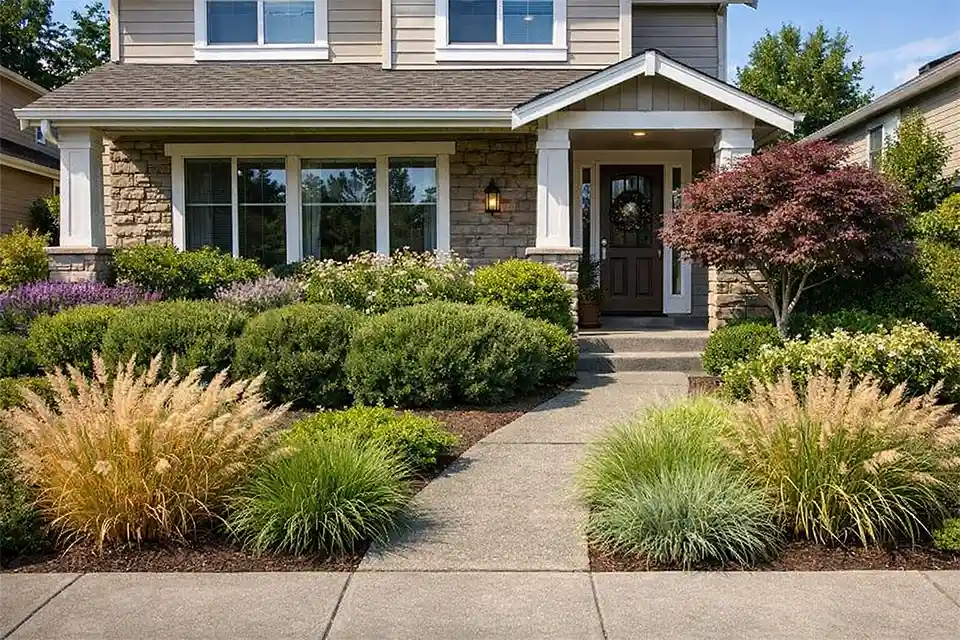
The best front yard privacy landscaping usually does not come from closing the whole yard off. It comes from placing the right amount of screening where people naturally look first — across front windows, porch openings, and driveway sightlines — while keeping the rest of the entrance open enough to still feel welcoming.
That is why fences are not the only answer, and often not the most attractive one. In many front yards, layered planting at the right height and depth does more useful privacy work than one continuous barrier.
If someone standing on the sidewalk can see straight into your front windows from about 20 to 35 feet away, the problem is usually not a lack of more plants everywhere. It is that the yard is still visually open in the wrong place.
Start with three checks. Measure the planting depth you actually have. If it is under 4 feet, a dense hedge is already less likely to be the right answer. Then figure out whether the exposure happens through front windows, across a porch, or along a driveway opening.
Finally, decide whether privacy matters only in summer or all 12 months, because a front yard that feels screened in June can look completely exposed from November through March.
What separates a strong front-yard privacy plan from a weak one is restraint: enough planting to interrupt the view that matters, enough openness to keep the house inviting, and enough depth to let the screen mature without turning into a constant trimming job.
The front-yard privacy formula that works most often
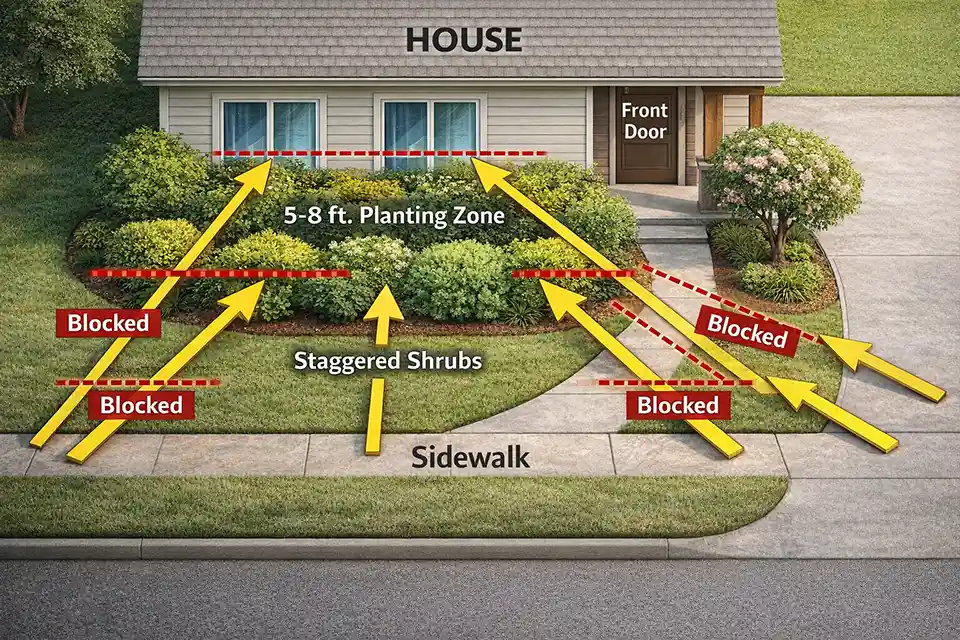
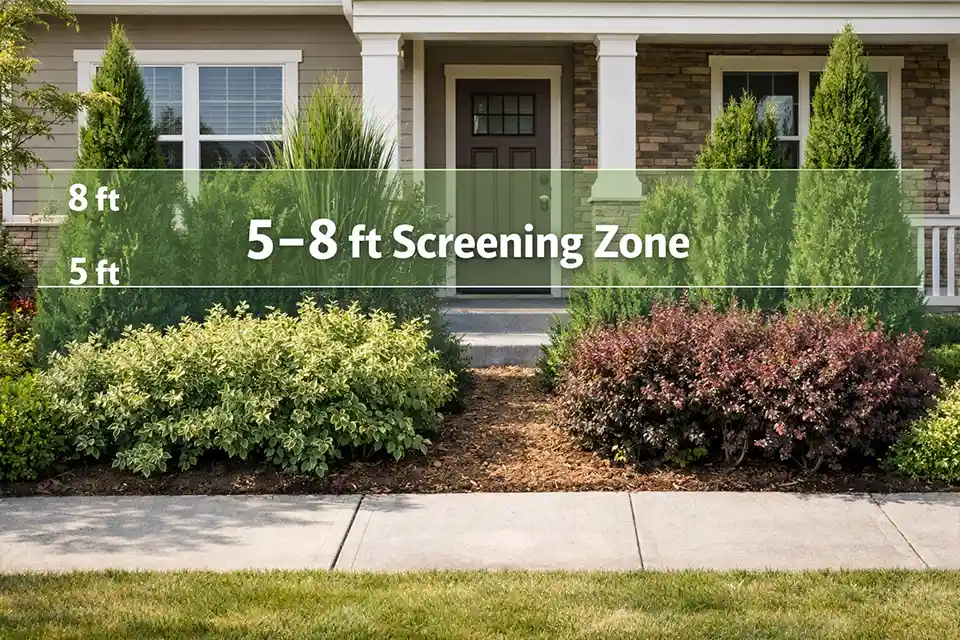
The most reliable front-yard privacy setup is usually not a single row of fast-growing shrubs. It is a layered privacy band placed where exposure is actually worst, often with about 5 to 8 feet of depth in the part of the yard doing the real screening work.
That does not mean every front yard needs a deep planting bed across the full frontage. It means the privacy zone needs enough depth somewhere to stack plants in layers instead of asking one thin row of shrubs to solve everything on its own.
In practice, that usually means low planting near the front edge, a denser 3- to 5-foot layer where sightlines pass through, and taller structural plants used more selectively near exposed windows, corners, or angled views. In most front yards, that middle layer does the hardest and most useful work.
People tend to overestimate tall plants because they sound more private on paper. In reality, privacy usually improves faster when the planting holds density at eye level rather than only adding height above it.
That same pattern becomes even more obvious in Front Yard Privacy Driveway Open to Street, where exposure often breaks down first at the opening rather than across the whole lot. It also shows up differently in Front Yard Privacy Sidewalk Bike Lane Traffic, where moving sightlines create a different problem than a quiet street does.
| Layer | Typical height | Main job | Best use |
|---|---|---|---|
| Low edge planting | 18 to 30 inches | Softens the front edge without closing it off | Front edge and along walkways |
| Mid-layer shrubs or grasses | 3 to 5 feet | Blocks the most important eye-level sightlines | Main privacy zone |
| Taller shrubs or small trees | 6 to 10 feet | Softens direct views into windows and exposed corners | Near windows, corners, and side angles |
| Open transition zone | Kept visually clear | Preserves access, openness, and a welcoming entry | Front walk and driveway edge |
What people usually get wrong first
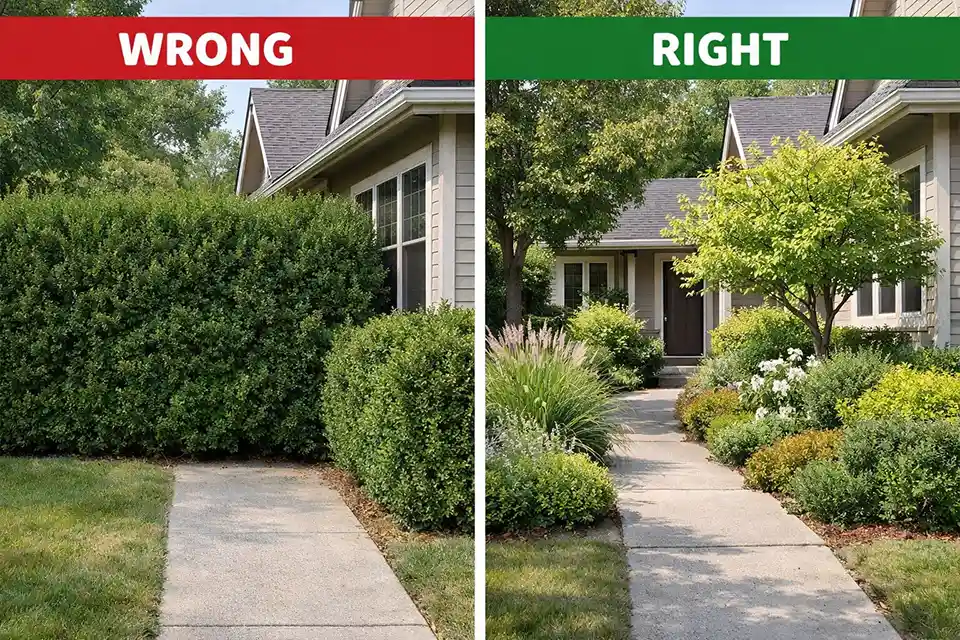
A front yard can stay visually open from the street and still feel much more private if the critical view into the house is interrupted. One of the most common mistakes is assuming openness and exposure are the same thing. They are not. You do not need a green wall across the whole property to create privacy. You need to block the view that matters most, which makes this a design problem rather than a plant-count problem.
Another mistake is trying to plant privacy evenly instead of strategically. Front yards are rarely exposed in one flat, front-facing way. More often, the real problem comes from an angle — along a driveway approach, across a corner-lot frontage, or from the sidewalk into one particular window. In those situations, one dense shrub grouping near the porch corner often does more useful work than a long, thinner row spread evenly across the lot.
That is why Front Yard Privacy No Setback and How to Create Front Yard Privacy When Your House Sits Directly on a Busy Street Corner solve a different version of the same problem. The shared issue is not “not enough plants.” It is exposed geometry. If the goal is to add privacy without making the entry feel closed off, this guide on front yard privacy that still looks welcoming explains how to block key sightlines while keeping the yard open and inviting.
For a softer alternative to heavier screening, tall planters for driveway privacy can work especially well in open front-yard layouts.
The fix that wastes the most time
The single biggest time-waster is usually a tight row of fast-growing hedge plants. It sounds efficient, promises quick coverage, and often feels like the obvious answer. But in front yards, it tends to fail in predictable ways. Height usually comes faster than useful density, so you can get 2 to 3 feet of top growth in one season and still have thin lower screening exactly where the view needs blocking most.
It also tends to outgrow the strip it was planted in. A bed that is only 3 feet deep cannot comfortably absorb a plant that eventually wants 5 to 7 feet of width. What looks like a privacy solution on planting day often turns into a shaping problem by the next growing season. Then maintenance becomes the real project. Instead of creating a cleaner privacy plan, the hedge turns into a shearing routine every few weeks during active growth.
That is where Front Yard Fast-Growing Hedges belongs in the conversation, but not as the default answer. Speed only helps when the plant also fits the bed, holds density at the right height, and does not make the entry feel pinched.
People also tend to overestimate how much a straight hedge line can solve in driveway-heavy yards. If most of the frontage is hardscape, privacy usually has to happen in concentrated pockets rather than in one continuous strip. That is why Front Yard Design Constraints When a Large Driveway Takes Up Most of the Front Yard is often more relevant here than generic screen-plant advice.
Pro Tip: Before planting, place two stakes in the proposed bed and run string at 4 feet and 6 feet high. Then stand on the sidewalk and at the curb cut. That quick test reveals whether the planting is solving the real view or just looking like it should.
Where the privacy planting should actually go
Usually closer to the problem than people expect.
If the front windows are the main issue, the most effective planting is often associated with the house rather than pushed all the way to the front property line. If the porch feels exposed from one side, a concentrated planting mass near that approach usually works better than a balanced design that spreads everything evenly. Front-yard privacy works best when it is targeted.
That is also why scenario pages matter. Fix Front Yard Privacy Windows Facing Busy Road fits homes where interior exposure is the real problem. How to Create Front Yard Privacy on a Busy Walking Route is more useful when repeated close-range foot traffic is what makes the yard feel exposed. Front Yard Privacy Problems Near Schools Parks or Bus Stops matters when the issue is concentration of people rather than simple visibility.
A practical threshold helps here. If the planting zone is under 3 to 4 feet deep, hedge logic usually starts to break down. If you can only fit one layer without crowding the walk, the answer is often not “denser shrubs.” It is “more selective screening.”
When a hedge-only plan stops making sense
There is a point where the standard privacy fix no longer earns the maintenance it creates. That point usually comes when the yard is shallow, the lot is narrow, the driveway takes up too much frontage, or the front walk needs to stay visually open for the house to feel inviting. In those situations, a full hedge often solves the privacy problem too crudely.
It may screen some views, but it can also reduce light, tighten circulation, and make the front yard feel heavier than it needs to. This is where Front Yard Design Problems on Narrow Lots becomes relevant, because narrow lots leave less room for deep layered planting and make placement much more important.
The same tradeoff shows up in Front Yard Design Ideas for Suburban Homes, where the real challenge is often balancing privacy with curb appeal instead of choosing one over the other.
A good rule of thumb is simple: if a shrub would eventually need to sit with more than half its mature width hanging into a walkway, driveway edge, or house clearance zone, it is the wrong plant or the wrong location. That is the point where repeated trimming stops being a small adjustment and starts proving the layout never really fit.
A better way to think about this topic
The most useful distinction is simple: the symptom is “people can see in.” The mechanism is that the front yard is not interrupting views at the right height, depth, and angle.
Once that becomes clear, a lot of bad advice falls away. You stop chasing the tallest plants. You stop assuming privacy has to run evenly across the whole frontage. You stop treating fast growth as the same thing as fast screening.
And you start making better decisions about where the privacy band belongs, how deep it needs to be, and which parts of the yard should stay visually lighter.
That broader logic also connects naturally to adjacent design problems. Front Yard Landscaping Ideas for Curb Appeal matters because privacy that hurts the front entrance usually feels wrong.
How to Layer Plants in Front Yard Landscaping matters because layering is not just styling here. It is the mechanism that makes privacy work without a fence.
Final take
The best front yard landscaping for privacy without fences does not try to imitate a fence. It works by placing the right amount of plant mass where the exposure actually happens, holding the most useful screening in the 3- to 6-foot range, and leaving the rest of the front yard open enough to still feel like an entrance rather than a barrier.
A strong plan does not block everything evenly. It interrupts the views that matter most, keeps the entry welcoming, and gives the planting enough depth to mature without turning into a constant trimming problem.
For broader official guidance on layered privacy planting, see the University of Maryland Extension guide to mixed privacy screens.