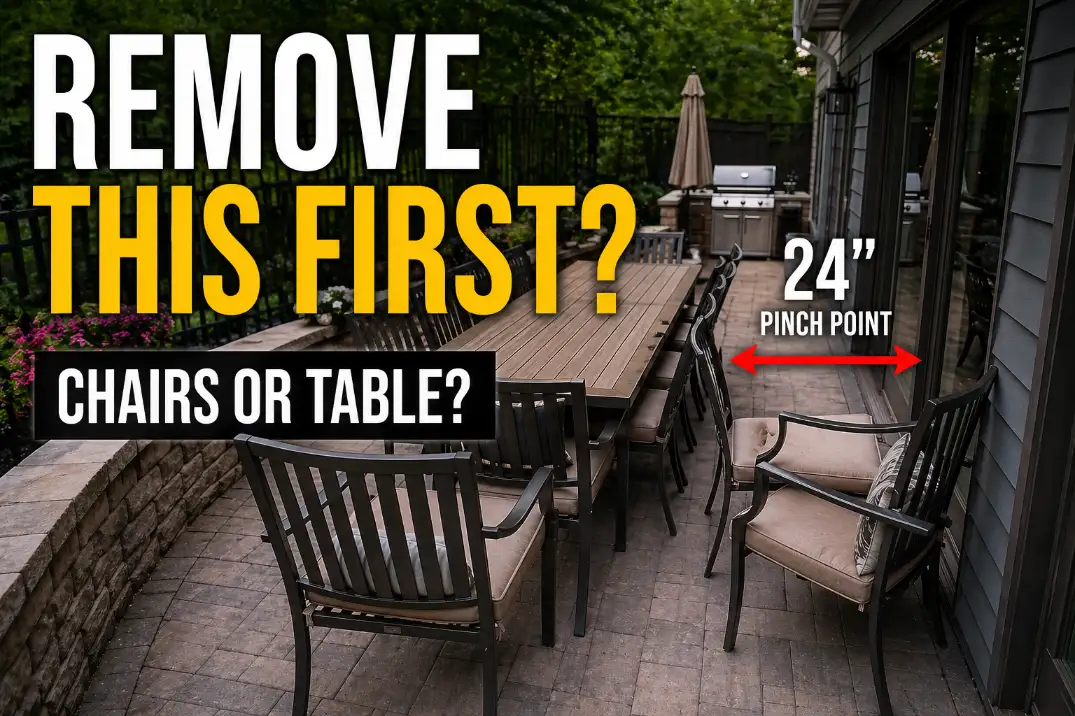
If patio furniture makes the space feel cramped, do not start by removing the piece you use least. Start with the piece that blocks movement most.
In most small patios, that means extra dining chairs first, then the table, then bulky deep seating if the lounge zone is the real offender.
The quick test is simple: walk from the door to the main seat with every chair pulled out as if someone is sitting. If the path narrows below 30 inches, or you have to turn sideways for more than 3–5 seconds, the furniture is not just visually crowded—it is interrupting use.
A few planters or a rug may make the patio look busy, but they rarely create the same failure. The real issue is usually chair pull-back space, table footprint, or seat depth.
The 3-Minute Removal Test
Pull the chairs out before judging the layout
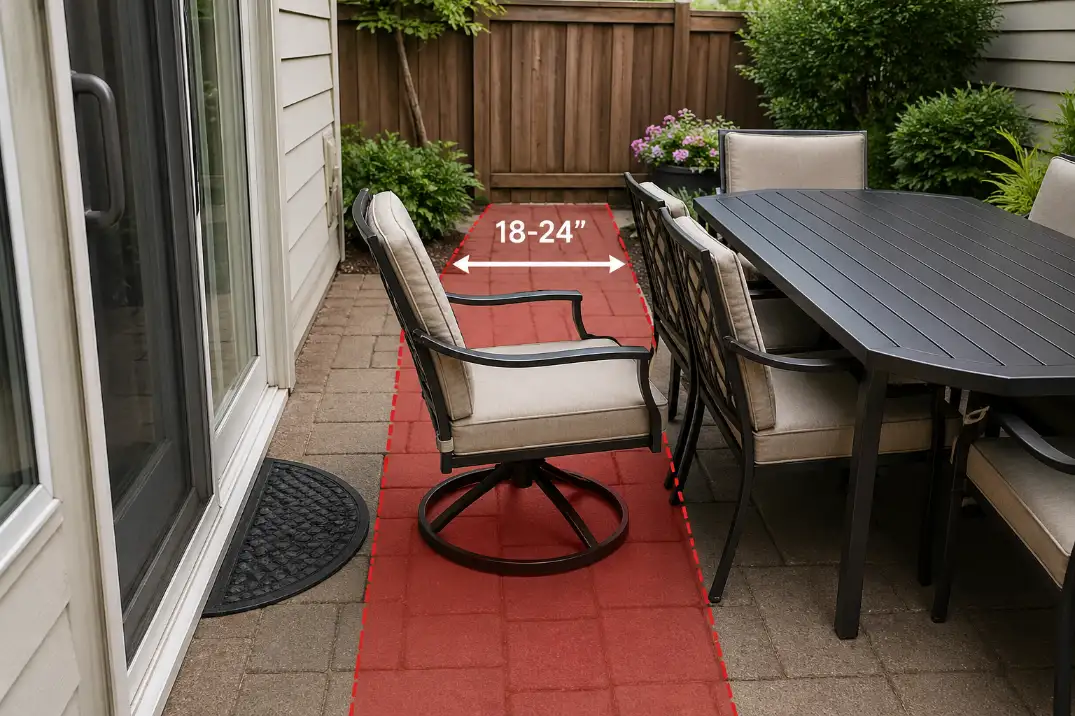
A patio can look acceptable when every chair is tucked in. That is not the real layout. Pull each dining chair out 18–24 inches, then check the walking path again.
If a chair now blocks the route from the door, grill, steps, or lounge seat, that chair is the first removal candidate.
This is where many homeowners misread the problem. They see a crowded patio and blame “too much furniture,” but the symptom is crowding. The mechanism is movement conflict.
Find the narrowest pinch point
Measure the tightest pass-through, not the open-looking area in the middle. A patio can have one generous corner and still function badly if the route beside the table drops to 22–26 inches.
A healthier small patio keeps the main route near 30–36 inches. A failing layout forces people to slide around furniture, lift chairs, or avoid part of the patio entirely.
Pro Tip: Judge the patio during normal use, not after cleaning. A layout that only works when every chair is perfectly tucked in does not really work.
Remove Extra Chairs First
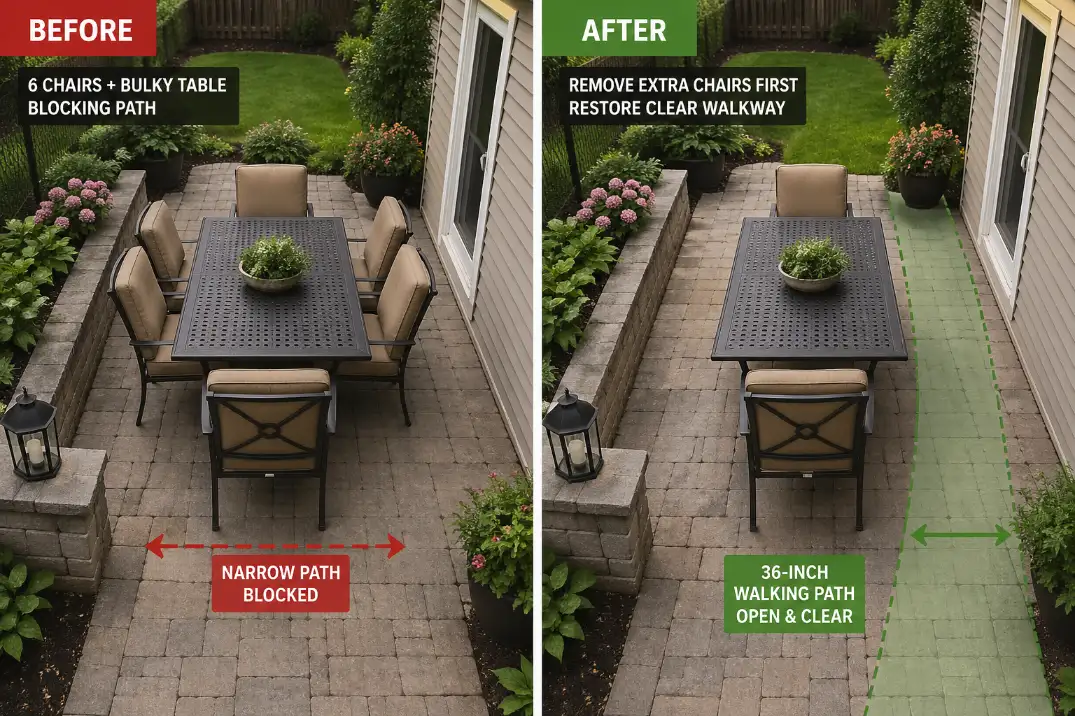
Extra chairs usually give the fastest improvement because they take up space twice: once while stored and again when pulled out. Removing just one or two chairs can restore 12–24 inches of usable movement space without eliminating the dining function.
This is especially important if your patio dining set was chosen for occasional guests instead of daily use. A six-chair set may sound practical, but if four people use the patio most weeks, the extra two chairs are charging rent every day for a party that happens a few times a year.
If your dining area already feels tight, the spacing logic in How Much Space a Patio Dining Set Really Needs is more useful than the advertised seat count on the furniture label.
Do not remove small decor first
Lanterns, pillows, a compact side table, or one planter may make the patio look busier, but they usually do not change the route. Removing them might reduce visual clutter by 5–10%, but it rarely fixes a blocked walkway.
That is the fix that often wastes time: tidying small things while the biggest obstruction stays in place.
When the Table Has to Go Next
If the patio still feels tight after removing extra chairs, the table may be too large for the footprint.
A dining table becomes the main problem when:
- It occupies more than 50% of the patio width
- Chair clearance leaves less than 30 inches on one side
- People must rotate their shoulders to pass
- The table interrupts the route to the house, grill, or steps
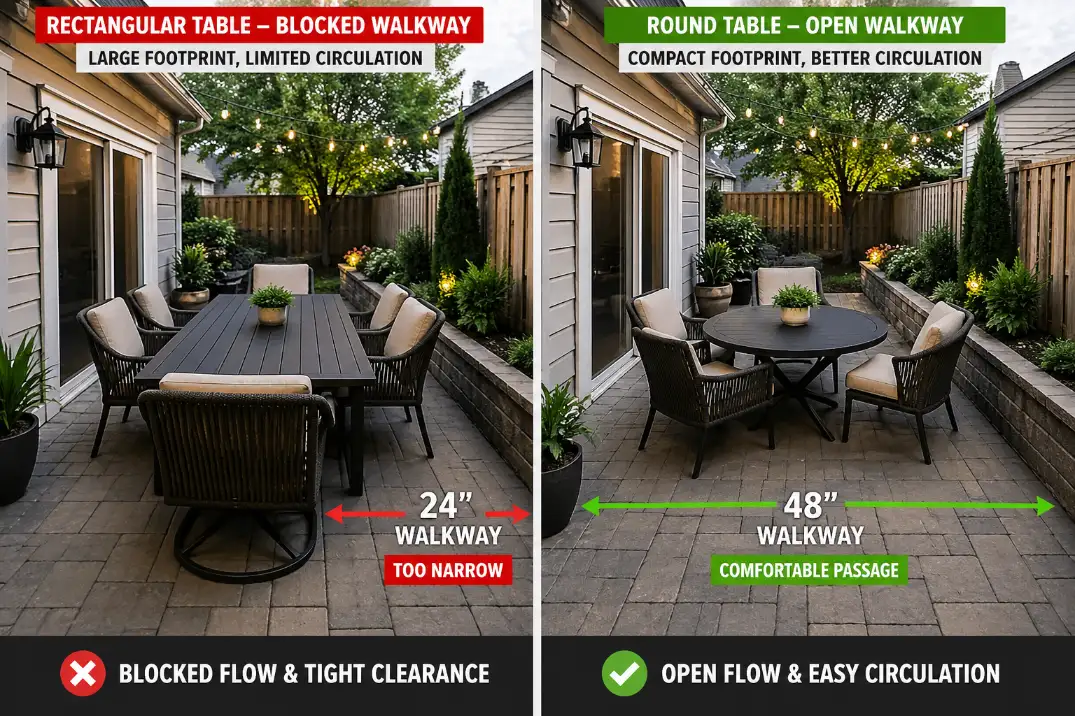
Rectangular tables are often the worst offenders in narrow patios because they create long edges that act like barriers. A round or square table can sometimes keep the same dining function while shortening the obstruction line. That is why table shape matters as much as seat count in tight layouts, especially when comparing options like those in Best Patio Table Shapes for Small Spaces.
The common overestimate
People often overestimate how much dining capacity they need. A six-seat table that gets used at full capacity twice a season may not be worth making the patio feel cramped for six months of warm-weather use.
The better question is not “How many people could I seat?” It is “How many people use this patio most of the time without moving furniture?”
When Deep Seating Should Be Removed First
Deep seating moves ahead of dining furniture only when the lounge zone is the piece blocking circulation. This happens most often on patios trying to serve as both dining room and living room.
Watch the depth:
- Compact lounge chairs often sit around 28–32 inches deep
- Deep seating can reach 36–40+ inches
- Sofas with thick back cushions may push even farther into the usable zone
That extra depth creates dead space behind and beside the furniture. It may look comfortable in a showroom, but on a small patio it can turn one side of the layout into a wall.
If your patio feels cramped even without a large dining table, the issue may be the kind of bulk explained in Why Deep Seating Makes Small Patios Harder to Use.
What to Remove First by Situation
| Patio problem | Remove first | Why it works |
|---|---|---|
| Chairs block the path when pulled out | 1–2 extra chairs | Fastest way to regain movement space |
| Table dominates the center | Oversized dining table | Fixes the main footprint problem |
| Lounge area feels heavy and unusable | Deep chair or bulky sofa | Removes hidden depth and dead zones |
| Patio looks busy but still moves well | Decor only after testing | Solves visual clutter, not movement |
| Dining and lounging compete | Duplicate seating type | Reduces overlap between zones |
This is where small patio mistakes become expensive. Buying slimmer decor will not fix a patio where the wrong primary furniture piece is doing the damage. The same pattern shows up in The Biggest Patio Furniture Mistakes in Small Backyards.
When Removal Is Better Than Rearranging
Rearranging stops making sense when every version keeps the main walkway under 30 inches. At that point, you are not solving the layout—you are choosing where the frustration happens.
A real improvement should do at least one of these:
- Restore a 30–36 inch walking path
- Remove 15–20% of the occupied floor area
- Reduce chair pull-back conflict
- Make one route usable without moving furniture
If none of those happen, the patio may look refreshed for a day, then feel cramped again during the next meal.
The better storage move
Extra chairs do not have to live on the patio full-time. Stackable chairs, folding chairs, or two backup chairs stored in a garage, shed, or deck box can preserve guest seating without sacrificing everyday comfort.
This is one of the cleanest fixes because it does not require buying new furniture. It simply separates daily layout from occasional hosting.
When Built-In Seating Becomes the Smarter Fix
If you remove extra chairs and the table still feels wrong, the problem may be that freestanding furniture needs too many gaps. Each piece requires clearance around it. Built-in seating can reclaim some of that wasted space.
A bench along a wall or fence can save roughly 12–18 inches of depth compared with freestanding chairs because it does not need rear pull-back space. In some tight layouts, it can also increase practical seating without adding more loose pieces.
This does not mean every patio needs built-ins. It means built-ins start making sense when the standard fix—smaller chairs, tighter arrangement, minor decor edits—no longer changes the movement pattern. For that decision point, When a Patio Needs Built-In Seating Instead of More Chairs is the more useful next step.
Quick Diagnostic Checklist
Use this before buying anything new:
- Main walkway is below 30 inches
- Chairs need 18–24 inches of pull-back and block the route
- One table takes over more than 50% of the usable width
- Deep seating reaches 36–40 inches into the patio
- You move furniture more than once during a normal meal
- The patio works visually but fails when people sit down
If two or more are true, remove a major obstruction before adjusting decor.
The Bottom Line
The first thing to remove is not the least attractive piece. It is the piece that steals movement.
For most cramped patios, remove extra chairs first. If the path still fails, reduce the table footprint. If dining is not the problem, look at deep seating depth. Small decor comes later, and only if the patio already moves well.
Do not buy your way out of a movement problem. Cramped patios usually do not need a new style. They need one honest subtraction.
For broader official guidance on clear movement space, see the ADA Standards for Accessible Routes.