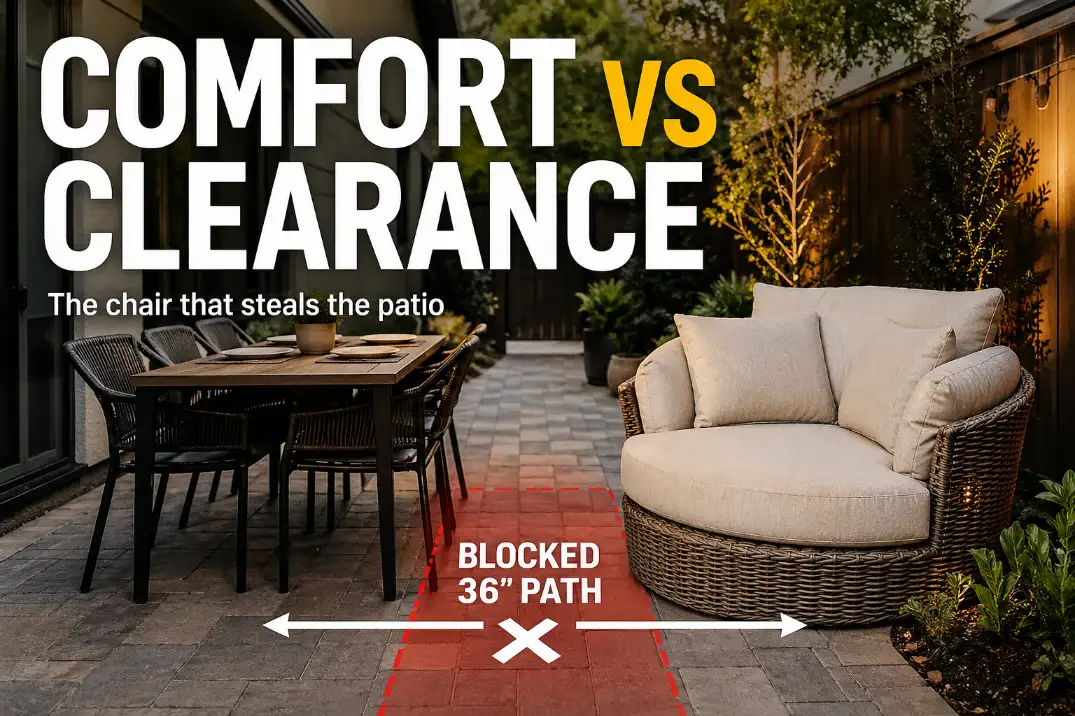
Choosing outdoor seating for dining and lounging is less about finding the softest set and more about protecting movement.
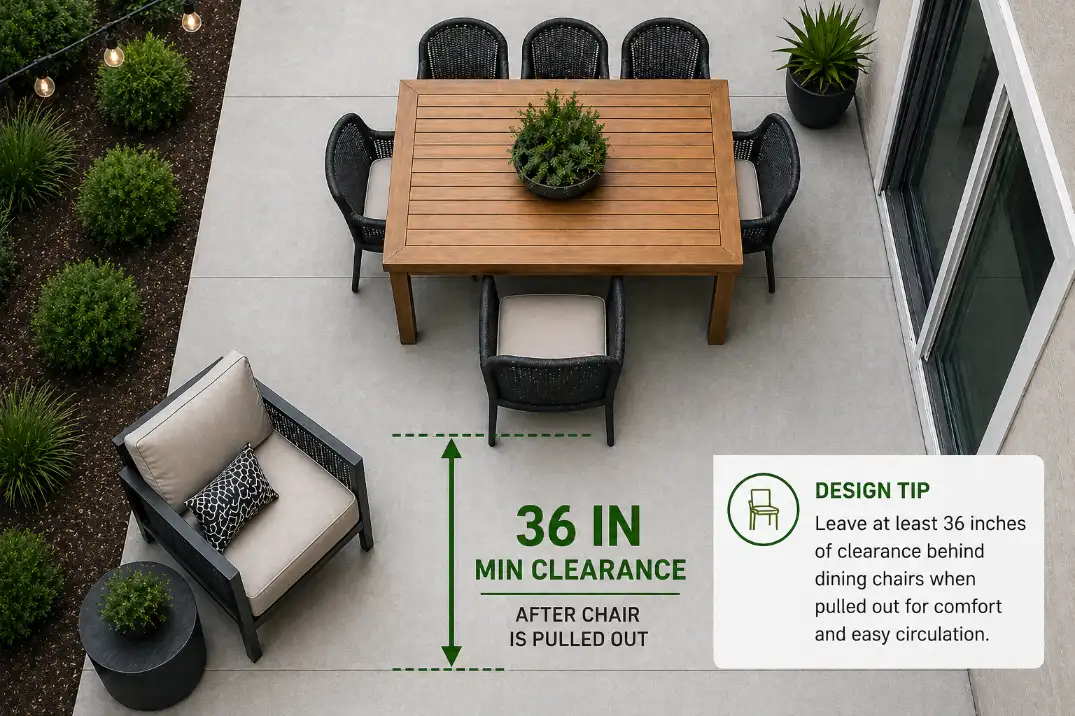
Start with three checks: can dining chairs pull out 24–30 inches, can people still walk through a 30–36 inch path, and does lounge seating stay out of the serving route? If any of those fail, the patio will feel crowded even if every piece technically fits.
The clearest threshold is furniture coverage. A mixed-use patio usually feels healthiest when furniture covers about 40–55% of the surface. Once seating, tables, and side pieces push past about 60%, the space often starts to feel staged rather than usable.
That is different from a patio that is simply small. A small patio can work well. A patio with the wrong seating depth, chair pullback, and traffic path cannot.
Start With the Use That Happens Most
A patio used for both dining and lounging does not need two equal zones. That is where many layouts go wrong. It needs one main job and one secondary job that does not interfere.
If you eat outside twice a week, choose dining first
If outdoor meals happen at least two times per week during the season, the dining area should lead. That does not always mean buying a larger table. It means protecting the table’s working space.
A 42-inch round table may sound compact, but with chairs pulled out, it can need close to 8 feet of usable depth. Around dining furniture, 36 inches of surrounding clearance is the safer target when the patio allows it; 24 inches may work for occasional use, but it feels tight once people are seated.
Before choosing the chairs, check whether the table shape is helping or wasting space. The guide to best patio table shapes for small spaces is useful when the table feels right in size but wrong in movement.
If evenings matter more, choose lounge posture first
If the patio is mostly used for coffee, reading, drinks, or after-dinner conversation, lounge comfort deserves priority. But that still does not mean oversized deep seating.
For a mixed-use patio, a seat depth around 22–25 inches often works better than extra-deep frames near 30 inches. The deeper chair may feel better for the first 20 minutes, but it can make eating awkward, block the walkway, and make the patio harder to reset.
The Patio Size Reality Check
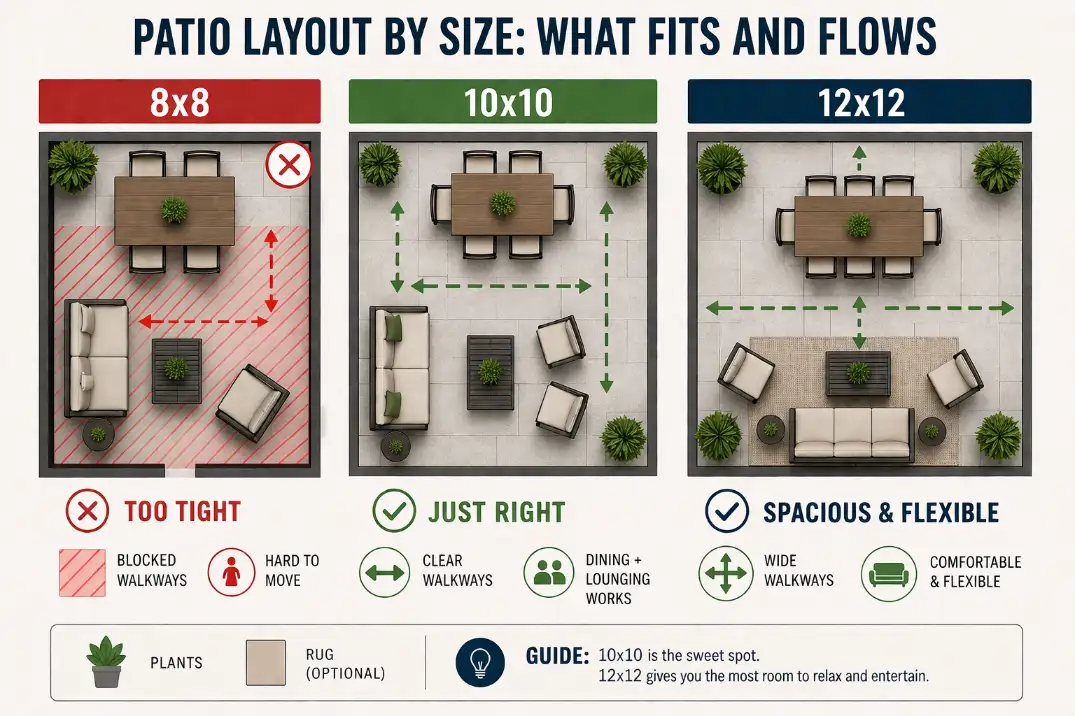
Most mixed-use seating mistakes happen before style is even considered. The patio size sets the limit.
| Patio size | Better seating priority | What usually fails |
|---|---|---|
| 8×8 | Bistro table, tuck-in bench, or two flexible chairs | Separate dining and lounge zones |
| 10×10 | Four-seat dining setup with one slim lounge accent | Deep loveseat plus full dining set |
| 12×12 | Clear dining anchor with one or two lounge seats | Oversized sectional crowding the table |
| Narrow balcony-style patio | Linear bench, armless chairs, or nesting side tables | Wide arms and round coffee tables |
| Large open patio | Separate zones with a clear path between them | Floating furniture with no circulation plan |
The mistake is not wanting both dining and lounging. The mistake is treating both as full-size zones on a patio that only has room for one full-size function.
The Seating Mix That Usually Works Best
The safest mixed-use layout is a compact dining anchor with one relaxed edge. That might be a four-person table with a slim lounge chair, a dining bench, or two upright club chairs nearby.
Four dining seats plus one relaxed seat is the best default
For many 10×10 to 12×12 patios, this balance works better than a complete dining set plus a complete conversation set. It gives the patio a main purpose without making the space feel overfurnished.
A bench can help because it tucks closer to a wall, railing, or fence than individual chairs. It also reduces the constant chair-pullback problem.
The tradeoff is comfort: benches are better for casual meals and overflow seating than long lounging. If the choice is between benches and separate chairs, bench seating vs patio chairs gives the more practical comparison.
Full dining plus deep seating is the risky version
A six-person dining set and deep loveseat may fit on a measuring tape, but the patio can still fail once people sit down. The real warning sign is simple: if two adults cannot pass each other without turning sideways, the seating plan is too crowded.
That is a more useful test than whether the furniture fits inside the slab dimensions.
What People Usually Misread First
The first misread is seat count. Six seats are not better than four if two of them are awkward, blocked, or only usable after moving something else.
Cushions change the usable size
Outdoor cushions add visual and physical bulk. Thick backs, wide arms, angled legs, and loose pillows can make a chair feel several inches larger than its listed frame.
They also affect usability after weather. In humid parts of the Southeast, thick cushions may stay damp for 24 hours or longer if airflow is poor.
In dry Arizona heat, dark metal arms can become uncomfortable fast in direct afternoon sun. In coastal California or the Carolinas, corrosion resistance matters more than a slightly softer cushion.
A chair that is wet, too hot, or hard to store is not really available seating.
Deep seating is often the wrong luxury
Deep seating is valuable when lounging is the patio’s main job. It becomes a liability when the patio also needs to serve meals.
The symptom is a crowded patio. The mechanism is lost clearance. A deep chair does not just occupy its own footprint; it pushes the sitter’s knees, the coffee table, and the walking path farther into the center of the patio.
That is why a “more comfortable” piece can make the whole space less comfortable. The guide on why deep seating makes small patios harder to use explains that pattern more directly.
Match the Seat to the Meal
Not every patio meal needs formal dining chairs. But low lounge seating is rarely a clean substitute for real dining height.
| Seating type | Best use | Watch-out |
|---|---|---|
| Standard dining chair | Regular meals | Needs 24–30 inches of pullback |
| Dining bench | Flexible family meals | Less comfortable for long sitting |
| Upright club chair | Drinks and casual plates | May be too low for standard tables |
| Loveseat | Conversation zone | Can dominate compact patios |
| Stackable chair | Guest overflow | Often less relaxing |
| Armless chair | Tight layouts | Less supportive for long lounging |
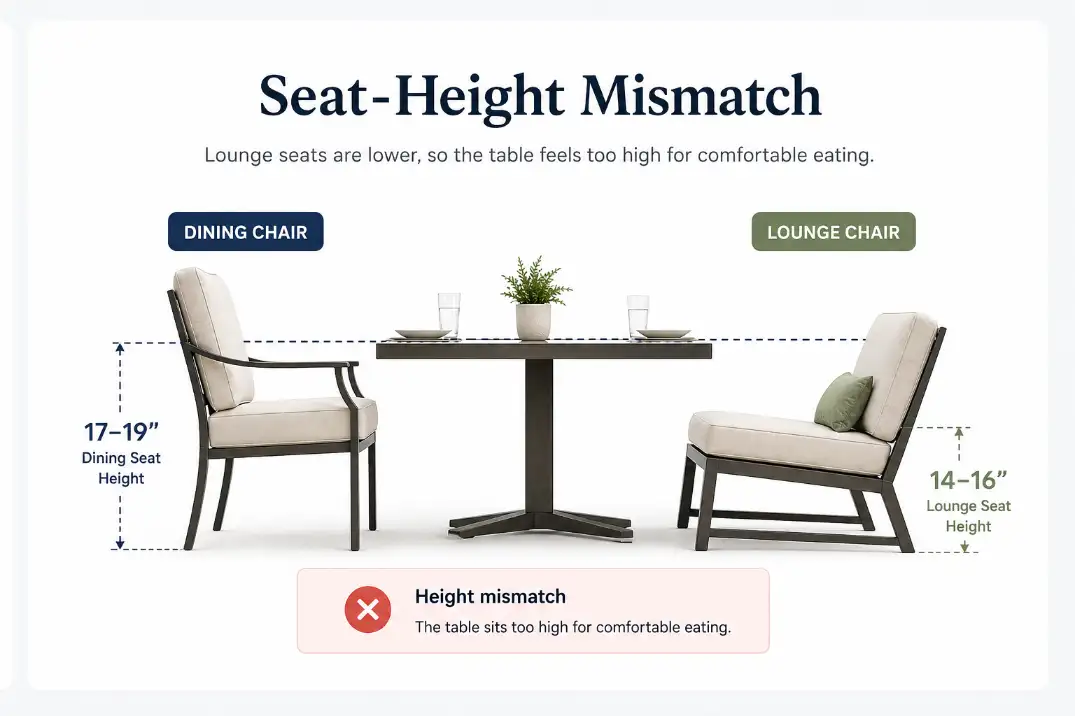
Seat height matters more than people expect. Dining seats usually work best around 17–19 inches high. Many lounge seats sit closer to 14–16 inches. That 2–4 inch difference can make a normal dining table feel too high.
Pro Tip: If one chair has to do both jobs, choose an upright outdoor lounge chair with a dining-height side table instead of forcing a low deep chair to work at a standard table.
Flexible Seating Beats Permanent Crowding
The best mixed-use patios often use fewer permanent pieces and better backup pieces. This is where many buyers make the wrong upgrade. They add a compact conversation set when what the patio really needs is seating that appears only when needed.
Choose pieces that tuck, stack, fold, or nest
Stackable dining chairs, foldable bistro chairs, nesting side tables, and tuck-in benches are more useful than they look because they preserve open space on ordinary days.
A nesting table can replace a coffee table without permanently occupying the center of the patio. A foldable chair can handle guests without forcing the layout to serve guests every day.
This matters most on patios used differently across the week: dinner on Friday, coffee on Saturday morning, two extra guests once a month. Permanent furniture should serve the weekly pattern, not the rare maximum crowd.
Do not let occasional guests design the patio
A patio that seats eight poorly is usually less useful than a patio that seats four well and has two overflow options. This is especially true in Midwest climates where seasonal rain, storage, and winter protection affect how much furniture people actually want to manage.
If dining is still the main function, start with a set scaled for real meals rather than improvising with lounge pieces. The guide to best outdoor dining sets for small patios helps when the table needs to stay central but the footprint has to stay controlled.
When the Hybrid Layout Stops Working
A dining-and-lounging patio works only while both uses remain easy. Once the patio is under about 8 feet in one direction, a true two-zone layout usually stops making sense.
Smaller furniture is not always the fix
Buying smaller versions of everything often creates more clutter, not more comfort. A tiny table, tiny sofa, tiny coffee table, and tiny side chairs can produce too many legs, too many edges, and no clean path.
This is where a routine fix stops making sense. If the patio cannot keep a 30-inch open route after chairs are pulled out, the answer is not usually another compact set. The answer is choosing one dominant use and making the other flexible.
The Better Buying Order
Do not buy the most comfortable chair first. Buy in the order that protects how the patio works.
First, choose the table or main seating anchor. Second, mark the chair pullback zone. Third, protect the walkway. Fourth, add lounge seating only if the remaining open space still works. Fifth, decide whether extra seating should be permanent or occasional.
On a 12×12 patio, that may mean a round dining table plus two slim lounge chairs along one edge. On a 10×10 patio, it may mean a square or round table with a bench and two chairs, plus a side table instead of a coffee table.
The layout examples in what outdoor furniture fits on a 10×10 patio show why the same furniture list can behave very differently in a tighter square.
The best layout is not the one with the most seats. It is the one where chairs pull out cleanly, people can walk through without turning sideways, and nobody has to move furniture just to sit down.
Questions People Usually Ask
Can one patio set work for both dining and lounging?
Yes, but only if the seats are upright enough for eating and relaxed enough for sitting after the meal. Dining-height lounge chairs, cushioned benches, and compact club chairs usually work better than low deep sofas.
Is a sectional a good idea for a dining patio?
Usually not on smaller patios. A sectional locks the patio into one posture and one orientation. It can work on a larger patio, but on compact patios it often makes the dining table feel like an afterthought.
How much empty space should a mixed-use patio have?
Keep at least one continuous 30–36 inch path open after chairs are pulled out. If that path disappears, the patio is overfurnished even if the furniture technically fits.
For broader official guidance on accessible clear routes and usable outdoor space, see the U.S. Access Board.