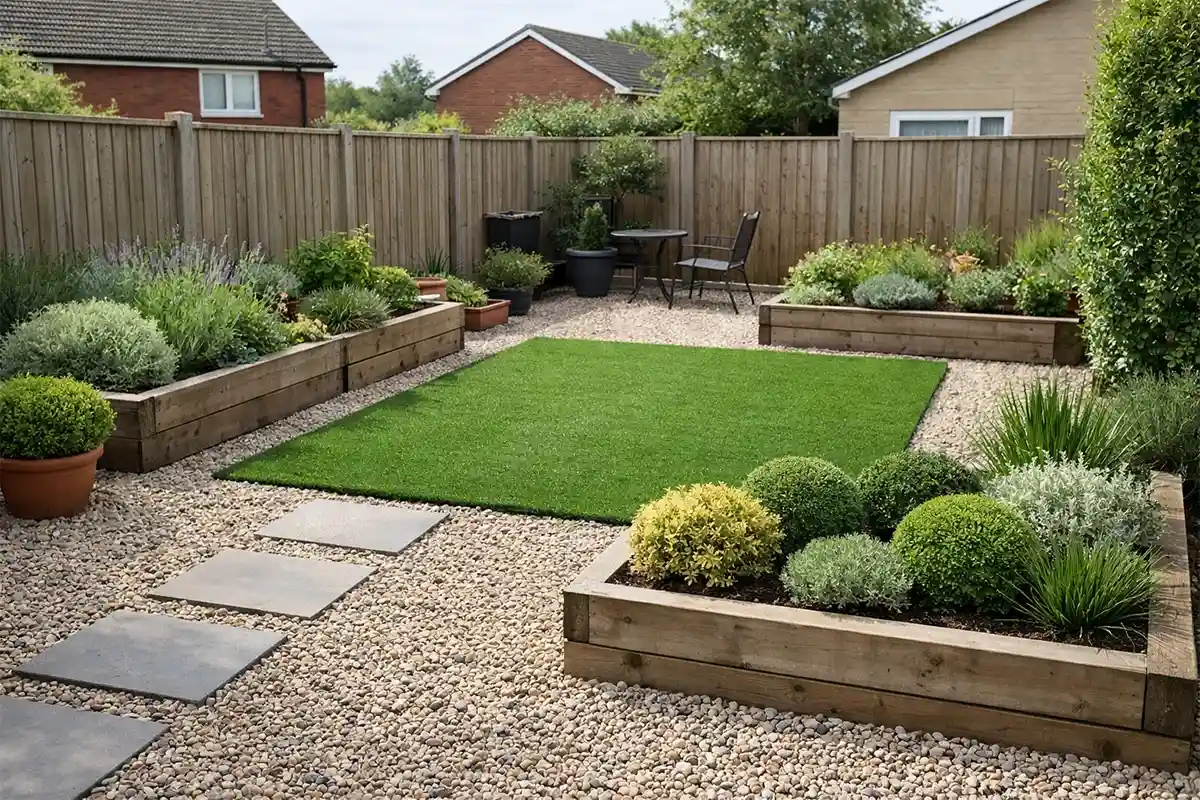
You step into a small backyard that looks perfectly organized. Gravel is clean, plants are tight and tidy, and there is barely a blade of grass in sight. It feels like the kind of space that should take almost no effort to keep up.
That promise is exactly what draws people in. Less yard, less mowing, fewer chores. It sounds logical on paper.
But after a season or two, small changes begin to show. The gravel shifts. Plants start leaning into each other. Corners stay damp longer than expected.
Low maintenance rarely depends on size alone. In a small garden, every choice sits closer together, and that closeness changes how the space behaves.
The Space Is Smaller, but the Margins for Error Are Smaller Too
You notice it the first time water pools in one corner after rain. In a larger yard, you might not even see it. In a small garden, that darker patch stands out immediately.
When everything is within a few steps, small flaws feel bigger. A slight slope toward the fence keeps soil damp longer than the rest of the yard. A narrow gap between shrubs blocks airflow and traps heat against the wall. Because the space is tight, these details affect the whole garden instead of just one area.
Heat builds faster in compact layouts. Sun reflects off fences and house walls and warms the soil more than expected. On hot days, plants near those surfaces wilt first, even if the rest of the garden looks fine. You may find yourself watering more often than you planned, even though the yard is small.
Maintenance increases not because the garden is large, but because there is no buffer. In a tight space, there is very little room for small mistakes to go unnoticed.
Hardscape Replaces Lawn, but It Adds a Different Kind of Work
You remove the lawn to avoid mowing. Gravel goes down, pavers create a clean patio edge, and maybe artificial turf fills a small play area. At first, it feels like you have eliminated your biggest chore.
A few months later, the new routine looks different. Gravel starts drifting into planting beds. Fine dust settles between stones, and weeds find their way into that thin layer. Pavers shift slightly where the base was not perfectly compacted. None of this is dramatic, but it adds small, steady tasks.
Artificial turf changes the kind of maintenance rather than removing it. Leaves and debris collect on the surface. In pet-friendly yards common across the US and Canada, odor control becomes part of the routine. The space stays green, but it does not stay maintenance-free.
Hard surfaces also change how water moves. Without lawn to absorb rainfall, runoff travels faster across stone and gathers at edges. In a compact garden, that extra water has fewer places to go. You may start noticing damp spots near foundations or along fence lines that were never an issue before.
What replaces mowing is not zero work. It is different work.
Dense Planting Creates Early Beauty and Long-Term Correction
Right after planting, everything looks lush and full. Shrubs are spaced closely so the beds do not look empty. Perennials overlap slightly to create that finished, magazine-style effect.
By the second or third growing season, branches start touching. Interior leaves thin out because sunlight cannot reach them. You begin trimming not just for shape, but to create breathing room. The garden still looks beautiful, but it asks for more regular attention.
Compact plantings also compete below ground. Roots share limited soil and moisture. In hot weather, one thirsty plant can affect the rest. You may find that watering becomes uneven, with one side of the bed drying faster than expected.
💡 The issue is not that dense planting is wrong. It is that growth rarely stays within the neat outline you imagined. In a small garden, even modest growth changes proportions quickly.
What felt efficient at installation slowly turns into selective pruning, thinning, and occasional replanting.
The Illusion of Simplification Often Hides Design Complexity
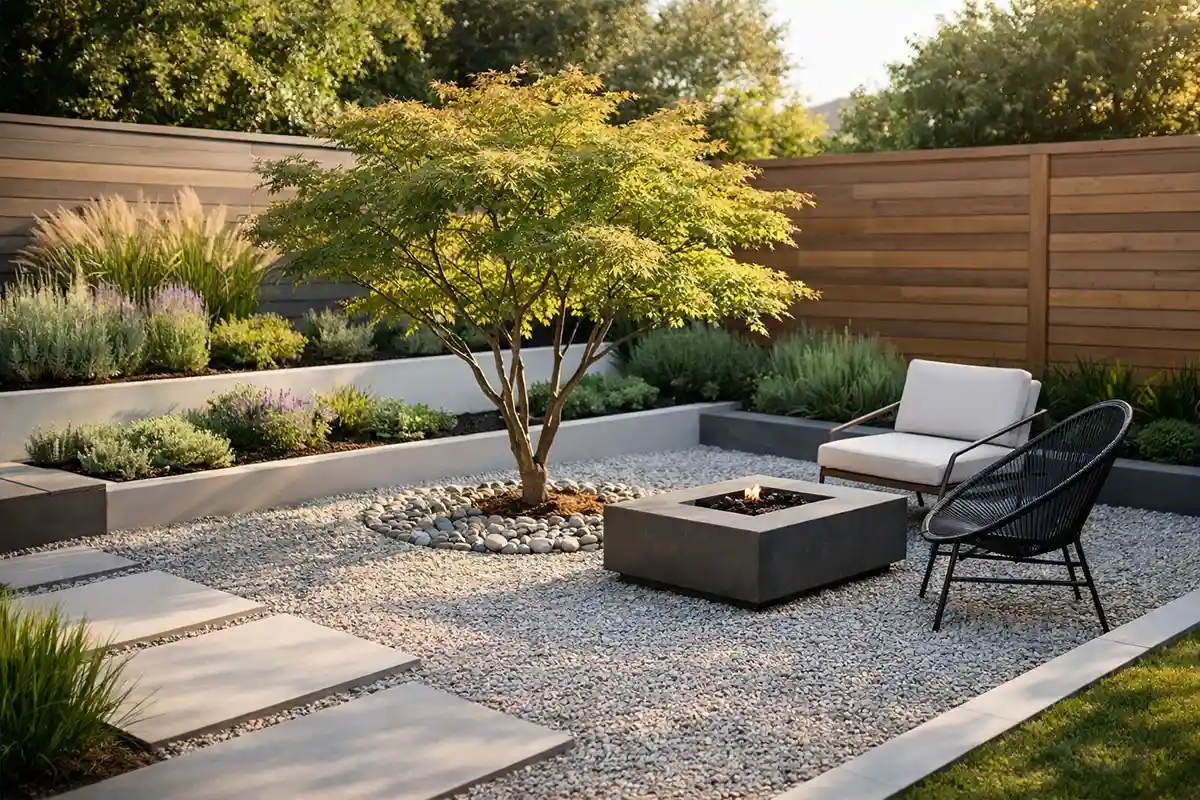
At a glance, the garden looks simple. Fewer materials, clean lines, open space. It seems easier than a large yard filled with lawn and trees.
Underneath that clean look, precision matters more than ever. Drainage layers need to be right because there is no extra soil to absorb mistakes. Edging must hold firm because a small shift disrupts the entire layout. Soil preparation cannot be rushed, since roots have limited room to spread.
When those hidden details are slightly off, you notice the results quickly. Water lingers where it should not. Stones settle unevenly. Plants struggle in corners where soil depth is thinner than expected.
A small garden can absolutely stay manageable. But simplicity on the surface often depends on careful structure underneath. When that structure is rushed or underestimated, maintenance slowly replaces the promise that made the design attractive in the first place.
Below is a practical breakdown of what homeowners commonly notice in small “low-maintenance” gardens — and what those small signals usually mean over time.
| What You Start Noticing in Your Small Garden | What It Seems Like at First | What Is Actually Happening | What It Turns Into Over Time |
|---|---|---|---|
| One corner stays darker and damp after rain | “That spot just dries slower.” | A subtle slope or compacted soil keeps directing runoff to the same tight area | Recurring pooling, soil compaction, and possible drainage correction |
| Gravel slowly creeps into planting beds or walkways | “It just needs raking.” | Foot traffic and water movement shift loose material in a confined footprint | Ongoing re-leveling, topping off gravel, installing edging or stabilizers |
| Shrubs begin touching each other sooner than expected | “They filled in nicely.” | Growth was underestimated in a limited planting zone | Frequent pruning, reshaping, or eventually removing one plant |
| Artificial turf develops odor or flattened areas | “It needs a rinse.” | Organic debris and pet use accumulate faster in low-airflow spaces | Regular cleaning routines and surface brushing to maintain appearance |
| Pavers feel slightly uneven underfoot | “It settled a bit.” | Base layers compact unevenly in small, high-traffic areas | Lifting and resetting sections instead of minor surface fixes |
| Mulch thins out quickly near walls | “It breaks down fast.” | Reflected heat accelerates decomposition in tight beds | Annual replenishing and edge redefining to keep beds defined |
| Plants near fences wilt faster in summer | “They get more sun.” | Heat radiates from vertical surfaces, raising soil temperature | Increased watering and potential plant relocation |
| Weeds stand out sharply in gravel beds | “They’re easy to pull.” | Uniform hardscape makes even small growth highly visible | More frequent spot-weeding to maintain the clean look |
In compact gardens, these signs appear early because there is no extra space to absorb small imbalances. What looks minor at first often becomes the rhythm of long-term upkeep.
Small Gardens Amplify Seasonal Extremes
You feel it the first hot afternoon of summer. The patio stones are warmer than expected, and plants near the fence droop sooner than the rest. In a compact garden, seasonal shifts show up faster and feel stronger.
Heat reflects off siding, fences, and nearby walls, raising soil temperature in a tight footprint. There is less open ground to balance that warmth. In winter, the same compression works in reverse. Freeze–thaw cycles push up pavers or edging more noticeably because the affected area represents a larger share of the space.
Snowmelt has fewer places to disperse. Water settles along borders and corners instead of spreading across a wide lawn. What might be minor settling in a large yard becomes a visible surface change in a small one.
Over time, seasonal stress does not just affect plants. It reshapes surfaces, moisture patterns, and the pace of maintenance.
Limited Soil Volume Limits Plant Resilience
You water in the morning, and by late afternoon one section already looks dry. In a small garden, soil pockets are often shallow and boxed in by hardscape.
Roots cannot spread freely when beds are narrow and bordered by stone or concrete. Moisture drains or evaporates more quickly. Nutrients deplete faster because the soil volume is limited. What looks like a simple raised bed may actually function like a container garden.
Plants in these tight zones react quickly to imbalance. Too much water lingers because drainage layers are thin. Too little water shows up as wilting within hours on hot days. In larger landscapes, deeper soil can buffer those swings. In compact spaces, the reaction time is shorter.
The result is not constant heavy labor, but steady monitoring. Small gardens ask for attention in smaller but more frequent adjustments.
Why does my small patio feel slippery even when it looks dry?
You step outside on a cool morning, and the surface feels slightly slick under your shoes. There is no visible puddle. The stone looks dry.
In compact gardens, moisture behaves differently than we expect. Airflow is limited, shade patterns are tight, and surfaces cool at uneven rates. The ground may look normal while holding a thin film you cannot see.
Is it morning dew even if I don’t see water?
Yes. Thin condensation can settle on pavers overnight, especially in shaded areas, and it often evaporates unevenly.
Why does it feel worse in sneakers than in boots?
Rubber soles with smoother tread grip less on lightly damp stone. Footwear changes how that moisture feels.
Could temperature alone make it slippery?
Yes. When surfaces cool quickly after sunset, condensation forms faster than it dries the next day.
Why only in one section of the patio?
That area may receive less sun or sit closer to a wall that blocks airflow, slowing evaporation.
Is this a drainage problem?
Not always. It can be a microclimate issue rather than standing water, especially in tightly enclosed yards.
Does artificial turf get slick too?
It can. Organic debris combined with light moisture can create a thin layer that reduces traction.
Could lighting make the patio look dry when it isn’t?
Yes. Bright daylight can hide a thin moisture layer on stone, especially on lighter surfaces that reflect glare.
Does surface texture affect how slippery it feels?
Yes. Smooth or sealed pavers hold a thin film of moisture differently than textured stone, which can change traction even when both appear dry.
Small patios magnify subtle environmental shifts. Because the space is enclosed and compact, minor moisture changes become noticeable underfoot. What feels like a structural issue is often a surface-level reaction to airflow, temperature, and material choice working together in a tight layout.
Decorative Solutions Often Replace, Rather Than Remove, Labor
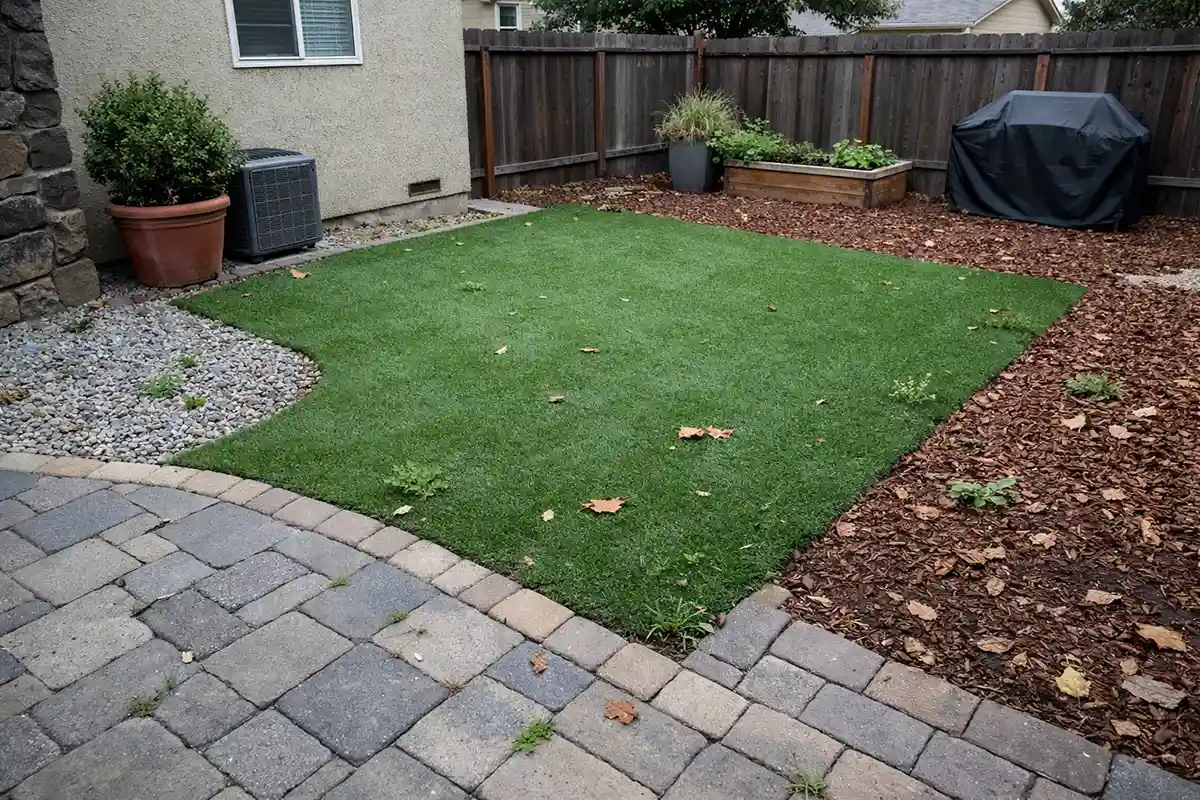
You replace grass with gravel and expect fewer chores. At first, the surface looks clean and stable. There is nothing to mow, nothing to edge.
After a season, fine dust settles between stones. Windblown seeds take root in that thin layer. Artificial turf traps leaves and organic debris that must be removed to prevent odor, especially in pet-friendly backyards common across North America. Bark mulch breaks down faster near heat-reflecting walls.
The work shifts from mowing to surface management. Instead of pushing a mower, you rake, level, brush, or refresh material. The tasks are smaller but more frequent.
Decorative surfaces reduce one type of effort while quietly adding another. In a compact yard, those shifts become visible sooner because there is no extra space to absorb minor imbalances.
Access Constraints Complicate Routine Tasks
You try to move a wheelbarrow through a narrow side yard and realize there is barely enough clearance. Compact gardens often prioritize visual flow over working space.
Tight corners make pruning slower. Hidden drains under pavers are harder to reach. Even replacing a single shrub may require moving surrounding elements because spacing is minimal.
In pet-friendly households, confined layouts also concentrate wear. Turf, gravel, or mulch absorbs repeated traffic in the same small zones. Odor control and surface cleaning become part of the regular rhythm rather than an occasional task.
Small gardens do not fail because they are small. They demand planning that anticipates movement, growth, and seasonal shifts in a limited footprint.
As these systems age together, the question shifts from whether the garden looks simple to whether it was structured to stay stable.
The Psychology Behind the “Low-Maintenance” Promise
You stand in the yard on installation day and feel relief. The gravel is level, the shrubs are perfectly spaced, and there is no lawn to mow. It looks finished, contained, and calm.
That feeling is powerful. It creates the belief that the work is mostly behind you. In reality, what feels like completion is often the beginning of how the space will respond to weather, growth, and daily use. Small gardens do not stay frozen in that first-day condition.
The real shift happens when expectations remain fixed while the garden changes. Plants grow outward. Surfaces settle. Shade patterns move as seasons rotate. When the original idea of “low maintenance” does not adjust with those changes, frustration quietly builds.
Stability comes from designing for movement and maturity, not just for a clean starting point.
Compressed Systems Leave No Room for Passive Recovery
After a heavy rain, you notice water collecting in the same strip along the fence. In a larger yard, that moisture might spread across open soil and dry gradually. In a compact layout, it concentrates.
Small gardens have fewer backup zones. If one drainage path slows down, the effect spreads across a meaningful portion of the space. If one shrub struggles, the gap feels obvious because there are fewer surrounding layers to soften the change. Recovery rarely happens in the background.
A practical shift appears when soil depth is increased in narrow beds and edging is set with slight breathing room instead of tight compression. In real terms, that looks like roots pushing less aggressively against borders and water dispersing instead of pooling. The garden begins correcting small stresses without visible disruption.
That quiet resilience is what reduces long-term effort.
Simplification Without Systems Thinking Creates Ongoing Work
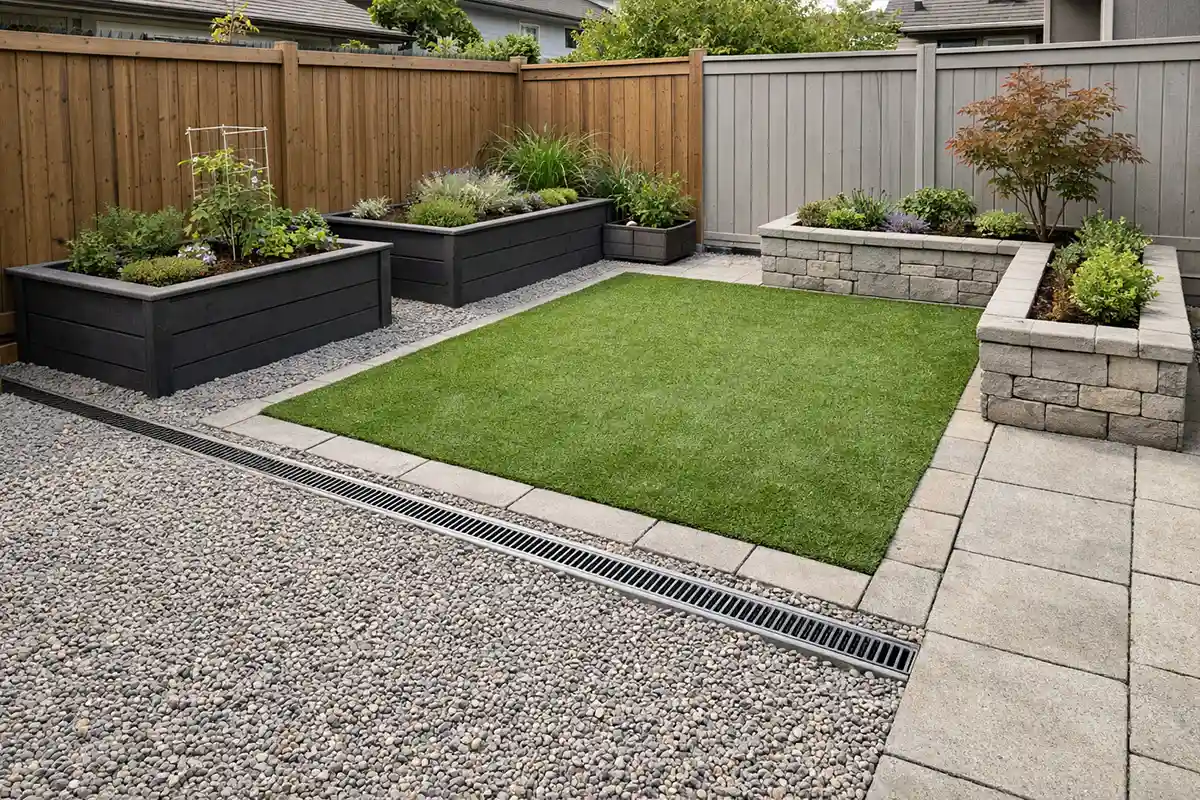
A gravel surface may look like a simple solution. A raised bed may appear self-contained. Yet beneath that simplicity, layers determine how the garden behaves over time.
When base materials are compacted evenly and drainage routes are intentionally directed rather than assumed, small shifts stop turning into repeated corrections. You feel the difference underfoot when pavers remain stable after winter. You see it in spring when water does not linger in corners.
Real solutions in compact gardens often look subtle. Slightly wider plant spacing means less reshaping later. A small gap between hardscape and soil allows airflow to reduce moisture buildup. Adjusted irrigation zones reflect actual sun exposure instead of uniform timing.
These changes do not add complexity to daily life. They reduce the need for repeated fixes that slowly accumulate.
Understanding the system beneath the surface shifts the garden from reactive upkeep to steadier rhythm.
Maintenance Shifts From Physical to Observational
On a quiet evening, you walk across the patio and notice a faint unevenness that was not there before. You trim a shrub and realize it reaches further than it did last season. These moments are small, but they signal how compact spaces evolve.
In stable small gardens, maintenance becomes lighter because adjustments happen early and gently. Surfaces are brushed or leveled before they drift significantly. Plant growth is guided rather than corrected after overcrowding. Irrigation is tuned to sun and shade patterns that you now recognize.
This shift is visible in behavior. Instead of dedicating full weekends to correction, attention spreads across short, regular interactions. The space feels responsive rather than demanding.
Compact gardens reward awareness more than labor. When structural choices support that awareness, the workload becomes predictable.
Near the end of this rhythm, a quiet recognition often appears:
These observations are not dramatic milestones. They are small confirmations that the garden has settled into balance.
As smaller properties continue shaping urban and suburban neighborhoods, the real measure of “low maintenance” will not be how little was installed, but how well the space adapts as it ages.
For broader research and region-based guidance on landscape performance in changing weather conditions, the University of Minnesota Extension provides reliable, climate-focused resources.