Last updated: April 15, 2026
If mulch keeps sliding off a sloped planting bed, the fix usually is not buying more mulch. The problem is usually one of three things: the slope is too steep, water is hitting the bed too fast, or the mulch layer is too thick and loose.
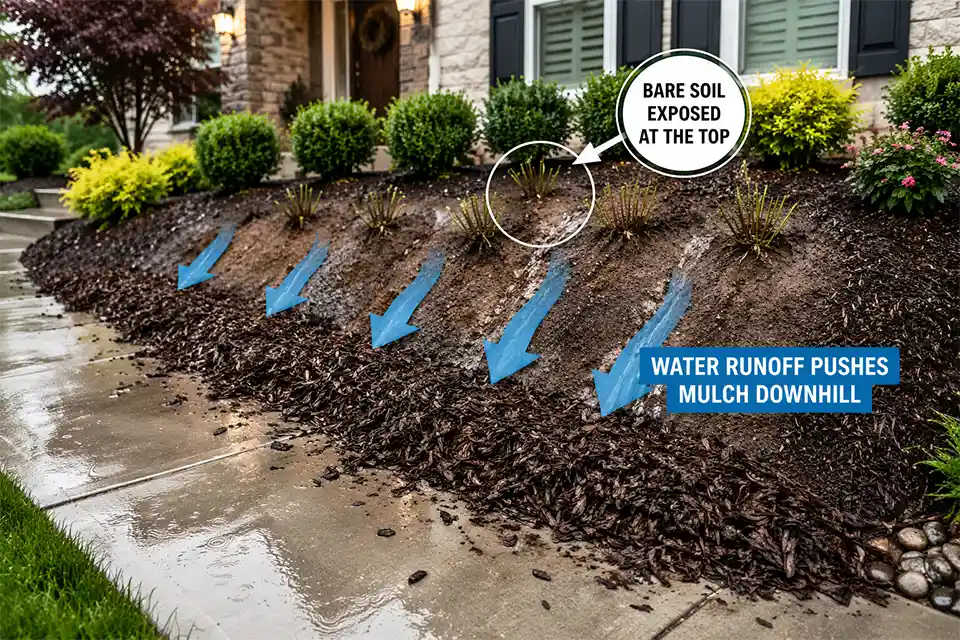
Start with three checks that actually tell you something: whether the slope is steeper than about 3:1, whether mulch depth is over 3 inches, and whether runoff is entering from a downspout, driveway, sidewalk, or higher lawn. If the top of the bed goes bare within 24 to 48 hours after a storm or a long watering cycle, that is not normal settling. That is washout.
A little movement is fine. A visible ridge of mulch at the bottom, exposed soil at the top, and runoff streaks after a 1-inch rain are not. That is the line most homeowners need. The pile at the bottom looks like the problem, but it is really just the clue. The real problem is usually water moving faster than the bed can hold.
What happens when mulch starts sliding
The first thing you lose is coverage where you need it most. The upper part of the bed ends up thin or bare, which means the soil dries out faster, weeds sprout more easily, and roots lose some protection from heat and temperature swings.
What is mostly cosmetic
A small shift of about 1/2 inch after the first rain on a new bed is not a big deal. If the bed still has an even 2- to 3-inch layer and plant crowns are not exposed, it is still doing its job.
What becomes a real problem
Once you can see exposed soil in the top 6 to 12 inches of the slope, you are past the “just rake it back” stage. The upper section starts drying out while the lower section stays wetter and collects extra mulch. That uneven moisture is hard on plants, especially shallow-rooted perennials and fresh installs.
Then the cleanup starts. Mulch ends up on the walkway, lawn edge, or driveway. If that keeps happening every week or two after rain, this is no longer a simple maintenance issue.
It is a bed design or drainage problem. When the soil itself starts moving with the mulch, the issue overlaps with the bigger pattern covered in Bare Soil Washout in a Sloped Backyard.

The most likely causes, in the order that matters
Not every possible cause deserves equal attention. A few are common. A few are mostly distractions.
Runoff from above
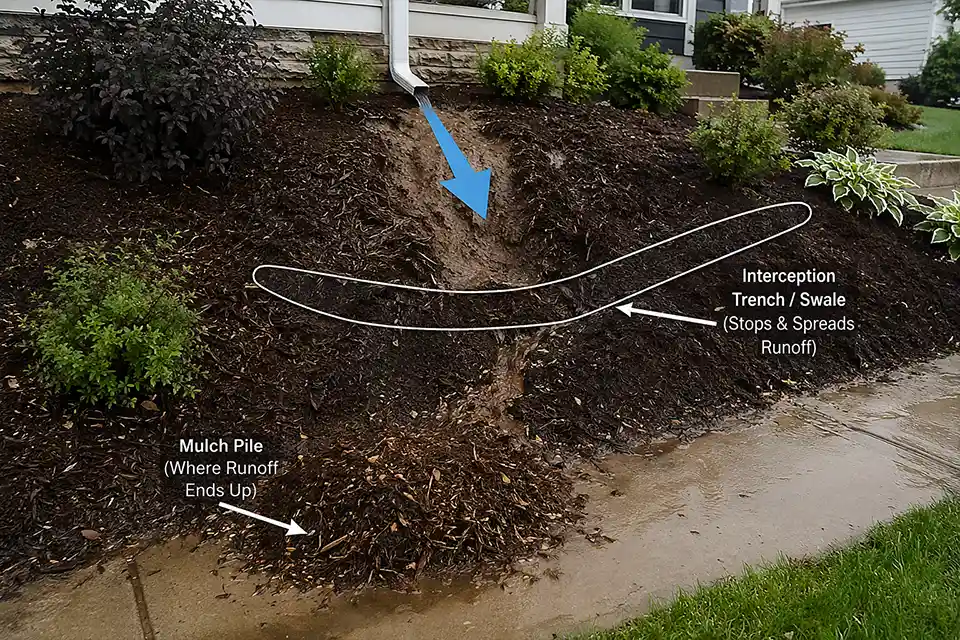
This is the big one. If water is entering the bed from somewhere else, mulch can fail even when the mulch itself is decent. A downspout that empties within 5 feet of the bed, a sidewalk that channels rain, or a higher patch of lawn draining into the slope can move mulch in one storm. Before buying more mulch or another edging fix, it is worth looking at products that actually help with backyard slope erosion so you can match the solution to the way the slope is failing.
This is what people usually underestimate. They spend too much time comparing mulch products and not enough time tracing where the water is actually coming from.
If runoff is crossing the yard before it reaches the bed, the broader drainage pattern often looks a lot like what shows up in Sloped Backyard Water Running Into a Neighbor’s Yard.
A slope that is too steep
On mild slopes, mulch can usually hold if the bed is set up well. Once the slope gets close to 3:1 or steeper, mulch alone becomes less reliable. On slopes near 2:1, repeated washout usually means it is time for a different system, not just a different bag of mulch.
Too much mulch
More mulch is one of the most common wasted fixes. Once the layer gets deeper than about 3 inches, it often becomes easier to move. It sounds backward, but piling on more loose material can make the next washout worse.
Mulch type
Mulch type matters, just not as much as people think. Coarse shredded bark usually grips better than big smooth nuggets or very light decorative mulch. But even a better product will slide if water is hitting the bed too hard.
Quick diagnostic checklist
- The slope looks steeper than about 3:1.
- Mulch depth is over 3 inches in spots.
- Bare soil shows up near the top after rain.
- Mulch piles at the bottom edge of the bed.
- Water enters from a hard surface or a downspout.
- Soil stays slick or puddled for more than 30 minutes after watering.
If three or more of those are true, stop treating this like a simple mulch touch-up.
The best mulch for slopes, and what usually fails early
Better choices
Coarse shredded bark is usually the safest pick for a sloped bed because the pieces knit together better. Shredded hardwood bark is a solid all-around choice. Shredded cedar or cypress can also work well where you want a lighter look but still need decent hold.
Pine straw can work on some slopes too, especially where it mats together well, but it is usually more site-dependent than shredded bark.
Weaker choices
Large bark nuggets tend to roll. Very light decorative wood mulch tends to move. Small smooth pieces that do fine on a flat bed often disappoint fast on a slope.
What not to overestimate
Mulch stabilizer can help on a mild slope or on a small trouble spot. It can buy time. But it is not a great long-term answer for a steep bed that keeps taking runoff. That is where people waste money trying to glue down a problem that really needs a drainage fix or a redesign.
Pro Tip: If the bed has already washed out two or three times this season, skip another “quick fix” product and look at water flow first.
How to set up the bed so mulch holds better
Rough up the surface a little
A slick, sealed surface gives mulch less to grab onto. Lightly loosening the top 1 to 2 inches of soil before re-mulching can help the new layer settle in better.
Break up the water path
A long uninterrupted slope lets water build speed. A 12-foot run is harder to manage than two 6-foot runs with a break in between. Small terrace steps, planting shelves, or even shallow horizontal interruption lines can slow that movement down.
On tougher sites, the layout choices start to overlap with the same structural fixes discussed in Tiered Backyard Problems on a Steep Slope.
Use edging the right way
Edging is helpful, but it is not the hero. It works best as a support move after you deal with runoff. A solid edge at the bottom can help keep minor drift out of the lawn or walkway, but it will not stop incoming water from pushing mulch downhill.
If your border keeps moving too, that is usually a separate clue, and Front Yard Edging That Keeps Shifting gets into why.
Add a trench or shallow swale when needed
If water is entering from above, a simple trench or shallow swale can intercept it before it hits the bed. That usually does more good than switching mulch brands.
If the edge itself may be part of the problem, this guide on what helps landscape edging stop shifting is a useful next step.
What actually fixes the problem
1. Fix the water path first
This is the first move almost every time. Redirect the downspout. Break up runoff before it reaches the bed. Add a shallow swale above the planting area if needed. If stormwater is being funneled straight into the slope, no mulch choice is going to save you for long.
2. Reset mulch depth
After the water issue is handled, rake the bed smooth and bring mulch back to a consistent 2 to 3 inches. Not 4 inches. Not 5 inches. Just enough to cover and protect the soil without creating a loose sliding blanket.
3. Pick the right holding method
Jute or coir netting can help on new slopes while plants are still filling in. That is different from basic weed-barrier fabric. Weed fabric usually does not solve the real problem here and often ends up exposed once the mulch moves. Erosion-control netting is more useful because it is meant to help hold the surface while the bed gets established.
4. Know when mulch alone is no longer enough
If the bed still fails after one or two decent storms, stop thinking in terms of routine touch-ups. That is when terrace breaks, denser planting, groundcover, or a more structural slope solution starts making more sense. When the entire yard is steep and failure keeps spreading beyond one bed, the bigger picture usually matches Sloped Backyard Problems: Drainage, Erosion, and Safety.
Clay soil and sandy soil do not behave the same way
Clay-heavy soil
Clay holds water longer and gets slick when saturated. That can create a slippery layer under the mulch, especially after a 30- to 45-minute watering cycle or back-to-back rains. In that situation, shorter watering cycles usually help more than adding more mulch.
Sandy soil
Sandy soil drains faster, but it also gives mulch less surface grip. On these beds, coarser mulch and tighter planting usually help more. You are not fighting puddling as much. You are fighting weak hold.
When the standard fix stops making sense
| Situation | Best first move | What usually wastes time | When to step up the fix |
|---|---|---|---|
| Slight shifting after install | Rake smooth and keep 2–3 inches deep | Adding another thick layer | If bare soil shows after the next storm |
| Repeated washout at the top | Check runoff and reduce depth | Re-spreading after every rain | If it returns within 7–10 days |
| Water enters from above | Redirect water first | Changing mulch without fixing flow | If runoff cannot be diverted easily |
| Steep slope keeps failing | Add terrace breaks, netting, or groundcover | Relying on mulch alone | If slope is near 2:1 or worse |
| Bottom edge stays messy | Add edging after runoff is corrected | Treating edging as the full fix | If cleanup continues after storms |
A simple storm-after check that saves time
After a hard rain, walk the bed and check three things: is the top going bare, is the bottom building a pile, and are there fresh channels in the surface. That takes about 2 minutes and tells you more than guessing from memory a week later.
If the same pattern shows up after every storm, the bed is not asking for more maintenance. It is asking for a better setup.
Pro Tip: If you are cleaning mulch off a walkway after every hard rain, the bed is already telling you the current layout is too fragile.

The simple way to think about it
If mulch only shifts a little, maintain it. If the top of the bed keeps going bare, fix the water and reduce depth. If it still fails after that, move to a stronger slope-control solution like terrace breaks, netting during establishment, denser planting, or a different surface treatment.
That is the part people usually need to hear plainly: sometimes the right answer is not “better mulch.” Sometimes the right answer is admitting the slope wants a different system.
For broader official guidance, see the USDA Natural Resources Conservation Service.