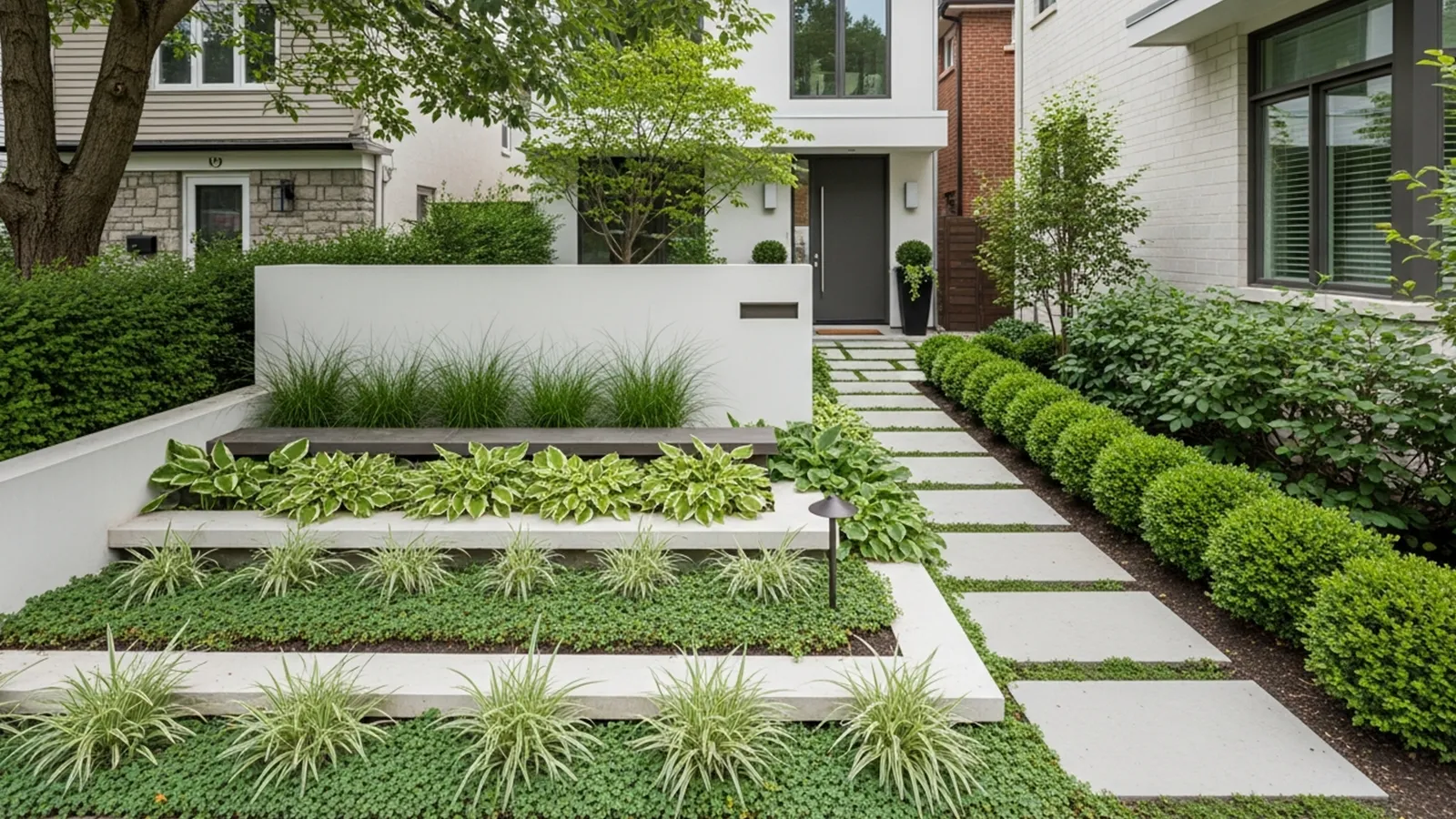
Small front yards rarely feel cramped because of their size alone. They feel small when too many decisions compete for attention at the same time. When every surface, plant, and feature demands notice, the space visually collapses inward.
A spacious front yard is created by subtraction as much as by addition. The most successful designs guide the eye smoothly, reduce visual friction, and avoid forcing the viewer to constantly reassess the space. When clarity replaces clutter, even modest yards begin to feel generous.
1. Start With Clear Sightlines Instead of Filling Space
✔️ Clear sightlines are one of the most reliable ways to expand how large a small front yard feels. When the eye can move uninterrupted from the street toward the entry, the space reads as deeper and more open. Visual blockers such as dense shrubs, oversized décor, or poorly placed features shorten that perceived distance. Removing or repositioning these interruptions often has a bigger impact than changing any single element.
This does not require leaving the yard bare. It requires placing elements where they support movement rather than stop it. A simple check is to notice where your gaze naturally pauses when approaching the house. If the eye keeps stopping early, the design is likely working against itself.
2. Use Fewer Materials, Repeated With Intention
💡 Material overload is one of the fastest ways to shrink a small front yard. Too many paving types, border styles, or surface finishes break the space into fragments. Limiting the design to a small, consistent material palette allows the yard to read as one continuous area instead of multiple competing zones. Continuity creates perceived width.
Repetition is what makes restraint effective. Using the same material in paths, edges, and accents reinforces visual unity without feeling monotonous. Subtle variation in texture or scale can add interest without introducing clutter. Fewer materials also reduce long-term visual creep as the yard evolves.
3. Shape Pathways to Suggest Depth, Not Distance
🐾 Pathways strongly influence how spacious a front yard feels because they guide both movement and perception. Very short, straight paths highlight limited depth, while exaggerated curves can feel artificial and waste space. A gentle angle or soft curve slows the eye just enough to suggest length without sacrificing function. The effect is subtle but powerful.
Proportion matters as much as shape. Paths that are too wide dominate a small yard, while paths that are too narrow feel constrained. A balanced width that supports natural walking keeps the layout human-scaled. When movement feels easy and intuitive, the entire yard feels larger.
4. Keep Planting Layers Low and Purposeful
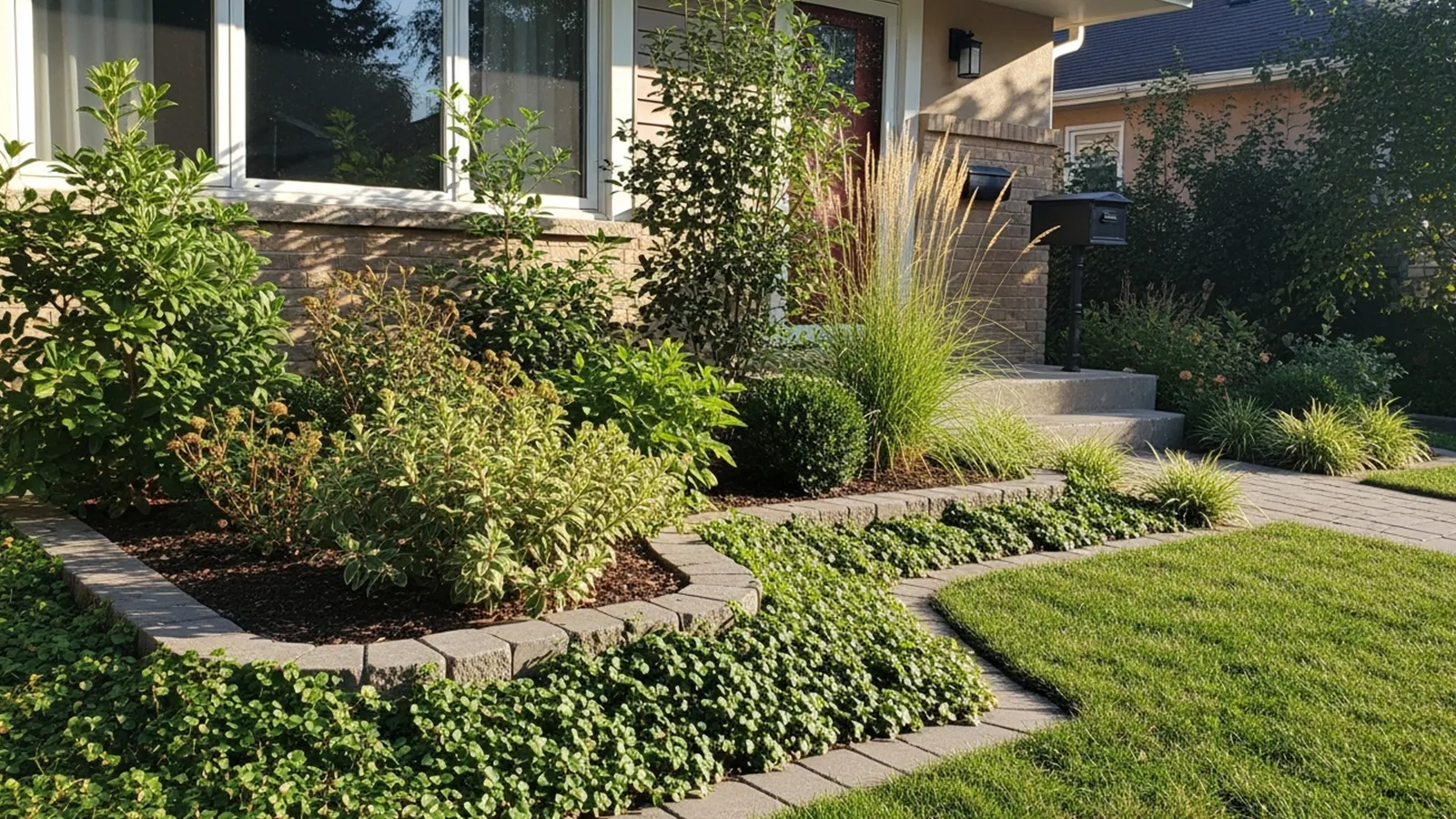
⚠️ Plant height has an outsized effect on perceived space. Tall hedges and bulky shrubs create hard visual stops that make boundaries feel closer than they are. Keeping most planting low, with height increasing gradually toward the house, preserves openness while still adding depth and softness. This layered approach frames the space instead of enclosing it.
Purposeful placement matters more than quantity. Taller plants are most effective when they support architectural lines rather than interrupt views. A helpful guideline is to let plants reinforce structure, not replace it. When planting works with the layout, the yard feels ordered instead of crowded.
5. Let Hardscape Elements Serve More Than One Role
✔️ In compact front yards, single-purpose features consume valuable visual space. Hardscape elements that perform multiple roles help maintain simplicity and clarity. Low retaining edges can double as seating, steps can define transitions, and borders can subtly guide movement. Fewer elements doing more work keeps the layout calm.
This approach also improves longevity. When each feature earns its place, the yard is less likely to accumulate extras later. Multifunctional hardscape supports both daily use and long-term balance. Thoughtful lighting can extend this effect by enhancing depth without adding physical bulk, and a cohesive front yard lighting strategy can subtly expand perceived space while strengthening curb appeal.
6. Design Around Everyday Movement, Not Just Appearance
💡 A front yard that feels spacious usually works well in daily life. Designs focused only on appearance tend to collect temporary fixes as real use exposes gaps. Planning for everyday movement, brief pauses, and natural entry patterns keeps the space orderly. Function protects openness over time.
When circulation is clear and zones are intuitive, fewer adjustments are needed later. The yard stays visually calm because it already supports how it is used. A space that works effortlessly almost always feels larger than one that looks good only from a distance.
7. Favor Open Edges Over Rigid Boundaries
✔️ Strong, clearly defined borders signal exactly where a small front yard ends. This visual certainty makes the space feel shorter and narrower than it actually is. Softer edges allow the yard to visually dissolve into its surroundings, which expands perceived space. When boundaries are implied rather than enforced, the eye travels farther.
Open edges also reduce visual tension. Instead of stopping abruptly, the landscape feels continuous and calm. This approach is especially effective in compact neighborhoods, where borrowing visual space from the street or adjacent greenery can dramatically change how large a yard feels. The goal is not to remove structure, but to reduce visual finality.
8. Use Vertical Elements With Discipline, Not Emphasis
⚠️ Vertical elements often promise drama but deliver compression in small front yards. Tall, bulky features draw attention upward in a way that highlights limited ground area. Vertical design works best when it feels light, narrow, and secondary to horizontal flow. Structure should guide the eye, not dominate it.
Slim trellises, open frameworks, or climbing plants that allow visual pass-through can add rhythm without enclosure. A useful test is to ask whether a vertical element reads as a frame or as a wall. In compact spaces, framing enhances openness, while walls tend to collapse it.
9. Replace Solid Privacy With Visual Layering
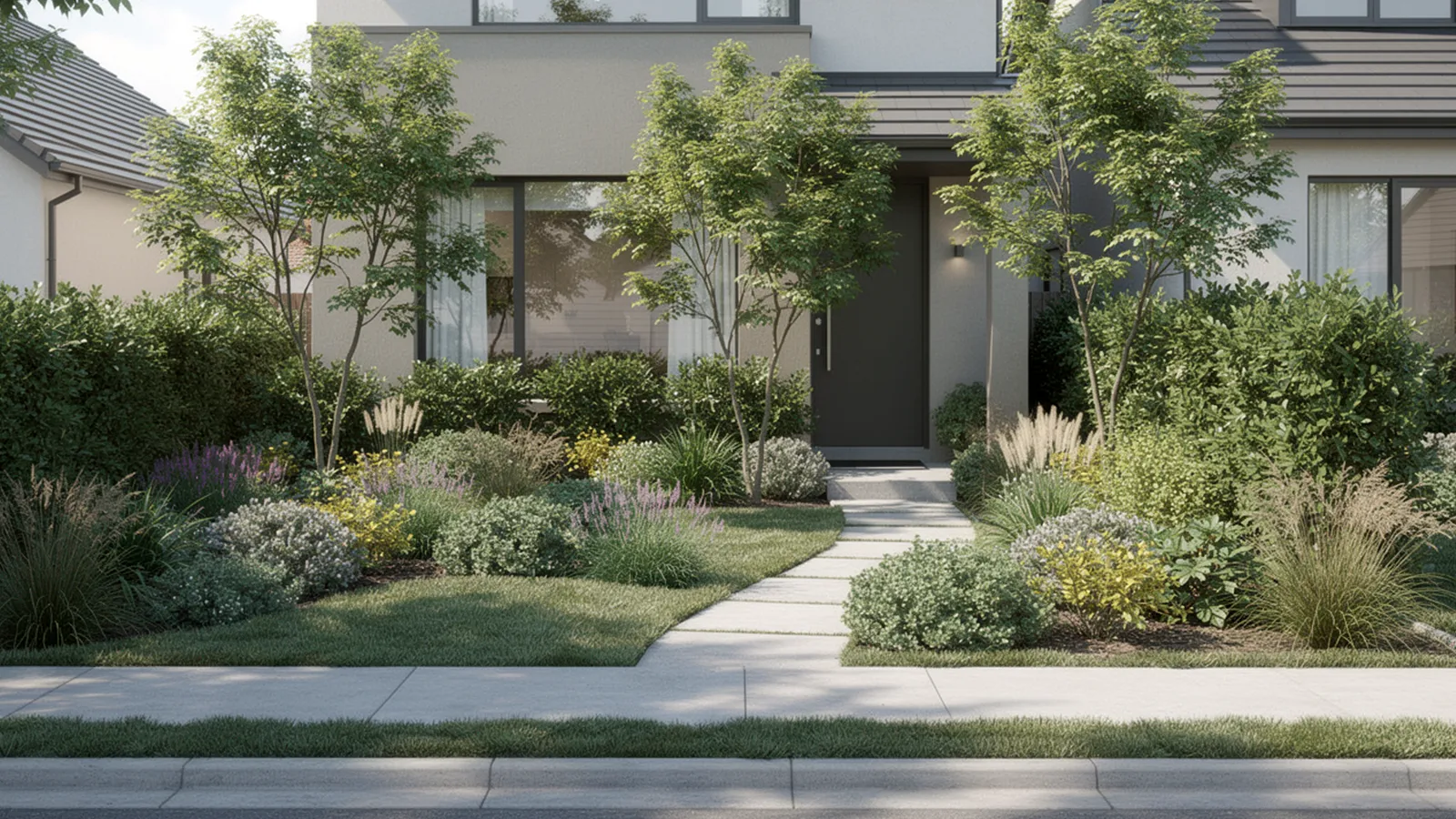
💡 Privacy does not require full visual blockage. In small front yards, solid fences and walls often create the opposite effect by shrinking perceived space. Visual layering offers a more flexible solution. Partial screening protects comfort while preserving light, depth, and openness.
The effectiveness comes from variation rather than height alone. Staggered plant layers allow views to soften instead of stop. This approach creates separation without isolation and adapts naturally over time. Landscaping for privacy without fences allows compact front yards to feel protected without sacrificing openness or spatial clarity.
10. Scale Features to Movement, Not Decoration
🐾 Oversized features disrupt flow in small front yards more than poor layout does. Large benches, heavy planters, or statement décor can quickly overwhelm limited space. Elements should be sized according to how people naturally move, pause, and pass through the yard. When features feel proportionate, movement feels effortless.
Clearances matter as much as objects. Tight gaps create bottlenecks that visually compress the space. Allowing just enough room for comfortable circulation preserves openness even when features are present. A yard designed around movement almost always feels larger than one designed around display.
11. Use Color and Texture to Control Depth
✔️ Color quietly shapes spatial perception. Lighter tones tend to recede, making surfaces feel farther away, while darker or highly saturated colors advance toward the viewer. In small front yards, a restrained palette supports depth without demanding attention. Contrast works best when it is limited and intentional.
Texture adds interest without visual noise when used carefully. Fine textures feel lighter and less dominant, while coarse textures should be used sparingly to anchor key areas. Keeping texture variation within a controlled color range maintains cohesion. This balance creates richness without clutter.
12. Plan for Seasonal Change Without Visual Accumulation
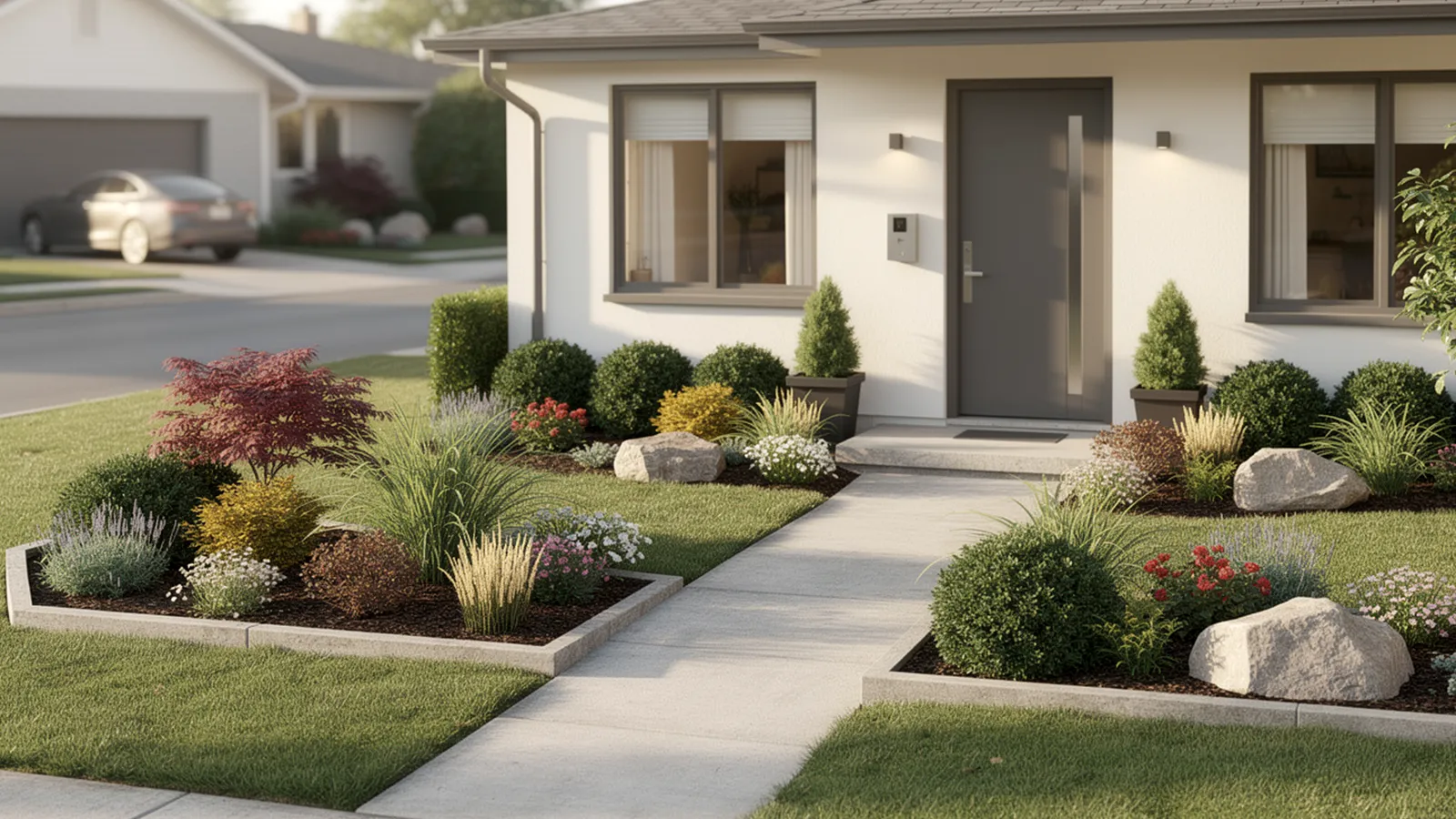
⚠️ Designs that rely on seasonal add-ons often lose clarity over time. Temporary planters, décor, or unchecked growth can quickly crowd limited space. Planning for seasonal flexibility means choosing elements that evolve without constant intervention. This protects the original sense of openness.
When the layout anticipates change, fewer corrections are needed later. Plants grow and recede without overwhelming the structure. Seasonal shifts become part of the design rather than a disruption. A front yard that adapts gracefully maintains its spacious feel year-round.
13. Reduce the Visual Narrative to One Dominant Idea
✔️ Small front yards feel larger when they communicate a single, clear design intention. When multiple styles, themes, or moods compete, the eye is forced to constantly recalibrate, which compresses perceived space. Choosing one dominant visual idea allows every element to reinforce the same message. This unity makes the yard feel calmer and more expansive.
Clarity does not mean stripping away personality. It means ensuring that new elements support the existing direction rather than introduce a competing one. When the yard reads as a coherent whole instead of a collection of moments, its physical limits feel less pronounced. Visual consistency amplifies spatial generosity.
14. Use Alignment to Reduce Visual Friction
💡 Alignment quietly shapes how spacious a front yard feels. When paths, edges, and architectural lines relate to one another, the space becomes easier to read. Misaligned elements create visual tension that makes small yards feel busy and compressed. Even subtle alignment can significantly improve spatial clarity.
This does not require strict symmetry. Parallel lines, shared angles, or repeated directional cues are often enough. Underlying structure allows organic elements to feel intentional rather than random. When visual friction is reduced, the yard feels larger without adding anything new.
15. Remove Accessories Before Removing Function
⚠️ Many small front yards become crowded through gradual accumulation rather than poor initial design. Decorative objects, containers, and seasonal items often remain long after their purpose fades. While each item may seem minor, together they fragment the space. Removing excess accessories restores openness without sacrificing usability.
Function should always be preserved first. Clear circulation, usable edges, and comfortable movement contribute more to spaciousness than decorative extras. When accessories are chosen selectively and sparingly, they enhance rather than compete. This restraint keeps the yard flexible and visually calm.
16. Let Negative Space Carry Visual Weight
✔️ Negative space plays an active role in making small front yards feel larger. Open ground, uncluttered planting zones, and visual pauses give the eye room to rest. Without these breaks, even well-designed features begin to feel compressed. Intentional emptiness creates contrast that highlights what remains.
Negative space also supports longevity. Fewer crowded areas mean less overgrowth and fewer adjustments over time. This restraint protects the original sense of openness as the yard matures. A landscape that leaves room to breathe will consistently feel more generous.
17. Design the Yard Around Everyday Living
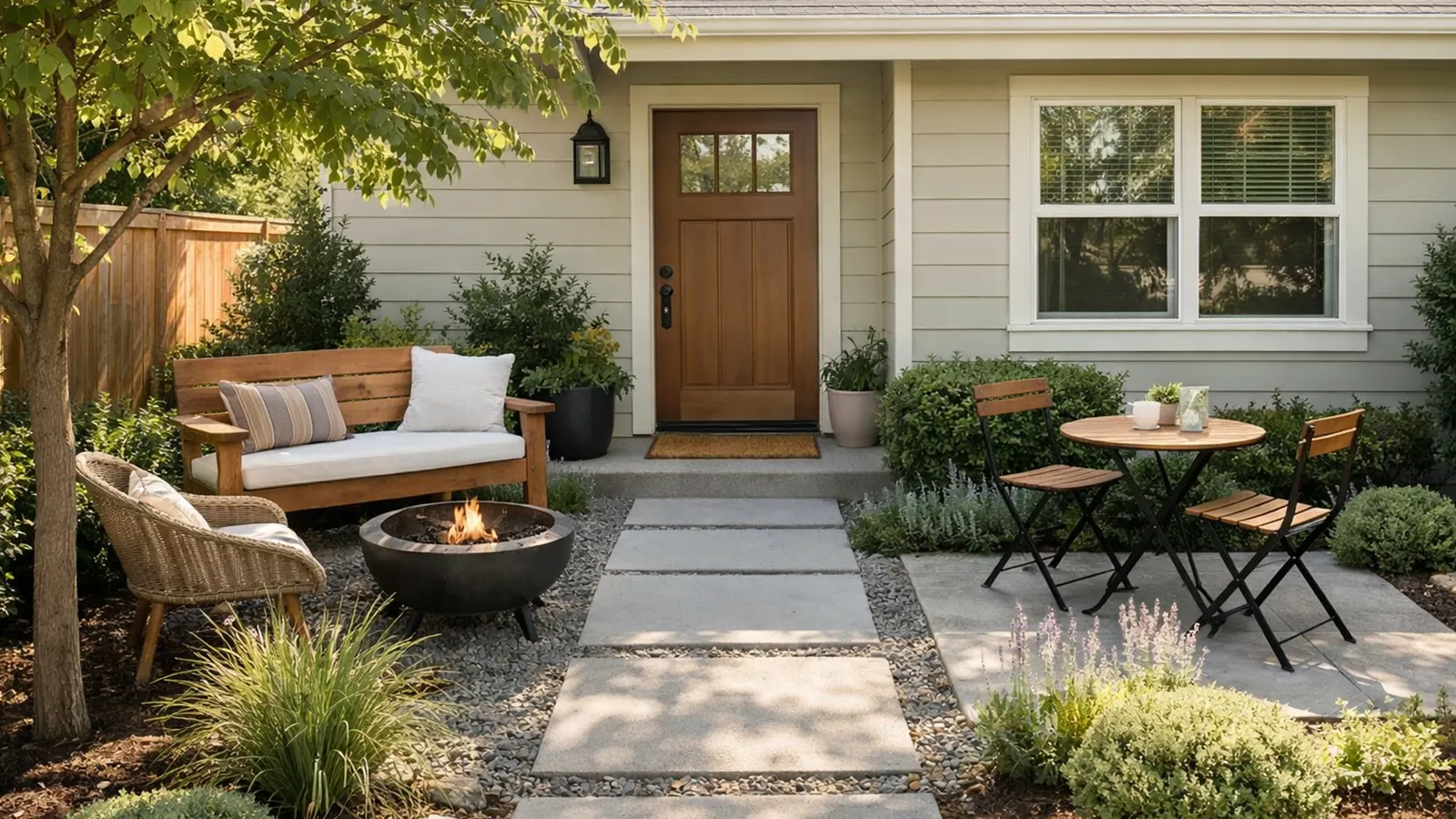
🐾 Front yards that feel spacious usually support real daily routines. When everyday movement is anticipated, the space remains orderly and adaptable. Designs that ignore daily use often require temporary fixes that introduce clutter. Planning for real habits protects openness over time.
Considering how the yard supports routine movement, brief pauses, and casual interaction helps prioritize space where it matters most. Clear transitions and flexible zones prevent congestion. Designing outdoor spaces around everyday living habits encourages layouts that remain open, calm, and functional rather than visually overloaded.
18. Accept Limits to Preserve a Sense of Space
💡 One of the most effective decisions in small front yard design is knowing what not to include. Trying to accommodate every idea usually results in visual compression. Clear limits protect the feeling of space by preventing overcrowding. Selectivity is what keeps the design legible.
When boundaries are respected, each element earns its place. The yard remains clear, comfortable, and resilient against future clutter. Accepting spatial limits is not a compromise, but a strategy. Small front yards that embrace restraint consistently feel more spacious than those that attempt to do too much.
External source: https://edis.ifas.ufl.edu/publication/MG086