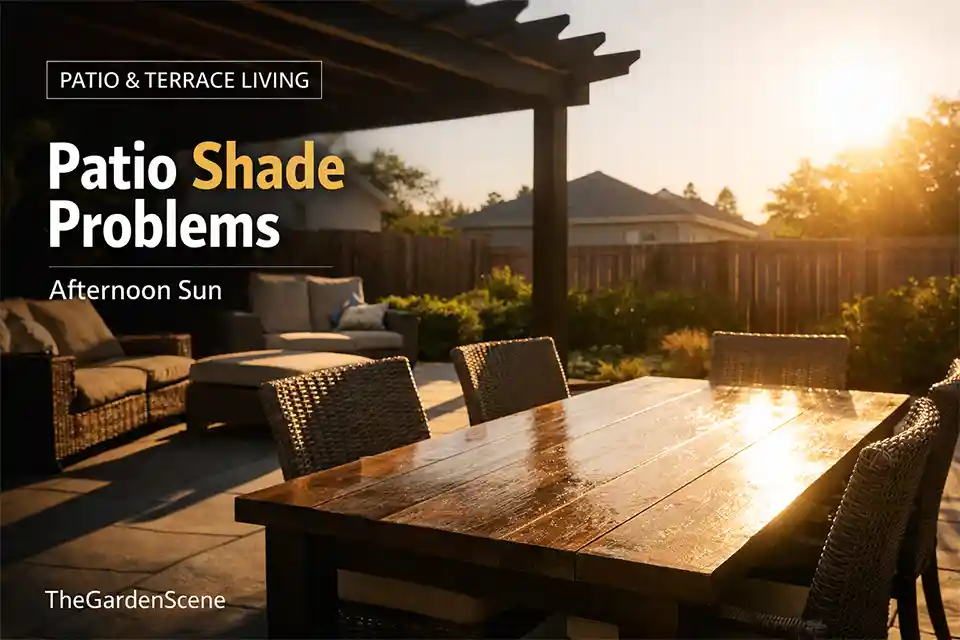
A patio usually fails from poor shade planning in one predictable way: it looks usable, but it stops being comfortable during the hours people actually want to sit outside.
If the space feels fine in the morning and starts emptying out between about 2 and 6 p.m., the problem is rarely just “not enough shade.” More often, the shade lands in the wrong place, works only at noon, or blocks overhead sun while doing very little against lower west sun.
Start with three checks. Count how many afternoon hours of direct sun hit the main seating zone in summer. Watch whether the hardest exposure comes from the west or southwest rather than straight above. Then judge the actual use area, not the whole patio.
If the table, chairs, or lounge seats sit in direct sun for more than 3 to 4 peak afternoon hours, the patio is under-shaded in the way that matters most. That is the real distinction: total shade is not the same as usable shade.
The Real Problem Is Shade Timing
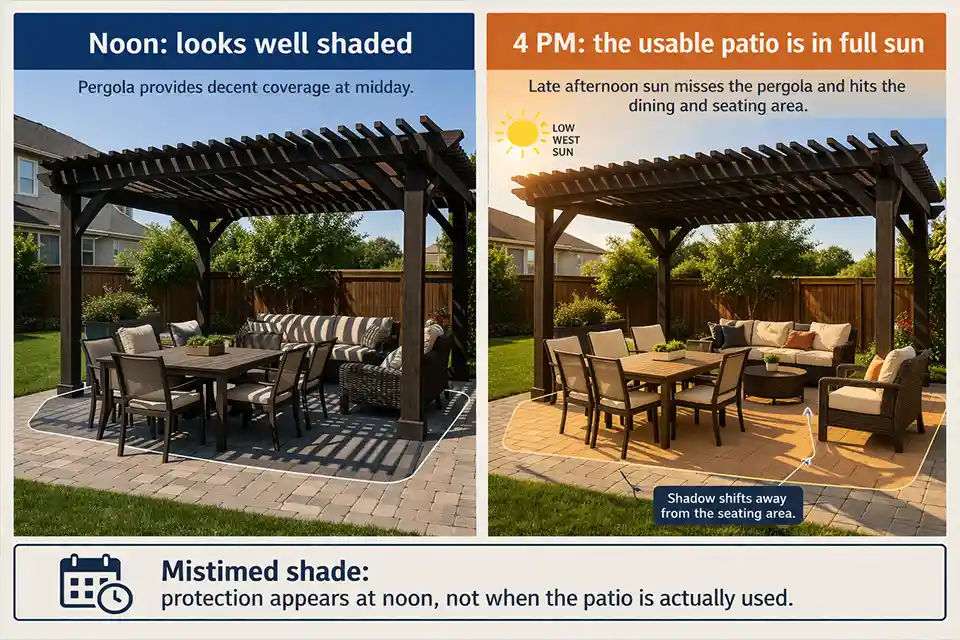
This is where people waste money. They assume the patio needs a bigger shade feature because the existing one looks too small. Sometimes that is true. More often, the issue is timing. The patio may have enough shaded square footage on paper, but the footprint lands on the wrong half of the slab once the sun shifts.
That is why the symptoms are easy to misread. Cushions fade early. Pavers feel hot underfoot. Chairs get dragged into circulation paths. Guests avoid the table and cluster in one corner. Those are symptoms. The mechanism underneath them is exposure during the wrong hours.
West and southwest exposure usually deserve more attention than homeowners expect. A patio that gets strong afternoon sun is harder to fix with a purely overhead solution than one that mainly struggles around noon. That is also why heat-heavy sites tend to magnify shade-planning mistakes instead of hiding them.
If the broader heat pattern is already making the space harder to use, Patio Design Problems in Hot Climates connects directly to the same comfort problem from a different angle.
What People Usually Get Wrong First
The first bad assumption is that a larger shade feature automatically solves the problem. The second is that overhead cover is enough. The third is that future shade counts as present shade. Each one sounds reasonable. Each one pushes the patio toward the wrong fix.
A Bigger Umbrella Is Not the Default Fix
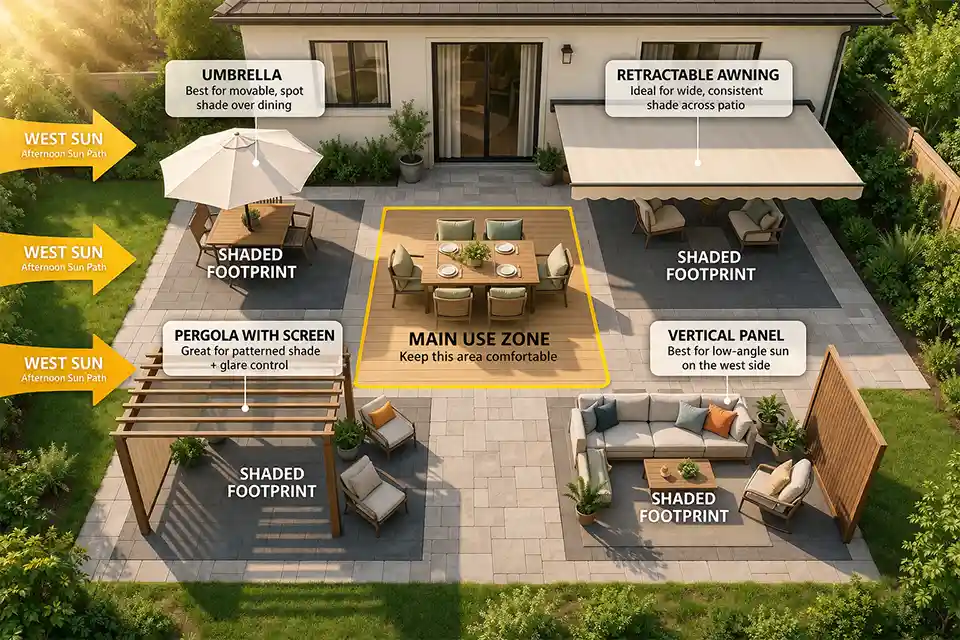
A larger umbrella can work well for one compact table or one tight conversation set, especially when the sun angle is fairly predictable. It becomes much less useful when the seating area is broad, when chairs need pull-out space, or when the problem is low side sun rather than overhead sun.
What usually gets overestimated is canopy diameter. What gets underestimated is where the shadow actually lands at 4 p.m. A bigger umbrella often creates a bigger noon patch without solving the late-day discomfort that made the patio fail in the first place.
Pergolas Often Fall Short Against Low Side Sun
Pergolas are often treated like a complete answer when they are really just one part of the answer. A plain slatted pergola may soften midday brightness and improve how the patio looks from the house, but it can still leave faces, shoulders, and the dining surface exposed later in the day.
That is why people often think the patio should be working better than it is. The structure is there. The shade is visible. But the useful coverage is still incomplete.
Young Trees Are a Long-Term Plan
A young shade tree can absolutely belong in the plan, but it should not be confused with immediate performance. Depending on species and starting size, a newly planted tree may need 5 to 10 years before it throws meaningful canopy over a patio. That is a long-term improvement, not a solution for a space that is already uncomfortable this season.
Pro Tip: Mark the shadow edge twice on the same hot day, once around noon and once around 4 p.m. If the later shadow misses the main table or seating zone by more than about 2 feet, the current shade feature is helping the patio visually more than functionally.
Match the Fix to the Failure Pattern
Most patio shade articles stay too broad here. The better question is not “What shade feature looks best?” It is “What kind of failure am I trying to correct?” That is where one fix starts making sense and another starts wasting money.
| Patio symptom | More likely cause | Better fix | What usually wastes time |
|---|---|---|---|
| Comfortable at noon, exposed by 3 to 4 p.m. | Low west sun | Vertical screen, side curtain, retractable awning, or repositioned cover | Buying a larger centered umbrella |
| One end of the table stays in sun | Shade footprint is too small or misaligned | Shift the anchor point or move the dining zone 2 to 4 feet | Replacing the table first |
| Patio still feels glaring with top cover | Side-angle light and reflected heat | Add side filtering and reduce reflective surfaces | Adding more overhead slats only |
| Whole patio overheats in summer | Broad exposure plus stored surface heat | Layer overhead shade with airflow and edge planting | Expecting one temporary device to fix everything |
| Umbrella works only when constantly moved | Coverage depends on one pivot point | Put permanent or semi-fixed shade over the real use zone | Buying a larger version of the same setup |
When an Umbrella Still Makes Sense
Umbrellas are still useful when the patio needs flexible coverage over one compact, centered zone. They are strongest when the table or seating group is small enough that one pivot point can actually control the useful shade area.
Once the patio depends on one umbrella for a dining zone, chair movement, and late-day comfort, the setup starts asking too much from the wrong tool.
When a Shade Sail Is the Better Fit
Shade sails make more sense when a wider overhead footprint is needed and the anchor geometry can be planned correctly from the start. They can cover more area than an umbrella, but they are less forgiving. If the height, angle, or anchor points are wrong, the mistake gets locked in.
That is why sails work best after the sun path has been tested, not before.
When You Need Side Protection
If the real problem is west or southwest sun, the patio often needs side filtering more than more overhead material. Curtains, screens, slatted panels, or a filtered planting edge can matter more than adding another top layer.
That is not because overhead shade does nothing. It is because overhead shade alone often solves the wrong part of the problem.
When a Pergola Needs Added Screening
Pergolas become far more convincing when they include an adjustable canopy, denser top cover, or side screening. Without that, they often remain partial comfort structures rather than reliable afternoon protection.
This is also where layout starts to matter more. Once people begin dragging chairs toward the only survivable patch of shade, even a decent-looking layout starts failing in real use. Patio Layout Problems That Make Spaces Hard to Use becomes relevant fast because shade failure often turns into circulation failure.
Why the Obvious Fix Keeps Failing
The classic time-waster is upgrading size without changing placement. A bigger shade device feels rational because it is faster and cheaper than rethinking the patio. But if the real problem is lateral afternoon sun, a bigger canopy often just scales up the same mistake.
More Coverage Is Not Always Better Coverage
A lot of patios do not need more shade in total. They need the right shade between the right hours. That sounds like a small distinction, but it is the difference between a patio that gets used and one that only looks finished from inside the house.
This is where people often overestimate square footage. A 240-square-foot patio with mistimed shade can feel less useful than a 140-square-foot patio where the main zone is protected at the right time.
Permanent Shade Only Works if the Target Zone Is Right
Permanent or semi-permanent shade can solve the problem beautifully, but only if the target zone has been identified correctly first. Otherwise the structure simply makes the wrong answer more expensive.
That is why temporary testing matters. If the shadow edge is not serving the table, lounge chairs, or normal evening use area now, a permanent installation should not be trusted to correct it later.
When a Standard Shade Fix Stops Making Sense
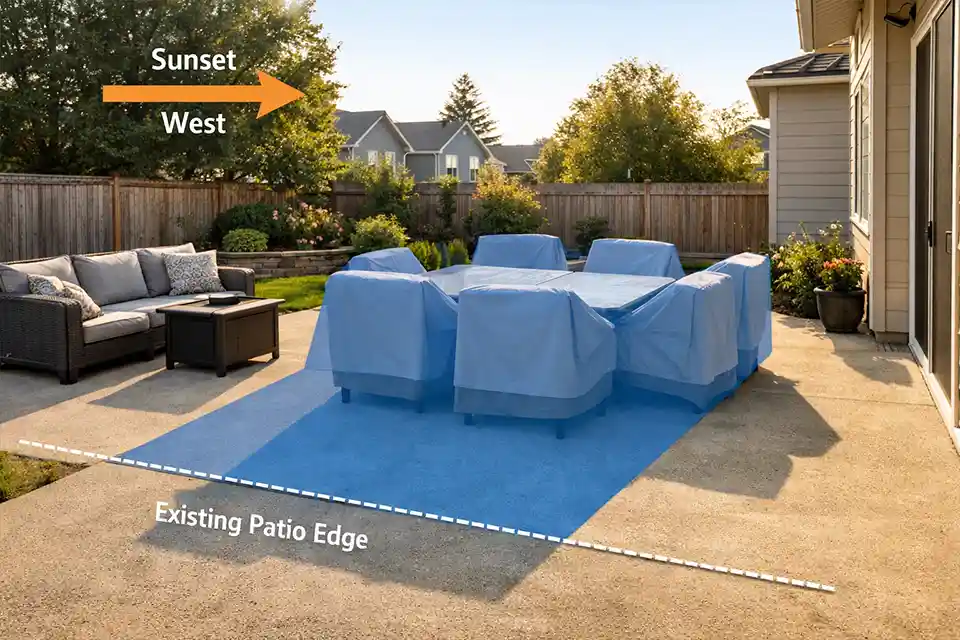
There is a clear point where casual shade stops being efficient. If you are repositioning an umbrella several times a week, still losing the patio for 3 or more afternoon hours, or still getting direct sun on the main seating zone during the hours you normally use it, the problem is no longer minor. At that stage, the patio usually needs a more fixed solution.
When Small Adjustments No Longer Solve It
Small adjustments make sense when the patio is close to working. They stop making sense when the whole use window is still compromised. If the main seating area remains exposed through the hottest 2 to 4 hours of your normal patio time, you are no longer fine-tuning. You are compensating for the wrong system.
When the Patio Needs a Layered Fix
Homeowners also tend to underestimate reflected heat. Light paving, masonry walls, nearby gravel, and broad hardscape edges can make a partly shaded patio feel hotter than expected. In those cases, overhead coverage alone may not change the experience enough. The real fix is often layered: overhead control, side filtering, and some reduction in reflected heat around the seating zone.
If the surrounding yard also has awkward light patterns or underperforming transitional zones, Backyard Landscaping Problems in Shaded Areas can help clarify where shade is helping and where it is creating new imbalance.
On hotter elevated spaces, How to Create a Microclimate in a Rooftop Garden is also useful because the underlying issue is sometimes broader than one shade device.
A Better Way to Plan Shade Before Buying Anything
The fastest way to waste money is to choose the product before defining the failure pattern. The smarter order is test first, measure second, then match the system to the way the patio is actually used.
Test the Patio During Real Use Hours
Test the patio during actual use hours for 2 to 3 days. Do not judge it at random times. Mark where the shadow edge falls at the start, middle, and end of the time window when the patio is normally used.
That one step usually reveals whether the problem is broad overhead exposure, low side sun, or a simple placement miss.
Measure the Actual Exposed Zone
Measure the exposed zone in feet rather than estimating it by eye. For dining, coverage should extend beyond the tabletop because chairs move and people lean into the sun path. For lounge seating, shoulder and face exposure matter more than whether the coffee table is fully shaded.
That difference changes what “enough shade” really means. It also prevents people from solving the wrong coverage target.
Choose the Shade Type by Use Pattern
Use an umbrella for one compact table or one tight seating group. Use a shade sail for a wider fixed zone when the anchor geometry is right from the start. Use a retractable awning when the patio needs broad directional shade next to the house. Use a pergola with canopy or added screens when the patio needs stable structure and layered control. Use vertical filtering when west or southwest sun is the main reason the space becomes uncomfortable.
Pro Tip: Before installing a permanent structure, mock up the intended shade edge with a temporary tarp or fabric at roughly the planned height for one afternoon. A low-cost test can catch a permanent placement mistake before it gets built.
A patio shade plan works when coverage hits the part of the patio people use during the hours they actually use it. If it misses that window, the patio may still look finished, but it will keep performing badly.
For broader practical guidance on sun and shade exposure, see Penn State Extension’s Planting in Sun or Shade.