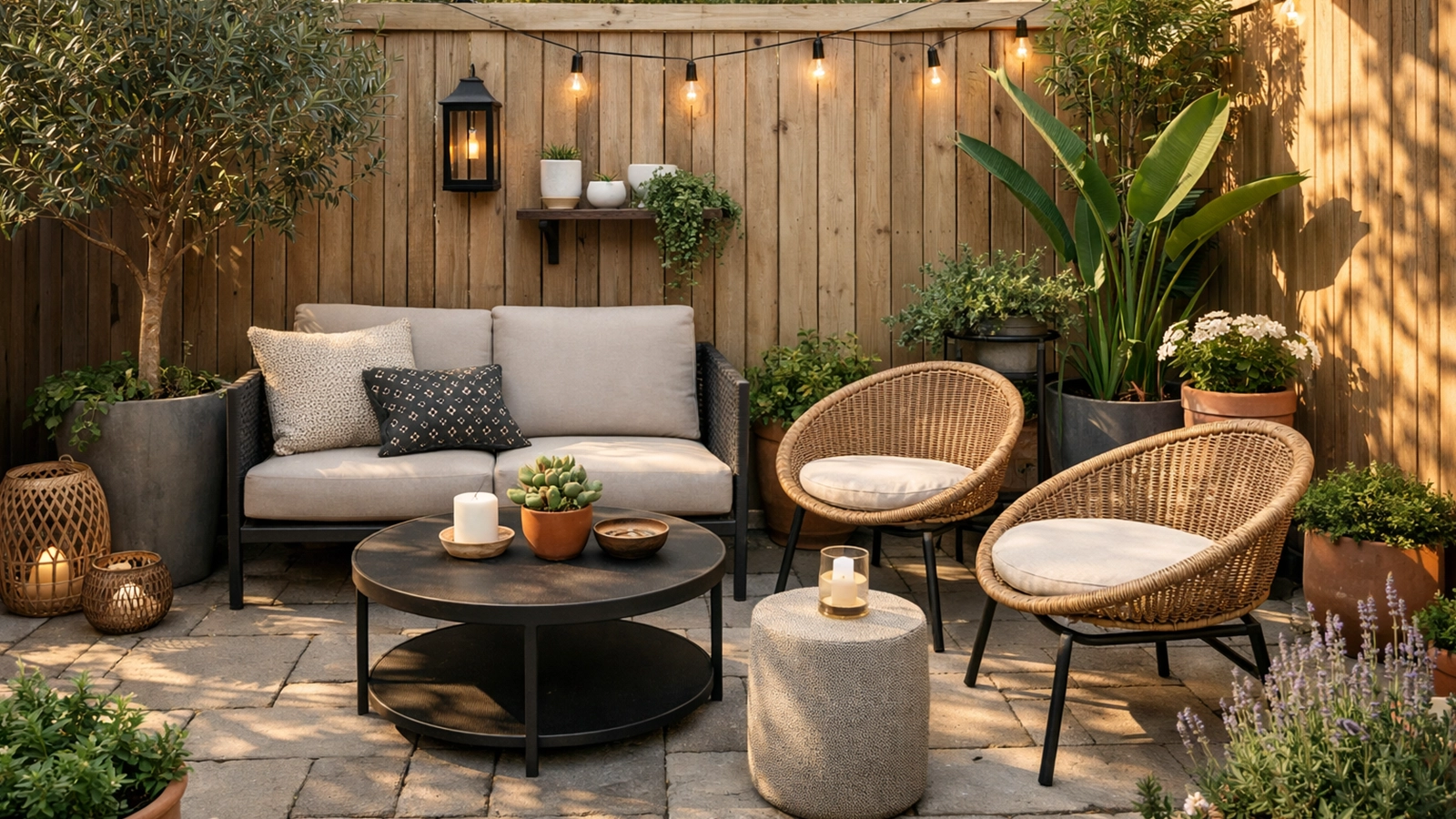
Designing a patio for a small backyard requires a shift in mindset from filling space to shaping experience. Limited square footage amplifies every design decision, making comfort, flow, and proportion more important than decorative volume. A well-designed small patio does not feel reduced; it feels intentional.
Daily use places different demands on outdoor spaces than occasional entertaining. Seating must invite lingering, surfaces must support routine activities, and circulation must remain intuitive even when furniture is in place. When these fundamentals guide decisions, a compact patio can function as a true extension of the home.
Understanding How You Actually Use the Space
✔️ The most successful small patio designs begin with an honest assessment of daily behavior rather than aspirational scenarios. Morning coffee, evening relaxation, pet movement, and solo downtime all require different spatial priorities than large gatherings. Designing for how the patio is used most often prevents wasted square footage and awkward layouts.
A depth-first analysis means identifying time-based patterns such as how long the space is occupied and at what times of day. Sun exposure, wind direction, and proximity to interior rooms directly influence comfort during routine use. When these environmental factors are aligned with daily habits, the patio feels naturally usable without constant adjustment.
Ignoring real usage patterns often leads to oversized furniture or underutilized zones. In a small backyard, even one poorly placed element can disrupt circulation or block sightlines. Thoughtful planning ensures that every feature supports routine comfort instead of competing for attention.
Choosing Furniture That Supports Comfort Without Crowding
💡 Furniture selection in compact patios should prioritize scale, flexibility, and visual openness. Low-profile seating with slim frames preserves sightlines and reduces visual weight, which helps the space feel larger than it is. Deep cushions can still provide comfort without bulky silhouettes when proportions are carefully chosen.
Multi-functional pieces play a critical role in everyday usability. Benches with hidden storage, nesting side tables, or stools that double as planters allow the patio to adapt without adding clutter. These choices support changing needs throughout the day while maintaining a clean layout.
Materials also influence how furniture performs in small spaces. Lightweight aluminum, treated wood, or woven synthetics are easier to reposition and visually softer than heavy masonry or oversized wicker. A carefully curated furniture set often outperforms a larger collection in both comfort and longevity.
Establishing Clear Zones Without Physical Barriers
⚠️ Zoning is essential in small patios, but physical dividers can quickly overwhelm limited space. Instead of walls or screens, designers rely on subtle cues such as furniture orientation, surface changes, or lighting placement. These techniques define function while preserving openness.
A seating zone can be established by anchoring furniture around a central table or rug without enclosing it. Dining or lounging areas become intuitive through alignment rather than separation. This approach allows the patio to feel cohesive instead of fragmented.
Visual zoning also supports mental clarity during use. When each area has a clear purpose, the space feels easier to navigate and more relaxing. This psychological comfort is especially important in small outdoor environments where overstimulation can occur quickly.
Using Surface Materials to Enhance Perceived Space
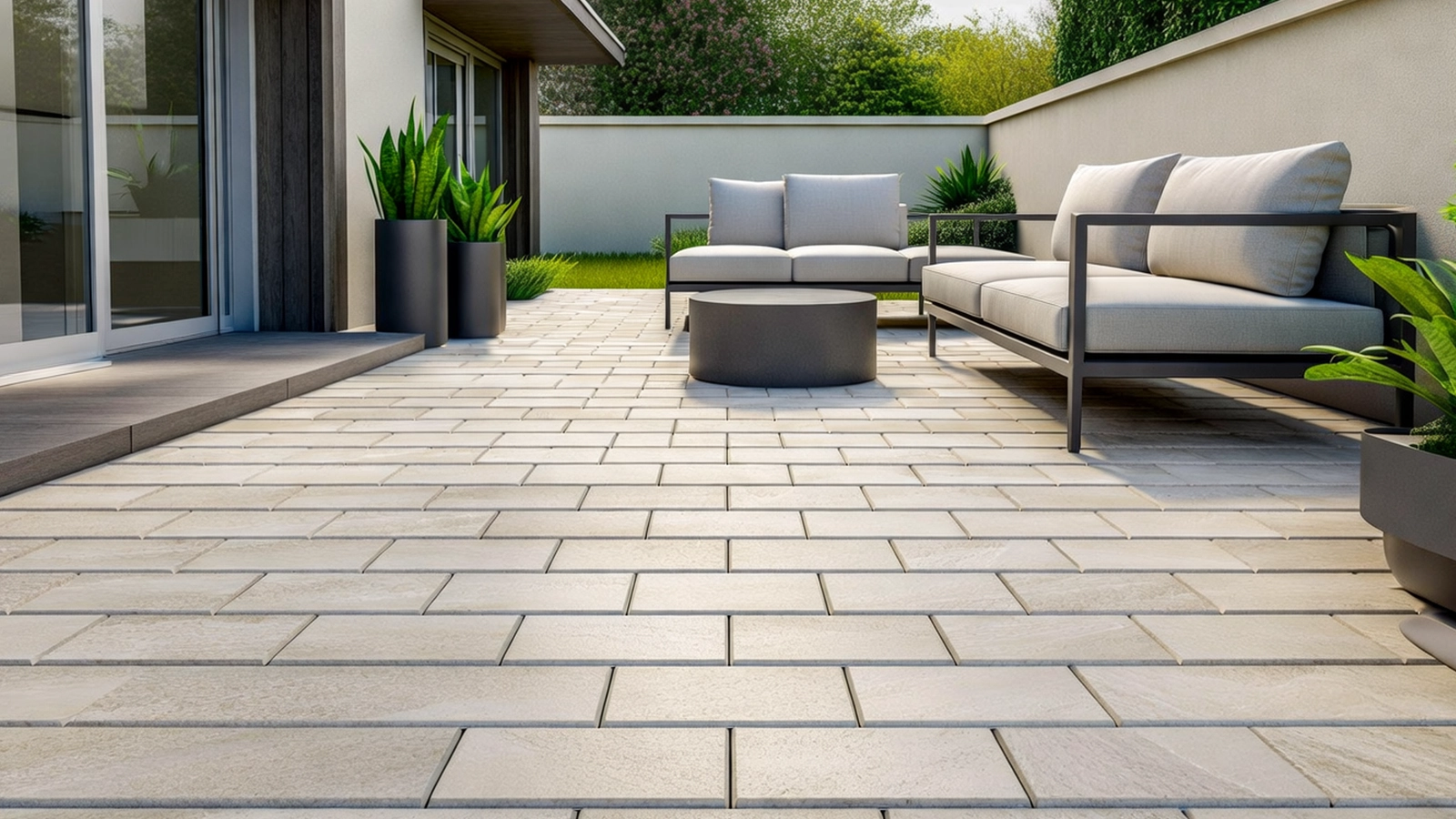
✔️ Ground surfaces have an outsized impact on how spacious a small patio feels. Light-toned materials reflect more light, reducing visual compression and improving comfort during daytime use. Continuous surfaces without abrupt transitions help the eye move smoothly across the space.
Pattern orientation subtly influences perception. Diagonal or linear paving can elongate a patio visually, while large-format pavers reduce grout lines and visual noise. These techniques create a sense of flow that supports daily movement and relaxation.
Texture selection matters as much as color. Overly rough or highly patterned surfaces can feel busy in tight quarters. A balanced surface choice supports barefoot comfort, easy maintenance, and visual calm throughout the seasons.
Integrating Greenery Without Sacrificing Function
🌿 Plants bring life and softness to small patios, but placement must respect circulation and seating comfort. Vertical planters, wall-mounted containers, and railing boxes introduce greenery without consuming valuable floor space. This approach preserves functionality while enhancing atmosphere.
Plant selection should align with maintenance capacity and light conditions. Slow-growing, compact species prevent overcrowding over time, reducing the need for frequent rearrangement. Consistent plant forms also contribute to a cohesive visual rhythm.
Greenery can also support microclimate comfort. Strategically placed plants provide shade, reduce reflected heat, and soften ambient noise. When integrated thoughtfully, plants become functional elements rather than decorative afterthoughts.
Designing for Daily Flow Between Indoors and Outdoors
🐾 A small patio succeeds when it feels like a natural extension of interior living space. Door placement, sightlines, and threshold materials all influence how often the patio is used. When access feels effortless, outdoor use becomes habitual rather than occasional.
Furniture alignment should respect primary movement paths. Clear walkways from the house to seating areas prevent congestion and frustration during daily use. This consideration is especially important for households with pets or children who move unpredictably.
Lighting completes the transition by supporting use beyond daylight hours. Soft, layered lighting near entrances and seating areas extends usability while maintaining a relaxed atmosphere. When indoor-outdoor flow is seamless, even a small patio supports meaningful everyday living.
Balancing Comfort and Durability in Everyday Patio Materials
✔️ In small backyards, material choices directly influence how often the patio is used rather than how it looks on day one. Everyday exposure to foot traffic, shifting furniture, and changing weather means surfaces and finishes must tolerate repetition without constant maintenance. Durability becomes a comfort feature when users are not worried about stains, scratches, or seasonal wear.
Comfort-driven materials also moderate temperature and texture. Stone that remains tolerable underfoot, composite decking that resists splintering, and fabrics designed to dry quickly all support spontaneous use. When materials remove friction from daily routines, the patio naturally becomes part of everyday life instead of a protected display area.
Material continuity between patio elements further reinforces calm. Mixing too many finishes in a small space creates visual tension that competes with relaxation. A restrained palette allows the user to focus on comfort and function rather than constant visual stimulation.
Managing Scale to Prevent Visual Overload
⚠️ Scale misjudgments are one of the most common failures in small patio design. Oversized furniture, tall planters, or bulky decor compress sightlines and make the area feel smaller than it is. Proper scale selection preserves openness while still supporting comfort and usability.
Human scale matters as much as object scale. Seating height, table proportions, and armrest widths should align with how the body interacts with the space. Furniture that feels physically comfortable but visually light strikes the balance small patios require.
Negative space is not wasted space in compact backyards. Leaving intentional breathing room between elements improves circulation and reduces mental clutter. This restraint allows individual features to feel purposeful rather than crowded.
Using Decor Strategically Without Sacrificing Space
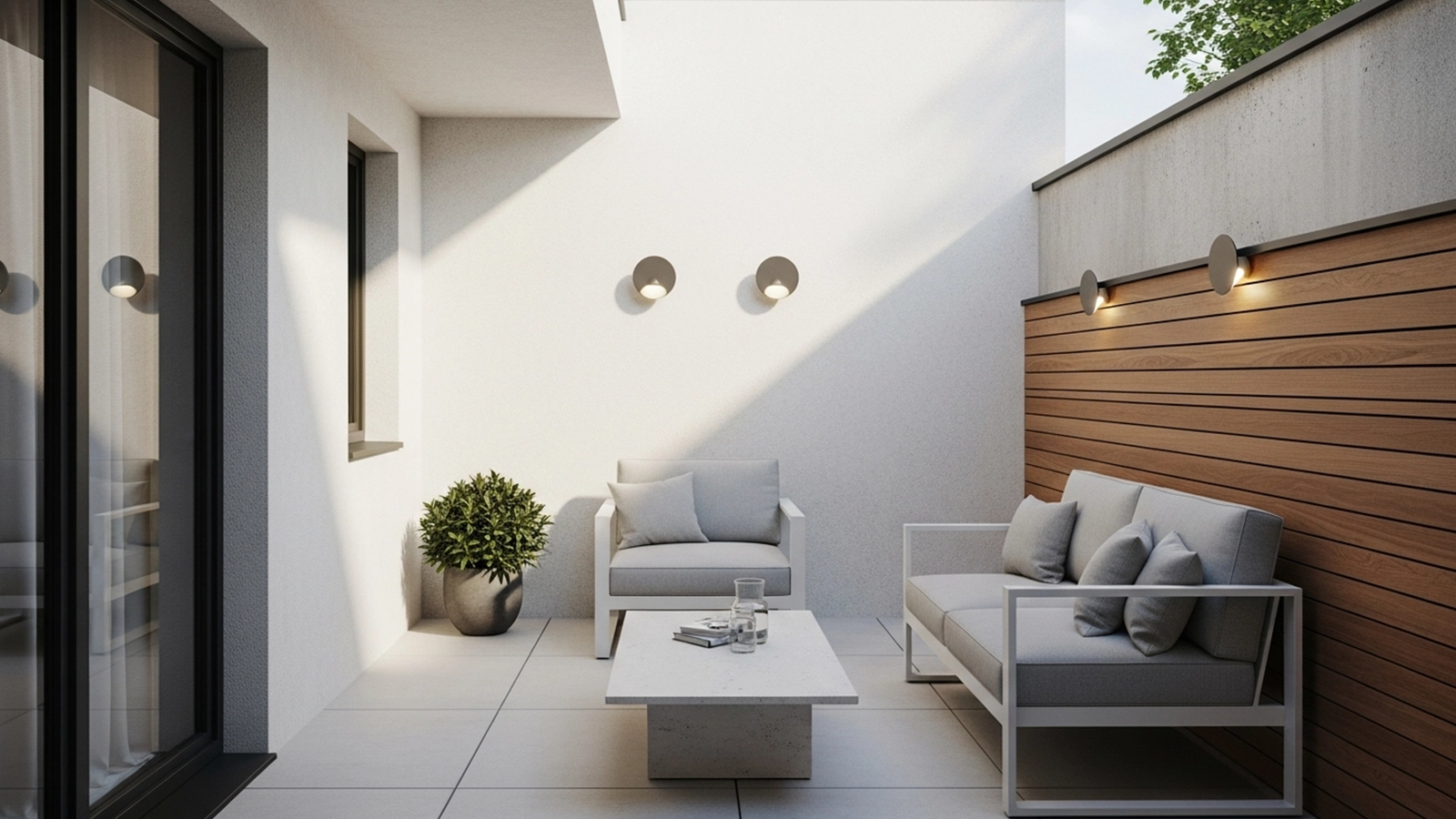
💡 Decor in small patios should reinforce function rather than introduce distraction. Items such as lanterns, cushions, or sculptural accents work best when they serve dual roles, contributing to ambiance while remaining visually restrained. Excess decor quickly overwhelms limited square footage.
Vertical placement is one of the most effective strategies for decorative expression. Wall-mounted art, hanging planters, or integrated lighting add personality without consuming floor area. This approach preserves circulation while still allowing for individual style.
Restraint also improves longevity. Fewer decor elements are easier to maintain, store, or update seasonally. When decor choices are intentional, the patio remains adaptable rather than locked into a single aesthetic moment.
Planning Lighting for Realistic Daily Use
✔️ Lighting determines whether a patio supports everyday routines or only daytime enjoyment. In small spaces, lighting must be layered carefully to avoid glare or visual clutter. A combination of ambient, task, and accent lighting supports different activities without overwhelming the space.
Low-level lighting near seating areas encourages relaxation and improves safety during evening use. Wall-mounted fixtures or integrated step lights provide illumination without occupying valuable surface area. This keeps the patio functional while maintaining a calm atmosphere.
Consistency in light temperature matters more in compact patios than large ones. Warm, unified lighting prevents harsh contrasts and supports visual comfort. When lighting feels intentional, the patio naturally extends daily use into evening hours.
Supporting Movement and Flexibility in Tight Layouts
🐾 Everyday patios must accommodate movement, not just static seating. Pets, children, and routine transitions between indoors and outdoors all place demands on circulation. Clear pathways prevent frustration and accidental wear on furniture or plants.
Flexible layouts allow the patio to adapt without constant rearrangement. Lightweight furniture, movable stools, and open corners enable quick adjustments based on activity or weather. This flexibility ensures the space remains useful across different times of day.
Designing for movement also improves perceived size. When users can move comfortably without obstruction, the patio feels larger and more welcoming. Flow becomes a form of comfort that supports daily engagement.
Creating Visual Depth Through Layering Instead of Size
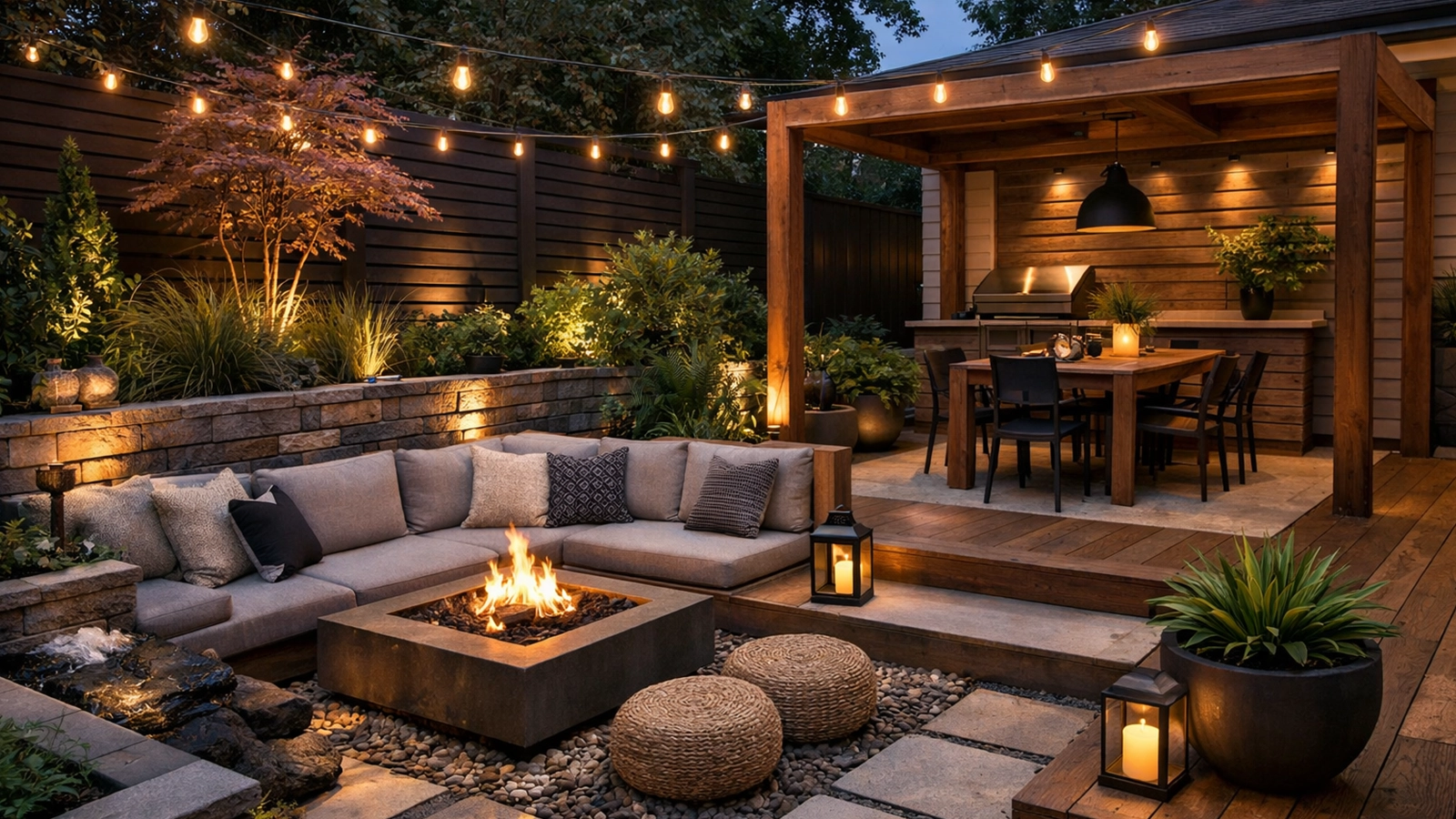
✔️ Visual depth compensates for limited square footage in small patios. Layering textures, lighting, and plant heights creates richness without expanding the footprint. This approach makes the space feel intentional rather than constrained.
Texture variation should remain subtle. Combining smooth surfaces with soft textiles or gentle greenery adds interest without visual noise. Overly bold contrasts can overwhelm small spaces and reduce comfort.
Depth also enhances emotional comfort. When a patio feels visually engaging but calm, users are more likely to spend time there daily. This layered approach sets the stage for refining how the patio connects to broader outdoor living patterns in the final section.
Designing for Long-Term Use Rather Than Seasonal Perfection
✔️ Small backyard patios often fail when they are designed around peak-season visuals instead of year-round usability. Everyday living requires materials, layouts, and features that perform consistently across temperature changes, moisture levels, and usage patterns. A patio that only feels comfortable a few weeks a year will never integrate into daily routines.
Designing for long-term use means anticipating wear and behavior over time. Furniture should age gracefully, surfaces should tolerate repeated cleaning, and layouts should remain functional even as plants mature. When these factors are considered early, the patio remains inviting rather than becoming a space that requires constant correction.
Longevity also affects emotional attachment. Spaces that feel reliable encourage habitual use, which reinforces the patio’s role as part of daily life. This sense of trust is especially important in small environments where every design decision has lasting impact.
Managing Maintenance to Preserve Daily Comfort
⚠️ Maintenance demands directly influence how often a small patio is used. If upkeep feels burdensome, the space slowly shifts from a daily asset to an avoided chore. Design choices should minimize required effort without sacrificing comfort or visual quality.
Low-maintenance materials such as sealed stone, composite decking, and weather-resistant fabrics reduce the need for frequent attention. Plant selections that do not shed excessively or require constant pruning also preserve cleanliness. These decisions protect both time and mental energy.
Maintenance planning also includes access and storage. Easy access to cleaning tools and discreet storage for cushions or accessories prevents clutter buildup. When upkeep is simple and predictable, daily use remains uninterrupted.
Supporting Everyday Activities Beyond Sitting
💡 A patio designed solely for seating underperforms in daily life. Everyday use often includes reading, working remotely, stretching, dining, or supervising pets. Supporting these activities requires thoughtful surface placement, power access, and adaptable furniture.
Side tables, ledges, or narrow counters expand functionality without crowding the layout. These elements support laptops, drinks, or planters while maintaining circulation. Even small additions can significantly increase how the space is used throughout the day.
Flexibility also matters for changing routines. A patio that supports multiple activities without reconfiguration feels intuitive. This versatility is critical in small backyards where space must work harder to justify its footprint.
Protecting Privacy Without Closing the Space In
✔️ Privacy is essential for daily comfort, but traditional screening solutions can overwhelm small patios. Instead of solid walls or dense fencing, layered and partial solutions preserve openness while reducing exposure. The goal is comfort, not isolation.
Vertical elements such as slatted panels, tall planters, or trellised greenery provide visual buffering without blocking light or airflow. These features soften boundaries and improve ambiance. When privacy solutions are integrated thoughtfully, they enhance rather than restrict the space.
Privacy also affects sound and perception. Even modest visual separation can reduce the feeling of being observed, which encourages longer and more frequent use. This psychological comfort is often more impactful than complete enclosure.
Connecting the Patio to Broader Outdoor Living Patterns
🐾 A small patio rarely exists in isolation from the rest of the yard or home. Its success depends on how well it connects to surrounding spaces and daily movement patterns. Visual alignment with adjacent garden areas or interior rooms strengthens this relationship.
Pathways, sightlines, and material continuity help unify the patio with the larger outdoor environment. Even minimal yards benefit from this cohesion, as it prevents the patio from feeling like a detached feature. This integration encourages spontaneous use throughout the day.
Designing with broader living patterns in mind also improves adaptability. When the patio aligns with how people move through their home and yard, it supports evolving routines without requiring redesign.
Allowing the Space to Evolve Without Losing Balance
✔️ Small patios should be designed with evolution in mind rather than fixed perfection. Over time, needs change, furniture wears, and preferences shift. A balanced design allows for these adjustments without visual or functional breakdown.
Neutral foundations make adaptation easier. When core surfaces and layouts remain restrained, accent elements can be swapped without disruption. This flexibility prevents the space from feeling dated or overdesigned.
Balance is preserved through restraint and clarity of purpose. When every element serves a role, additions feel intentional rather than reactive. This approach ensures the patio continues to support everyday comfort as life evolves around it.
External source: https://alliedoutdoorsolutions.com/blog/post/20-small-backyard-patio-ideas