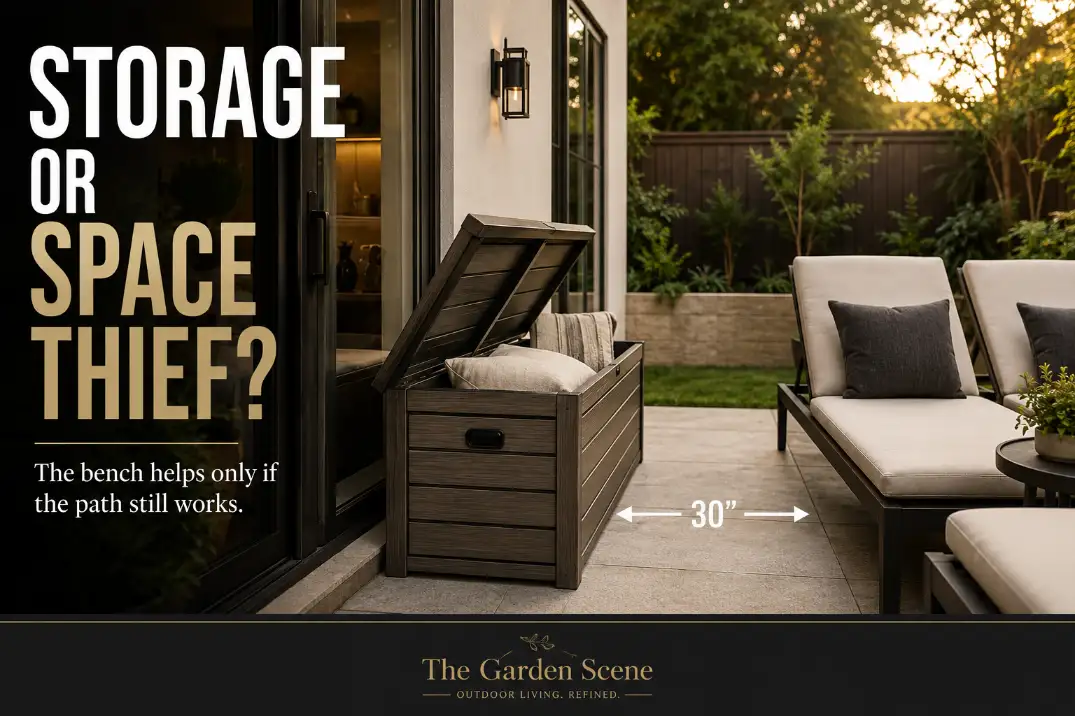
An outdoor storage bench helps when it removes clutter without stealing the space people actually use. It hurts when it becomes a bulky box pretending to be seating.
The first checks are simple: measure the open walking path, test whether the lid can open fully, and see whether stored items dry within 24–48 hours after rain. A bench that leaves less than 30 inches of clear passage near a door, dining chair, or grill path is not solving a storage problem; it is creating a layout problem.
This differs from a normal patio furniture issue because the bench has two jobs. It must sit comfortably and store safely. A chair only needs room around it. A storage bench also needs lid clearance, airflow, drainage, hinge strength, and a reason to be opened often enough that the storage does not become forgotten damp clutter.
The Real Test: Does the Bench Remove Friction or Add It?
Outdoor storage benches are most useful on patios where the main problem is scattered, lightweight items: cushions, small toys, garden gloves, grill covers, citronella candles, or folded throws. They are less useful when the real problem is too much furniture, poor circulation, or a patio that already has no spare wall edge.
The 30-Inch Passage Rule Matters More Than Capacity
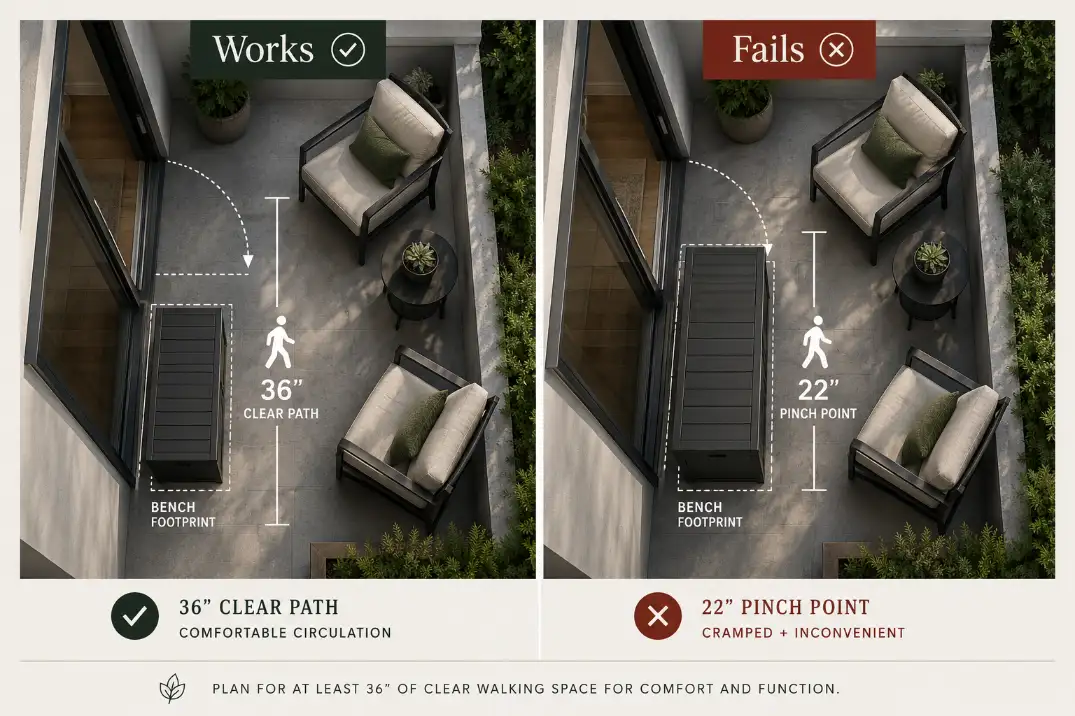
The most useful storage bench is not the one with the largest gallon rating. It is the one that preserves movement. On most patios, 30–36 inches of open passage is the practical minimum for walking past seating, carrying a tray, or opening a door without turning sideways.
If the bench narrows that path to 22–24 inches, the patio will feel smaller even if the clutter disappears.
This is where many homeowners misread the problem. They see visible clutter and buy more storage, but the patio may actually need less furniture or better placement. A bench can support a cleaner layout, but it cannot rescue a patio that is already overfilled.
If every chair has to be shifted before someone can sit down, the better starting point may be Backyard Storage Mistakes That Hurt Patio Flow, not a bigger bench.
The Lid Swing Is the Forgotten Measurement
A storage bench needs more space than its footprint. A 48-inch-wide bench may only be 22 inches deep, but if the lid tilts back or cushions pile on top, it may need another 8–14 inches of working room.
If the lid hits a wall, railing, planter, or chair back, people stop using it properly. Then the bench becomes outdoor clutter with a hollow center.
Pro Tip: Tape the bench footprint on the patio before buying, then mimic opening the lid with cardboard or a broom handle. If the motion feels awkward during the test, it will feel worse once the bench is full.
When Outdoor Storage Benches Help
A bench earns its space when it combines storage, seating, and edge control. That usually happens on patios with one underused boundary: along a fence, against a wall, beside a railing, or at the far edge of a lounge zone.
They Work Best as Edge Furniture
A storage bench is strongest when it defines the edge of a patio rather than sitting in the middle of it. Along a wall, it can replace two loose chairs, hide cushions, and keep the center open. In a small 8-by-10-foot or 10-by-12-foot patio, that edge placement can be the difference between a usable sitting area and a space that always feels half-blocked.
The mistake is treating the bench like a movable chair. It is not. Once loaded with cushions or tools, even a medium resin bench can weigh 60–100 pounds. People rarely shift it around after the first week. Choose the location as if it will stay there through the season.
For patios where storage is needed but floor space is already tight, Best Small Patio Storage Solutions is usually a better planning lens than simply shopping for the largest box.
They Help Most With Light, Bulky, Weather-Sensitive Items
Outdoor benches are well suited to cushions because cushions occupy a lot of volume without adding much weight. A 50–70 gallon bench can often handle two to four seat cushions plus small accessories, depending on cushion thickness. That is useful storage.
They are less convincing for heavy tools, bags of soil, ceramic pots, or sharp garden equipment. Those items make the bench harder to open, harder to clean, and more likely to damage the bottom panel.
If the storage need involves tools and supplies rather than soft patio items, a cabinet or off-patio storage zone usually makes more sense. A bench should reduce daily friction, not become a disguised shed.
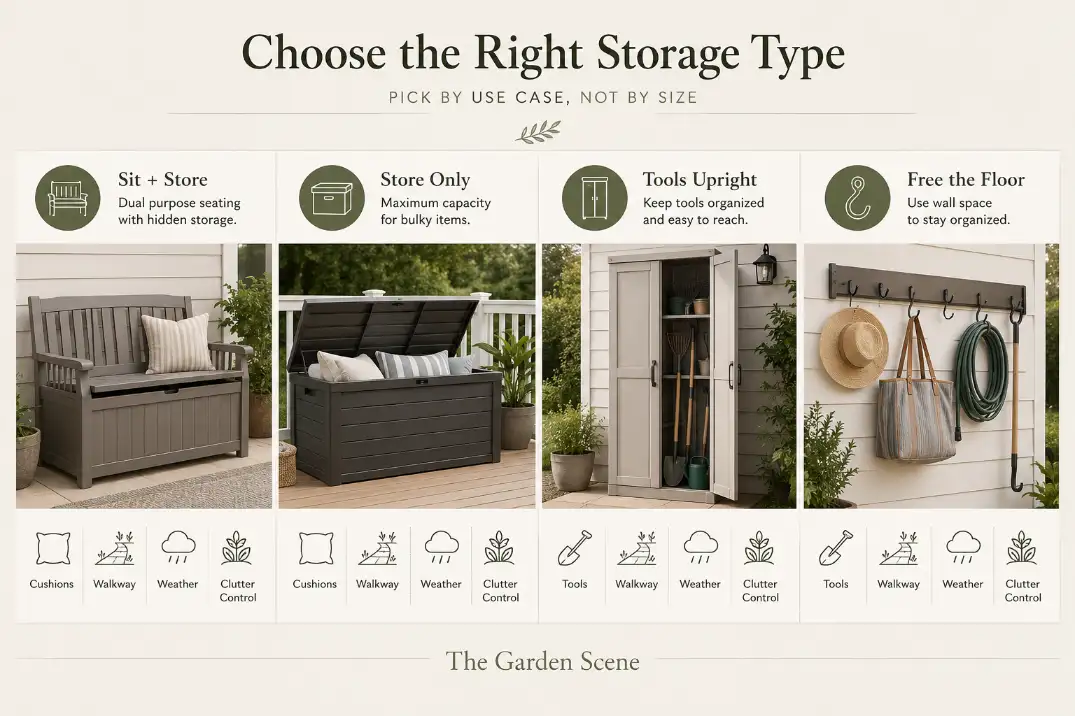
Storage Bench, Deck Box, or Cabinet: Which One Actually Fits?
The cleaner patio is not always the one with the most storage. It is the one where the right items live in the right place. A storage bench is only one format, and it is not the best answer for every patio.
| Storage option | Best for | Avoid when | Better signal |
|---|---|---|---|
| Storage bench | Cushions plus real edge seating | Walkways are already tight | It replaces clutter or a chair |
| Deck box | Pure storage near seating | You expect comfortable seating | It fits off to the side |
| Tall cabinet | Tools, sprays, grill gear | Wind exposure is high | Items need shelves, not a bin |
| Wall hooks | Hoses, small tools, kids’ gear | No solid wall or fence nearby | Floor space is scarce |
| Off-patio storage | Rarely used seasonal items | Items are needed daily | The patio feels open again |
The common overestimate is seating value. A bench that technically seats two may still be the last place anyone wants to sit if it is too deep, too hot, too low, or placed outside the conversation zone. Typical patio seating works best around 17–19 inches high, but height alone does not make a bench comfortable. Lid flex, lack of back support, and awkward placement matter just as much.
Once a bench passes the 30-inch path test and the 48-hour moisture test, product comparison starts to matter. That is where Best Outdoor Storage Benches and Deck Boxes for Small Patios makes more sense than choosing by gallon size alone.
Where Outdoor Storage Benches Hurt the Patio
Storage benches hurt patios when they solve the visible symptom while ignoring the underlying mechanism. The symptom is clutter. The mechanism is usually one of three things: not enough circulation, no dry storage path, or too many functions competing for the same square footage.
They Turn Into “Maybe Seating”
A storage bench is not automatically extra seating. If it sits behind a table, faces away from the conversation area, or requires people to move cushions before sitting, it is storage first and seating only in theory. That distinction matters because a bench takes up permanent space even when nobody uses it.
A cosmetic signal is “the patio looks cleaner.” A decision-useful signal is “people can move, sit, open the door, and retrieve items without rearranging the patio.” The second one matters more.
They Trap Moisture When Airflow Is Poor
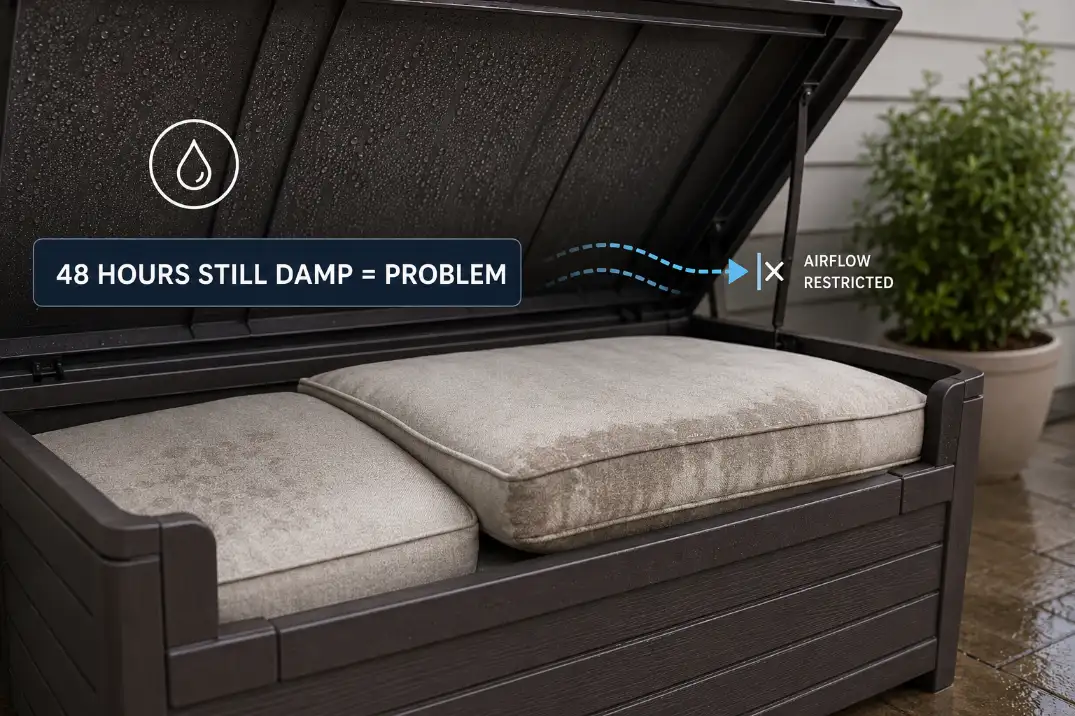
The hidden failure is moisture. A bench can look clean outside while cushions inside stay damp for days. In humid Florida, shaded Midwest patios after summer storms, or coastal California yards with marine moisture, a closed bench can hold damp air longer than people expect.
A practical threshold: if cushions still feel cool, clammy, or faintly musty after 48 hours inside the bench, the storage is not dry enough. Healthy storage lets items dry or stay dry. Failing storage slows drying, traps humidity, and turns the bench into a mildew chamber.
Look for small ventilation gaps, raised feet, a sloped or water-shedding lid, and a bottom that does not sit flat in puddles. Even 1/8 inch of standing water near the base after rain can keep the underside damp long enough to cause odor and staining.
Are Outdoor Storage Benches Waterproof Enough for Cushions?
Most outdoor storage benches are water-resistant, not truly waterproof. That distinction matters. A bench can shed direct rainfall and still allow wind-driven rain through seams, condensation under the lid, or moisture from damp cushions placed inside.
After a normal storm, check the interior corners and underside of the lid within 12 hours. If the walls are dry but the cushions are damp, the storage habit is the issue. If seams, corners, or the bottom panel are wet, the bench design or placement is failing.
This is why buying a larger “weatherproof” bench often wastes time. Size does not fix trapped moisture. Seal quality, airflow, drainage, and what you put inside matter more.
Quick Diagnostic Checklist
Use this before buying or keeping an outdoor storage bench:
- Clear path remains at least 30 inches wide after placement.
- Lid opens fully without moving chairs, cushions, planters, or grill tools.
- Stored cushions feel dry within 24–48 hours after normal rain exposure.
- Bench sits on a surface that drains instead of holding water at the base.
- Contents are light enough that opening the bench stays easy.
- The bench replaces clutter or furniture rather than adding another object.
- Lock, latch, lid, and hinge still work smoothly after loading.
If two or more of these fail, the bench is probably not the first fix.
Bench Material: What Actually Changes the Outcome
Material matters most after the location passes the space and moisture tests. The right material depends on sun, rain, weight, climate, and maintenance tolerance.
Resin Works, Until Heat and Flex Win
Resin is often the easiest choice for cushion storage because it sheds water and needs little upkeep. But cheap resin benches can flex, crack, or let wind-driven rain through seams.
The hinge and lid stiffness are more important than the marketing capacity. A rigid 70-gallon bench is often more useful than a flimsy 120-gallon one.
In hot Arizona or Texas afternoon sun, dark resin can become uncomfortable to touch and more prone to lid deformation. If the bench sits in full sun from noon to 4 p.m., UV exposure and surface heat matter more than storage volume.
For patios where the bench is only part of a larger storage setup, Best Patio Storage Ideas for Easy Use can help separate storage that gets used from storage that only looks tidy on day one.
Wood Needs a Better Setting
Wood works when the bench is part of the visible patio design and the owner accepts maintenance. It is a poor choice for a constantly wet corner or a patio with irrigation overspray. If sprinklers hit the bench several times per week, finish failure is not a surprise; it is the expected outcome.
A wood bench exposed to regular rain usually needs resealing about every 1–2 years. Under a covered patio with good airflow, that maintenance window can stretch. In a damp, shaded corner, it can shrink quickly.
The Lid Tells You More Than the Gallon Rating
The lid is where weak benches reveal themselves. If the lid flexes under light hand pressure, drags during assembly, or needs force to close, do not assume it will “settle.” Misalignment usually gets worse after heat cycles, loading, and repeated opening.
During assembly, the lid should close evenly without pushing one corner down by hand. If the panels rack out of square on day one, the bench is more likely to leak, bind, or stress the hinges after a few heat cycles.
Soft-close or supported lids are not just a luxury. They reduce finger-slam risk, protect hinges, and make the bench easier to use daily. A storage bench that feels annoying to open will not stay organized.
What Changes in Different US Conditions
The best bench for a covered patio in Ohio is not automatically the best bench for a full-sun patio in Phoenix or a salt-air deck near the California coast.
Humid and Rainy Regions
In humid climates, ventilation can matter more than a tight seal. A fully sealed bench may keep direct rain out but still trap damp cushions inside. Raised feet, drain gaps, and a lid that sheds water cleanly are more valuable than maximum capacity.
Dry Desert Patios
In dry desert conditions, moisture may be less of a concern than heat, UV exposure, and brittleness. Dark finishes can become unpleasant to sit on, and cheaper plastic can weaken over time. Shade exposure should influence the material choice.
Northern Freeze-Thaw Areas
In northern states, trapped water can freeze in seams or low spots. That can worsen cracks, loosen joints, and make brittle plastic fail faster. A bench that sits level in summer but collects meltwater in winter is not a good long-term choice.
Coastal Patios
Near coastal moisture, metal hinges and hardware deserve extra attention. A bench may look fine from the outside while screws, hinges, or latch parts corrode. Stainless or corrosion-resistant hardware is worth prioritizing when salt air is part of the setting.
When the Standard Fix Stops Working
There is a point where a storage bench stops making sense. If the patio is under about 80 square feet and already needs dining, lounging, and grill access, a full-size bench may be the wrong object. The better fix may be vertical storage, a slim deck box, wall hooks, or moving seasonal items off the patio entirely.
A bench also stops making sense when the storage items are rarely used. If something comes out twice a year, it does not deserve prime patio space. Store it in a garage, shed, side-yard cabinet, or weatherproof bin away from the main seating area. Patios work better when the closest storage supports the most frequent actions.
That is the sharper way to decide: keep daily-use items near the patio; move occasional-use items away. Store Items Off the Patio to Free Space fits this situation because it solves the layout problem instead of adding another box to the same crowded zone.
If the storage problem is really tools, sprays, grill accessories, or small equipment, a bench is usually the wrong container.
A vertical unit with shelves keeps items visible and separated, which is why Best Backyard Storage Cabinets and Tool Organizers is the stronger next step when the patio clutter is not mostly cushions.
Pro Tip: Store one category inside the bench if possible. Mixed storage turns the bench into a rummage bin, and rummage bins stop being used neatly.
Security and Wind: Useful, but Easy to Overrate
A lockable lid helps on front-facing patios, pool areas, windy lots, and shared spaces. It can keep kids, pets, and casual handling out of the bench, and it may keep cushions from lifting during gusty weather. But a lock does not turn a light resin bench into secure storage; valuables belong in a locked garage, shed, or sturdier cabinet.
The Practical Decision Rule
Buy or keep an outdoor storage bench when it passes three tests: it preserves movement, keeps contents dry, and replaces something worse. It should make the patio easier to use within the first week, not just cleaner on the day it is assembled.
Skip it when it narrows circulation, blocks door swing, traps damp cushions, or adds “maybe seating” that nobody chooses. In those cases, the bench is not a storage solution. It is a patio layout mistake with a lid.
If you are weighing the bench against chairs, a dining set, or a lounge layout, Patio Furniture Layout by Size can help you judge whether the patio has room for storage furniture before you commit.
Questions People Usually Ask
Is an outdoor storage bench waterproof?
Usually no. Most are water-resistant, which means they can shed normal rain but may still allow moisture through seams, condensation, or wind-driven rain. If contents must stay completely dry, use sealed cushion bags inside the bench or choose a better-protected cabinet.
Should cushions be stored in a bench every night?
Only if they are dry before storage. Storing damp cushions overnight once or twice is not a disaster, but repeated damp storage can create odor and mildew. If cushions are still damp after 24 hours, let them air out before closing them inside.
Is a storage bench better than a deck box?
A bench is better when it genuinely adds usable seating or supports the patio edge. A deck box is better when storage is the only job. If nobody will sit on it, choose the storage shape that wastes the least space.
For broader official guidance on moisture and ventilation, see the University of Minnesota Extension.