You step onto your porch at dusk and notice you can see straight into your neighbor’s kitchen. A passing car’s headlights sweep across your windows, and the yard suddenly feels exposed even though nothing has physically changed.
In suburban neighborhoods, privacy rarely disappears overnight. A removed tree, an added second story, or heavier traffic quietly shifts sightlines over time.
As many residential landscape architects emphasize, perceived exposure is usually a geometry issue, not a square footage problem — the angles change, and the comfort level follows.
Step 1: Identify Your Primary Exposure Zones
You stand at the end of the driveway and notice how clearly the porch seating is visible. From the sidewalk, the front windows offer a direct line of sight inside. The yard does not feel private because certain angles are completely open.
Exposure in suburban yards usually shows up in specific zones:
-
The diagonal view from a neighbor’s second-story window.
-
The straight-on view from passing cars.
-
The side angle from a corner lot intersection.
-
The clear line between driveway and living room window.
Each of these angles feels different in daily life. You may not mind people walking past, but headlights at night make the yard feel harsh. You may not notice street views, yet a neighbor’s upper window feels intrusive.
Many homeowners misread the problem at first. They assume the entire yard lacks privacy, when in reality only a few sightlines are responsible for the discomfort. Understanding common challenges in suburban visibility helps clarify why certain homes struggle more than others with unwanted exposure.
Before changing anything, it helps to separate what feels exposed from what actually is. The issue is rarely the whole property. It is usually a handful of repeat viewpoints that show up every day.
| What You Notice | What You Assume | What Is Actually Happening |
|---|---|---|
| You feel watched when sitting on the porch. | The entire yard lacks privacy. | One upper-level window has a direct diagonal view. |
| Headlights sweep across the living room at night. | The front yard is too open. | The driveway creates a clear corridor from the street. |
| Neighbors seem close when you step outside. | The lot is too small. | Sightlines are uninterrupted due to low planting. |
Step 2: Establish a Layered Planting Framework
You walk along the property edge and see a single row of low shrubs. They mark the boundary, but they do not block much. The yard feels open because there is no depth between the street and the house.
A flat planting line often creates three problems:
-
It defines the edge but does not soften views.
-
It leaves upper windows completely exposed.
-
It creates a sharp visual line instead of gradual screening.
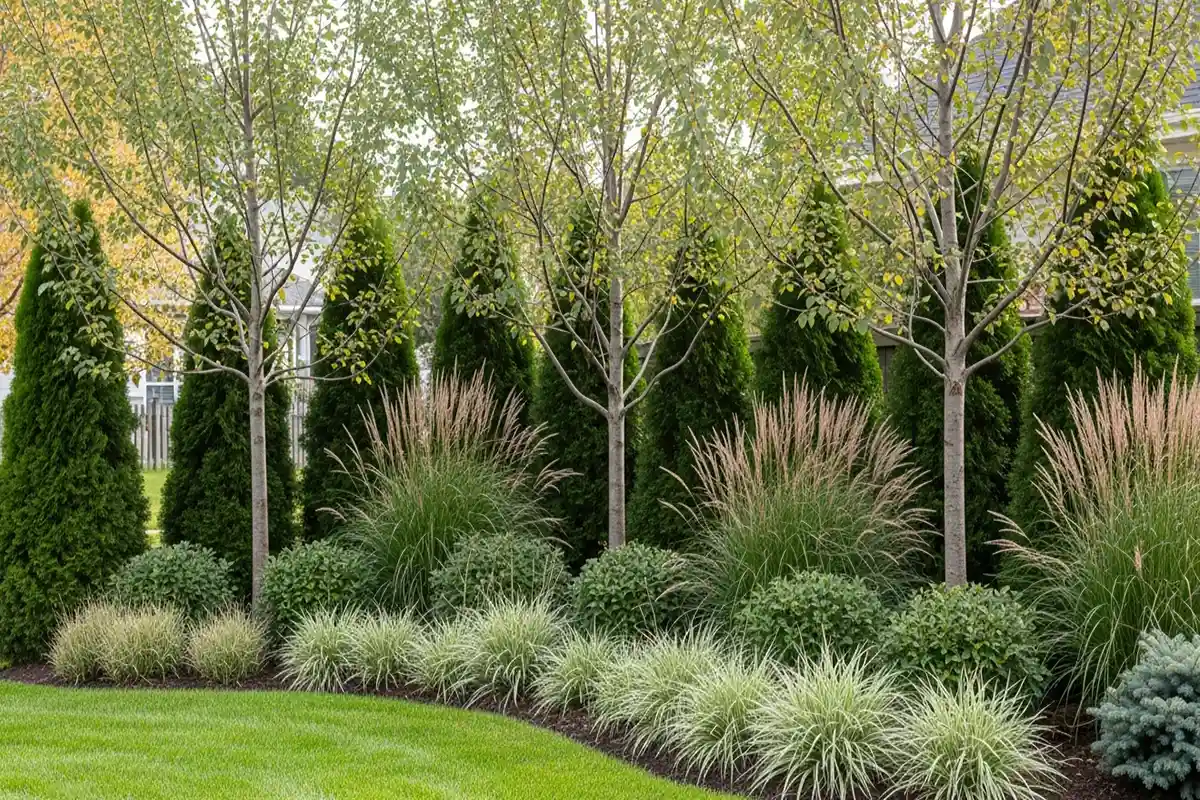
Suburban yards respond better to layering than to single barriers. When plants vary in height and are staggered, the eye slows down. Views become filtered instead of direct.
In everyday use, this difference is obvious. Sitting on a porch behind layered planting feels calmer than sitting behind a short hedge. The yard begins to feel buffered rather than bordered.
Step 3: Balance Privacy With Curb Appeal
You pull into the driveway and imagine tall hedges blocking everything from view. For a moment, that sounds appealing. Then you picture the house disappearing behind a wall of green and the front looking closed off.
Over-screening creates its own issues:
-
The home feels hidden rather than welcoming.
-
Windows lose natural light.
-
The facade loses proportion and shape.
Suburban neighborhoods rely on a degree of openness. Completely blocking the front yard can feel defensive and out of place. What usually works better is selective filtering.
From the street, the front door should still be readable. From the porch, seating areas should feel slightly shielded. When privacy supports presentation instead of fighting it, the yard feels intentional rather than guarded.
Step 4: Integrate Structural Elements Strategically
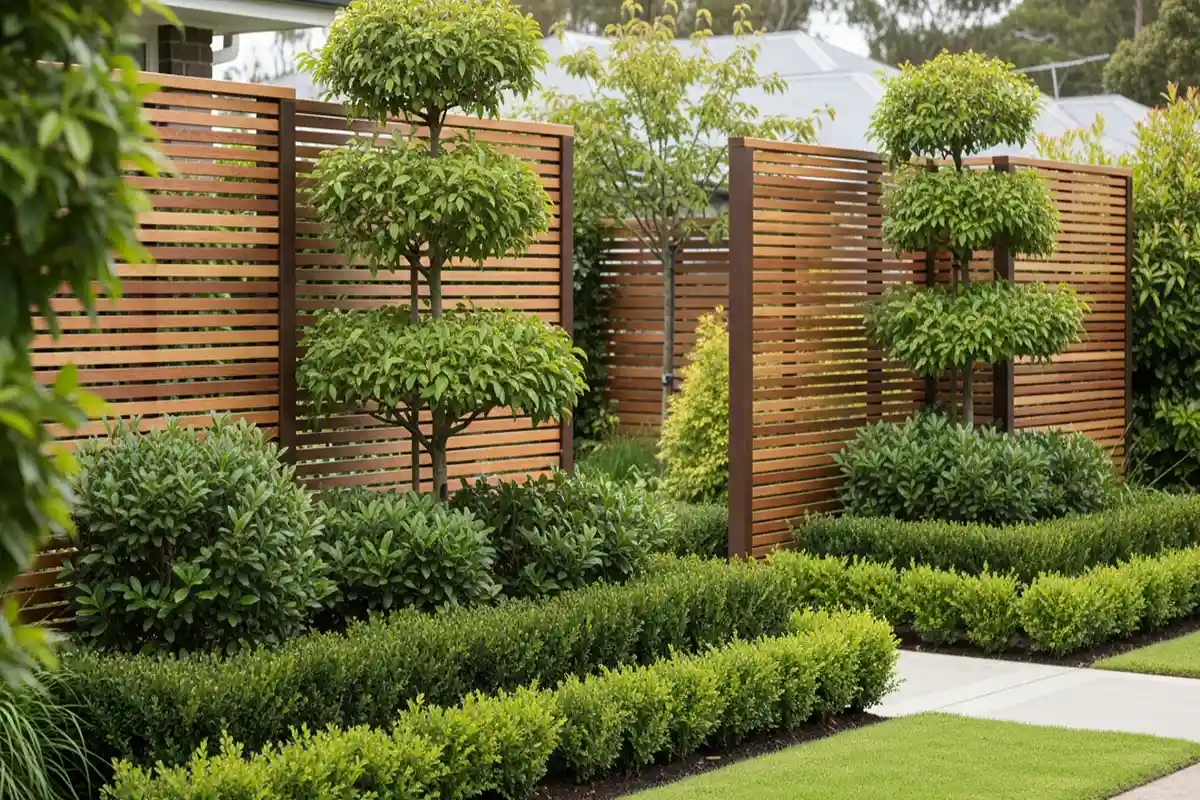
You stand near the walkway and realize plants alone may not interrupt the view from the street. Even mature shrubs cannot block certain angles without becoming oversized. The exposure problem sometimes sits at a very specific height.
Structural elements address focused sightlines that planting cannot easily handle:
-
Slatted screens break direct views while allowing airflow.
-
Partial fencing shields seating areas without enclosing the yard.
-
Pergola posts create vertical interruption at eye level.
Unlike solid fences, open structures feel lighter. They redirect attention rather than create a wall. In daily use, this difference shows up in how the yard feels at sunset or under porch lighting.
Seasonal change also matters. Deciduous plants lose leaves, but structural elements remain consistent. In colder months, when yards often feel most exposed, these features continue to interrupt key lines of sight.
Step 5: Consider Height Gradation and Property Scale
You look from the sidewalk toward the house and imagine tall evergreens planted along the entire frontage. The idea promises privacy, yet it also suggests a heavy, shadowed edge.
Height problems usually show up in simple ways:
-
Plants near the street block visibility too early.
-
Tall shrubs crowd windows and reduce light.
-
Uniform height makes the yard feel boxed in.
Gradual height change feels more natural. Lower plantings near the curb keep the yard visually open. Taller elements closer to the house provide meaningful screening where it matters most.
On wider lots, uneven exposure often calls for uneven height. Concentrating taller planting where sightlines are strongest prevents the entire frontage from feeling fortified.
Step 6: Plan for Growth, Maintenance, and Long-Term Density
You plant young shrubs and the yard still feels open. Two years later, those same shrubs begin to lean into the walkway. Growth changes how privacy behaves over time.
Long-term density creates challenges many homeowners underestimate:
-
Fast growers fill gaps quickly but demand frequent trimming.
-
Overgrown shrubs block light and crowd windows.
-
Tight spacing reduces airflow and plant health.
A privacy buffer that feels balanced in year one may feel heavy in year five. Maintenance is not just about appearance; it affects how light, air, and movement flow through the yard.
In everyday life, overgrowth shows up as narrowed paths, darker rooms, or branches brushing against siding. Planning for mature size from the beginning prevents privacy from turning into confinement.
The deeper layers of climate, elevation, and functional zoning shape how this framework performs across different suburban settings, which becomes clearer as the design moves beyond the initial structure.
Step 7: Select Plants Based on Climate and Light Conditions
You stand in the front yard in early spring and notice one side warms up quickly while the other stays damp and cool. The sun hits unevenly because neighboring houses cast shifting shadows throughout the day. Privacy plantings respond directly to these light patterns, and mismatches show up fast.
Light exposure shapes density over time. Shrubs placed in deeper shade often stretch toward available light, thinning at the base. In full sun, certain evergreens can experience heat stress or browning if soil moisture is inconsistent.
Climate zones further influence structure. In colder regions, winter wind desiccates exposed foliage, reducing screening just when visibility increases due to leaf drop elsewhere. In humid southern areas, dense planting can trap moisture and encourage fungal pressure, gradually weakening coverage.
Soil conditions add another layer. Compacted suburban soils restrict root expansion, slowing growth and causing uneven canopy development. When plant biology conflicts with site reality, privacy buffers lose density long before homeowners expect them to.
Step 8: Use Mixed Textures to Prevent Visual Flatness
From the sidewalk, a single-species hedge looks solid at first glance. After a few months, the line appears flat and visually heavy. Texture affects how privacy is perceived even when height remains constant.
Different leaf sizes and branching habits interact with light in distinct ways. Fine-textured foliage diffuses views more softly, while broad leaves block sightlines more abruptly. A combination prevents the “green wall” effect that often feels rigid in suburban settings.
Monoculture planting also increases systemic risk. If one disease or pest targets the species, the entire buffer can thin simultaneously. Mixed textures distribute that risk and preserve structural continuity.
Over time, texture influences maintenance behavior. Dense, fine-leaf shrubs require lighter pruning to maintain form, whereas broadleaf species often demand more shaping. These interactions affect how evenly screening is maintained year after year.
Step 9: Why does my yard still feel exposed even after planting shrubs?
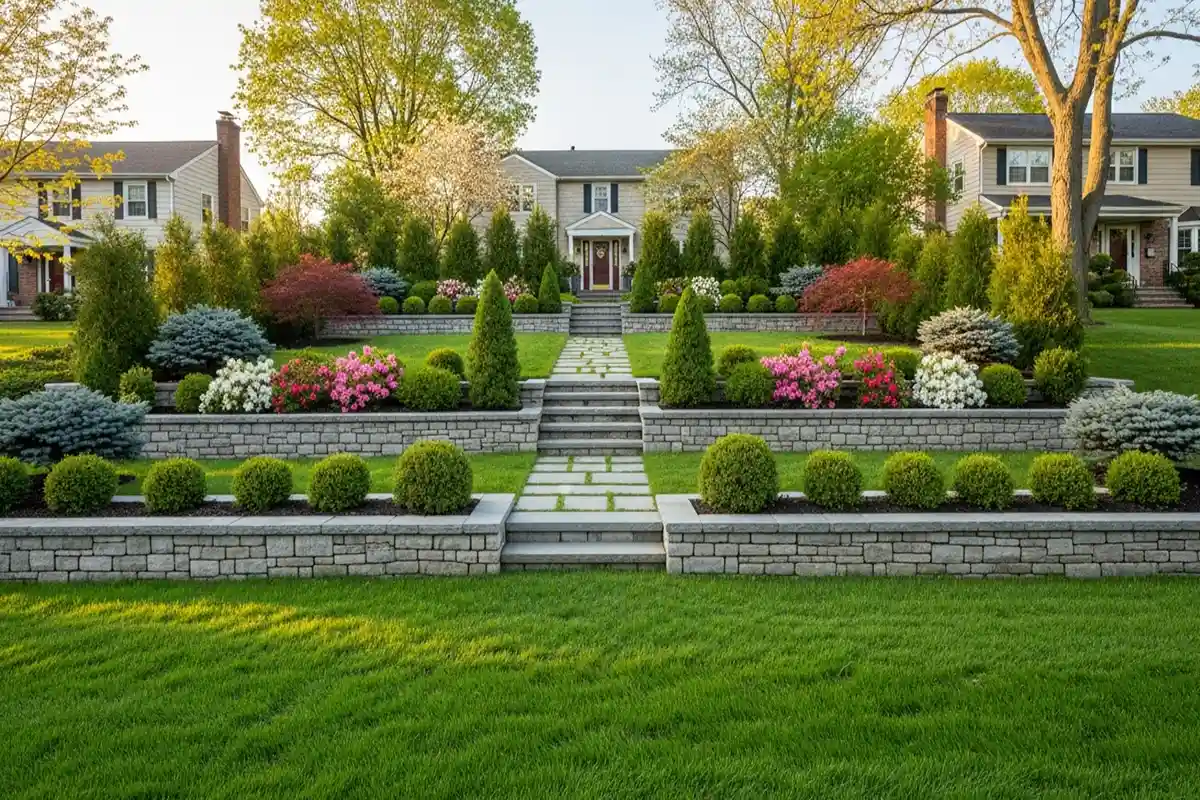
You planted shrubs along the property line, yet sitting on the porch still feels uncomfortably visible. From certain angles, people walking past can see over or between plantings. The discomfort often comes from how sightlines move rather than from plant height alone.
Shrubs that look tall from the lawn may not intercept views from a higher sidewalk or neighboring window. Elevation shifts, seasonal thinning, and spacing gaps combine in subtle ways. What appears dense at eye level does not always block diagonal or elevated views.
Is shrub height the main reason it still feels exposed?
Not always. Diagonal sightlines often pass above or between plants that seem tall enough from straight-on views.
Does spacing between shrubs matter more than I think?
Yes. Even small gaps widen visually at distance and create clear viewing corridors.
Could lighting be making the space feel more open at night?
Absolutely. Interior lights and exterior uplighting can silhouette activity behind otherwise adequate planting.
Do sloped lawns change how screening works?
They do. A downward slope toward the street lowers effective plant height from a passerby’s perspective.
Does winter leaf loss affect exposure more than expected?
Yes. Deciduous shrubs can reduce screening dramatically once foliage drops.
These layered variables explain why planting alone sometimes fails to deliver the expected sense of enclosure.
Step 10: Define Functional Privacy Zones Within the Yard
A front yard rarely serves a single purpose. Seating areas, entry paths, decorative beds, and pet zones all coexist within limited square footage. Privacy behaves differently depending on how each zone is used.
Exposure intensifies in areas where people remain stationary. A porch swing or bench invites longer occupancy, increasing sensitivity to visibility. In contrast, transitional spaces like walkways tolerate higher openness because movement reduces perceived vulnerability.
The following analytical matrix illustrates how use intensity interacts with exposure risk:
| Yard Zone | Typical Activity Duration | Exposure Sensitivity | Structural Impact |
|---|---|---|---|
| Porch seating | Extended sitting | High | Requires layered screening |
| Front walkway | Brief passage | Moderate | Partial filtering sufficient |
| Driveway edge | Short-term activity | Low to moderate | Visual interruption optional |
| Lawn center | Variable | Context dependent | Depends on slope and neighbor height |
| Side yard strip | Occasional use | High if narrow | Focused screening needed |
This comparison clarifies why some areas demand denser buffers while others remain visually open without discomfort.
Step 11: Combine Soft Landscaping With Design Intent
Architecture influences how privacy reads from the street. A modern facade with strong horizontal lines responds differently to screening than a traditional home with layered trim and columns. Plant forms either reinforce or disrupt architectural rhythm.
Linear homes often benefit from structured hedges that echo clean edges. More detailed facades tolerate varied shrub groupings without appearing cluttered. Misalignment between planting form and house style can make the buffer look accidental.
Design cohesion becomes easier when privacy planning is integrated with broader suburban layout strategies. When screening aligns with architectural proportion, the yard feels composed rather than reactive.
Over time, mismatched planting grows more noticeable. As shrubs mature, they amplify either harmony or imbalance with the facade.
Step 12: Reinforce Privacy at Entry Points Without Blocking Access
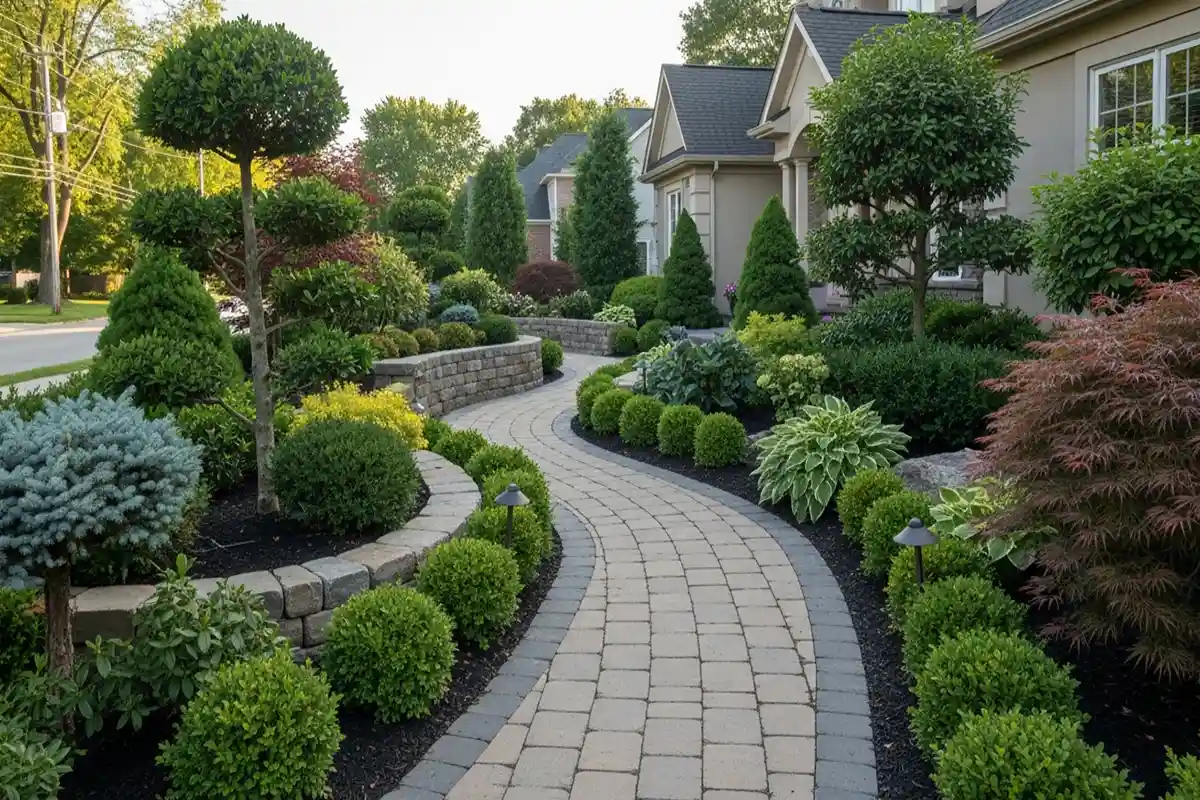
Approaching the front door reveals how sensitive entry points are to visibility. Complete obstruction can create unease, yet full openness leaves occupants exposed while unlocking or greeting visitors.
Environmental and structural conditions alter how entry privacy behaves:
-
Corner lots increase cross-directional visibility from intersecting sidewalks.
-
Elevated porches expose seating to eye-level views from the street.
-
Narrow setbacks reduce distance available for layered screening.
-
Bright exterior lighting amplifies visibility at night.
Each condition modifies how much visual interruption is needed. Subtle lateral planting, rather than frontal blocking, often maintains both safety and comfort.
As seasonal growth, elevation shifts, and architectural scale interact, the privacy buffer begins to behave as a dynamic system rather than a fixed line of plants. These dynamics become more pronounced as plant maturity and long-term maintenance factors enter the equation.
Step 13: Reinforce Seasonal Weak Points Before They Reopen
Winter arrives and the yard that felt sheltered in July suddenly looks thinner. Bare branches reveal angles that were invisible in full leaf. Seasonal shifts expose where the buffer lacks structural depth.
Minor seasonal gaps often show up as light filtering through upper sections. In these cases, adding evergreen mass behind deciduous shrubs changes how the yard behaves without altering its overall layout. The space feels steadier even after leaf drop.
Moderate exposure appears when diagonal sightlines reopen from neighboring second stories. Here, introducing narrow vertical evergreens at targeted angles changes the viewing corridor. The porch begins to feel shielded again without heavy enclosure.
Severe seasonal failure occurs when most screening relies on foliage that disappears in winter. In that situation, structural elements such as open slat panels or permanent vertical accents reestablish continuity. The yard regains balance across all seasons rather than fluctuating dramatically.
Step 14: Correct Gaps Created by Growth and Spacing Drift
A few years pass and shrubs that once touched begin to separate. Interior thinning develops, and small openings widen into visible corridors. The buffer feels inconsistent because plant density has shifted unevenly.
Minor spacing drift often responds to selective infill planting. Introducing compatible shrubs between mature specimens restores layered overlap. The yard regains visual continuity without major redesign.
Moderate density loss appears when shrubs have become leggy at the base. In this case, staggered replanting behind the original row rebuilds depth. The added layer softens gaps and reduces the need for heavy pruning.
Severe breakdown occurs when the original planting row has become hollow or diseased. At that point, phased replacement preserves partial screening while new growth establishes behind it. The yard transitions gradually instead of abruptly reopening.
Step 15: Restore Vertical Control Where Upper Views Persist
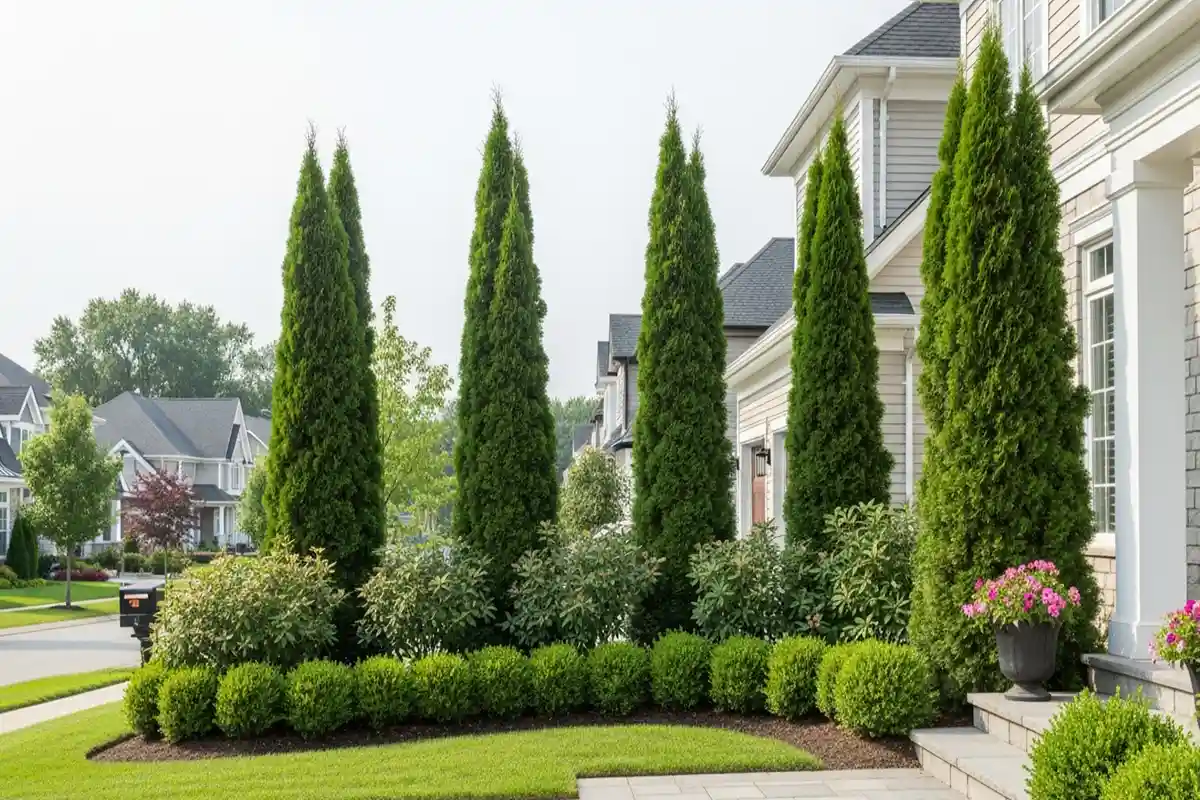
Standing on the porch, you may still sense exposure from elevated windows across the street. Even with dense shrubs below, upper-level sightlines remain active. The discomfort is subtle but persistent.
Minor vertical exposure often improves when a single columnar evergreen intercepts the most direct diagonal. The change feels immediate because the key angle is interrupted. The rest of the yard remains visually open.
Moderate upper-level visibility calls for a repeating rhythm of vertical accents. Spacing them at measured intervals reshapes how the eye travels across the frontage. The house feels framed rather than blocked.
Severe vertical intrusion occurs when neighboring homes overlook the yard from multiple heights. In that case, combining tall narrow trees with mid-level shrub mass produces layered interception. The yard begins to feel three-dimensional rather than flat.
Step 16: Rebalance Light and Airflow Without Losing Privacy
Privacy that becomes too dense changes how the yard feels during the day. Windows darken, airflow slows, and shaded turf thins. What once solved exposure can begin to create confinement.
Minor over-screening reveals itself as slightly reduced light near lower windows. Selective canopy thinning restores brightness while preserving lateral screening. The yard feels lighter without reopening sightlines.
Moderate density problems appear when air stagnates and interior foliage browns. Opening interior plant structure, rather than reducing outer mass, maintains privacy while improving plant health. The buffer regains vitality.
Severe enclosure shows up when paths narrow and views feel boxed in. Strategic removal of select plants, followed by repositioned layering, restores movement. The space feels breathable again without returning to full exposure.
Step 17: Concentrated Adjustment in High-Use Zones
Certain areas of the yard carry more emotional weight than others. A porch chair, a small seating nook, or a pet’s resting spot can feel exposed even if the broader yard functions well. Concentrated correction in these zones often produces the greatest comfort shift.
Minor sensitivity around seating may respond to angled shrub placement that redirects direct views. The adjustment reshapes the space’s behavior without altering the entire frontage.
Moderate discomfort occurs when eye-level exposure aligns with where people sit or stand frequently. Adding lateral screening elements beside rather than in front of these zones subtly narrows viewing angles. The area feels buffered while maintaining openness toward the street.
Severe exposure in high-use zones often combines multiple factors:
-
Direct diagonal sightline.
-
Elevated viewing point from neighboring property.
-
Insufficient vertical interruption.
Addressing these together through layered shrubs and targeted vertical elements changes how the space is experienced minute by minute. The correction feels proportional rather than excessive.
Step 18: Evaluate Whether the Buffer Is Performing as Intended
Walking through the yard at different times of day reveals how well the buffer functions. Morning light, evening headlights, and winter leaf drop all test its reliability. Performance is measured not by plant size alone but by how the space feels under changing conditions.
Use the following self-assessment checklist to gauge stability:
-
Upper-story windows no longer have a direct diagonal view into seating areas.
-
Headlights do not sweep directly across primary windows at night.
-
Gaps between shrubs do not form visible corridors from the sidewalk.
-
Seasonal leaf loss does not significantly reopen exposure.
-
Walkways remain clear and unobstructed despite plant growth.
-
Interior rooms maintain natural light levels.
-
Airflow around dense plantings feels adequate.
-
The facade remains visually readable from the street.
If several of these conditions fail simultaneously, deeper structural reconfiguration may be required rather than minor adjustment.
Landscaping solutions that prioritize privacy without relying on tall fences often create a more natural and welcoming streetscape. As plants mature and surrounding structures evolve, continued observation keeps the privacy buffer responsive rather than static.