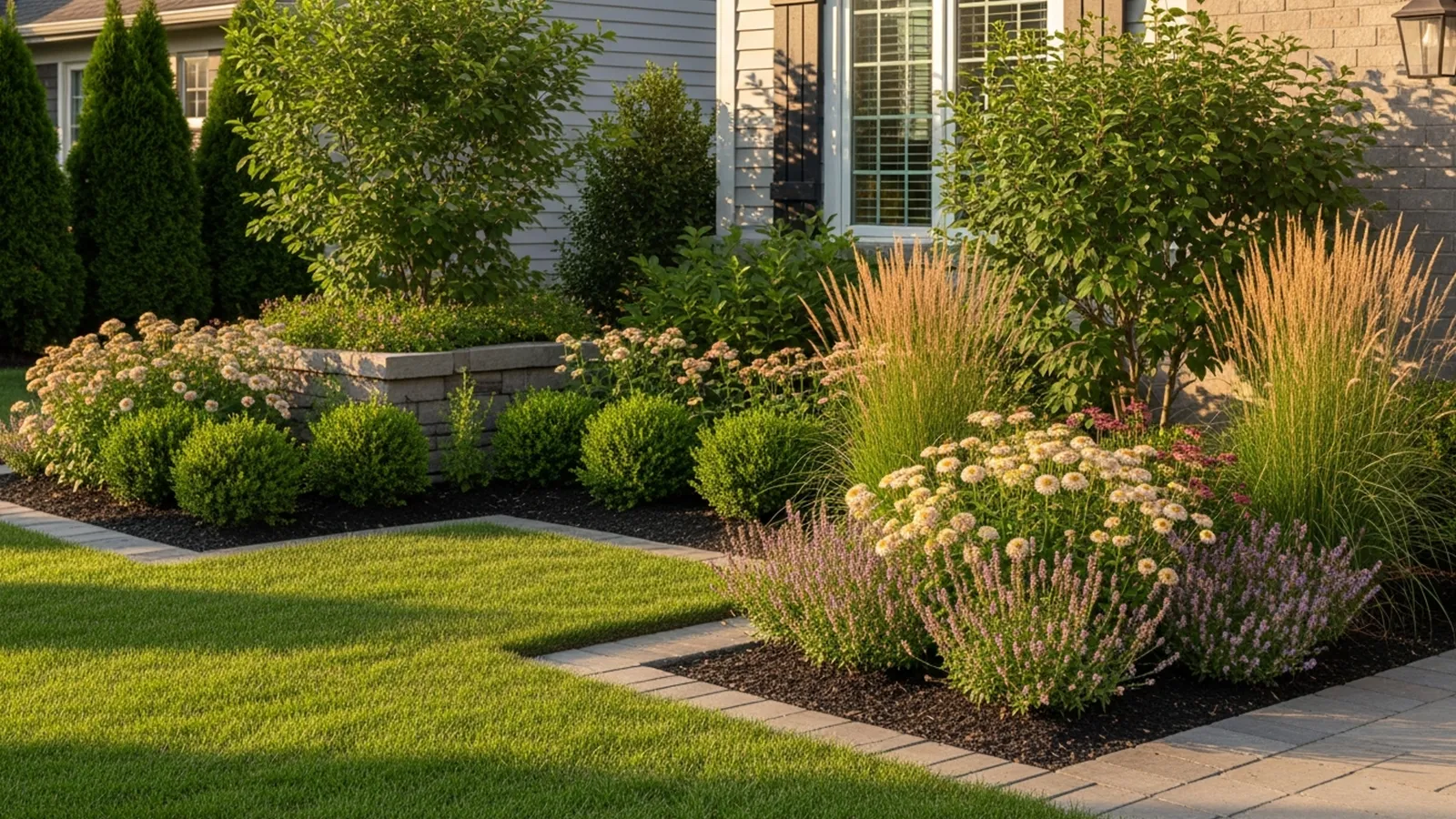
Some front yards feel calm and settled at first glance, while others feel slightly off, and that difference usually comes from how plants behave over time rather than how they look on planting day. Because this space stays visible every day, growth, scale, and day-to-day livability shape the first impression far more than color or novelty.
-
Plants must respect visibility, movement, and daily use.
-
Long-term growth matters more than nursery size.
-
Structure carries the yard when seasonal interest fades.
-
Maintenance pressure becomes visible faster in front yards than anywhere else.
These patterns explain why some front yards stay composed for years while others feel like they are always being adjusted.
Define the Purpose of Your Front Yard Space
Standing at the sidewalk, it is usually clear whether a front yard feels open, formal, relaxed, or confused, and that impression comes from an underlying purpose, even if it was never consciously planned. Entry paths, driveways, and street-facing sightlines quietly shape that purpose, which is why plants feel supportive when they respect movement and visibility, and disruptive when they do not.
A few conditions typically define how a front yard is meant to function:
-
Visibility from the street and sidewalk
-
Clear movement toward doors and driveways
-
Visual relationship to nearby homes
Plants that respect these boundaries tend to feel naturally placed rather than forced.
Evaluate Climate, Soil, and Microconditions
A plant struggling in the front yard rarely does so quietly. Uneven growth, leaf drop, or seasonal thinning becomes visible from the street long before it becomes a serious issue. These signals almost always point back to a mismatch between the plant and its conditions.
Front yards often hide more variation than expected. Soil near walkways may be compacted, areas near pavement may dry faster, and spots close to walls often stay warmer. These differences explain why the same plant thrives in one location and falters just a few feet away.
Common front yard microconditions include:
-
Heat buildup near pavement and foundations
-
Poor drainage in compacted soil
-
Increased wind exposure at corners
Plants matched to these realities settle more evenly and require less correction over time.
Prioritize Structural Plants First
When a front yard feels steady year-round, structure is usually doing the quiet work. Shrubs, small trees, and strong-form grasses hold the space together even when flowers fade. Without them, planting beds often feel temporary or unfinished.
Structure becomes most noticeable outside peak seasons. Evergreen and semi-evergreen plants prevent the yard from collapsing visually when perennials retreat. This continuity matters because front yards are rarely allowed to look empty.
Structural plants typically serve more than one role:
-
They define the overall shape of planting beds.
-
They anchor the yard visually during dormant periods.
-
They give smaller plants something to relate to.
Once this framework is clear, lighter layers can shift without disrupting the whole.
Align Plant Choices With Home Architecture
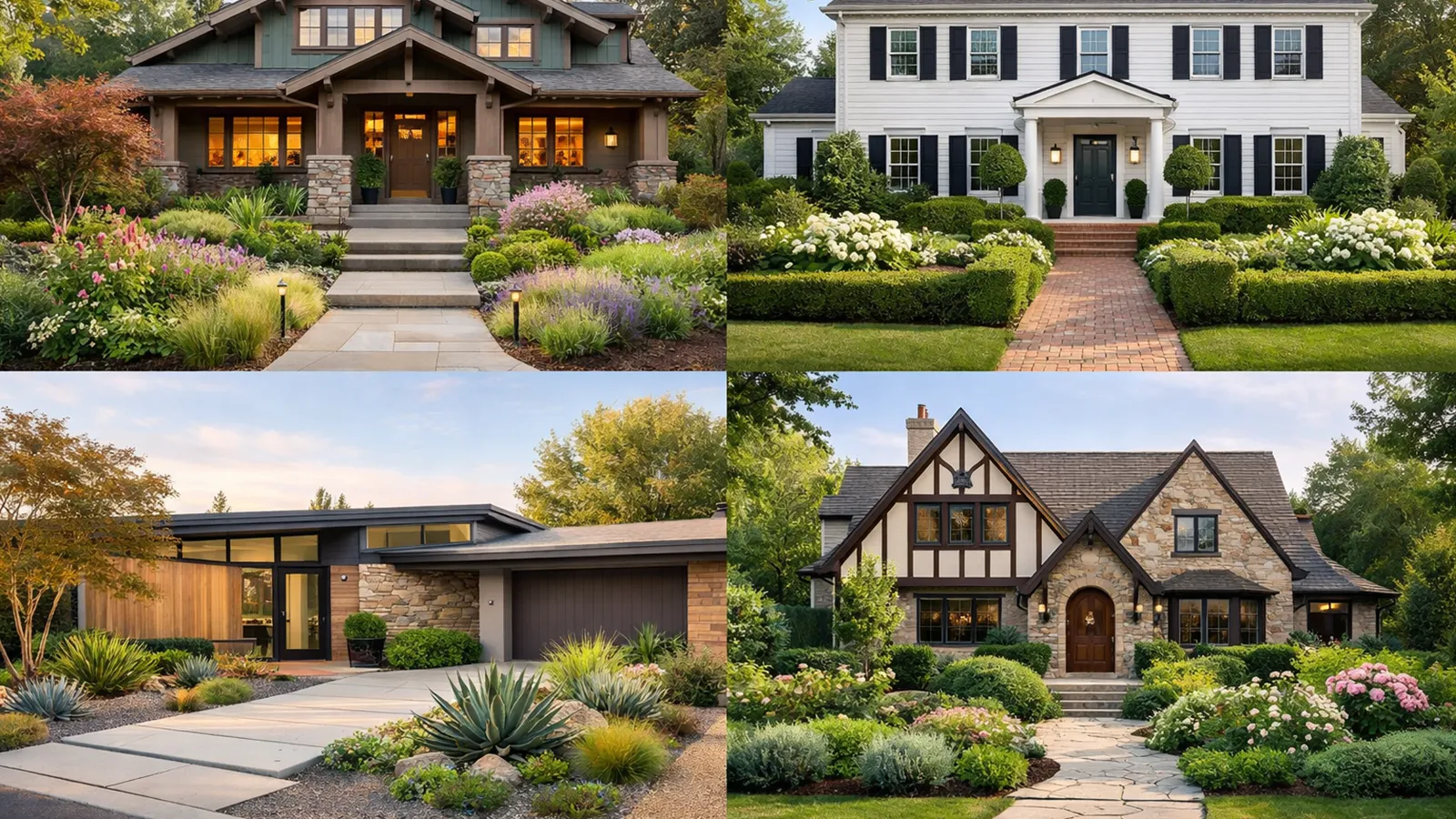
Looking at a house and its planting together, it becomes obvious when the two are speaking different visual languages. Clean-lined homes tend to feel calmer with restrained plant forms, while more traditional façades absorb layered planting more naturally. When plants echo the building, the yard feels settled instead of styled.
Scale quietly determines whether that alignment works. Plants that grow too large can overpower smaller façades, while delicate choices can disappear against wide elevations. Matching plant mass to architectural weight keeps the home visually present.
Several cues usually guide this relationship:
-
Strong forms pair well with modern architecture.
-
Softer silhouettes suit traditional structures.
-
Repetition reinforces architectural rhythm.
Balance Maintenance Needs With Seasonal Interest
A front yard that looks good only during peak bloom often feels disappointing the rest of the year. Seasonal interest works best when it is distributed rather than concentrated. Subtle change tends to read as intentional instead of fleeting.
Maintenance pressure usually shows up after the first year. Plants that demand precise timing or constant shaping begin to feel heavy in visible spaces. Front yards benefit from plants that remain acceptable even when care is uneven.
Reliable front yard plantings often share a few traits:
-
They hold shape without frequent pruning.
-
They tolerate short periods of neglect.
-
They pair well with plants that peak at different times.
This balance keeps the yard readable without turning upkeep into a constant task.
Plan for Mature Size and Long-Term Growth
A plant that fits neatly at installation can feel very different after a few growing seasons. In front yards, that change appears quickly as crowding near paths, windows, or neighboring plants. Planning for mature size protects the original layout.
Root behavior often reveals itself later rather than sooner. Some plants quietly push against edging or paving long before damage becomes obvious. Choosing predictable root systems reduces future disruption.
Long-term stability usually depends on a few forward-looking considerations:
-
Mature width instead of nursery size
-
Growth speed relative to nearby plants
-
Longevity compared to surrounding elements
When these factors are respected early, the front yard gains character instead of friction.
Use Plant Layers to Create Depth and Order
Looking at a front yard from the street, depth is often what separates a composed landscape from one that feels flat, and it usually comes from clear layering rather than plant variety. Taller plants set a backdrop, mid-height plants add body, and low plants define edges, allowing the yard to feel intentional while the eye moves naturally across the space.
Well-balanced front yard layering tends to rely on a few consistent patterns:
-
Taller plants stay away from windows and sightlines.
-
Middle layers absorb visual transitions near paths and walls.
-
Low plants keep edges readable from a distance.
When these roles stay clear, the yard feels ordered even as plants mature.
Choose Plants Based on Growth Habit, Not Store Size
At the garden center, many plants appear compact and controlled. In a front yard, that early appearance can be misleading. Growth habit, not initial size, determines how a plant will behave once established. Misjudging this often leads to crowding or constant pruning.
Some plants grow upright and narrow, while others spread outward or cascade. Each habit interacts differently with walkways, walls, and neighboring plants. Upright forms tend to work well near entrances, while spreading plants need space to avoid overlapping paths. Cascading plants soften edges but can become intrusive if placed too close to movement areas.
Spacing decisions usually benefit from thinking ahead rather than filling space quickly:
-
Mature width matters more than early fullness.
-
Airflow improves when plants are not forced together.
-
Fewer corrections are needed when growth is anticipated.
Patience at planting time often saves effort later.
Integrate Hardscape and Planting as a Single System
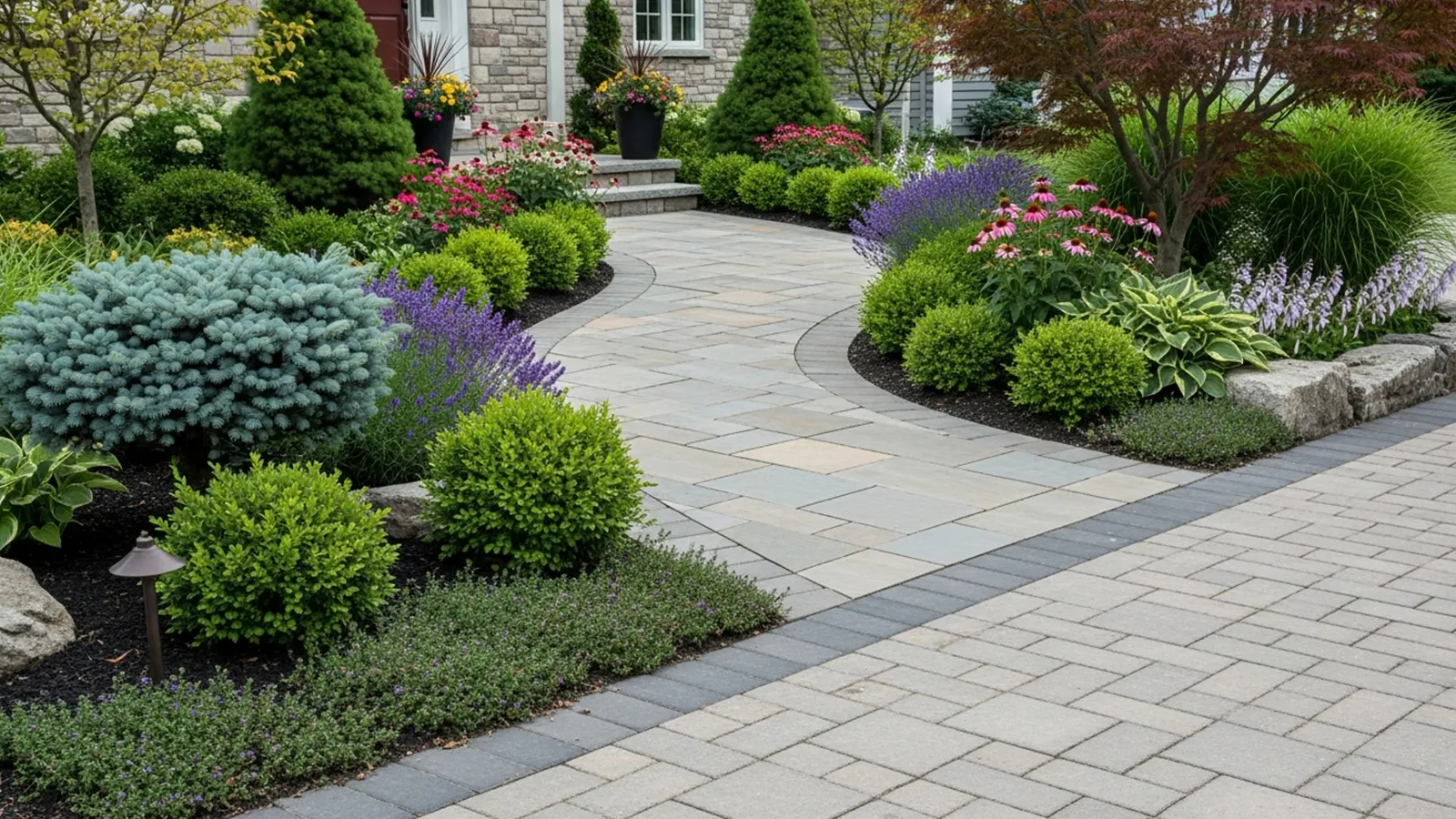
Walking through a front yard, it is easy to sense when plants and hardscape were planned separately, as paths feel tight, edges spill over, and maintenance turns reactive instead of intuitive. Clearances matter more than they first appear, because plants that lean into walkways or driveways quickly create daily friction, especially during periods of rapid growth.
Hard surfaces also shape how plants perform over time, since pavement reflects heat and permeable materials alter moisture patterns, which is why front yards feel more natural and easier to live with when planting and hardscape are treated as a single, integrated system.
Use Repetition to Strengthen Visual Cohesion
A front yard often feels calm when the same plant forms appear in more than one place. Repetition helps the eye move smoothly instead of stopping at every new shape. In visible spaces, this sense of rhythm matters more than novelty.
Limiting the number of plant species also reduces visual noise. When too many different plants compete at the same height, the yard can feel unsettled. Repeating forms creates clarity without making the space feel rigid.
Effective repetition usually shows up in a few simple ways:
-
The same shrub appears along multiple edges.
-
Similar textures repeat near paths and entries.
-
Plant groups echo each other across the yard.
Select Plants That Age Well Together
A front yard rarely changes all at once. Some plants grow quickly, others slowly, and that imbalance becomes obvious over time. When fast growers overwhelm their neighbors, the original layout begins to disappear. Compatibility matters as much as individual beauty.
Plants that peak at different times help the yard stay visually active without constant change. As one plant fades, another quietly takes its place. This staggered rhythm keeps the landscape from feeling empty or overworked.
Stable plant groupings usually share a few traits:
-
Similar growth rates reduce competition.
-
Compatible water needs simplify care.
-
Comparable lifespans prevent sudden gaps.
These combinations help the yard mature evenly instead of unevenly.
Avoid High-Risk Plants in Public-Facing Areas
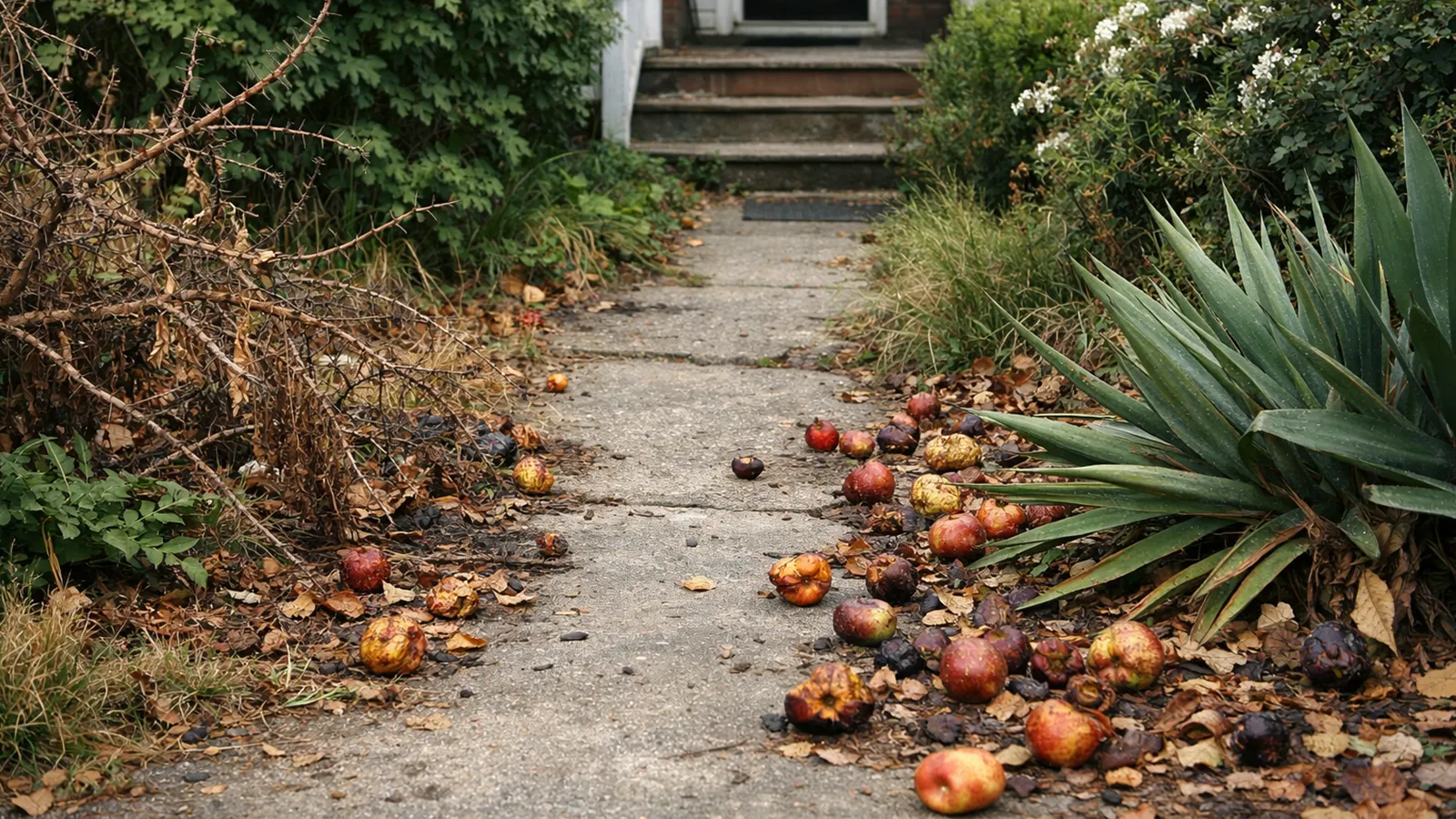
Some plants create problems simply by being in the wrong place. Thorny shrubs, aggressive spreaders, or messy fruiting plants can quickly turn a front yard into a source of frustration. In visible areas, these issues are hard to ignore.
Maintenance-heavy plants amplify their drawbacks in front yards. Fallen fruit, sticky residue, or constant cleanup becomes part of daily life. Over time, this erodes the sense of order the front yard is meant to project.
High-risk plants in front yards often share common traits:
-
They create safety concerns near paths.
-
They demand frequent cleanup or pruning.
-
They decline visibly when conditions shift.
Choosing calmer, more predictable plants keeps the space easier to live with.
Choose Plants That Support Local Ecology
In many front yards, the difference between a space that feels alive and one that feels static shows up quietly over time. Birds linger, pollinators return, and plants hold their ground with less effort. These signals usually come from plant choices that align with local ecology rather than working against it.
Plants adapted to regional conditions tend to settle in more easily. They respond better to local weather patterns, soil types, and seasonal shifts. This resilience shows up as steadier growth and fewer visible stress signs in a highly exposed space like the front yard.
Ecologically supportive plant choices often share a few traits:
-
They tolerate local climate extremes without intervention.
-
They offer food or shelter value to wildlife.
-
They maintain form without intensive inputs.
When these plants are integrated thoughtfully, the yard feels both intentional and quietly productive.
Consider Visibility, Safety, and Access Points
Walking past a front yard, it becomes obvious when plants interfere with movement or visibility. Overgrown corners, blocked sightlines, or crowded entries change how the space feels to visitors and neighbors alike. These issues usually stem from plants placed without long-term visibility in mind.
Access points demand extra clarity. Entryways framed too tightly can feel hidden, while plants near driveways can create blind spots. Choosing plants with predictable height and spread helps keep these areas open without looking bare.
Front yard safety is often shaped by a few recurring conditions:
-
Sightlines near sidewalks and streets remain clear.
-
Entry paths stay unobstructed year-round.
-
Corners and intersections avoid dense growth.
Plants that respect these needs contribute to a sense of ease rather than tension.
Use Color With Restraint and Intent
Color tends to draw attention first, especially in front yards. When too many colors compete, the space can feel restless instead of welcoming. Controlled color choices allow the eye to settle and notice form, texture, and structure.
Green usually carries the design, with color playing a supporting role. Flowering plants work best when they punctuate the space rather than define it entirely. This approach keeps the yard readable even outside peak bloom.
Intentional color use often relies on a few simple patterns:
-
A limited palette repeated across the yard.
-
Seasonal color that appears gradually, not abruptly.
-
Strong contrast used sparingly near focal points.
Restraint helps color feel deliberate rather than decorative.
Select Plants Based on Maintenance Reality
Front yards rarely forgive missed maintenance. Uneven pruning, delayed cleanup, or inconsistent watering becomes visible faster here than anywhere else. Plants that tolerate imperfect care tend to age more gracefully in this setting.
Pruning demands matter more than many expect. Some plants require precise timing to maintain shape, while others recover easily even when neglected. In a front yard, flexibility often outweighs perfection.
Plants that align with real maintenance patterns usually have these qualities:
-
They hold form without frequent intervention.
-
They recover well from occasional neglect.
-
They share similar water and care needs.
This alignment protects the yard from looking stressed when attention fluctuates.
Avoid Short-Lived Trends in Plant Selection
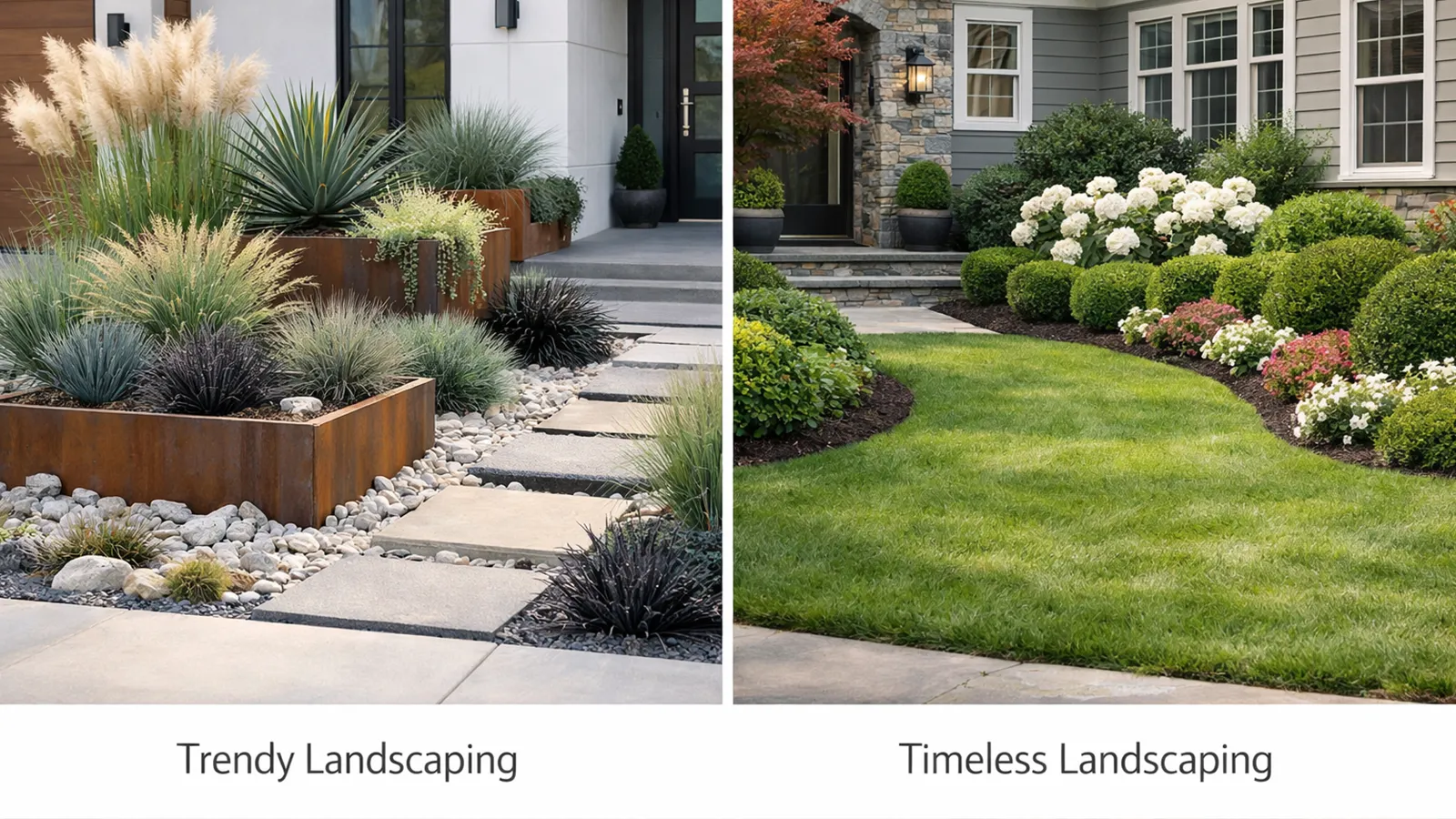
Some front yards feel dated surprisingly quickly, even when they were carefully designed. This often traces back to plants chosen for novelty rather than longevity. Trends tend to exaggerate form or color in ways that do not age evenly.
Highly fashionable plants often come with hidden costs. They may demand precise care, struggle outside ideal conditions, or lose appeal once the trend fades. In a space meant to represent permanence, this volatility becomes a liability.
Timeless front yard plantings usually emphasize:
-
Proven plant forms with long track records.
-
Balanced proportions over dramatic contrast.
-
Consistency instead of constant reinvention.
These choices allow the yard to mature instead of resetting every few years.
Build Confidence Through Simple, Proven Choices
Front yards that feel confident rarely rely on complexity. A small number of dependable plants, used consistently, often creates the most stable result. This simplicity reduces visual noise and makes long-term care feel manageable.
Predictable plant combinations remove much of the guesswork. When plants share similar growth habits and needs, performance becomes more reliable. This reliability matters most in front yards, where visible failure affects the entire impression of the home.
For those easing into plant selection, a steady starting point helps momentum build naturally. Clear, approachable plant selection strategies help beginners build front yard landscapes that remain manageable and visually consistent over time. From there, adjustments can happen gradually without disrupting the foundation.
Horticultural and Landscape Planning Resources