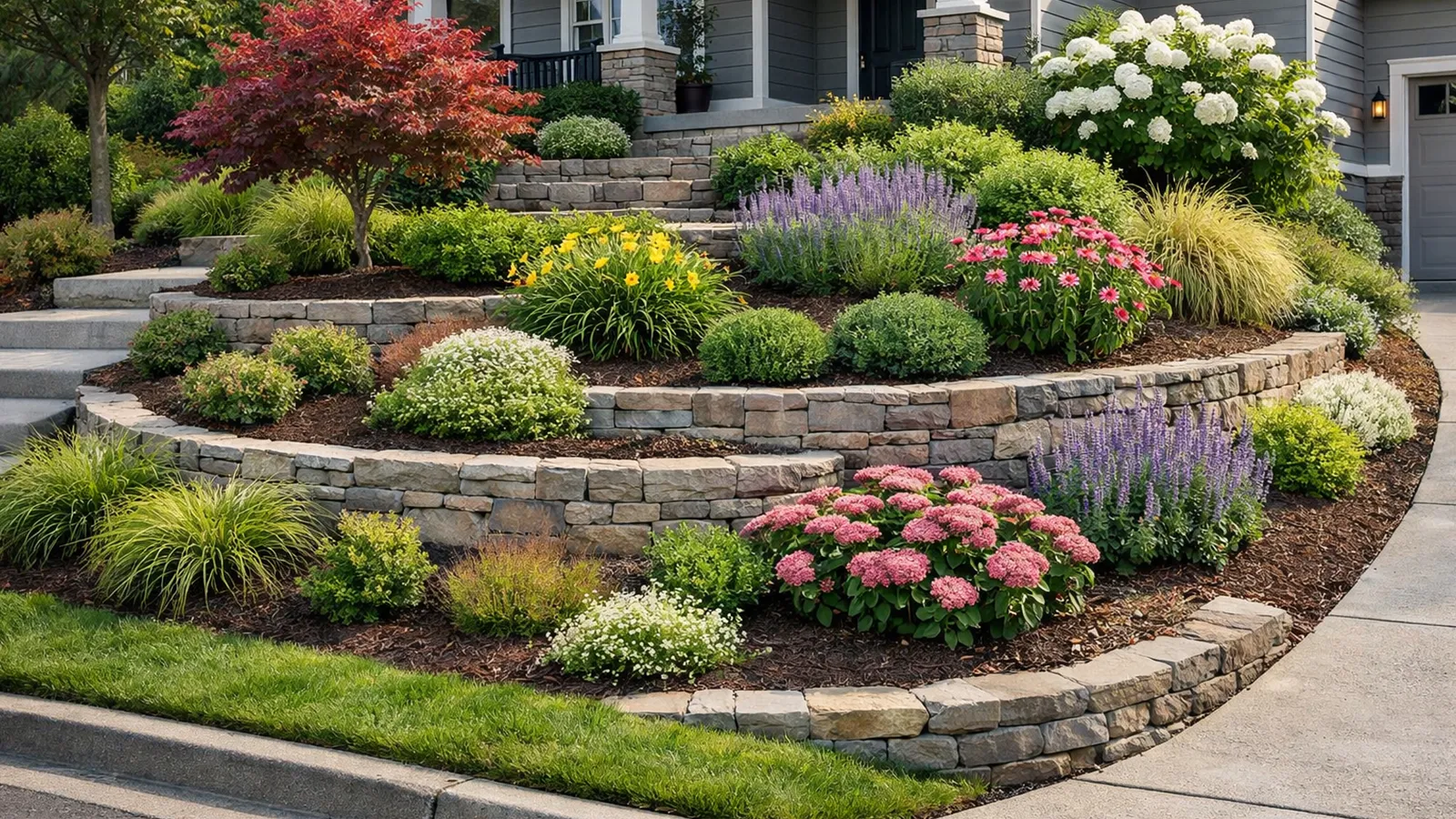
Sloped front yards are often treated as problems to be fixed rather than spaces to be designed. The combination of visibility, gravity, and water movement makes every decision more noticeable than on flat ground. When those forces are ignored, even attractive materials fail quickly.
Most long-term issues come from early assumptions rather than the slope itself. Erosion, awkward walkways, and high maintenance usually trace back to designs that focus on appearance before structure. A sloped yard performs best when stability, access, and planting are planned as one system.
This approach does not require complex construction. It requires understanding how the land already behaves and shaping the design around that behavior. Once that foundation is clear, solutions become more predictable and easier to maintain.
Reading the Slope Before Making Any Design Decisions
A sloped front yard should be evaluated as a working surface, not a blank canvas. Water flow, soil movement, and foot traffic all follow gravity. Design choices either reinforce that movement or create friction that shows up later as damage.
Key slope factors that influence every decision include:
-
Overall grade severity (gentle vs. steep)
-
Soil type and compaction
-
Direction of water runoff during heavy rain
-
Natural walking paths toward the entrance
Each factor changes how much structure and support the yard needs. For example, a shallow slope with fast-draining soil behaves very differently from a steep clay-based slope that holds moisture. Misreading these conditions often leads to settling, root exposure, or unstable planting beds within a few seasons.
A short observation period before designing provides clarity. Watching where water collects or how people naturally cross the yard reveals constraints that drawings alone cannot show. These observations guide smarter layout decisions without locking you into specific construction methods.
Structuring the Yard to Control Movement and Stability
Structure defines how a sloped yard ages. Without it, gravity slowly reshapes the landscape regardless of planting effort. The goal is not to flatten the slope but to slow and organize movement across it.
Common structural approaches that work well on front-yard slopes include:
-
Low retaining transitions that reduce grade in stages
-
Step-down planting beds that create natural pauses
-
Defined edges that prevent soil creep
-
Shallow level zones for planting stability
Spacing matters more than height. Several modest transitions usually outperform one tall wall because pressure is distributed more evenly. This reduces stress on soil and materials while keeping the yard visually approachable.
Structure should feel integrated, not dominant. When structural elements align with planting and pathways, they read as part of the landscape rather than engineering solutions added later.
Plant Choices That Work With, Not Against, the Slope
Plants on sloped ground serve a functional role beyond decoration. They stabilize soil, absorb water, and visually balance elevation changes. Choosing plants only for color or bloom often leads to weak root systems and uneven coverage.
Functional plant groupings for sloped front yards include:
-
Deep-rooted shrubs for anchoring soil
-
Spreading groundcovers for erosion control
-
Ornamental grasses for flexible coverage and drainage tolerance
-
Structural plants that maintain form year-round
Layering plants by function and height improves both performance and appearance. Heavier visual mass near the lower slope anchors the design, while lighter textures near the top reduce the sense of steepness. This distribution helps the slope feel calmer and more intentional.
Plant spacing should be based on mature size, not initial appearance. Overcrowding on slopes increases competition for water and weakens root hold, leading to instability over time.
Managing Drainage Before It Becomes a Problem
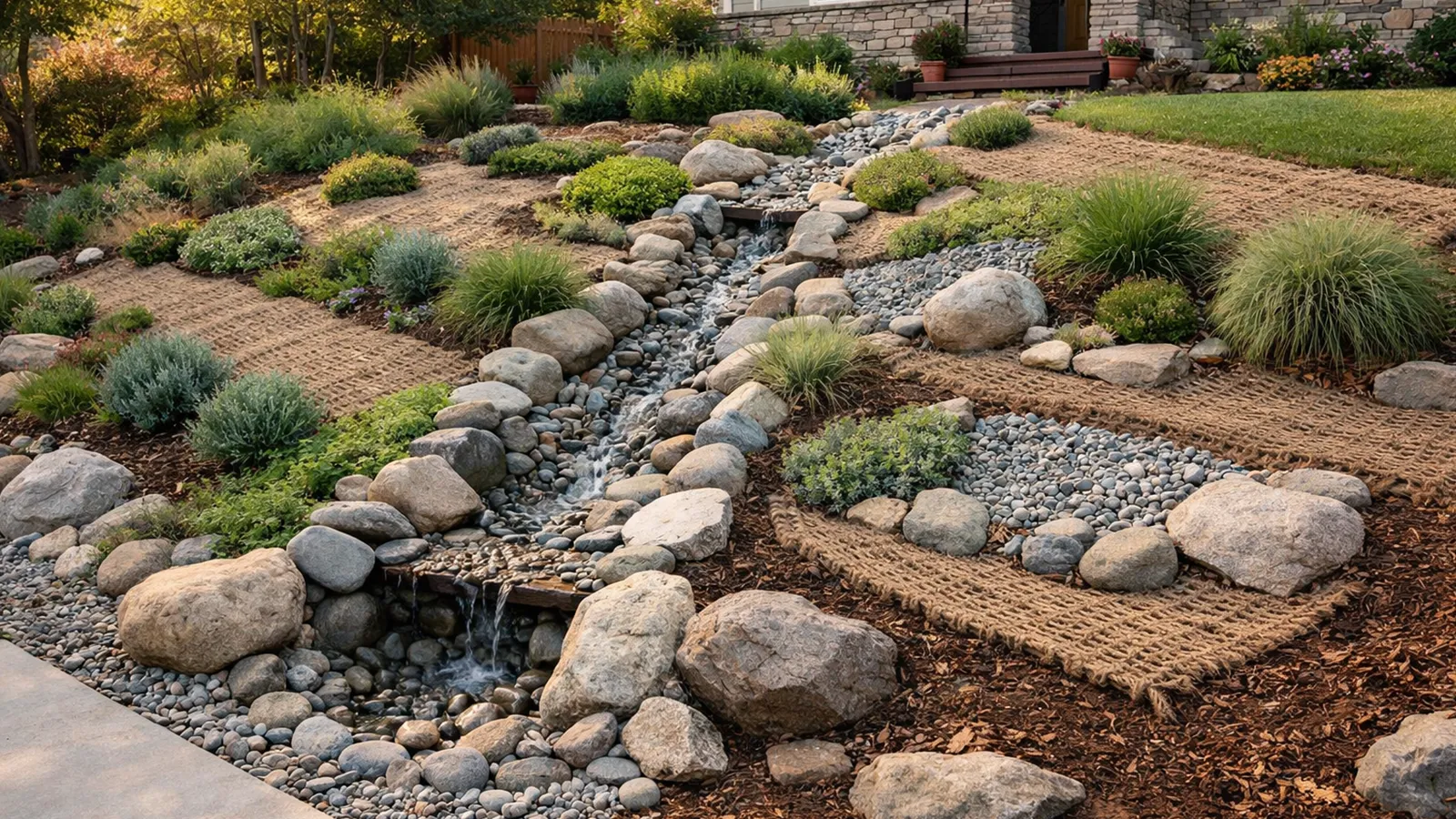
Drainage is the most common failure point in sloped front yards. Water accelerates downhill, carrying soil with it unless redirected or absorbed. When drainage is ignored early, problems compound quickly.
Early warning signs that drainage needs attention include:
-
Exposed plant roots after rain
-
Muddy streaks or channels forming downhill
-
Soil collecting at the base of the slope
-
Plant stress in lower sections despite regular watering
Effective drainage does not need to be complex. Shallow swales, permeable surfaces, and planted absorption zones slow runoff naturally. These solutions work with gravity instead of forcing water into rigid systems that may clog or shift.
Many long-term landscape failures originate from overlooked fundamentals.
Understanding common front yard landscaping mistakes helps prevent erosion, drainage issues, and costly redesigns before they take hold.
Designing Walkways That Feel Safe and Natural
Walkways determine how people interact with a sloped front yard. Without clear paths, foot traffic compresses soil and damages plant roots. Over time, informal trails form and undermine both structure and appearance.
Well-designed slope walkways share a few consistent traits:
-
Even step spacing that matches natural stride
-
Intermediate landings on longer runs
-
Textured surfaces for traction in wet conditions
-
Alignment with natural approach lines to the entrance
Straight paths are not always the safest option on slopes. Gentle turns and staggered routes reduce strain and improve comfort. These paths also slow movement visually, making the yard feel more welcoming.
Material choice affects longevity as much as safety. Surfaces that tolerate moisture and minor soil movement prevent cracking and uneven settling as the landscape matures.
Planning for Maintenance From the Start
Maintenance demands increase sharply on slopes when access is ignored. Tight planting beds and awkward angles make routine care difficult and discourage long-term upkeep. Designs that consider access remain functional longer.
Maintenance-friendly slope design includes:
-
Clear access routes for pruning and mulching
-
Open edges where tools can reach soil easily
-
Plant spacing that allows air circulation and growth
-
Limited plant variety to reduce care complexity
Restraint improves durability. Designs that rely on constant adjustment often deteriorate faster than simpler layouts. A sloped yard that is easy to reach and easy to understand stays intentional over time.
Planning for maintenance early protects both the landscape and the homeowner’s time, ensuring the slope remains stable and visually balanced as it evolves.
Creating Terraces That Feel Intentional, Not Engineered
Terracing works best when it follows the logic of the slope instead of forcing symmetry onto it. When terraces are placed purely for visual order, they often interrupt water flow and concentrate pressure in the wrong areas. Over time, this leads to shifting soil and visible structural stress.
Effective terraces respond to how the land already falls. Slight curves, staggered edges, and varied widths reduce the mechanical look that makes many sloped yards feel overbuilt. These softer transitions also slow runoff and give plants better conditions to establish.
Terraces should be understood as organizing tools rather than decorative features. Their main role is to break the slope into stable zones that age at the same pace. When this happens, the yard matures evenly instead of developing weak points.
Using Proportion to Reduce the Feeling of Steepness
Steep slopes often feel more dramatic than they truly are because the eye reads uninterrupted vertical movement. Proportion is the most effective way to counter this perception. Breaking elevation changes into measured intervals creates visual calm.
Shorter vertical rises paired with wider horizontal surfaces make slopes feel more walkable and less abrupt. Even when the total elevation change stays the same, this redistribution changes how the space is experienced. The yard feels more intentional and less reactive.
Proportion also affects maintenance. Wider planting zones allow roots to spread naturally and reduce erosion pressure. This balance between vertical and horizontal space improves both performance and appearance.
Simplifying Design Decisions for First-Time Projects
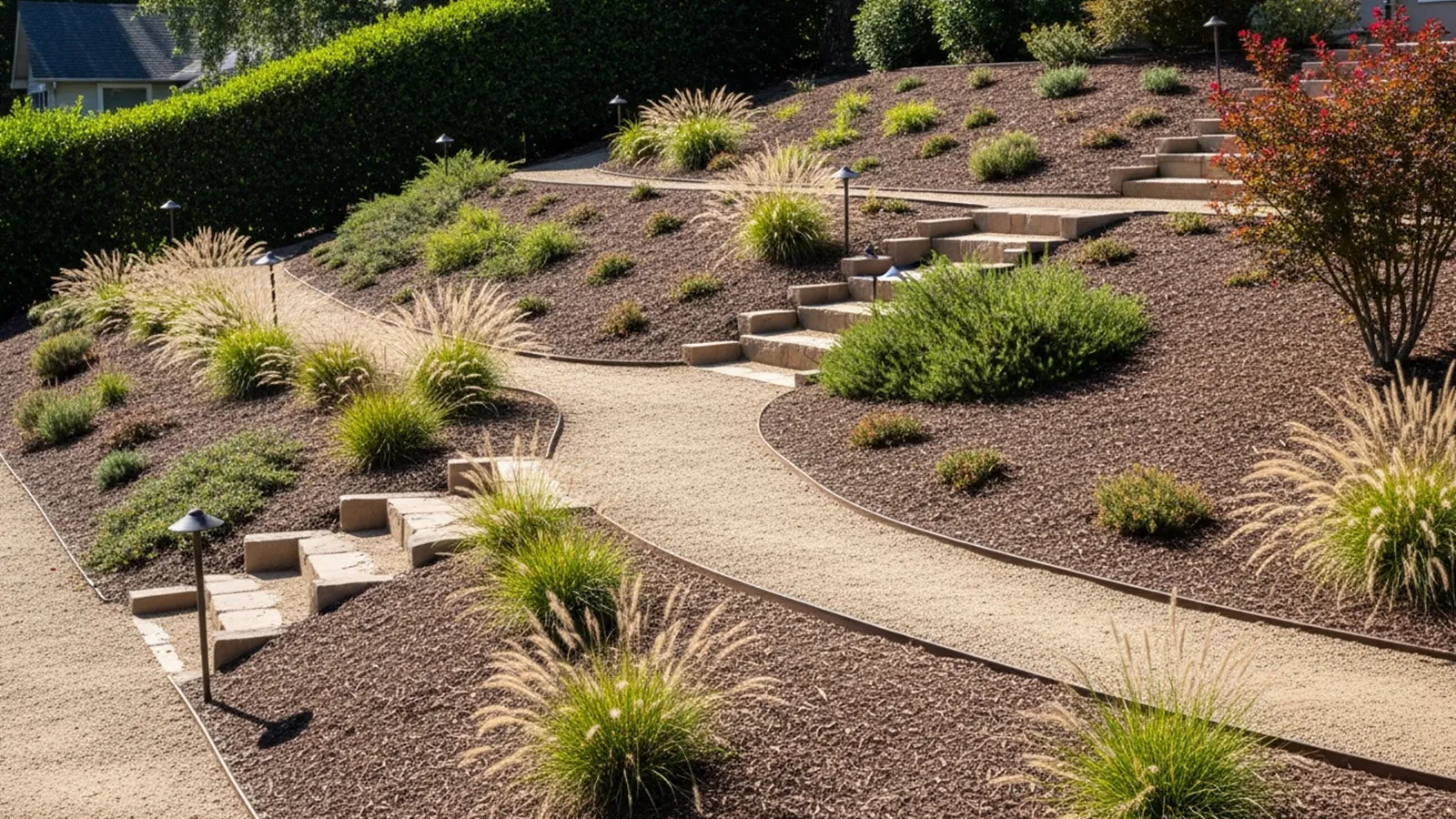
Sloped yards often intimidate homeowners because mistakes feel permanent. In reality, complexity is what creates most long-term problems. Simple designs are easier to adjust, easier to maintain, and more forgiving as conditions change.
Clarity matters more than variety. A limited number of materials and plant types creates consistency across the slope and reduces decision fatigue. This approach also makes performance issues easier to identify and correct early.
For homeowners without prior landscaping experience, accessible design choices reduce risk. Simple, beginner-focused front yard strategies make sloped landscapes easier to manage while still achieving a finished, intentional look.
Guiding Movement Without Creating Wear Paths
Movement patterns shape sloped landscapes as much as water does. When people do not have clear routes, they create their own. These informal paths compact soil and undermine plant roots, especially on inclines.
Paths should align with natural approach lines to the entrance. Gentle direction changes and intermediate landings reduce both physical strain and soil stress. Over time, this preserves planting zones and maintains visual order.
Material texture is critical on slopes. Surfaces that provide grip in wet or icy conditions protect both users and the landscape. Durability matters more than appearance when soil movement is unavoidable.
Managing Water Flow With Subtle Interventions
Water control does not require heavy infrastructure to be effective. In many sloped yards, the most durable solutions are the least visible. Subtle grading and absorption features often outperform rigid systems.
Effective water management strategies typically share common traits:
-
They slow water rather than redirect it abruptly
-
They allow infiltration instead of confinement
-
They adapt to seasonal changes without adjustment
Observation is the most reliable guide. Watching how water behaves during heavy rain reveals natural channels and pressure points. Designs that respond to these patterns remain stable longer and require fewer corrections.
Planning for Long-Term Access and Care
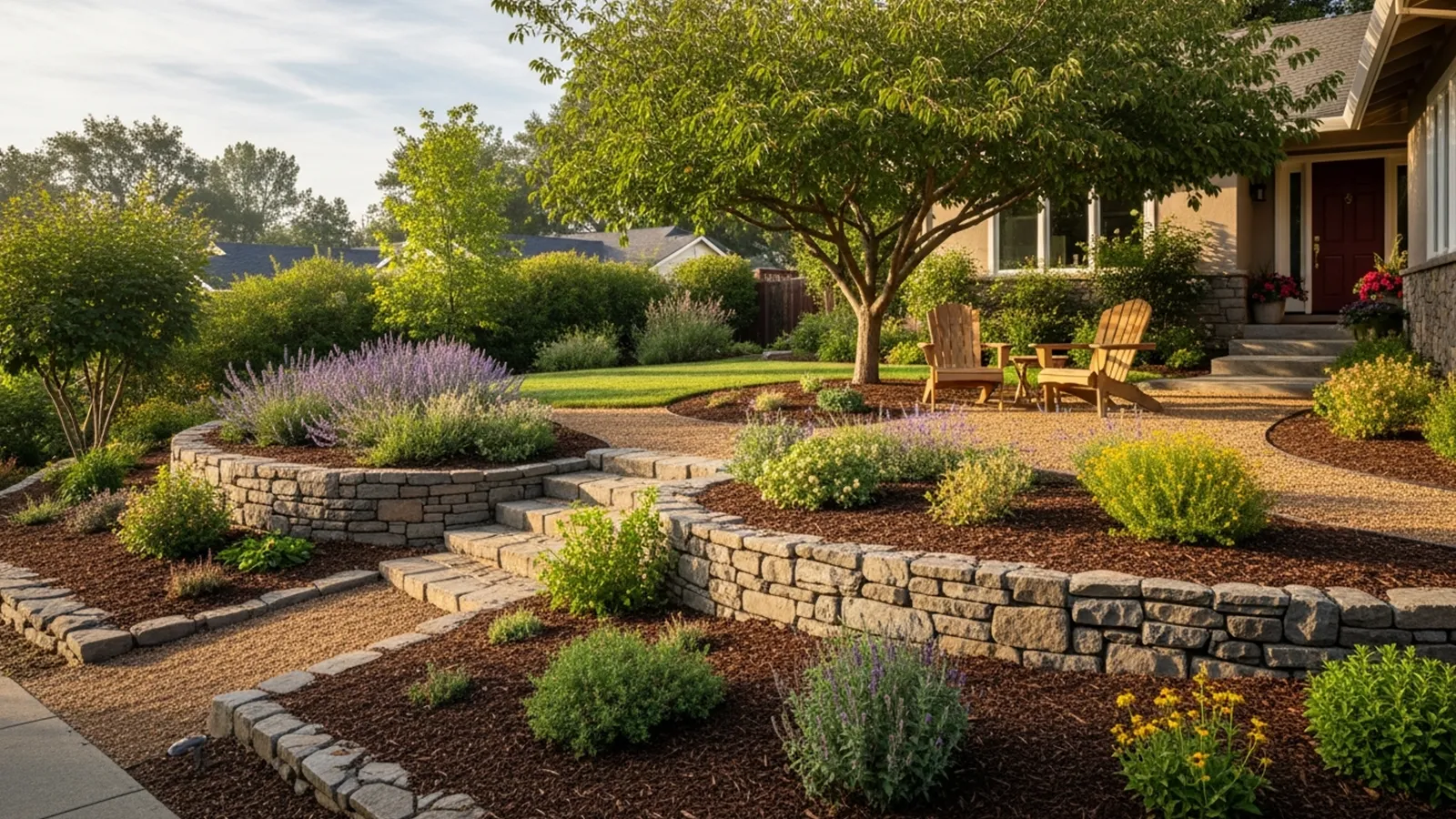
Access determines whether a sloped yard stays intentional or slowly deteriorates. Designs that ignore reach, footing, and tool access become difficult to maintain. Over time, neglected areas turn into erosion points.
Plant spacing should reflect mature size rather than initial fullness. Crowded roots compete for water and weaken soil stability. Allowing space for growth reduces long-term intervention and improves plant health.
Maintenance-friendly design is a form of durability. When routine care feels manageable, the landscape continues to perform as designed instead of slowly unraveling.
Using Visual Weight to Calm Steep Elevation Changes
Steep front yards often feel more dramatic than they truly are because visual weight concentrates unevenly. When all attention is pulled downhill, the space can feel unstable or rushed. Managing how weight is distributed across the slope helps slow the eye and creates a sense of control.
Heavier visual elements belong closer to the base of the slope. Dense shrubs, stone elements, or structurally strong plants anchor the design and prevent the lower edge from feeling exposed. Lighter textures placed higher up reduce the sense of height without competing for attention.
Consistency matters more than contrast. Repeating similar forms or materials across levels creates continuity and reduces visual noise. When the eye recognizes patterns, the slope feels intentional rather than chaotic.
Creating Transitions That Guide Attention Toward the Home
A sloped front yard works best when elevation changes support a clear visual journey. Abrupt transitions interrupt that journey and make the yard feel disjointed. Gradual shifts help guide attention naturally toward the entrance.
Transitions function best when they combine structure and planting. Small level changes paired with planting breaks create visual pauses that slow movement. These pauses allow the landscape to unfold instead of revealing everything at once.
Alignment is critical. When steps, edges, and planting lines subtly point toward the home, the slope becomes directional rather than distracting. This alignment reinforces curb appeal without relying on decoration.
Designing for Maturity, Not Just the First Season
Many sloped landscapes look complete in the first year but struggle as plants mature and soil settles. This usually happens when early growth is prioritized over long-term behavior. Slopes amplify these miscalculations faster than flat yards.
Plants expand, roots compete, and soil compresses over time. Designs that allow for this growth remain stable longer and require fewer corrections. Leaving intentional space prevents overcrowding and preserves structure.
Materials also age differently on slopes. Choosing finishes that tolerate moisture, temperature change, and slight movement allows the landscape to evolve gracefully rather than deteriorate. Designing with time in mind is a hallmark of durable front yard landscapes.
Integrating the Slope Into Everyday Movement
A front yard should support daily routines, not just visual appeal. On sloped sites, this means understanding how the space is entered, crossed, and experienced repeatedly. Designs that ignore daily use often feel disconnected from the home.
Landings, widened steps, and subtle pauses make movement feel natural. These features reduce strain and encourage slower, more deliberate transitions. Even modest adjustments can significantly improve how the slope feels to use.
Designs that reflect real habits remain relevant longer. Designing outdoor spaces around everyday movement and routines helps sloped front yards feel intuitive, usable, and naturally connected to daily life.
Using Evergreen Structure to Maintain Year-Round Balance
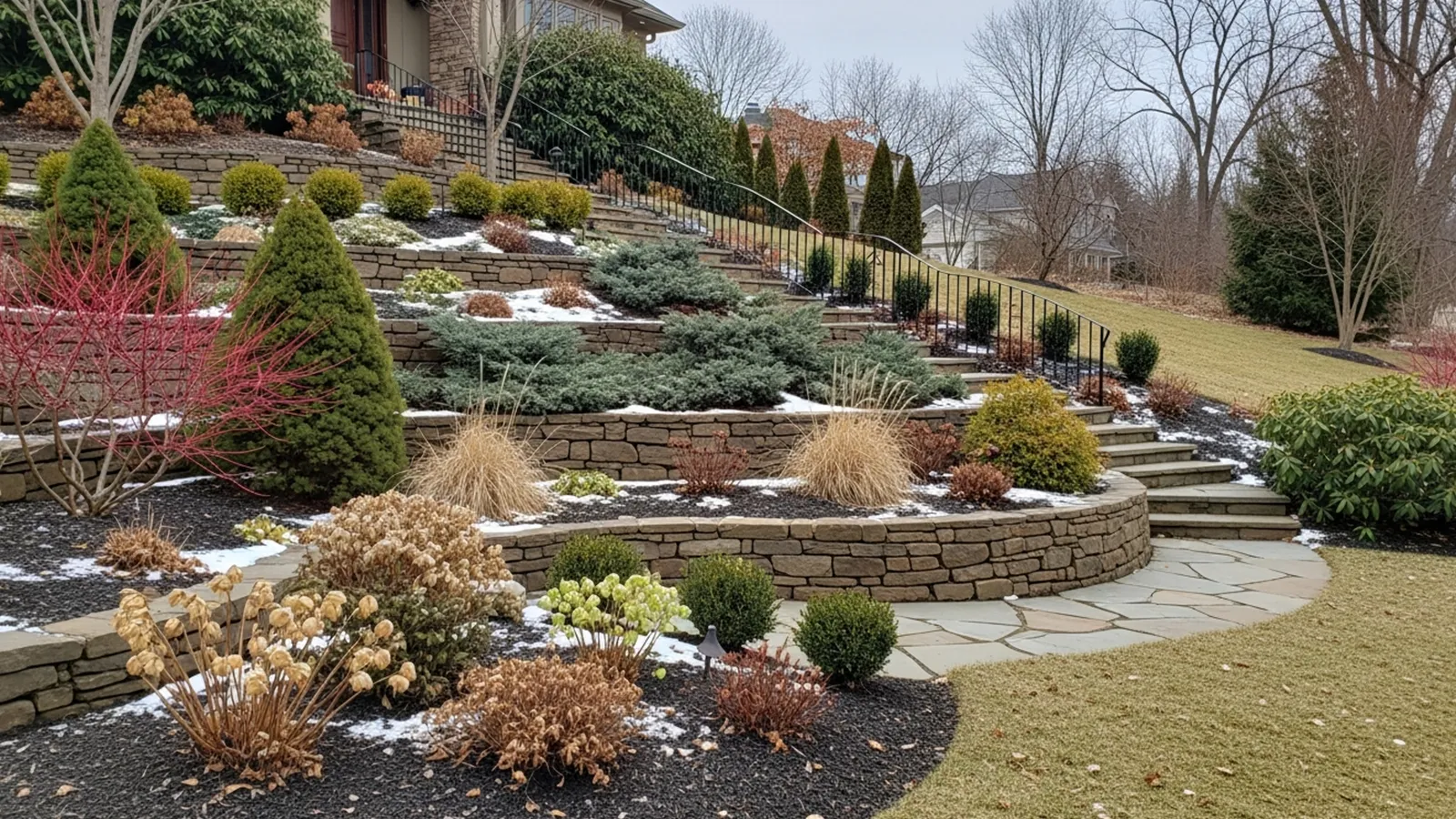
Seasonal change exposes weaknesses in sloped designs quickly. When perennials fade, slopes without structure often appear bare or unstable. Evergreen elements provide continuity when other plants recede.
Structural evergreens define edges and hold visual form through winter. They also protect soil during heavy rain and freeze–thaw cycles. This year-round presence reinforces stability when conditions are most challenging.
Balance is essential. Too many evergreens create visual heaviness, while too few leave the slope exposed. Strategic placement maintains openness while preserving structure.
Knowing When to Simplify Instead of Add More
Sloped front yards are especially vulnerable to overdesign. Adding more features rarely solves underlying problems and often introduces new ones. Simplification is frequently the most effective improvement.
Reducing unnecessary elements clarifies how the slope functions. Clean lines, defined zones, and restrained planting make maintenance easier and improve long-term performance. Simpler designs also keep attention on the home rather than the landscape itself.
A successful sloped front yard feels resolved rather than busy. When every element has a clear role, the yard remains stable, attractive, and manageable as it matures.
Technical background: https://extension.wsu.edu/