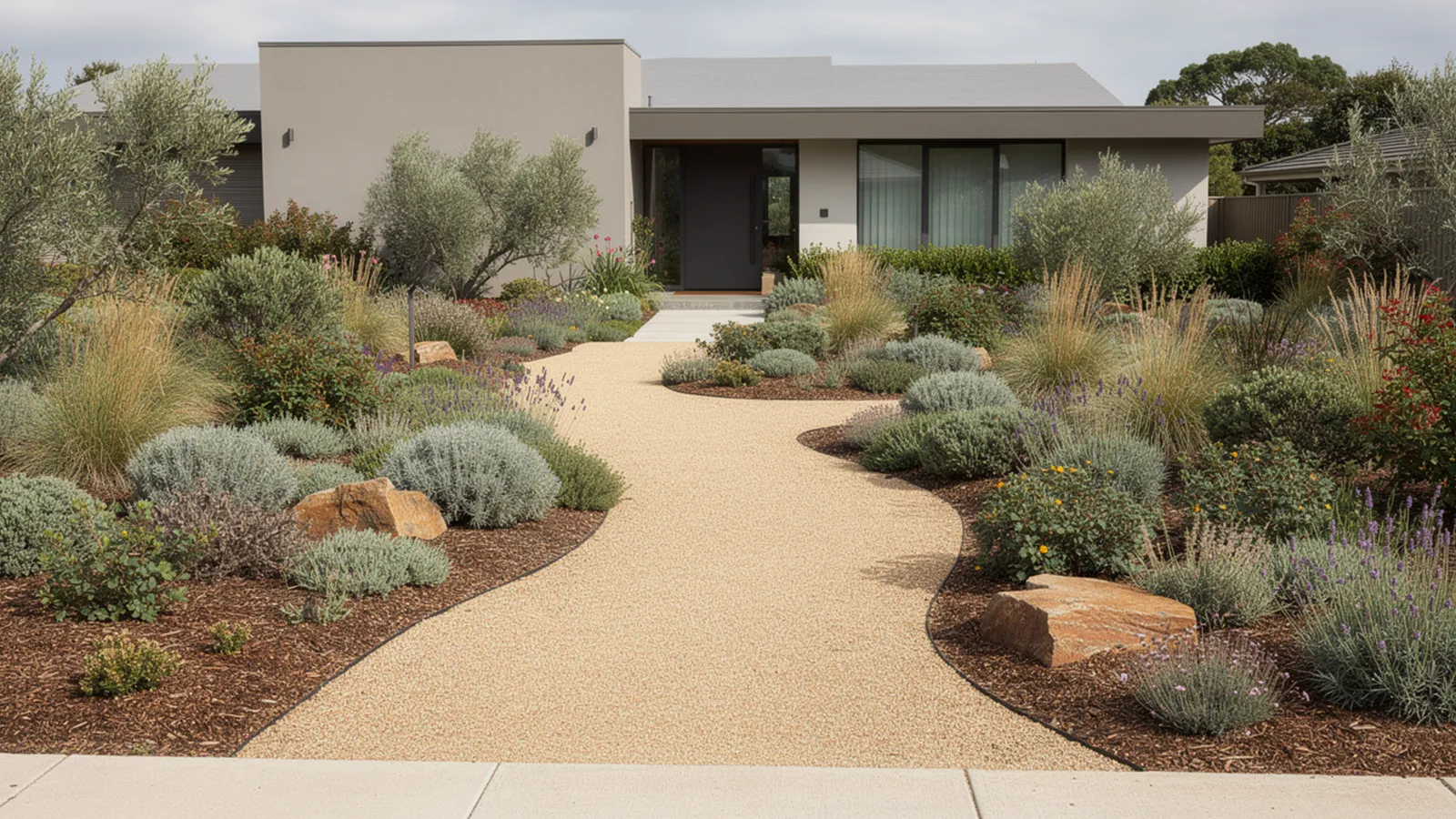
Passing a front yard without grass often triggers a quick, almost subconscious reaction. The ground feels calmer, edges look clearer, and nothing seems to demand attention all at once. That sense usually comes from how deliberately the space is divided.
When turf is removed, the yard stops relying on a single surface to carry everything. Instead, each part of the ground begins to explain itself through texture, placement, and proportion. This makes the space easier to read even at a glance.
Over time, these yards tend to feel less temporary. Rather than constantly fixing weak spots, the layout leans on materials and plants that settle in and hold their shape. The result feels stable instead of managed.
Why Traditional Lawns Struggle in Front Yard Conditions
Most front lawns show stress long before they completely fail. You notice it when the grass thins near the sidewalk or turns dull where shade and heat overlap. These signs appear because front yards combine several difficult conditions in one place.
Common pressure points tend to repeat:
-
Foot traffic concentrates near entries and paths.
-
Soil compacts quickly in narrow strips.
-
Heat reflects off pavement and walls.
-
Watering is inconsistent and restricted.
Each issue alone is manageable, but together they work against turf. Removing grass allows these areas to be addressed directly rather than patched over.
How Lawn-Free Design Changes Spatial Logic
Stepping into a lawn-free yard, movement feels clearer without being guided by signs or borders. Paths stand out because their surface changes, not because grass wears away around them. This clarity reduces hesitation.
The space also breaks into readable zones instead of one open field. Each zone supports a different role, even if it is not actively used. That structure becomes visible very quickly.
Typical changes people notice include:
-
Entry paths that feel obvious without explanation.
-
Planting beds that look intentional, not leftover.
-
A layout that makes sense even when viewed briefly.
Instead of feeling empty, the yard gains definition.
Material Choices That Replace Grass Effectively
Once grass is gone, surface materials become more noticeable. They need to look deliberate and behave predictably under use. The most successful lawn-free yards balance firmness with permeability.
Effective replacements often share a few traits:
-
They drain well after rain.
-
They visually recede rather than dominate.
-
They stay contained with proper edges.
Gravel and crushed stone meet these needs when installed correctly. Organic surfaces such as mulch or low ground covers soften transitions and protect soil, even as the garden evolves.
Structuring the Front Yard Without a Central Lawn
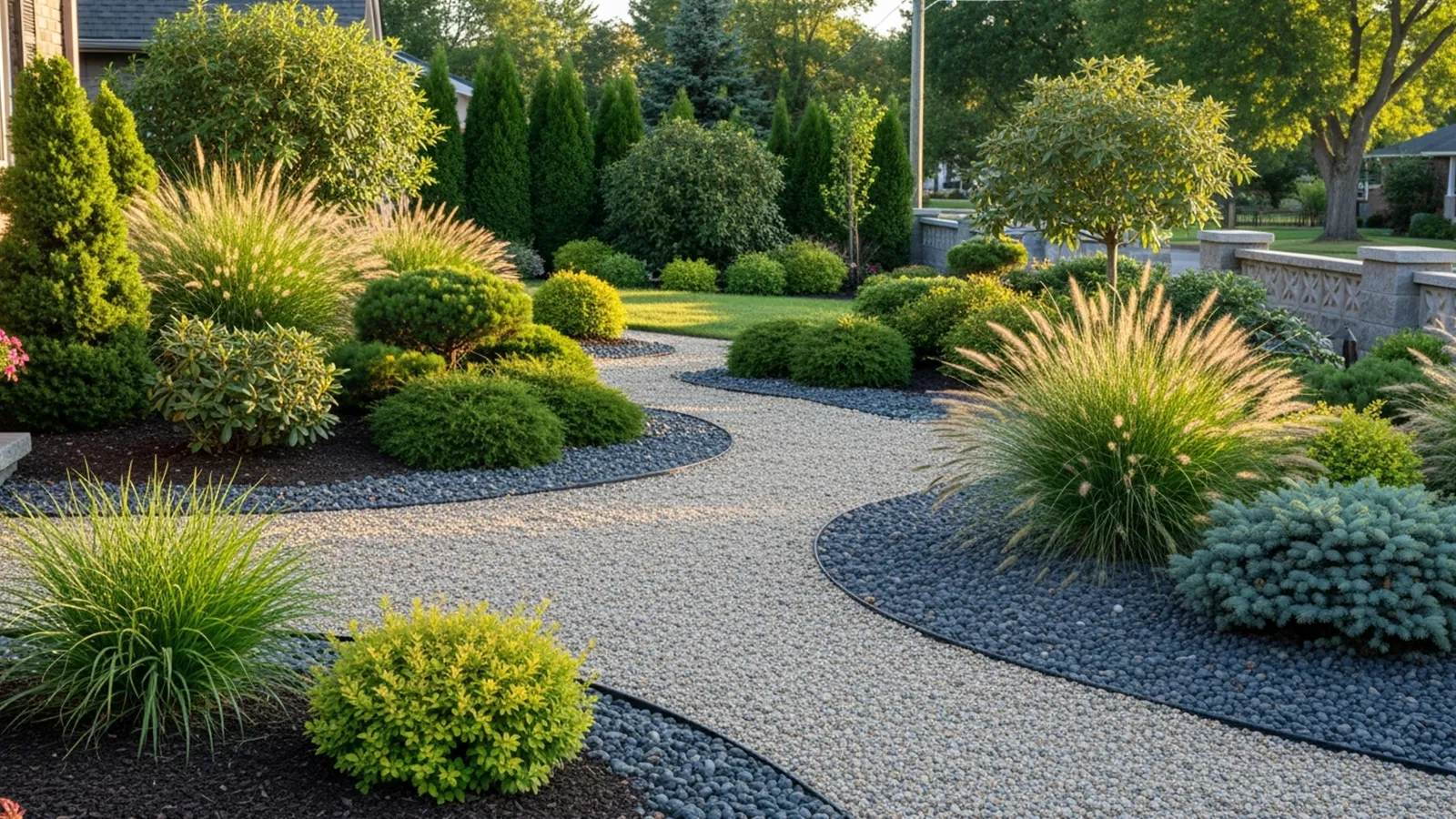
From the sidewalk, the yard no longer reads as a single surface. The front edge feels quieter and more contained, acting as a buffer rather than an invitation to step in. This subtle separation reduces exposure without blocking views.
Closer to the house, the structure becomes more expressive. Planting height and material shifts begin to echo the architecture. Without grass competing for attention, these relationships stand out.
Most lawn-free structures rely on a small set of clear decisions:
-
One primary path that defines approach.
-
Layered planting to create depth.
-
Material changes that mark transitions.
Together, these elements replace the unifying role turf once played.
Planting Strategies That Support Lawn-Free Design
In a lawn-free yard, planting shapes the space instead of decorating it. You notice this when plants define edges and guide views rather than filling gaps. Poor choices feel obvious because there is nothing masking them.
Plants that perform best tend to share predictable habits:
-
Consistent growth patterns.
-
Forms that hold without frequent pruning.
-
Tolerance to local conditions.
Spacing matters just as much. When plants are crowded, airflow drops and maintenance increases. Allowing room for mature size keeps the layout legible as the yard grows in.
Maintenance Realities and Long-Term Performance
The shift away from lawn becomes most noticeable after regular use. Instead of repeating the same weekly tasks, care becomes observational. Small adjustments replace constant correction.
Early maintenance usually involves watching how surfaces and plants settle:
-
Weeds appear mainly during establishment.
-
Materials stabilize as edges hold.
-
Plant roles become clearer over time.
As the yard matures, effort decreases rather than increases. Materials weather naturally, plants grow into place, and the design gains coherence instead of losing it.
Practical Reasons Homeowners Choose a Lawn-Free Front Yard
Living with a front yard day after day exposes small frustrations quickly. Uneven grass, worn paths, and constant upkeep become noticeable long before major problems appear. Lawn-free designs often start as a response to these everyday irritations rather than a stylistic preference.
Common motivations tend to cluster around a few repeat experiences:
-
Grass struggles in high-traffic entry zones.
-
Visual wear appears faster than it can be corrected.
-
Maintenance effort feels disconnected from results.
Removing turf allows the yard to respond to how it is actually used. Surfaces and plants are selected for reliability instead of tradition, which reduces friction over time.
Designing Circulation Without Turf as a Buffer
Approaching a lawn-free front yard, movement usually feels clearer right away. Instead of guessing where to step, the surface itself explains the route. Paths stand out because they are designed, not because grass has worn away.
This clarity comes from a few consistent signals:
-
A distinct walking surface that contrasts with planting.
-
Direct alignment between sidewalk, path, and entry.
-
Fewer unnecessary curves or detours.
Without grass blurring edges, circulation decisions become more visible. When those decisions are strong, the yard feels calm and intuitive rather than rigid.
Managing Water and Drainage Without Grass
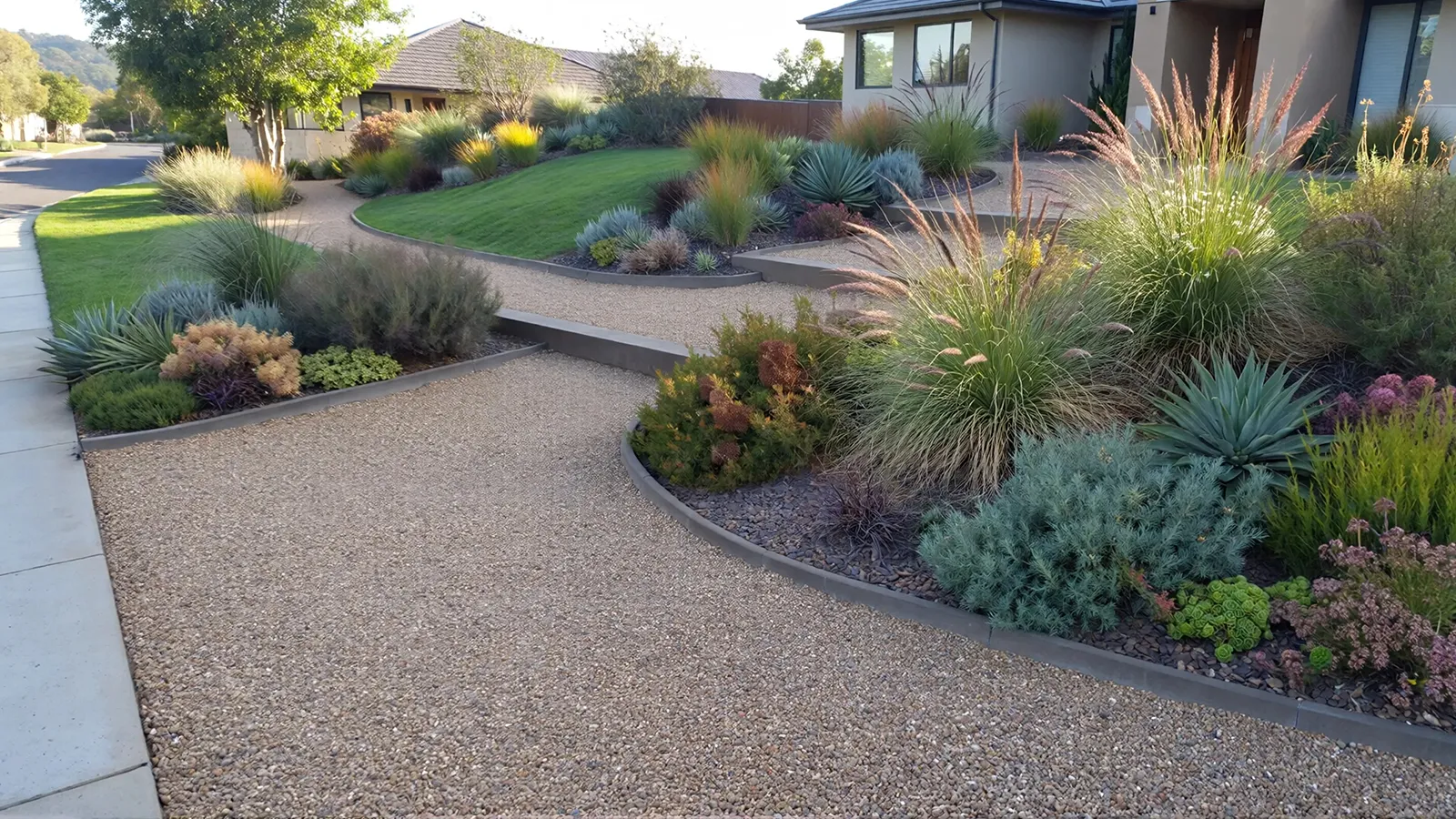
After heavy rain, the limits of turf are easy to see. Water pools near walkways, soil compacts, and grass struggles to recover. Lawn-free yards reveal drainage behavior more honestly and allow it to be shaped.
Effective water management usually combines several elements:
-
Permeable surfaces that slow runoff.
-
Planted areas that absorb and stabilize moisture.
-
Gradual grading that directs water away from structures.
Instead of hiding water issues, the layout works with them. Over time, the yard becomes more resilient because moisture is absorbed gradually rather than redirected abruptly.
Creating Visual Interest Without Open Green Space
Standing back from a lawn-free yard, the eye rarely stops in one place. Texture, height, and material changes create movement across the space. This replaces the visual role grass once played as a neutral field.
Interest usually comes from layered contrast:
-
Fine and coarse textures placed side by side.
-
Low ground covers paired with mid-height shrubs.
-
Occasional vertical elements to anchor views.
These layers give the yard depth without clutter. The space feels composed even when glanced at briefly from the street.
Reducing Ongoing Work Through Design Decisions
Maintenance becomes more predictable when it is designed into the layout. Instead of reacting to problems weekly, homeowners notice patterns and adjust seasonally. This shift changes how the yard fits into daily life.
Design choices that reduce effort tend to be subtle:
-
Plants chosen for stable form rather than fast growth.
-
Clear edges that keep materials contained.
-
Repetition that simplifies care routines.
Over time, these decisions compound. The yard requires less attention not because it is neglected, but because it was set up to behave predictably.
Adapting Lawn-Free Designs to Different Climates
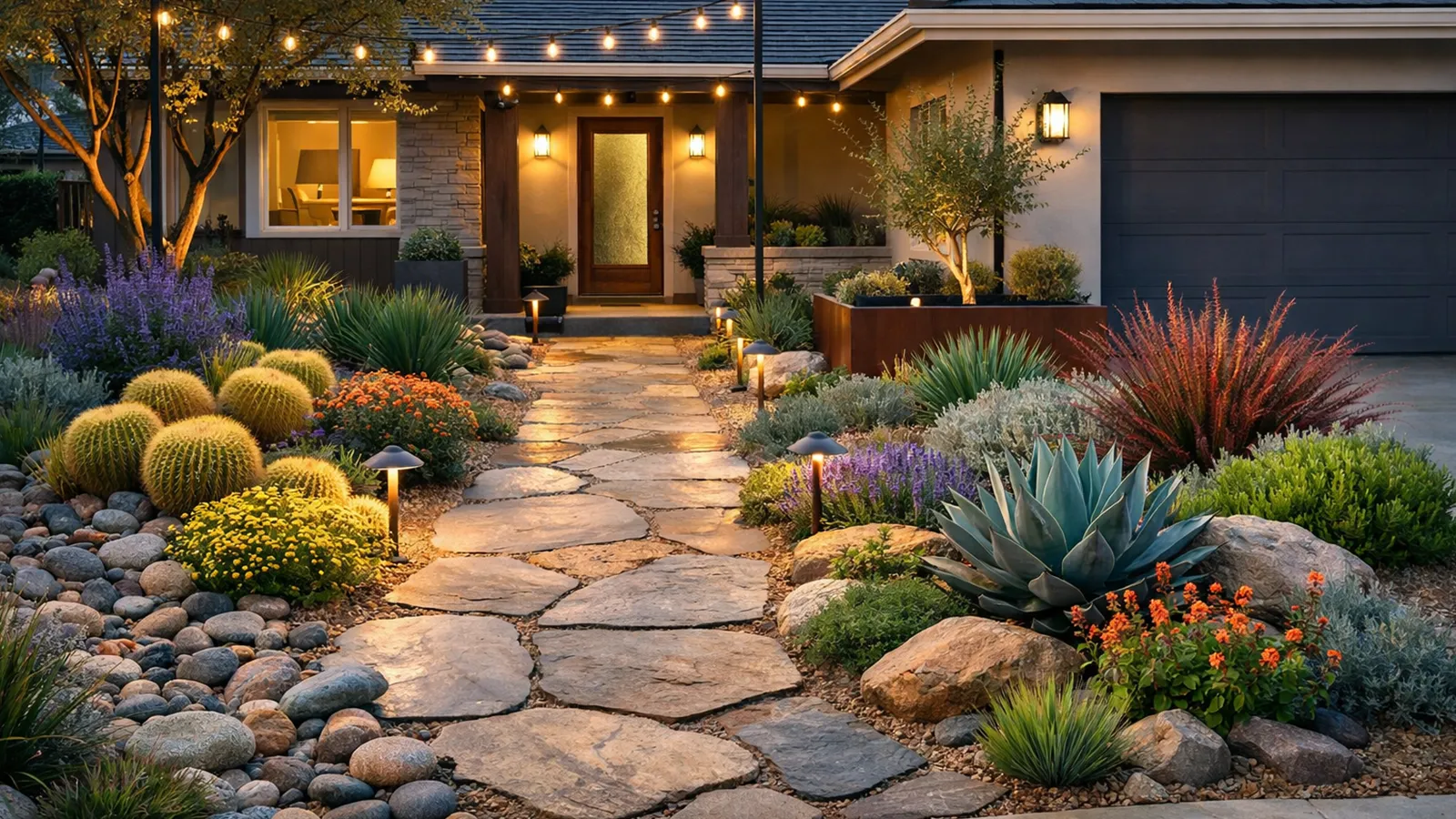
Climate differences become more visible once grass is removed. Materials respond to heat, cold, and moisture in distinct ways, and plants reveal their true limits. Lawn-free design adapts rather than resists these conditions.
Successful adaptations usually focus on a few priorities:
-
Surface colors that manage heat or freeze stress.
-
Materials that tolerate expansion and contraction.
-
Plants selected for year-round performance, not peak season alone.
When climate is treated as a design partner rather than an obstacle, the yard remains visually stable across seasons. This stability becomes especially important in front spaces where change is always on display.
Designing Privacy Without Enclosing the Front Yard
Standing in a lawn-free front yard often makes exposure feel more noticeable. Without grass softening the foreground, sightlines from the street become clearer and closer. Privacy becomes less about blocking views and more about shaping how space is perceived.
The discomfort usually comes from a few repeat moments:
-
Eye contact with passersby feels too direct.
-
The entry area lacks a sense of pause.
-
The yard feels visually open but emotionally unfinished.
Addressing privacy at this level focuses on perception rather than enclosure. The goal is to reduce visual pressure without cutting the yard off from its surroundings.
Using Plants as Spatial Boundaries
Plants begin to act like walls once grass is removed, even when they are not dense or tall. Their placement, spacing, and height changes define where the yard begins and where it relaxes. You notice this most when the boundary feels clear without looking closed.
Effective planting boundaries tend to rely on structure rather than mass:
-
Low plants in the foreground to maintain openness.
-
Taller forms set back to interrupt sightlines.
-
Repetition that creates rhythm instead of clutter.
Evergreen elements anchor this structure through seasonal change. Deciduous plants add softness but work best when they support, rather than replace, year-round form.
Balancing Openness and Shelter Near the Entry
Approaching the front door is where privacy feels most personal. This area needs to feel protected without disappearing from view. Visitors should sense where to go without feeling watched.
The balance often comes from partial screening rather than full coverage:
-
Offset shrubs that block direct views but keep paths visible.
-
Tall grasses or small trees that soften eye level.
-
Subtle changes in paving texture that signal transition.
These cues create a sense of arrival. The entry feels calmer because the space slows people down visually before they reach the door.
Avoiding Visual Clutter in Lawn-Free Front Yards
Without grass tying everything together, excess detail becomes obvious. Too many plant types or materials compete for attention and weaken the sense of order. The yard can start to feel busy instead of layered.
Clarity is usually preserved through restraint:
-
Limiting the number of surface materials.
-
Repeating plant forms rather than mixing many shapes.
-
Leaving intentional open areas for visual rest.
Negative space plays a quiet but important role. Gravel beds, simple paths, or open soil allow the design to breathe and keep boundaries legible.
Creating Privacy Without Fences Through Design
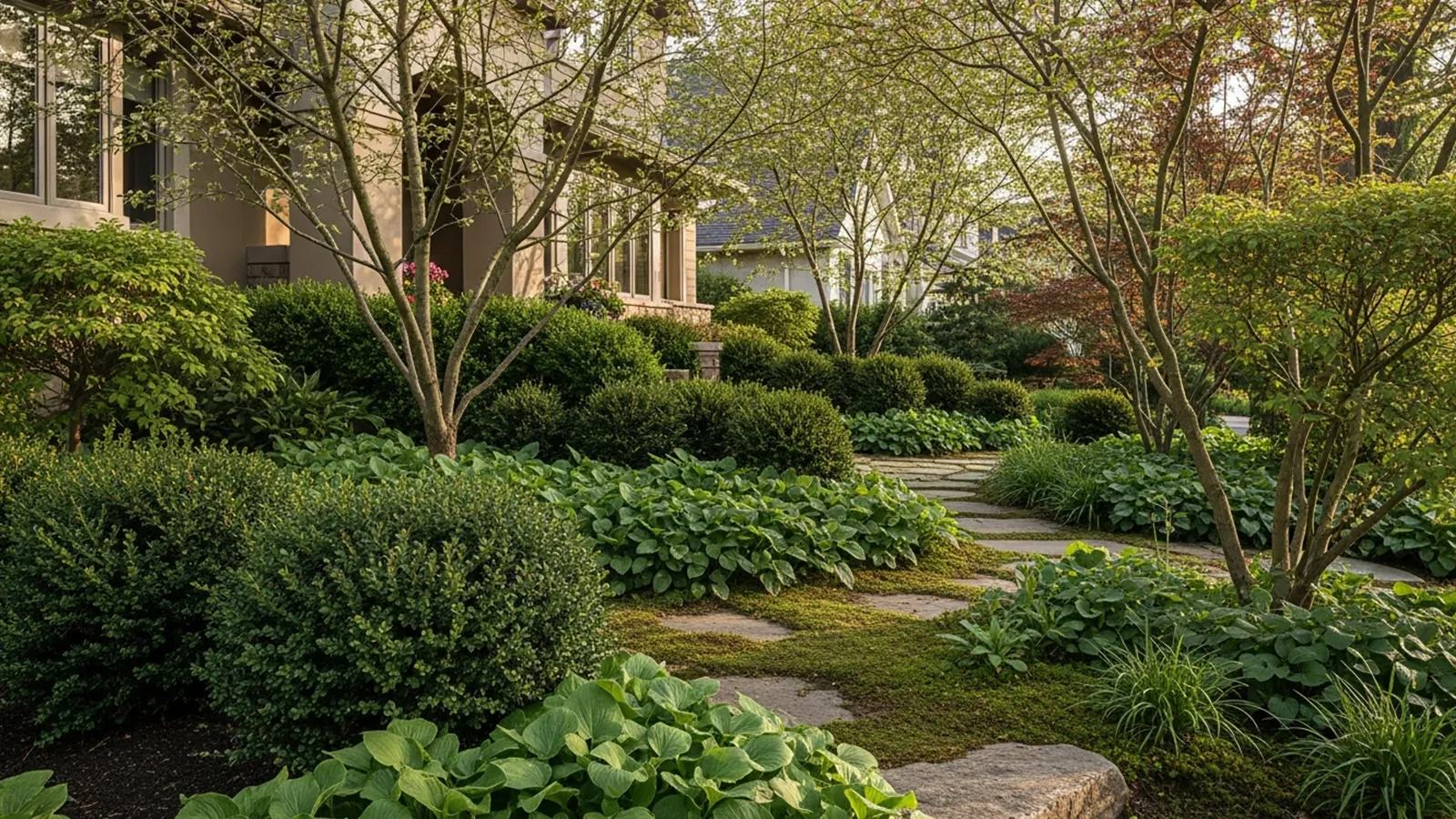
Privacy without fences works by interrupting how the eye travels rather than stopping it completely. Small shifts in plant alignment or depth can change how exposed a space feels. These changes are often noticed subconsciously rather than deliberately.
Successful designs usually focus on a few key moves:
-
Breaking long sightlines with layered planting.
-
Creating depth so views pass through, not straight across.
-
Using height changes instead of solid barriers.
When privacy is handled this way, the yard remains welcoming. It feels sheltered without signaling defensiveness.
Long-Term Adaptation and Design Resilience
Over time, a lawn-free front yard reveals whether its privacy strategy was well judged. Plants grow, views shift, and daily patterns become clear. Designs that anticipate this change feel stable rather than reactive.
Resilient layouts tend to share a few qualities:
-
Space for plants to mature without crowding.
-
Flexibility to thin or adjust planting as needed.
-
A structure that holds even as details evolve.
As materials weather and plants settle in, the yard often gains clarity instead of losing it. The space begins to feel established, not finished, which allows it to adapt quietly while maintaining comfort and coherence.
https://www.epa.gov/watersense/landscaping-tips
Planning background: Environmental Protection Agency (EPA)