Quick Solution Summary
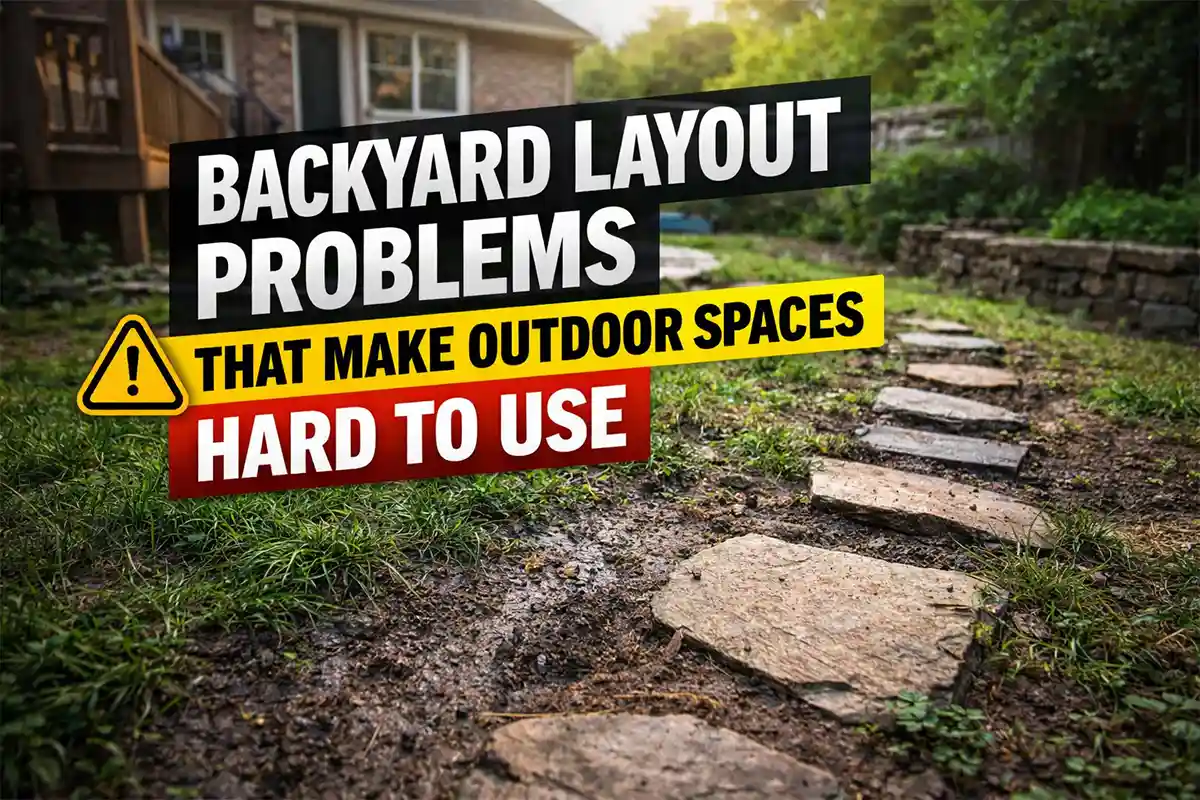
A backyard can look attractive on paper yet feel frustrating to use in everyday life. Layout problems usually appear when outdoor spaces are designed around visual elements instead of real movement patterns. Narrow pathways, crowded patios, and poorly placed features force people to squeeze through furniture or constantly rearrange seating just to move around.
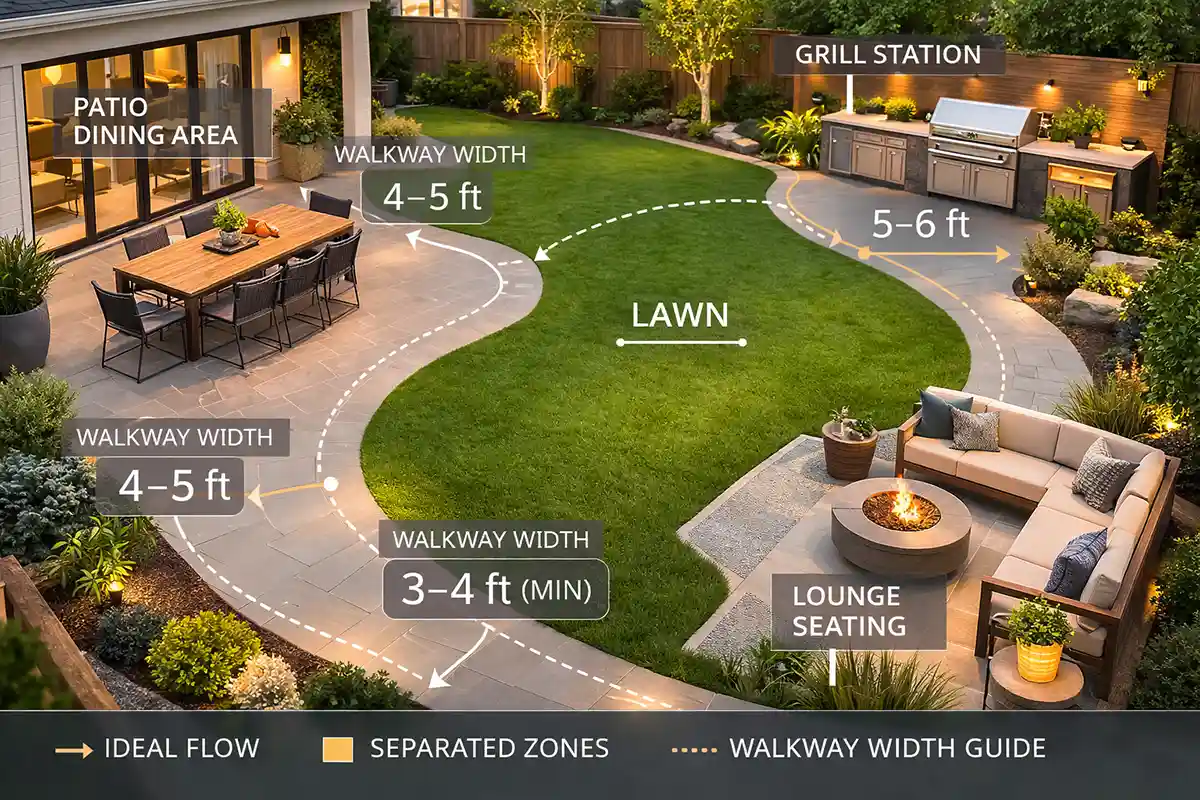
In most residential yards, the core problem is missing spatial structure. Functional outdoor layouts typically maintain 36–48 inches of walkway clearance, separate activity zones such as cooking and dining, and position frequently used features close to the house. When these design basics are ignored, even a large backyard can feel cramped.
Many homeowners discover these issues after hosting gatherings. A patio that looked spacious during installation can suddenly feel crowded when six or eight dining chairs are pulled out at once. Fixing layout problems often requires simple adjustments—repositioning furniture, widening walking paths, or reorganizing zones to improve movement flow.
In climates across the United States—from humid Florida summers to mild California evenings—functional layout planning often determines whether a backyard becomes a daily living space or a rarely used outdoor area.
Signs Your Backyard Layout Is Working Against You
Many layout problems become obvious once you start using the yard regularly. Watch for these common warning signs:
-
Guests constantly walk across grass instead of using pathways
-
Dining chairs block the main walking route through the patio
-
The grill or outdoor kitchen feels far from the house
-
Seating areas feel crowded when people move chairs
-
Walkways feel narrower than 30–36 inches
-
Multiple features compete for the same central space
These signals usually indicate that the backyard lacks a clear movement flow or defined activity zones.
Why Backyard Layout Problems Happen
Many residential yards are designed visually rather than functionally. The result may look appealing from the house but becomes inconvenient during everyday use.
This issue often appears alongside broader planning mistakes explained in Backyard Design Mistakes That Ruin Outdoor Spaces, where layout planning plays a central role in long-term usability.
Several factors commonly contribute to poor backyard layouts.
1. Lack of Defined Outdoor Zones
Well-designed yards usually separate activities into zones such as:
-
outdoor dining area
-
lounge seating space
-
cooking or grilling station
-
open lawn or play area
Without these boundaries, all activities compete for the same space.
For example, a 14 × 16 foot patio may appear large enough for dining and lounging together. However, once chairs require 30–36 inches of movement clearance, the usable space shrinks significantly.
The result is a patio that constantly feels crowded.
2. Poor Traffic Flow
Outdoor spaces function much like indoor floor plans. People naturally move between key areas such as:
-
the back door
-
seating areas
-
grills or outdoor kitchens
-
garden beds or lawns
If furniture blocks these routes, people begin cutting across lawns or squeezing between chairs.
Typical backyard pathway dimensions should include:
| Path Type | Recommended Width | Reason |
|---|---|---|
| Primary path | 36–48 inches | Allows two people to pass comfortably |
| Secondary path | 30–36 inches | Single-person movement |
| Service path | 24–30 inches | Occasional garden or maintenance access |
Ignoring these clearances often creates subtle friction in everyday backyard use.
3. Outdoor Features Placed in the Wrong Location
Backyard elements work best when positioned according to frequency of use.
Common placement mistakes include:
-
fire pits located in primary walkways
-
grills placed too far from kitchen access
-
seating areas too close to cooking zones
-
patios located in low drainage areas
Cooking areas illustrate this clearly. When a grill sits 20–30 feet from the house, homeowners must constantly carry supplies back and forth.
Many designers recommend positioning outdoor cooking areas 8–15 feet from the back door, depending on ventilation and safety clearances.
Placement problems may also appear when patios are built on uneven terrain, which is discussed in Uneven or Sloped Ground: Here’s Why Your Patio Feels Unstable.
Environmental Conditions That Influence Backyard Layout
Climate conditions across the United States also affect how outdoor layouts perform.
Humid Climates (Florida and Gulf Coast)
In regions where humidity regularly reaches 70–80%, airflow becomes essential. Dense layouts with tall structures or tightly grouped furniture can trap heat, making seating areas feel 10–15°F warmer than nearby open areas.
Allowing wider spacing between seating zones improves ventilation.
Dry Desert Regions (Arizona and Nevada)
Backyards in desert climates often depend on shade structures such as pergolas or shade sails. Because sun angles shift during the day, seating areas must be placed carefully so shade coverage remains usable during peak afternoon heat above 95°F.
Northern Cold Climates
In colder regions where winter temperatures drop below 20°F, backyard layouts must also allow for snow removal and drainage.
Patios that trap meltwater or block runoff paths can quickly become slippery surfaces during freeze-thaw cycles. These issues often relate to problems described in Patio Drainage Problems Most Homeowners Notice Too Late.
The Most Common Backyard Layout Problems
The following issues frequently appear in residential landscape designs.
| Problem | Impact on Usability | Likelihood | Fix |
|---|---|---|---|
| Patio overcrowding | Limited movement and seating discomfort | High | Reduce furniture or expand patio |
| Blocked pathways | People cut across lawn areas | High | Maintain 36–48 inch walkways |
| Poor grill placement | Cooking becomes inconvenient | Medium | Move cooking zone closer to the house |
| Too many focal points | Yard feels visually cluttered | Medium | Choose one main design feature |
| Narrow transitions | Congestion between activity zones | High | Widen connectors between areas |
| Poor drainage layout | Standing water after rain | Medium | Adjust slope or install drainage |
Even shifting a fire pit or dining table by 3–4 feet can noticeably improve circulation.
Backyard Layout Mistakes in Small Yards
Layout problems become even more noticeable in small backyards between 800 and 1,500 square feet.
Trying to include too many features in limited space often creates congestion. A small yard might attempt to fit:
-
a fire pit area
-
full dining set
-
lounge seating
-
raised garden beds
-
children’s play equipment
When these elements compete for the same area, movement flow collapses.
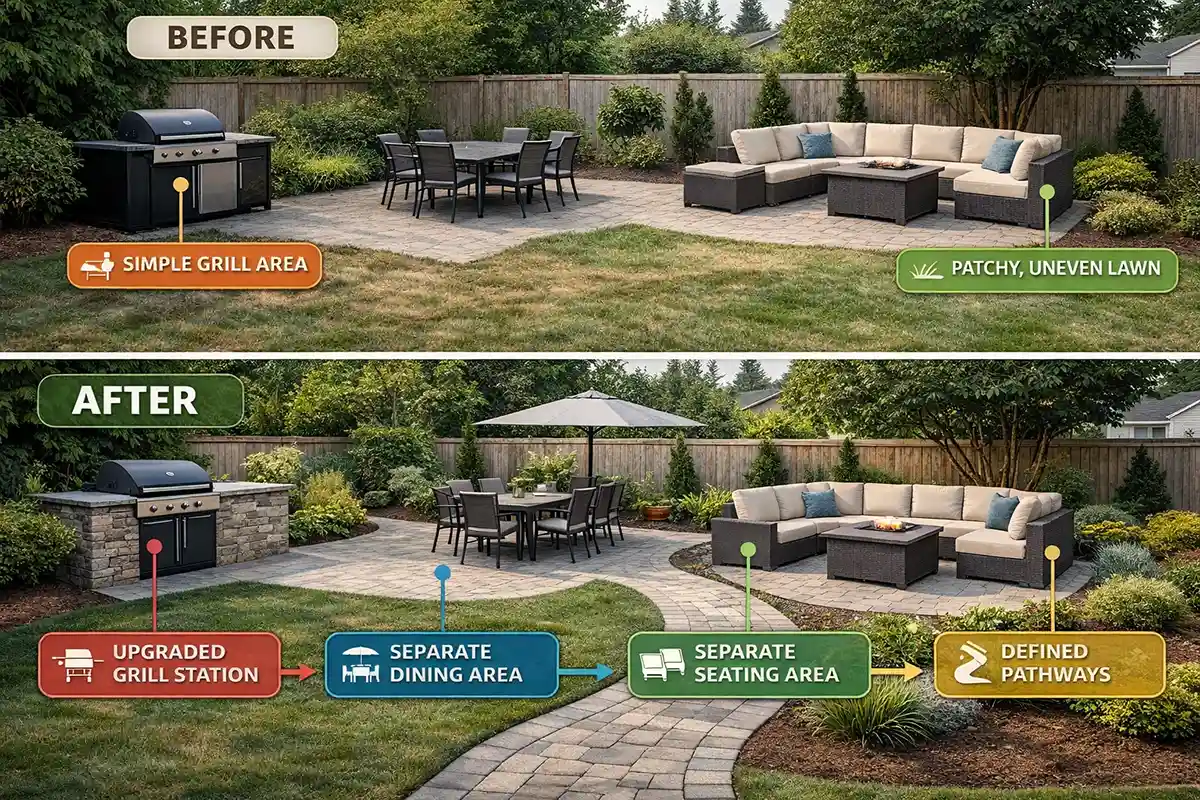
Smaller yards usually perform better with two primary zones instead of four or five. For example:
-
patio dining area
-
open flexible lawn or seating space
Simplifying the layout allows furniture spacing and pathways to remain comfortable. For additional strategies, see Patio Furniture Layout Fixes That Make a Big Difference.
Practical Fixes That Improve Backyard Layout
Many layout issues can be corrected without major construction.
Reposition Furniture First
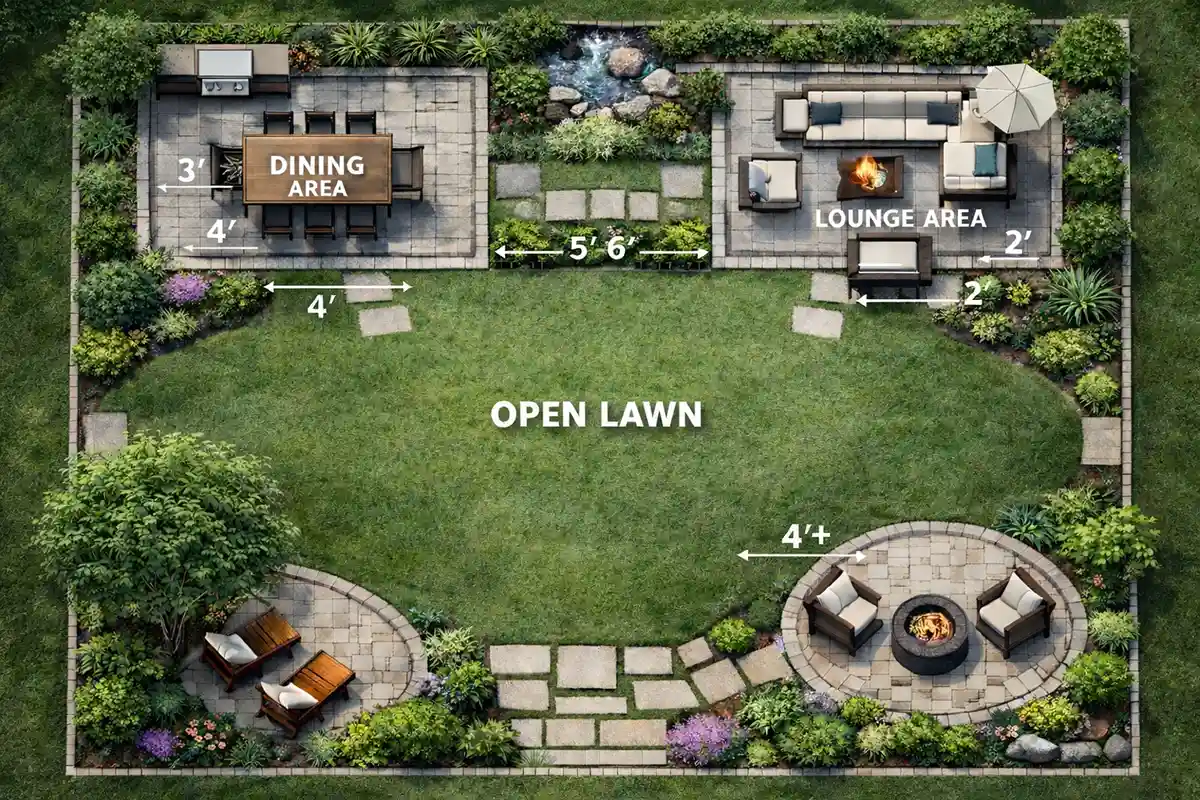
Outdoor furniture spacing should typically include:
-
30–36 inches behind dining chairs
-
18–24 inches between seating pieces
-
36 inches of walkway clearance
Rearranging furniture alone can often improve movement flow by 20–30%.
Define Outdoor Zones
Use subtle visual boundaries to guide movement:
-
outdoor rugs
-
planter boxes
-
low garden walls
-
pergola posts
These elements help separate activities without making the yard feel crowded.
Reduce the Number of Features
Trying to include every design idea often creates clutter. Most successful backyards focus on two or three primary functions.
Additional planning ideas can be found in How to Design a Backyard for Everyday Use.
Key Principles Landscape Designers Follow
Professional landscape designers typically organize outdoor spaces using a few consistent rules.
-
Plan movement paths before furniture placement
-
Maintain comfortable walkway widths
-
Separate activity zones clearly
-
Limit the number of focal points
-
Design spaces based on everyday use patterns
These principles allow backyards to function more like natural outdoor living areas instead of decorative spaces.
Frequently Asked Questions
How wide should backyard walkways be?
Primary backyard walkways typically measure 36–48 inches wide, which allows two people to pass comfortably. Narrower paths often cause congestion near seating areas.
How much space should be left between patio furniture pieces?
Most layouts work best with 18–24 inches between furniture pieces and 30–36 inches behind dining chairs when pulled out.
How many activity zones should a backyard have?
For most suburban yards between 1,000 and 3,000 square feet, two or three zones—such as dining, lounging, and open lawn—usually provide the best balance of function and simplicity.
Can backyard layout problems be fixed without rebuilding the patio?
Yes. Many usability issues can be improved by rearranging furniture, relocating features like grills or fire pits, and widening walking paths between activity areas.
Research on residential landscape functionality from the University of Georgia Extension provides additional guidance on outdoor design principles.
Conclusion
Backyard layout problems rarely come from a lack of space. More often, they result from poor movement flow, crowded patios, or features placed in inconvenient locations.
When outdoor zones are clearly defined and walkways remain open, backyards become far easier to use for everyday activities. Small changes—such as repositioning furniture, widening pathways, or simplifying the number of features—can dramatically improve usability.
The most successful backyard layouts are not just visually appealing. They support comfortable movement, practical outdoor living, and flexible spaces that homeowners actually enjoy using throughout the year.