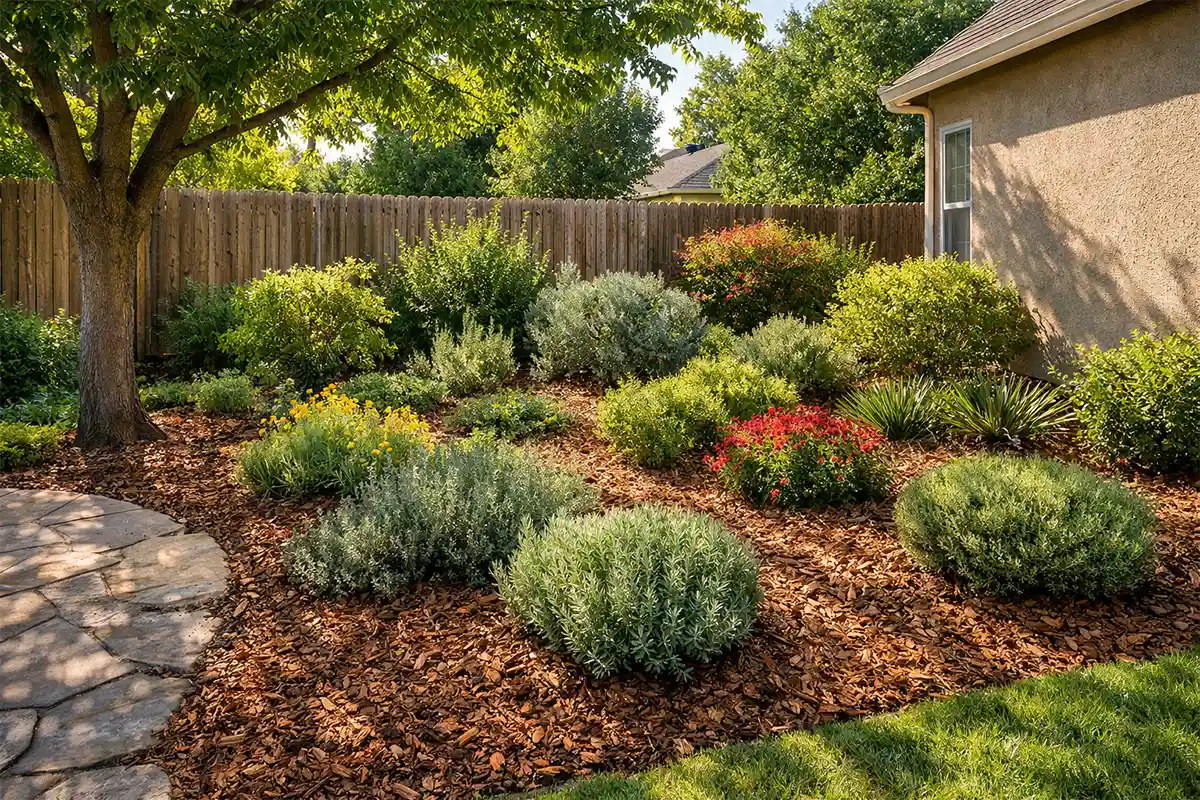
Small garden design problems in hot climates are rarely caused by poor watering alone. They are usually the result of structural heat buildup, shallow soil systems, excessive hardscape, and plant selections that cannot tolerate prolonged high temperatures. The most effective solutions combine shade planning, deeper soil preparation, drought-adapted plant choices, and surface cooling strategies into a unified design approach.
In USDA Zones 8–10 and in interior regions that experience extended heat waves, small yards often run hotter than nearby open landscapes. Fences, exterior walls, and patios absorb solar radiation during the day and re-release that heat into planting beds well after sunset. This sustained radiant load prevents soil from cooling overnight, weakening roots and reducing recovery capacity between hot days.
When heat is treated as a core design constraint rather than a seasonal inconvenience, layout decisions shift. Instead of reacting to plant decline with more irrigation or fertilizer, the focus moves toward reducing thermal stress at its source. That shift creates a foundation for multiple viable solutions in the long term.
How Heat Builds Up in Small Yards
Compact gardens create intensified microclimates because surfaces are close together and airflow is limited. Hardscape elements such as concrete, stone, and masonry walls store solar energy and reflect it into surrounding beds. In tightly built neighborhoods, this effect can elevate localized temperatures several degrees above regional forecasts.
The most damaging stress often occurs late in the day. Western-facing boundaries receive intense afternoon sun, which reflects off vertical and horizontal surfaces simultaneously. Plants positioned near those edges experience both direct and indirect heat exposure, increasing leaf scorch and soil moisture loss.
Nighttime cooling is equally important. When soil temperatures remain elevated after sunset, root respiration increases while nutrient absorption efficiency declines. Repeated cycles of warm nights and hot days gradually weaken plant systems, even if surface irrigation appears consistent.
The Hidden Impact of Hardscape Ratios
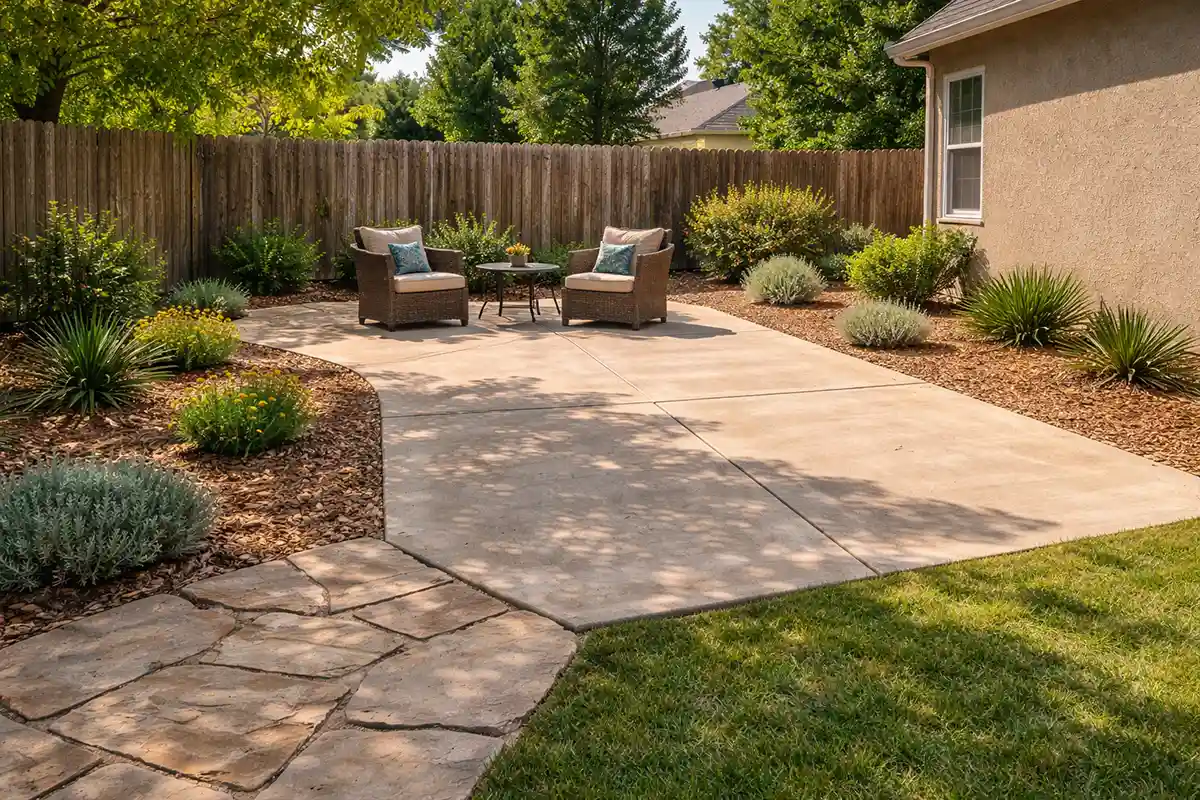
Hardscape is often marketed as low-maintenance and water-saving, yet in hot climates it increases thermal pressure. Concrete and stone absorb heat throughout the day and release it slowly, raising surrounding soil temperatures. In small gardens, where planting beds are adjacent to paved surfaces, the effect is magnified.
High hardscape ratios also reduce natural cooling from plant transpiration. Vegetation releases moisture into the air, which slightly lowers ambient temperature. When planted areas shrink, that cooling function weakens, forcing irrigation systems to compensate for the imbalance.
Over time, this dynamic increases maintenance rather than reducing it. Soil dries more quickly, roots remain shallow, and plant replacement cycles accelerate. Reducing continuous paved surfaces or incorporating permeable materials can significantly moderate these effects across multiple summers.
Soil Depth as a Thermal Buffer
Shallow planting beds are one of the most common structural weaknesses in hot-climate landscapes. When roots are confined to the upper six to eight inches of soil, they remain exposed to intense surface heat and rapid evaporation. Deeper amended soil allows roots to access cooler subsurface moisture reserves during prolonged drought periods.
Organic matter improves both water retention and temperature stability. Compost-enriched soil buffers dramatic swings between dry heat and sudden rainfall events, supporting more consistent root function. Active soil biology also strengthens plant resilience by improving nutrient cycling during periods of stress.
Raised beds can help in poorly draining sites, but elevation alone does not solve overheating. Without adequate depth and organic structure, raised beds may dry even faster than in-ground systems, compounding rather than correcting thermal stress.
Plant Selection Based on Climate Function
Many small gardens decline because plant selection is driven by appearance rather than endurance. Compact ornamental varieties bred for color intensity often lack deep root systems and sustained heat tolerance. They may perform well in spring but deteriorate under repeated summer heat waves.
Drought-adapted and regionally compatible species regulate transpiration more efficiently and maintain structural integrity during extended high temperatures. Selecting plants aligned with local climate realities reduces irrigation demand and replacement frequency. A detailed exploration of mismatched plant choices appears in Small Garden Plants That Fail — And What Works Instead, which highlights how visual appeal can conflict with performance in small spaces.
Spacing also matters more than many homeowners expect. Overcrowded beds restrict airflow and intensify competition for limited soil moisture, increasing susceptibility to heat stress even when watering schedules are carefully managed.
The Maintenance Illusion in High-Heat Landscapes
Minimalist designs are often promoted as effortless, yet in hot climates they can create hidden maintenance cycles. Large paved areas combined with sparse planting amplify radiant heat and reduce natural cooling, increasing reliance on mechanical irrigation. What appears simple during installation can become resource-intensive across successive summers.
This pattern reflects a broader structural issue described in Why “Low-Maintenance” Gardens Never Stay That Way. Short-term design shortcuts frequently shift labor rather than eliminate it, particularly in environments with sustained climatic pressure.
Addressing small garden design problems in hot climates begins with structural recalibration. By reducing hardscape dominance, increasing soil depth, and prioritizing climate-functional plant selection, homeowners create a stable baseline. From that foundation, more advanced decisions about shade integration and irrigation efficiency can be layered strategically in the next stage of design.
Shade Integration as a Primary Cooling Strategy
In hot-climate small gardens, shade is not optional support but structural protection. Afternoon sun, especially on west-facing fences and patios, generates the most intense radiant load because heat reflects back into planting beds. Reducing that exposure lowers cumulative stress on foliage and soil across the entire growing season.
Trees provide the most balanced long-term solution because they combine overhead filtering with air movement beneath the canopy. Shade sails and pergolas can work effectively, but they must preserve cross-ventilation so trapped heat does not accumulate. The goal is moderated light, not dense darkness, which would restrict plant diversity and airflow.
If your yard’s hottest zone sits along a reflective boundary, then positioning shade to intercept late-day sun in that area delivers greater performance gains than evenly distributing shade across the entire garden. Strategic placement consistently outperforms uniform coverage.
Irrigation Design: Short-Term Lushness vs Long-Term Stability
Water management determines whether a garden adapts to heat or becomes dependent on constant intervention. Drip irrigation reduces evaporation and directs moisture to the root zone, which is critical in extended drought conditions common in Zones 8–10. However, how often and how deeply you water shapes root architecture over time.
There is a clear trade-off between appearance and durability. Frequent, shallow watering produces rapid surface growth but discourages deep root penetration, increasing vulnerability during water restrictions or extreme heat spikes. Deeper, spaced watering strengthens root systems and improves long-term stability, though plants may require an adjustment period before showing full vigor.
If your region enforces periodic watering limits, then designing around drought-adapted plants combined with deep irrigation intervals is the safer structural baseline. In areas with more consistent rainfall and moderated summer temperatures, supplemental watering can expand planting options without undermining resilience.
Mulch Systems That Reduce Thermal Stress
Mulch functions as insulation for soil, moderating both evaporation and temperature swings. Organic materials such as bark chips or shredded wood create a protective layer that limits direct solar contact and gradually enriches soil as they decompose. A consistent two- to three-inch layer stabilizes root-zone conditions during prolonged heat waves.
Gravel mulch behaves differently because it stores and radiates heat. In true desert ecosystems built around widely spaced xeric species, gravel can align with the surrounding ecology. In many suburban hot-climate yards, however, gravel increases root-zone temperature and irrigation demand, particularly when combined with reflective hardscape.
Landscape fabric beneath decorative stone further restricts soil biology and organic renewal. Over time, reduced microbial activity weakens plant health even if watering schedules remain consistent.
What Not to Do in High-Heat Small Gardens
❌ Avoid designing primarily around aesthetic trends that ignore environmental mechanics. Tropical ornamentals placed in exposed microclimates often demand heavy irrigation yet still struggle during sustained heat waves. The visual payoff in early summer rarely offsets the long-term instability created by repeated stress cycles.
Expanding patio and paver coverage while shrinking planted areas compounds the problem. Large continuous hardscape zones reduce the cooling effect of plant transpiration and reflect energy into remaining beds. This imbalance increases irrigation dependency and narrows the range of plants that can survive multiple summers.
Artificial turf can intensify surface heat under direct sun and radiate warmth into adjacent soil. In compact yards, that heat spillover reduces comfort and usability during peak afternoon hours while adding stress to nearby plantings.
Defining the Strongest Default Solution
Two dominant design paths emerge in hot-climate small gardens. One integrates shade infrastructure, deeper amended soil, drought-adapted plants, organic mulch, and controlled drip irrigation. The other minimizes vegetation, expands paving, and relies heavily on irrigation to maintain appearance.
The first approach requires more thoughtful planning and initial investment but distributes thermal stress across living systems that cool and stabilize the environment. The second may appear simpler at installation yet often increases long-term water dependency and plant replacement cycles. Effort versus payoff becomes clear over several extreme summers rather than within the first year.
For most homeowners across the US and southern Canada, the strongest general default is a shade-integrated, soil-first system that reduces hardscape dominance, builds deeper organic soil, uses drought-adapted species, and structures irrigation to promote root depth instead of surface saturation. This integrated model consistently outperforms hardscape-heavy alternatives under recurring heat waves.
An important exception applies in extremely arid desert environments where native xeric ecosystems dominate and rainfall is minimal. In those contexts, gravel-based designs with widely spaced, highly adapted species can perform effectively when the entire layout aligns with desert ecology rather than suburban planting assumptions.
Understanding how climate stress differs regionally prevents misapplied strategies. Cold-climate failures stem from freeze-thaw cycles and soil contraction rather than radiant overload, as detailed in What Cold Climates Do to Small Garden Designs.
Similarly, removing turf without recalibrating surface heat dynamics can create unintended thermal amplification, an issue explored in Small Garden Landscaping Without Lawn: Hidden Problems.
When shade planning, soil depth, plant selection, mulch management, and irrigation strategy operate as a unified system, small gardens in hot climates transition from reactive maintenance cycles to predictable long-term stability.
For broader guidance on water efficiency and heat mitigation principles in residential landscapes, the United States Environmental Protection Agency is a reliable starting point.