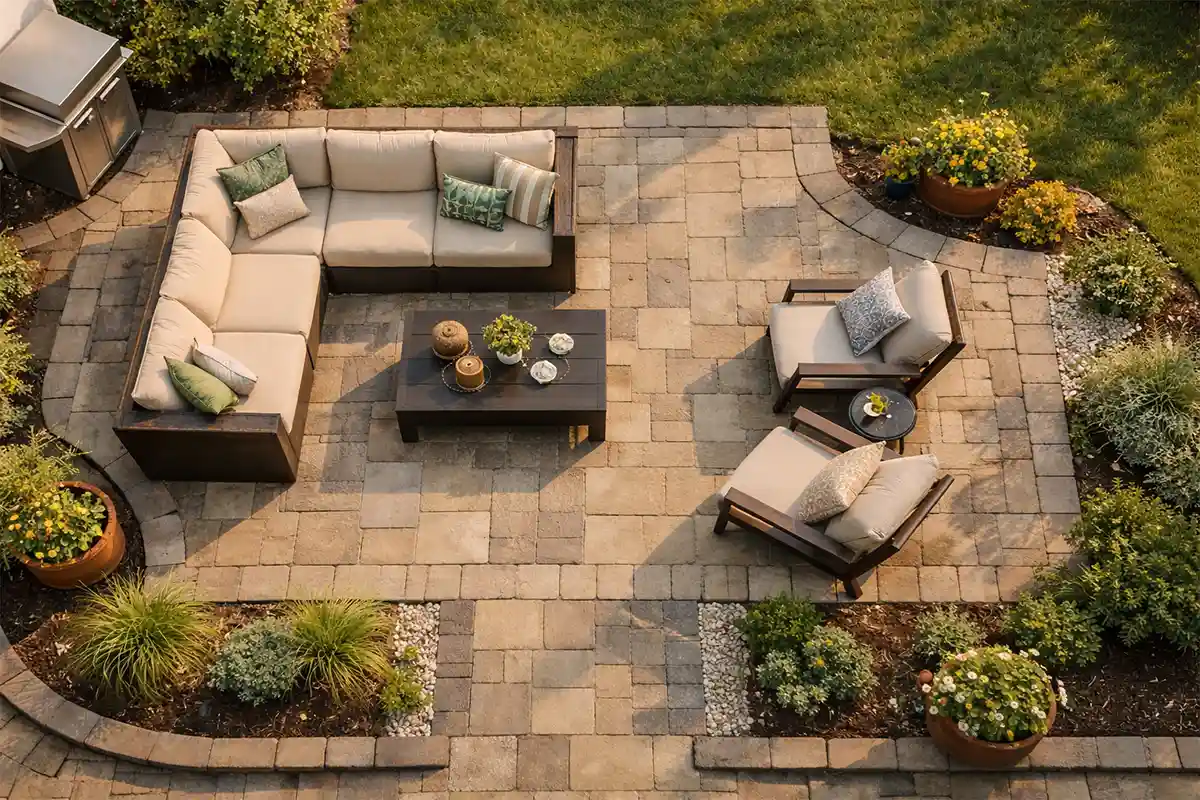
Most patio discomfort is not caused by cheap furniture or outdated cushions. It is almost always a layout problem. When spacing blocks movement, seating faces the wrong direction, or proportions overwhelm the slab, even premium outdoor pieces feel awkward and underused.
Smart patio furniture layout solutions focus on how people move, gather, and transition through the space. Comfort improves when circulation is protected, seating distances match human behavior, and furniture scale fits the patio footprint. There are multiple ways to arrange a patio successfully, but the strongest layouts consistently prioritize flow before style.
Start With Circulation Before Seating
The most overlooked comfort factor is circulation width. If guests must twist sideways to pass between a chair and a railing, the layout is already compromised. A primary walking path from the house entry to the yard, grill, or steps should remain at least 30–36 inches wide in most American backyards to prevent bottlenecks and awkward interruptions.
Circulation planning also prevents long-term layout drift. When movement paths are unclear, furniture slowly shifts over time as people adjust pieces to create room. That constant repositioning signals that the original layout never respected flow. Many recurring issues outlined in Patio Layout Problems That Make Spaces Hard to Use begin with ignoring circulation geometry.
Another nuance involves surface type. On pavers or textured concrete, tight walkways feel even narrower because visual grout lines emphasize restriction. On smooth deck boards, furniture can appear to “float,” masking congestion until real use exposes it. Accounting for visual compression is just as important as measuring physical clearance.
Define a Conversation Zone With Proper Spacing
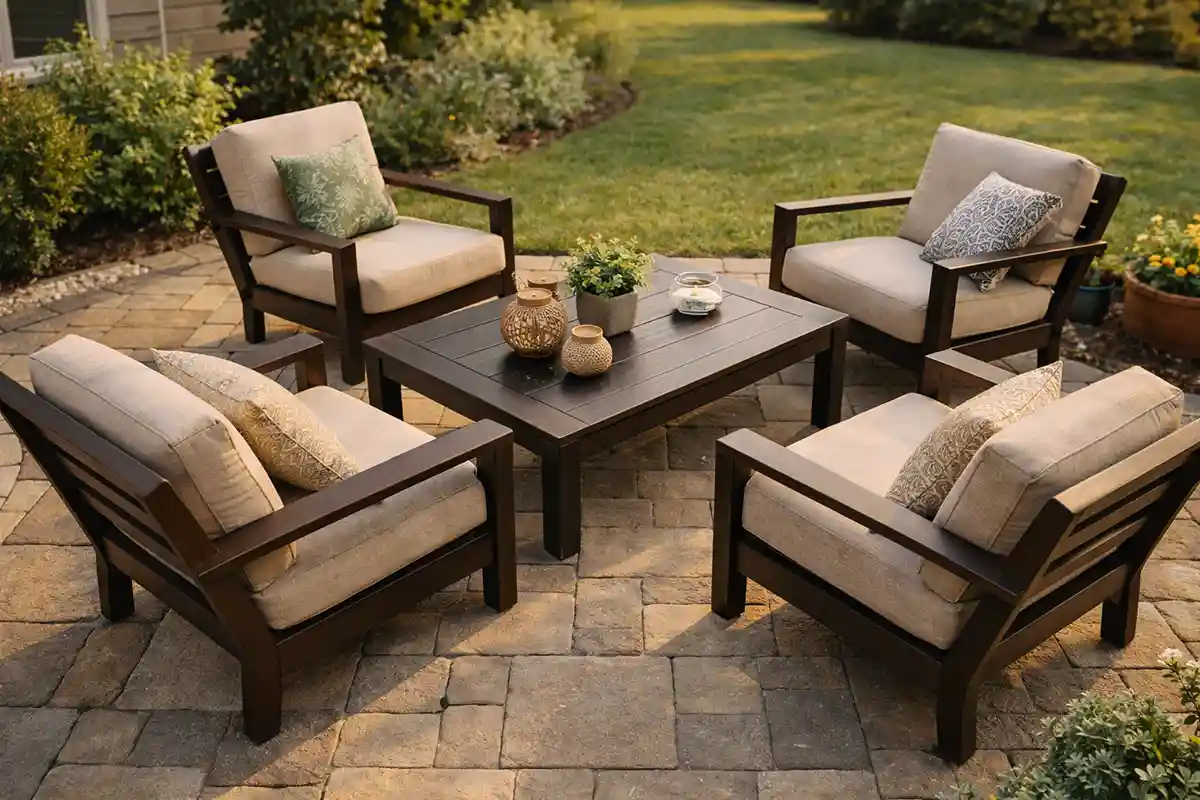
Comfort depends on how easily people can interact without leaning or straining. In most patios, 16–18 inches between seating and a coffee table allows natural reach without crowding knees. When chairs sit more than 8 feet apart across a central space, voices rise and posture tightens, subtly reducing relaxation.
Angling seating inward rather than aligning everything parallel to the house creates psychological enclosure. This orientation signals gathering rather than display. It also shortens conversational distance, which is especially important in open backyards where wind or ambient noise can interfere with sound clarity.
Climate also influences spacing decisions. In warmer Southern regions, slightly wider spacing can prevent heat buildup and improve airflow between seats. In cooler climates, tighter groupings feel cozier and extend seasonal usability. These adjustments demonstrate that comfort is not static but responsive to environment.
Anchor Furniture to a Purposeful Focal Point
Furniture without orientation feels temporary. A patio needs a visual anchor such as a fire feature, garden focal bed, outdoor kitchen, or even a framed view toward the yard. Without this reference, seating often floats in the middle of the slab, creating imbalance and wasted perimeter space.
When seating faces a defined anchor, people instinctively settle in longer. A sectional positioned toward a fire pit encourages evening gatherings, while lounge chairs angled toward a landscape view enhance daytime relaxation. The anchor establishes hierarchy, preventing random placement decisions that dilute comfort.
Wind exposure is another factor. In open suburban yards, anchoring seating away from prevailing wind direction improves usability. Even subtle orientation shifts of 15–20 degrees can shield conversation areas without requiring structural additions like screens or pergolas.
Scale Furniture to the Patio Footprint
Proportion determines whether a patio feels inviting or overcrowded. As a general rule, furniture should occupy roughly 60–70 percent of usable patio space, leaving enough negative space to breathe. Oversized deep-seating sectionals in compact patios often eliminate necessary circulation, while undersized sets on large slabs create visual fragmentation.
Depth matters as much as width. Many modern outdoor sofas measure 34–38 inches deep. On patios under 10 feet wide, two opposing deep sofas can leave less than 2 feet of walking space, effectively collapsing flow. Scaling choices should account for actual movement patterns, not just seating capacity.
Small patios demand even stricter proportion control. In these cases, reviewing layout pitfalls inside Small Patio Design Mistakes That Waste Space can reveal how overestimating furniture size quietly reduces comfort and usability.
Layer Zones Instead of Creating One Static Cluster
Single-cluster layouts often struggle to support multiple activities. A patio that handles dining, lounging, and traffic simultaneously benefits from subtle zoning. Even without walls, rotating chairs, repositioning rugs, or adjusting table orientation can create functional boundaries.
Layering also protects adaptability. If a dining area sits directly in the main walkway between the house and yard, chairs will constantly shift. By defining adjacent but distinct zones, the layout maintains structure during everyday use and larger gatherings alike.
Effective zoning does not require more furniture. It requires strategic placement that respects circulation, scale, and orientation. When these foundational elements align, comfort becomes sustainable rather than accidental, setting the stage for deeper layout decisions that determine long-term performance.
Balance Fixed Pieces With Adaptive Flexibility
Permanent seating elements such as large sectionals create visual stability and often define the main conversation area. However, a patio built entirely around fixed furniture limits adaptability when guest counts change or seasonal needs shift. Over time, rigid layouts reduce functionality because they cannot respond to evolving use patterns.
There is a measurable trade-off between structure and flexibility. Fixed seating provides cohesion, visual weight, and a clear focal zone, but it restricts reconfiguration and can dominate smaller patios. Movable chairs and lightweight side tables increase versatility and airflow, yet require disciplined placement to avoid visual clutter. For most US backyards, the strongest performance comes from anchoring one primary seating element and supporting it with two to four flexible pieces that can adjust without disrupting circulation.
Material weight also affects this balance. Aluminum or resin-framed chairs allow seasonal repositioning with minimal effort, while heavy teak or steel pieces discourage movement and gradually lock the layout into suboptimal positions.
Sectional Versus Separate Seating: A Functional Decision
Choosing between a sectional and individual seating pieces is not purely aesthetic. It directly influences flow, spacing precision, and long-term comfort. Deep L-shaped sectionals encourage lounging but require accurate clearance planning to avoid compressing walkways.
If your patio is rectangular and primarily used for extended lounging, then a sectional aligned along the longest wall often maximizes seating without breaking circulation. If your patio includes multiple entry points or must support both dining and lounging, then separate chairs and loveseats allow tighter spacing control and clearer movement corridors. This decision framework matters because layout friction usually appears months after installation, not on day one.
Climate exposure introduces another layer. In high-wind regions, modular sectionals can shift unless properly weighted, while separated seating distributes weight more evenly. The wrong choice does not fail immediately; it fails gradually as comfort erodes.
Designing for Multi-Use Patios Without Congestion
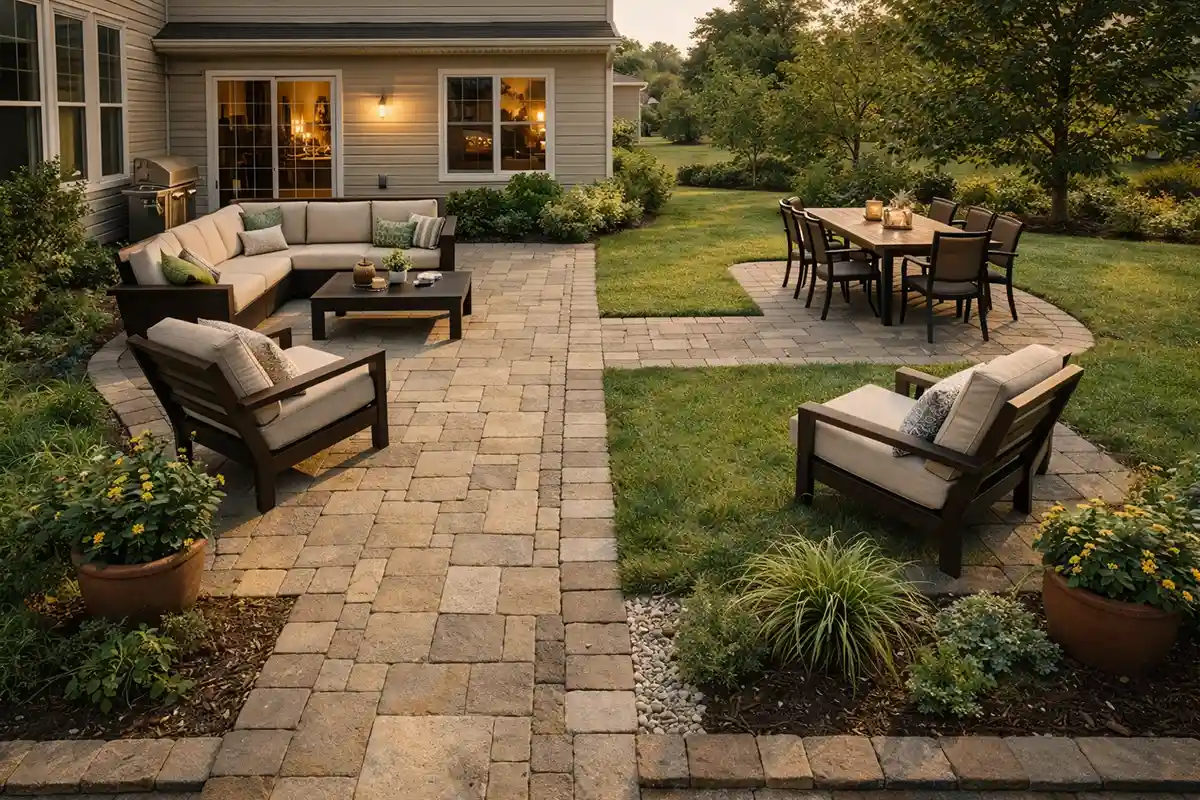
Modern patios often function as outdoor living rooms, dining spaces, and transitional corridors simultaneously. Without deliberate zoning, chairs migrate into walkways and dining tables interrupt natural traffic flow. Comfort decreases when furniture must be shifted before every gathering.
The key is hierarchy. The primary conversation zone should anchor the patio, while dining or secondary seating areas sit adjacent but not directly in the main circulation path. For broader structural concepts that support efficient small-space planning, reviewing Patio Design Ideas for Small Backyards helps clarify how zoning preserves usability even in compact footprints.
Shade structures also influence congestion. Umbrellas positioned in the center of a narrow patio can block sightlines and walking paths. Offset bases or wall-mounted shade solutions maintain coverage without compressing movement space.
What Not to Do When Arranging Patio Furniture
One of the most damaging layout habits is pushing all furniture against perimeter edges to create a wide empty center. While this may appear spacious at first glance, it increases conversational distance and wastes functional square footage. The result is a patio that looks open but feels disconnected.
Avoid oversizing coffee tables or ottomans relative to seating depth. When the central table exceeds one-third of the seating footprint, it restricts legroom and interrupts circulation arcs. Similarly, placing dining sets directly in the path between the house door and yard access forces daily navigation around chair backs, gradually creating frustration and wear patterns.
Do not rely solely on visual symmetry. Perfect alignment along a wall can flatten the layout and reduce spatial layering. Slight angling and central anchoring typically create more natural energy and better long-term comfort.
Establishing the Strongest Default Layout for Most Homes
For the majority of US and Canadian suburban patios between 150 and 400 square feet, the strongest default configuration is a centered conversation zone anchored by one primary seating element, supported by movable chairs, and protected by a continuous 30–36 inch circulation path connecting entry and yard. This arrangement balances structure, flexibility, and movement without overcomplicating the footprint.
There are exceptions. Extremely narrow patios under 8 feet deep may require wall-adjacent seating to preserve minimum clearance. In those cases, flow protection outweighs central anchoring. However, for most average backyard layouts, a centered cluster that respects circulation and proportional scale delivers the highest long-term comfort payoff relative to effort.
Patio Furniture Layout Decision Matrix
| Layout Factor |
What Works Best |
Why It Improves Comfort |
Risk If Ignored |
Best For |
| Circulation Width |
30–36 inch clear path |
Prevents congestion and awkward movement |
Bottlenecks, constant chair shifting |
Most suburban patios |
| Conversation Spacing |
16–18 inches from seat to table |
Natural reach without crowding legs |
Leaning forward, discomfort |
Lounge-focused patios |
| Seating Orientation |
Slight inward angle |
Encourages interaction and reduces distance |
Disconnected seating |
Social gatherings |
| Furniture Scale |
60–70% space coverage |
Balanced proportion, breathable layout |
Overcrowded or under-furnished look |
All patio sizes |
| Sectional vs Separate |
1 anchor piece + movable chairs |
Structure + flexibility balance |
Rigid or chaotic layout |
Medium-sized patios |
| Zoning Strategy |
Defined lounge + dining areas |
Reduces furniture drift |
Traffic interference |
Multi-use patios |
| Wind & Exposure |
Face away from prevailing wind |
Improves usability in open yards |
Reduced comfort over time |
Open suburban backyards |
| Shade Placement |
Offset umbrella or wall-mounted shade |
Preserves sightlines and walking paths |
Blocked circulation |
Narrow patios |
Long-term usability also depends on maintenance practicality. Heavy, overcrowded arrangements tend to drift and compress over time. Integrating planning principles from Step-by-Step Guide to a Patio That Stays Low Maintenance ensures that the chosen layout remains stable without constant adjustment.
Thoughtful patio planning aligns with broader outdoor design standards promoted by organizations such as the National Association of Landscape Professionals, which emphasize functional circulation and proportional balance in residential landscapes.