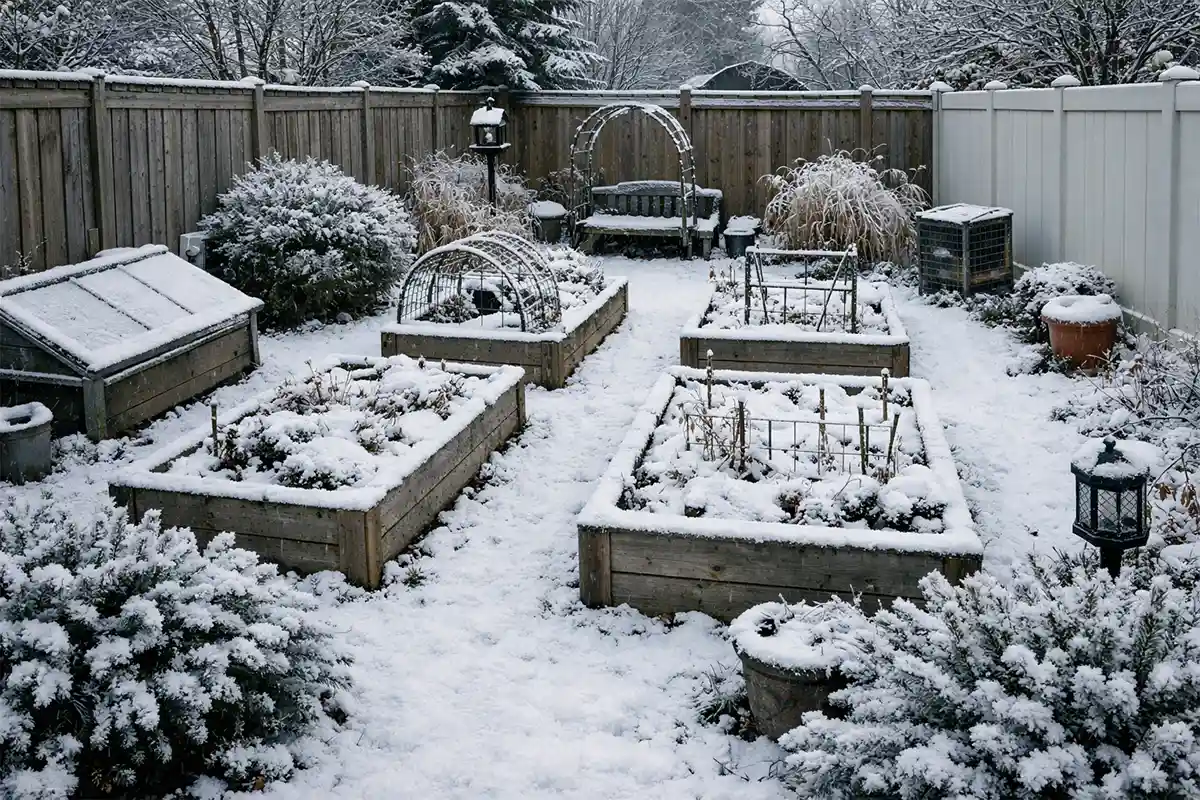
The backyard sat on a slight 4-inch drop from the patio door to the rear fence line. The raised beds were installed about 60 inches from the siding, aligned carefully with the bottom edge of the kitchen window. In summer, everything looked level and clean. By late January, however, the stone edging closest to the fence appeared tilted by nearly half an inch.
At first, the homeowner assumed the shift came from heavy snow pressing against the fence. A 12-inch snowfall had drifted into that corner where the wind funneled between two houses. It seemed logical to blame the weight of snow. The tilt was small enough to ignore.
But by early March, after a few warmer afternoons followed by sharp overnight freezes, the same edge shifted again. This time, the stepping stone leading toward the back gate rocked slightly underfoot. The issue was not a single storm event. It was a repeating pattern tied to temperature swings.
Most people believe snow weight alone causes these changes. That belief is common and incorrect. The early signal in cases like this is uneven freeze–thaw movement beneath the base layer, not the snow sitting on top.
Freeze–Thaw Cycles and Ground Displacement
The first sign was subtle. A straight edging line that once aligned perfectly with the patio corner began drifting out of square by about a quarter inch. The soil beneath had absorbed moisture from melting snow along the 6-foot fence run.
Each afternoon thaw softened the top layer by roughly an inch. Overnight, temperatures dropped below freezing again. The expanding soil pushed upward against the base of the edging stones. Because the yard sloped slightly toward the fence, pressure built unevenly on one side.
At first, it looked like minor settling. After three cycles, the displacement became visible along the entire 10-foot bed edge. The repeated pattern revealed that the ground movement, not surface snow, was driving the shift.
Reduced Winter Sunlight and Plant Stress
The evergreen shrubs sat about 18 inches from the fence and 5 feet below the window line. In December, the sun cleared the neighboring roofline for only two to three hours a day. Frost clung longer to the shaded side closest to the siding.
By late winter, the outer needle tips turned brown along the wind-facing edge. Initially, the homeowner thought road salt from a nearby driveway was drifting in. But there was no visible residue along the leaf surface or soil crust.
The pattern repeated the next year. Browning appeared only on the exposed side facing northwest wind. The common assumption is that cold air alone kills foliage. In reality, moisture loss during frozen soil conditions causes the damage first.
Hardscape Materials Under Extreme Temperature Swings
The patio pavers were set 2 inches above the surrounding soil grade. After the second winter, thin surface cracks appeared along two stones near the center walkway. These cracks measured less than 1/16 inch but followed the same direction as water runoff.
The homeowner initially suspected poor installation. Yet the cracks aligned with areas where meltwater pooled during daytime thaw before refreezing overnight. Water absorption within the porous surface expanded during freezing and stressed the stone internally.
It was not a one-time material defect. It was repeated thermal stress tied to runoff direction and slope alignment.
Snow Accumulation and Concentrated Structural Load
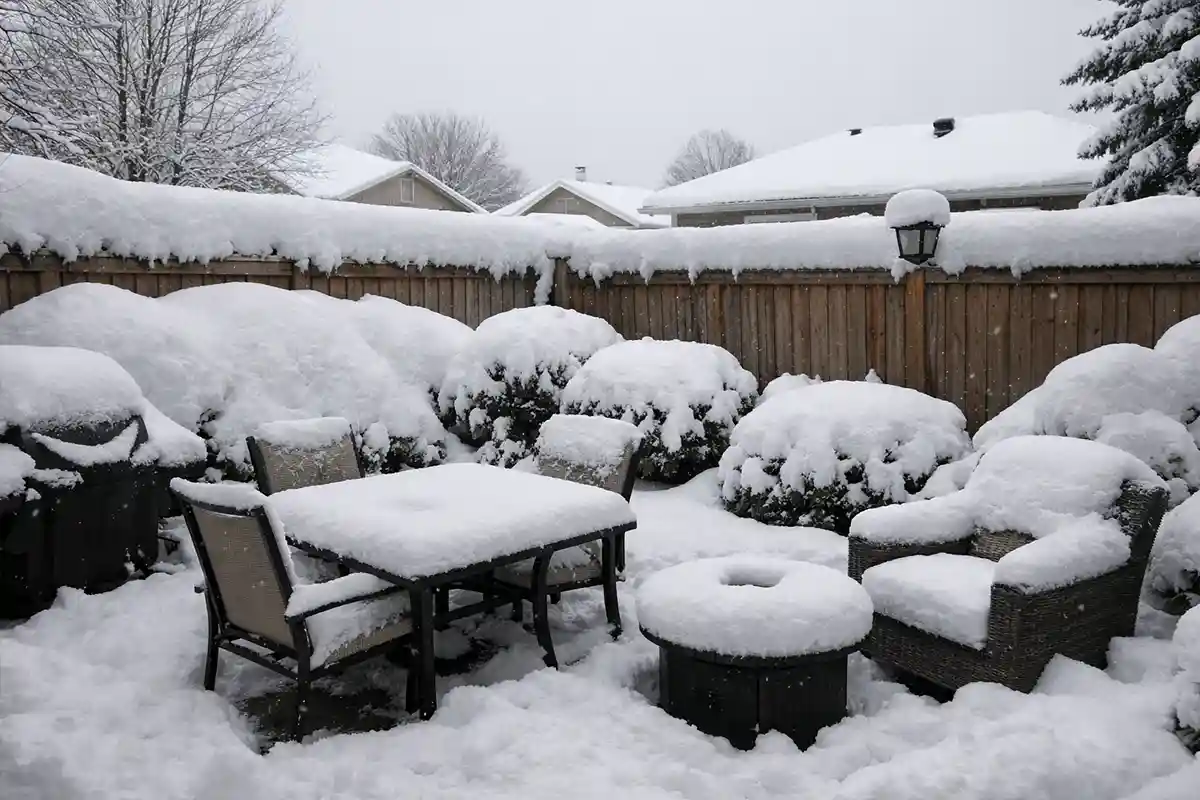
Snow consistently drifted into the 3-foot-wide gap between the shed and fence. Depth reached nearly 18 inches during peak winter. The ornamental grasses nearest that corner bent sharply toward the patio.
At first, the bending seemed temporary. Once temperatures rose above freezing, some blades stood upright again. By the third winter, however, the center of the clump remained permanently flattened.
The difference between a single storm and repeated accumulation became clear. Concentrated load in the same location season after season altered plant structure gradually.
Winter Drainage Shifts and Surface Water Patterns
When daytime temperatures reached the mid-30s, meltwater flowed diagonally across the patio toward the back fence. The slight 4-inch grade difference directed water into a shallow depression near the raised bed corner. That depression measured less than 2 inches deep but refroze nightly.
At first, the homeowner assumed the ice patch was random. But it formed in the same 2-foot area each thaw cycle. Over time, the soil in that corner compacted and remained wetter than the rest of the yard.
Design choices that remove permeable buffers often intensify this effect. Small Garden Landscaping Without Lawn: Hidden Problems examines how limited absorption zones concentrate runoff in compact yards, especially where slight slopes meet hard edges. What began as a minor winter ice patch revealed a repeating structural pattern beneath the surface.
In this case, the sequence followed a clear path: visible shift, simple explanation, repeated occurrence, and then a deeper environmental cause tied to cold-climate behavior.
Wind Exposure in Confined Winter Layouts
The yard measured 24 feet from the sliding door threshold to the rear fence, with a 3-foot-wide passage between the house and a detached shed on the west side. Each winter, northwest wind accelerated through that gap and stacked snow 15 to 18 inches deep along an 8-foot section of fence. The center of the patio, only 10 feet from the door, held barely 3 inches.
Stage 1 – Surface Adjustment
The first response targeted what was easy to see. A temporary 4-foot wind barrier panel was installed at the west entry point. The goal was to reduce drift height and protect the ornamental grasses leaning about 15 degrees toward the patio edge.
After the next snowfall, drift height dropped to roughly 11 inches. The grasses bent less sharply, and the patio looked cleaner. However, a 2-foot strip of ice still formed beside the raised bed during each thaw, and the stepping stone closest to the fence continued to rock slightly under pressure.
At first, it felt like success. The visible snow problem improved. But when a soil probe was pressed 6 inches from the bed wall, resistance was still felt just 2 inches below grade. The underlying compression had not changed.
Many homeowners believe wind alone causes winter instability. That assumption is common and incorrect. Wind shaped the snow, but it did not create the repeated freeze–thaw pressure beneath the surface.
Root Zone Compression Beneath Snow Cover
The raised bed ran 10 feet along the fence and stood 16 inches tall. Repeated 18-inch drifts had compacted the same 3-foot corner zone for three consecutive winters. The soil near the patio felt loose, while the fence-side soil was dense and darker.
Stage 2 – Directional Correction
Instead of focusing only on snow depth, the second intervention redirected meltwater. A shallow channel, about 1.5 inches deep and 5 feet long, was shaped parallel to the fence. The existing 4-inch slope from patio to fence was subtly redirected so runoff would angle toward a central gravel strip rather than the raised bed corner.
During the next thaw cycle, water flowed more directly outward. The recurring 2-foot ice sheet along the fence narrowed significantly. The soil remained damp but did not stay saturated for days.
Still, the edging stone at the corner showed a 1/4-inch misalignment from the patio’s straight reference line. The drainage pattern improved, but structural stress near the entry plane persisted.
Microclimates Created by Snow and Shade
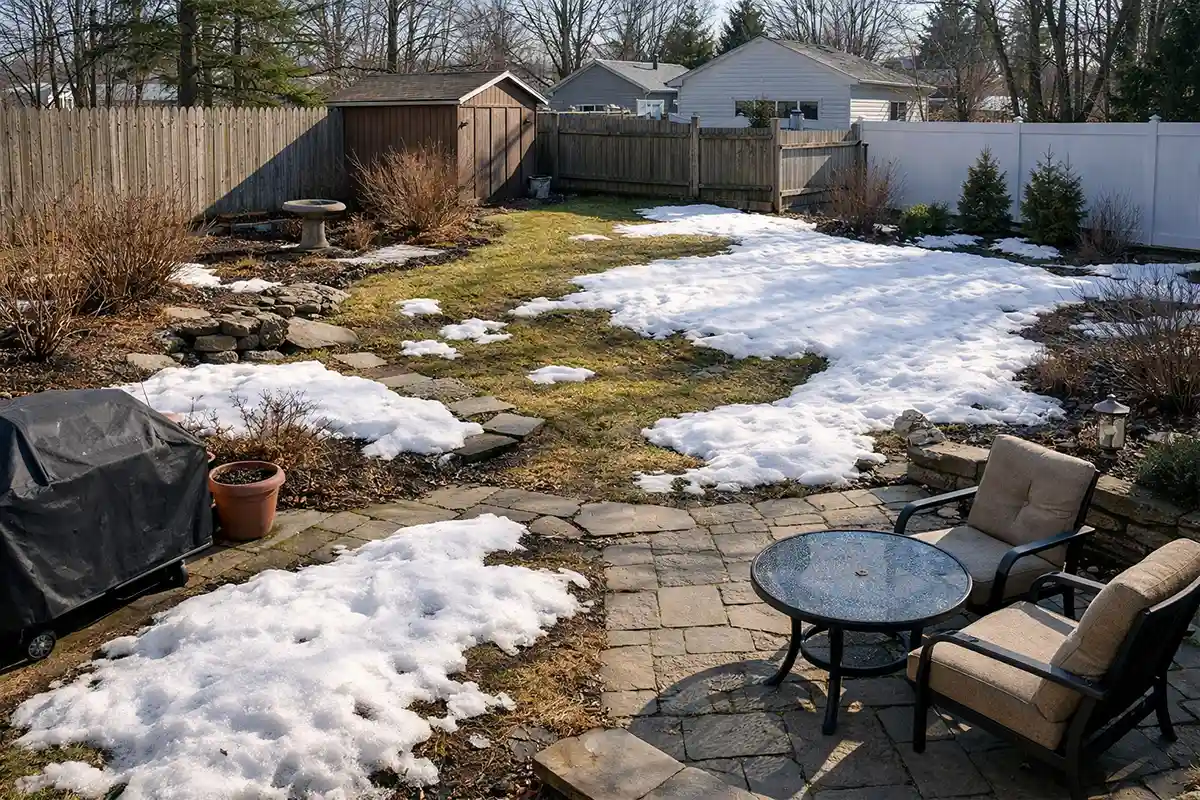
The neighboring home blocked direct winter sunlight after approximately 1:30 p.m. in December. A 6-foot-wide strip along the fence remained shaded most of the afternoon, while the patio near the sliding door warmed sooner due to reflected light from the siding.
Snow melted first within 3 feet of the threshold and lingered near the fence. That contrast kept the corner soil colder and wetter longer than the rest of the yard.
Homeowners often assume uneven melting is random. It is not. Shade lines, fence height, and siding reflection create predictable microclimates that influence freeze timing.
The shaded strip thawed hours later than the patio center. That delay intensified soil saturation in the already compressed zone.
Stage 3 – Entry Plane Balancing
A careful measurement at the sliding door showed a subtle 3/4-inch drop across the first 2 feet of pavers. That slope directed meltwater diagonally toward the stressed bed corner instead of straight outward.
The first two rows of pavers were lifted and re-leveled using compacted base material. The adjustment was less than 1 inch but altered the runoff angle. Water now flowed toward the central gravel strip rather than crossing the patio edge.
After this correction, the recurring 2-foot ice strip disappeared. The edging stones remained aligned through the next freeze cycle. Stability emerged when slope and runoff direction worked together.
Timeline of Observations and Adjustments
| Stage | Observed Behavior | Adjustment Made | Result After Rain Cycle |
|---|---|---|---|
| Initial | ● 18 in. drift at fence | None | Pooling continued ● |
| Stage 1 | ● Grasses leaned 15° | Wind barrier installed | Drift reduced ✓ |
| Stage 2 | ● 2 ft ice strip | Shallow runoff channel | Pooling reduced ✓ |
| Stage 3 | ● Diagonal melt flow | Patio re-leveled | Stable drainage ✓ |
Structural Stress on Raised Beds and Containment Walls
The 16-inch raised bed wall showed slight outward movement along a 4-foot span aligned with the lower window frame. Frost pressure from saturated soil had pushed against that section repeatedly.
Once runoff direction changed and the patio slope was corrected, soil moisture levels stabilized behind the wall. The following winter showed no additional bowing. The alignment between the bed edge and siding corner remained straight.
What appeared to be wall weakness was actually moisture-driven pressure caused by misdirected meltwater.
Maintenance Load in Short Growing Seasons
In colder states such as Minnesota, freeze–thaw cycles often continue into early April. Before intervention, this yard required re-leveling stones and reshaping soil every spring.
After the three-stage correction, seasonal maintenance changed. Stones stayed level, shrubs near the fence recovered upright, and the 2-foot ice strip no longer reappeared.
Small Garden Design Mistakes That Increase Maintenance explains how small grading errors compound in cold climates where winter stress repeats annually. In this case, maintenance decreased only after the structural slope and runoff path were corrected rather than temporarily masked.
Micro Questions from the Case
Why did the first fix fail?
Because reducing wind height did not change soil compression or runoff direction.
What revealed the deeper issue?
The same 2-foot ice strip formed in the identical location after each thaw.
Which stage created real stability?
Re-leveling the entry plane corrected the 3/4-inch slope that redirected meltwater.
Was snow weight the primary cause?
No. Freeze–thaw pressure combined with slope misalignment produced the repeated structural stress.
Surface control brought partial relief. Directional correction reduced pooling. True stability arrived only when the entry plane was balanced and runoff followed a predictable path.
Long-Term Soil Structure Degradation
By the fifth winter after correction, the soil along the 10-foot fence run behaved differently. A metal probe could now pass 4 to 5 inches into the surface before meeting resistance, compared to the 2-inch barrier that once existed. The 16-inch raised bed wall stayed flush with the lower window trim above it, and the 1/4-inch seasonal corner gap no longer appeared each March.
Earlier, the warning sign was subtle. The edging line shifted slightly out of square with the patio corner, and a soft patch developed within 3 feet of the fence where snow had repeatedly stacked 15 inches deep. Many homeowners assume soil compaction resets once temperatures rise. That belief is incorrect. Without correcting slope and drainage angle, freeze–thaw pressure returns to the same zone every year.
Now the moisture line after thaw was even across the bed. No 2-foot section remained darker or wetter than the rest. The absence of repeat movement confirmed that the underlying pressure had been resolved rather than temporarily masked.
Perennial Fatigue and Plant Replacement Cycles
Before intervention, the ornamental grasses near the northwest fence leaned 15 to 20 degrees after each heavy snowfall. Their centers thinned where snow compressed crowns against frozen soil. Shrubs positioned 6 feet closer to the patio maintained upright growth and fuller foliage.
After entry-plane leveling and runoff redirection, snow no longer concentrated along that 8-foot fence section. The grasses bent only slightly and recovered within days after thaw. The previous 12-inch band of winter browning on wind-facing evergreen tips became minimal.
If the project had stopped at wind control alone, root compression would have continued at 2 inches below grade. Over two or three additional winters, thinning would likely spread 3 to 4 feet beyond the original corner. Structural alignment, not cosmetic shielding, prevented that expansion.
Drainage Infrastructure and Foundation Risk
Before the slope correction, meltwater traveled diagonally across the first 2 feet of pavers at roughly a 10-degree angle toward the raised bed corner. That path brought moisture within 18 inches of the foundation wall during midwinter thaws. The subtle 3/4-inch drop at the sliding door amplified the flow.
After re-leveling the first two paver rows, runoff moved straight toward the central gravel strip. No ice formed along the siding edge. The soil within 2 feet of the house remained firm rather than soft during early spring thaw.
Many homeowners believe foundation risk comes only from heavy rain. In cold climates, repeated diagonal melt flow creates equal structural stress over time.
Small Garden Design Principles That Work explains why grading precision and directional runoff control are foundational to long-term stability, especially in compact yards where a 1/2-inch variation across 2 feet can redirect thousands of freeze–thaw cycles into the same corner.
Surface Material Fatigue and Safety Concerns
Before correction, thin 1/16-inch cracks followed the runoff line across two central pavers. Ice repeatedly formed in a 2-foot strip during overnight refreeze. The surface felt slick near the patio edge where the slope redirected water.
After leveling the entry plane, meltwater no longer crossed that line. The cracks stopped widening, and ice stopped reforming in that exact location. The patio felt solid underfoot, even during 30-degree mornings after a thaw.
If only the wind barrier had remained, diagonal runoff would continue. Ice sheets would reappear, and the crack pattern would extend another 1 to 2 feet across the patio surface.
Long-Term Design Simplification as Adaptation
The final condition of the yard looked almost unchanged at first glance. The 4-inch overall yard slope remained intact. The raised bed still stood 16 inches high and aligned with the siding corner. The difference lay in behavior, not appearance.
Snow now distributed more evenly along the fence rather than stacking 15 inches in one 3-foot zone. Meltwater flowed straight outward instead of diagonally. The entry plane no longer amplified runoff into a single corner.
If surface adjustments alone had been maintained, soil compaction would likely extend 3 feet along the fence within two more winters. Edging shifts would increase, and plant fatigue would widen across the bed. The repeating pattern would expand from a 2-foot strip to nearly half the fence length.
The structural lesson is clear. Early signals—such as a recurring 2-foot ice strip, a 1/4-inch edging shift, or a 15-degree plant lean—are directional clues. Ignoring them allows freeze–thaw pressure to anchor itself in the same alignment year after year.
Case-Based Stability Checklist
-
Edging remains within 1/8 inch of original alignment after winter
-
No recurring ice forms in the same 2-foot strip
-
Soil probe reaches at least 4 inches before resistance
-
Patio slope within first 2 feet stays under 1/2-inch variation
-
Snow drift does not exceed 12 inches in a single concentrated zone
-
Shrubs return upright within 48 hours after thaw
-
Soil within 18 inches of siding feels firm during melt
-
Runoff travels straight outward, not diagonally across pavers
According to the National Weather Service, repeated freeze–thaw cycles and concentrated snow loads significantly affect soil stability and surface alignment in residential landscapes.