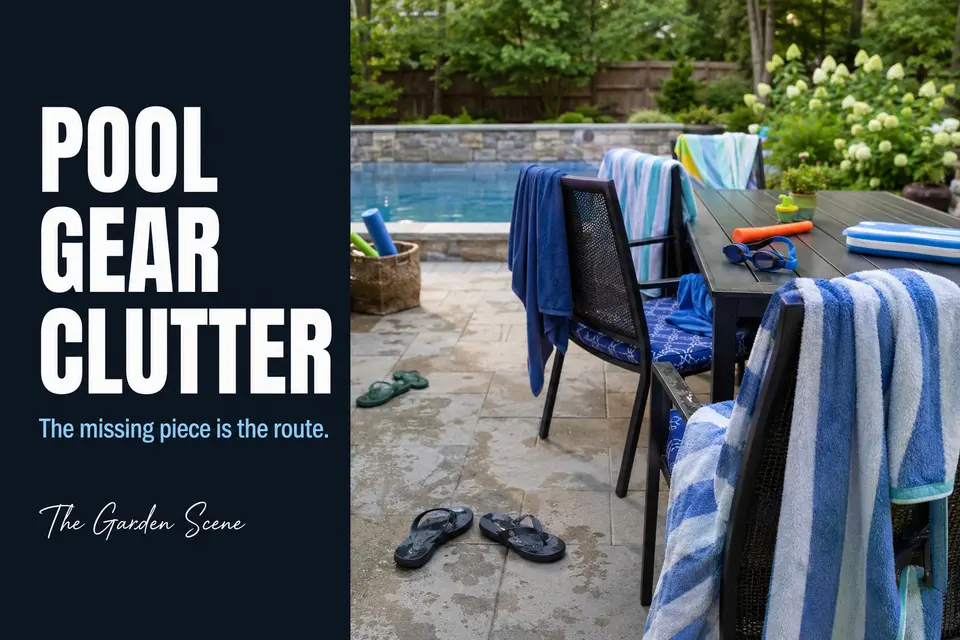
Wet towels and pool gear take over a patio when the water exit leads directly into the seating area. Swimmers carrying towels, goggles, toys, and sandals release them at the first convenient surface: a chair back, dining table, empty seat, or open patch of paving.
This is not primarily a storage-capacity problem. It is a route problem. Adding another bin will not protect the patio if swimmers reach the furniture before they reach the place intended for wet belongings.
A workable route has three distinct stages: a quick wet drop near the water exit, an open drying position beside the patio use zone, and separate storage for items that are fully dry. That order matters. It allows wet gear to remain outside and continue drying without sacrificing chairs, door access, or the main path between the water and house.
Why Towels and Pool Gear Take Over the Patio
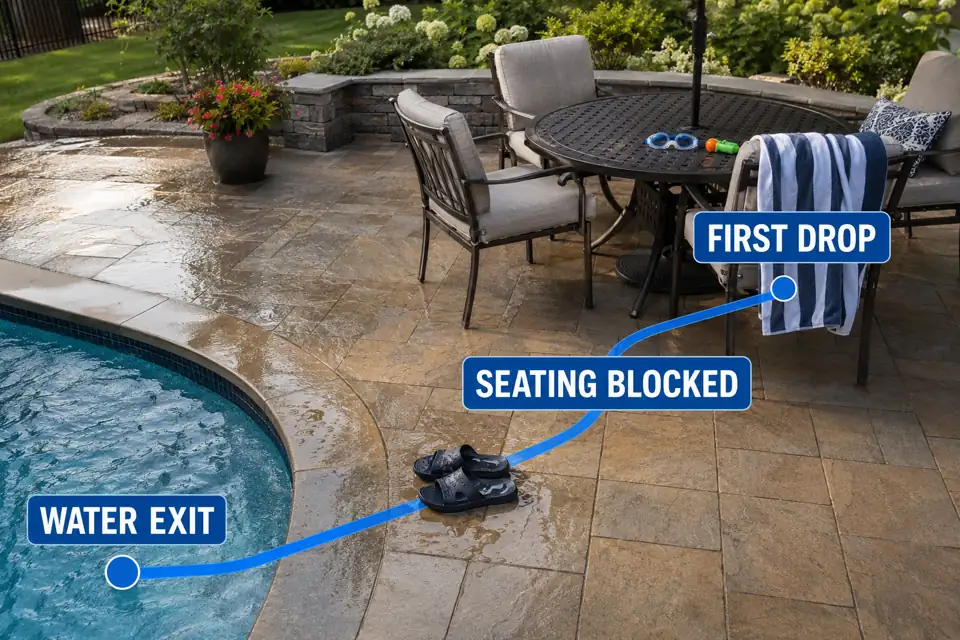
The first usable surface after the water exit becomes the default drop point. Someone carrying several wet items is unlikely to cross the patio or backtrack through a gate before putting something down.
That is why towels cover dining chairs, goggles collect beside drinks, and toys remain under the table. Sandals are often removed where wet feet first meet the patio, leaving them directly in the route between the pool, seating, and house.
The belongings may arrive together, but they do not need the same next step. A soaked towel must be opened to the air. Goggles need to drain. Toys may retain water in seams or recessed areas. Sandals need a stable edge where they will not become obstacles. Dropping everything into one pile leaves no clear transition between use, drying, and storage.
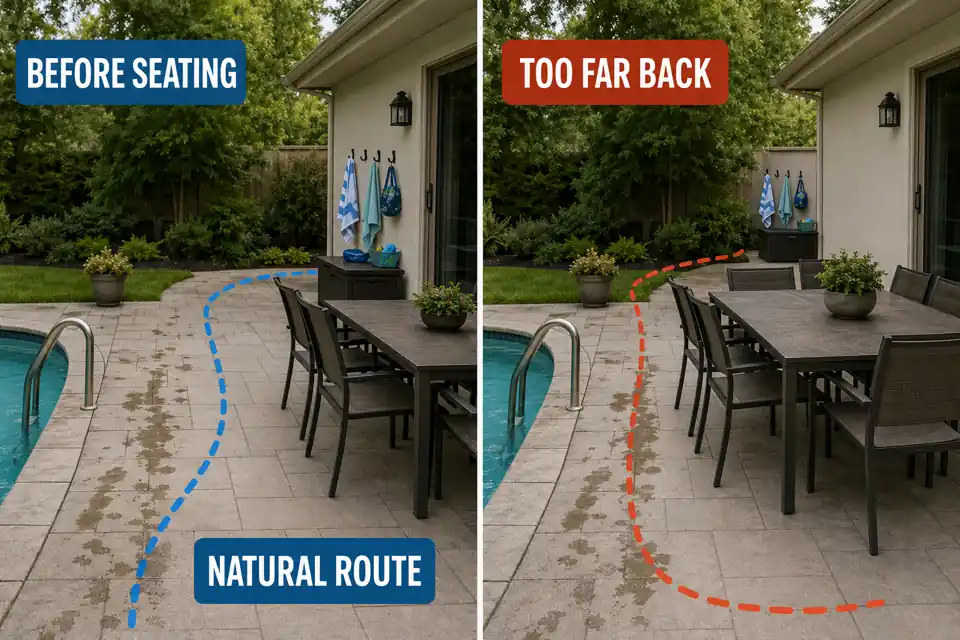
A storage location beyond the natural post-swim route is functionally invisible at the moment it is needed. If swimmers must pass the chairs, enter the house, or walk through a gate to reach it, the patio furniture remains the easier first stop.
Where Wet Items Should Dry Without Blocking Seating
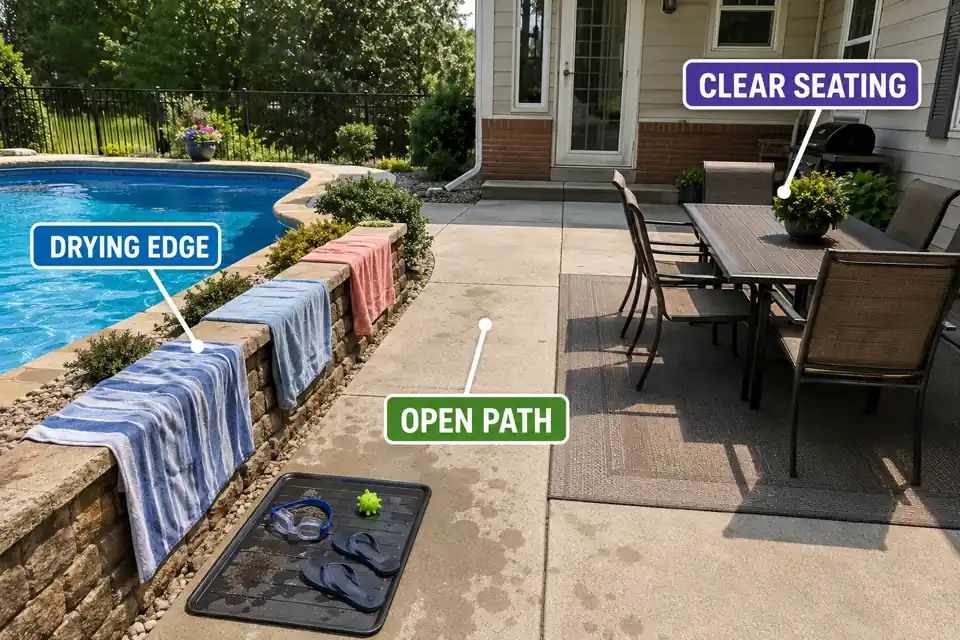
Place the drying stage beside the post-swim route, not inside the patio’s active use zone. Swimmers should encounter it before reaching the chairs, but hanging towels or draining gear should not interfere with seating, door movement, or circulation.
A useful position remains clear of the main doorway, chair access, and the walking line connecting the water, patio, and house. If someone must cross the entire patio before releasing a wet towel, the drying point comes too late in the route.
Give towels open exposure
Wet towels need separation and exposure to moving air. Several towels dropped together may look contained, but the pile keeps moisture trapped and eventually spreads back onto nearby chairs as people search for individual items.
Chair backs are unreliable drying positions because every hanging towel removes a usable seat. Door handles interfere with house access, while towels hung along a railing can intrude into circulation. Dining tables and grill-prep surfaces should remain available for their intended jobs.
The objective is not to hide wet towels immediately. It is to keep them open to the air without surrendering useful patio surfaces.
Keep smaller wet items at the edge
Goggles, toys, and sandals need a defined pause point near the towel-drying area, outside the primary walking line.
Place sandals along a stable boundary rather than beside a doorway or between the water and seating. Allow goggles and toys to drain without being buried beneath towels. Small gear may share the general drying edge, but it should not become one mixed wet pile.
A drying area fails if someone must step around it, move it to open a door, or clear it before using a chair. Judge the position while the patio is occupied, not by how tidy it appears when nobody is outside.
How to Separate Dry Storage From Wet Drop Zones
Separate belongings by moisture state rather than forcing the wet drop, drying area, and dry storage to perform the same job. Each stage has a different completion standard.
The first stop is temporary
The wet drop point catches belongings before they reach the furniture. It should be visible and usable with wet hands, but it is only a short-term landing place. Towels still need to be opened, and toys that retain water still need time to drain.
This temporary stage is especially useful when several people leave the water together. It absorbs the hurried transition without requiring every swimmer to sort each item before moving toward the patio or house.
The wet drop should not quietly become permanent storage. Once the immediate transition ends, its contents must move either to active drying or, if already dry, to their normal storage location.
Dry storage begins only after moisture is gone
Dry storage is for unused towels and gear that no longer carries moisture. Sending a soaked towel or dripping toy there prematurely creates damp piles, buries smaller belongings, and transfers moisture to supplies that were ready to use.
Keep fresh towels apart from used ones. Goggles and small toys can return to a shared collection point after they have drained and dried. Sandals should also finish drying before being moved into a more enclosed or consolidated location.
The rule is simple: wet items may pause, drying items remain exposed, and only fully dry items return to storage. Mixing those states is what sends overflow back onto patio furniture.
Why Hooks and Bins Fail in the Wrong Location
An organizer works only if swimmers encounter it before they begin unloading onto the furniture. Capacity cannot compensate for a location that requires backtracking.
Hooks behind the seating group ask someone to pass the chairs before hanging a towel. Hooks inside the house require a wet swimmer to cross the threshold. A drop point beyond a gate adds another detour. With every extra step, the nearest chair becomes more convenient.
A bin can also preserve storage capacity while failing to protect the patio. Positioned along the chair line, it still occupies the use zone. Used as the immediate destination for soaked towels or dripping toys, a closed container also combines wet holding with dry storage.
The stronger placement is visible from the water exit, reachable with wet hands, and encountered before the seating area. Its location should remove decisions from the sequence: towels stop here, draining gear pauses beside them, and fully dry supplies return elsewhere.
Practical note: If people repeatedly pass an organizer before dropping what they are carrying, test a better position before adding more capacity.
How to Keep the Patio Usable After Swimming
Complete the route at one predictable moment. Without a reset trigger, the first drop point fills up, dry items remain outside, and a few belongings inevitably stay on chairs or tables.
Use the end of swimming—or the moment before everyone goes indoors—as the household reset cue:
- Collect anything still occupying chairs, tables, or the walking route.
- Spread wet items at the designated drying point instead of leaving them in a pile.
- Return fully dry goggles, toys, sandals, and spare towels to dry storage.
- Confirm that the seats, main path, and house access point are open for normal use.
The reset does not need to wait for every towel to dry. Wet gear can remain exposed along the designated edge while the rest of the patio returns to normal.
That is the practical completion standard: open seats, an unobstructed walking route, clear house access, and no damp gear mixed into dry storage.
When the water exit, wet stop, drying edge, and dry-storage location form one continuous route, the pool gear can still be drying without the patio looking or behaving like a storage area.