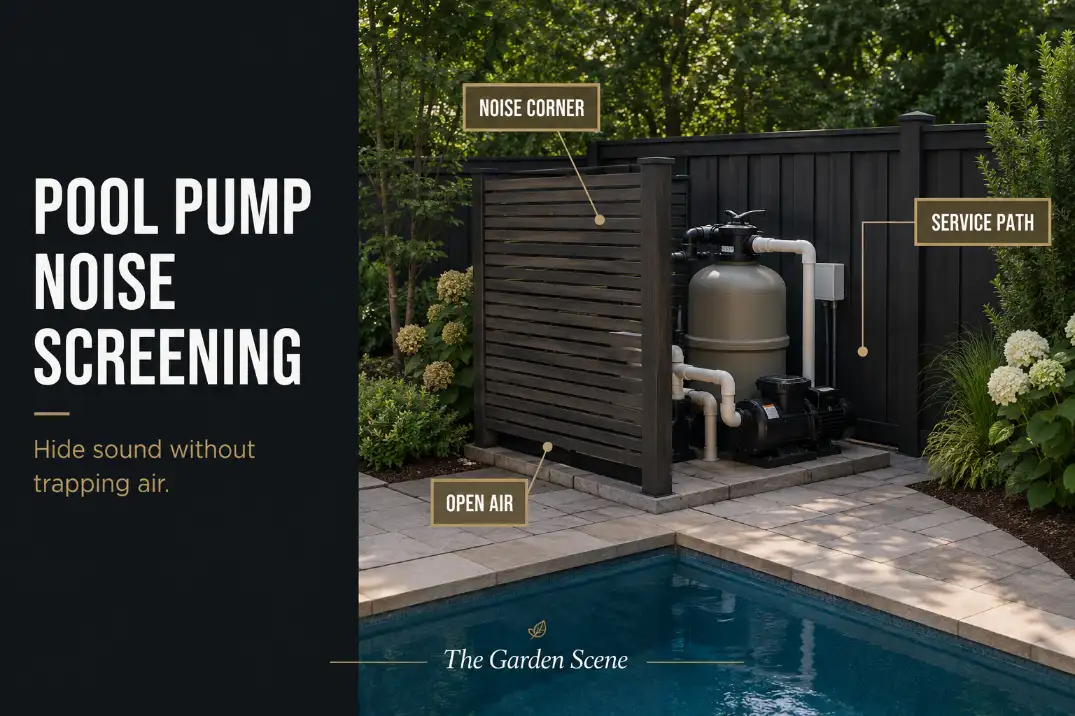
Pool pump noise screening works best when it separates three different problems: an exposed sound path, a normally loud pump, and a pump that is starting to fail.
A screen helps when the steady hum travels directly toward a patio, bedroom window, or neighbor fence.
A more acoustic enclosure may help when the pump tone is normal but too direct. Repair comes first when the sound suddenly changes into grinding, rattling, buzzing, or a sharp whine.
Start with the equipment corner before buying panels. Check where the sound travels, whether the pump is vibrating through the pad, and whether a screen would block service.
A useful target is 30 to 36 inches of clear working space around the pump basket, filter, valves, and unions. If the pump runs 6 to 12 hours a day in warm weather, even a small access mistake becomes a daily design problem.
The Equipment Noise Corner
The first decision is not what material to use. It is which direction the pump noise actually travels. Pool equipment often sounds worse when it sits against a fence, house wall, or hard concrete pad because those surfaces reflect the mechanical tone outward.
Find the Sound Path First
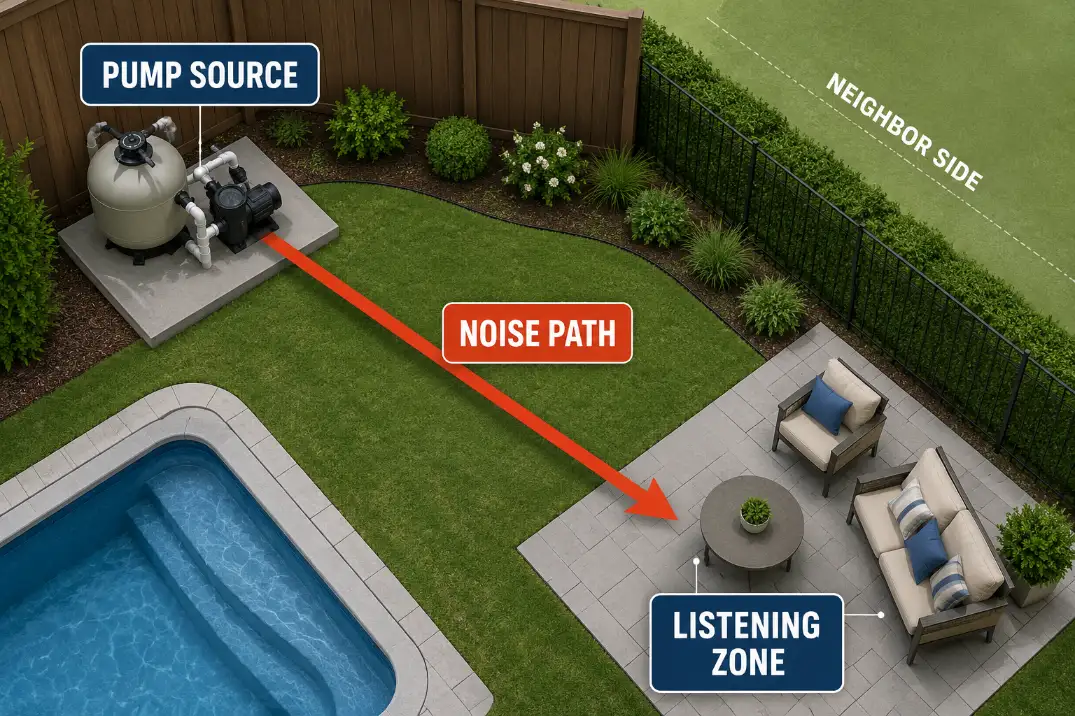
Stand in three places while the pump is running: beside the equipment, at the main seating area, and near the property line.
If the sound feels sharper at the seating area than it does only a few feet from the pump, reflection and direction matter more than raw loudness. That is where screening can help.
If the pump sound is aimed at a neighbor-facing edge, the logic is similar to a smaller version of Backyard Neighbor Noise Solutions.
You are not trying to silence the entire yard. You are trying to interrupt the direct line between the source and the place where people actually hear it.
Screen, Enclosure, or Repair?
Use a simple rule before choosing the fix. If the pump has a steady hum but the sound path is open, start with screen placement.
If the pump sounds normal but still dominates a nearby sitting area, a partial acoustic or louvered enclosure may help. If the sound changed suddenly within days or weeks, diagnose the pump before building around it.
A screen helps a path problem. It does not cure a failing motor, bad bearing, loose lid, clogged basket, plumbing restriction, or vibration moving through the pad.
Do Not Screen the Wrong Side
The most useful screen is usually on the side facing the patio, bedroom window, or neighbor line. Screening the prettiest side for appearance may do almost nothing if the open side still points directly toward the listener.
A 4- to 5-foot screen can often be more useful than a taller fence when it sits exactly between the pump and the listening zone.
Access Still Matters
A pool pump screen should quiet the listener’s side without ruining the working side. Pool equipment has lids, valves, unions, filter clamps, electrical connections, and sometimes heater or automation components. It needs to be reached often, not just hidden once.
Keep the Working Side Open
Leave the side with the pump basket, filter clamp, valves, and control panel easy to approach. For many residential layouts, 30 inches is the minimum practical working width.
Around 36 inches feels much better when someone is lifting a cartridge filter, opening a gate, or kneeling beside the pad.
If the pump lid, filter clamp, or valve handle cannot be reached without moving the screen, the design has already failed.
A removable panel can work, but only if it is genuinely easy to use. If it requires tools, two people, or awkward lifting, it will eventually be left off, ignored, or damaged.
The Fix That Wastes Time
Painting the equipment, adding a narrow decorative trellis, or placing a tiny panel in front of the pump often improves the view without improving the noise. It hides the object from one angle while leaving the sound path open.
This is why pool equipment screening belongs with broader Outdoor Noise Buffer Ideas rather than simple cover-up projects. The screen has to solve sound direction, access, and airflow at the same time.
Pro Tip: Before building anything permanent, place a temporary plywood panel or outdoor privacy screen between the pump and the listening area for one full pump cycle.
If the sound barely changes, the screen position is wrong or the pump itself is the problem.
Solid Screens Can Backfire
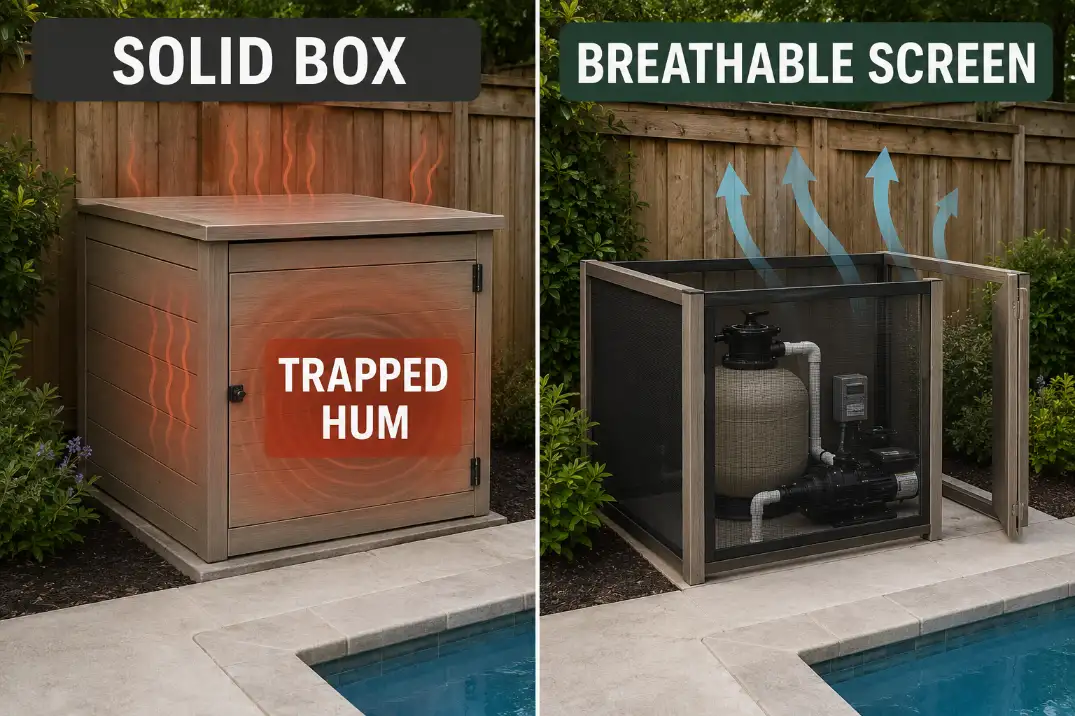
A sound screen should interrupt the path, not seal the machine into a hot box. A solid panel can help when it faces the listener, but a tight enclosure around the whole equipment pad can reflect sound, trap heat, collect leaves, and make maintenance harder.
Reflection Is Not Absorption
A wood, vinyl, or composite panel blocks view. It does not automatically absorb mechanical sound. If the pump sits 6 to 12 inches from a hard panel, sound can bounce between the panel and the fence or house wall.
The result may be less visible equipment but a sharper hum through the remaining opening.
The better layout is usually partial mass plus controlled openness: one solid or semi-solid face toward the listening zone, an open top, and a clear service side.
Slatted or louvered panels can work well because they break the visual line without boxing the pump in completely.
Heat and Airflow Are Not Cosmetic
Readers often overestimate how much a screen can block sound and underestimate how much pool equipment needs open air.
A pump motor, heater, salt system, and automation box should not be crowded by solid panels, vines, mulch, or leaf buildup.
If the equipment corner feels noticeably hotter than the rest of the yard after 30 minutes of pump operation, the enclosure is too tight or too reflective.
The same airflow principle appears in Side Yard AC Screening Without Blocking Airflow: hiding mechanical equipment only works when the machine can still breathe and be serviced.
Planting Around Pool Equipment
Planting should finish the screen, not become the screen. Shrubs soften the hard equipment corner, reduce some reflection, and make the area feel intentional.
They do not replace a screen when the pump points directly at a patio chair, bedroom window, or neighbor fence.
Use Plants Outside the Service Zone
Keep planting outside the main access path and away from hot equipment.
A practical spacing target is 18 to 24 inches between mature plant growth and the pump or filter edge, with more space when the equipment layout or local requirements call for it.
Do not measure from the nursery pot. Measure from the mature spread.
Dense evergreen shrubs can help where year-round screening matters, especially in warm regions where pool equipment runs through much of the year.
In humid Florida-style conditions, extra air movement matters because a tight planting pocket can hold leaves, moisture, and debris around the pad. In dry Arizona conditions, reflected heat from concrete and fencing can punish thirsty plants that looked fine at the garden center.
Avoid the Fast-Growing Trap
Fast-growing shrubs feel tempting because they hide equipment quickly. The tradeoff is maintenance. If a plant needs trimming every 3 to 4 weeks in the growing season just to keep the pump lid clear, it is not a low-maintenance screen.
Vines are another common overestimate. They can make a screen look softer, but they also creep into hinges, valves, fence gaps, and equipment openings. A slower, tighter evergreen or a mixed layout with one structural panel usually ages better.
Planting can also help a pool or hot tub area feel less exposed, but the access rule does not change.
When privacy around the water area is part of the larger problem, Pool and Hot Tub Exposed Privacy Fixes can support the layout without turning the equipment corner into a plant wall.
Keep Air and Service Clear
The pass-fail test is simple: the screen should make the equipment less noticeable without making normal service harder.
Weekly basket checks, seasonal filter cleaning, valve adjustments, and repair visits determine whether the layout actually works.
Use This Quick Screening Check
| Check | Healthy Screening | Problem Screening |
|---|---|---|
| Pump access | 30–36 inches of clear working space | Narrow gap, blocked lid, awkward gate swing |
| Air movement | Open top or breathable sides | Four-sided tight enclosure |
| Sound path | Screen between pump and listener | Screen placed only for looks |
| Plant spacing | Mature growth kept off equipment | Shrubs touching pipes, lids, or motors |
| Maintenance timing | Easy weekly basket checks | Screen must be moved for routine service |
When the Standard Fix Stops Working
Screening stops being the priority when the pump noise is mechanical instead of positional. Grinding, screeching, buzzing, sudden volume jumps, or vibration through the pad are not normal screening problems. They point toward equipment diagnosis.
A healthier setup may involve a lower pump speed, better vibration isolation, a level equipment pad, plumbing correction, or pump repair. A failing setup is one where the enclosure keeps getting upgraded while the motor, bearing, basket, lid, or vibration problem remains unchanged.
Hide the Sound Source Quietly
The best pool pump noise screen is usually a layered partial layout, not a sealed box. Use one screened face to interrupt the sound line, one open side for service, an open top or breathable upper section for airflow, and planting outside the maintenance zone.
Build the Layout in the Right Order
Start with the pump condition. A variable-speed pump running at a lower speed may sound far less intrusive than a single-speed pump running hard for a short window. Then test the screen position. Only after that should you choose the final panel material and planting.
If the pump runs mostly during the day, protect the patio and pool seating area first. If it runs early in the morning or at night, bedroom windows and neighbor-facing edges matter more.
The schedule changes where the screen should work hardest.
For seating areas near the pool, water sound can help only if it is placed close enough to the listener. A fountain far from the chairs will not cover a pump at the equipment pad.
The useful version follows the same close-range masking logic as Outdoor Water Features for Softening Yard Noise: gentle sound works near the listening zone, not magically across the whole yard.
Best Practical Screen Types
A louvered panel is often the best first choice because it blocks view while keeping air moving. A fence-style panel with planting in front can work when the equipment sits near a pool edge and needs to visually disappear.
A short masonry, composite, or solid screen may help when the pump faces a neighbor line, but it should not close all sides.
A full enclosure belongs only where ventilation, drainage, electrical safety, and service clearances still work.
If the enclosure creates trapped heat, standing leaves, awkward filter removal, or a narrow crouching path, it is not a premium solution. It is just a better-looking maintenance problem.
Questions People Usually Ask
Will plants actually reduce pool pump noise?
Plants can soften reflections and hide the equipment, but they rarely solve a direct mechanical noise path by themselves. Use plants with a screen or fence face, not as the only barrier between the pump and the listener.
Should a pool pump screen be taller than the pump?
Usually yes, but only by enough to interrupt the line of sight and sound path. A 4- to 5-foot screen often does more useful work than a much taller enclosure that traps heat or blocks service.
Can I put a pool pump inside a box?
Only if the box preserves ventilation, drainage, electrical safety, and service access. A tight box may make the view better while making heat, vibration, and repair access worse.
What should I fix first if the pump is suddenly louder?
Check the pump before adding more screening. Sudden grinding, whining, rattling, buzzing, or vibration is a symptom of equipment trouble, not a normal screening problem.
Because a quieter screen will not fix an inefficient or overworked pump schedule, the U.S. Department of Energy pool pump guidance is the most useful final check.