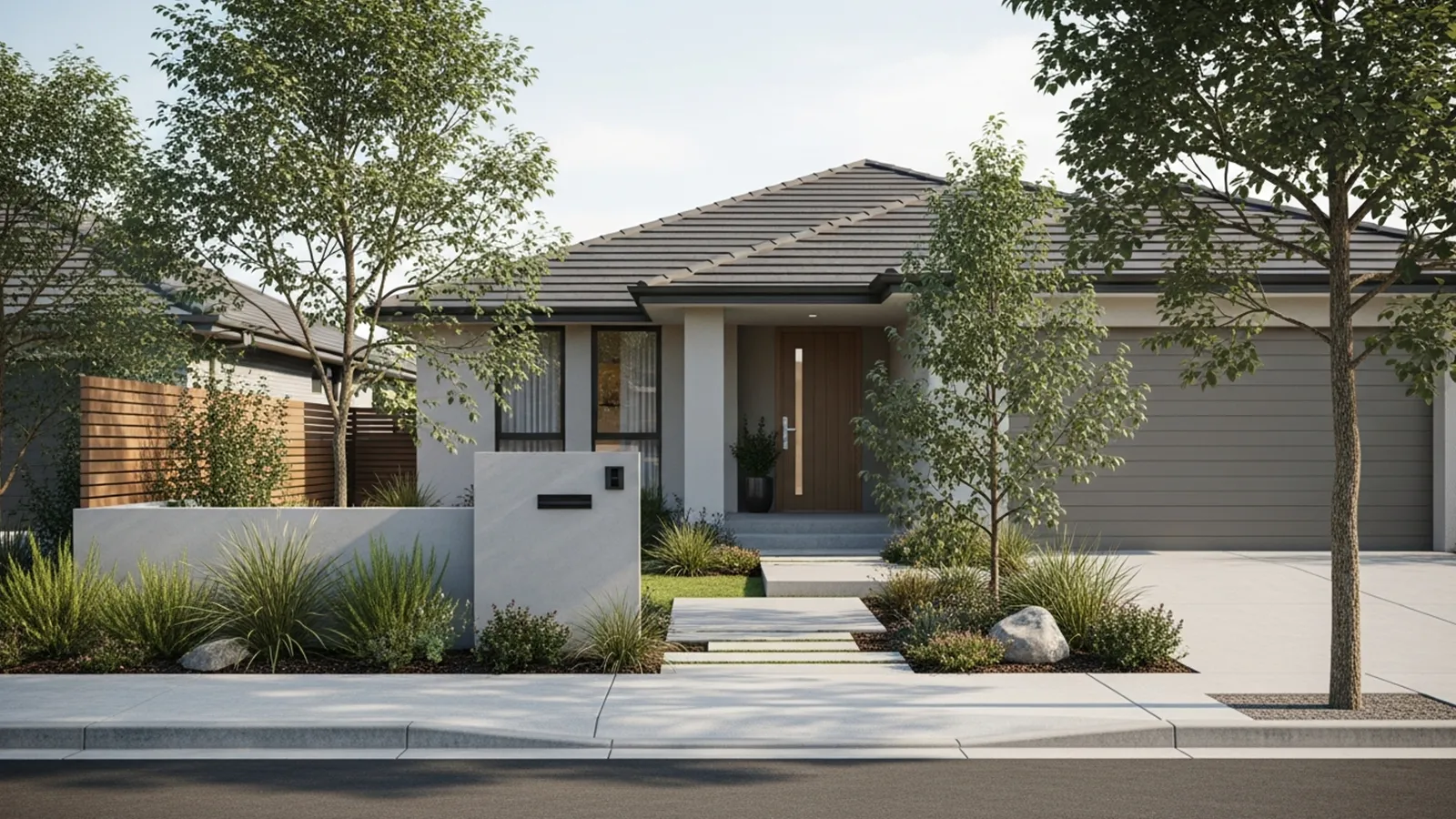
Walking toward a home usually takes only a few seconds, yet those seconds shape how the entire place is perceived. The front yard is crossed quickly, often while distracted, but it still sends a clear signal. People sense whether the space feels open or awkward, calm or cluttered, before they consciously notice any details.
What makes front yard design challenging is that these impressions form without effort. Unlike interior rooms, there is no moment where someone stops to “understand” the space. The layout either feels natural, or it quietly creates friction. When something feels off, the reaction is immediate, even if the reason is hard to explain.
A front yard that works well does not demand attention. Movement feels obvious, the entrance feels easy to approach, and nothing seems to be in the way. When this happens, the space feels finished, even if the design itself is restrained.
Why Front Yard Design Feels Harder Than It Looks
Standing at the edge of a front yard, it can seem like there isn’t much to solve. The area is small, the path is short, and the goal feels simple. Yet this is exactly where many designs start to struggle, because the space carries more responsibility than its size suggests.
Front yards have to perform several roles at the same time, and these roles often compete with each other:
-
welcoming visitors without feeling exposed
-
representing the home while remaining practical
-
staying visually clear while requiring minimal attention
Because these expectations overlap, small decisions carry disproportionate weight. A slightly misplaced path or an overly dominant planting area is noticed every single day. There is no neutral zone where mistakes can hide.
Another reason front yards feel difficult is permanence. Once a layout is set, it becomes part of how the home is read from the street. Adjustments later tend to be incremental rather than structural, which means early compromises often remain visible long-term.
This leads many homeowners into two common patterns:
-
delaying decisions until problems become unavoidable
-
overdesigning early in an attempt to “get everything right”
Both approaches usually create tension rather than clarity.
How Front Yards Are Actually Used in Daily Life
Most interactions with a front yard happen while attention is elsewhere. Keys are being searched for, bags are being carried, or someone is already thinking about what comes next. The space is experienced repeatedly, but almost never slowly.
Because of this, the front yard needs to make sense instantly. There is no pause to interpret where to walk or how to approach the door. When movement feels unclear, discomfort appears even if the design looks intentional.
Daily use highlights issues that are easy to overlook during planning:
-
paths that feel narrower than expected
-
planting that brushes against circulation
-
steps or level changes that interrupt flow
Individually, these may seem minor. Over time, their repetition defines how the space feels. What initially appeared thoughtful can start to feel inconvenient simply because it requires extra attention during routine moments.
This is why simplicity matters so much in front yard design. Clear circulation and predictable movement reduce mental effort. When people can move without thinking, the space feels welcoming by default.
The Role of First Impressions and Subconscious Perception
Approaching a front yard from the street, people form impressions long before they identify specific elements. Openness, balance, and order are sensed almost immediately. These reactions happen without deliberate analysis.
What shapes this perception most strongly is not decoration, but structure. A clear path and an unobstructed view of the entrance allow the eye to move easily. When that happens, the yard feels calm and approachable.
In contrast, visual interruptions create subtle tension:
-
frequent material changes
-
planting that blocks sightlines
-
competing focal points near the entrance
These elements force the eye to stop and restart, which makes the space feel smaller and more complicated than it is.
Front yards are also read in context. They sit alongside neighboring properties, and even distinct designs are subconsciously compared. A yard that feels crowded or overworked tends to stand out, not because it is unique, but because it breaks the visual rhythm of the street.
Once these impressions are formed, they tend to stick. The first few experiences of a front yard often define how it is perceived afterward, which is why early decisions carry lasting influence.
Why Early Front Yard Decisions Matter More Than Details
Noticing how often small frustrations repeat is usually what reveals deeper design issues. A path that feels slightly tight or an entrance that seems harder to approach than expected does not improve with time. These feelings accumulate.
Early decisions about layout and proportion create a framework that everything else must follow. Once circulation is set, later changes are limited to surface adjustments. Decorative updates rarely resolve structural discomfort.
This is why front yards that age well tend to share similar foundations:
-
clear organization before added features
-
restrained use of materials and focal points
-
layouts that allow for growth and change
When these conditions are present, plants can mature and materials can weather without undermining the design. The space remains legible even as it evolves.
Front yard design benefits from restraint at the beginning. Saying no early often creates more flexibility later. When the structure is right, details become supportive rather than corrective.
Space Size, Scale, and the Reality of Front Yard Proportions
Standing in a front yard often creates a misleading sense of space. From inside the house, the area can feel generous, but once outside, everything feels closer together. This shift is where many design decisions begin to strain, because the space does not behave the way people expect it to.
Small front yards reveal this problem immediately. A few added elements can change how the entire area feels. When space is limited, proportion becomes more important than variety. What fits on paper may feel crowded once paths, planting, and movement are experienced together.
In these tighter spaces, issues tend to surface through everyday use:
-
walking paths feel narrower than anticipated
-
planting edges encroach into circulation
-
visual breaks interrupt flow more often
Each of these may seem manageable on its own. Combined, they change how the yard is perceived. The space begins to feel busy, even when it is carefully maintained.
Larger front yards face a different challenge. Instead of crowding, the issue is often a lack of focus. Without enough structure, the space can feel detached from the house. Simply adding more elements rarely fixes this. What’s missing is a sense of scale that ties the yard back to the entrance and gives movement a clear direction.
Why Layout and Circulation Define Success More Than Features
Approaching the front door is usually done without thinking. The body expects a clear route, and when that expectation is met, the space feels natural. When it isn’t, hesitation appears, even if only for a moment.
Layout determines whether movement feels intuitive or forced. A clear path establishes order immediately. Everything else in the yard is read in relation to that path. When circulation is unresolved, decorative elements begin to compete for attention, and the yard feels unsettled.
Circulation problems are often noticed through small, repeated moments:
-
visitors slowing down to find the entrance
-
residents adjusting their route to avoid obstacles
-
movement patterns changing to compensate for awkward turns
These adjustments happen quietly, but they signal that the layout is working against use rather than supporting it.
Features alone cannot resolve these issues. Benches, planters, or focal points may add interest, but they do not fix unclear movement. When circulation works, features feel intentional. When it doesn’t, even well-chosen elements feel misplaced.
Maintenance Capacity as a Design Constraint
Front yards rarely receive daily attention, yet they are judged as if they do. This mismatch creates pressure. When maintenance demands exceed realistic habits, the design begins to deteriorate visually, even when effort is being made.
Signs of this appear gradually:
-
edges lose definition
-
planting becomes uneven
-
surfaces show wear more quickly
These changes don’t indicate neglect so much as misalignment. The design requires more care than the routine allows.
Recognizing maintenance capacity early changes how decisions are made. Designs that rely on repetition, durability, and predictable growth patterns tend to hold their shape longer. This does not reduce quality. It preserves it.
Front yards that age well usually share a common trait: their upkeep fits naturally into daily life. When maintenance feels like a constant task, the space becomes a source of quiet frustration rather than comfort.
Curb Appeal as a Long-Term Condition, Not a Moment
Curb appeal is often imagined as a peak moment. The yard looks its best right after completion, and that image becomes the reference point. In reality, front yards are experienced far more often on ordinary days.
What people notice most is consistency. A yard that looks balanced even when not freshly maintained creates a stronger impression than one that alternates between impressive and neglected. This stability comes from decisions that prioritize endurance over novelty.
Designs that support long-term curb appeal tend to rely on:
-
restrained material palettes
-
planting that holds form between seasons
-
layouts that remain clear as elements mature
These choices allow the yard to look appropriate across time, not just at its best.
When curb appeal is treated as an ongoing condition, design priorities shift. The focus moves away from short-term impact and toward decisions that continue to work under everyday conditions.
The Hidden Relationship Between Front Yard Size and Effort
Smaller front yards often appear easier to manage, but they usually demand more precision. With limited space, there is less room for error. Every element influences movement and perception more directly.
In contrast, larger front yards allow more flexibility but require stronger structure. Without it, effort increases as the space becomes harder to define and maintain. In both cases, effort is not dictated by size alone.
Effort increases when design and capacity are misaligned:
-
compact yards with overly complex layouts
-
large yards without clear organization
-
materials and planting that exceed maintenance routines
When effort feels mismatched, frustration follows regardless of square footage.
Front yards that feel manageable do so because their design respects how much attention they can realistically receive. This alignment reduces the need for constant correction.
Setting Up the Next Layer of Decisions
By this stage, the front yard is no longer an abstract concept. Space size, proportion, circulation, and maintenance capacity have narrowed the range of viable choices. This narrowing is not limiting. It provides clarity.
Once these constraints are understood, material and boundary decisions become easier to evaluate. Instead of asking whether something looks good, the question becomes whether it supports the structure already in place.
This shift prepares the ground for the next layer of decisions. Materials, surfaces, and privacy strategies now have a context. They no longer stand alone; they reinforce or weaken what has already been established.
Materials and Surfaces as the Visual Foundation
Walking across a front yard, the first thing people register is not the planting but the surface beneath their feet. The texture, continuity, and transitions between materials shape how the space feels before any individual element stands out. When surfaces feel disjointed, the entire yard feels unsettled.
Paths, driveways, and ground treatments quietly define how the front yard is read. When these elements share a common language, the space feels intentional even if planting is minimal. When they compete, the yard feels fragmented, and attention is pulled in too many directions at once.
This fragmentation usually comes from small, layered decisions:
-
introducing multiple paving materials in a short distance
-
frequent shifts in color or texture
-
decorative surfaces that interrupt movement
Each change may feel justified on its own. Together, they interrupt visual flow and make the yard feel smaller than it is.
Durability plays an equally important role. Front yards are exposed to weather, foot traffic, and constant visibility. Materials that age unevenly draw attention to wear, while those that weather consistently fade into the background. In this context, blending in is often a success.
How Planting Should Support, Not Compete With, Structure
Planting is often where front yard designs become visually ambitious. Plants feel flexible and expressive, which makes them an easy place to add interest. Problems arise when planting is asked to do too much at once.
In daily use, planting issues show up subtly:
-
paths feel tighter as plants mature
-
sightlines to the entrance become obscured
-
maintenance effort increases unevenly
These effects don’t appear immediately. They build over time, gradually shifting how the space feels to move through.
Front yards benefit when planting reinforces the structure already in place. Predictable growth habits and appropriate scale help maintain clarity. When plants respect circulation and boundaries, the space remains legible even as it changes seasonally.
When planting competes with layout instead of supporting it, adjustments become constant. Trimming, replacing, or rebalancing becomes part of routine maintenance, not because the yard is neglected, but because the design relies on ongoing correction.
Privacy Without Turning the Front Yard Into a Barrier
Pausing near the front door often reveals how exposed or protected a space feels. Too much openness can feel uncomfortable, while too much enclosure can feel unwelcoming. Finding balance here is one of the most misunderstood aspects of front yard design.
Heavy privacy solutions tend to announce themselves immediately:
-
tall fences dominate the visual field
-
dense hedges block light and sightlines
-
solid barriers interrupt the approach to the home
While these elements may block views, they often create new issues. The front yard begins to feel defensive, and movement toward the entrance feels less fluid.
Subtle privacy strategies work differently. Low planting, layered greenery, and gentle elevation changes create a sense of separation without closing the space. These boundaries are felt more than seen, which allows the yard to remain open while still offering comfort.
The goal is not concealment. It is ease. When privacy solutions reduce tension rather than draw attention, they support the front yard’s transitional role.
Why Overdefining Boundaries Often Backfires
Clear boundaries help organize space, but in front yards, rigidity can quickly become a liability. When every edge is sharply defined, the yard loses flexibility and feels constrained.
This often becomes noticeable through movement:
-
paths feel boxed in
-
planting has no room to soften edges
-
adjustments feel difficult once growth occurs
Overdefined boundaries leave little space for natural change. As plants mature or routines shift, the design resists adaptation, forcing corrective measures.
Softer boundaries allow the yard to evolve. They accommodate growth without disrupting circulation or visual balance. This adaptability helps the space remain comfortable rather than controlled.
Boundaries work best when they guide behavior subtly. When they become the dominant feature, they distract from the overall experience.
The Cumulative Effect of Small Design Choices
Front yard discomfort rarely comes from a single decision. It usually emerges from several small choices that were never considered together. Each one seems reasonable in isolation.
Over time, these choices interact:
-
slightly narrower paths combine with growing plants
-
additional materials amplify visual breaks
-
incremental features compete for attention
The result is a space that feels busier than intended. Maintenance increases, and clarity decreases, even though no single element appears obviously wrong.
Recognizing this cumulative effect helps explain why restraint is so effective in front yard design. Fewer decisions, made deliberately, reduce the risk of unintended interactions later.
When choices are evaluated as part of a system rather than individually, the front yard retains its structure longer.
Preparing for the Final Layer of Decisions
At this point, the front yard’s character is largely determined. Surface choices, planting behavior, and boundary strategies are already shaping how the space feels. What remains is not adding complexity, but understanding direction.
Some front yards naturally support openness and visual calm. Others allow for more structure or definition. These tendencies emerge from the decisions already made, not from style labels applied afterward.
Recognizing these signals prevents unnecessary struggle. It shifts focus away from forcing an identity and toward reinforcing what is already working. This awareness sets the stage for the final layer of decisions, where alignment matters more than addition.
How Front Yard Design Problems Appear Over Time
Walking through a front yard months after it was completed often feels slightly different than it did at first. Nothing is obviously wrong, yet movement feels tighter, upkeep feels heavier, and the space no longer feels as calm. This shift usually happens gradually, which makes it harder to identify the source.
Most front yard issues develop through accumulation rather than failure. Early decisions don’t break the space outright; they slowly change how it behaves. Because the changes are subtle, responses tend to be reactive rather than structural.
Over time, these patterns become noticeable:
-
paths feel narrower as planting matures
-
maintenance tasks increase without clear reason
-
small adjustments begin to stack on top of each other
Each response is meant to correct a minor issue. Together, they alter the original balance of the space.
Front yards are particularly vulnerable to this because they are rarely revisited as a complete system. Once installed, they are modified piece by piece. Without a clear underlying logic, these changes slowly erode clarity.
Why Choosing a Style Is Often the Wrong Starting Point
Browsing front yard styles often feels productive at the beginning. Labels like modern, traditional, or minimalist provide a sense of direction. The problem is that these labels describe appearance, not behavior.
Style does not account for how visible the yard is, how often it is maintained, or how it is used daily. When style becomes the starting point, practical decisions are forced to follow rather than lead.
This disconnect shows up in everyday use:
-
materials feel out of place for the climate or upkeep level
-
planting choices demand more attention than expected
-
the space looks intentional but feels uncomfortable to use
In these cases, the front yard appears designed but does not perform well.
Front yards that age successfully tend to arrive at a recognizable character naturally. Their visual identity emerges from decisions about layout, proportion, materials, and boundaries. When those decisions are sound, the resulting “style” feels appropriate rather than imposed.
Understanding Which Front Yard You Actually Have
Standing back from the front yard after considering space, scale, maintenance, materials, and privacy often reveals a pattern. The yard begins to signal what it can support and what it resists.
Some front yards naturally lean toward openness and simplicity. Others support more structure and definition. These tendencies are not preferences; they are conditions shaped by exposure, size, and daily use.
Ignoring these signals usually leads to tension:
-
small, exposed yards feel crowded when pushed toward enclosure
-
highly visible yards feel strained when asked to carry heavy detail
-
low-maintenance routines conflict with expressive designs
Recognizing what the yard already wants to be shifts the design process. Decisions stop fighting the space and start reinforcing it.
This awareness does not limit options. It filters them.
How Successful Front Yards Maintain Balance Without Constant Revision
Returning to a front yard that still feels right years later often reveals a common trait: nothing feels overly precise. There is room for growth, wear, and adjustment without the space losing its structure.
Balance in front yard design comes from decisions that allow change. When planting has room to mature and materials weather evenly, the space adapts rather than degrades.
Front yards that maintain balance tend to rely on:
-
clear organization instead of tight control
-
consistent materials instead of varied finishes
-
planting that supports form rather than dominates it
These choices reduce the need for correction. The yard absorbs change instead of resisting it.
When balance is present, maintenance feels like upkeep rather than repair.
Why “Good Enough” Often Outperforms “Perfect”
Trying to keep a front yard in perfect condition usually creates stress. Because the space is so visible, small imperfections stand out, and designs that rely on precision begin to feel fragile.
Front yards designed around consistency perform better in everyday life. They look appropriate even when not freshly maintained. Their structure remains legible despite minor variation.
This difference becomes noticeable through use:
-
missed maintenance does not disrupt the whole space
-
growth feels natural rather than problematic
-
wear blends in instead of drawing attention
Designing for “good enough” does not lower standards. It prioritizes resilience over control.
When a front yard can look acceptable under ordinary conditions, it becomes easier to live with.
Placing Yourself Within the Design Logic
At this point, the front yard is no longer an abstract idea. The accumulated decisions place each homeowner in a specific position. Some prioritize ease and openness. Others value structure and definition. Neither is inherently better.
What matters is alignment. When future choices follow the same logic as earlier decisions, the space feels coherent. When they don’t, friction appears.
This self-placement provides a reference point. Instead of restarting the design process with every change, decisions can be evaluated against the logic already established.
That consistency is what allows front yards to evolve without losing their identity.
Front Yard Design as an Ongoing Relationship
Walking through a front yard over time makes one thing clear: the space never truly stays still. Plants grow, surfaces weather, and routines shift. Expecting the design to remain fixed often leads to frustration.
Front yards that work well are understood as ongoing relationships. They accommodate change without requiring constant redesign. Adjustments feel intentional rather than corrective.
When this mindset is in place, design decisions become calmer. The goal shifts from maintaining an ideal state to supporting a space that continues to function comfortably.
A front yard that can adapt without losing clarity is one that remains useful long after the initial design decisions are made.