Last updated: June 27, 2026
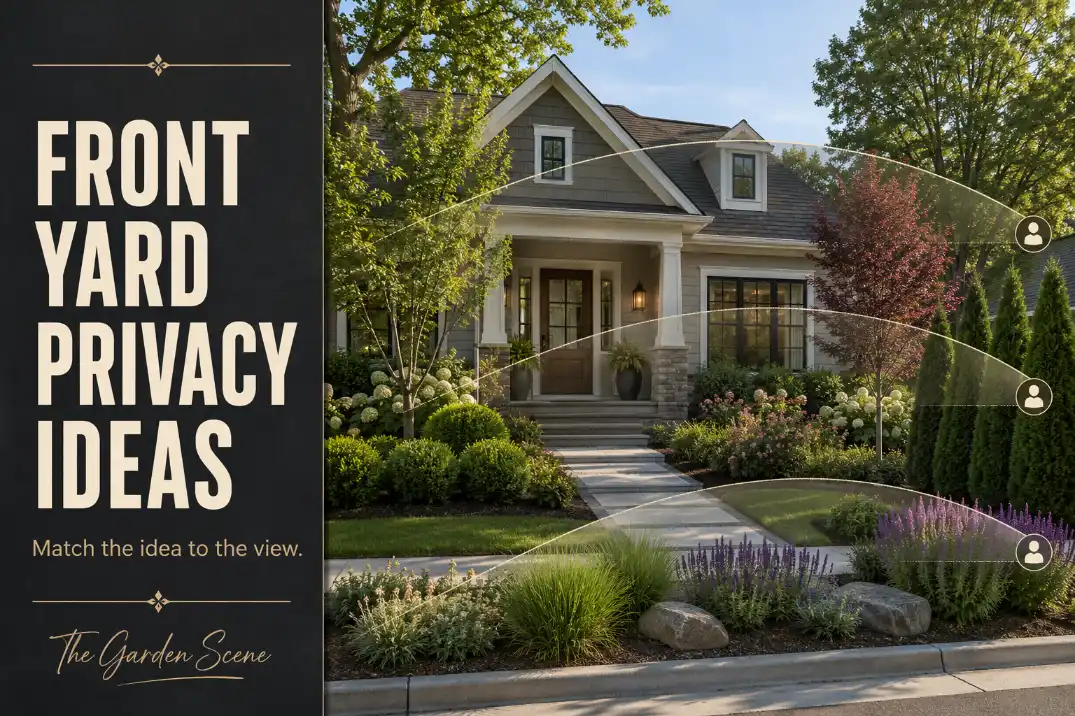
Most front yard privacy ideas fail when they treat every view the same. A shrub that helps a front window may make a porch feel boxed in.
A screen that works near a driveway may look heavy along the street. A hedge that blocks passing cars may also hide the front door, house numbers, and the parts of the home visitors need to read quickly.
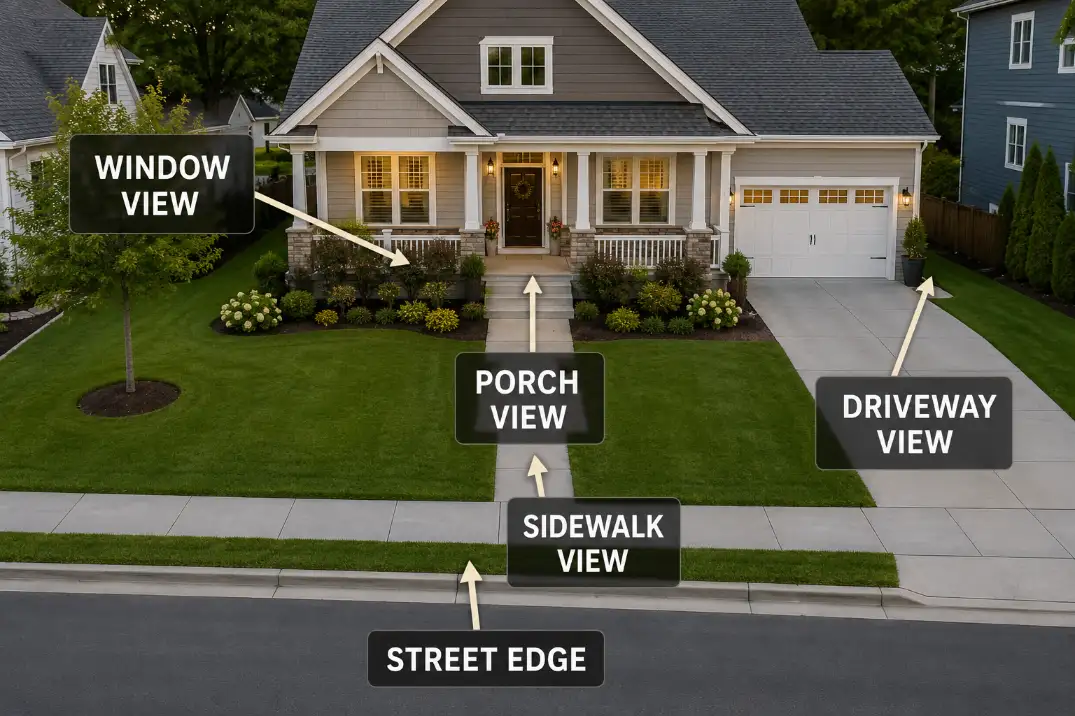
The better starting point is not “Which privacy idea looks best?” It is “Which view am I trying to filter?” A front yard usually has more than one exposure: people looking toward windows, neighbors seeing a porch chair, pedestrians passing close to the sidewalk, cars opening into the driveway, or broad movement from the street edge. Each one needs a different kind of privacy.
Use these ideas as fit models, not as a shopping list. The goal is to choose the smallest idea that solves the exposure without making the home feel closed, dark, or awkward from the curb.
Start With the View You Need to Filter
Before choosing plants, planters, trellises, or screens, stand where the view begins. Look from the sidewalk, the street, the driveway edge, and the porch seat. The right privacy idea depends on the angle of the view, the speed of the viewer, and what still needs to stay visible.
A car moving past the street does not create the same privacy problem as a pedestrian walking five feet from your window. A neighbor looking across a driveway is different from a porch chair that feels exposed from the public sidewalk. That is why one “front yard privacy” idea can work in one yard and feel wrong in another.
| Exposure problem | Best idea type | Works best when | Watch out for | Keep visible |
|---|---|---|---|---|
| Front windows | Layered shrubs, grasses, small ornamental tree | The view is direct but the room still needs daylight | Planting too close to the glass | Window shape and house face |
| Porch seating | Side planters, railing-height shrubs, partial trellis | The seat feels exposed but the entry must stay open | Blocking the door or steps | Door, porch light, walkway |
| Sidewalk view | Staggered low-to-mid planting | Pedestrians pass slowly and close to the yard | Creating a tunnel effect | Public-facing edge |
| Driveway view | Narrow planting pockets or movable containers | The exposure is from parked cars or side angles | Car door and backing clearance | Garage and vehicle route |
| Street edge | Layered curb planting or ornamental trees | The problem is broad movement, not close staring | Building a tall visual wall | Address and front door |
For a broader planning layer, use a separate guide such as front yard landscaping for privacy when the whole yard needs a framework. This article stays narrower: which idea fits which exposure.
Window Privacy Ideas That Soften the View Without Darkening the House
Window privacy is usually a filtering problem, not a blocking problem. The shallow version of the idea says to plant something tall in front of the glass. That often creates a darker room, trapped maintenance, and shrubs that press against the house after a few seasons.
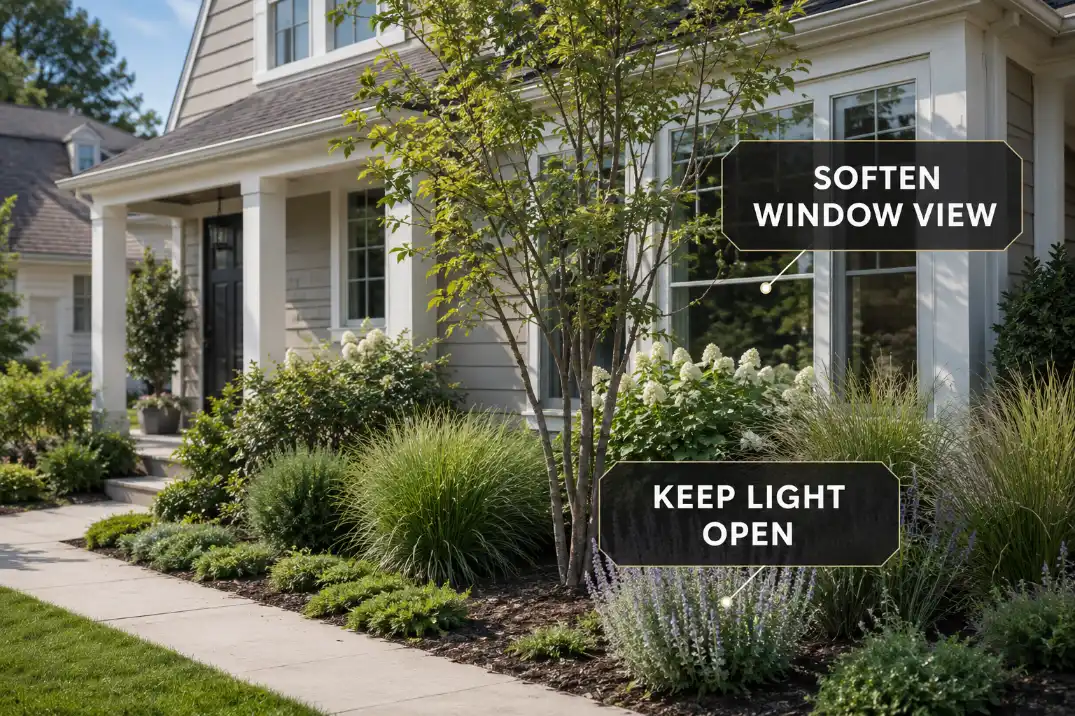
A stronger idea is to break the direct sightline before it reaches the window. That can happen with layered planting set away from the wall, ornamental grasses that move slightly without becoming a wall, or a small ornamental tree placed off the direct centerline of the window.
Use layered planting when the window feels exposed from the street
A low foreground layer, a mid-height shrub layer, and one taller accent can soften the view without covering the entire front of the house. This works best when the front yard has enough depth to keep mature plants away from siding, steps, and window trim.
The mistake is planting for the first season only. A shrub that looks modest at purchase can become too wide after 2–3 years. Check the mature spread before placing it near a window, not just the height on the tag.
Use one off-center vertical filter when the view is too direct
A small ornamental tree or upright shrub can work when the problem is one obvious line of sight from the sidewalk or street. Place it slightly off the window center so it interrupts the view without making the house look masked.
This is especially useful when the room needs light. The privacy comes from angle and partial cover, not from turning the window into a green wall. For a deeper version of this specific problem, a guide like fixing front yard privacy for windows facing a busy road belongs closer to the child-page level.
Porch Privacy Ideas That Keep the Entry Friendly
Porch privacy has a different problem: the person using the space is outside, visible, and close to the front door. The wrong move is to treat the porch like a backyard patio and surround it. That may make the seat feel private, but it can also make the entry feel confusing or hidden.
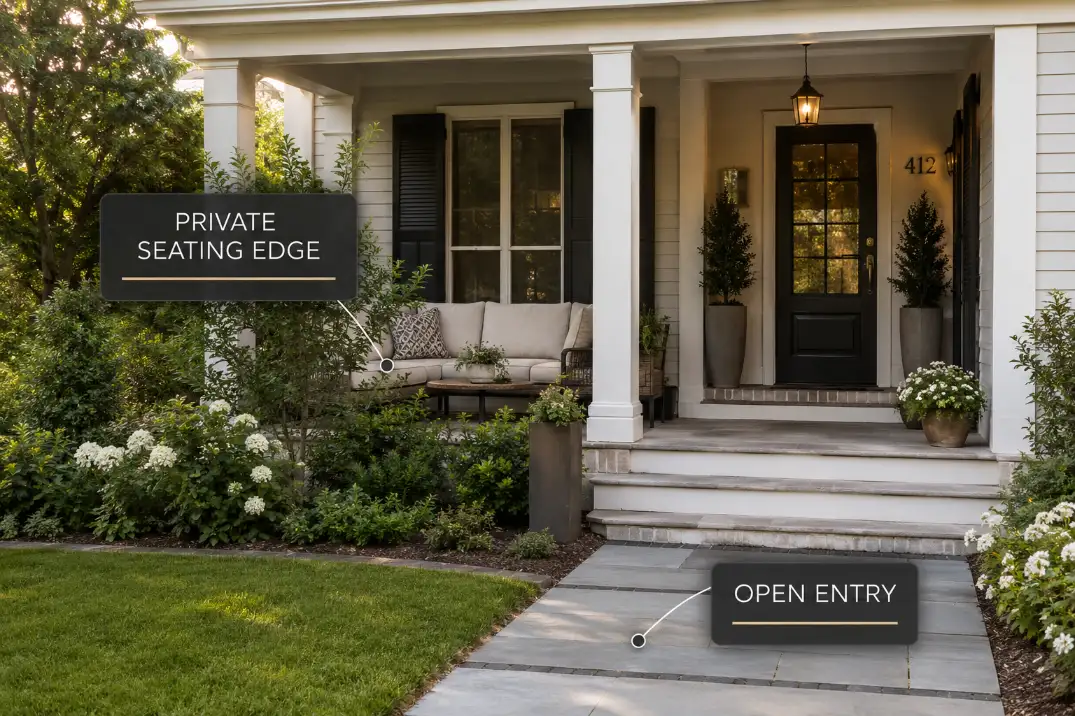
The better filter is side privacy. Shield the seating edge, not the whole porch.
Use side planters when the chair is the exposed point
Tall planters can work near a porch when they sit beside the seating zone rather than in front of the door. They are useful for homes where a porch chair faces the sidewalk or driveway and needs a side buffer.
The fit condition is simple: the planter should protect the sitting position while the steps, door, porch light, and house number remain easy to read from the street. If a delivery driver has to guess where to go, the idea has gone too far.
Use a partial trellis only when it does not fight the entry
A trellis can help when the porch exposure comes from one side, especially near a neighbor-facing angle. It should feel like an edge, not a gate. Keep it away from the main door swing and avoid placing it where it narrows the walkway.
For more specific front porch cases, front porch privacy ideas can carry the deeper porch-level details. On this page, the decision is only whether the porch needs side filtering, seating-edge planting, or a lighter visual break.
Sidewalk Privacy Ideas for Close Public Views
Sidewalk privacy is easy to overbuild because the viewer is close. A pedestrian may pass only a few feet from the yard, slow enough to see into windows or porch seating. That does not automatically mean the front yard needs a tall hedge.
The more useful idea is to interrupt eye-level attention without turning the sidewalk edge into a barrier. Staggered planting usually works better than a straight wall because it filters the view in pieces.
Use low-to-mid shrubs when the sidewalk is close but the yard still needs to look open. Add a slightly taller accent only where the sightline is strongest. A small berm can help in some yards, but it should be subtle enough that mowing, drainage, and curb visibility do not become new problems.
The wrong choice is a continuous screen that makes the sidewalk feel like a corridor. That can look defensive from the curb and may create more maintenance than the privacy is worth.
Where the sidewalk itself is the main issue, front yard privacy on a busy walking route is the kind of deeper guide that should handle the full layout.
Driveway Privacy Ideas That Do Not Block Daily Access
Driveway privacy is not only about what people can see. It is also about what still has to move. Car doors open, visitors step out, trash bins roll through, bikes pass, and someone may need to back out with a clear view.
That makes driveway privacy a narrow-fit idea. It works best with staggered shrubs, slim planting pockets, or containers placed outside the daily movement path. The goal is to soften the side view without shrinking the usable driveway.
Use vertical accents near the edge when the exposure comes from a neighbor’s driveway or a parked car line. Use containers when the privacy need changes by season or when the hardscape leaves no planting bed. Use low planting near the street end where visibility matters most.
Avoid placing dense shrubs where car doors need to swing open. Also avoid tall planting near the driveway mouth if it makes backing out harder.
A privacy idea that creates a daily access problem will feel wrong faster than almost any front yard choice. For a driveway-specific route, driveway privacy ideas for front yards can go deeper without overloading this article.
Street Edge Privacy Ideas That Filter Movement Without Hiding the Home
Street-edge privacy is usually about movement. Cars pass, headlights sweep, people glance over, and the front yard feels too exposed from the curb. The weak solution is to build one long visual wall.
That can work in rare cases, but in many U.S. front yards it makes the home look smaller, darker, or less welcoming. It can also hide the address, front entry, and the parts of the house that help visitors understand where to go.
A better street-edge idea uses rhythm. Low planting near the curb, mid-height shrubs set farther back, and one or two small ornamental trees can filter movement without erasing the house. The viewer catches layers, not a blank barrier.
Choose street-edge planting when the problem is broad exposure from passing traffic. Choose sidewalk-edge filtering when the problem is close pedestrian attention. Those are not the same privacy issue, and treating them the same is how front yards start to feel over-screened.
Curb Appeal Check: If the front door disappears from the street, the privacy idea is too strong for the front yard. Reduce height, break the screen into layers, or move the taller filter away from the entry sightline.
Match the Idea to Yard Depth, Maintenance, and Visibility
The same privacy idea changes depending on yard depth. A deep front lawn can carry layers: low planting near the public edge, mid-height shrubs in the middle, and taller filters closer to the strongest sightline. A shallow front yard has less room for error. In a narrow setback, one oversized shrub can crowd the walkway, cover the window, and make the entry feel squeezed.
Mature size matters more than first-season appearance. Check both height and spread. A plant that matures wider than the bed may push into the walk, touch siding, or need constant trimming to behave. That turns a “low-maintenance privacy idea” into a recurring chore.
Visibility is the other filter. The front door should remain readable. The address should not disappear. The main walkway should look open from the curb. On corner lots, near stop signs, or near school and bus routes, the best privacy idea may be lower and more staggered than the homeowner first imagined.
HOA-sensitive neighborhoods add one more reality check. A layered planting bed may pass more easily than a fence-like screen, but it still needs to match the home’s public face. The safer choice is usually partial filtering that looks intentional from the street, not a defensive wall of plants.
Use Specific Privacy Guides When One Exposure Becomes the Main Problem
This article is a selector. It helps match the idea to the exposure. Once one exposure clearly controls the yard, a more specific guide can do the deeper work.
Use a window-focused guide when the main issue is looking into front rooms. Use a porch guide when the seating area feels exposed but the entry needs to stay friendly. Use a sidewalk guide when slow foot traffic passes close to the house. Use a driveway guide when privacy has to work around vehicles, bins, and daily access.
For street-facing yards, street-facing front yard privacy landscaping can carry the heavier street-exposure decisions. For smaller lots, stay with the same exposure-first logic but scale the idea down before choosing taller or wider planting.
The important boundary is not to solve every privacy problem with the same move. When one exposure dominates, follow that exposure deeper instead of adding more unrelated ideas.
Choose the Smallest Idea That Solves the Exposure
The best front yard privacy idea is rarely the biggest one. It is the one that filters the specific view that makes the yard uncomfortable while leaving the home easy to understand from the street.
For windows, soften the line of sight without darkening the room. For porch seating, protect the side of the chair without hiding the entry.
For sidewalks, break close pedestrian views without making the public edge feel like a tunnel. For driveways, keep doors, bins, and backing movement clear. For the street edge, filter motion without turning the house into a hidden object.
That is the practical test: match the idea to the view, then stop before the front yard loses its welcome.
For plant placement and long-term shrub sizing, a university extension resource such as University of Minnesota Extension’s tree and shrub planting guidance can help check spacing before planting.