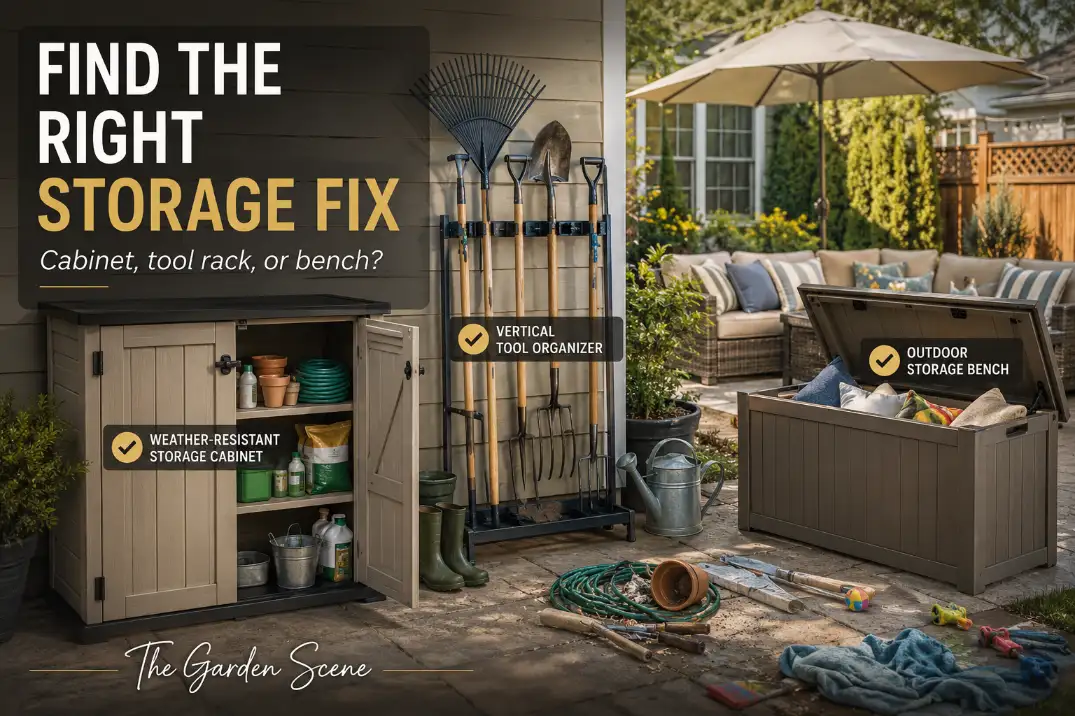
The best backyard storage cabinet is not always the biggest one you can fit against a fence. The better question is what kind of clutter keeps coming back. Mixed patio supplies need dry shelves. Rakes and shovels need upright separation.
Cushions and kids’ toys need quick access near seating. When all of that gets forced into one oversized box, the yard may look cleaner for a weekend, but the same mess usually returns.
For most U.S. backyards, start with a weather-resistant resin storage cabinet if the clutter is mixed and visible. Choose a vertical garden tool organizer first if long-handled tools keep leaning, sliding, or blocking shelves.
Choose an outdoor storage bench only when the stored items belong near the seating area. As a practical threshold, avoid any storage piece that leaves less than 30 inches of clear walkway; 36 inches is better if people carry cushions, trays, or tools through that path.
Quick Buying Direction: Match the Product to the Mess
If you want the fastest decision, use this order:
- Mixed backyard clutter: choose a weather-resistant resin storage cabinet.
- Rakes, shovels, brooms, and cords: choose a vertical garden tool organizer.
- Cushions, toys, throws, and seating-zone clutter: choose an outdoor storage bench.
- Wet storage area after rain: fix placement or drainage before buying another cabinet.
The mistake that wastes money is buying more capacity before identifying the clutter type. A 70-inch cabinet can still fail if long tools fall across the shelves, if the base sits in water, or if daily-use items are too far from where they are actually used.
Best First Buy for Most Backyards: Weather-Resistant Resin Storage Cabinets
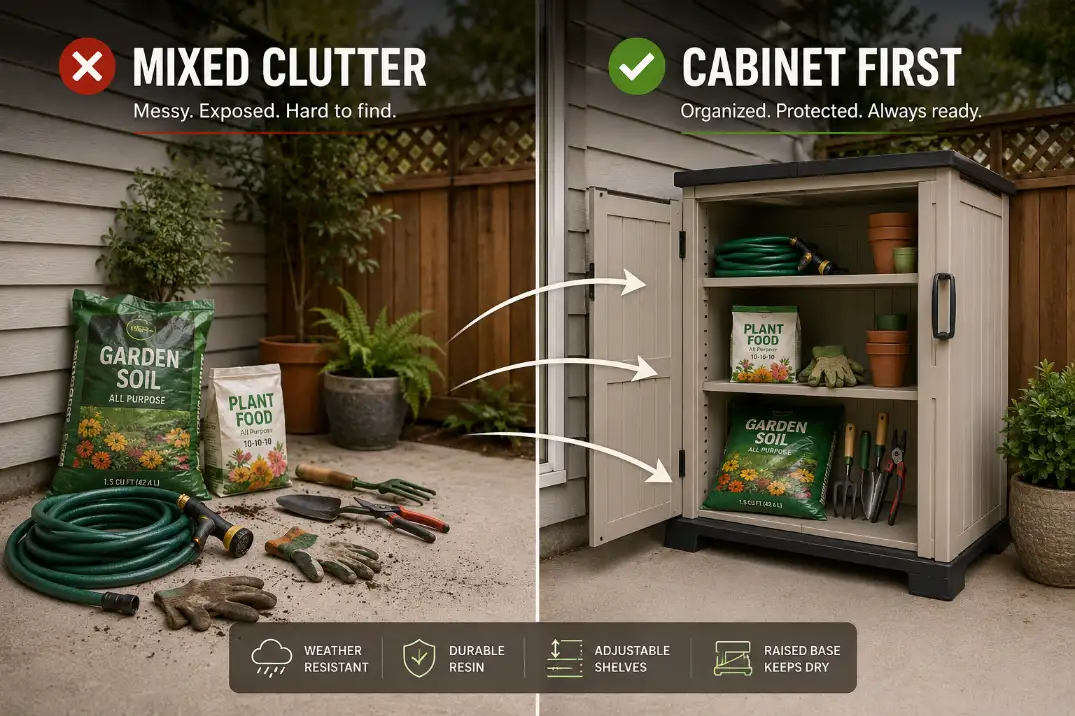
A weather-resistant resin cabinet is the strongest first category for most homeowners because it handles the widest range of ordinary backyard clutter without demanding much maintenance.
It works for gloves, watering parts, plant food, hand tools, grill brushes, small pool accessories, outdoor candles, cleaning supplies, and seasonal patio items.
The right cabinet should feel practical before it feels decorative. Look for 60 to 72 inches of height if you need standing storage, at least 24 inches of usable depth for bulky supplies, adjustable shelves, and shelf ratings around 40 to 75 pounds if you plan to store heavier bags or containers.
Raised feet or a molded base are worth prioritizing because outdoor cabinets often age from bottom moisture before the doors or side panels fail.
Skip this category as your first buy if the main problem is long-handled tools. A standard cabinet may hide rakes and shovels, but it rarely organizes them well unless it has a dedicated tall compartment.
If your backyard mess is mixed, this is the first category to browse. It solves the broadest problem: small and medium outdoor items finally get a dry, visible, easy-to-return place instead of spreading across the patio.
BEST FIRST STORAGE BUY
Weather-Resistant Resin Storage Cabinets
Best for mixed backyard supplies, patio accessories, watering parts, light garden gear, and seasonal outdoor items.
Choose this first when your clutter is varied and you need hidden storage that can stay outdoors.
Look for adjustable shelves, raised feet, tight door overlap, and at least 24 inches of usable depth.
🔴 SHOP weather-resistant resin storage cabinets
Best Buy When Tools Keep Falling Over: Vertical Garden Tool Organizers
If your real problem is rakes, shovels, brooms, pruning poles, cords, or trimmers leaning against walls, a larger cabinet is not the cleanest fix. Long tools need upright separation. Without it, they slide, tangle, block shelves, and end up back against the fence.
A good vertical organizer should hold at least 12 long-handled tools, use separated slots, have a wide anti-tip base, and include hooks for cords or smaller hanging tools. For wall-mounted systems, adjustable hooks are better than fixed spacing because tool collections change over time.
This category works especially well near a garage door, side yard gate, shed entrance, or covered utility wall. In humid coastal areas, avoid unfinished metal hardware unless it is protected from rain and salt air. In windy exposed areas, open wall storage should not hold lightweight items that can swing, rattle, or fall.
Here is the buying line: if the tool handle is longer than about 48 inches, vertical control matters more than enclosed shelf space. Do not pay for more cabinet volume when the real issue is tools having nowhere stable to stand.
If long tools are the clutter source, this is the first category to browse. It prevents the same mess from returning because each tool has a defined slot instead of a corner to fall into.
BEST BUY FOR TOOL CLUTTER
Vertical Garden Tool Organizers
Best for rakes, shovels, brooms, cords, pruning tools, and long-handled yard equipment.
Choose this when the problem is tools leaning, falling, or blocking shelves inside a regular cabinet.
Look for separated slots, a wide base, side hooks, and capacity for at least 12 long-handled tools.
🔴 SHOP vertical garden tool organizers
The Smart Setup Is Usually Cabinet Plus Organizer
The cleanest backyard storage plan often uses two categories: a resin cabinet for mixed supplies and a vertical organizer for awkward tools.
That pairing works better than one oversized box because each item gets stored according to shape, weight, and use frequency.
This is also where placement starts to matter. If the patio is already tight, it may be smarter to store items off the patio to free usable space instead of placing another bulky cabinet near the seating area.
A simple rule works well: daily-use items should be within 10 to 20 steps of the task zone, while seasonal items can live farther away. Gloves and pruners belong near garden beds. Grill brushes belong near the grill. Pool accessories belong near the pool path. Extra pots, covers, and off-season decor do not need the easiest-access spot.
Cabinet vs Organizer vs Bench: What Actually Fits?
| Storage Category | Best For | Weak Point | Choose It When |
|---|---|---|---|
| Resin storage cabinet | Mixed supplies, small tools, patio items | Poor long-tool control | You need hidden outdoor storage |
| Vertical tool organizer | Rakes, shovels, cords, brooms | Does not hide everything | Tools keep falling or tangling |
| Wall-mounted tool rack | Covered walls, garages, sheds | Needs strong anchors and weather protection | You want fast tool access |
| Outdoor storage bench | Cushions, toys, light patio items | Bad for tools and heavy supplies | Seating and storage both matter |
| Metal utility cabinet | Lockable heavier storage | Rust, heat, corrosion risk | Security matters more than low upkeep |
The table narrows the choice, but the real decision is use behavior. If the item is used weekly, it needs easy access. If the item is heavy, it belongs low. If the item is long, it needs vertical space. If the item is soft or seasonal, it needs dry hidden space.
That is why general backyard organization connects closely with patio storage ideas that keep everyday items easy to use. The goal is not just hiding things. The goal is making the right item easy to put away again.
When an Outdoor Storage Bench Is the Better Purchase
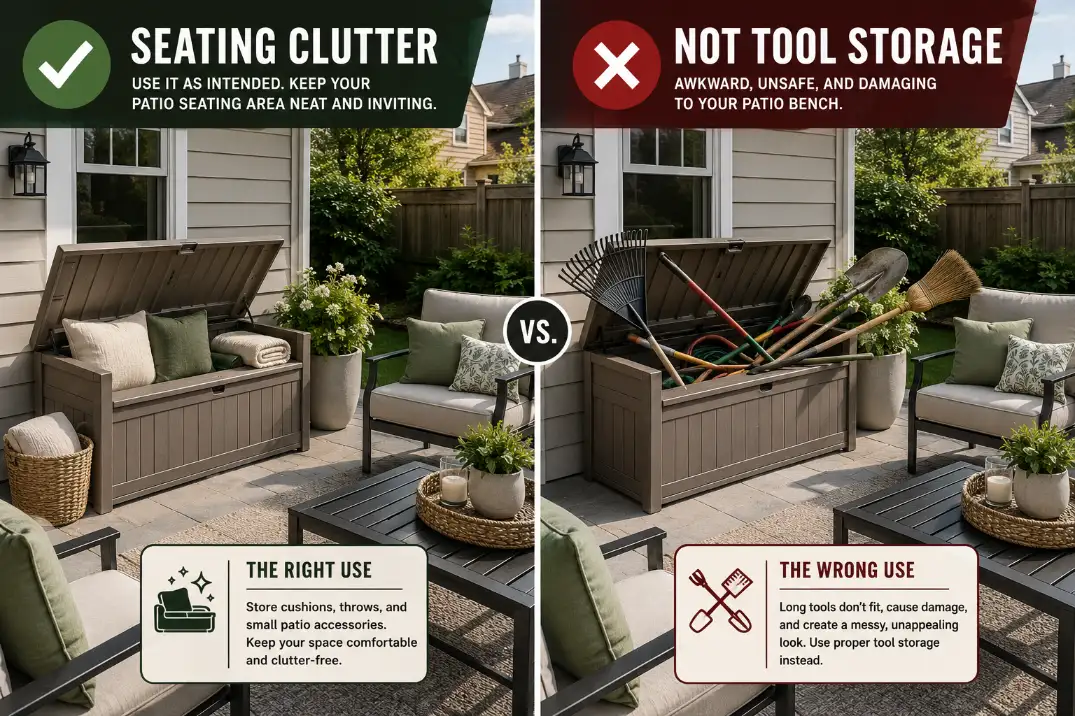
An outdoor storage bench is not the best tool organizer, but it can be the best purchase when the clutter belongs near seating. Cushions, throws, kids’ toys, small outdoor games, and light patio accessories are exactly the kind of items a bench can handle well.
Look for a bench around 45 to 60 inches wide, a lid that opens fully without hitting a wall or railing, weather-resistant construction, and an interior floor that keeps contents off wet surfaces. On a small patio, the bench earns its footprint only if it replaces separate seating. If it sits beside existing chairs and narrows the walkway, it adds another obstacle.
Skip this category for long tools, sharp tools, heavy soil bags, chemicals, fuel, or expensive battery equipment. A storage bench is convenience storage, not utility storage.
If your seating area needs both light hidden storage and another place to sit, this category earns the click. It solves patio clutter without adding a separate box that competes with furniture.
BEST BUY FOR PATIO CLUTTER
Outdoor Storage Benches
Best for cushions, kids’ outdoor items, throws, small patio accessories, and light seating-zone storage.
Choose this when storage should also reduce furniture clutter instead of adding another separate box.
Look for weather-resistant construction, a smooth hinged lid, raised interior floor, and enough width without blocking the walkway.
🔴 SHOP outdoor storage benches
Placement Can Make a Good Cabinet Fail
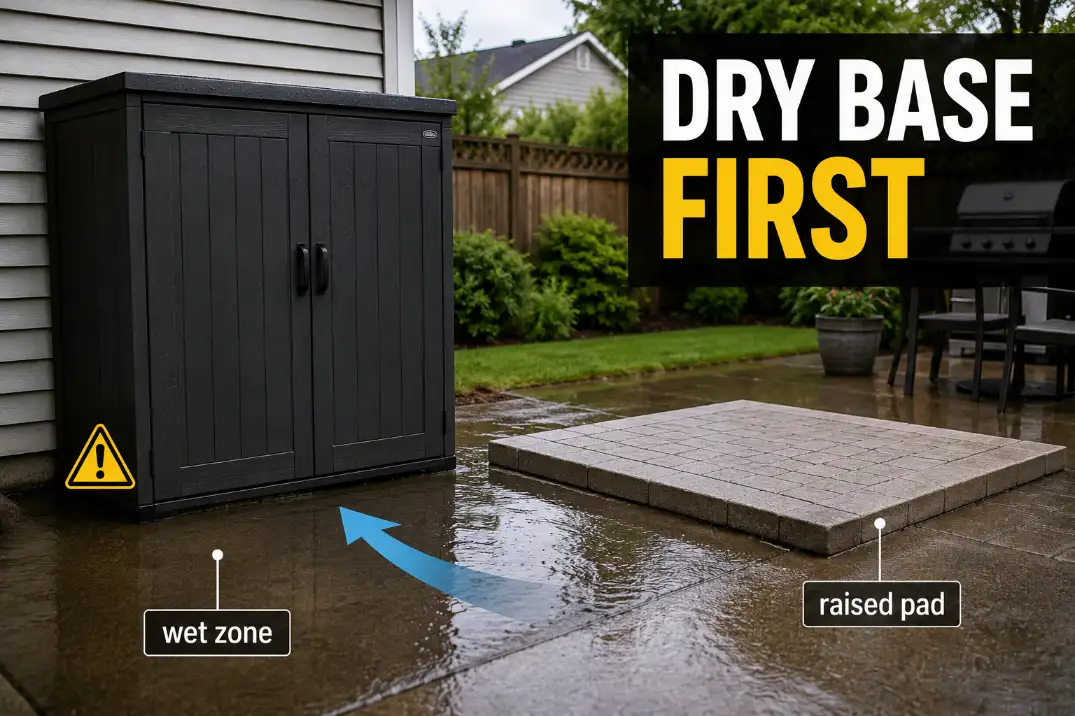
Keep storage out of wet zones
Outdoor cabinets should not sit where downspouts splash, irrigation hits the doors, or rainwater pools around the base. A cabinet that stays damp more than 24 hours after rain is in the wrong location, even if the cabinet itself is decent.
Raise storage 2 to 4 inches above wet concrete, soil, or mulch when possible. This is especially important in humid regions, but it also matters in northern freeze-thaw climates where snowmelt can sit around a cabinet base for days.
If water already moves across the patio after storms, a new storage unit will not fix the root problem. In that case, patio drainage and layout problems should be handled before adding more enclosed storage.
Protect the walkway, not just the wall
Many buyers measure the cabinet width but forget door swing and body position. A cabinet may technically fit along a wall and still make the backyard harder to use.
Keep at least 30 inches of clear walking space around the main path. Use 36 inches when people regularly carry trays, cushions, tools, or bags through that zone. If a cabinet makes people turn sideways to pass, it is not cleaning up the yard; it is moving the problem into the walkway.
If the storage piece makes the patio feel tighter, the better answer may be removing or relocating the wrong item first. The same logic applies when deciding what to remove from a cramped patio space before buying more organizers.
What You Should Not Store Outside
Not every backyard item belongs in an outdoor cabinet. Heat-sensitive products, aerosol cans, fuel, paint, certain cleaners, pesticides, and battery packs need more caution than a general storage unit provides. A dark cabinet in direct afternoon sun can get too hot for items that require controlled storage.
Battery-powered tools deserve special attention. The tool body may tolerate a protected cabinet, but batteries and chargers are usually better kept in a dry garage, shed, or utility area. Moisture, heat, and theft risk all matter.
Heavy bags also expose weak storage quickly. A 40-pound bag of soil, compost, or fertilizer belongs on the cabinet floor unless the shelf is clearly rated for the load. Shelf strength matters more than total capacity once the cabinet is used every weekend.
This is where buyers often overestimate capacity numbers and underestimate storage behavior. A cabinet can be large and still be wrong if the shelves bow, the base stays damp, or the items inside are unsafe for outdoor storage.
A Clean Backyard Storage Plan That Holds Up
Start with the mess that returns fastest.
Daily-use items
Keep gloves, pruners, watering parts, grill brushes, and frequently used hand tools at chest height or in a shallow upper shelf. These are the items that create visible clutter fastest when storage is inconvenient.
Weekly-use tools
Put rakes, shovels, brooms, and cords in vertical slots or on adjustable hooks. Do not bury them behind cabinet shelves. If a tool is awkward to return, it will end up leaning somewhere else.
Seasonal supplies
Store extra pots, covers, pool items, and off-season accessories higher, farther back, or in the less convenient cabinet zone. Seasonal items do not deserve the easiest-access space.
This system also helps prevent the backyard from feeling smaller over time. When storage becomes another object in the wrong place, it can contribute to the same visual pressure described in backyard clutter that makes outdoor spaces feel smaller.
Final Verdict: Buy the Category That Matches the Mess
For most homeowners, the first purchase should be a weather-resistant resin storage cabinet because it handles the widest range of mixed backyard clutter.
For tool-heavy yards, a vertical garden tool organizer should come first because it solves falling and tangled long tools better than a standard cabinet.
For seating areas, an outdoor storage bench makes sense only when it stores light patio items and replaces furniture rather than crowding the layout.
Do not let capacity numbers make the decision for you. Depth, shelf strength, vertical control, dry placement, and walkway clearance matter more.
The right storage category should make the backyard easier to use within the first week, not just hide clutter until the next weekend.
For chemical lawn and garden products that should not be stored like ordinary patio supplies, follow the U.S. Environmental Protection Agency’s pesticide storage guidance.