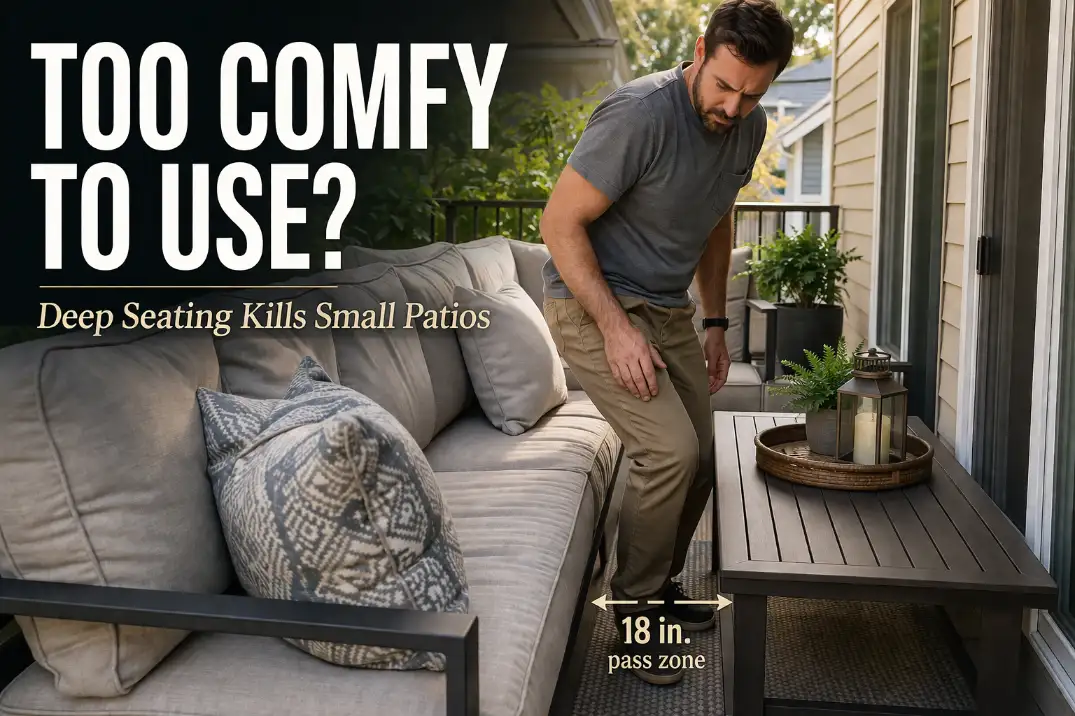
Deep seating makes small patios harder to use because it creates a use-depth conflict, not just a size issue. A deep outdoor sofa may extend 34 to 42 inches from the wall, but that’s only part of the story.
Once you add 18 to 24 inches for knees and standing, plus 24 to 36 inches for a usable walking path, the layout can demand more than 80 inches of real working space.
That’s why a patio can look perfectly furnished on day one and feel frustrating by day five. The early warning signs are practical: you turn sideways to pass, you pause before opening the door, or you move something every time you sit down.
This is not about aesthetics—it’s about whether the patio still functions once people start using it.
The Real Problem Is Total Use Depth
Most layout mistakes start with measuring furniture dimensions but ignoring the space needed to actually use it. Deep seating fails on small patios because its functional footprint is much larger than its frame.
The Total Use Depth Test
Use this simple breakdown before placing or buying deep seating:
| Space component | Common range | Why it matters |
|---|---|---|
| Deep seating depth | 34–42 inches | Fixed footprint |
| Knee + standing zone | 18–24 inches | Space to sit and rise |
| Comfortable walkway | 30–36 inches | Natural movement |
| Tight minimum pass | 24 inches | Usable but restricted |
| Failure zone | Under 18–24 inches | Movement feels blocked |
A 38-inch-deep sofa plus a 24-inch knee zone already consumes 62 inches. Add a 30-inch path, and you reach 92 inches of required depth. On a patio that is only 8 to 10 feet deep, that leaves little room for anything else to function.
Width Rarely Fails First
A loveseat might fit along a wall with no issue. But if it projects too far forward, it collapses the usable center. That’s why patios often feel “tight” even when nothing looks oversized.
What People Usually Misread First
Deep seating looks like the upgrade choice. It feels more comfortable, more complete, and more “living-room-like.” But that logic breaks down in small outdoor spaces.
Comfort vs Daily Use
Deep cushions improve long sitting sessions. But small patios are often used in short bursts—morning coffee, stepping outside, watering plants, quick meals. In those moments, access matters more than comfort.
If you hesitate before moving, reach awkwardly for a table, or constantly shift items out of the way, the layout is working against you.
Cosmetic Fixes That Don’t Work
Most people try to fix the problem visually first:
- switching to a smaller coffee table
- removing a rug
- adjusting pillows
- rotating the furniture
These changes rarely solve anything if the total depth is still blocking the route. The problem is structural, not decorative.
For tighter patios, a slim bench can often solve more than a smaller sofa because it keeps seating at the edge instead of pushing into the walkway. Options like Best Patio Benches for Small Patios work better when access is the priority.
The Deep Seating Failure Pattern
Deep seating usually doesn’t fail immediately. It gradually removes usable space.
First: The Door Becomes Awkward
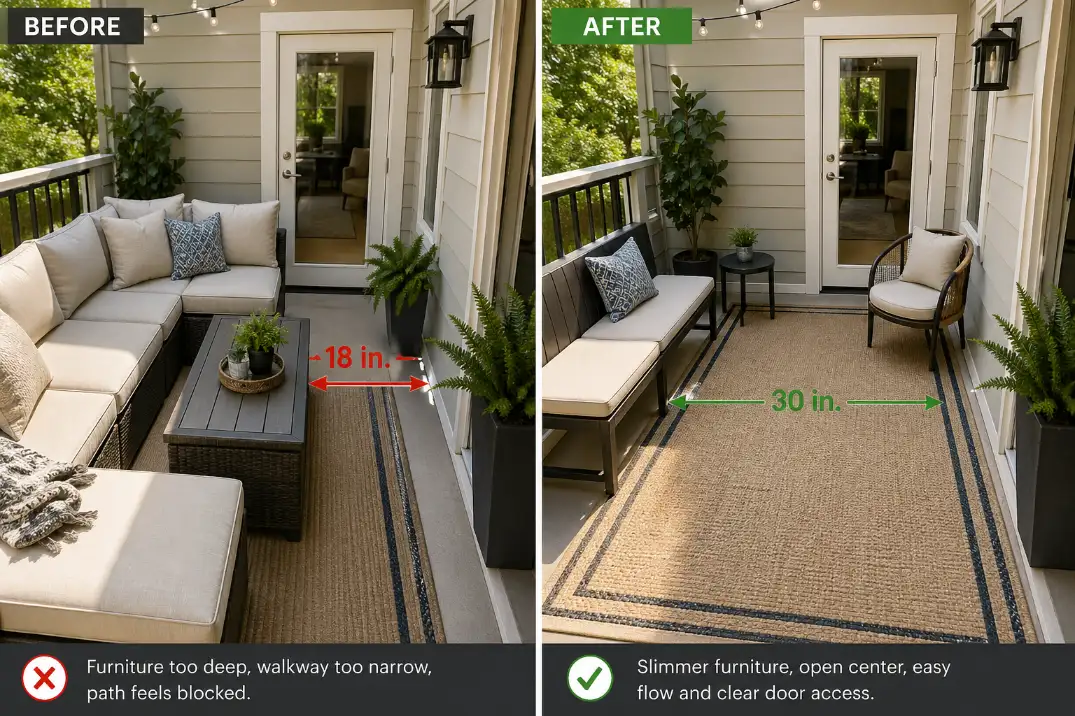
The patio door needs more than clearance—it needs a landing zone. If seating sits within 24 inches of that path, entering and exiting becomes uncomfortable, especially when carrying items.
Then: The Center Stops Working
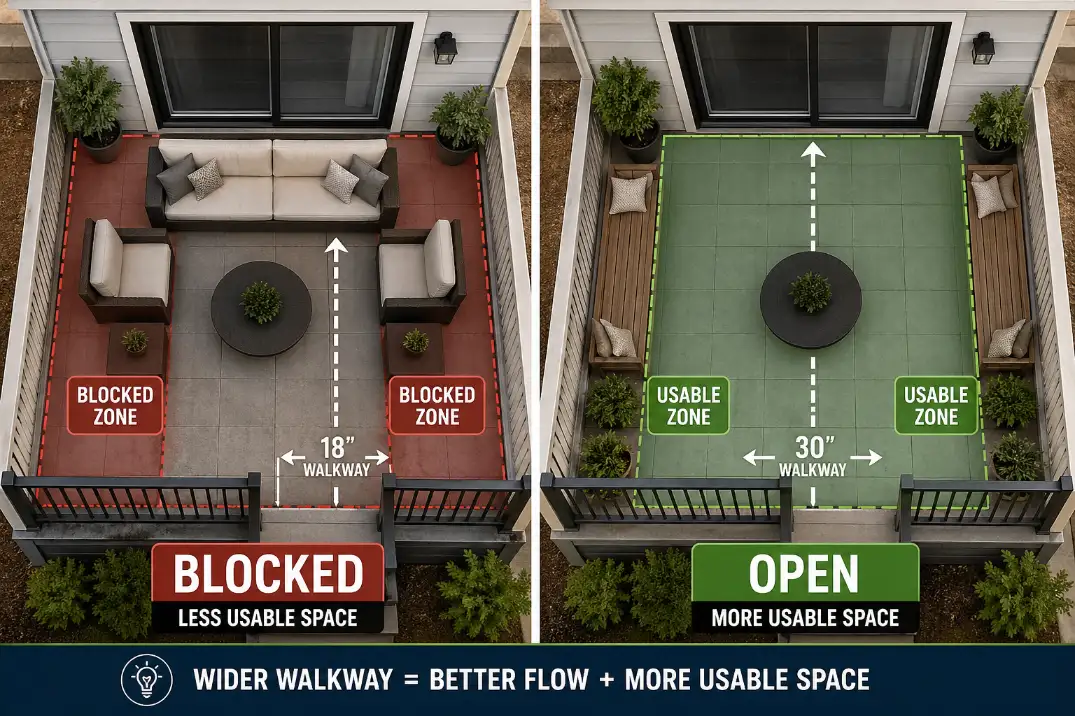
The middle of the patio becomes a narrow strip that doesn’t function well. Too tight for walking, too central to ignore. This is where people add and remove tables, trying to fix something that’s already been decided by depth.
Finally: Flexibility Disappears
Deep sectionals lock the layout into one fixed shape. Chairs and benches can shift, rotate, or tuck away. Deep seating tends to stay exactly where it is, limiting how the space can adapt.
For patios used for meals or mixed activities, a compact dining setup often performs better than a lounge-first design. Best Outdoor Dining Sets for Small Patios becomes the more practical direction in those cases.
Quick Diagnostic Checklist
- Walking path is under 24 inches
- Seating depth exceeds 36 inches on a small patio
- Coffee table spacing is under 18 inches
- Door access feels tight or interrupted
- Movement requires repositioning furniture
- The space looks finished but feels inconvenient
Pro Tip: Tape the full layout on the ground before buying. Include seating depth and movement zones—not just the furniture outline.
Better Seating Choices for Small Patios
Choosing better seating isn’t about going smaller—it’s about protecting the route.
| Seating type | Small patio verdict | Best use | Watch-out |
|---|---|---|---|
| Deep sectional | High risk | Lounge-only patios | Blocks flexibility |
| Deep loveseat | Conditional | Single anchor piece | Needs open front |
| Compact chair | Reliable | Flexible layouts | Can crowd in pairs |
| Slim bench | Strong choice | Narrow edges | Less lounge feel |
| Bistro/dining set | Often best | Daily use patios | Needs pull-out space |
Choose Upright Comfort
Seats around 17–19 inches high are easier to use in tight spaces. Very low seating may feel relaxing but becomes inconvenient when space is limited.
One Deep Piece Is Enough
If you want deep seating, use one piece only. Pair it with light, movable elements. Avoid stacking multiple deep elements (sofa + ottoman + large table).
On smaller patios, especially around 10×10, one oversized decision can dominate the entire layout. The layout logic in What Outdoor Furniture Actually Fits on a 10×10 Patio helps prioritize what deserves space.
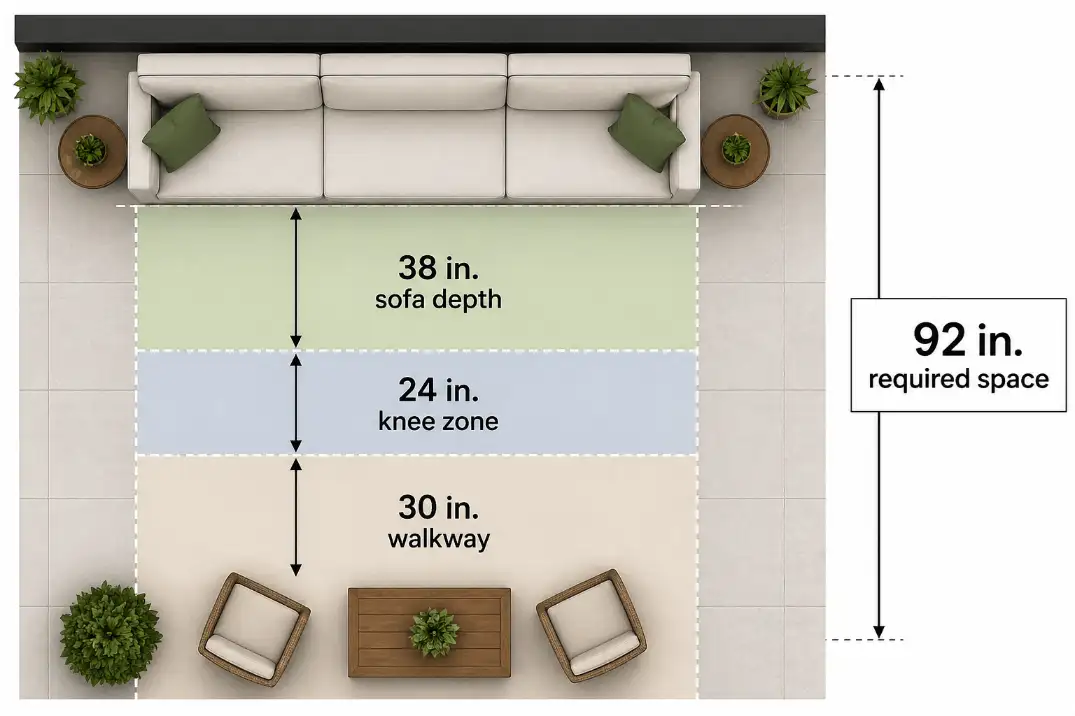
Table Shape Can Make It Worse
Tables often repeat the same mistake as seating—occupying the center. Rectangular coffee tables create hard edges in tight paths. Large round tables can take over the middle.
Better options:
- side tables
- C-tables
- nesting tables
These support seating without blocking movement. If the table sits inside the walkway, even a smaller version will not fix the issue. The same principle appears in Best Patio Table Shapes for Small Spaces.
The 18-Inch Rule Isn’t Enough Outside
Indoor spacing rules don’t always translate. Outdoors, where people move more freely, 18 inches between seat and table can feel too tight. Aim closer to 24 inches if that space is part of a walking route.
When Deep Seating Still Works
Deep seating can work when:
- patio depth is at least 10–12 feet
- seating is placed along a low-traffic edge
- main walkway stays above 30 inches
It also works when lounging is the only purpose of the space. But most small patios are multi-use. That’s where deep seating starts competing with everything else.
What people often underestimate is how quickly daily habits reveal the problem. Within 7 to 14 days, patterns emerge: hesitation, adjustment, avoidance.
What to Do Instead
Start with the path. Mark the route from the door to key areas first. Keep that clear, then build around it.
Most small patios work better with:
- edge-based seating
- open center space
- one movable element
Instead of building a mini living room, treat the patio like a flexible surface.
If you’re choosing between chairs and benches, Bench Seating vs Patio Chairs helps compare flexibility versus comfort in tight layouts.
Replace the Layout, Not Just the Furniture
The most effective fix is removing one central blockage:
- swap coffee table → side table
- remove ottoman
- replace sectional corner → bench
Pro Tip: Remove the table for 3–5 days. If the patio suddenly works, the issue wasn’t comfort—it was obstruction.
Questions People Usually Ask
Is deep seating always a mistake?
No. It becomes a problem when it reduces usable movement space below about 24–30 inches.
Is a sectional worse than chairs?
Usually on small patios. Sectionals reduce flexibility and lock the layout.
Can I keep my deep sofa?
Yes, but simplify everything else around it. Remove central obstacles first.
What’s the fastest fix?
Remove the coffee table and test the layout for a few days. That reveals whether depth is the issue.
Deep seating makes small patios harder to use when comfort is allowed to override movement. The best layout is not the one that looks full—it’s the one that still works.
For broader official guidance on outdoor living space planning, see the University of Florida IFAS Extension.