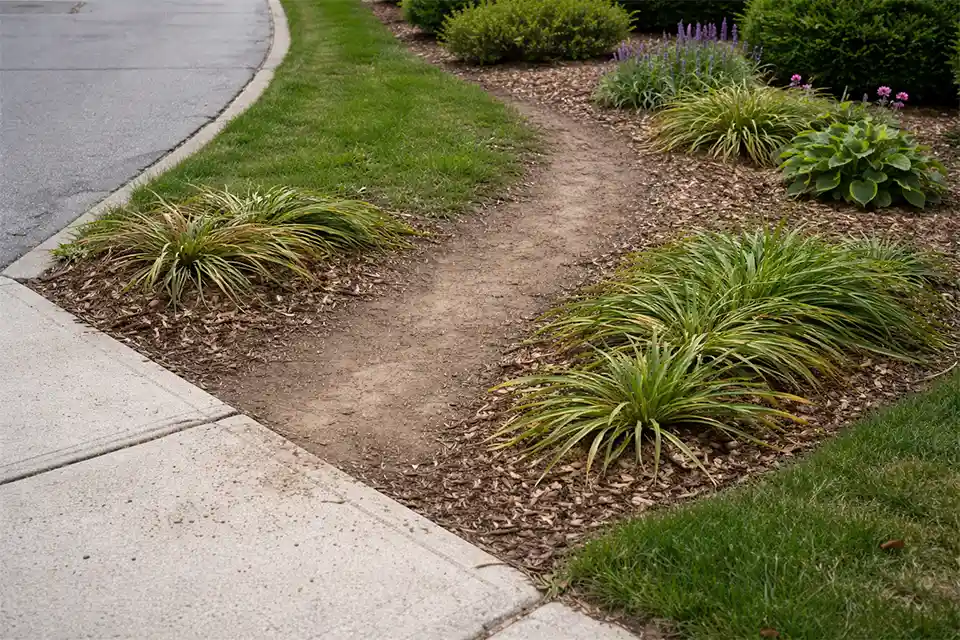
The best front yard plants for sidewalk shortcut traffic are usually not the softest flowering plants at the edge. They are the plants that can handle brushing, occasional stepping, heat reflected off concrete, and soil that gets harder every week.
Start with three checks before you buy anything: how wide the worn line already is, whether the damage is mostly crushed foliage or loosened crowns, and how fast water soaks into the first 2 to 4 inches of soil.
If the shortcut path is already 12 to 18 inches wide and 1 gallon of water still puddles there after 5 minutes, the problem is no longer just plant choice.
That is where people misread this issue. It can look like drought stress, dog traffic, or poor irrigation, but shortcut damage has a different pattern: stems shear low, the soil seals over, and the same edge fails again within 2 to 4 weeks of cleanup. The visible symptom is ragged planting.
The underlying mechanism is repeated foot pressure plus compaction. The best results usually come from two moves together: tougher edge plants and a planting layout that accepts where people actually cut through.
The plant types that earn their place here
A long list is less helpful than a shortlist with judgment. For this kind of front yard, the strongest plants are usually clumping, flexible, and visually forgiving. You want plants that either recover fast, hide minor damage, or create enough structure that the shortcut line becomes less tempting.
Best overall picks
Liriope is the safest all-around answer for the first row in many U.S. yards. The leaves flex rather than snap, established clumps still look intentional after minor abuse, and the plant handles reflected sidewalk heat better than many softer edging choices. Space it about 15 to 18 inches on center.
Daylily is one of the best second-row plants when the edge itself takes pressure. Its crown is durable, the foliage recovers quickly, and it fills visual space without asking the front 12 inches to stay perfect.
Best for hot, sunny edges
Creeping juniper is stronger than most flowering groundcovers where the sidewalk throws heat and the soil dries fast. It is not truly walkable, but it survives scraping and edge pressure better than softer mats.
Compact spirea earns its place just behind the edge in full sun. It rebounds from light breakage, keeps visual shape through the season, and helps the bed look deliberate even when the outer strip gets rough.
Best for softer-looking part-shade edges
Tough sedges work well where the traffic is more clipping than full stomping. They are especially useful when a bed needs a softer look without relying on fragile flowers.
Dwarf yaupon holly is useful when you need a shrub that gently redirects movement. At 2 to 3 feet wide, it can make a shortcut feel less easy without making the front yard look defensive.
Plants people overestimate here
This is where a lot of time gets wasted. Lavender looks like the obvious choice for a sunny front edge, but repeated brushing and compacted soil often cause plants to split open from the center within a season or two. Gaura, coneflowers, soft annual fillers, hostas at the sidewalk edge, and dwarf mondo grass in daily cut-through zones are also commonly overestimated. Some tolerate climate stress. That is not the same as tolerating shortcut traffic.
A similar maintenance pattern shows up in Front Yard Maintenance Problems When Groundcovers Spread Into Walkways and Lawn: the plant may be healthy enough to grow, but the habit is still wrong for the edge condition.
What “walkable” gets wrong in this situation
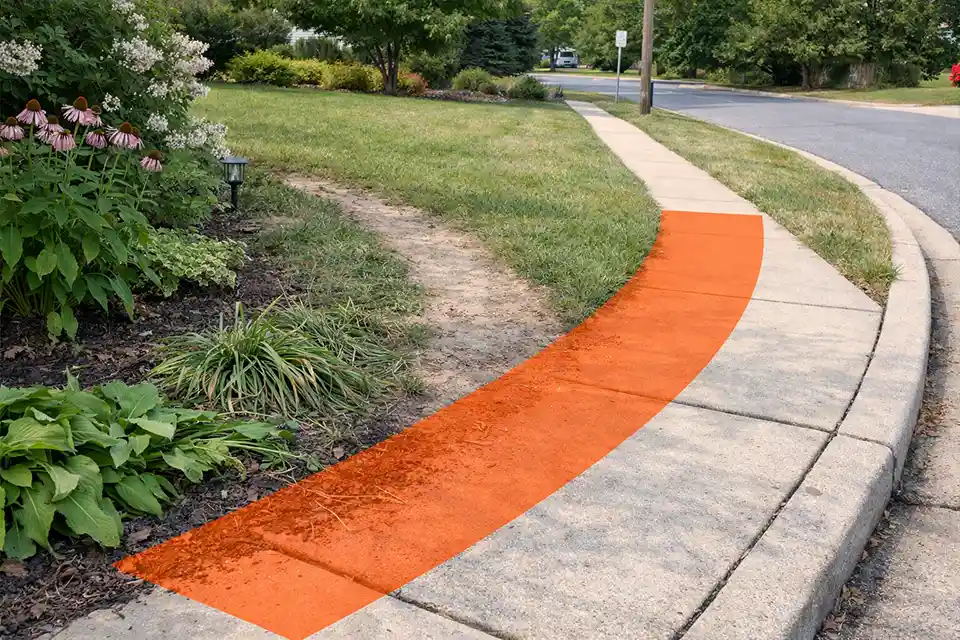
A lot of search results blur two different ideas: walkable groundcovers and plants for sidewalk shortcut traffic. They are not the same thing.
Light foot traffic is not daily shortcut traffic
A plant that handles light foot traffic usually means occasional stepping, not repeated diagonal cutting across the same line. The difference is practical, not semantic. A few steps spread across a season are very different from shoes landing in the same 12-inch strip every day.
Edge survival matters more than true walk-on performance
Most front yards do not need a plant you can regularly walk across. They need a plant that still looks decent when people clip the corner, step off the sidewalk once, or drag a stroller wheel over the bed edge. That is why liriope and daylilies often outperform softer “walkable” groundcovers in real front-yard use. Readers often underestimate this distinction and end up buying a plant for the wrong job.
If the yard is already exposed to heavy pedestrian flow, layout pressure, or privacy issues from street traffic, How to Create Front Yard Privacy on a Busy Walking Route gets at the same core truth: movement patterns determine which plantings keep working.
Quick compare: what actually works by traffic level
| Plant | Best zone | Handles best | Fails when |
|---|---|---|---|
| Liriope | First edge band | Moderate edge pressure, brushing, occasional stepping | Shoes land in the same spot every day |
| Creeping juniper | Hot sunny edge | Heat, dry soil, light scraping | Repeated footfalls hit one narrow line |
| Sedge | Part-shade edge | Light clipping and softer edge use | Exposed corners get daily shortcut traffic |
| Daylily | Second row buffer | Moderate incidental damage behind the edge | Asked to absorb the first impact strip |
| Compact spirea | Mid-layer structure | Light breakage and visual recovery | Planted in the direct first 12 inches |
| Dwarf yaupon holly | Redirect zone | Movement control and gentle structure | Used where the bed is under 3 feet deep |
The layout change that usually matters more than the plant swap
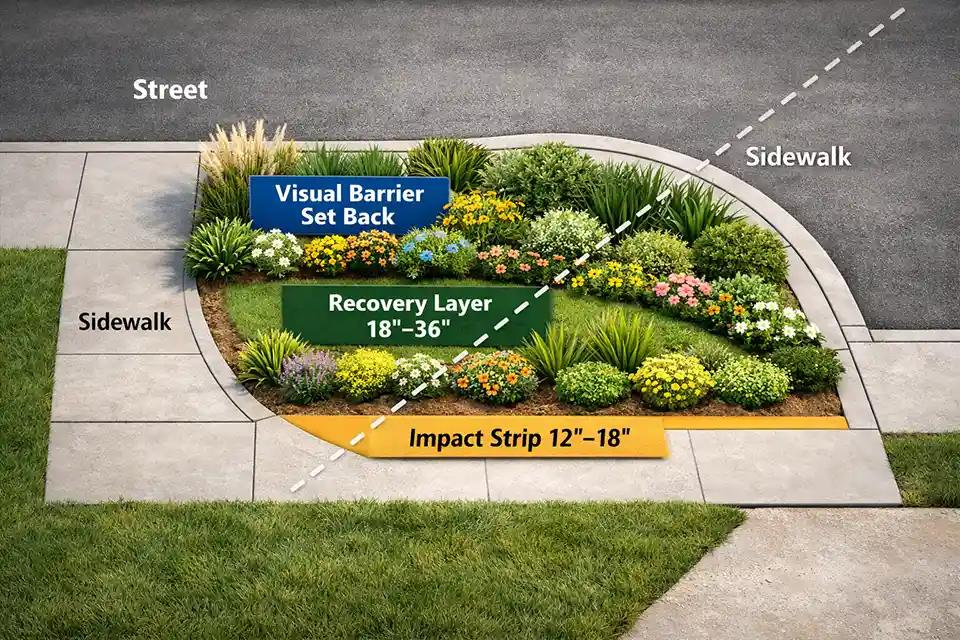
The most useful design move here is to stop treating the whole bed as one planting zone. Shortcut traffic creates zones whether you plan for them or not.
Zone 1: the impact strip
The first 12 to 18 inches next to the sidewalk should be the toughest part of the bed. That may be liriope, low juniper, a narrow gravel or stone strip, or another deliberately durable edge treatment. When shoes land there daily, this is no longer a flower bed first. It is an impact strip.
Zone 2: the recovery layer
From about 18 to 36 inches back, use fuller plants that can visually absorb edge wear. Daylilies, compact grasses, and spirea work well because they create mass without needing a perfect front line.
Zone 3: the visual layer
Keep your softer or showier plants at least 30 to 36 inches back from the shortcut line. That is where seasonal color and finer texture make sense. Putting delicate bloomers in the front row is one of the most common ways to spend more and repair more.
Pro Tip: If damage returns within 2 to 4 weeks after replanting, stop changing varieties and test the edge layout instead. That speed of failure usually means the traffic line is stronger than the plant choice.
This is also why a lot of “more mulch” fixes disappoint. A fresh 2-inch mulch layer can make the bed look reset for a few days, but it does not change where people step. On slopes or corners, it often makes the worn line more obvious after the next rain. Mulch is usually cosmetic here, not corrective.
The same broader movement logic matters in Front Yard Walkway Offset Door Driveway. When people are not given a path that matches how they naturally move, the bed edge absorbs the mistake.
What changes in different U.S. conditions
The strongest shortlist changes a little by climate, but not as much as people think. Climate matters. Traffic pattern usually matters more.
Hot, humid Southeast
In places like Florida or the Gulf states, soft flowering edges can collapse fast because foot pressure combines with summer humidity and lush growth. Liriope, yaupon, and durable clumping plants tend to hold their shape better than loose mounding bloomers.
Dry, sunny Southwest
In Arizona or inland Southern California, the sidewalk edge often gets hotter and drier than the rest of the bed. Creeping juniper and heat-tolerant shrubs usually outperform softer green groundcovers that look good only while irrigation stays perfect.
Colder northern states
Where freeze-thaw cycles hit hard, already-stressed crowns get weaker at the edge. Daylilies, spirea, and hardy evergreens tend to recover better than tender fillers. People often overestimate how much winter survival equals trampling tolerance. It does not.
If the broader front-yard plan is also fighting sun exposure or plant placement issues, Choose Front Yard Plants for Blazing Afternoon Sun helps separate heat stress from traffic damage, which is an easy thing to confuse.
When plant-only stops being a smart fix
This is the decision point many articles dodge. A plant-only solution stops making sense when the worn line is obvious, recurring, and functionally part of how people move through the site.
Replace planting with a tougher edge when these are true
- The shortcut line is already 12 to 18 inches wide
- Water still sits in the damaged strip after 5 minutes
- The bed edge is narrower than 18 inches
- The same damage returns within 6 to 8 weeks
- Shoes are clearly landing in the same spot every day
At that point, widening the walk, adding a stepping surface, or deliberately hardening the first strip usually beats another round of replanting. One of the easiest mistakes in front yards is assuming every visible problem deserves a planting answer. Some problems are circulation problems first.
That same “design first, plant second” logic shows up in Front Yard Design Minimal Setback Space. When the available front-yard depth is tight, every inch at the edge has to work harder.
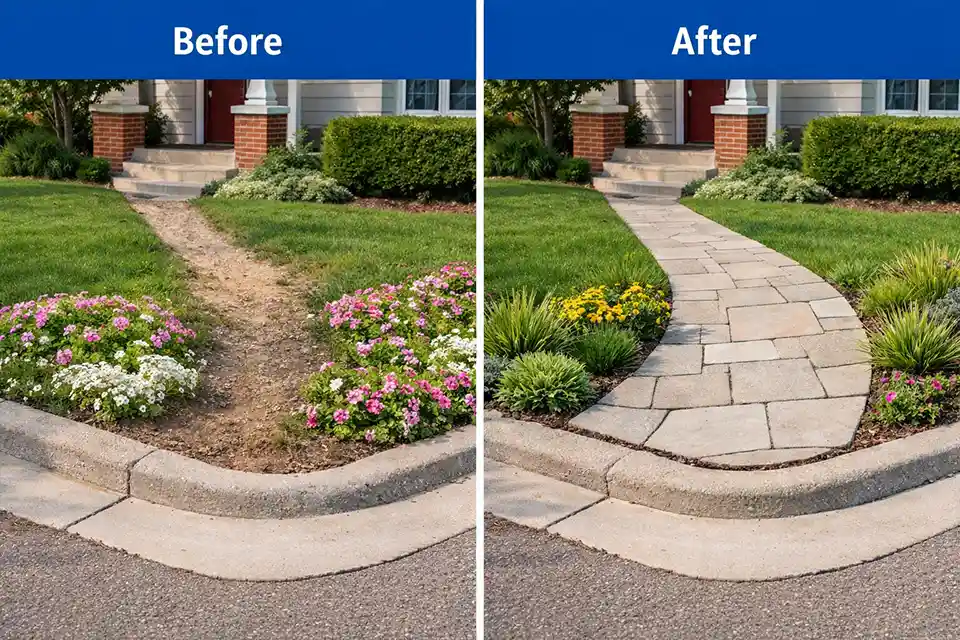
The best front yard plants for sidewalk shortcut traffic are the ones matched to the actual pressure zone, not the prettiest plants in the catalog.
In most yards, that means durable edge plants, fuller second-row plants, and enough discipline to admit when the first 12 inches should behave more like a buffer than a flower border.
The real improvement usually comes when the planting plan stops fighting pedestrian behavior and starts designing around it.
For broader official guidance on landscape design that accounts for pedestrian movement, see the Alabama Cooperative Extension System.