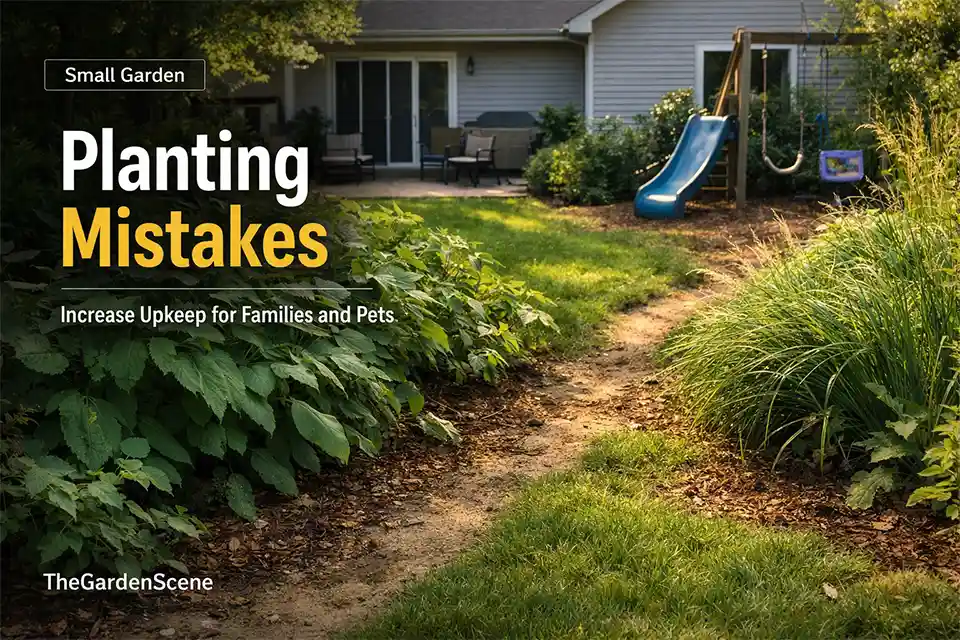
The planting mistakes that create the most work in small gardens are usually not dramatic ones.
They are the ordinary choices that look full and finished in week one, then start causing trimming, cleanup, replanting, and muddy traffic patterns by month three. The first checks are practical.
See whether plants are being spaced by pot size instead of mature width, whether soft groundcovers are spilling into the same 24- to 36-inch routes kids and dogs use every day, and whether anything thorny, floppy, or messy sits within about 3 feet of a play or run zone.
In a small garden, those mistakes compound fast because one plant does not stay in its lane. It leans into the path, traps debris, holds moisture, and turns a tidy layout into a maintenance loop.
This is different from a general small-garden design problem. The issue is not just that the garden feels crowded.
The issue is repeated wear. Families and pets create traffic, sharp turns, rough edges, and narrow movement patterns. A planting plan that looks fine in a static photo can fail quickly once the garden is actually used.
The mistakes that create the most upkeep first
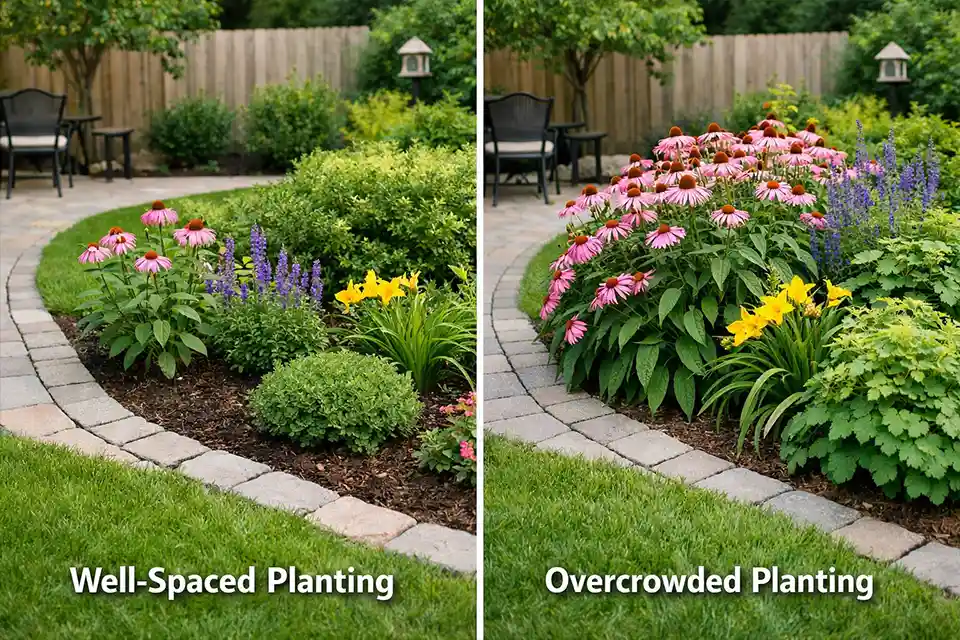
Plants are spaced for the first season, not the second
This is the most common one. Small gardens get planted to look finished right away, so shrubs and perennials are set too close. A plant sold in a 1-gallon pot can still mature to 24 to 36 inches wide, and many ornamental grasses can easily spread to around 30 inches or more in one strong season.
In a family garden, that extra spread does not stay decorative. It narrows paths, drags seed heads into play areas, and creates more trimming than the layout can tolerate.
A bed can look balanced at installation and become high-upkeep by late summer. That is why mature width matters more than container size.
Soft, spreading plants get placed in traffic zones
People often underestimate how quickly low plants become messy in real use. Groundcovers, trailing herbs, and floppy perennials look forgiving, but along a route used 10 to 20 times a day by kids or dogs, they get crushed, split open, or smeared into the path. Then the maintenance multiplies: trimming, re-edging, cleanup, and replacement.
This is one reason Small Garden Design Mistakes That Increase Maintenance overlaps with planting decisions more than many people expect. In compact spaces, layout and planting are not separate systems.
High-litter plants go near hard-to-clean edges
Some plants are not hard to grow, but they are expensive to maintain in the wrong place. Seed-heavy grasses, constantly shedding flowers, fruit-dropping ornamentals, and brittle plants near pavers or artificial turf create steady cleanup. The mistake is not always the plant itself. It is putting a messy plant where every fallen piece shows.
In a small garden, debris is more visible and more concentrated. A bed beside a 2-foot path or a compact patio edge does not hide litter the way a larger yard can.
What families and pet owners usually misread
“Low-growing” does not mean low-maintenance
A plant that stays under 12 inches tall can still be a maintenance problem if it sprawls 18 to 24 inches sideways, traps mulch, or needs frequent shearing to stay off the path. Height is only one number. Spread, flop, and recovery rate matter more in active gardens.
Fast-growing screening plants feel smart at first
They often do the opposite of what busy households need. Fast growers create fast pruning cycles, blocked sightlines, and more debris. In a small garden, a plant that puts on 12 to 24 inches of growth in one season may not be helpful coverage. It may just be another thing you have to cut back.
That same maintenance logic shows up in Why Low-Maintenance Gardens Never Stay That Way. The plants that promise quick coverage are often the ones that create routine correction work later.
Tough plants are not always pet-friendly plants
This gets overestimated in the wrong direction. People focus so much on durability that they ignore texture and behavior. The more useful question is not “Will this survive a dog brushing past it?” It is “What happens after that contact?” Thorns, stiff blades, burrs, brittle stems, irritating sap, and heavy seed drop are the real maintenance triggers because they create cleanup, avoidance, and damage patterns.
Safety belongs in the same decision. A plant can be durable and still be a poor fit if it sits within easy reach of curious kids or pets that chew, paw, or brush through it daily.
Pro Tip: Leave at least a 24-inch clear planted edge beside the route pets use most. If the dog path is already obvious, design to it instead of trying to plant through it.
Why the obvious fix usually fails
Replacing one damaged plant rarely solves the pattern
If one corner keeps getting wrecked, the problem is usually not that particular plant. It is that the spot is handling traffic, turning radius, or rough play the planting plan never accounted for. Replacing the same 1- or 2-gallon plant again and again is usually a sign that the wrong plant type is in the wrong use zone.
This is also where readers may run into similar issues in Backyard Landscaping Problems With Pets. The small-garden version is less forgiving because there is less buffer between planted areas and active use.
More mulch is not a real solution
Mulch helps, but it does not fix poor plant placement. If pets cut the same line through the bed every day, more mulch usually means more mulch being kicked into the lawn, path, or patio. Once a route is used repeatedly, the better fix is usually a clear edge, stepping surface, or tougher planting zone nearby.
Constant shearing often makes the bed look worse
This is one of those fixes that seems disciplined and ends up creating more work. Repeated trimming every 2 to 3 weeks can make plants denser in the wrong place, stimulate more edge growth, and leave the bed looking blunt rather than tidy. If you are clipping the same plant back all summer just to keep a 30-inch path usable, the planting choice is no longer working.
Plants that usually behave better in busy small gardens
Look for contained shape first
The plants that reduce upkeep usually have a predictable outline. Compact shrubs, clumping perennials, and upright plants that stay close to their footprint are usually better bets than floppy spreaders. In a bed under 36 inches deep, that matters more than flower color or first-season fullness.
A plant that holds a 20- to 24-inch shape with minimal correction is usually easier to live with than one that starts small but sprawls to 30 inches by midsummer.
Lower-litter plants make a bigger difference than people expect
In small spaces, cleanup frequency matters almost as much as growth rate. Plants that do not constantly drop petals, seed heads, sticky fruit, or brittle stems are usually easier near patios, stepping stones, artificial turf, or play edges. Busy households tend to feel the maintenance burden from litter long before they notice a design problem.
Flexible, non-spiny texture usually wins near active edges
Near play zones, seating, and pet routes, softer and more forgiving textures usually age better than thorny, rigid, or snag-prone plants. That does not mean every edge plant has to be delicate. It means the first contact zone should not punish normal movement.
The best family-and-pet planting plans usually combine three traits: contained growth, low litter, and non-problematic texture.
A better way to plant a small garden that actually gets used
Separate active zones from soft planting zones
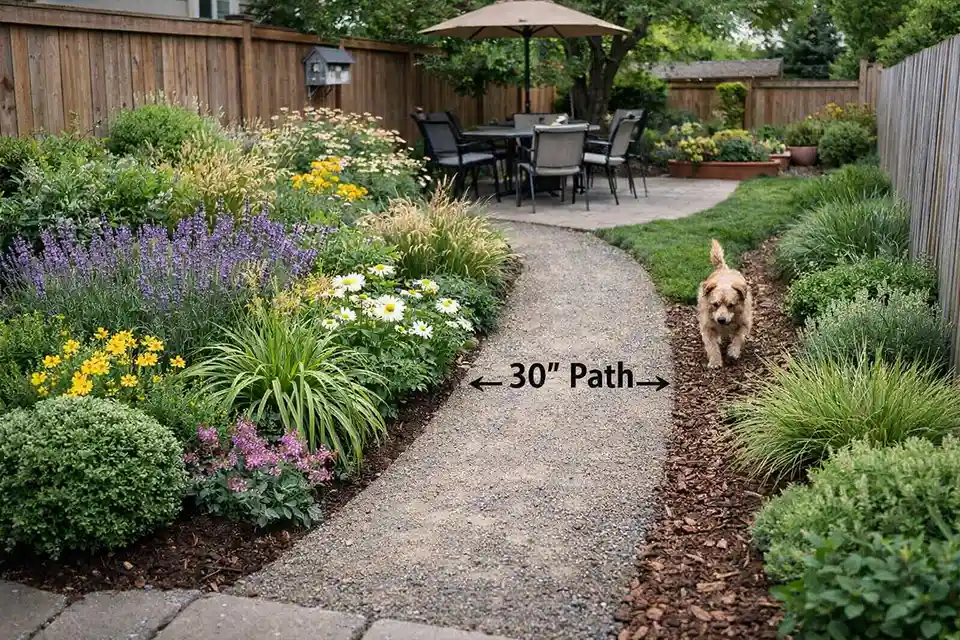
This matters more than squeezing in one more shrub. If a path, play corner, or dog loop is real daily use space, keep the most fragile or floppy plants at least 24 to 36 inches away from it. Use the tougher edge for structure, then place softer plants behind it.
Choose plants by behavior, not just looks
The better question is not “Is this pretty in a small garden?” It is “What does this do after heat, rough brushing, one missed week of maintenance, and repeated use?” A strong family planting palette usually has three traits: contained growth, low litter, and predictable shape.
For a broader planning mindset, Small Garden Design Principles That Work is useful, but family-and-pet gardens need one extra filter: plants have to behave well under repeated use, not just look balanced on paper.
Keep cleanup-heavy plants out of the narrowest spaces
A 2- to 3-foot side bed, a strip beside turf, or a narrow run near a fence is the wrong place for shedding grasses, thorny shrubs, or sprawling fillers. Those are the spots where maintenance stacks up fastest. If the bed is under 36 inches deep, choose plants that hold their shape without constant correction.
| Planting choice | What usually happens in a busy small garden | Better move | What wastes time |
|---|---|---|---|
| Tight spacing for instant fullness | Plants merge by late season and crowd paths | Space by mature width | Repeated cutting back |
| Floppy plants near play areas | Broken stems and constant cleanup | Put sturdier forms on the edge | Replanting the same spot |
| Messy seed or flower drop near paving | Daily sweeping and debris tracking | Use low-litter plants near hardscape | Adding more mulch |
| Fast-growing screens in narrow beds | Heavy pruning and blocked visibility | Choose slower, contained screening | Letting them fill in unchecked |
| Fragile plants on dog routes | Wear, mud, and replacement cycles | Create a durable edge or route | Planting through the traffic line |
The point where a routine fix stops making sense
If you are trimming the same bed every weekend, replacing the same plants every season, or cleaning the same debris line after every windy day, the issue is no longer minor upkeep. It is a planting plan that does not match how the garden is used.
That is the real decision point. A small garden for families and pets should reduce correction work, not create it. Once a plant needs constant defense from children, dogs, or narrow traffic patterns, it has already become too expensive in time.
For broader official guidance, see the ASPCA’s toxic and non-toxic plant database.
Snippet: Small garden planting mistakes can create constant trimming, cleanup, and replanting for families with pets. Here’s what causes the most upkeep.