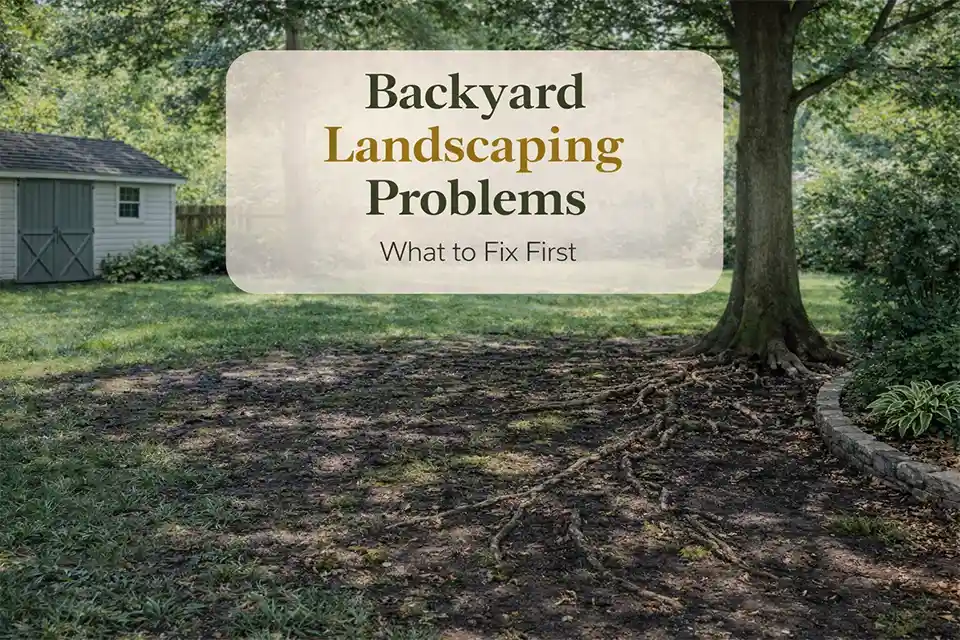
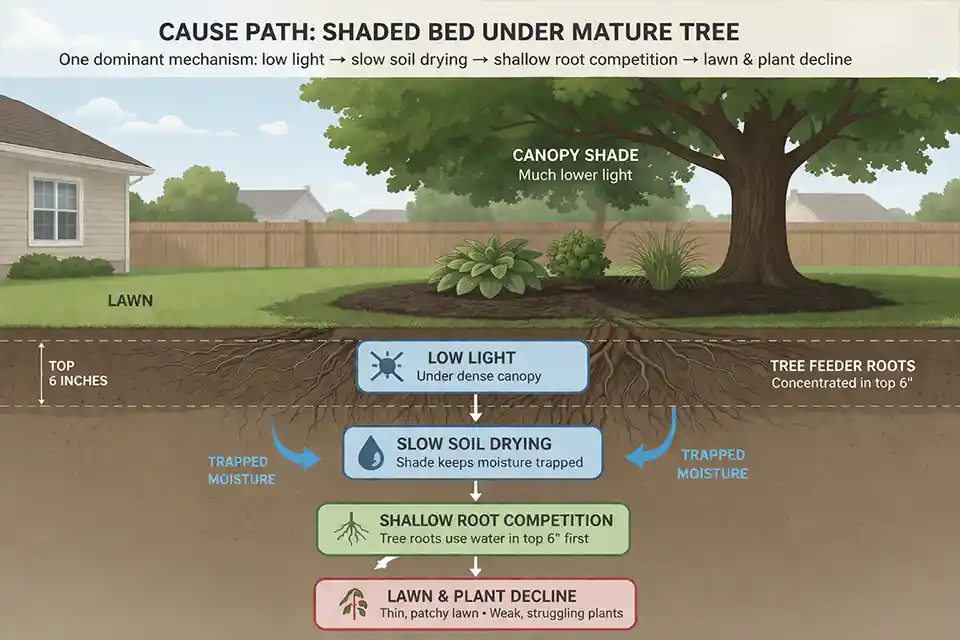
Most backyard shade problems come from one of four conditions, not from a bad plant choice: the area gets under 3 to 4 hours of direct sun, the soil stays wet longer than 24 to 48 hours after rain, tree roots dominate the top 6 to 12 inches of soil, or the space is being pushed to perform like a lawn when it is not a lawn site.
Patchy grass, moss, mildew, weak flowering, and mulch that never seems to dry are symptoms. The real decision is whether you are dealing with low light, slow drying, root competition, or the wrong expectation for the site.
Start with three checks before you buy anything. Measure sun after the trees are fully leafed out, not in early spring when light levels look better than they really are. Check whether the top 2 inches of soil are still wet a full day after ordinary rain or irrigation.
Then dig a small test hole 4 to 6 inches deep. If you hit dense feeder roots almost immediately, this is not just a shade problem. It is a shade-plus-root-pressure problem, and that changes what is realistic.
That is why so many shade fixes waste time. Moss is usually a signal, not the root problem. Fertilizer cannot solve low light. And if the site stays wet too long, stronger growth often makes the result worse instead of better.
The Shade Problem You Actually Have
Not all shade deserves the same plan.
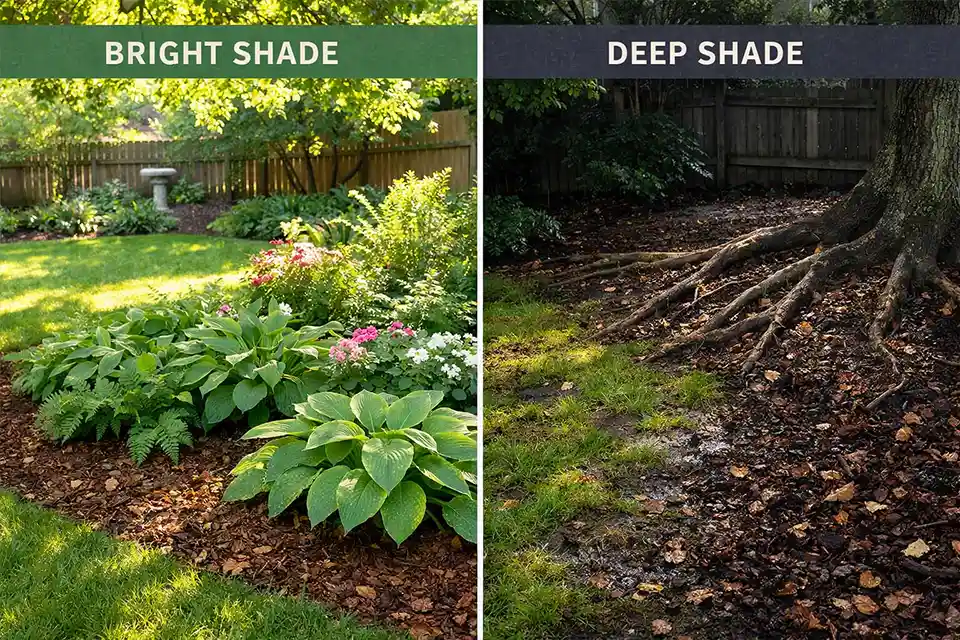
Bright Shade
Bright shade is the easiest version. It usually gets dappled light most of the day or about 4 to 6 hours of morning sun. This is the one category where selective planting still makes sense, and even a thinner, lower-vigor lawn can sometimes hold. If a shaded backyard still dries within about 24 hours and the root zone is not crowded, keep the area planted and refine the mix rather than redesigning it.
Dry Shade Under Trees
Dry shade under trees is harsher than it looks. The surface may dry in 12 to 24 hours, but shallow roots still take most of the moisture and nutrients first. This is where dense, lush planting keeps failing for the same reason. Stop chasing full coverage. The smarter move is sparse planting, smaller improved pockets, and lower expectations for how much of the ground should stay filled.
Damp Deep Shade
Damp deep shade is the most failure-prone pattern. Think north-side fence runs, enclosed back corners, or heavily shaded areas behind a garage. Soil can stay damp for 24 to 72 hours, mulch breaks down faster, and crowns stay wet too long. In this kind of site, moisture control matters more than plant shopping. Fix drying first, then decide how much planting the space can actually support.
Structure-Made Shade
Structure-made shade gets underestimated. A wall, fence, or outbuilding can block usable light more completely than open tree canopy. These areas often look like they should support a layered planting bed, but they usually perform better with simpler edge planting and less density. If the space feels dark and still even in midsummer, simplify it instead of forcing a full ornamental border.
What People Usually Waste Time Fixing First
The biggest waste is fertilizer. In a bed getting under about 3 hours of direct sun, extra feeding may give you a short flush of soft growth, then more thinning and more disease pressure. It does not solve low light.
The next waste is repeated mulching. Once mulch reaches roughly 3 to 4 inches in a shady, low-airflow bed, it can trap too much surface moisture and bury crowns that already dry slowly. Fresh mulch makes the bed look better for a week or two, but often worsens the conditions that caused the decline.
Then comes the expensive mistake: rebuilding the same planting logic after each failure. If two rounds of plants have declined within 1 to 2 growing seasons, stop treating it like bad luck or poor plant quality. At that point, it is usually a site mismatch.
That same mistake shows up when people remove turf and assume the problem is solved. In shade, debris still builds up, surfaces still stay damp, and maintenance can still get worse instead of easier. Some of those same patterns show up in Backyard Landscaping Without Grass Problems when the surface changes but the conditions underneath do not.
When Lawn Repair Still Makes Sense
This part needs a straight answer.
When It Still Makes Sense
Lawn recovery is still realistic when the area gets about 4 hours or more of filtered or morning sun, drains within roughly 24 hours, and roots are present but not controlling the top 4 to 6 inches. That lawn may never match the sunny parts of the yard, but it can still function. The goal here is not perfect turf. It is a stable, usable surface.
When It Stops Making Sense
Lawn recovery stops making much sense when the area gets under 2 to 3 hours of direct sun, moss keeps returning, surface roots are heavy, and the soil stays damp for 48 hours or more. That combination usually means the site is wrong for lawn-quality expectations. Keep treating it like normal turf and you mostly buy yourself another season of patching.
What Moss Is Actually Telling You
Moss helps separate a cosmetic nuisance from a real mismatch. A little moss at the edge of a shady bed is not automatically a crisis. Moss replacing thinning turf is different. That usually means the site is telling you it wants a different landscape format.
If runoff from hardscape or a higher section of the yard is feeding the area, the problem shifts even further away from turf care and closer to drainage. Shade tends to magnify water problems that sunnier sites partly hide, much like the patterns in Backyard Drainage Problems Homeowners Ignore.
What to Do, in Order
Start with the site, not the plant tag.
Measure Light First
Use midsummer conditions after the canopy is full. If the space gets less than about 3 hours of direct sun, stop planning around lawn-quality results. That one number rules out a lot of wasted effort early.
Check Drying Speed
If the top 2 inches are still wet after 24 to 48 hours, reduce irrigation and look for trapped moisture, compaction, runoff, or a canopy so dense evaporation stays weak. People often overestimate how much plant choice can fix a bed that never dries.
Test the Root Zone
If roots fill the top 6 inches, do not plan a densely planted ornamental bed. Improve only small planting pockets and leave wider spacing instead of trying to amend the whole area. That is usually where repeated replanting starts becoming more expensive than redesign.
Reduce Ambition in the Darkest Core
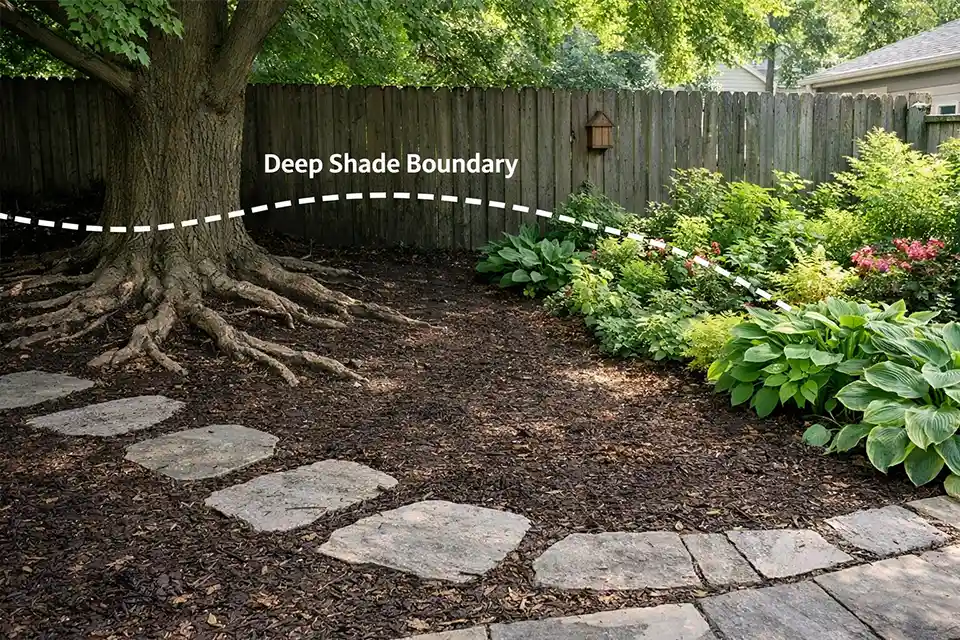
The worst-performing 40 to 80 square feet is usually where people keep overspending. Put the visual emphasis on brighter edges and transitions instead. Shaded backyards rarely fail because the whole yard is impossible. They fail because the darkest center keeps getting treated like the best planting space.
Simplify the Material Palette
Fewer species, wider spacing, and a cleaner layout usually outperform a lush planting that closes up too tightly and stays wet. That same caution applies if gravel looks like the easy way out. In shade, it often becomes a leaf-litter trap faster than expected, which is why Backyard Landscaping Gravel Maintenance Problems often show up early under canopy.
Pro Tip: If a shady area only looks good before nearby trees fully leaf out, judge it by July, not April.
Best Next Move by Condition
| What you see | What it usually means | Best next move | Stop doing this |
|---|---|---|---|
| Thin grass, moss, under 3 hours of sun | Turf mismatch | Stop chasing lawn recovery and convert the area to a simpler shade layout | Re-seeding every season |
| Wet mulch, mildew, soil still damp after 48+ hours | Damp deep shade with poor airflow or drainage | Fix drying first, then replant only if the site starts behaving differently | Adding more mulch |
| Bare soil and repeated decline under mature trees | Dry shade plus root competition | Keep planting sparse, improve only small pockets, and accept partial coverage | Amending the whole root zone heavily |
| Plants stretch, lean, and flower poorly | Light level too low for dense ornamental planting | Move the visual planting to brighter edges and simplify the darker core | Trusting the plant tag alone |
| Repeated plant loss in 2 seasons | Site mismatch, not random failure | Reassign the space instead of refreshing the same bed again | Buying another round of similar plants |
When the Smartest Fix Is Not More Planting
Some shaded backyard areas should stop being treated like failing garden beds and start being treated like low-demand zones with a clear job.
Mulch-and-Stepstone Transition
This works when the darkest section mainly needs to carry foot traffic or connect spaces cleanly. It is often the best answer for ground that is too dark, too root-heavy, or too damp to justify another full planting attempt.
Woodland Edge
A woodland-style edge works when the perimeter gets slightly better light than the center. Instead of forcing the whole area to perform evenly, let the brighter margin carry the planting interest and keep the darkest core quieter.
Planted Perimeter, Simpler Core
This layout works when you still want structure without forcing full-bed performance. It also prevents the common mistake of overspending on the exact square footage that keeps failing. Some of the same layout logic appears in Backyard Layout Problems That Make Outdoor Spaces Hard to Use, especially when the plan keeps fighting the hardest part of the yard.
Small Seating Nook
A shaded corner that is cool, enclosed, and calm may be more useful as a sitting area than as a struggling ornamental bed. This is one of the most underestimated fixes because people keep trying to make the space productive when it would work better as a pause point.
This is not giving up. It is assigning the area a role it can actually perform.
Pro Tip: If the darkest 60 square feet keep failing, do not redesign all 300 square feet the same way. Fix the boundary first, then decide how much of the core still deserves planting.
The Bottom Line
Backyard landscaping problems in shaded areas get cheaper to solve once you stop treating every failure like a plant problem. If the issue is low light, lower the expectation.
If the issue is slow drying, fix that first. If roots own the topsoil, reduce planting intensity. And if the same area has already failed twice, reassign the space instead of replanting it again.
For practical guidance on planting in shady areas, see the University of Maryland Extension.