Last updated: March 6, 2026
You step out of your car and look toward the house. The lawn edge drifts 2 or 3 inches into the walkway. Shrubs stop well below the window line, leaving a tall stretch of exposed siding above them. The driveway slopes slightly toward the street, but the planting bed looks flat and undefined. Nothing is damaged. It just doesn’t look finished.
Most curb appeal problems are not caused by the wrong plants. They’re caused by weak structure. When the lawn-to-bed edge is soft, when plant height doesn’t relate to the window sill, and when the walkway isn’t clearly framed, the entire front yard loses visual impact.
The good news is that these are some of the fastest curb appeal upgrades you can make. Small physical adjustments—sometimes as simple as redefining a 3-inch edge or raising plant height by 8 to 10 inches—can visibly sharpen the entire façade in a weekend.
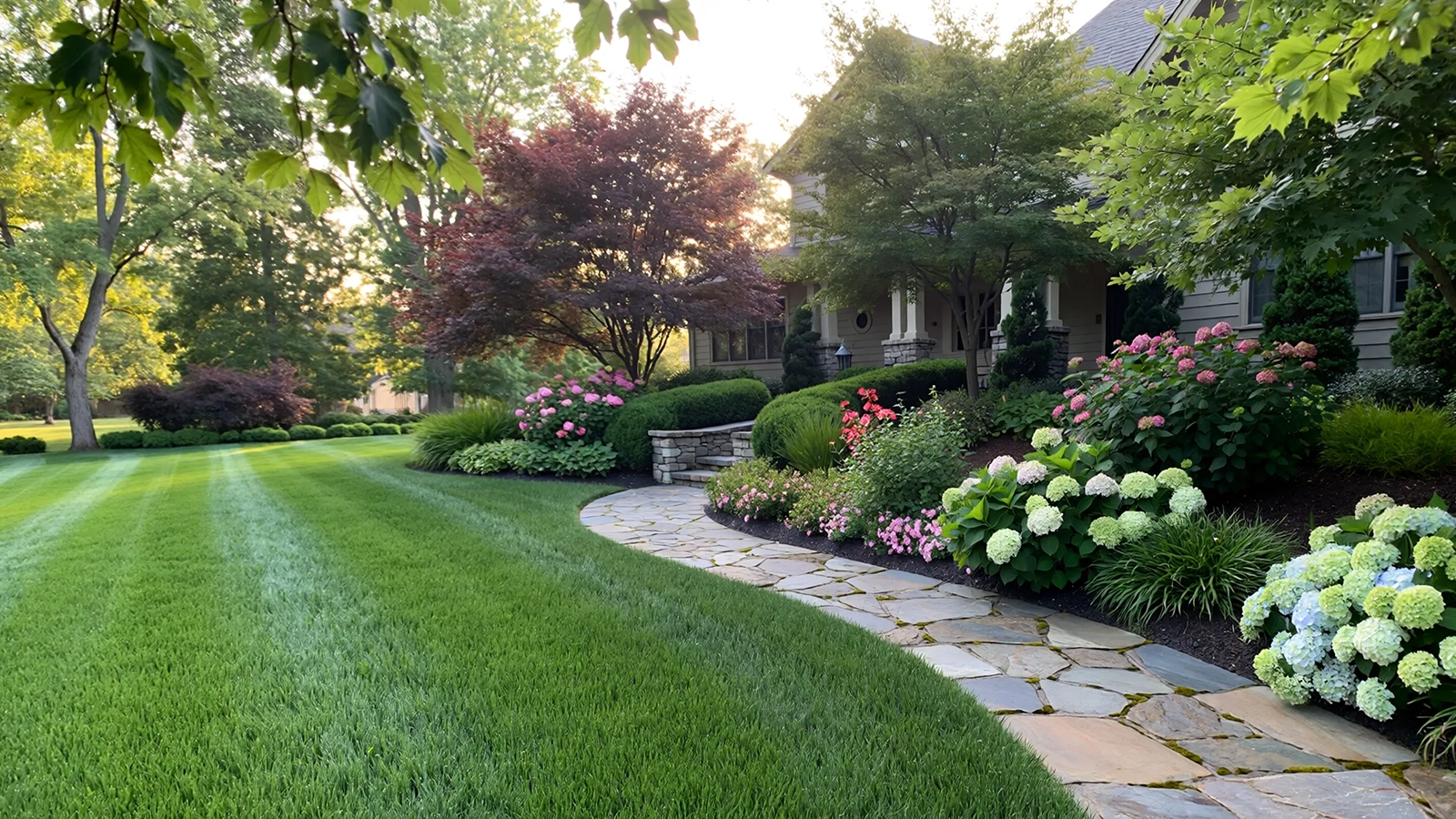
Before: the yard feels flat and slightly messy from the street.
After: the entry looks defined, balanced, and intentional without a full redesign.
That shift doesn’t require new trends or expensive additions. It requires correcting the physical relationships that guide how the eye reads your front yard.
1. Define the Lawn-to-Bed Edge
The fastest visible improvement usually happens at ground level. If the mulch line wobbles or grass creeps 2–3 inches into the planting bed, the yard instantly looks messy.
Cut a clean edge where turf meets soil. Even a consistent 3-inch vertical separation between lawn and bed creates visual control. When the line is sharp, the entire façade feels more intentional.
Before: Grass spills into mulch after every mow.
After: The edge holds its shape, even after heavy rain.
A common belief is that adding more flowers improves curb appeal. It doesn’t—if the edge underneath is weak.
2. Align Plant Height With the Window Line
Stand at the curb and look at the bottom of your windows. If shrubs stop 12–18 inches below a 36-inch sill, the wall above looks tall and empty.
Increase plant height so it visually supports the lower third of the window frame. Even moving from 18 inches to 28 inches in mature height changes proportion immediately.
Before: Siding dominates above short shrubs.
After: Plant mass visually anchors the house.
This isn’t about bigger plants. It’s about correct scale.
3. Widen Shallow Foundation Beds
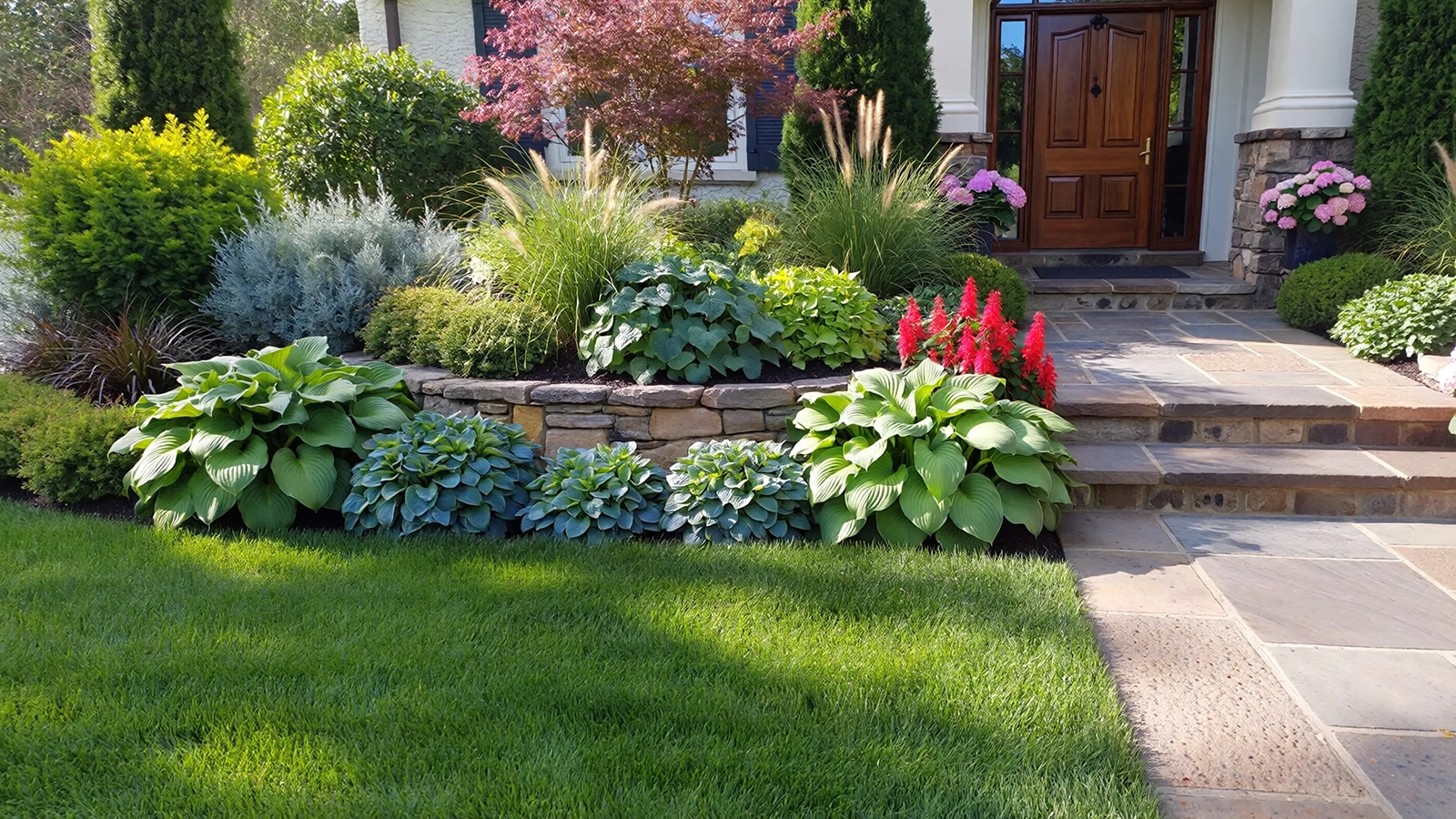
Many homes have planting beds that are only 12 inches deep along the foundation. That forces plants into a tight strip between the siding and driveway edge.
Expanding that bed to 24–30 inches creates breathing room. Shrubs stop looking pressed against the wall. Mulch stays inside the border instead of spilling onto concrete.
This is especially important on tighter properties where driveway proximity compresses planting space. Narrow frontage exaggerates proportion mistakes, a pattern often seen in layouts similar to those described in front yard design problems on narrow lots.
4. Frame the Walkway Clearly
If plants lean 4–6 inches into a 3-foot walkway, guests subconsciously slow down. The path feels uncertain.
Pull back planting lines so the walking surface reads as a full 36-inch corridor. When both edges are clearly defined, movement feels natural.
Before: The path feels squeezed.
After: The entry reads as direct and welcoming.
Fast curb appeal gains don’t require a full redesign. They require visible alignment—clean edges, correct height, balanced bed depth, and a walkway that feels intentional from the street.
5. Redirect Water Before It Repeats the Same Problem
Curb appeal falls apart when water behavior repeats. After a heavy rain, look at the 2–3 foot zone along the foundation. If water sits there for more than a few minutes, the slope is working against you.
Many front yards tilt just slightly toward the house—sometimes less than 1 inch over 4 feet. That small angle is enough to pull runoff toward the siding line instead of away from it.
Adjusting the grade so it drops 1 inch over 4 feet away from the foundation changes everything.
Before: Mulch washes toward the driveway edge after every storm.
After: Water moves outward, and the bed line stays intact.
A common belief is that thicker mulch solves washout. It doesn’t. If gravity is directing water toward the wrong place, adding more material only delays the problem.
When runoff direction changes, repeat erosion weakens and edges begin holding their shape season after season.
6. Balance Visual Weight Across the Front Elevation
Stand at the curb and compare the left and right sides of the house. If shrubs on one side reach 30 inches and the opposite side stops at 16 inches, the house will always look uneven.
The fix is not symmetry for the sake of symmetry. It’s proportional balance.
Raise or reduce plant height so both sides visually relate to the same horizontal window line. Even a 6–8 inch adjustment in mature height can stabilize the entire façade.
Before: One corner feels heavy and crowded.
After: The eye settles at the entry instead of drifting sideways.
When height alignment improves, visual tension fades. The house looks centered and intentional.
7. Expand the Planting Strip Where It Feels Compressed
If the distance between the driveway edge and the foundation wall is under 2 feet, plants are forced into a narrow channel. That compression creates overcrowding within one or two growing seasons.
Expanding the bed from 18 inches to 30 inches allows root spread and proper spacing. Soil stays firmer because plants are not competing for the same narrow strip.
Before: Shrubs press into siding and spill into concrete.
After: Plants sit comfortably within defined boundaries.
Compressed beds often lead to overplanting, which can quietly hurt property value over time. Overcrowded shrubs block windows, trap moisture near siding, and create long-term maintenance problems similar to those discussed in front yard landscaping mistakes that lower home value.
Physical space directly affects visual clarity.
8. Correct the Walkway Corridor
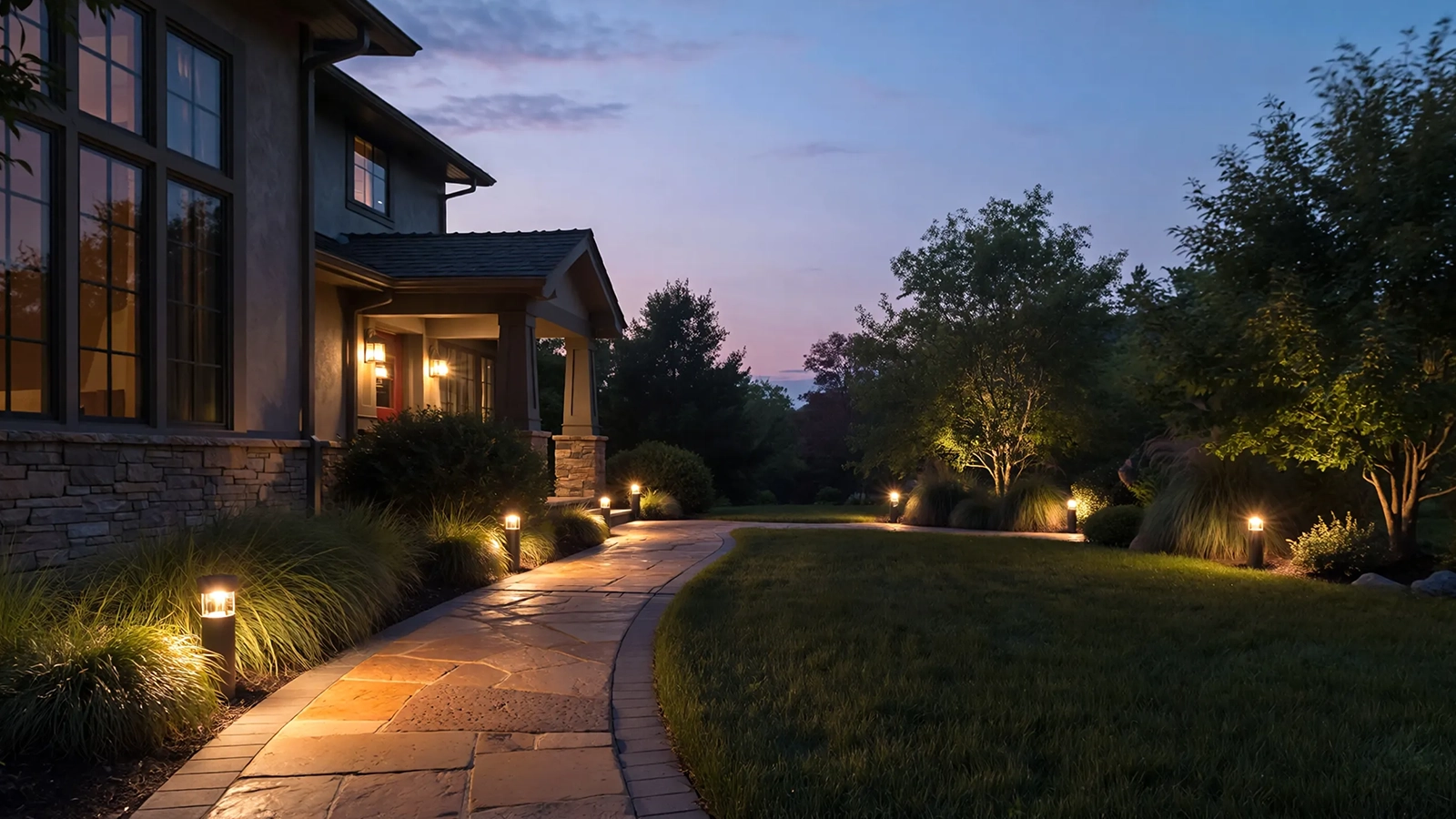
A walkway should visually read as its full width. If plants lean 4 inches into a 36-inch path, the usable space drops below 32 inches. That narrowing is subtle but noticeable.
Pull back planting lines so the walkway edge remains clearly visible from curb to steps. Keep plant mass at least 3 inches away from the concrete border.
Before: Guests step slightly sideways near the entry.
After: Movement feels straight and uninterrupted.
When the corridor is clear, the entry feels confident.
9. Use Layering to Remove the “Flat” Look
Flat planting is one of the biggest curb appeal killers. A single row of shrubs at the same 18-inch height along the foundation reads as unfinished.
Introduce depth by layering:
Low ground cover in front (6–10 inches)
Mid-level shrubs in the center (18–30 inches)
Taller elements near corners (36 inches or more)
When depth increases by even 12 inches between layers, the yard gains dimension.
Before: The front wall looks bare above one thin line of plants.
After: The planting bed reads as intentional and full.
Layering changes how shadows fall across the siding and window line, which strengthens visual contrast without adding clutter.
Each of these adjustments changes physical behavior.
Slope correction redirects water.
Height alignment redistributes visual weight.
Bed expansion reduces compression.
Walkway framing improves movement flow.
Layering adds depth and contrast.
When physical relationships change, the repeated problems—washout, imbalance, crowding, hesitation—begin to fade.
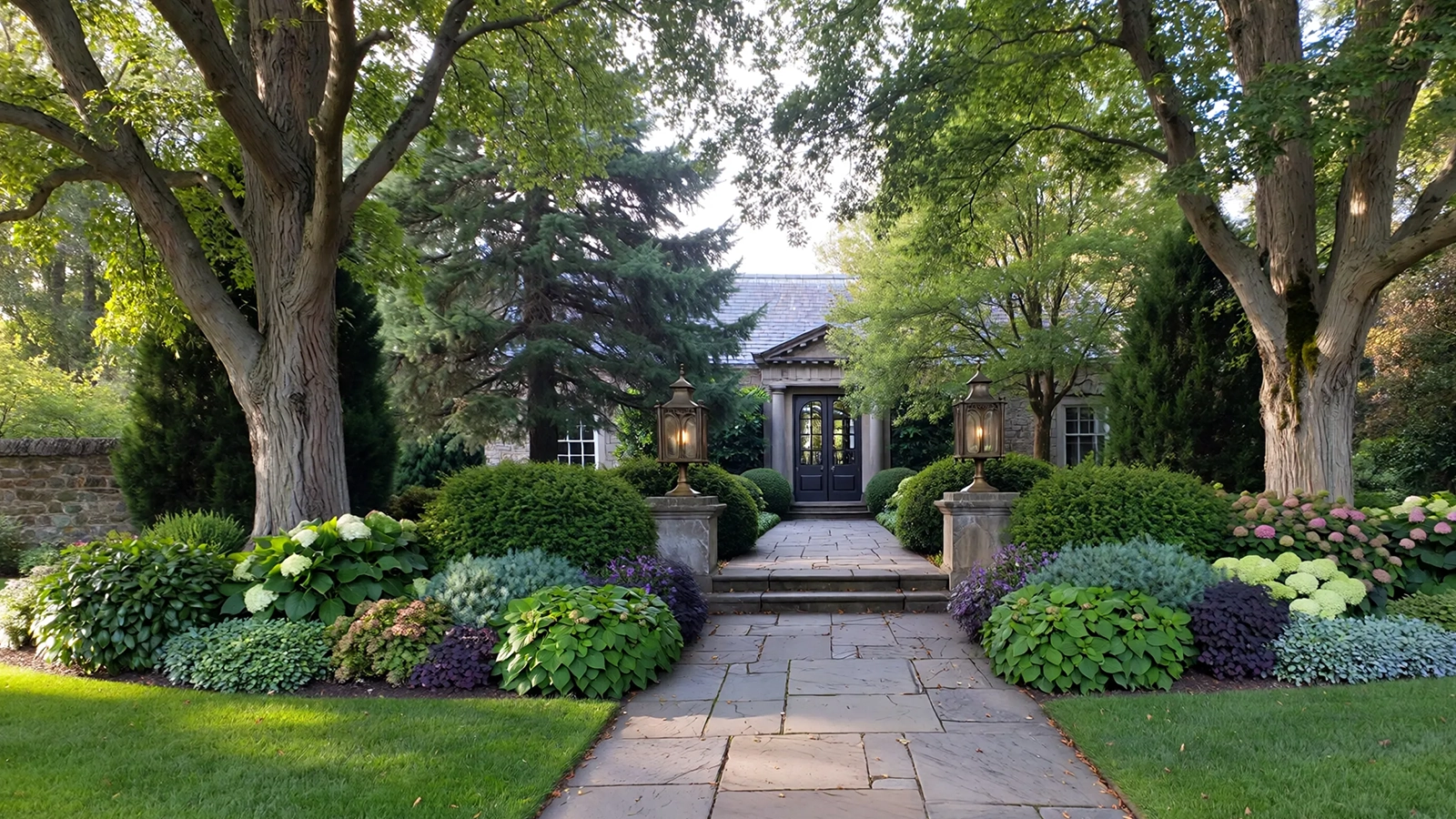
How to Know Your Curb Appeal Is Actually Working
You’ll know your curb appeal is working when the yard holds its shape after real conditions test it. After a steady rain, no water should sit within 2 to 3 feet of the foundation. The driveway edge should not dip more than ½ inch below the adjacent soil line. Mulch should stay inside the bed instead of drifting onto the sidewalk.
Stand at the curb and scan across the window line. Plant height should feel even from left to right. No shrub mass should stop 8–10 inches lower than the opposite side. The walkway should read as a full 36-inch corridor from driveway to front steps, without plants leaning 3–4 inches into the concrete.
Stability is visible in repetition. What used to happen every storm should stop happening entirely.
What Should Stop Happening
The same puddle should not form in the same 2-foot corner after every rainfall. The same narrow strip along the driveway edge should not wash out twice in one season. Soil within 3 feet of the siding should feel firm when pressed lightly with your foot.
A common belief is, “If it looks good today, it’s fixed.” That’s unreliable. One dry afternoon proves nothing if the slope still tilts slightly toward the house. Stability shows up over multiple rain cycles.
If water once collected near the driveway edge
→ soil softened over 6–12 months
→ the grade shifted slightly
→ the low spot widened
That pattern should completely disappear. When alignment is correct, runoff consistently moves away from the siding line and no erosion mark reappears.
But ground stability is only one layer. The approach to the entry should also feel intentional from curb to door. When slope, edge control, and plant height are aligned, the entire entrance sequence becomes clearer and more welcoming, which connects to broader layout principles outlined in front yard design planning a welcoming functional and lasting entrance.
When to Monitor vs Adjust
Monitoring stage:
A small irregularity appears, but no pooling returns after two storms. Bed edges remain clean and plant height stays aligned with the lower window frame.
Adjustment stage:
The same 2–3 foot zone shows repeat runoff, or mulch begins migrating toward concrete again.
Structural intervention stage:
The affected area expands beyond 3 feet, the driveway edge visibly drops, or vertical balance across the window line shifts within a single growing season.
Driveway edge remains level within ½ inch.
Runoff consistently moves away from the foundation.
No repeat pooling after two storms.
Soil within 3 feet of the siding stays firm.
Mulch remains inside defined bed lines.
Plant height stays visually balanced across the window line.
Walkway width remains clear and unobstructed.
No recurring erosion near the driveway corner.
For research-based guidance on plant selection, soil preparation, and long-term landscape care, explore the educational resources provided by the Clemson University Home & Garden Information Center.