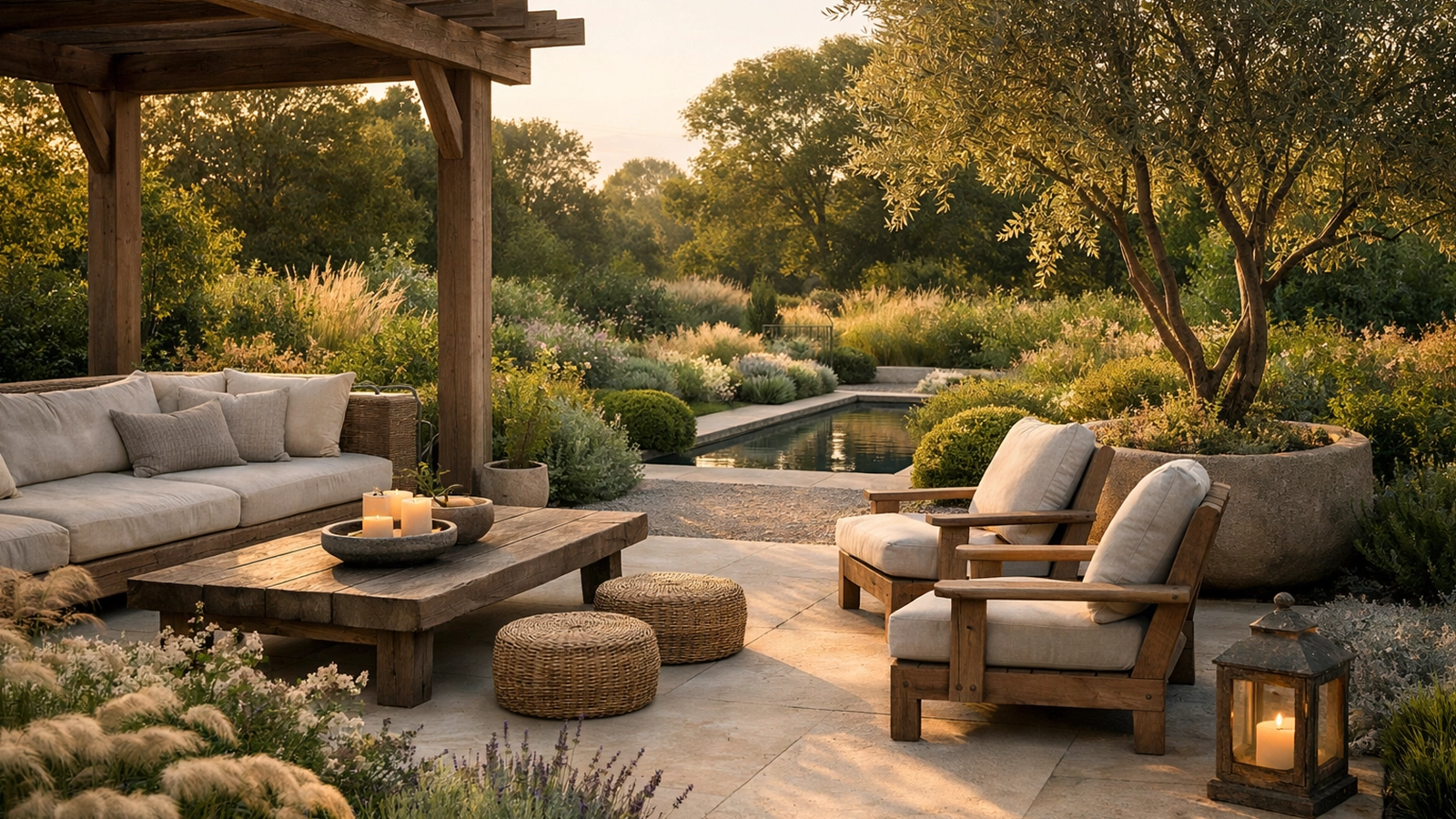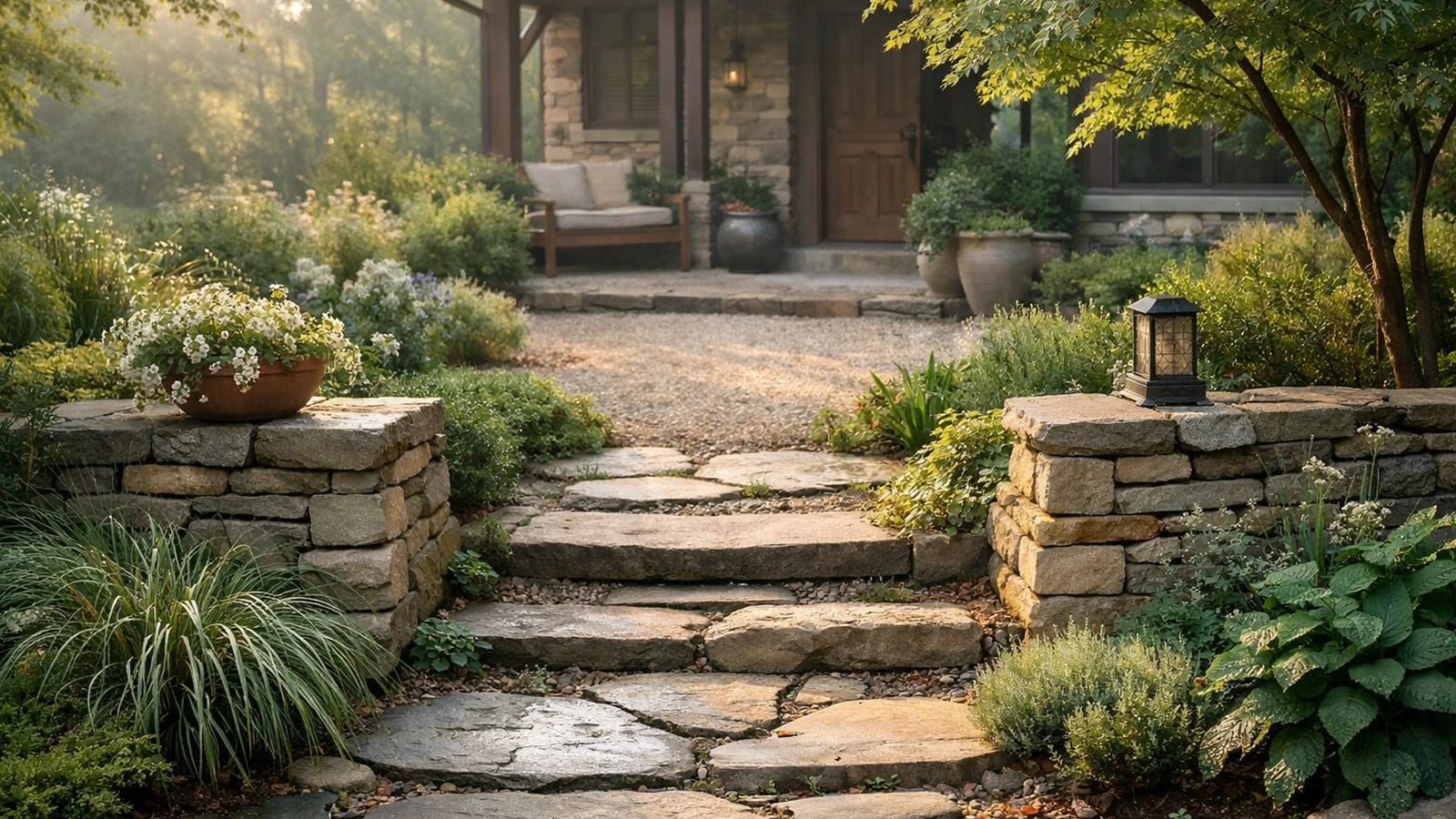
Outdoor spaces are often discussed as if they are secondary—areas that decorate a home rather than shape the experience of living within it. Yet in reality, these spaces are encountered more frequently than many interior rooms. They are crossed at the beginning and end of each day, glimpsed from windows, and absorbed into the subconscious through repetition. Long before they are evaluated visually, they begin to influence how a home feels.
What gives outdoor spaces their enduring significance is not spectacle but alignment. Alignment between space and habit, between form and daily rhythm. When an outdoor environment reflects how people actually move through their lives—how they arrive, hesitate, slow down, or leave—it becomes supportive rather than performative. It does not demand attention. It earns trust through consistency.
At this level, outdoor design is not about style or expression. It is about structure in the deepest sense: an invisible framework that holds experience together. This structure governs whether a space feels calm or unsettled, welcoming or indifferent. These qualities are not the result of individual features. They emerge from relationships—between openness and shelter, between softness and solidity, between movement and rest.
One of the most underestimated forces shaping outdoor environments is repetition. Unlike spaces visited occasionally, outdoor areas are returned to again and again, often without conscious awareness. This repetition magnifies whatever is present. A space that feels slightly exposed will feel increasingly so over time. A space that feels intuitive will grow more comforting with each return. Outdoor design leaves traces, and daily use deepens them.
Time is inseparable from this process. Outdoor spaces exist in constant dialogue with change. Light shifts across surfaces throughout the day. Seasons alter color, density, and sound. Materials weather. Plants grow, thin, and renew. Designs that attempt to resist these changes often feel tense, as though they are perpetually falling out of sync. Designs that accept time as a collaborator gain depth rather than losing clarity.
This acceptance shapes how outdoor spaces are composed. Environments that age well rarely rely on precision or perfection. Instead, they are built on tolerance—materials that soften with wear, layouts that absorb growth or loss, and spatial relationships that remain legible as elements evolve. Longevity here is not simply about durability; it is about allowing change without erasing intention.
Outdoor spaces also serve as thresholds, and this role carries emotional weight. Front-facing environments mediate between private life and the public world. They introduce a home without fully revealing it. They create a moment of adjustment between movement and arrival. More secluded outdoor areas negotiate a different balance, offering retreat without isolation. These transitions shape how protected or exposed a space feels.
Thresholds are rarely defined by single boundaries. Walls and fences matter, but the most effective transitions are subtle. A shift in planting density, a change in surface underfoot, or the orientation of a path can quietly signal movement from one condition to another. These elements create gradation rather than division, allowing people to choose how they inhabit the space in different moments.
Coherence is what allows these choices to feel effortless. When an outdoor space is coherent, it does not need to be interpreted. Materials feel related. Proportions feel intentional. Boundaries are readable without being rigid. Coherence does not demand minimalism, nor does it require simplicity. It requires that decisions reinforce one another instead of competing for attention. When coherence is present, a space feels settled, even if it is modest or evolving.
Restraint is essential to achieving this quality. Outdoor environments need room to breathe. Open ground, uncluttered edges, and moments of visual quiet allow natural elements—light, air, shadow, and sound—to participate in the experience. Overdesigned spaces often suppress these qualities by attempting to control every surface and view. In doing so, they diminish the restorative potential that outdoor spaces naturally hold.
There is also a psychological dimension to outdoor environments that is rarely articulated. These spaces influence mood in subtle but cumulative ways. A balanced outdoor approach can soften the transition from the outside world to the interior of a home. A calm threshold can make arrivals feel less abrupt and departures less hurried. Over time, these small effects shape how a home is experienced emotionally.
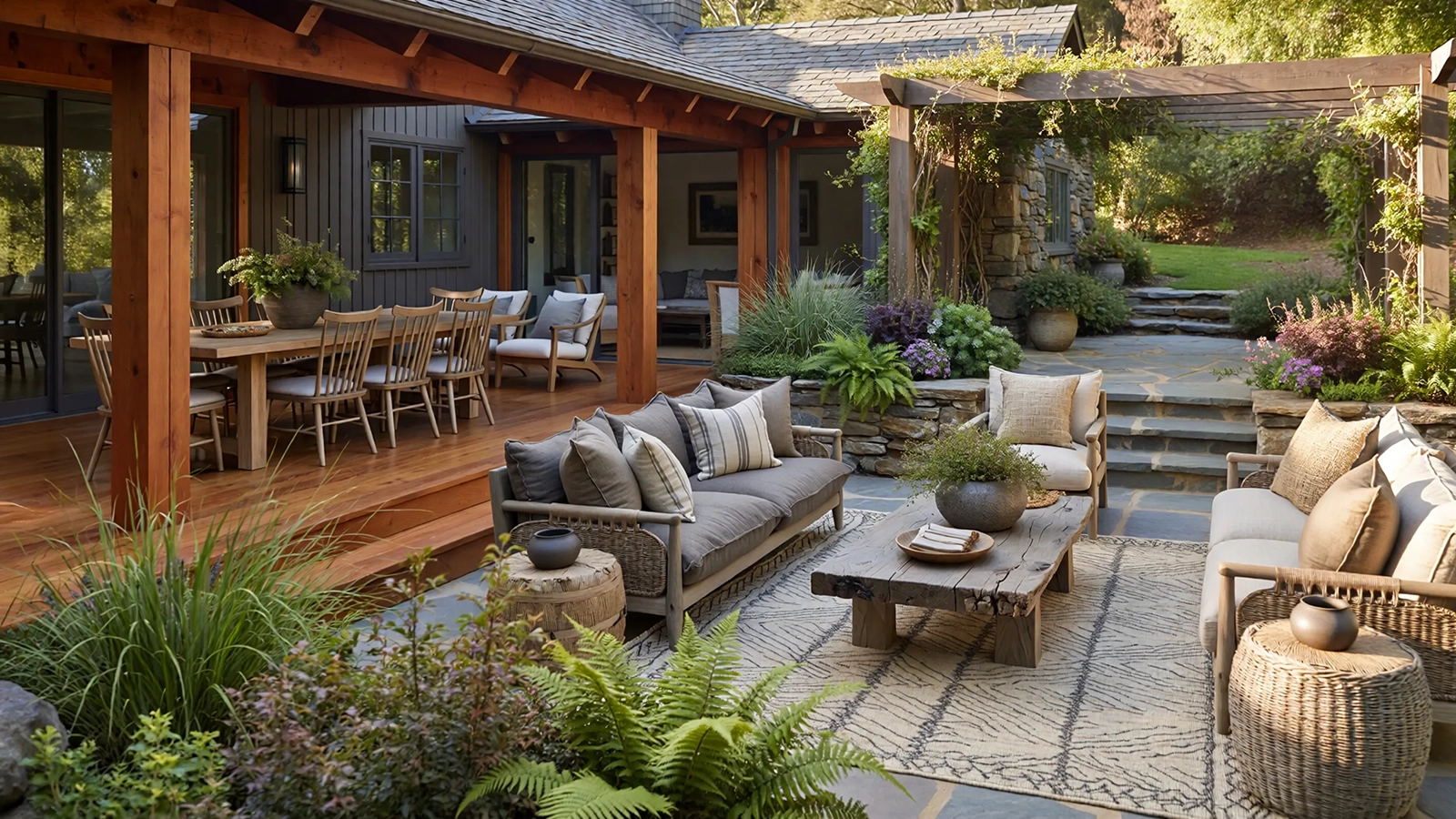
Importantly, none of these qualities depend on size, budget, or complexity. They depend on attention. Attention to how space is used rather than how it is displayed. Attention to relationships rather than isolated features. Attention to the rhythms of everyday life rather than to moments of visual impact. This is why smaller, simpler outdoor spaces often feel more complete than larger, more elaborate ones.
At its deepest level, outdoor design is not about solving problems or showcasing ideas. It is about support. It supports movement and pause, arrival and departure, presence and absence. It allows for imperfection, inconsistency, and change. It accepts days when a space is actively used and days when it quietly recedes into the background.
A truly successful outdoor space does not demand attention. It offers stability. It becomes part of daily life not as a destination, but as a constant—quiet, reliable, and deeply human.
As outdoor spaces become woven into daily routines, their meaning shifts from impression to experience. What matters most is not how a space looks when first encountered, but how it behaves over time. Does it invite use without effort? Does it accommodate changing moods and needs without resistance? The true measure of an outdoor environment emerges gradually, through habit rather than spectacle.
Movement is one of the clearest indicators of whether a space is working. In environments that feel resolved, people move without hesitation. Paths feel natural, transitions feel expected, and destinations reveal themselves without instruction. This ease is not the result of control, but of alignment. When spatial organization mirrors instinctive human behavior, movement becomes fluid. When it does not, even visually pleasing spaces can feel awkward or underused.
Proportion plays a quiet but decisive role in this experience. Outdoor spaces that feel comfortable tend to relate closely to the scale of the body and the pace of everyday life. Distances feel walkable rather than expansive. Openings feel welcoming rather than exposed. Places to pause feel appropriately sized, neither isolated nor crowded. These relationships are not governed by fixed measurements, but by sensitivity to context. A narrow garden can feel generous when proportions are coherent, while a large yard can feel unsettled when they are not.
The balance between openness and enclosure is equally influential. Spaces that reveal everything at once often feel exposed, while those that close in too tightly can feel restrictive. The most supportive outdoor environments exist between these extremes. They offer partial views, layered boundaries, and moments of shelter that do not disconnect from the surroundings. This balance allows people to feel present without feeling observed, connected without feeling vulnerable.
Such environments are rarely shaped by single gestures. Instead, they emerge through accumulation. A planting bed that softens an edge. A slight change in elevation that signals transition. A canopy that filters light without blocking it. Individually, these elements may seem modest. Together, they create spaces that feel emotionally secure and physically comfortable. The effect is not dramatic, but it is enduring.
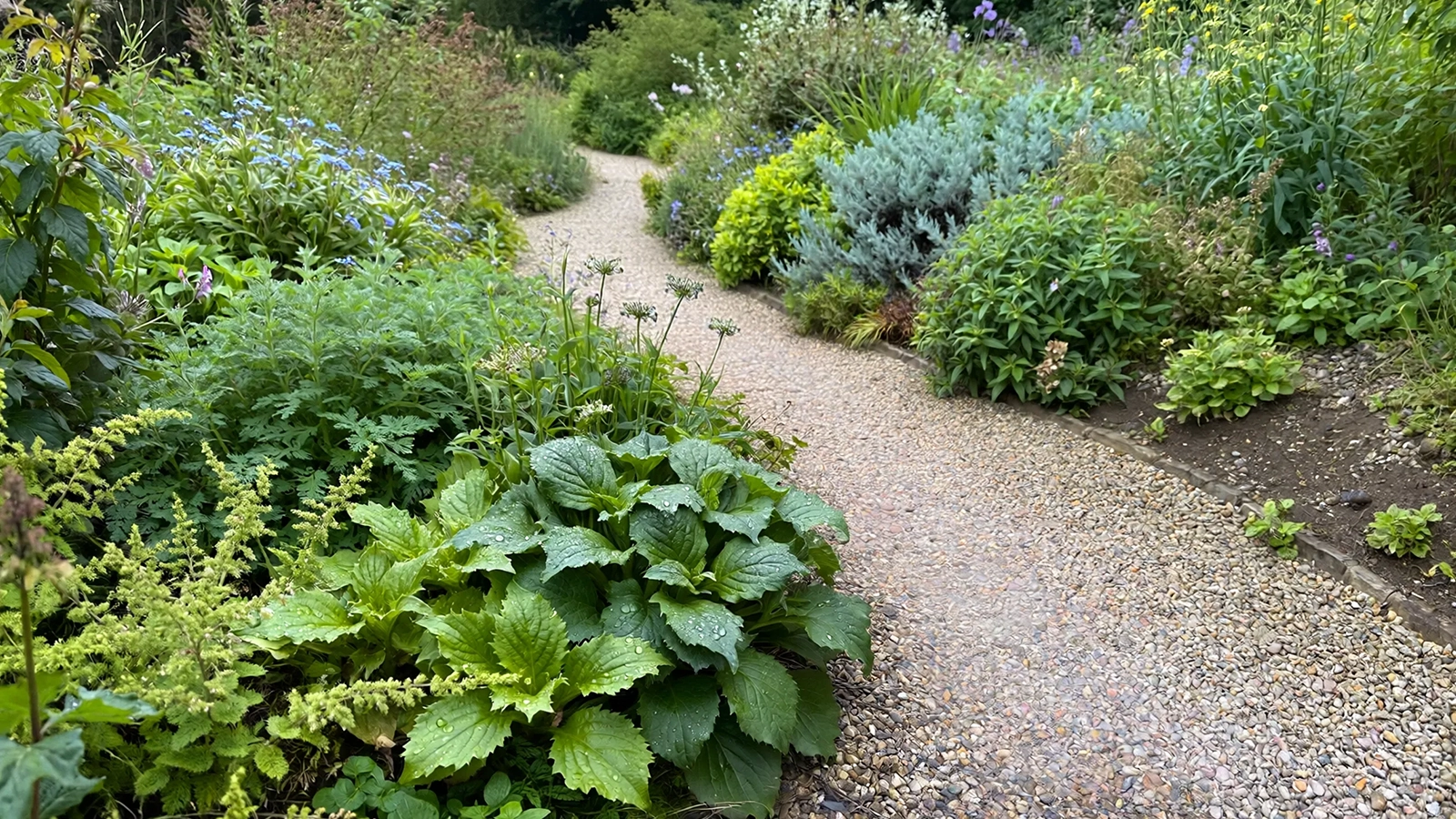
Material relationships quietly reinforce these experiences. Hard surfaces provide clarity, orientation, and durability. Softer elements introduce movement, sound, and seasonal change. When these components are composed thoughtfully, they support one another rather than compete. Stone gains warmth when bordered by planting. Greenery feels intentional when anchored by defined edges. This dialogue between permanence and change gives outdoor spaces depth without excess.
Maintenance, often treated as a practical afterthought, has a profound influence on how a space is perceived over time. Environments that demand constant attention can generate low-level tension, even when admired. Spaces designed with realistic care in mind tend to invite use. They acknowledge that attention fluctuates, seasons shift, and life intervenes. Ease becomes a form of generosity, allowing the space to remain welcoming even when it is not perfectly tended.
This does not require sparseness. It requires forgiveness. Outdoor spaces that age well accommodate fallen leaves, uneven growth, and weathered surfaces without losing their character. They look lived-in rather than neglected. Over time, this acceptance fosters attachment. The space becomes familiar, not fragile—something to return to rather than manage.
Outdoor environments also shape how time is experienced. Some spaces encourage constant activity; others invite stillness. When either dominates, imbalance can occur. Spaces that only support activity may feel restless. Spaces that only support stillness may feel inert. The most enduring outdoor environments allow both to coexist. They support movement without haste and rest without stagnation. A place to pass through and a place to pause exist together, without hierarchy.
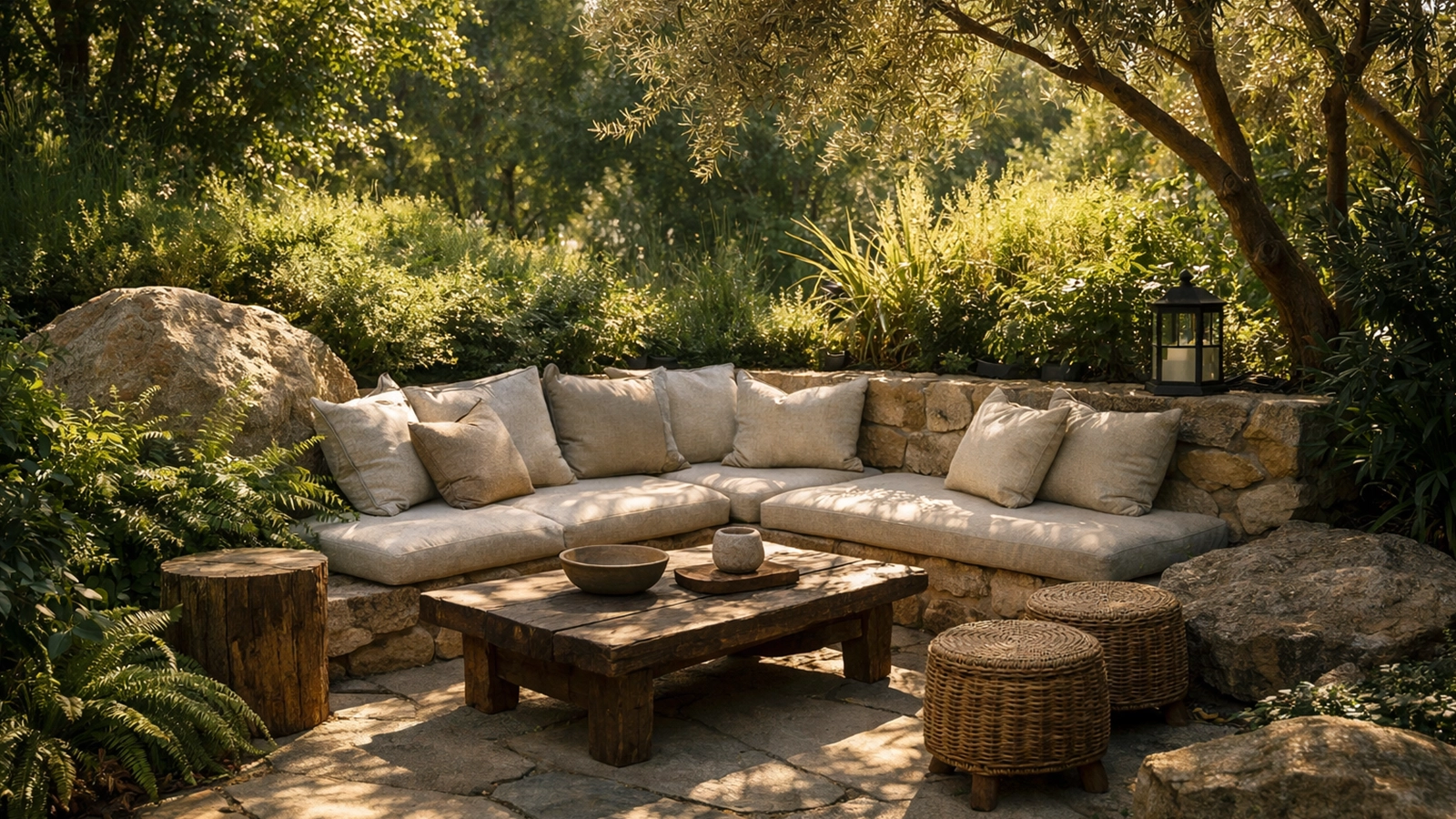
This flexibility is essential in everyday settings, where needs change without notice. A space that can host conversation one evening and solitude the next becomes resilient. It does not dictate behavior or require preparation. It accommodates presence in whatever form it arrives.
Over time, clarity becomes the defining quality of such environments. They are neither overwhelming nor empty. They feel legible. One understands where to move, where to sit, and where to linger without conscious thought. This understanding does not come from decoration or abundance, but from spatial logic aligned with instinct.
As days pass and routines settle, these qualities reveal their importance quietly. People step outside without a specific reason. They linger without planning to. The space becomes part of the rhythm of daily life—not as a destination, but as a constant companion, steady and unobtrusive. In this way, outdoor spaces move beyond design and become lived frameworks, shaping everyday experience through consistency rather than display.
What distinguishes these environments is their role as mediators. They translate the stability of the interior into the variability of the outdoors. When this translation is handled well, the shift feels natural. One does not feel as though they have stepped outside so much as stepped into a different mode of being. When it is handled poorly, the space feels unresolved—either too interior to belong outdoors, or too exposed to feel inhabitable.
Comfort in these spaces is rarely created through enclosure alone. Instead, it emerges through proportion and orientation. The relationship between ground plane, vertical edges, and overhead conditions determines whether a space feels settled or temporary. A terrace can feel expansive without being exposed, intimate without being enclosed, when its boundaries are implied rather than imposed. Subtle containment allows people to relax without feeling confined.
These areas are also deeply sensitive to scale. A space that is too large for its purpose can feel empty, while one that is too tight can feel provisional. Scale here is not about size, but about fit. Furniture, circulation, and negative space must relate to one another in a way that supports use without announcing intention. When this balance is achieved, the space feels ready—neither staged nor unfinished.
Light plays a particularly important role in shaping these experiences. Unlike interior lighting, which is controlled and consistent, outdoor light is dynamic. It shifts throughout the day, casting changing shadows and altering perception. Spaces that work well do not attempt to neutralize this variability. They embrace it. Surfaces are chosen to respond to light rather than resist it, and layouts allow for both brightness and shade to coexist.
Material choice reinforces this relationship with change. Outdoor spaces that age gracefully rarely rely on pristine finishes. They favor materials that gain character through exposure—surfaces that soften, patinate, or subtly transform. This aging process becomes part of the space’s identity rather than a sign of decline. Over time, the space feels more settled, not less.
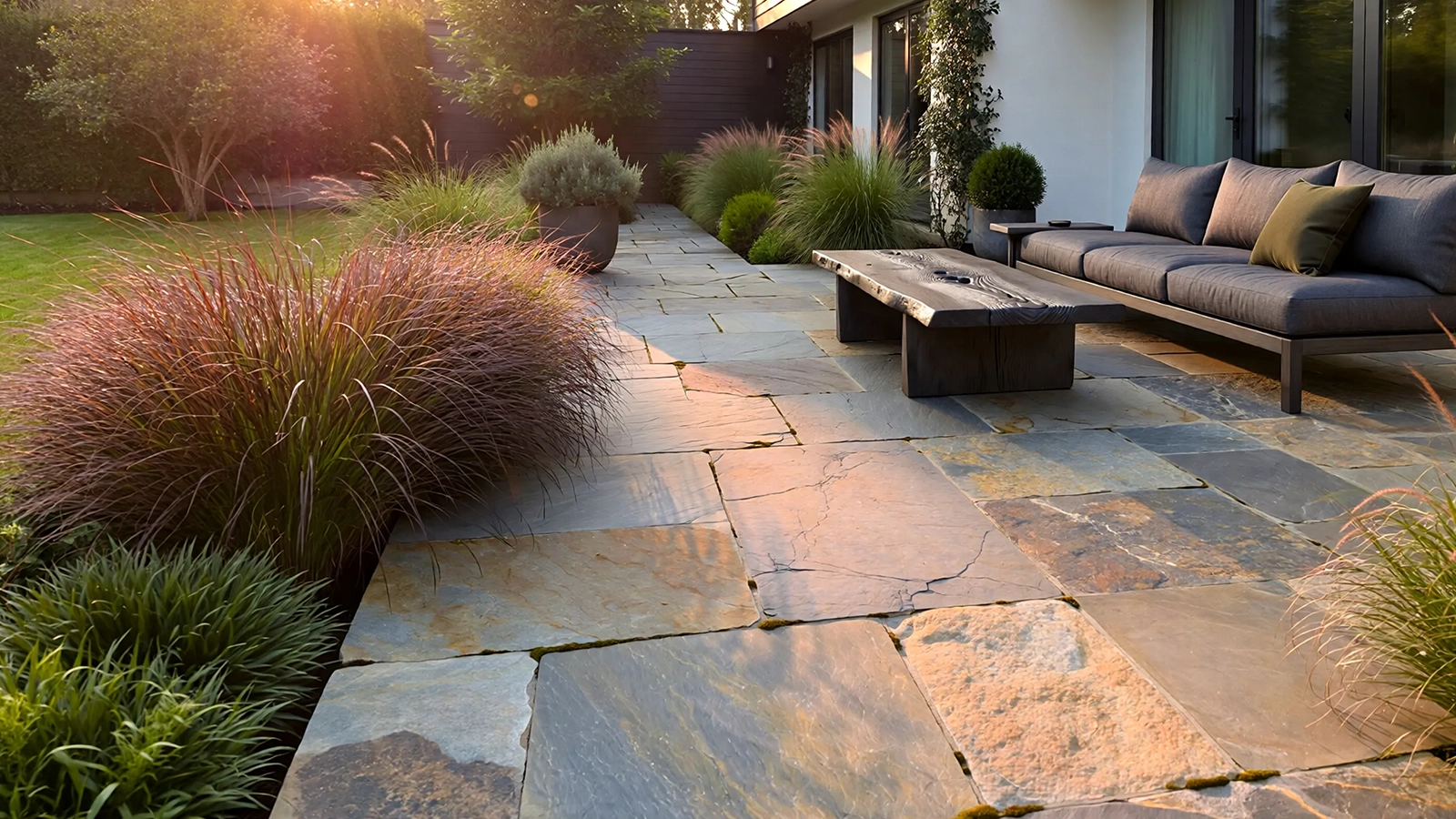
These transitional outdoor areas also shape how people gather. They often become default places for conversation, meals, or quiet presence. Their proximity to the home makes them accessible, while their exposure to the outdoors makes them restorative. When designed with care, they do not need to be programmed. Use emerges naturally. People linger without planning to, stay longer than expected, and return without deliberation.
Restraint is especially important here. Because these spaces sit so close to daily life, excess quickly becomes intrusive. Too many objects, features, or visual gestures can disrupt the sense of ease. Spaces that feel calm tend to rely on fewer, more deliberate choices. Each element has a reason to be there, even if that reason is not immediately visible.
There is also an emotional clarity that arises in well-considered transitional spaces. They do not compete with the interior, nor do they attempt to replace it. Instead, they offer a different pace. A slower one. They provide room for pause without demanding disengagement from the home. In this way, they support continuity rather than escape.
As with all successful outdoor environments, these spaces reveal their quality over time. Their value is not measured by how they photograph, but by how often they are used. When people find themselves stepping outside instinctively—without planning, without occasion—the space has achieved its purpose. It has become part of the daily fabric of life, quietly reinforcing a sense of balance between inside and out.
By bridging shelter and exposure, consistency and change, these spaces demonstrate a central truth of outdoor design: that comfort does not come from control, but from alignment. When alignment is present, outdoor living feels effortless, natural, and enduring.
When outdoor spaces are fully integrated into daily life, they begin to transcend function. They are no longer experienced as designed environments, but as familiar ground—places where presence feels natural and unforced. At this stage, the value of outdoor space is not expressed through use alone, but through meaning. The space becomes a quiet reference point, shaping how people relate to their surroundings and to time itself.
What defines these environments is not refinement in a visual sense, but intention in a human one. Every element feels considered, yet nothing feels imposed. There is a sense that the space knows how to behave, and that those within it are free to do the same. This balance between guidance and freedom is what allows outdoor spaces to feel elevated without feeling formal, calm without feeling empty.
In such spaces, simplicity is not an aesthetic choice but a structural one. Simplicity allows relationships to surface—between materials, between open and enclosed areas, between moments of activity and rest. It creates room for subtlety. Light becomes more noticeable. Sound carries differently. Seasonal shifts feel more present. The space does not distract from these experiences; it frames them.
This framing is what separates thoughtful outdoor environments from decorative ones. Decorative spaces rely on accumulation to create interest. Thoughtful spaces rely on clarity. They do not attempt to fill every moment or surface. Instead, they allow for intervals—moments where nothing is happening except being there. These intervals are not empty; they are restorative.
Over time, such spaces develop a quiet authority. They do not need to be updated frequently, nor do they depend on novelty to remain engaging. Their relevance comes from how well they continue to support everyday life. As routines change, as seasons repeat, as people age and circumstances shift, the space remains adaptable. It does not resist change; it absorbs it.
This adaptability is often mistaken for neutrality, but it is something deeper. It is the result of design choices that prioritize balance over statement. Materials are chosen for how they age, not how they impress. Forms are chosen for how they relate, not how they stand out. The result is a space that feels settled rather than finished.
Outdoor environments that reach this level often feel personal without being expressive. They reflect the lives lived within them, not the tastes imposed upon them. Over time, traces of use accumulate—worn paths, favored seats, familiar views. These traces do not diminish the space; they complete it. The environment becomes a record of lived experience rather than a static composition.
There is also a particular kind of calm that emerges here, distinct from stillness or quiet. It is a calm rooted in trust. Trust that the space will support without demanding, adapt without collapsing, and remain present without needing attention. This trust encourages return. People step outside not to achieve something, but simply because it feels right to do so.
In this way, outdoor spaces fulfill their deepest role. They become companions rather than projects. They do not ask to be evaluated or improved constantly. They exist alongside daily life, offering continuity in a world defined by change. Their success is not visible in any single moment, but in the accumulation of ordinary ones.
Ultimately, the most meaningful outdoor environments are those that fade gently into the background while quietly shaping experience. They do not announce themselves as design. They reveal themselves through use. By supporting everyday moments with clarity, balance, and restraint, they become places where life unfolds naturally—unremarkable in the best possible way.