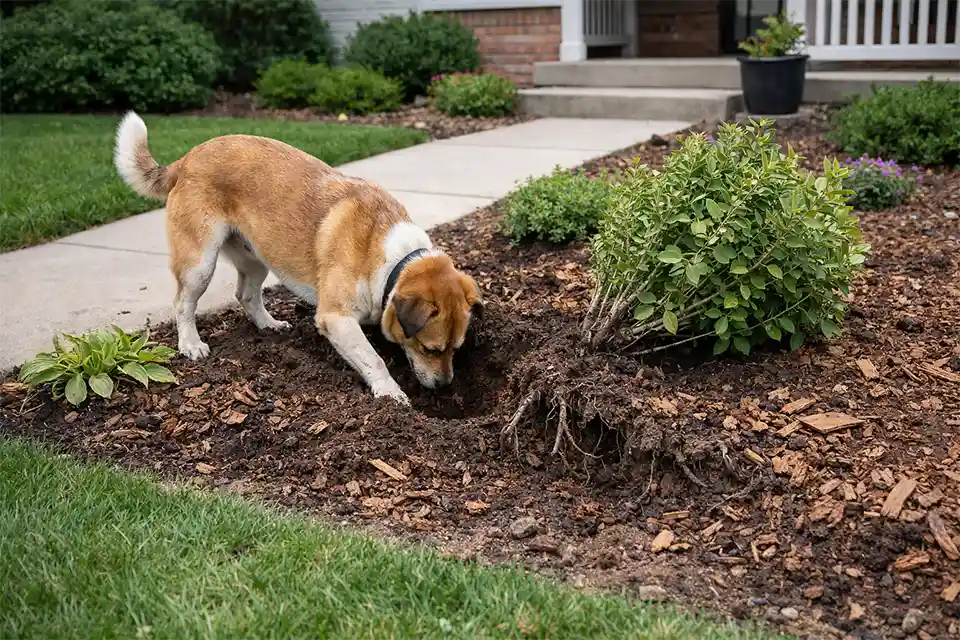
If dogs keep digging in the front yard, the first job is not finding the prettiest pet-safe plant. It is filtering out toxic choices, keeping fragile roots out of the main dig line, and making the bed less rewarding to disturb.
In most yards, damage starts in the first 12 to 18 inches from the lawn edge, where mulch is loose, soil stays cooler, irrigation softens the surface, or the dog already has a repeated approach path.
Three checks usually tell you what kind of problem you have. First, measure the hole depth. Scratching under 2 inches is mostly cosmetic; repeated holes 4 to 8 inches deep can destabilize new plants fast.
Second, watch where the digging repeats. One random hole is not the same as a trench that keeps reopening in the same 1- to 2-foot strip. Third, notice timing. Damage that spikes during the first 7 to 14 days after planting points to fresh soil and scent disturbance.
Damage that continues for months usually means the bed layout is too easy to dig.
That distinction matters because many homeowners overestimate plant toughness and underestimate bed design. A tougher plant often fails for the same reason the softer one did: the dog can still reach the root zone, loosen the soil, and reopen the same spot.
What actually holds up best in a front yard where dogs dig
Choose plant structure before bloom
In this situation, bloom is not the first filter. Structure is. Plants that usually last longer have dense root systems, woody bases, or enough mass to stay stable when the surface gets disturbed.
That usually means:
- dense ornamental grasses
- low groundcovers that knit the soil surface
- mounding shrubs with woody crowns
- larger, more established plants rather than tiny starter sizes
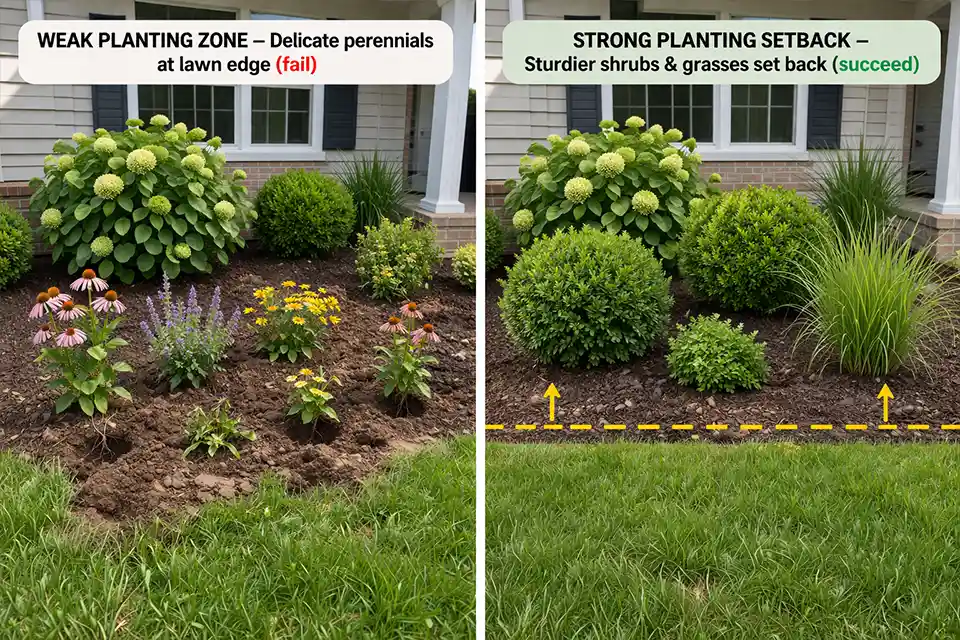
What often fails first are 1-gallon perennials with soft crowns, bulbs planted near the surface, and anything newly divided and set right at the bed edge. A plant can look full above ground while still having only 8 to 10 inches of rooted width below. In a digging-prone zone, that is often not enough.
A practical threshold helps here: if the plant goes into a high-risk edge zone with less than about 10 inches of real root spread, it is much easier to loosen in one session than a denser shrub or grass.
That does not mean every plant needs to be large, but it does mean tiny transplants are the wrong economy in the wrong spot.
What usually fails first
The fastest failures tend to share one trait: exposed vulnerability at grade. Soft crowns, open mulch around the base, and shallow root systems invite repeat damage. Replanting the same delicate perennial in the same loosened pocket rarely changes the outcome.
That is similar to what happens in other constrained planting situations. In front yard plants with tree roots and little soil, the visible decline starts at the plant, but the real limit is the planting zone itself.
How to choose the right plant type
Filter 1 — Is it safe for dogs?
This should come first, not last. If a dog is likely to nose, chew, or dig in the bed, widely used toxic ornamentals do not belong in easy-access zones. Especially risky choices include azalea, daffodil, iris, and sago palm.
For more accessible front-yard planting, it is usually smarter to build around known non-toxic options and then judge them for durability. Safer starting points can include thyme, snapdragon, camellia, coral bells, coreopsis, and crape myrtle, depending on climate and exposure.
Filter 2 — Can the root zone take disturbance?
After safety, ask a harder question: can the plant tolerate repeated surface disturbance and still stay anchored?
The better bets are usually fibrous-rooted grasses, woody mounds, and groundcovers that bind the top layer. The weaker bets are exposed crowns, soft floppy stems near the base, and shallow-rooted color planted in open mulch pockets.
Dog-safe and dig-tolerant are not the same filter. A plant may be non-toxic and still be a terrible choice for the first row of a digging-prone bed.
Filter 3 — Does it still look right in a front yard?
This point gets missed. The front yard is visible every day from the street, the walkway, and the windows. It needs plants that can absorb some wear without making the whole bed look accidental.
That usually means controlled shapes instead of messy survival planting. Dense repeated forms work better than mixed delicate filler. Mounding shrubs, disciplined drifts of grasses, and lower soil-covering layers usually give a cleaner result than a scattered mix of tender flowering plants.
That logic also overlaps with best low-maintenance front yard plants for people who travel often. A planting scheme that only works with constant correction is not truly low maintenance, even if the plants themselves are hardy.
Filter 4 — Does it fit the actual site?
A dog-resistant layout still fails if the site is wrong for the plant. Narrow beds, reflected heat, compacted soil, tree-root competition, and heavy afternoon sun all reduce recovery after digging.
That is why the same plant can hold up on one side of the yard and burn out on the other. In tougher exposure, site fit matters even more.
Best plants for front walkways next to hot concrete and how to choose front yard plants for blazing afternoon sun reflect the same principle: stressed plants recover slowly from physical disturbance.
A practical way to turn that into plant choices
For the bed edge, lean toward tougher, lower plants that can cover soil and tolerate some disturbance. Pet-safe examples worth considering include thyme, coral bells, and coreopsis where climate and exposure fit.
For the set-back layer, look for denser shrubs or shrub-like forms that hold shape better, such as camellia in suitable climates or crape myrtle where size, sun, and region make sense. For seasonal color, snapdragon can work better behind the edge than directly in the first dig zone.
The point is not to build a long shopping list. It is to choose fewer plants with safer profiles and sturdier placement logic.
What people usually misread first
The dog is not always targeting the plant
In many front yards, the dog is not “choosing” the plant at all. The draw is often loose soil, fresh mulch, trapped scent, or a bed edge that feels different underfoot than the lawn. The plant simply happens to be where the digging lands.
That is why changing the species without changing the bed often wastes time. If the same hole reappears in the same 18-inch strip, the layout is usually the main problem.
Thicker mulch is often the wrong first fix
Many homeowners respond by adding more mulch. That sounds logical, but fluffy fresh mulch can make the bed easier to dig. A mulch layer around 2 to 3 inches is usually enough for a planted bed. More than that can keep the surface too loose or too attractive in the exact place you need stability.
One safety note matters here too: cocoa mulch is a poor choice for homes with dogs because its smell can attract pets, and ingesting enough of it can cause serious symptoms. Fertilizers and compost piles can also create avoidable risk in dog-accessible beds.
Pro Tip: If a bed edge stays soft more than 24 hours after irrigation, stop treating it like a plant-selection issue alone. The surface conditions are actively encouraging the behavior.
How to build a planting layout that survives digging
Keep your fragile plants out of the first dig zone
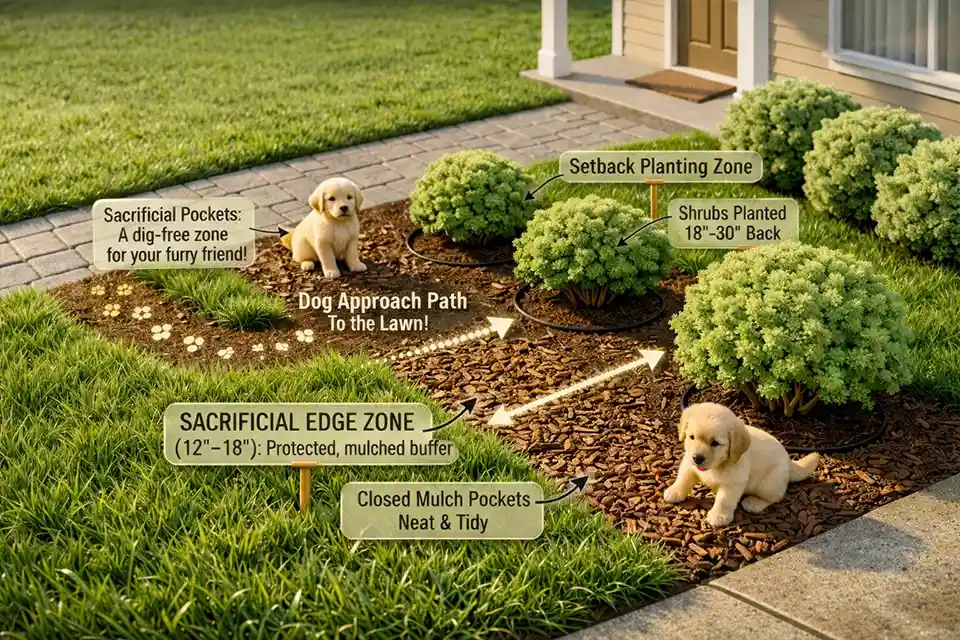
In most front yards, the first 12 to 18 inches at the lawn edge should not carry your most delicate plants. Treat that strip as a tougher transition zone.
Use it for:
- dense groundcovers
- tougher grasses
- low woody structure
- plants that can hide shallow disturbance
Then place your focal plants 18 to 30 inches back, where the dog is less likely to hit the root crown directly.
| Planting role | What usually works | Why it works | What often fails |
|---|---|---|---|
| Bed edge | Dense grasses, tough low groundcovers | Hides shallow digging and holds soil | Tiny soft-crown perennials |
| 18–30 inches back | Woody mounding shrubs | Harder to loosen and more visually stable | Small new transplants |
| Accent layer | Pet-safe flowering plants set back from the edge | Adds color without living in the dig line | Bulbs and exposed crowns |
| Entry points and corners | Shrubs with low border cues or tighter planting | Breaks the digging pattern | Open mulch pockets |
| Repeat failure zone | Convert to a tougher edge composition | Stops the replanting cycle | Repeating the same delicate plant |
Close the open pockets
Open mulch pockets near corners, walkway entries, or lawn transitions often become repeat targets. If the dog already has an approach line, an open pocket acts like an invitation.
This is one place where simple structure helps. A low border, a tighter groundcover band, or a denser shrub rhythm can interrupt the path without making the yard look defensive.
That same idea matters in narrow exposure too. In best plants for narrow strips between sidewalk and street, the physical edge conditions drive plant choice just as much as the plant palette does.
Give digging somewhere else to go
Front yards should not be the easiest outlet
If a dog has a strong digging habit, planting alone will not erase it. The goal is not to win every battle at the bed edge. The goal is to make the front yard less rewarding and redirect the behavior somewhere less costly.
That may mean a side yard, a screened utility strip, or a backyard corner where the dog can be allowed a looser surface. In the front yard, the bed should be firmer, tighter, and more structured.
Redirect instead of replanting forever
If you have replanted the same pocket two or three times in one growing season, stop reading it as a plant failure. That is a layout and behavior signal.
A better move is usually to:
- harden the edge condition
- move the focal plant back
- close the open mulch pocket
- redirect the dog’s digging energy elsewhere
This is also where general pet-space planning matters more than people expect. Small garden planting mistakes for families and pets often come down to the same issue: delicate planting placed where daily behavior keeps winning.
What to plant instead of repeating the same mistake
Replace the failure pattern, not just the plant
When one edge zone keeps failing, do not swap one delicate plant for another and hope for better luck. Change the role of the area.
Instead of:
- small perennial at the lawn edge
- exposed mulch around the base
- a focal plant in the easiest digging zone
Try:
- low soil-binding edge planting
- a denser transition layer
- a mounding shrub farther back
- fewer specimen plants in high-risk spots
The best front yard in this situation is usually not the one with the widest plant mix. It is the one with fewer, sturdier, better-placed plants.
Quick diagnostic checklist
- Holes stay under 2 inches deep and appear randomly: mostly cosmetic disturbance
- Holes repeat in the same 1- to 2-foot strip: the bed layout is likely the bigger issue
- Surface stays soft more than 24 hours after watering: the bed is encouraging digging
- Plants lean within 7 to 14 days of planting: the root zone is too exposed
- You have replanted the same spot 2 to 3 times: stop swapping plants and redesign the edge
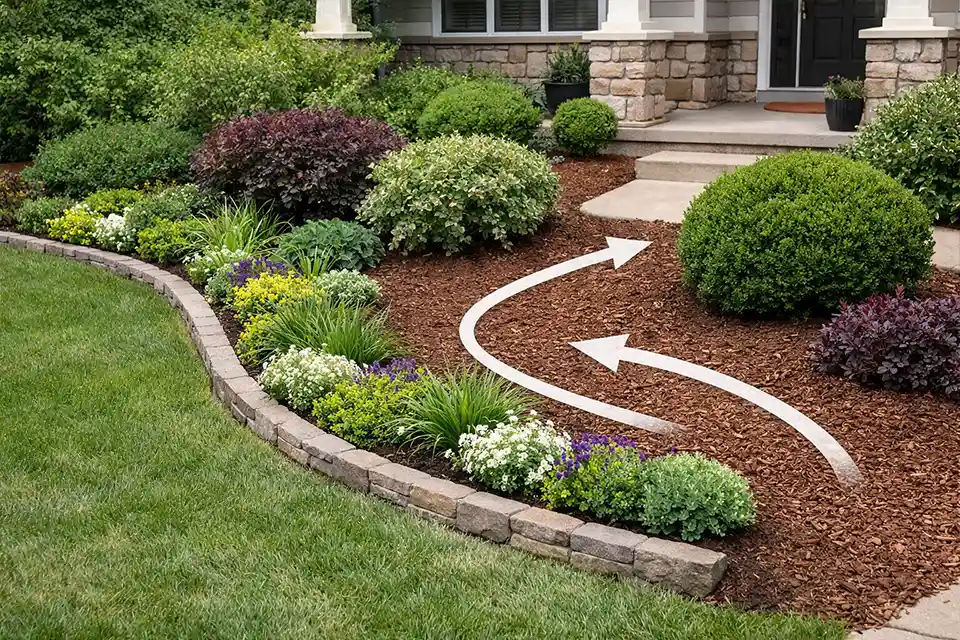
A front yard does not need to be harsh to survive a digging dog, but it does need to be less fragile. Start by removing toxic choices from easy-access zones, then choose sturdier plant forms, keep delicate roots out of the first 12 to 18 inches, and stop treating repeated edge failure like a simple plant swap problem.
In practical terms, that usually means choosing dog-safe plants with denser structure for the edge, reserving your showier plants for the set-back zone, and avoiding bulbs, cocoa mulch, and exposed soft crowns where digging already repeats.
For broader official guidance, see Penn State Extension’s petscaping guide.