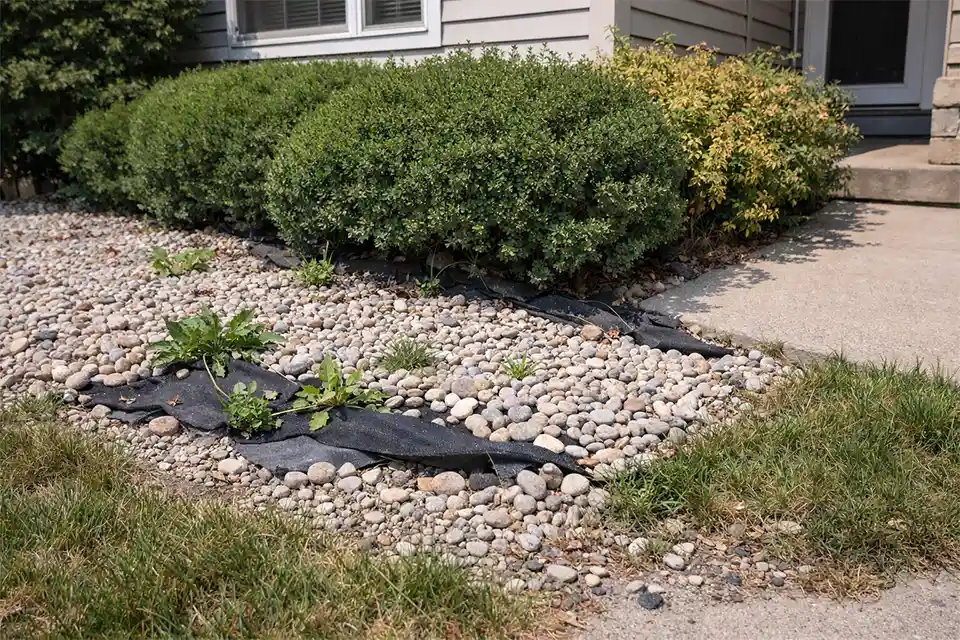
The front-yard ideas that cost the most later are usually the ones that looked like the cheapest win at the start. Decorative gravel over fabric, skimpy mulch, fast-growing shrubs in tight beds, and repeated lawn patching all seem affordable because the install bill stays low. The real cost shows up later in cleanup, re-edging, replanting, and seasonal do-overs.
The first signs are measurable. If water still sits longer than 24 hours after rain, if mulch settles below about 2 inches by midseason, if gravel drifts 6 to 12 inches into the lawn over a season, or if shrubs need trimming more than 2 to 3 times each growing season just to stay off paths and windows, the yard is already telling you the “cheap” choice was a weak fit.
The mistake people make is treating the visible mess as the problem. Usually it is only the symptom. The real issue is movement: water moving downhill, loose material moving out of place, or plants outgrowing the space they were given.
Decorative gravel is often the first cheap idea to backfire
Gravel is not automatically a mistake. In the right place, it can be useful. The problem is that it gets used in planted front beds far more often than it should.
Why it looks affordable at first
Gravel looks permanent. It does not need annual fluffing, it signals low water use, and it appears to be a one-time purchase. That makes it sound cheaper than mulch, especially to homeowners trying to reduce upkeep.
But planted front beds are rarely stable enough for gravel to stay low-maintenance. They collect leaves, dust, seed heads, and organic debris. Once that layer builds up on top, weeds start germinating there anyway. At that point, the bed is no longer a one-time install. It is a hand-cleaning project.
What starts failing first
The first failure is usually not weeds. It is containment. Gravel migrates with mower tires, runoff, foot traffic, pets, and weak edging. Once stones start reaching the turf, every mow becomes part cleanup, part lawn care.
That is the bigger lesson behind front-yard gravel that keeps spreading into the lawn. The visible issue is loose rock. The underlying issue is that the bed edge is too weak or too shallow for the material behind it.
Weed fabric often makes the long-term mess worse. By year two or three, debris builds on top, roots knit through it, and removal becomes harder than simply refreshing an organic bed would have been.
Where gravel still works
Gravel can still be a smart budget material in low-litter areas, narrow utility strips, dry side zones, or spaces with very few plants and a strong hard edge. It usually performs poorly in front beds that need regular editing, seasonal leaf cleanup, or plant replacement.
If you know the bed will need routine hand work, gravel is rarely the cheap option it first appears to be.
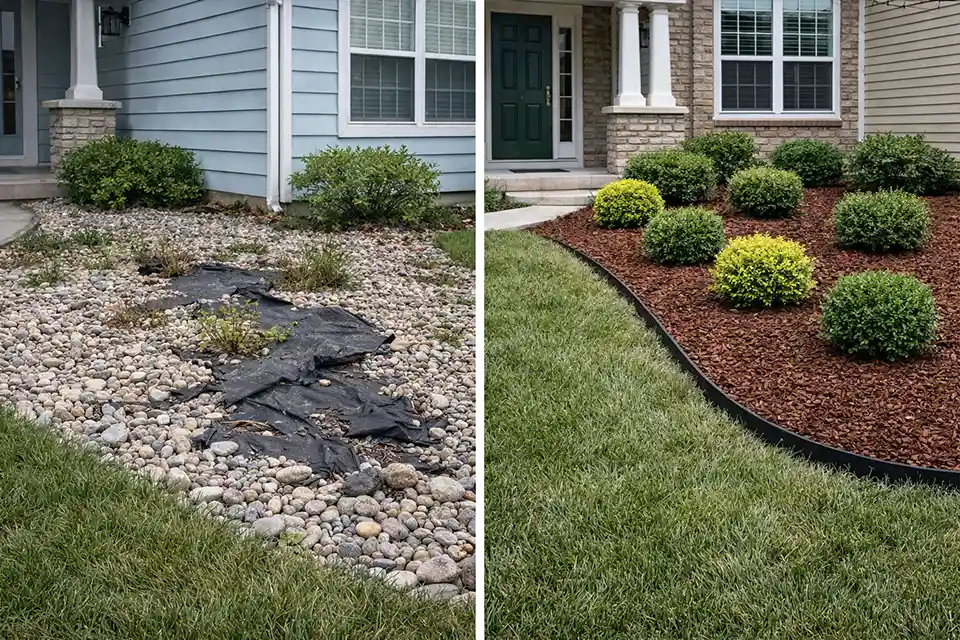
Thin mulch is cheap only on day one
Mulch remains one of the better low-cost front-yard materials. The catch is that it has to be installed deeply enough to function, not just to look finished.
The depth that usually fails
A thin decorative layer may look tidy for a few weeks, then stop doing real work. Once mulch settles below about 2 inches, weed suppression weakens fast and bare soil starts showing through. In most front-yard planting beds, a working layer is closer to 3 to 4 inches after settling.
That difference matters because many cheap installs underfill beds from the start. The quote looks lower, but the homeowner ends up paying for a second round later the same season.
Why washout is usually the real problem
If mulch keeps moving after storms, homeowners often blame the mulch itself. More often, the actual cause is concentrated runoff, poor bed shape, roof splash, or a slope that is pushing water through the bed too aggressively. On sites with roughly a 10% slope or more, light mulch in a splash zone is especially likely to drift or wash thin.
That is why front-yard mulch that washes away every season is usually a drainage and flow-control problem before it is a mulch problem. Replacing the surface without changing the water path is one of the most common time-wasting fixes in front-yard landscaping.
When mulch is still the better bargain
Mulch remains a smart choice where runoff is controlled, shrubs are correctly spaced, and the bed is not acting like a drainage channel. It is usually cheaper over time than gravel because it is easier to refresh, easier to edit around plants, and more forgiving when the bed changes.
Pro Tip: If a bed needs a spring mulch refresh and another visible touch-up before fall, the layout is probably the problem, not the mulch color or brand.
Fast-growing shrubs are often a delayed maintenance bill
This is the front-yard shortcut that fools people fastest because it looks like instant success.
Why they get chosen
Fast-growing shrubs make a new bed look full right away. They can create privacy, shape, and curb appeal with a relatively small nursery purchase. In a front yard that feels empty, that is appealing.
The trouble is that homeowners usually buy for the current size, not the mature size. That is where the long-term cost starts.
The mature-width mismatch
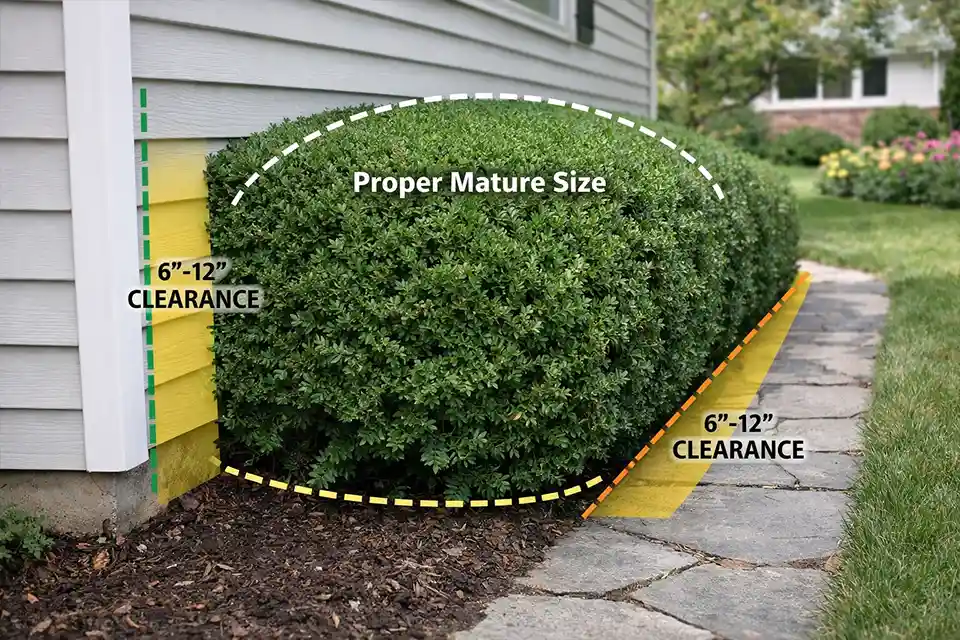
In small front beds, mature width matters far more than container size. A shrub that will reach 4 to 6 feet wide is usually a poor fit for a bed only 3 feet deep. The plant may look manageable at install, but once it reaches the walk, the window line, or the siding, the budget choice turns into a recurring pruning job.
That is why small front-yard plant beds that become high-upkeep and fast-growing front-yard hedges are really the same mistake from two different angles. One gives the plant too little room. The other chooses a plant that fills that room too aggressively.
When replacement is cheaper than pruning
This is the point many homeowners underestimate. They assume pruning is the affordable fix because each trimming feels smaller than replacement. But if a shrub needs trimming more than 2 to 3 times a growing season just to stay in bounds, or if mature growth leaves less than 6 to 12 inches of clearance from the house, windows, or path edge, the plant is not a fit anymore.
At that stage, ongoing shearing is often more expensive over the next few years than simply replacing the shrub with one sized for the bed. Pruning can control appearance. It does not solve a size mismatch.
Repeated lawn patching is usually a soil problem in disguise
This is the cheapest-looking fix that often wastes the most time.
Why reseeding feels harmless
A bag of grass seed is inexpensive enough that repeated patching barely registers as a major spend. Homeowners see a thin or bare area, buy seed and fertilizer, water for a few weeks, and feel like they made a practical low-cost repair.
Sometimes that works. But it only works when the original problem was minor wear, not a bad site.
The warning signs below the surface
If the same area fails again within 6 to 12 months, the grass was probably not the main problem. If water remains on the surface longer than 24 hours after a moderate rain, or the soil stays slick and airless a few inches down, the site is already telling you roots will struggle there.
That is why poor soil that causes patchy grass and weeds is more expensive than it looks. The seed is only the visible expense. The hidden cost is repeated watering, repeat fertilizer, repeat patching, and frustration in the same failed strip.
When to stop forcing turf
The key mistake here is comparing one more patch to the cost of a full reset. The better comparison is one redesign versus several more seasons of repeated small failures. If a front strip stays wet, shaded, or compacted year after year, it often makes more sense to reshape the lawn area, widen the bed, or stop asking turf to thrive in that spot.
That is where many “cheap” lawn fixes stop being cheap at all.
What people misread most often
The visible mess usually gets blamed first. That is not always where the cost is coming from.
| Cheap idea | Why it seems affordable | What fails first | What costs more later | Better long-term choice |
|---|---|---|---|---|
| Gravel over fabric in planted beds | Looks permanent and low-water | Edge failure, rock migration, debris buildup | Constant cleanup and harder future removal | Mulched bed with a real edge and fewer plants |
| Thin mulch | Lower install quote | Weed breakthrough, exposed soil, washout | Seasonal top-offs and storm cleanup | 3 to 4 inch mulch after runoff is corrected |
| Fast-growing shrubs | Instant fullness and quick privacy | Crowding, repeated shearing, blocked paths | Ongoing pruning or earlier replacement | Shrubs sized to mature width with wider spacing |
| Repeated reseeding | Cheap weekend repair | Thin germination and repeat dieback | More seed, more water, more fertilizer | Soil correction or bed redesign first |
| Weak edging | Fast and inexpensive install | Shifting, heaving, spillover | Re-setting and material containment work | Stable edging matched to the bed material |
One thing homeowners overestimate is weeds. Weeds are visible, so they get blamed. One thing they underestimate is geometry. Bed width, slope, runoff direction, and mature plant size usually decide long-term cost more than the day-one material list.
That is also why front-yard edging that keeps shifting matters more than it sounds. Once the boundary starts moving, every loose material behind it becomes harder and more expensive to manage.
The better budget choices are the ones that stay out of rescue mode
A front yard can be inexpensive without becoming a maintenance trap. The better low-cost choices usually have one thing in common: they reduce correction instead of creating it.
What tends to age well
The setups that usually hold up better are the simpler ones:
-
fewer plants, each chosen for mature fit rather than instant fullness
-
beds deep enough that shrubs are not forced against the house
-
mulch used where it can stay in place and actually protect soil
-
gravel limited to low-litter, low-edit areas with strong containment
-
lawn kept only where drainage, light, and soil are good enough to support it
-
edging selected to control the material behind it, not just outline the bed
The cutoff point that matters
A cheap front-yard idea has stopped being cheap when the same correction repeats for 2 straight seasons, when shrubs need frequent trimming just to stay functional, or when top-offs and touch-ups have become part of monthly upkeep.
That is the point where another patch usually wastes time. Replacing the oversized shrub, correcting the runoff path, rebuilding the edge, or reshaping the bed is often the cheaper move from that point forward.
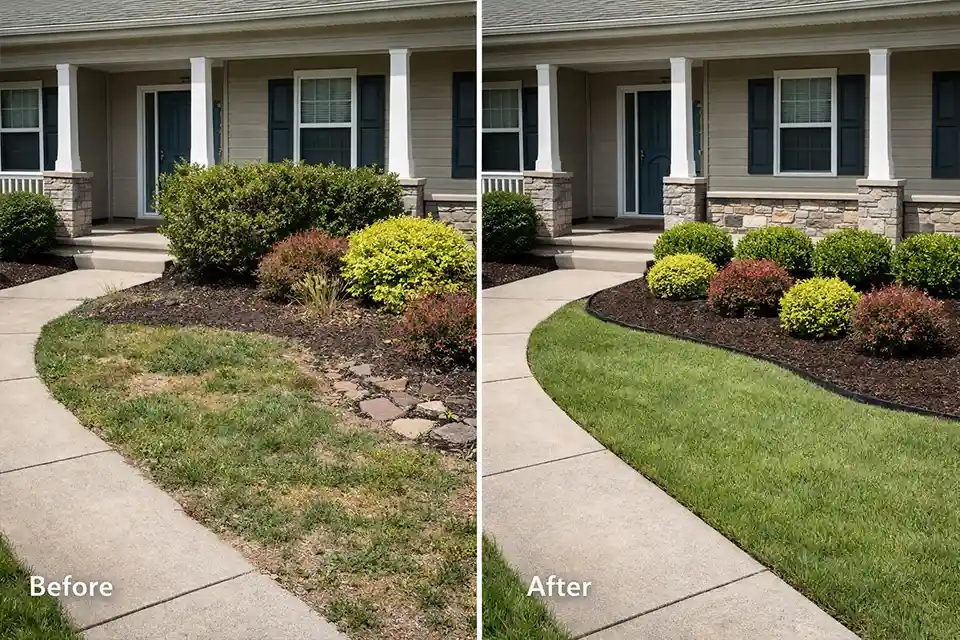
The cheapest front-yard install is not always the cheapest front-yard decision. The better budget choice is the one that still looks controlled in year three without constant refilling, trimming, patching, or cleanup.
For broader official guidance, see NC State Extension’s Plan Before You Plant.