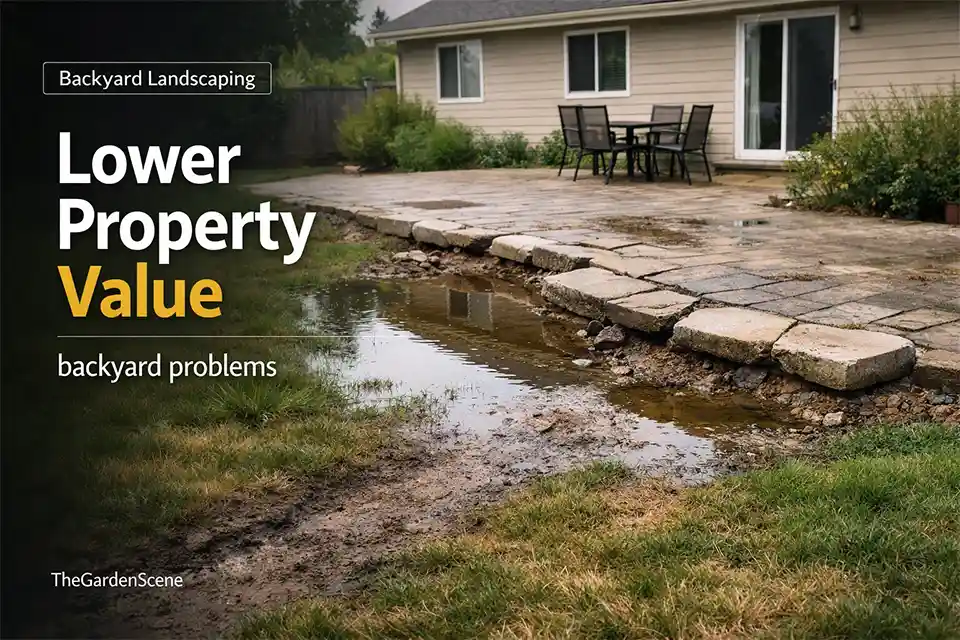
The backyard problems that reduce property value are usually not the most decorative ones. Buyers react harder to signs of repeat cost than to a yard that simply looks plain. If water still sits 24 to 48 hours after ordinary rain, if pavers have dropped more than about 1 inch in a main walking area, or if the same muddy shortcut returns within one growing season, the yard is signaling ongoing expense rather than minor cleanup.
That is the distinction many sellers miss. A basic backyard with simple planting can still support value if it feels dry, stable, and easy to use. What pulls value down is a backyard that looks like the next owner will inherit drainage work, hardscape repair, pruning headaches, or a feature they do not even want. Buyers are not only judging style. They are pricing hassle.
The strongest pre-sale move is usually not adding more. It is removing the clearest signs of recurring trouble and making the yard feel predictable after rain, solid underfoot, and manageable over time.
Backyard Problems Buyers Notice Fastest
Standing water and chronically wet ground
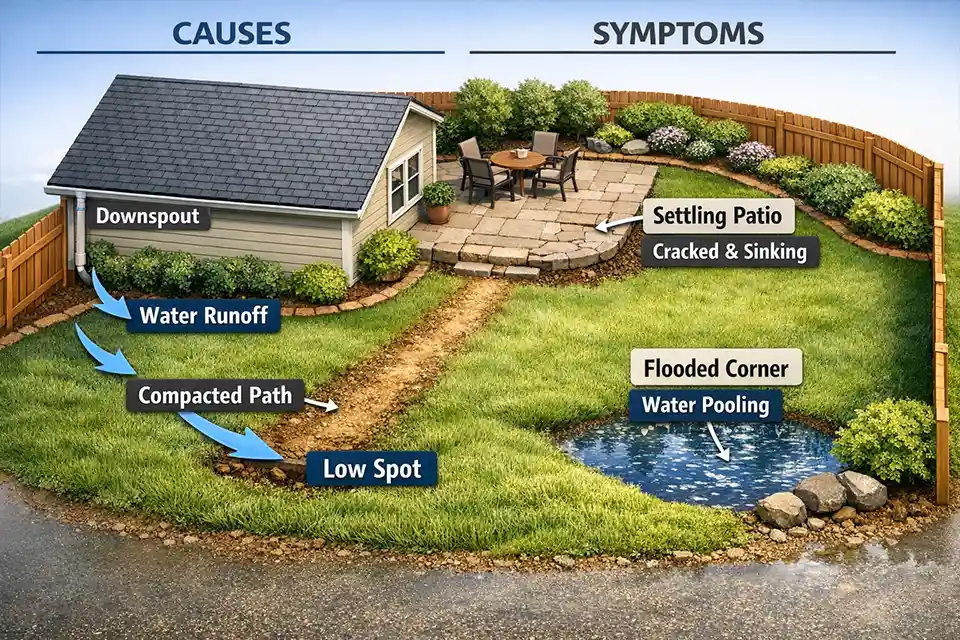
This is the clearest value killer because buyers immediately connect it to other costs. A wet corner suggests bad grading, compacted soil, poor runoff handling, mosquito pressure, fence rot, and slippery hardscape.
A useful threshold is simple: if the soil surface is still tacky and footprints remain visible after 2 days of mild weather, that is not normal moisture retention. It is a drainage problem buyers will read as unfinished work.
Uneven patios, paths, and pavers
Simple hardscape does not hurt value. Failing hardscape does. A modest patio can still feel solid, but once edges dip, pavers rock underfoot, or joints widen enough to catch a heel, the yard starts reading as repair territory.
Settlement matters most where people step first. If the problem is visible between the back door and the patio, it feels larger than the actual square footage involved.
Overgrown plants crowding usable space
An overplanted yard can look rich in photos and exhausting in person. Buyers notice when shrubs swallow walkways, low branches hang into seating areas, or screening plants need constant hard pruning to stay in bounds.
This is where “lush” becomes “too much work.” In resale terms, overgrowth is not just a style problem. It shrinks usable space and signals maintenance.
The Problems That Actually Cut Value First
Drainage problems come first
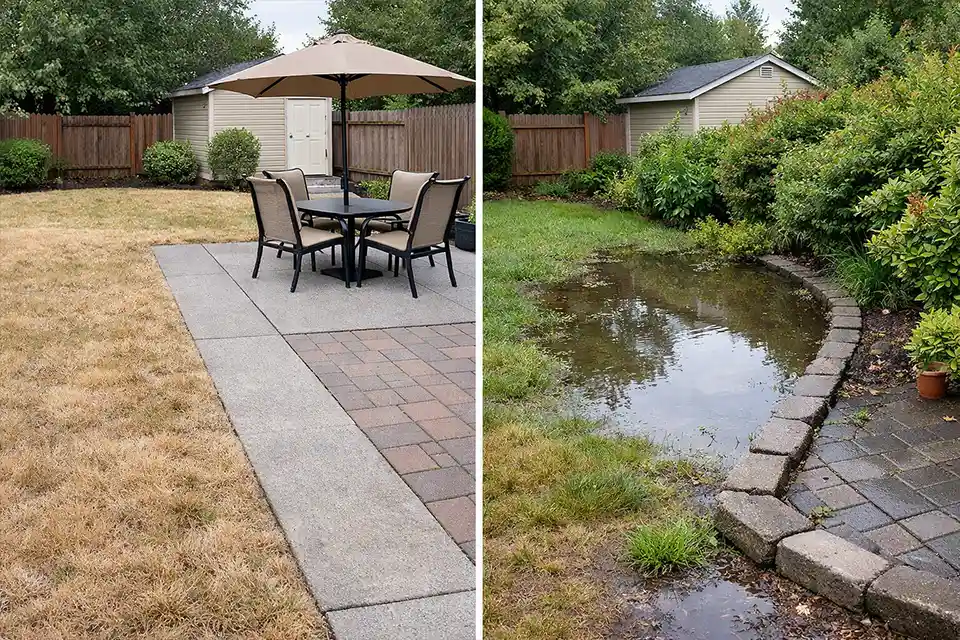
If one backyard issue deserves top priority before listing, it is drainage. Not because every buyer uses that word, but because water creates the symptoms they do notice: patchy turf, algae, washout, soft lawn, fence staining, mosquito-prone corners, and settled paving.
The mistake is treating the surface symptom as the problem. Grass is often the casualty, not the cause. Fresh sod over saturated soil fails. Extra mulch in a washout bed moves again in the next storm. Leveling one low paver corner without correcting runoff only delays the same problem.
A healthier area drains at the surface while still holding moisture deeper down. A failing area stays soft at the top, stays darker longer than adjacent ground, and worsens after even modest rainfall. That is why backyard drainage problems homeowners ignore tend to hurt resale more than sellers expect.
Failing hardscape feels expensive even when the fix is local
Buyers are quick to forgive dated pavers or plain concrete. They are much less forgiving of movement. Cracking, settling, tilted edging, and loose step stones suggest the base, drainage, or installation was wrong.
This is also where homeowners waste time. Sweeping sand into joints or topping low spots with loose fill may improve photos briefly, but it does not restore confidence. If a section has already moved once and the height difference is around 1 inch or more, patching starts to look temporary.
A small stable patio usually supports value better than a larger one with visible movement.
Awkward layout makes the yard feel smaller than it is
A backyard can have decent square footage and still feel like bad value if circulation is clumsy. When people cut through lawn to reach a gate, squeeze around furniture, or step into beds to move through the space, the yard feels compromised.
This matters more than many sellers expect because buyers mentally test daily use right away. Can they grill here? Can kids cross the yard without trampling plants? Can they carry something from the house to the back gate without detouring around obstacles?
Clearance is a useful filter. Main routes generally need at least 36 inches of usable width, while 42 to 48 inches feels more comfortable around patios and dining zones. Below that, the space starts feeling improvised rather than planned. The same pattern shows up in backyard zoning mistakes that hurt outdoor flow because layout problems often become value problems.
High-maintenance planting drags value down quietly
This is one of the most underestimated resale problems. Homeowners often assume buyers want richness and layers. Many buyers actually want clarity: where to walk, what will stay in bounds, and how much weekend labor the yard demands.
A yard becomes a value drag when the upkeep is obvious from the patio door. Shrubs forced into tight spaces, loose gravel spreading into turf, beds with too many material changes, and fast-growing screening planted too close together all create the same reaction: this yard never settles down.
The first failure is often at the edges. Once mulch washes across pavers, groundcovers invade paths, or gravel keeps migrating, the whole backyard starts reading as high-friction ownership. Backyard landscaping problems that get worse over time often follow exactly that pattern.
Pro Tip: Before selling, reduce maintenance complexity before spending money on fresh styling. Simpler bed lines and fewer loose materials usually build more confidence than extra ornament.
Backyard Features That Often Backfire
Oversized hardscape for the home’s price point
Big patios, elaborate outdoor kitchens, and oversized built-ins do not automatically add value. If they consume too much of the yard, reduce flexible open space, or feel out of scale with the house, they can read as overbuilt rather than premium.
That gets worse when the materials or installation do not look durable. Buyers are less impressed by a large feature than sellers hope, especially when they also see future repair risk.
Water features and fire features that feel like upkeep
A fountain, pond, or dramatic fire feature can appeal to a narrow buyer. But if it looks high-maintenance, underused, or awkwardly placed, it often becomes a liability instead of a selling point.
This is where sellers commonly overestimate appeal. A feature that needs cleaning, seasonal shutdown, repairs, supervision, or insurance questions is not broadly valuable just because it was expensive to install. If it dominates the yard or interrupts flow, it can actively lower buyer enthusiasm.
Trees or roots too close to primary use areas
Mature trees can absolutely support value, but poor placement changes the equation. Roots lifting pavers near a patio, heavy shade keeping a high-traffic zone damp, or tree placement that crowds fences and structures creates a practical problem, not just a visual one.
This does not mean every exposed root is a negative. Buyers usually tolerate natural root flare in less-used corners. The higher-risk cases are the ones affecting drainage, hardscape stability, or everyday movement near the house.
What Sellers Usually Misread
They overestimate outdated style
A plain backyard is not automatically a value problem. An old mulch color, basic paver pattern, or unfashionable plant mix can be changed later.
What buyers do not want is evidence that the yard needs corrective work before it can simply be enjoyed.
They underestimate repeat-failure patterns
A muddy path that returns every season matters more than a bland planting scheme. A shrub that repeatedly blocks a walkway matters more than a slightly dated bed design. A patio edge that settles again after repair matters more than whether the material feels trendy.
The pattern is what lowers confidence. Buyers do not need a technical diagnosis to sense that the same issue keeps coming back.
They assume more landscaping always looks more valuable
Not in backyards. Extra layers, extra materials, extra décor, and extra features can make the space feel busy, expensive to maintain, and less flexible.
That is especially true in everyday-use yards where clear movement matters more than showcase planting. Busy family backyard problems often turn into value issues for exactly that reason.
What to Fix Before You Sell and What to Stop Patching
| Problem | What buyers assume | Fix that wastes time | Better resale-minded move |
|---|---|---|---|
| Water pooling after normal rain | Drainage will keep costing money | Adding sod first | Correct runoff path and grade, then repair turf |
| Uneven paver section | The installation may keep moving | Spreading sand or filler on top only | Reset the settled area if movement is visible |
| Overgrown shrubs at paths or patio edges | The yard is too much work | Hard-pruning everything repeatedly | Remove or replace plants that outgrew the space |
| Gravel or mulch migration | The yard never stays tidy | Replenishing loose material only | Improve edging and stop concentrated runoff |
| Large underused backyard feature | Maintenance and repair burden | Cosmetic staging around it | Simplify, reduce dominance, or remove if feasible |
The key decision line is repetition. If you have patched the same issue twice within 12 to 24 months and it keeps returning, you are probably treating the symptom rather than the mechanism.
When Repair Stops Making Sense
At some point, piecemeal fixes do more harm than a cleaner simplification. That moment usually arrives when two or three problems overlap: drainage trouble, awkward movement, and maintenance-heavy planting; or failing hardscape plus oversized features plus recurring wet spots.
The smarter resale move is often selective redesign, not full replacement. Reduce bed area. Keep one strong route to the gate or main seating zone. Remove plants that already outgrew the space. Correct runoff before refreshing finishes. Stabilize the most visible, most-used surface first.
Buyers respond more strongly to a yard that feels controlled than to one that merely looks dressed up.
Bottom Line
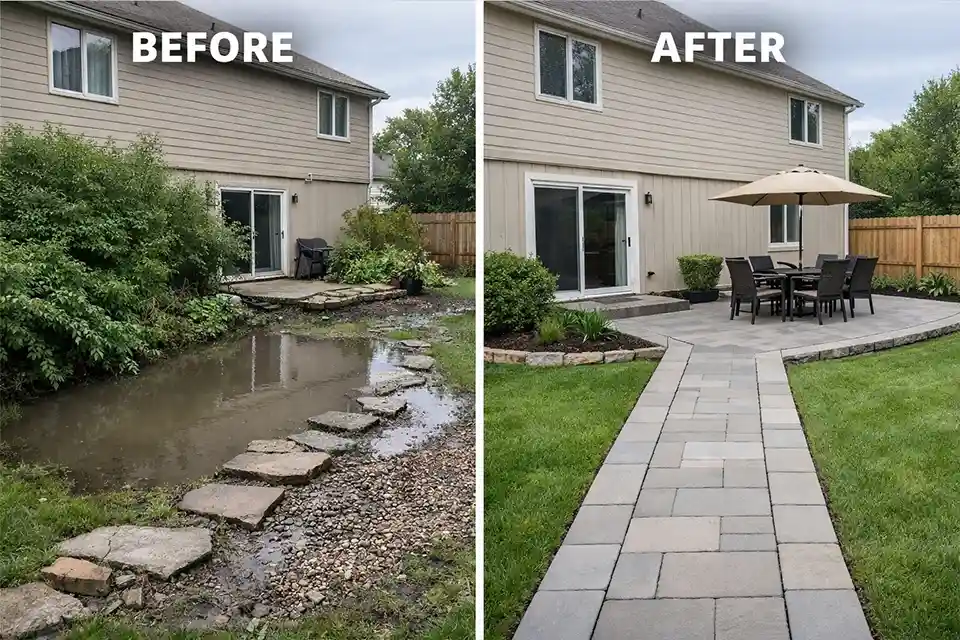
The backyard problems that reduce property value most are the ones that broadcast repeat cost: drainage failures, moving hardscape, overgrown plantings, awkward layout, and features that look expensive to maintain or too personalized to keep. Buyers usually forgive simple design faster than they forgive instability.
A resale-friendly backyard does not need to look luxurious. It needs to feel dry after rain, solid underfoot, easy to move through, and realistic to maintain. That is what keeps the yard from being priced as a future project.
For broader official guidance, see the NC State Extension landscape design guide.