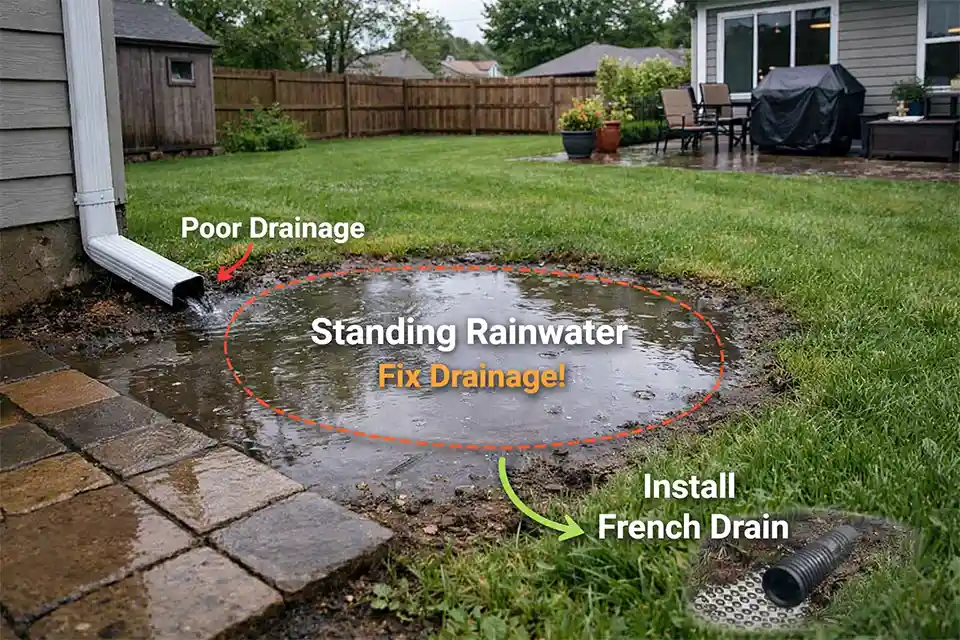
Most backyard drainage problems get ignored because the visible wet spot looks small. The real issue is usually upstream. In most yards, failure starts with one of three things: runoff is being dumped into the wrong place, the grade is flatter or more reversed than it looks, or the soil is too compacted to absorb water fast enough.
Start there. If water is still sitting 24 hours after a typical rain, if a downspout discharges within 3 to 4 feet of the house, or if the yard falls back toward the patio or foundation, this is no longer just a soggy patch.
That distinction matters because “wet lawn” is not the same thing as drainage failure. After a heavy storm, some softness is normal. Water that returns to the same spot after 2 or 3 ordinary rains is not. That is a repeat pattern, which means the yard is not just getting wet. It is handling water badly.
Quick Diagnostic Checklist
- Water remains visible for more than 12 to 24 hours after moderate rain
- The same area turns muddy after 2 or 3 normal storms
- A downspout or sump outlet sends water into the yard instead of away from it
- Grass thins out while moss, algae, or slick soil keeps returning
- The yard subtly falls toward the house, patio, or one recurring low point
- Mulch, gravel, or loose soil keeps washing into the same section
What Homeowners Usually Get Wrong
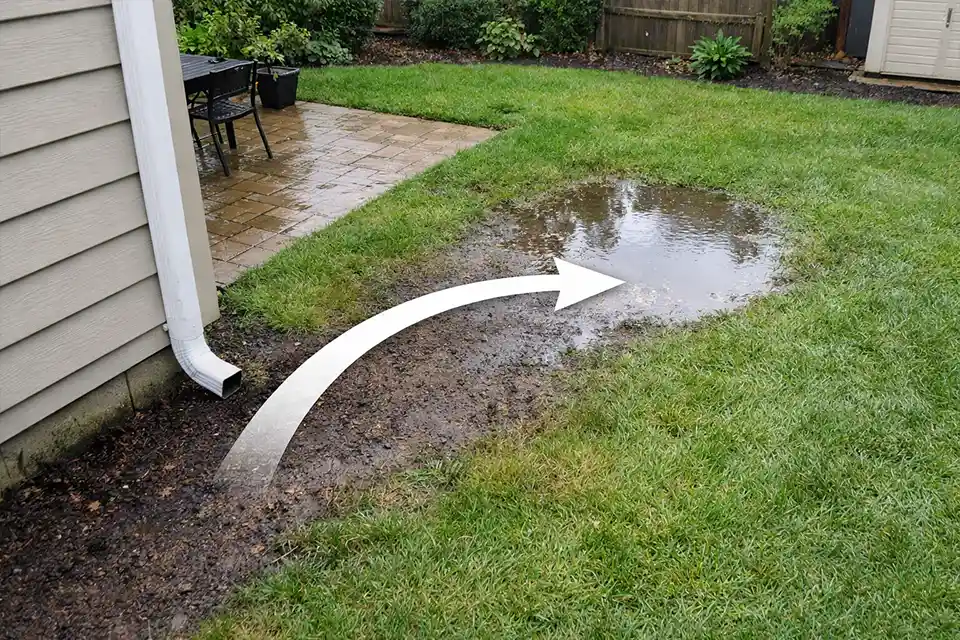
The first mistake is blaming the soil too early. Clay-heavy or compacted soil absolutely matters, but in many backyards the first failure is simpler: too much water is being concentrated into one weak area. Roof runoff, patio runoff, and even a slightly higher neighboring grade can all overload the same part of the yard.
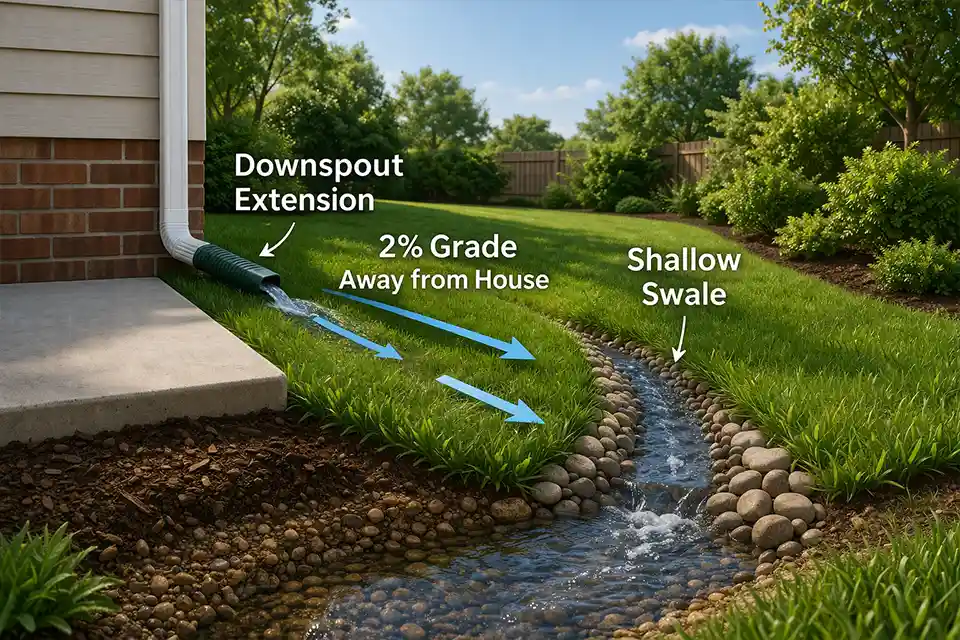
The second mistake is underestimating grading because the yard does not look steep enough to matter. In reality, a backyard often needs only about a 2% fall away from the house, roughly 1/4 inch per foot for the first 10 feet, to move surface water in the right direction. When that slope disappears or reverses, the problem does not look dramatic at first. It just keeps repeating.
The third mistake is using topsoil as if it fixes drainage. Loose fill spread over a puddled area often settles 1 to 2 inches within weeks or months, and the same depression returns. That is not a repair. It is a delay. The same kind of false progress is common in Costly Backyard Landscaping Mistakes, where the yard looks improved before the site actually performs better.
The Causes Worth Prioritizing
Not every drainage cause deserves equal attention. Start with the ones that are most common, easiest to confirm, and most likely to change the repair decision.
Concentrated runoff
This is usually the first thing to rule in or out. If the wet area sits below a roof edge, a downspout, a patio edge, or a hard surface that sheds water fast, assume runoff concentration is part of the problem until proven otherwise. Downspout extensions often need to carry water 6 to 10 feet away, not just past the wall.
Compacted or slow-draining soil
Once the water source is under better control, test the soil. A simple infiltration test is enough to separate “slow” from “failing.” Dig a hole about 12 inches deep and 6 to 8 inches wide, fill it with water, let it drain once, then refill it.
If the second fill drops less than 1 inch in 2 hours, the soil is draining slowly enough to keep causing trouble. In many yards, the compacted layer sits only 4 to 8 inches below the surface, which is why shallow puddling can persist even when lower soil seems drier.
Settled low spots
These usually appear near patios, filled areas, trench lines, or places disturbed during construction. They get described as random puddles, but they are rarely random. They are repeat collection points.
What homeowners often overestimate is the dramatic explanation: a hidden spring, a mysterious underground defect, a rare water-table issue. Those things happen, but they are not where most backyard diagnosis should begin. If the property also has runoff speed, washout, or slope instability, Sloped Backyard Problems: Drainage, Erosion, and Safety is usually the more relevant companion problem.
Why the Obvious Fix Fails
The most common overspend is buried drainage installed before the surface logic is corrected. A French drain can help, but it cannot rescue a yard that still funnels water into the wrong place. If grade, discharge points, and collection areas are wrong, the buried system is being asked to compensate for a layout failure. That is why these systems often underperform in heavier storms or clog earlier than homeowners expect.
Aeration alone is another partial fix that gets too much credit. It can help the top layer, but it does not change where runoff is being sent. Sand is also misused. In clay-heavy soil, adding small amounts of sand without a full amendment strategy often creates a denser surface instead of a looser one.
Some lawn-free backyards have the same hidden weakness. Decorative gravel, tight paver joints, and compacted base layers can reduce infiltration rather than improve it. That is one reason Backyard Landscaping Without Grass: Problems and Fixes often overlaps with drainage complaints even when the yard looks cleaner and easier to maintain.
Pro Tip: Take photos of the same wet area 1 hour, 12 hours, and 24 hours after rain. That timeline reveals repeat collection points faster than memory does.
What Actually Fixes It
Fixes work when they interrupt the failure pattern, not when they cosmetically hide it.
| Symptom | Most likely cause | Best first move | When to escalate |
|---|---|---|---|
| Puddle below downspout | Concentrated roof runoff | Extend discharge 6 to 10 feet away | Water still returns to the same low area |
| Broad soft muddy patch | Compacted or slow soil | Aerate and incorporate 2 to 3 inches of compost where practical | Water still stands after 24 hours |
| Wet strip along patio | Patio runoff plus bad grade transition | Regrade edge and create a shallow swale or collection path | Patio pitches toward the yard |
| Repeating low spot in lawn | Settlement | Rebuild grade with compacted fill in lifts, then finish with topsoil | Source water still enters that point |
| Water near foundation | Reverse slope | Correct grade to about 2% away from house | Water volume exceeds what grading alone can manage |
The order matters. First redirect the water source. Then correct the grade. Then improve infiltration. Only after that should you decide whether buried drainage is still necessary.
This is the point many homeowners get backward. They choose the fix that looks the most technical instead of the one that changes the water path first. In a poorly graded yard, a drain can become an expensive accessory rather than a real solution.
When Small Fixes Stop Making Sense
Some yards are beyond spot repair. If standing water is deeper than about 2 inches in repeated storms, if the same area stays soft for 48 hours or more, or if water is reaching the foundation, patio base, or shed edge, the issue has moved past minor correction. At that point, the yard usually needs broader grading, a better runoff route, or both.
Hardscape often makes this threshold easier to miss. A patio that sheds water into the lawn can re-create the same wet strip no matter how often the soil is amended. That is why Patio Drainage Problems Most Homeowners Notice Too Late is often part of the same diagnosis rather than a separate problem.
The Part People Ignore Too Long
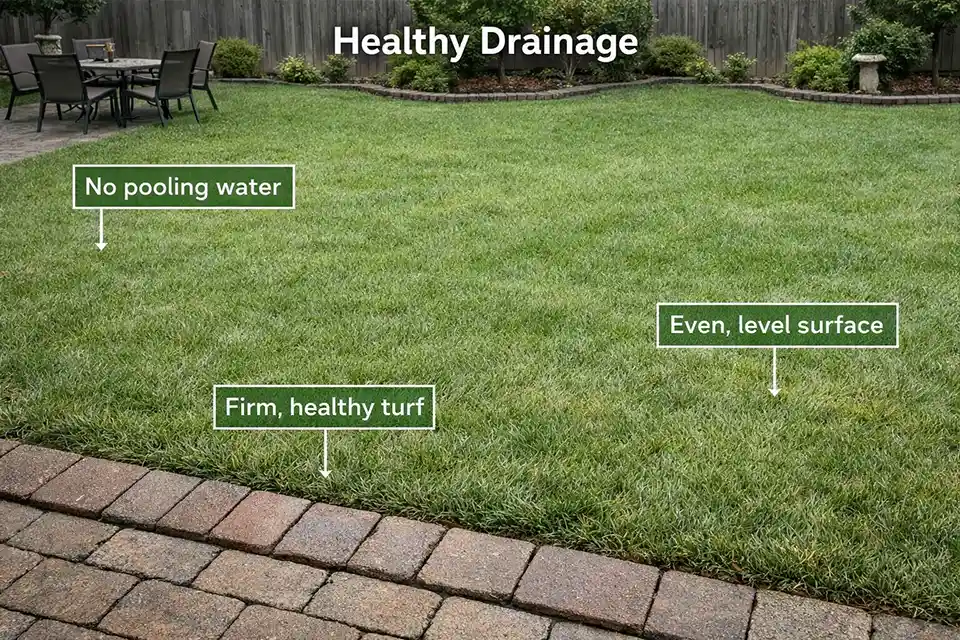
The wet spot is usually not the whole problem. It is just the place where the yard finally shows you that runoff, slope, and soil are out of balance.
That is why repeated patching wastes money. If the same spot fails after ordinary storms, stop treating it like a surface blemish. Track where water starts, where it slows, and where it settles. That sequence tells you more than the puddle does.
The best repair decisions are usually simple in principle: fix where water enters, fix where the yard falls, then decide whether the soil needs help. Most backyard drainage problems are ignored not because they are hard to see, but because the wrong part of the problem is the part homeowners notice first.
For a more technical overview of drainage-friendly site planning, see the EPA green infrastructure resource.