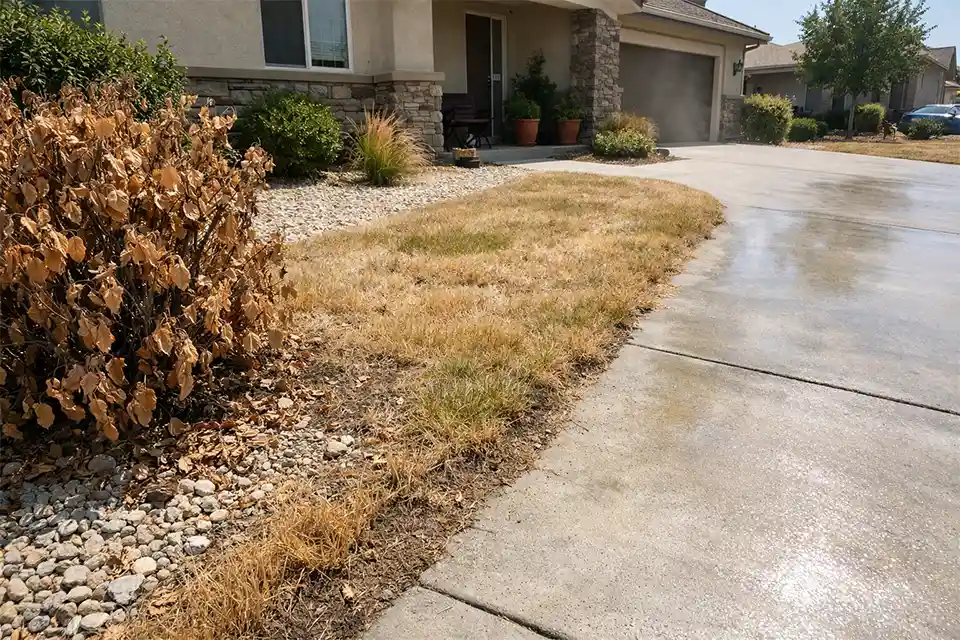
In hot climates, front yard landscaping usually fails for one reason people underestimate: the yard is hotter than the planting plan assumes. Not just sunny, but thermally aggressive. A narrow bed beside concrete, shallow watering that only wets the top 3 to 4 inches, and plants chosen for “full sun” rather than actual heat tolerance can turn a tidy front yard into a constant repair job once temperatures stay above 95°F for several days.
Start with three checks. See whether damage is worst within 2 to 4 feet of pavement, whether moisture reaches at least 6 to 8 inches deep after watering, and whether plants recover by the next morning or keep showing scorch for 7 to 10 days.
That last distinction matters. Temporary afternoon wilt can be normal stress. Repeated browning, dieback, and seasonal plant loss usually mean the site is structurally too harsh for the current layout.
That is why this problem is often misread. People blame summer weather when the bigger issue is that heat exposes weak design logic faster than almost anything else.
Where Hot-Climate Front Yards Usually Start Failing
Most front yards do not decline evenly. One zone starts breaking down first, then the rest follows if nothing changes. That pattern is useful because it tells you where the real stress is coming from.
Driveway and walkway edges
Beds beside concrete and pavers often fail first because they get both direct sun and reflected heat. The damage usually appears on the pavement side before the rest of the plant declines. Leaves scorch, the top few inches of soil dry quickly, and mulch stops doing much temperature buffering by late afternoon.
In places like Arizona, inland Southern California, and parts of Texas, this heat reflection can be severe enough that a plant bed looks overwatered and underwatered at the same time: stressed foliage above, shallow wet soil below.
Narrow lawn strips
A lawn strip under about 6 feet wide is one of the weakest features in a hot-climate front yard. It is hard to water evenly, easy to overspray onto pavement, and prone to thinning along the edges long before the center goes off-color.
In dry parts of Nevada, New Mexico, and west Texas, those edge zones can fail quickly because hot air, wind, and reflected heat dry them faster than sprinkler coverage can correct. Repeated turf repair here is often a sign that grass is the wrong material for that location, not that the lawn needs more effort.
West-facing foundation beds
These are often treated like protected planting areas, but in hot climates they can become some of the harshest spots on the property. Stucco walls, glass, masonry, and low airflow all compound the heat load. In parts of California’s Central Valley, inland Florida developments, and sun-exposed neighborhoods across the Southeast, west-facing beds can stay stressed even when irrigation is technically adequate.
What People Usually Misread in Hot Climates
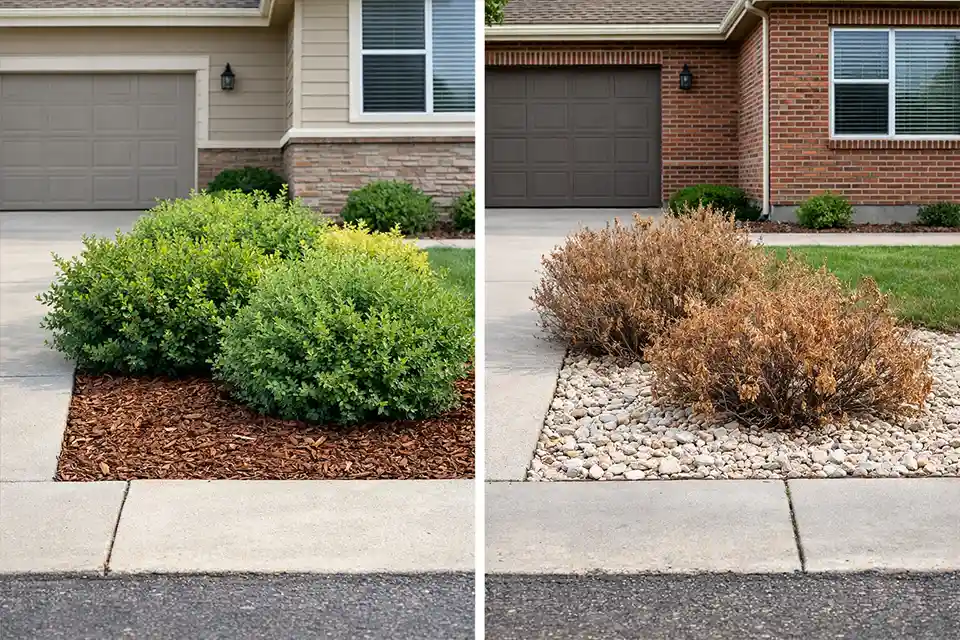
The most common mistake is assuming every burned-looking plant needs more water. Sometimes it does. Often it does not. In hot climates, frequent shallow watering can keep a plant alive just long enough to hide the real failure pattern: weak root depth, overheated upper soil, and a site that dries too fast between irrigation cycles.
“Full sun” is not the same as real heat tolerance
A nursery label can be technically true and still be misleading in practice. Full sun in a moderate climate is not the same as a west-facing front bed beside concrete in Phoenix, Palm Springs, or a dry inland subdivision outside Sacramento. Many plants tolerate sunlight better than they tolerate radiant heat, hot wind, and shallow soil.
Decorative stone is often overvalued
Rock and gravel can work in the right xeric design, but they are often treated as universally low-maintenance when they are not. Around shallow-rooted ornamentals, seasonal color, or crowded foundation beds, stone can increase soil heat rather than stabilize it. That is one reason some apparently simple layouts become expensive to maintain over time, much like the failures behind cheap front yard ideas that cost more later.
People usually underestimate soil, not sun
Sun is obvious. Soil is not. But compacted builder soil, low organic matter, and crusting near the surface often decide whether a plant can survive a heat wave. In many hot-climate front yards, soil conditions are the reason the same spot fails repeatedly while nearby areas hang on.
The Watering Problem Is Usually About Depth, Timing, or Delivery
The real irrigation problem is rarely just total volume. It is whether water gets into the soil deeply enough, whether it gets there before runoff starts, and whether the delivery method suits the exposure.
Shallow wetting is a bigger problem than slight underwatering
Healthier front beds usually show moisture at least 6 to 8 inches down after irrigation, and established shrubs often benefit when wetting reaches closer to 8 to 12 inches. Failing beds are often damp at the surface and dry below. That difference matters more than many homeowners realize. A plant with deeper roots can ride through hot afternoons better than one getting frequent shallow watering.
Runoff can make longer watering almost useless
If water starts shedding after the first 5 to 10 minutes, a longer runtime may just create puddling, wet pavement, and evaporation loss. This is especially common in sloped beds, compacted new-build soil, and front yards with crusted surfaces. In the hotter parts of Oklahoma, central Texas, and inland California, this problem gets worse because dry surface soil can repel water at first contact. Cycle-and-soak watering usually works better than one long run: shorter cycles, spaced 30 to 60 minutes apart, allow better infiltration.
Delivery method often decides whether the system is workable
Overhead spray is usually the weakest option in exposed shrub beds because wind drift and evaporation reduce what reaches the roots. That problem is especially noticeable in desert air and open suburban developments. Drip or low-volume emitters usually make more sense in shrub beds and mixed plantings, especially in yards already trending toward low-water front yard landscaping practical solutions that last.
Hot Climate Problems Change by Region
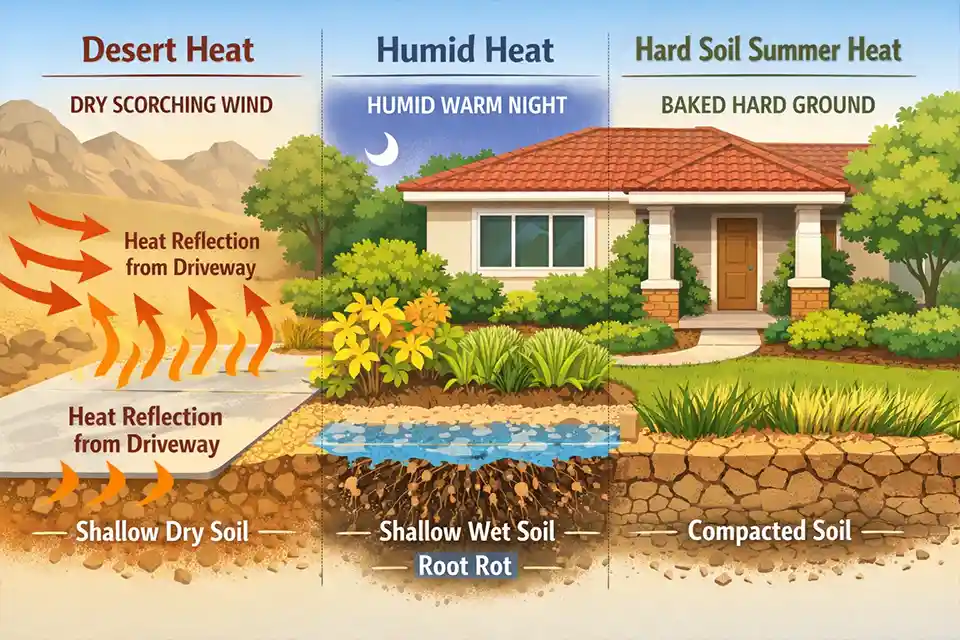 This is where the topic gets flattened too often. “Hot climate” is not one condition. A front yard in Arizona fails differently from one in Florida, and both differ from a heat-prone front yard in inland California or central Texas.
Arizona, Nevada, and inland desert conditions
The biggest problem here is usually heat intensity plus fast surface drying. Gravel, decomposed granite, masonry, and reflected pavement heat can push the upper root zone into repeated stress even when irrigation frequency seems reasonable. Hot wind also matters more than people expect. It can pull moisture out of leaves and upper soil fast enough that afternoon collapse looks sudden.
Texas, Oklahoma, and transitional hot-summer regions
These yards often fail because they combine heat, hard soils, and inconsistent rainfall patterns. A front yard may look manageable in June, then break down during a 2- to 4-week stretch of intense heat. That usually means the design works only in moderate conditions, not in peak summer. Clay-heavy soils can also create the frustrating pattern of runoff on top with dryness below.
Florida and the humid Southeast
In Florida, coastal Georgia, southern Alabama, and similar humid areas, heat stress still matters, but the mechanism is a little different. Plants may not dry as explosively as they do in Arizona, yet they can remain stressed because warm nights reduce recovery, soils stay unevenly wet, and plant choices often prioritize appearance over long-term durability. Adding more irrigation in these yards is often less useful than improving spacing, zoning, and root-zone conditions.
Inland and Mediterranean-leaning California
Many front yards in inland California combine drought pressure, reflected heat, long dry stretches, and intense west sun. A plant palette that survives near the coast may fail inland because the thermal load is different. This is one place where “California-friendly” planting advice often gets overgeneralized.
Why Some Front Yard Designs Become High Maintenance in Summer
The front yards that break down fastest usually have the same design weaknesses. They are not always unattractive. In fact, they often look polished at installation. The problem is that they leave almost no margin for real summer conditions.
Too many plant types in one zone
A mixed bed can look rich in spring and become unmanageable in August. A drought-tolerant shrub, shallow-rooted annual color, and thirsty accent planting in the same irrigation zone almost guarantees compromise. One part stays too wet, one dries out, and one declines first.
Tight spacing that looks good only when conditions are easy
Planting tightly is one of the easiest ways to make a front yard feel finished quickly. It is also one of the easiest ways to increase summer stress. Dense spacing increases root competition and makes irrigation inconsistency harder to spot. By the time one plant starts collapsing, the rest of the bed is often already strained.
Materials chosen for appearance, not thermal performance
Pale rock, gravel, metal edging, and hardscape-heavy borders often look clean and deliberate, but they can make a hot front yard less forgiving. This is where homeowners often overestimate the value of neatness and underestimate the value of thermal buffering.
Soil structure treated like a minor detail
It is not a minor detail. If compaction begins 4 to 6 inches down, or if water cannot penetrate before runoff starts, even a good irrigation schedule will underperform. The same logic behind poor soil in front yards causing patchy grass and weeds applies here: visible decline is often just the top layer of a deeper soil issue.
Practical Thresholds That Actually Help
| Condition | Usually manageable | Usually problematic | Why it matters |
|---|---|---|---|
| Moisture depth after watering | 6–8 inches or more | only top 3–4 inches | Shallow wetting creates weak roots |
| Mulch depth | 2–3 inches organic mulch | under 1 inch or bare soil | Thin cover loses moisture too fast |
| Runoff start time | after 10+ minutes of absorption | within first 5–10 minutes | Water is not entering the root zone well |
| Planting strip width near pavement | 5+ feet | under 3–4 feet | Narrow beds overheat faster |
| Summer recovery pattern | wilts in afternoon, rebounds by morning | scorch and decline over 7–10 days | Separates stress from ongoing failure |
| Replacement cycle | occasional seasonal adjustment | same plants failing every 1–2 summers | Signals a design mismatch |
When the Standard Fix Stops Making Sense
There is a point where replacing plants, extending runtimes, and touching up the lawn are no longer sensible responses. If the same bed fails every year, if turf along hardscape never holds density, or if new plantings struggle through their first 30 to 90 days even with regular care, the design is too fragile for the site.
New plantings fail differently from established landscapes
This distinction is important. New plants often fail because the root ball dries faster than the surrounding soil and never properly bridges into the native ground. Established plants usually fail for different reasons: root restriction, repeated shallow watering, crowding, or chronic heat load. Treating both situations the same wastes time and replacements.
Some lawns are not worth rescuing
In hot-climate front yards, narrow turf ribbons and curb-edge lawn sections are often the weakest parts of the whole landscape. If those areas need repeated repair every summer, redesign usually makes more sense than rescue. That same long-term mismatch appears in other front-yard systems too, including front yard ornamental grass maintenance problems when a plant choice looks durable but creates recurring upkeep in the wrong setting.
What to change first
Start with irrigation delivery. Then reduce reflected heat where possible. Then improve the soil profile and root-zone depth. Only after that should you decide which plants actually belong there. Replanting before fixing the exposure and soil logic is one of the most common ways homeowners lose another season.
Pro Tip: If a bed still looks stressed by late morning the day after a deep soak, the problem is usually not water volume alone. Check reflected heat, soil compaction, crowding, and hardscape proximity before increasing runtime again.
A Durable Hot-Climate Front Yard Usually Looks Simpler
The best-performing front yards in hot climates usually are not the busiest ones. They have fewer plant categories, wider spacing, less lawn in exposed strips, and irrigation zones based on actual exposure rather than symmetry. They also rely less on decorative material that amplifies heat and more on layouts that stay stable during the hottest 3 to 5 weeks of summer, because that period is the real design test.
A front yard that looks attractive in April but falls apart in July is not low maintenance. It is just delayed maintenance. Hot climates make that truth harder to hide.
For broader climate-adapted landscape guidance, see the University of Florida IFAS Extension.