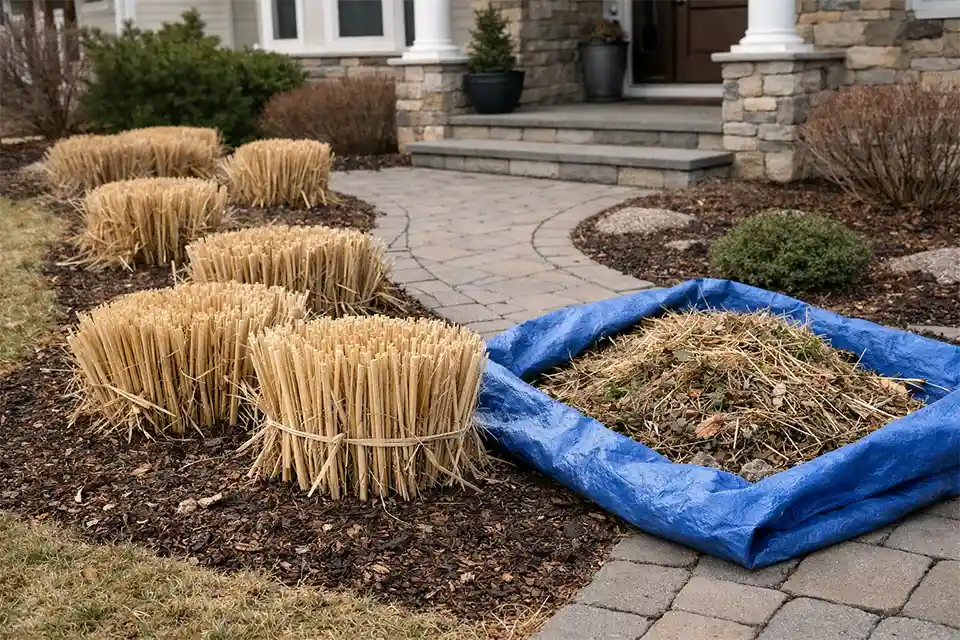
Ornamental grasses become a front-yard maintenance problem when the yard has to absorb one big seasonal reset instead of light week-to-week care. That is the part people misjudge. A clump that looks effortless in July can still create a messy late-winter job if it grows 4 to 6 feet tall, sits too close to a walkway, and has to be cut back to about 3 to 6 inches before spring growth starts.
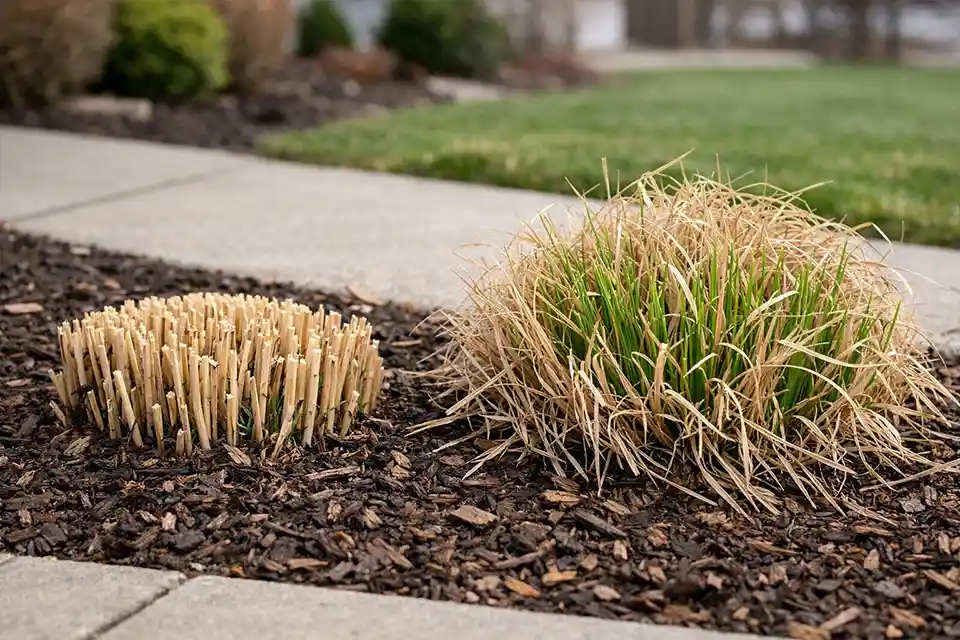
The first checks are simple: how large the clumps have become, whether they sit within about 18 to 24 inches of pavement or porch edges, and whether new green shoots are already 2 to 4 inches tall. That last signal matters because once fresh growth threads through old blades, cleanup stops being a quick cutback and turns into slow detail work.
This issue also gets confused with “grasses that just need trimming,” but trimming is not the real problem. The real problem is a front-yard layout that makes one predictable seasonal job harder, messier, and more visible than it needs to be.
What people usually overestimate is how long ornamental grasses stay neat without consequences. What they underestimate is the labor spike. Tying, cutting, hauling, raking, and clearing blown blades out of lawn edges or mulch is still maintenance, even if it only happens once a year. In a back corner, that is manageable. In a front yard, it affects curb appeal the moment the plant is cut down.
Quick Diagnostic Checklist
Your ornamental grass planting is probably adding more upkeep than it should if most of these are true:
-
The clumps are over about 4 feet tall and less than 2 feet from a front walk, driveway edge, porch, or mailbox area.
-
A single cutback takes more than 15 to 20 minutes because the stems are dense, awkward, or tangled into nearby plants.
-
New shoots are already coming up through old growth before cleanup is finished.
-
Dry blades keep blowing into turf, gravel, or entry beds for 1 to 2 weeks after cutting.
-
The space looks bare for several weeks once the grass is cut down.
-
You need a tarp, hedge shears, gloves, and multiple cleanup passes just to make one plant look under control.
What People Usually Misread First
The first wrong conclusion is that ornamental grasses are the problem by themselves. Usually they are not. The more accurate diagnosis is that ornamental grasses were placed in the wrong kind of front yard.
A grass clump with enough breathing room is rarely the issue. You tie it, cut it, lift it out, clean the base, and move on. The trouble starts when the plant is doing its full natural job in a space that only works if everything stays tidy year-round. Put a large grass beside a narrow path, into a tight foundation bed, or among smaller decorative plantings, and the annual cutback becomes awkward by design.
That is why this problem often overlaps with front yard layouts built from multiple small plant beds. The maintenance burden is not coming from one dramatic failure. It is coming from too many small edges, small transitions, and small cleanup zones around a plant that needs a wider, simpler footprint.
The second thing people misread is timing. They either cut too early because the plant looks dead, or too late because they want to keep winter structure. Both can work against them. In colder states, cutting in fall or very early winter often leaves the front yard looking flat for months. In milder climates, waiting too long can shrink the cleanup window to a week or two before spring growth turns the job messy.
Why the Obvious Fix Usually Fails
The obvious fix is to keep the grasses and just cut them more often, trim them smaller, or shape them through the growing season. That usually wastes time.
Most front-yard ornamental grasses do not become lower-maintenance when they are repeatedly sheared. They become uglier, less natural, and more labor-intensive. Instead of one defined seasonal reset, you end up doing corrective grooming several times a year. That is not simplification. It is maintenance drift.
Another weak fix is trying to solve the mess without changing the bed around the plant. If the clump is dropping brittle blades into loose rock, thin mulch, or narrow edging channels, the cleanup problem spreads beyond the plant itself. The same logic shows up in front yard mulch beds that wash away every season. Once the surrounding surface is unstable or fussy, every seasonal task becomes slower than it should be.
Pro Tip: If one front-yard grass fills more than a standard cleanup tarp by itself, the question is no longer whether it is healthy. The question is whether it still belongs in that spot.
The Real Decision Point
The most useful distinction is not between healthy grass and unhealthy grass. It is between a plant that still earns its maintenance and one that no longer does.
Use this test:
| Condition | Still Reasonable | Starting to Cost Too Much Time | Why It Changes the Decision |
|---|---|---|---|
| Clump footprint | Holds within its intended bed area | Leans or spills 12+ inches past its line | Repeated edge cleanup begins |
| Distance to hardscape | 24+ inches from paths or porch edges | Under 18 inches | Debris and stems interfere with access |
| Cutback effort | One clean pass | Several passes plus hand cleanup | Annual task stops being efficient |
| Post-cut appearance | Other plants keep structure in place | Bed looks stripped for 3 to 6 weeks | Front yard looks unfinished |
| Seasonal rhythm | One reset, then mostly stable | Ongoing correction before and after cutback | “Low maintenance” no longer fits |
This is where people often waste a full extra season. They keep a grass because it survives drought, looks good in summer, or technically only needs one major cutback. None of that answers the real front-yard question: does this plant still make the yard easier to live with? If the answer is no, the maintenance logic has already changed.
A useful comparison is front yard flower beds that keep needing replanting. The surface issue looks different, but the design failure is similar. A planting can look attractive in its best season and still be wrong for the long-term workload.
What Changes Under Different Conditions
Climate changes the pressure point, but not the overall pattern.
In northern climates, the main drawback is usually the long blank period after cutback. If the grass was carrying much of the front yard’s height or screening effect, the bed can look abruptly empty for 3 to 6 weeks. In warmer regions, the bigger problem is timing. A mild February or early March can push new growth fast enough that missing the cutback window by 7 to 10 days makes the job noticeably worse.
Moisture and wind matter too. In humid regions, wet old growth can mat down at the base and hold debris longer. In dry or windy areas, brittle blades tend to shatter and travel farther across lawn and hardscape. Fine-textured grasses usually create more cleanup scatter than stiffer upright types, even when both are technically manageable.
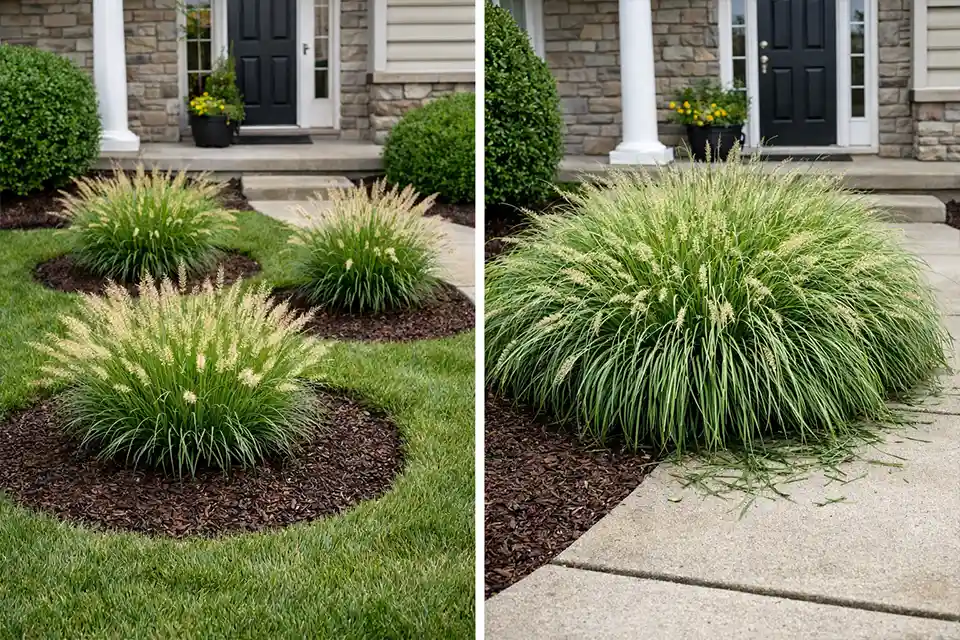
One thing people underestimate is how much massing affects all of this. Three medium clumps spaced about 30 to 36 inches apart are often easier to manage visually than one oversized clump jammed into a narrow entry bed.
If the yard already struggles with overgrowth pressure, the same pattern often appears with fast-growing front yard hedges. The issue is not just plant vigor. It is whether the site can absorb repeated maintenance without looking stressed.
When the Standard Fix Stops Making Sense
There is a point where annual cutback is no longer the real task. The real task becomes managing everything the grass is doing to the space around it.
That point has usually arrived when:
-
the clump blocks mowing, edging, or access to nearby plants
-
the cleanup spreads into lawn, gravel, or porch edges every year
-
the plant leaves a visual hole after cutback that weakens the whole front yard
-
dividing or reducing the clump starts feeling like a recurring necessity, not an occasional reset
-
the grass is still healthy, but the yard is clearly easier without it
That last condition matters most. Homeowners often underestimate replacement because the plant itself is not failing. But a healthy plant can still be a bad fit. Once a front-yard grass needs too much space, too much cleanup, or too much forgiveness from the rest of the design, it stops being a low-maintenance choice in any meaningful sense.
Practical Fix Strategy
Start by deciding which grasses are genuinely doing structural work. Keep the ones that anchor a wide bed, soften a blank wall, or create a strong seasonal shape without crowding access. Remove or relocate the ones that are mostly there as texture filler.
If the plant is worth keeping, simplify the area around it. Give it a wider bed edge, more separation from lawn, and fewer small companion plants packed around the base.
A front yard usually gets easier when larger forms are allowed to read clearly instead of being forced into decorative clutter. That is also why many front yard design ideas for suburban homes work best when the structure is simple and the maintenance zones are obvious.
If the grass is not doing enough to justify the seasonal disruption, reduce the number of clumps or replace them with plants that hold shape without a hard annual reset. That is usually the better move when the cutback leaves the entry landscape looking empty or unfinished.
Pro Tip: Tie the clump tightly before cutting and leave a clean 3 to 6 inch crown. It will not fix bad placement, but it does reduce scatter and makes the yearly reset faster.
For practical university guidance on cutting back and managing ornamental grasses, see the University of Illinois Extension.