Patio entry problems usually come from one of three mistakes: the first landing outside the door is too crowded, the walking path narrows below 36 inches, or the threshold stays wet or awkward after rain.
Fix the entry before changing the patio style: clear the first 4 to 6 feet, protect a 36- to 48-inch route, and treat water that remains near the door after 24 hours as a priority issue.
This is different from a general patio layout problem. A small patio can still work if the entry stays clean. A larger patio can feel irritating every day if the first step outside the house leads into a chair back, a side table, a slippery mat, or a forced turn.
The entry is the control point. If that first sequence fails, the rest of the outdoor space has to work harder than it should.
The 10-Second Patio Entry Test
Before measuring the whole patio, test the first few seconds of use. Open the door, step outside, turn naturally toward the seating or yard, and imagine carrying a tray, dog leash, laundry basket, or stack of cushions. If the movement feels awkward during that short sequence, the patio entry is probably the problem.
The entries that get ignored longest are rarely dramatic. They are the ones where people hesitate for half a second every time they step out, then slowly stop using that door as naturally as they should.
The door opens without negotiation
A good entry does not require someone to move a chair, slide a planter, or squeeze past a grill shelf before stepping outside. Hinged doors need swing clearance. Sliding doors still need clearance around the active panel. French doors need enough landing space so both sides do not open directly into furniture.
Most entry plans fail because they measure the door opening, not the moving parts of the door system. The swing arc, screen panel, active slider, chair pullback, and first foot landing all matter more than the width of the glass or the view from inside.
The first step lands flat
The first step outside should feel stable. A 1-inch lip may be noticeable. Around 2 inches, people start adjusting their step. At 4 inches or more, the transition becomes a real grade change that affects serving, lighting, winter safety, and furniture placement.
The path stays open when people are seated
A path that works only when chairs are pushed in is not a working path. Dining chairs often need 30 to 36 inches behind them once someone sits down or pulls away from the table. If that expansion overlaps the entry lane, the patio will feel blocked during the exact moments it is being used.
The Entry Zone Is Not Extra Seating Space
The most common mistake is treating the first few feet outside the door as available square footage for furniture. It feels efficient from above, but it makes the patio harder to enter, clean, serve, and leave.
The first 4 to 6 feet matter most
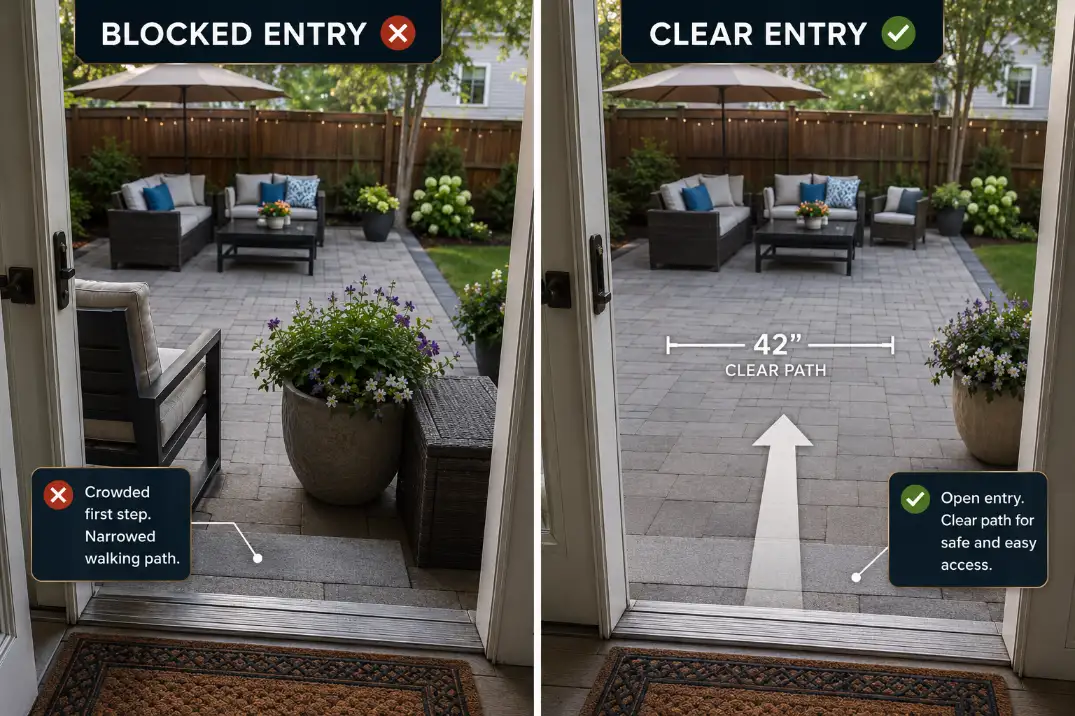
The area immediately outside the door should act like a transition space, not a storage strip. A comfortable patio entry usually needs a clear landing of about 4 feet deep, and more if the door swings outward or the household regularly carries food, cushions, pets, or garden tools through that point.
A 30-inch gap can look passable when the patio is empty. It becomes tight when someone opens a screen, steps over a threshold, avoids a chair leg, and turns with a serving dish. For most homes, 36 inches is the minimum usable path. Around a busy back door, 42 to 48 inches feels noticeably calmer.
Many patio fixes disappoint because they start with prettier furniture instead of a better route. A smaller chair in the wrong place still interrupts the movement pattern.
The symptom is clutter, but the mechanism is interruption
People often read the problem as visual clutter. The real issue is interrupted motion. If the route from kitchen to table requires a sideways step, a reach around a chair, or a pause while someone else moves, the patio will feel more annoying than its square footage suggests.
For a deeper look at why the house-to-patio connection matters more than the patio’s center, Better Flow From House to Patio explains how the route from the door quietly controls everyday outdoor use.
What People Usually Misread First
The first mistake is assuming the patio is too small. Sometimes it is. More often, the entry is using space badly.
Open center space can be misleading
A patio can have a generous-looking open middle and still feel hard to use if the doorway is pinched. The first path from the house carries more weight than a decorative open zone near the far edge.
This matters on compact patios because every inch near the door has a job. If a table is centered for appearance but forces people to turn immediately after stepping out, the layout is serving the photo, not the household.
The “loaded exit” is the real test
A route that works empty can fail during normal use. Carry a tray, a trash bag, a watering can, or a stack of cushions through the entry. If your elbow hits a chair back or your foot naturally avoids a mat edge, the design is asking for daily adjustment.
Pro Tip: Test the patio entry while carrying something wide. A laundry basket reveals more than a tape measure alone.
Door Type Changes the Mistake
Not every patio entry fails the same way. The door type often decides which mistake shows up first.
| Door type | Common entry mistake | Better priority |
|---|---|---|
| Sliding glass door | Treating the full glass width as the usable exit | Plan around the active sliding panel |
| Hinged back door | Placing furniture inside the door swing or first landing | Keep the swing and first step clear |
| French doors | Centering furniture on the doors for symmetry | Preserve both opening space and serving path |
| Screen or storm door | Forgetting the second door movement | Test with both doors open |
| Raised threshold door | Hiding an awkward step with a rug | Fix the landing or transition first |
This is where a patio entry article differs from a general layout guide. The active door movement matters more than the wall width, the view, or the centerline of the patio.
On back-door patios, the strongest layouts usually begin with the exit point and then place seating around it. Patio Layouts for Back Door Seating is useful when the patio needs seating close to the house without letting chairs take over the arrival zone.
Mistake 1: Seating Starts Too Close to the Door
Putting seating right outside the door is tempting because it makes the patio look complete. But the entry side of a patio has a different job from the lounge side. It needs clearance, not character.
A chair needs more room than its footprint
A dining chair may be only 20 to 24 inches wide, but a seated person needs room behind it. Once pulled out, the chair can claim 30 to 36 inches. If that movement happens inside the main entry path, the route disappears as soon as people sit down.
Sliding glass doors can be especially deceptive here. The door saves swing space, but it does not erase the need for a clear arrival zone. A sliding door that opens onto a table edge, chair back, or grill side shelf still creates daily friction.
The fix is not always removing seating. Often, it is rotating the furniture so chair backs do not expand into the entry path. On narrow patios, an offset table or wall-side bench often works better than a centered set.
Symmetry is often the wrong goal
A symmetrical patio can feel stiff if it ignores the house connection. Better patios often look slightly offset because the arrangement respects how people arrive. That offset is not a flaw. It is usually why the space feels easier to use.
If the active door panel sends people into the side of a table, Patio Layouts for Sliding Glass Doors and Walkways shows why the usable opening, not the full glass wall, should guide the path.
Mistake 2: The Threshold Is Treated Like a Minor Detail
A small step, lip, or uneven threshold can make the patio feel less usable even when the furniture plan is sensible. This is not just a comfort issue. It changes how people move through the space.
One awkward step changes the whole patio
If people pause at the door before stepping down, the surface material is probably not the first problem. The transition is. Replacing pavers, staining concrete, or adding a rug will not fix an awkward step sequence.
Thresholds become more important in northern states where meltwater can refreeze near the door. In humid climates such as Florida, the issue is often slipperiness and algae near shaded entries. In dry desert areas, the same mistake may show up as dust, grit, or a loose mat that slides underfoot.
The common wasted fix is placing a nicer outdoor rug right at the entry. If the threshold is uneven, the landing is too small, or the surface stays damp, the rug hides the warning sign and can make footing worse.
When transition beats decoration
A patio may look like it needs a style refresh, but if the first step is uncomfortable, the decorative layer is not the right starting point. In many cases, the smarter fix is a larger landing, a corrected trip edge, or a furniture shift away from the threshold.
That narrower transition issue is exactly why Back Door Patio Transition Awkward should be treated as a separate problem from simply choosing better patio furniture.
Mistake 3: Drainage Is Solved After the Layout Is Finished
Water near the entry is one of the most underestimated patio usability problems. It does not need to flood the yard to matter. A shallow puddle at the door, a damp strip under the mat, or a slick shaded corner can change how often people use the space.
Drying time is the practical threshold
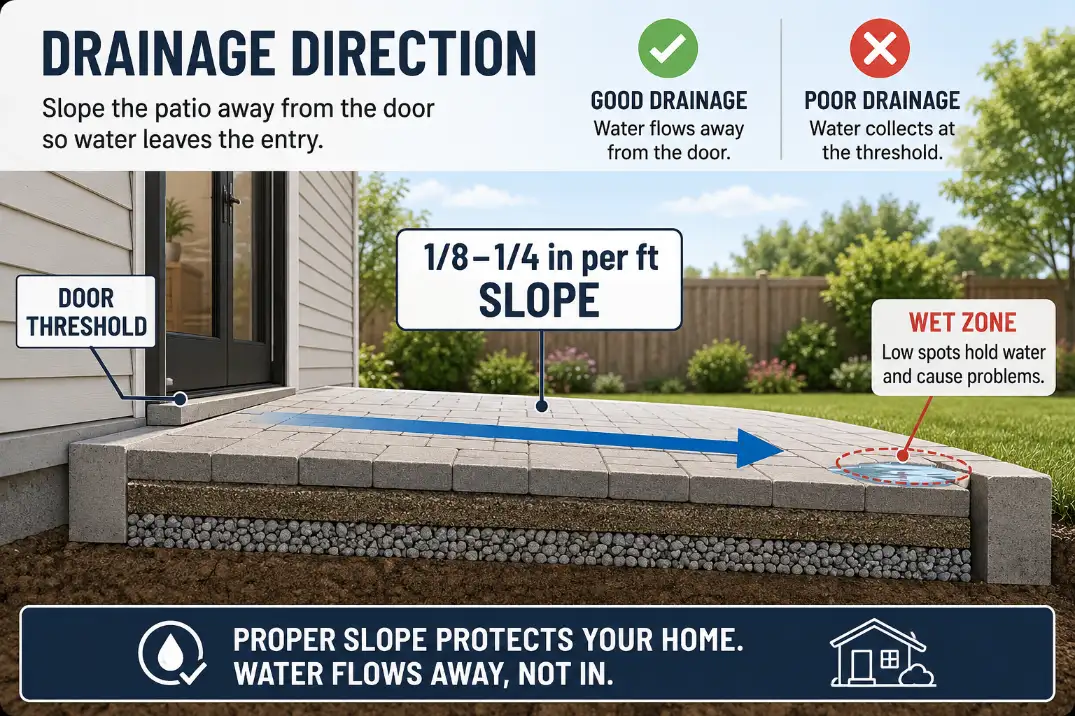
After normal rainfall, the entry area should begin clearing quickly and should not still feel wet the next day. If water remains in the first walking zone after 24 hours, the patio is training people to avoid that route. If it still holds water after 48 hours, the issue deserves priority over decorative upgrades.
Healthy patio drainage is usually subtle. A surface slope of about 1/8 to 1/4 inch per foot away from the house is often enough to move water without making the patio feel tilted. Too little slope holds water. Too much slope makes chairs feel unstable and can send runoff across the wrong part of the yard.
Why the obvious fix fails
Sweeping water away or adding a mat may help for an afternoon. It does not fix the cause. The more useful question is where the water comes from: patio slope, roof runoff, a downspout, compacted planting soil, or a low spot created by edging.
If water is moving toward the door, furniture layout is the wrong repair category. That is where Patio Drainage Layout Problems becomes more relevant than another furniture plan.
Mistake 4: Small Storage Collects at the Most Valuable Spot
The entry zone attracts clutter because it is convenient. Shoes, toys, garden gloves, grill tools, watering cans, folded chairs, and delivery boxes all land near the door. The mistake is assuming this is only a tidiness problem.
Convenience can become friction
A storage bench can help if it sits outside the movement lane. It becomes part of the problem if the lid opens into the walkway or if people have to step around it every time they exit. The same is true of deck boxes, hose reels, and plant stands.
The boundary is simple: if an object near the door makes someone adjust their path more than once a day, it is no longer convenient. It is claiming the most valuable square footage on the patio.
If the same object keeps getting moved out of the way and then returns to the door, the storage plan is failing, not the family. A better fix is to move storage to the secondary edge of the patio, not the threshold edge.
If the patio is small, Reduce Patio Clutter Without Losing Function gives the entry more breathing room than simply buying another container for the same crowded spot.
Pro Tip: Keep the first 3 feet beside the handle side of the door visually boring. That plain space is often what makes the whole patio feel easier.
What to Fix First
Rearranging furniture is the right fix only when the surface is dry, the landing is safe, and the problem is blocked movement. Once the entry has standing water, a loose edge, a steep drop, or a recurring slip zone, the repair category changes.
| What you notice first | Most likely mechanism | Fix first |
|---|---|---|
| People turn sideways at the door | Path is too narrow or blocked | Move furniture out of the first 4 to 6 feet |
| Chairs block the route during meals | Pullback space overlaps the entry lane | Rotate table or shift seating to one side |
| Water stays near the threshold after 24 hours | Slope, runoff, or low spot problem | Correct drainage before decorating |
| People pause before stepping down | Awkward threshold or grade change | Improve landing or transition |
| Patio looks open but feels annoying | Layout designed from the center, not the door | Rebuild the plan around the entry sequence |
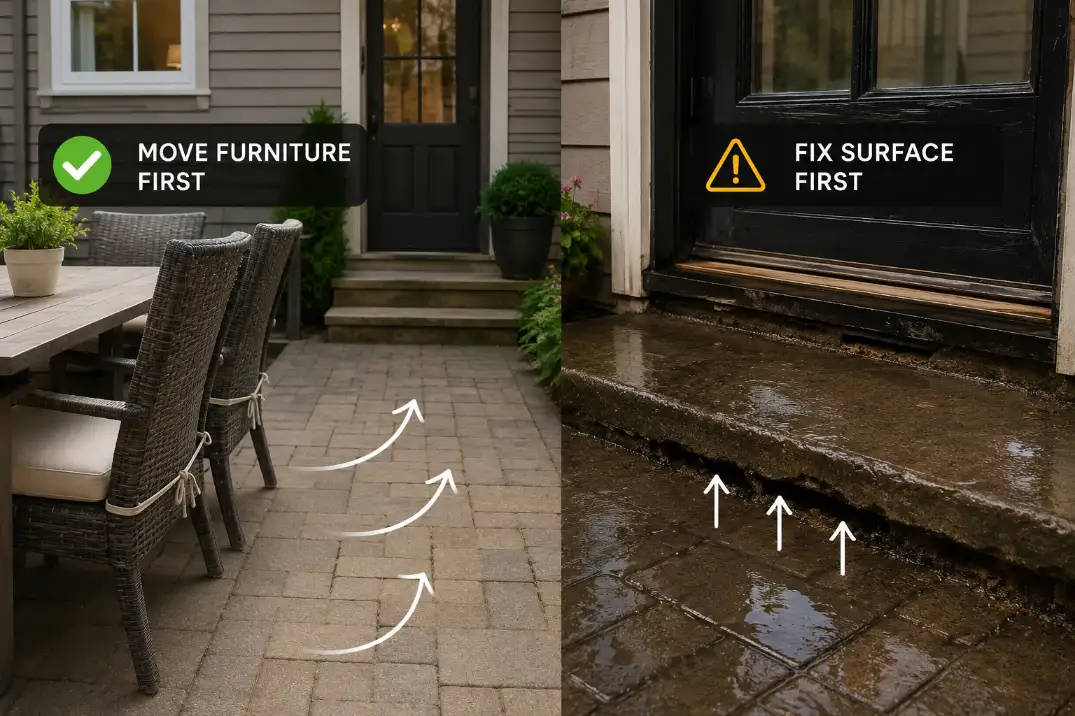
The point is not to make the patio empty. It is to fix the sequence: door opens, foot lands, body turns, route stays clear, surface feels safe. When that sequence works, the patio often feels larger without adding a square foot.
Questions People Usually Ask
How wide should a patio entry path be?
Use 36 inches as the practical minimum. For a busy back door, 42 to 48 inches is better, especially if the route serves dining, grilling, pets, or daily yard access.
Is it bad to put a dining table right outside the back door?
Not always. It becomes a problem when pulled-out chairs overlap the entry path or when the table forces people to turn immediately after stepping outside. The test is how the table works while people are seated, not how it looks when chairs are pushed in.
Should drainage be fixed before furniture layout?
If water collects near the door for more than 24 hours after average rain, yes. Drainage should be addressed before investing in a new layout because wet entry conditions will keep shaping how people use the patio.
What is the fastest way to tell if the entry is the real problem?
Carry something through the door and watch where your body hesitates. If the first adjustment happens within the first 4 to 6 feet, the entry is more likely the problem than the patio size.
For broader official guidance on surface drainage and keeping water away from the home, see University of Minnesota Extension.