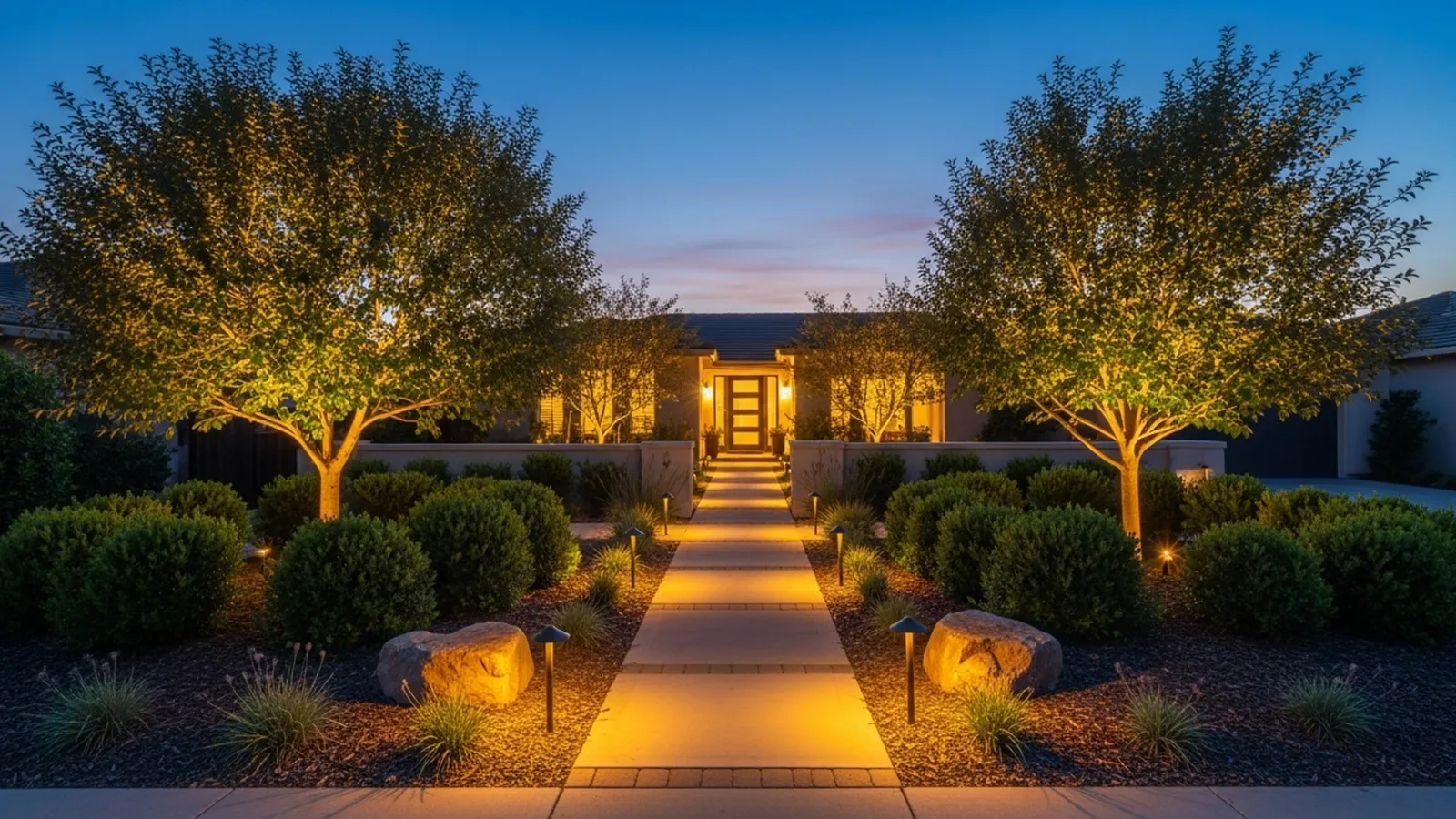
A front yard is the first visual conversation a home has with the outside world, and lighting determines how that conversation continues after dark. Thoughtful illumination shapes perception, clarifies form, and signals care without saying a word.
Unlike temporary upgrades, outdoor lighting works every night and across every season. It supports safety and navigation while reinforcing architectural character and landscape structure.
The most effective front yard lighting feels intentional rather than decorative. When planned as part of the overall outdoor environment, it enhances curb appeal quietly and consistently instead of demanding attention.
Understanding Light Layers in Front Yard Design
Layered lighting is the backbone of a successful front yard lighting plan. It relies on the interaction of ambient, task, and accent light rather than a single dominant source. This balance allows the yard to feel complete without appearing overlit.
Each layer serves a distinct purpose while supporting the others. Ambient light establishes overall visibility, task lighting supports movement and entry, and accent lighting introduces visual hierarchy. When one layer is missing, the space often feels either flat or visually chaotic.
A layered approach also protects flexibility over time. As plants mature or paths shift, individual elements can be adjusted without redesigning the entire system. This adaptability keeps the lighting relevant as the landscape evolves.
✔️ When layers are balanced, shadows become intentional design tools instead of accidental dark spots.
Pathway Lighting That Guides and Frames the Yard
Pathway lighting does more than illuminate where to walk. It subtly defines circulation, helping visitors understand how the front yard is meant to be used. This guidance improves comfort and reduces hesitation, especially at night.
Consistency is more important than brightness. Evenly spaced fixtures create a steady visual rhythm that draws the eye forward. Irregular placement or overly bright lights can interrupt that rhythm and feel distracting rather than helpful.
Path lights also frame surrounding landscape elements. By outlining walkways and edges, they give garden beds and lawn borders a clear nighttime structure. This framing effect makes the entire yard feel more composed and intentional.
💡 A softer glow along paths often looks more refined than fewer, brighter fixtures.
Highlighting Architecture With Subtle Illumination
Architectural lighting reveals the character of a home after dark. Walls, columns, and entry details gain depth when illuminated gently rather than flooded with light. The goal is to support the architecture, not compete with it.
Subtle wall washing or downward-focused fixtures emphasize texture and material quality. Stone, brick, and wood surfaces benefit especially from grazing light that highlights natural variation. This approach adds dimension without creating glare.
Scale and placement matter as much as brightness. Fixtures that feel proportional to the facade reinforce design cohesion, while oversized or mismatched lights can disrupt the visual balance of the front elevation.
⚠️ Light that spills directly into eyes or windows undermines both comfort and curb appeal.
Using Accent Lighting to Create Focal Points
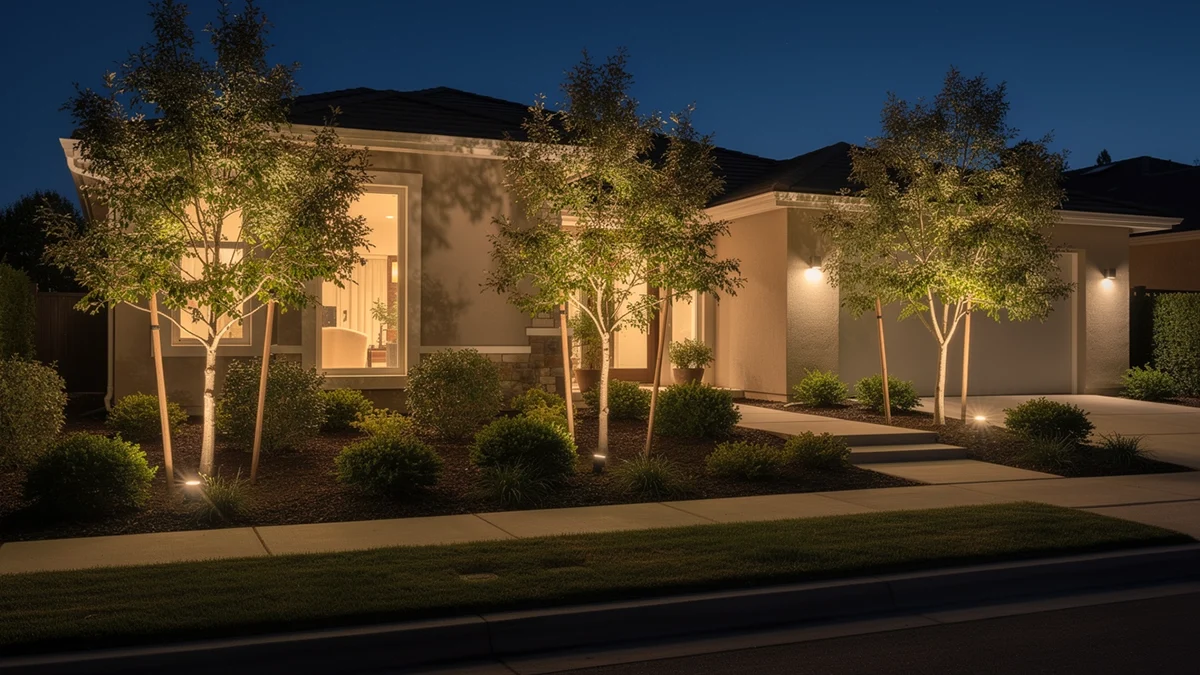
Accent lighting gives a front yard its nighttime personality. By drawing attention to selected features, it establishes visual priorities and prevents the space from feeling uniformly lit. This selective emphasis creates depth and interest.
Common focal points include small trees, sculptural shrubs, or distinctive landscape elements. Uplighting reveals branching structure and texture, while low-angle spotlights can highlight form without overwhelming nearby areas. The restraint of accent lighting is what makes it effective.
Limiting the number of highlighted features is critical. Too many focal points compete for attention and create visual noise. A few intentional accents feel confident and refined.
✔️ Choosing what not to light is often as important as choosing what to highlight.
Entryway Lighting That Balances Function and Warmth
The front entry is both a destination and a transition. Lighting here must support practical needs such as visibility and safety while also communicating welcome. A balanced glow encourages approach rather than caution.
Layering is especially valuable at the entry. Combining wall-mounted fixtures, overhead light, and nearby landscape illumination reduces harsh shadows and improves facial visibility. This layered effect feels more comfortable and human.
Entry lighting also supports daily routines. Whether arriving home late or welcoming guests, consistent illumination reinforces ease of use without drawing unnecessary attention to the fixture itself.
🐾 Comfortable entry lighting benefits everyone, including pets moving in and out after dark.
Coordinating Lighting With Overall Front Yard Design
Lighting decisions are most successful when they align with the broader front yard design. Fixture style, light color, and placement should reflect the same priorities found in planting, hardscape, and architecture. Consistency across these elements strengthens curb appeal.
Coordination also simplifies future changes. When lighting is planned alongside landscape structure, adjustments feel natural rather than corrective. This prevents the piecemeal look that often develops when lighting is added late.
A unified approach helps lighting support long-term visual goals. Front yard lighting becomes more effective when it reinforces the same design intent found in front yard landscaping ideas that improve curb appeal, creating continuity from daylight through evening hours.
Balancing Security and Aesthetics in Front Yard Lighting
Security is often one of the primary motivations for installing front yard lighting, but effective solutions do not rely on harsh brightness. Thoughtful lighting discourages unwanted activity by improving visibility and reducing deep shadows, not by overwhelming the space. When done well, security lighting feels calm and intentional rather than aggressive.
Aesthetic balance comes from placement, not intensity. Lights positioned near transitions such as walkways, driveways, and entries communicate presence and care. This visual clarity supports safety while preserving the welcoming character of the home.
Overt security fixtures can undermine curb appeal if they dominate the scene. Integrating security-minded lighting into landscape and architectural elements allows protection to exist quietly, reinforcing confidence without visual tension.
Choosing the Right Color Temperature for Outdoor Spaces
Color temperature has a strong emotional impact on how a front yard is perceived at night. Warm light in the residential range creates familiarity and comfort, aligning with how people expect a home to feel after dark. It softens edges and complements natural materials.
Cooler temperatures can appear brighter, but they often feel clinical in residential settings. They exaggerate contrast and can make plants and faces look unnatural. This effect is especially noticeable in front yards, where the goal is approachability rather than surveillance.
Consistency matters as much as selection. When different color temperatures compete, the yard can feel fragmented. A unified warmth across fixtures helps the space read as a single, cohesive environment.
💡 Warm, consistent lighting often feels brighter to the eye than mixed temperatures at higher output.
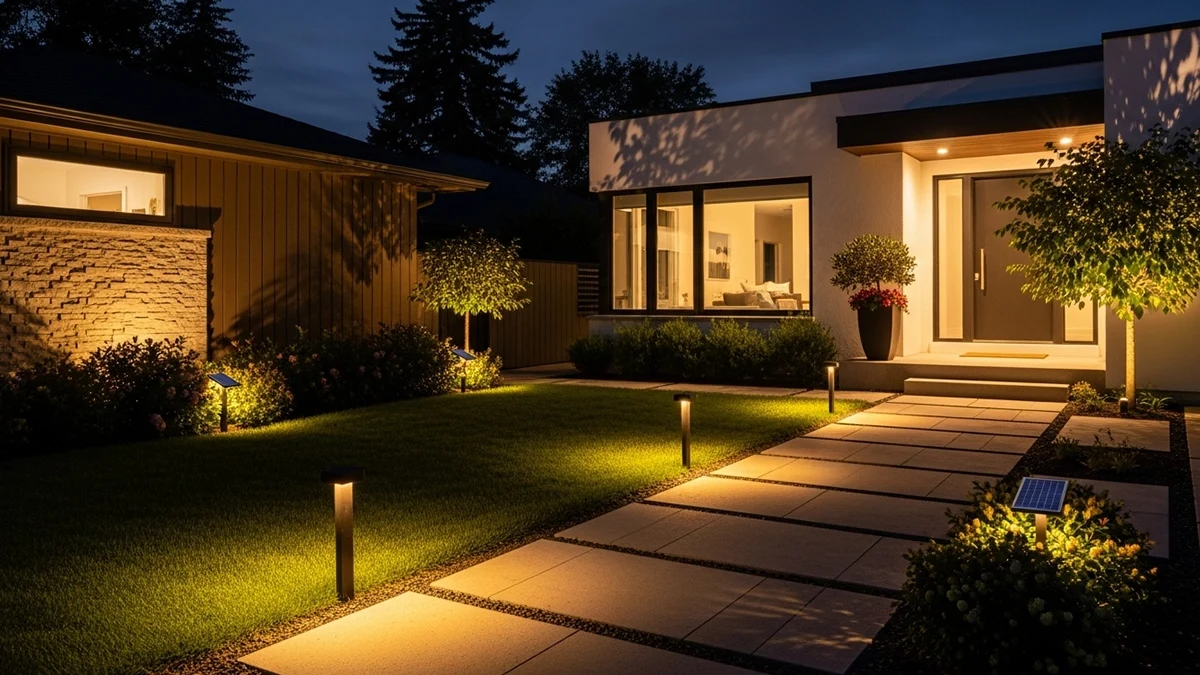
Energy efficiency is no longer a secondary concern in outdoor lighting design. Modern LED fixtures provide reliable illumination with minimal power consumption, making them suitable for nightly use without excessive operating costs. Their long lifespan also reduces maintenance disruption.
Smart lighting systems add flexibility rather than complexity. Timers, motion sensors, and adaptive controls allow lighting to respond to real habits instead of fixed assumptions. This ensures the yard is illuminated when needed and quiet when it is not.
Solar lighting can be effective when used strategically. In areas with consistent sunlight and lower illumination demands, solar fixtures support subtle accents without wiring complexity. They work best as complements rather than primary light sources.
✔️ Efficiency improves when lighting output matches actual use, not maximum capacity.
Integrating Lighting With Privacy-Focused Landscaping
Front yard lighting must support visibility without sacrificing privacy. Poorly aimed fixtures can unintentionally expose windows or interior spaces, creating discomfort for residents. Careful placement keeps light focused on landscape and circulation areas.
Planting and lighting work best together. Soft illumination behind layered shrubs or ornamental grasses creates separation from the street while maintaining visual depth. This technique defines boundaries without hard barriers.
When lighting and planting are coordinated, privacy feels intentional rather than defensive. Front yard lighting integrates naturally with front yard landscaping for privacy without fences, allowing illumination and greenery to define space while preserving openness.
⚠️ Light that spills beyond its purpose often creates exposure instead of security.
Seasonal Considerations for Front Yard Illumination
Seasonal change alters how front yard lighting behaves and is perceived. In winter, reduced foliage and longer nights make lighting more prominent and function-driven. Snow and reflective surfaces can amplify brightness beyond what was intended.
During warmer months, denser planting may block or soften light output. Fixtures that performed well in winter can become visually muted as foliage grows. This shift requires occasional reassessment to maintain balance.
Flexible lighting systems adapt more easily to these changes. Adjustable fixtures and modular layouts allow subtle refinements without reworking the entire design. Seasonal awareness prevents both underlighting and excess glare throughout the year.
💡 Lighting that adapts seasonally feels intentional rather than neglected.
Avoiding Common Front Yard Lighting Mistakes
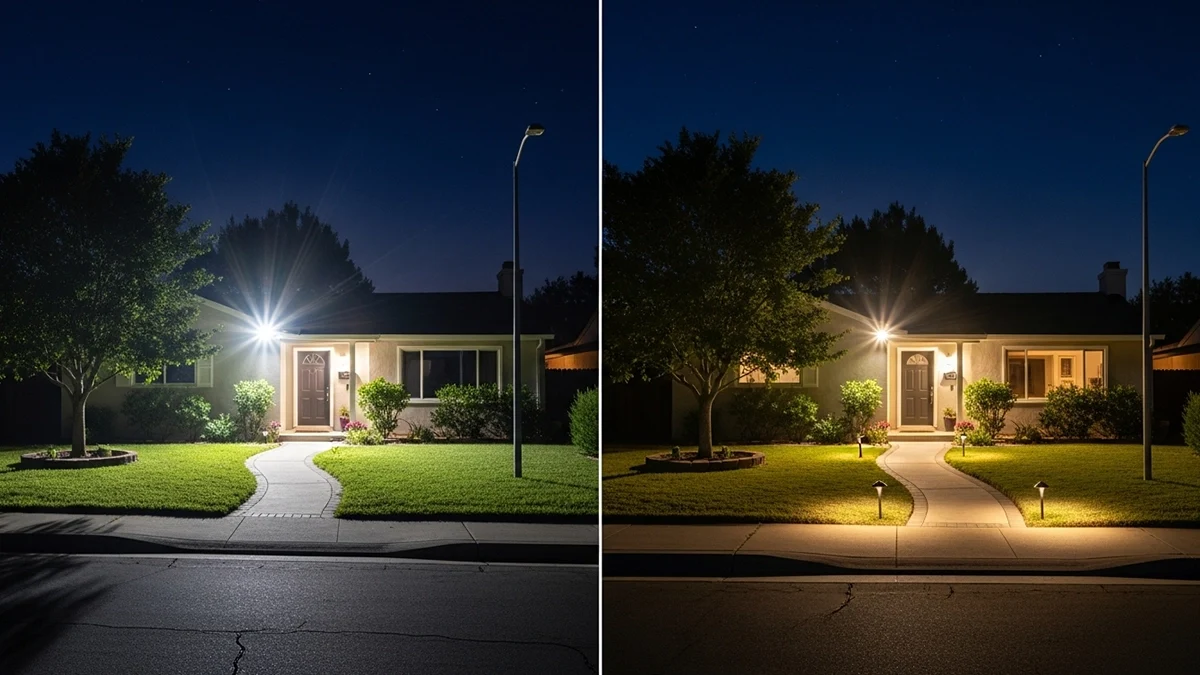
Overlighting is one of the most frequent mistakes in front yard design. Excessive brightness flattens form, removes shadow depth, and creates glare that reduces comfort. The result often feels less safe rather than more secure.
Poor aiming is equally disruptive. Fixtures that shine into eyes, windows, or neighboring properties create visual stress and undermine usability. Downward-focused and shielded light maintains control and clarity.
Inconsistency in fixture style and spacing also weakens visual cohesion. When lighting elements lack rhythm or shared design language, the yard feels pieced together instead of planned. Avoiding these pitfalls preserves both function and curb appeal.
❌ More fixtures do not compensate for poor placement.
Planning Lighting as Part of Everyday Outdoor Living
Front yard lighting influences daily routines more than many homeowners realize. From returning home after dark to short conversations near the entry, lighting shapes how comfortably the space supports everyday use. Subtle illumination reduces friction in these moments.
Considering lighting early in the design process allows it to integrate naturally with paths, plantings, and social edges. This foresight prevents the need for corrective additions later, which often feel visually forced.
Lighting that supports everyday living also anticipates change. As routines evolve, adaptable systems continue to serve without compromising appearance, preparing the front yard for deeper use and long-term enjoyment.
Matching Fixture Styles to Home Architecture
Front yard lighting feels most credible when fixture style aligns with the home’s architectural language. Clean-lined homes benefit from restrained, minimal fixtures, while traditional facades often read better with classic forms and softer detailing. This alignment prevents lighting from feeling like a foreign layer added after the fact.
Consistency in style signals intention. When fixtures echo existing elements such as door hardware, railings, or trim finishes, the exterior reads as a cohesive whole. Even subtle mismatches can stand out at night when lighting becomes a focal element.
Material choice reinforces this relationship. Finishes that age well outdoors help maintain visual integrity over time, ensuring the lighting continues to support curb appeal rather than distract from it.
Placement Strategies That Respect Scale and Proportion
Lighting placement determines how balanced a front yard feels after dark. Fixtures that are oversized or undersized for their surroundings can distort perception and make the space feel awkward. Scale should always relate to nearby paths, planting beds, and facade height.
Proportion is especially important near primary circulation and the entry. Consistent mounting heights and predictable spacing help the eye move comfortably through the space. This visual order reduces clutter and strengthens overall clarity.
Thoughtful placement also supports durability. Fixtures positioned with maintenance and daily activity in mind are less likely to be damaged, preserving both function and appearance over time.
Using Lighting to Support Wayfinding and Flow
Front yard lighting quietly communicates how the space is meant to be navigated. By emphasizing paths and transitions, light guides movement without the need for signs or instructions. This intuitive guidance improves comfort for both residents and visitors.
Wayfinding works best when illumination is continuous and understated. A sequence of low-level lights creates a visual rhythm that naturally draws attention forward. Breaks in that rhythm can cause hesitation, especially in unfamiliar spaces.
Clear flow benefits everyday use as well. Consistent lighting reduces uncertainty during nighttime routines, making the front yard feel reliable and easy to move through.
💡 Smooth visual flow often comes from restraint rather than emphasis.
Adapting Lighting for Small vs. Large Front Yards
Front yard size directly influences lighting strategy. Smaller spaces benefit from a limited number of well-placed fixtures that avoid visual crowding. Too much light in a compact yard can feel overwhelming and reduce perceived space.
Larger front yards require more deliberate zoning. Different areas may call for varying intensities and fixture types to maintain balance across distance. Without this hierarchy, large yards can feel uneven or disjointed at night.
Regardless of scale, the principle remains consistent. Lighting should clarify space and proportion, not compete with them.
✔️ Fewer, well-considered fixtures often outperform dense installations.
Coordinating Lighting With Daily Outdoor Use
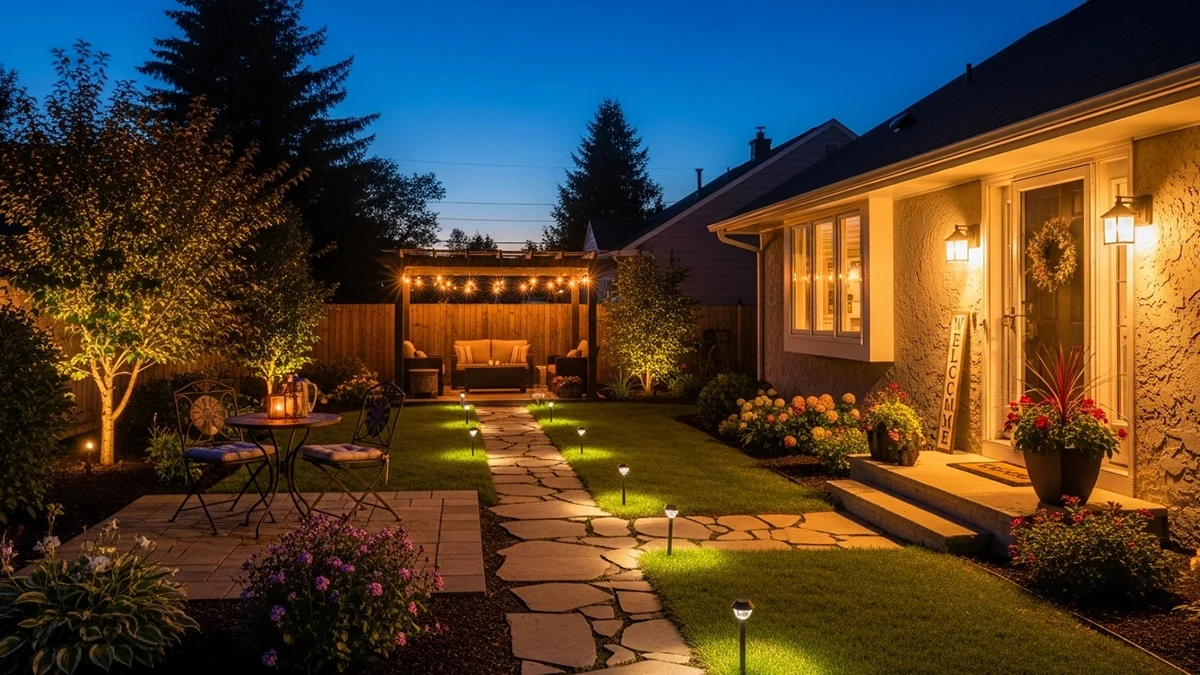
Front yards increasingly function as lived-in spaces rather than purely visual ones. Lighting should support brief interactions, quiet moments outside, and routine movement without exposing the space unnecessarily to the street. Comfort, not brightness, defines success here.
Illumination near seating edges or porches benefits from softness and indirect placement. This encourages use while preserving a sense of privacy. Light that feels too exposed can discourage lingering.
When lighting aligns with how the space is actually used, it fades into the background. It becomes part of the environment rather than a feature demanding attention.
🐾 Thoughtful lighting supports everyday habits for both people and pets.
Long-Term Planning for Durability and Maintenance
A front yard lighting plan should account for long-term performance, not just initial appearance. Fixtures exposed to weather, irrigation, and seasonal debris must be durable enough to maintain consistent output. Quality materials reduce the need for frequent replacement.
Maintenance considerations influence placement as much as fixture choice. Accessible locations and logical wiring paths simplify future adjustments, preventing disruption as the landscape matures. This foresight protects both time and investment.
When lighting is planned as part of a broader outdoor system, it adapts more easily to change. Coordinating lighting decisions with designing outdoor spaces for everyday living supports long-term use while preserving curb appeal as routines and landscapes evolve.
Durable lighting does more than illuminate. It reinforces care, continuity, and intention, allowing curb appeal to remain strong without constant intervention.
External source: https://darksky.org/resources/what-is-light-pollution/