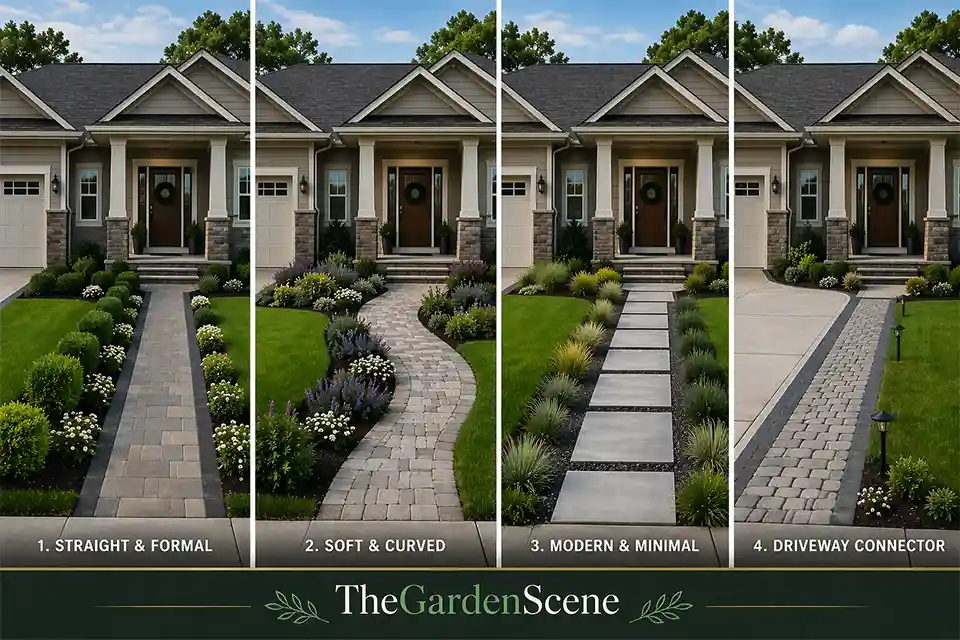
The best front yard landscape design ideas with a walkway to the front door usually succeed or fail before anyone chooses plants or pavers.
They come down to four things first: how quickly the front door reads from the street, whether the path shape fits the house, whether the planting stays low enough to keep the route open, and whether the entry still feels good after 1 to 2 growing seasons.
If someone can spot the front door within about 2 to 4 seconds from the sidewalk or driveway, the design is already doing useful work.
If the path is narrower than about 36 inches, if shrubs lean 6 to 12 inches into the route, or if the garage grabs the first glance instead of the door, the front yard usually feels off no matter how attractive the materials are.
That is the real difference between a yard that photographs well and one that actually feels welcoming every day.
Start with the kind of arrival you want
Most people think they are choosing a walkway. They are really choosing the feel of the approach. Once that is clear, the shape, planting style, edging, and materials get much easier to sort out.
Clean and formal
This is one of the safest options when the front door is easy to see and the house has balanced proportions. The walkway is direct, the beds are controlled, and the entry feels orderly without looking stiff.
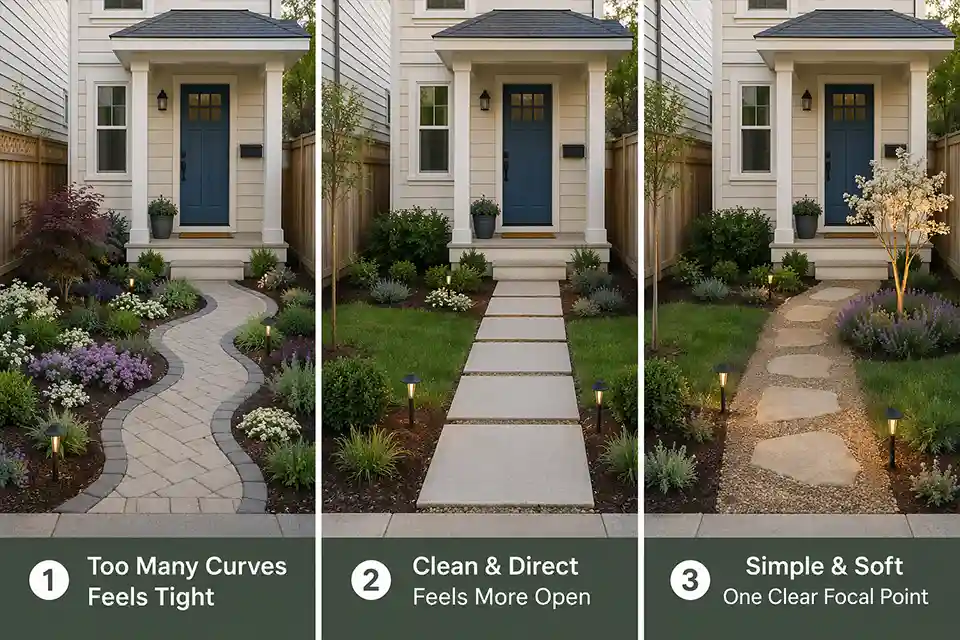
This look usually weakens when people try to make it more interesting with too many bed curves or too many plant types. Formal entries rarely need more motion. They need better repetition.
Soft and garden-like
This works best when the house can handle a looser planted look and the yard has enough depth for a gentler route. A soft entry is not just a curved path. It is a path that feels supported by planting, not crowded by it.
In a shallow front yard of about 18 to 22 feet, too much curve usually wastes space and makes the entry feel staged instead of natural.
Modern and restrained
This usually means large-format pavers, slab-style sections, or a calm concrete walk with disciplined planting around it. The appeal comes from contrast, spacing, and open ground around the path.
This style often fails because people overplant it. Modern front entries usually need fewer gestures than homeowners expect.
Warm and traditional
Brick, brick-toned pavers, and classic path proportions often work well here. The goal is not nostalgia. It is a front entry that feels settled, readable, and welcoming.
That same entry-first logic also fits Front Yard Design Ideas for Suburban Homes, where the strongest designs settle the big moves before chasing smaller details.
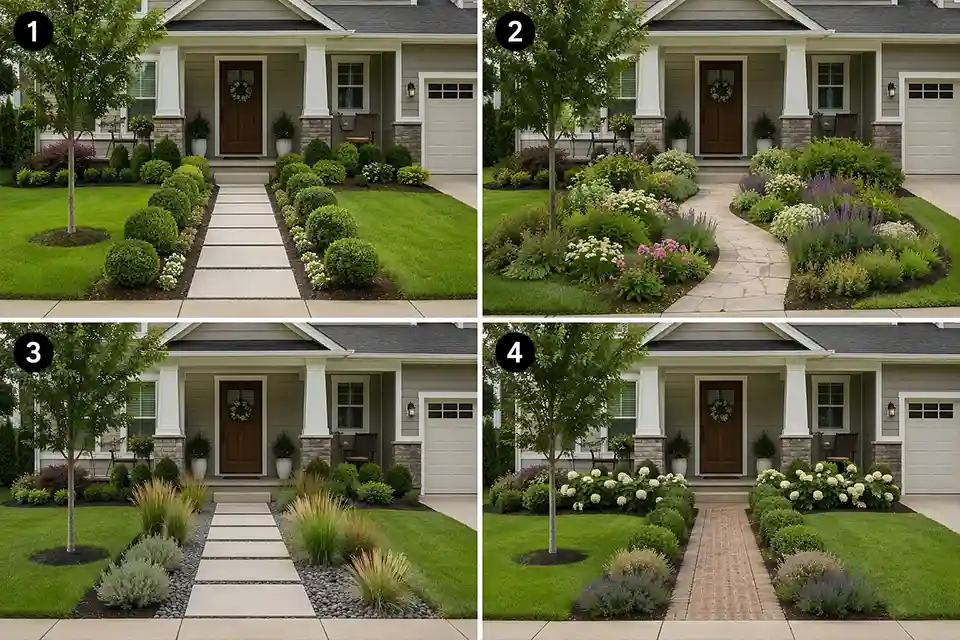
Walkway shape ideas that actually solve something
A lot of inspiration content overuses curves because they photograph well. In real front yards, the best path shape is the one that fixes a layout problem. If the front door is already visible and the yard is straightforward, a direct path usually beats a decorative one.
Straight walkway with layered side beds
This is one of the strongest choices for a typical suburban front yard. It works especially well when the sidewalk-to-porch run is about 15 to 30 feet and the door reads clearly from the street. The path stays direct, while the planting creates depth: lower edges, fuller planting farther out, and one stronger anchor near the porch.
Gentle curve for offset doors
If the front door sits off-center, or if the path needs to soften a hard driveway edge, a mild curve can help. Mild is the key word. In most front yards, the right curve is less dramatic than people imagine.
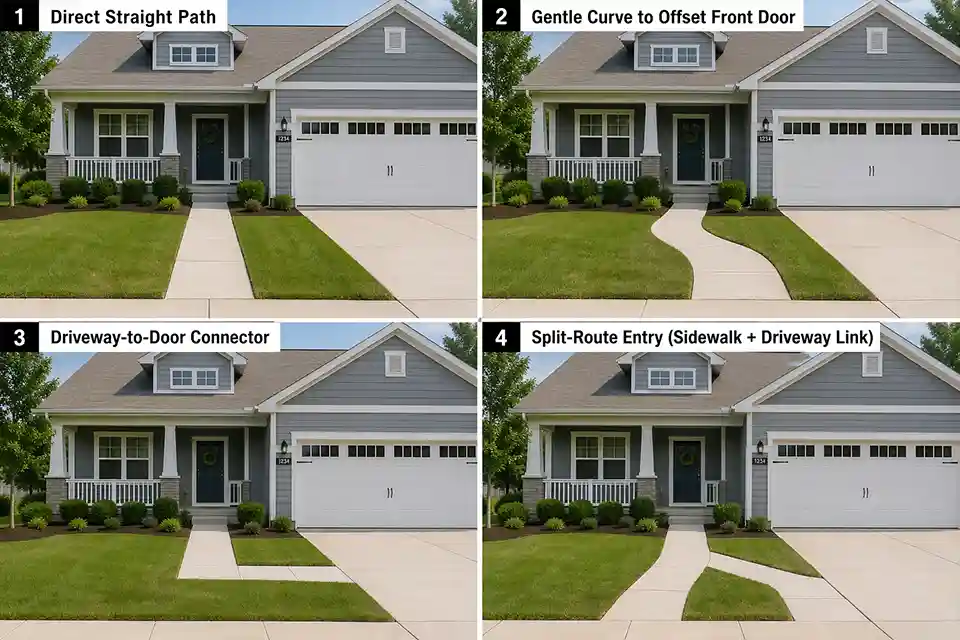
Driveway-to-door connector
This is not the flashiest option, but it is one of the most useful because it reflects how many people actually approach the house. If the driveway route feels improvised, the whole front entry usually feels unfinished. Front Yard Design With Driveway and Front Door Access becomes especially relevant when circulation is the real design issue.
Split-route entry
Some homes really do need both a sidewalk route and a driveway link. That can work, but only if one path still reads as the main approach. When both routes compete equally, the entry tends to feel uncertain.
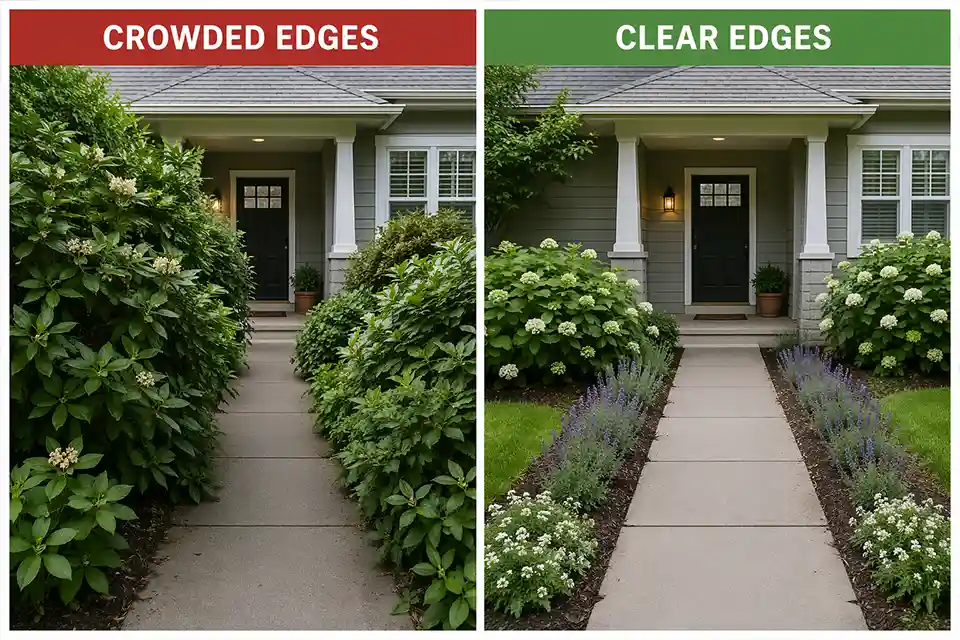
The path edge usually matters more than the paving
People searching for ideas often focus on the center of the walkway. In real front yards, the edge treatment usually changes the result more than the paving itself.
Keep the first-read zone low
If the walkway is the main wayfinding line, the first few feet around it should stay visually quiet. Plants in roughly the 8- to 24-inch range usually help more than shrubs that soon lean into the route.
Put fullness farther out
A common mistake is placing medium shrubs too close to the path because the yard looks a little thin at planting time. Within 1 to 2 seasons, that decision can make the route feel 6 to 12 inches narrower on each side.
Use taller plants to frame, not block
Taller planting can make the entry feel grounded, but it usually works better near house corners, porch edges, or outer beds than right beside the main approach. If the front door loses the first glance, the planting is doing the wrong job.
That same principle also shows up in Best Plants for Front Walkways Near Hot Concrete, especially where the hardscape edge creates a harsher growing zone than the rest of the bed.
Material ideas that really change the look
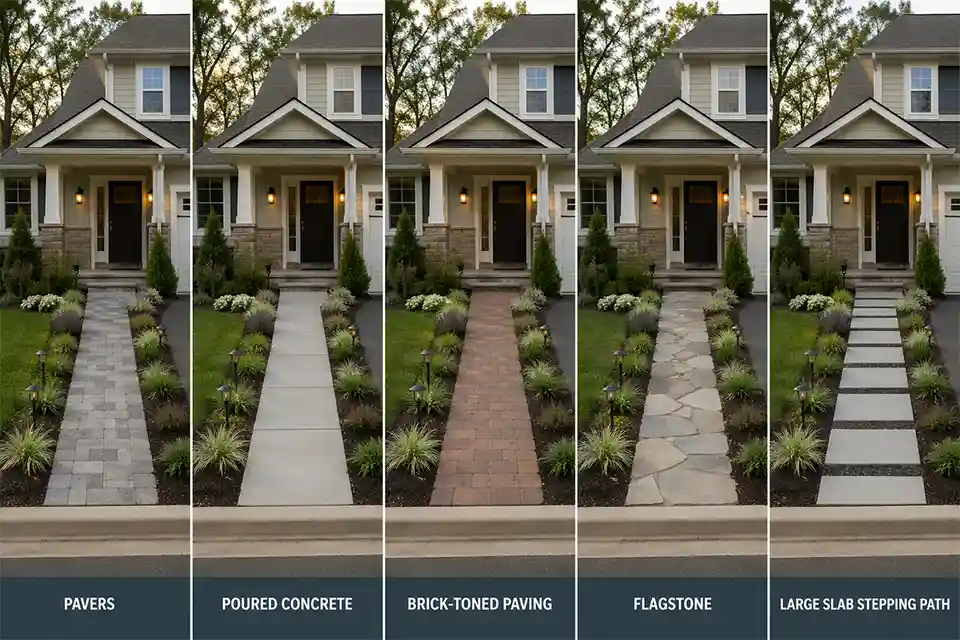
Materials matter, but mostly because they shift the character of the entry. They do not rescue a weak layout. In practice, most homeowners are deciding three things at once: material tone, edge style, and planting character around the path.
Pavers
One of the safest options because they can lean formal, traditional, or simplified depending on color and shape. The usual mistake is too much pattern or too much color contrast.
Poured concrete
Best when the route and proportions are already doing the work. Concrete can feel calm, clear, and durable, but it often looks flat when the path edges are generic.
Brick or brick-toned paving
This usually works best when the house already has warmth or classic detailing. It can feel forced on a cooler, sharper exterior.
Flagstone
A softer, more planted choice that can work beautifully on homes that support a more relaxed entry. It is usually less convincing on formal houses that want cleaner geometry.
Large slabs
A strong option for modern homes, especially where spacing and open ground around the path are part of the look. This is where people often overestimate hardscape drama and underestimate the value of emptier space.
| Material | Best entry look | What often goes wrong | Better rule |
|---|---|---|---|
| Pavers | Flexible, suburban, adaptable | Too many colors or patterns | Keep the field simple |
| Concrete | Clean, calm, direct | Looks plain when edges are weak | Use it where proportions are already right |
| Brick | Warm, traditional, welcoming | Feels stylistically forced | Match it to the house first |
| Flagstone | Soft, planted, relaxed | Looks too casual for formal homes | Use when the planting also leans softer |
| Large slabs | Modern, restrained, crisp | Looks overdone with busy planting | Let spacing and contrast do the work |
Match the walkway to the house before matching it to the plants
This is one of the most overlooked front-yard decisions. People spend too much time choosing flowers and not enough time asking whether the walkway style fits the house.
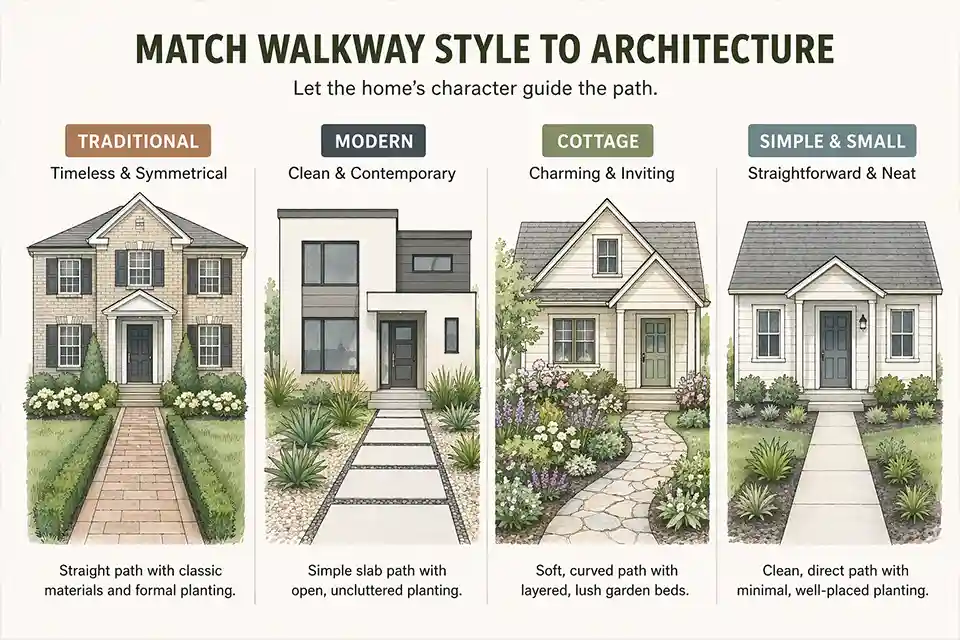
Traditional homes
Straighter paths, balanced bed shapes, and warmer paving tones usually feel better here. The path should feel established, not experimental.
Modern homes
Fewer moves, cleaner joints, and more open space usually work best. One of the fastest ways to weaken a modern entry is to crowd it with decorative planting choices.
Cottage-style homes
A softer route can work well, but clarity still matters. Informal should not mean vague. The walkway still needs to be the most readable line in the yard.
Small homes
On smaller houses, too many bed cuts, accent plants, or path changes can make the front yard feel tighter than it is. Why a Small House Can Make the Yard Feel Tiny is useful here because the problem is often visual crowding, not actual square footage.
The best front-entry ideas also work from the street, midway, and at the porch
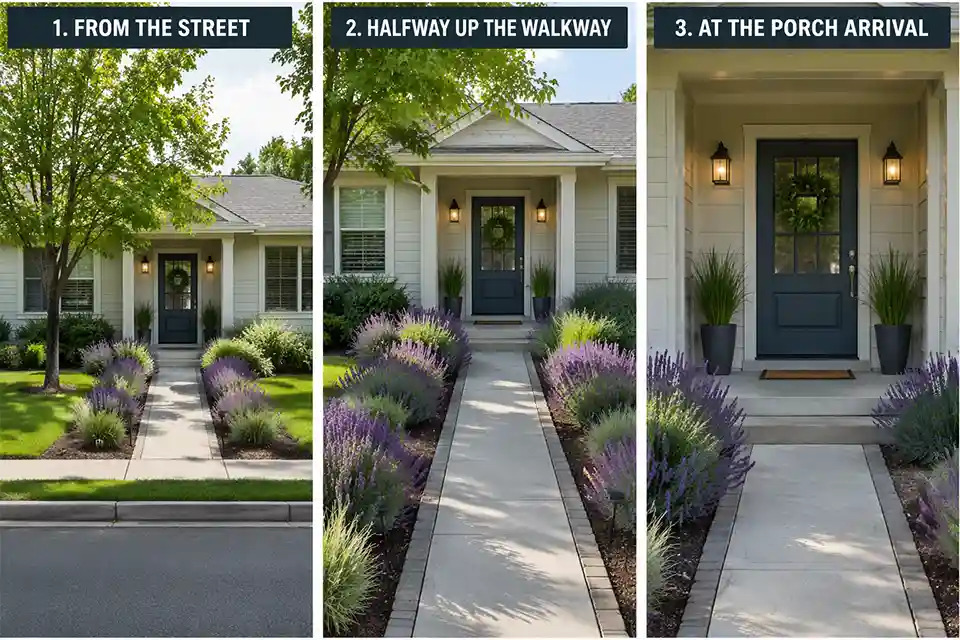
A walkway should not only look good in one hero photo. It should hold together as someone actually approaches the house.
From the street
The front door should win the first read. If the garage, a tall shrub, or a decorative bed dominates instead, the yard is not guiding the eye well enough.
Halfway up the path
This is where proportion starts to show. The route should still feel open, and the planting should still feel deliberate rather than crowded.
At the porch
The arrival should resolve cleanly. Even a modest widening of 12 to 24 inches near the steps or porch can make the entry feel more intentional.
Ready-made front yard combinations that usually work
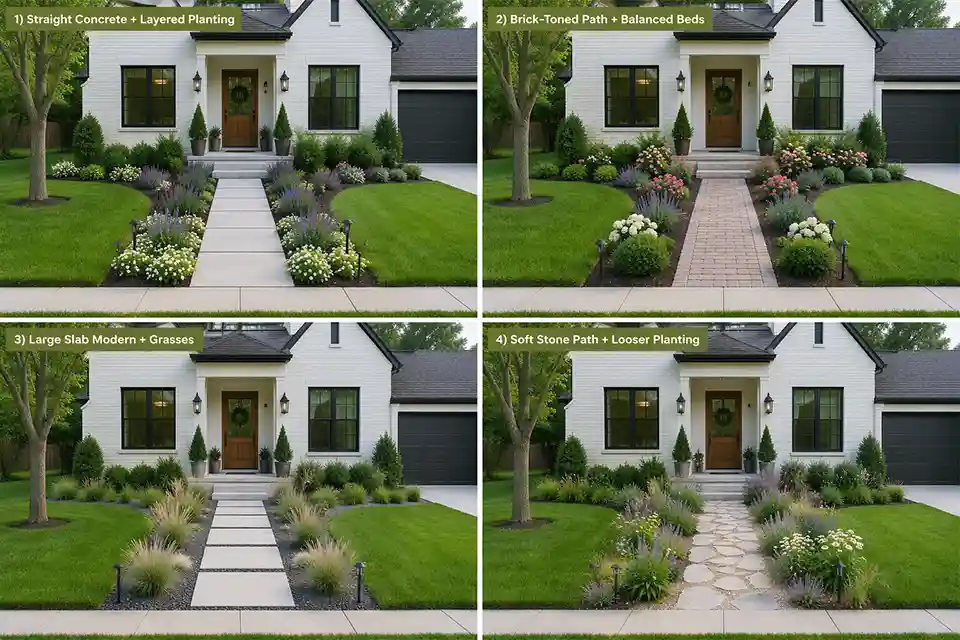
Some readers do not want loose principles. They want combinations that already hold together. These are the pairings that usually perform well in real yards.
Straight concrete walk + layered planting + one porch anchor
A strong option for a wide range of suburban houses because it is readable, affordable, and easy to maintain. It usually falls flat only when the planting around it is too weak or too random.
Brick-toned path + balanced beds + traditional porch lighting
Often a good fit when the house already has warmth and structure. It can feel welcoming without trying too hard.
Large slabs + grasses + low evergreen rhythm
A strong option for simplified or updated homes, especially when the yard benefits from a cleaner look. The risk is adding too many accent plants to a concept that depends on restraint.
Soft stone path + looser planting + wider bed depth
This can look beautiful on homes that support a softer front entry. It usually fails when squeezed into shallow yards or paired with too many competing edge treatments.
Front Yard Landscaping Ideas With a Driveway and Hidden Front Entrance supports the same point, because once the entry is harder to read, the best design direction is usually the one that improves approach clarity first.
Small front-yard ideas that do not make the entry feel tighter
Small front yards show bad walkway decisions fast. Too much curve, too many bed cuts, or too much material contrast can make a compact entry feel busy almost immediately.
Use fewer shape changes
If the total depth from sidewalk to porch is under about 20 feet, one strong path line usually works better than several smaller moves.
Keep the palette tighter
Two or three repeating plant groups usually outperform a long list of accent choices in a compact front yard.
Let one thing be the focal point
On a small entry, the path, the door, and the planting cannot all compete equally. Usually the door should win, the path should support it, and the planting should reinforce both.
Front-yard ideas for garage-forward homes
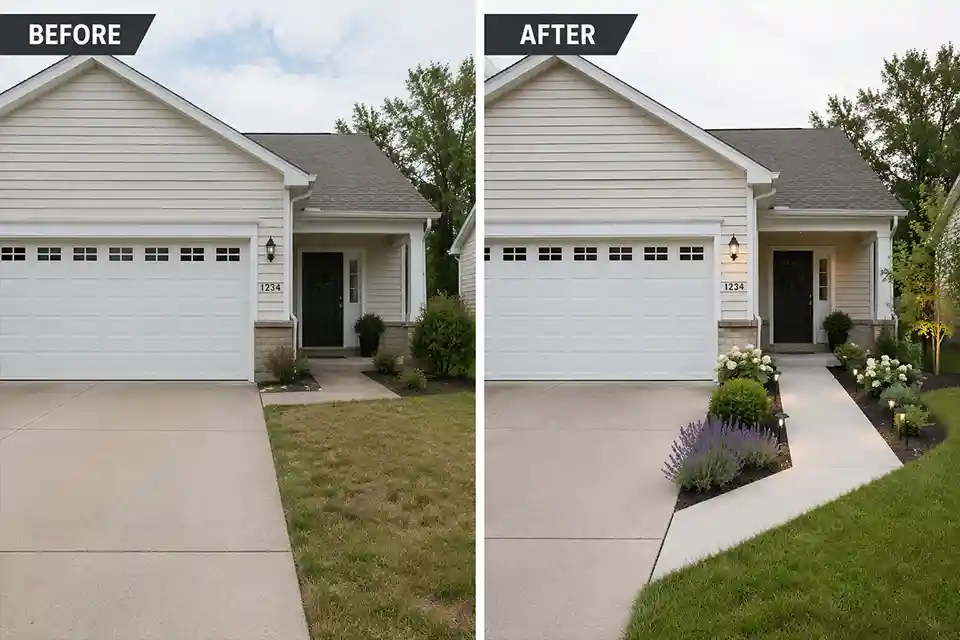
Garage-forward houses often struggle because the driveway wants to become the main visual route whether you planned for it or not. This is one condition people commonly underestimate.
Make the driveway connector look intentional
If the daily route from driveway to porch feels like an afterthought, the entire front entry usually feels unresolved.
Do not let the garage own the first glance
This often means cleaner planting near the main path and slightly stronger visual emphasis closer to the door.
Use the walkway to restore balance
The path can pull attention back toward the house entry, especially when planting mass, lighting, and edging reinforce the route.
When planting is no longer the fix
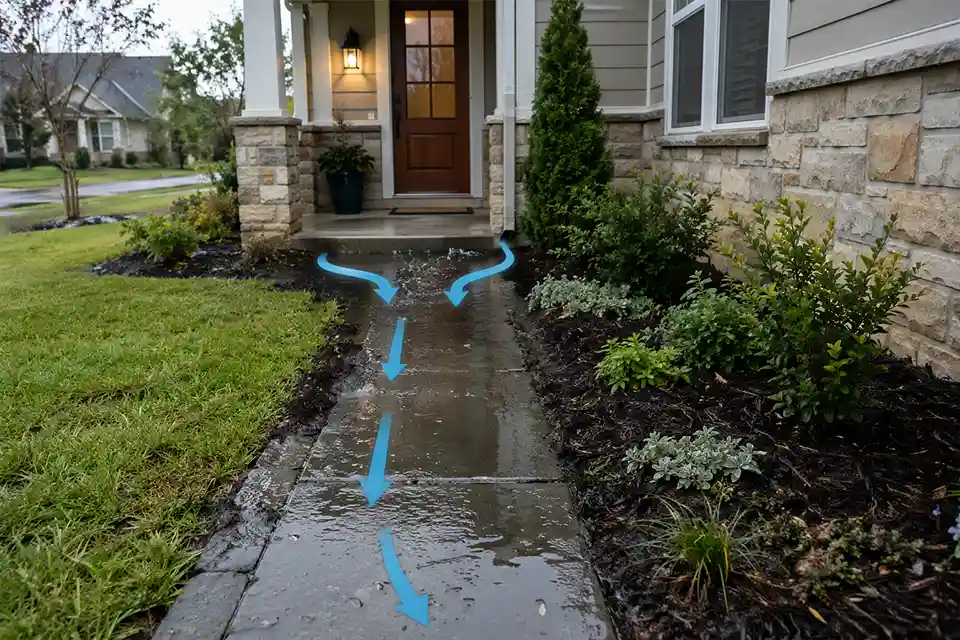
There is a point where changing plants mostly wastes time. If the walkway stays wet more than about 24 hours after a normal rain, if runoff regularly crosses the path toward the porch, or if the entry still feels secondary to the driveway no matter how the beds are edited, the problem is no longer mainly visual.
At that point the front yard shifts from planting-led to grading-led or hardscape-led. People often mistake sparse beds, weak curb appeal, or messy mulch for the real issue when those are only symptoms.
If the path sits in the wrong place or collects water, more ideas around the edge will not improve the arrival experience. That same pattern overlaps with Front Yard Problems After Regrading or New Hardscaping, where the visible issue and the underlying mechanism are not the same.
Pro Tip: Test any walkway idea in three conditions before changing the planting plan—dry daytime view, nighttime arrival, and the day after rain. Those checks rule out a surprising number of expensive mistakes.
Quick checklist for choosing the right front-yard walkway idea
- The front door is readable from the street in about 2 to 4 seconds
- The main walkway is roughly 36 to 48 inches wide
- Key edge plants stay under about 24 to 30 inches
- The path still feels open after 1 to 2 growing seasons
- The walkway style fits the house before it tries to impress with material variety
- The route looks intentional from the driveway as well as the sidewalk
- Water does not sit on the main path for more than about 24 hours
The best front yard landscape design idea with a walkway to the front door is not the one with the most detail. It is the one that makes the route easy to understand, the house easier to approach, and the planting feel like it belongs to the entry instead of competing with it.
For broader practical guidance on planning a front-door walk and entry layout, see Alabama Extension’s residential landscape design guide.