If your front yard has shallow topsoil, the real problem usually is not “bad soil” in the broad sense. It is limited root room. That changes both what you should plant and which fixes are worth doing.
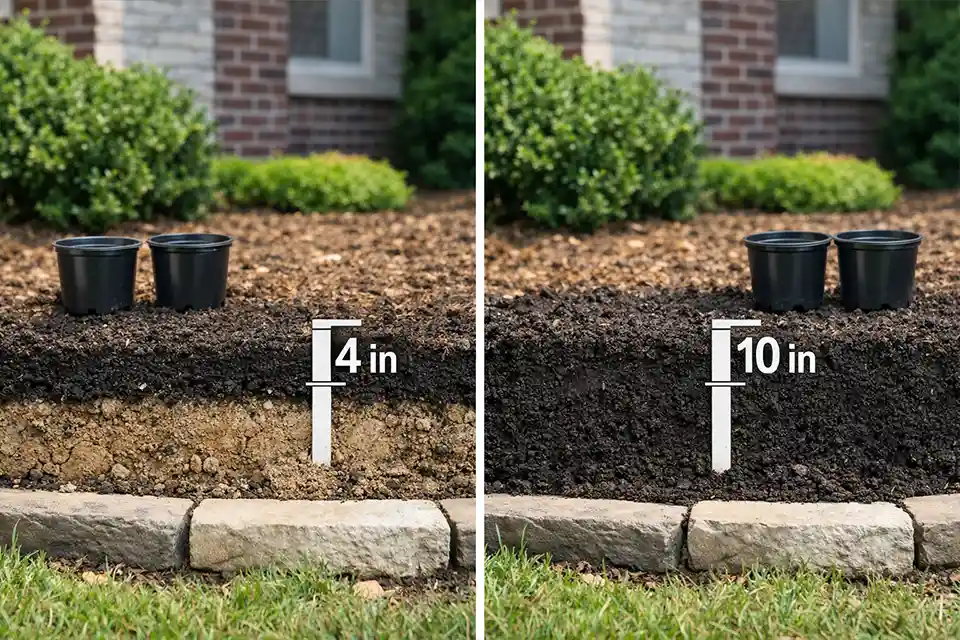
A bed with 10 to 12 inches of workable soil can support a very different planting plan than one with only 4 to 6 inches before roots hit clay, compacted fill, rubble, or rock.
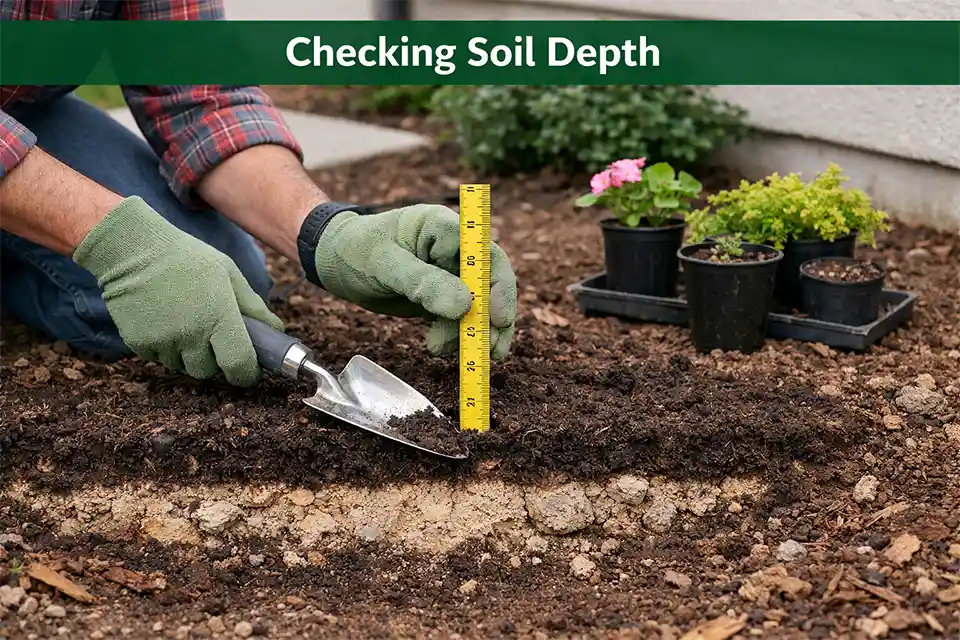
Start with three checks: measure usable depth in at least 3 to 5 spots, test whether a screwdriver or soil probe stops abruptly, and watch whether plants wilt again within 24 to 48 hours after watering in warm weather.
That last signal matters because shallow topsoil often gets mistaken for a simple watering issue when it is really a root-volume issue. Once usable depth drops below about 6 inches across most of the bed, many shrub choices stop being smart no matter how much compost or extra irrigation you add.
Start by dividing the yard into depth zones
The biggest mistake is treating the whole front yard as one planting condition. Most shallow-topsoil yards are patchier than they look. One section may have 8 inches of workable soil near an older bed edge or runoff path, while another has only 4 inches over hard fill.
Under 6 inches of usable soil
Treat this as a low-root-volume zone. This is where people usually overestimate what the yard can support. Think groundcovers, very compact perennials, and tight clumping grasses before you think “small shrubs.”
Better choices here:
- Creeping thyme works best in sunny, fast-draining shallow beds because it stays low, spreads without needing deep soil, and handles exposed edges better than taller flowering fillers.
- Low sedums are among the safest picks for heat, lean soil, and pavement-adjacent stress because they store moisture well and do not need much root depth to stay stable.
- Moss phlox is a strong option when you want spring color in a well-drained bed, but it makes more sense where the crown will not sit wet after heavy rain.
- Hens-and-chicks suit rocky, shallow, dry spots especially well because they tolerate thin soil, reflected heat, and sharp drainage better than softer, thirstier perennials.
These plants work because they stay proportionate to the site instead of fighting it.
About 6 to 8 inches of usable soil
This range gives you more flexibility, but it is still a restrained palette. Compact perennials start to make sense if the bed drains reasonably well.
Good starting picks:
- Heuchera is a better fit for part shade or gentler sun because it adds foliage presence without asking for the deeper, cooler root run that many larger perennials prefer.
- Dianthus works well in lean, sunny, well-drained beds because it stays relatively tidy and does not need the same moisture buffer as fuller cottage-style bloomers.
- Compact salvia is useful in bright, drier exposures because it brings vertical flower color without the oversized root demand of broader, thirstier perennials.
- Coreopsis earns its place in lighter soils and open sun because it gives a longer season of color while still fitting a relatively shallow root zone better than bulkier flowering plants.
This is also the range where nursery tags become misleading. “Easy” does not mean suitable for a shallow, heat-stressed root zone.
About 8 to 12 inches of usable soil
This is the threshold where selected dwarf shrubs, sturdier perennials, and stronger ornamental grasses become realistic. But realistic is not the same as unlimited.
Best options in this range:
- Compact dwarf spirea becomes realistic in sunnier beds with decent depth because it gives shrub structure without the oversized root demand of faster-growing foundation shrubs.
- Dwarf fountain grass or a similarly compact ornamental grass works well where heat is high because it adds movement and shape while tolerating leaner, more exposed conditions.
- Catmint makes sense in well-drained sunny beds because it offers soft structure and long bloom without demanding the lush, deep rooting conditions larger perennials prefer.
- Grouped compact perennials in moderated exposures create a fuller planted look without forcing the site to support oversized shrub mass.
A narrow 10-inch strip beside hot pavement is still a stressful site in July and August.
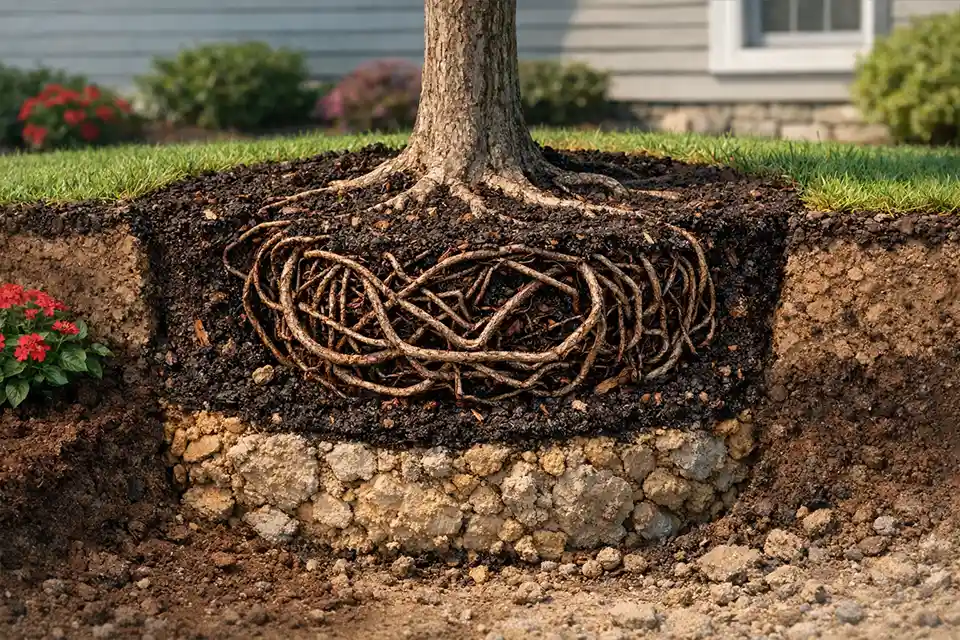
A similar root-space limit shows up in How to Choose Front Yard Plants When Tree Roots Leave Little Soil. The cause is different, but the design logic is similar: when root space is restricted, plant size matters more than plant promise.
What people usually misread first
Shallow topsoil gets confused with several other problems, and that confusion leads to bad plant choices.
It is not automatically poor soil
A thin top layer can still have acceptable fertility. Plants may still fail because roots run out of physical depth too quickly. That is different from a bed that is deep enough but simply low in nutrients.
It is not automatically a drought-only problem
Yes, shallow soil dries faster. But shallow topsoil over dense clay or compacted fill can also hold water briefly after rain and then bake hard a day later. That wet-dry swing is harder on roots than many people expect. People often overestimate pure drought and underestimate unstable moisture.
It is not fixed by compost alone
This is the fix readers usually overvalue. Adding 2 to 3 inches of compost to the upper layer can improve surface texture and moisture behavior. It does not turn a 5-inch root zone into a 10-inch root zone. If the hard stop below is still there, the real limit is still there.
That is one reason How to Choose Front Yard Plants for Water Restrictions connects naturally to this topic. In both cases, success depends less on wishful watering and more on how much usable root-zone support the site actually has.
How to choose plants that actually last
The best filter is not flower color or even drought tolerance alone. It is mature root demand versus real soil volume.
Choose tighter habits before taller habits
A 12- to 18-inch plant with controlled spread often performs better in shallow soil than a 3-foot plant sold as compact. Height creates more demand for anchorage, cooling, and moisture buffering. In thin soil, top growth is often what collapses first.
Prefer plants that suit lean, exposed conditions
Low growers, fibrous-rooted perennials, rock-garden types, and compact grasses usually make better long-term front-yard workers here than lush, thirsty broadleaf fillers.
Filter twice: by depth, then by exposure
A shallow bed in blazing afternoon sun is not the same as shallow soil near a north-facing entry. The soil issue may be similar, but the stress pattern is not. Hot concrete, reflected light, and heat-heavy surfaces can turn a borderline plant into a short-lived one.
That is why How to Choose Front Yard Plants for Blazing Afternoon Sun and Best Plants for Front Walkways Next to Hot Concrete are useful companion reads if the shallow bed also runs hot.
Pro Tip: When two plants seem equally suitable, choose the one with the smaller mature size and denser habit. In shallow topsoil, restraint usually ages better than vigor.
Quick diagnostic checklist before planting
- Usable soil depth is under 6 inches in more than half the bed
- A trowel, probe, or screwdriver hits hard resistance abruptly
- Plants wilt again within 24 to 48 hours after watering in summer
- The hottest edge near pavement fails first
- Larger perennials thin out by the second growing season
- Winter heaving or summer stress loosens crowns or tips plants sideways
The fix that often wastes time
The classic time-waster is digging a large hole for each plant and filling it with rich amended soil while leaving the rest of the site unchanged. It feels logical, but it often creates a comfortable pocket above an uncomfortable landscape.
Roots expand into the soft backfill, then struggle when they meet the harder surrounding layer. The symptom can look like a fertilizer problem or inconsistent watering. The mechanism is root confinement plus an abrupt soil transition.
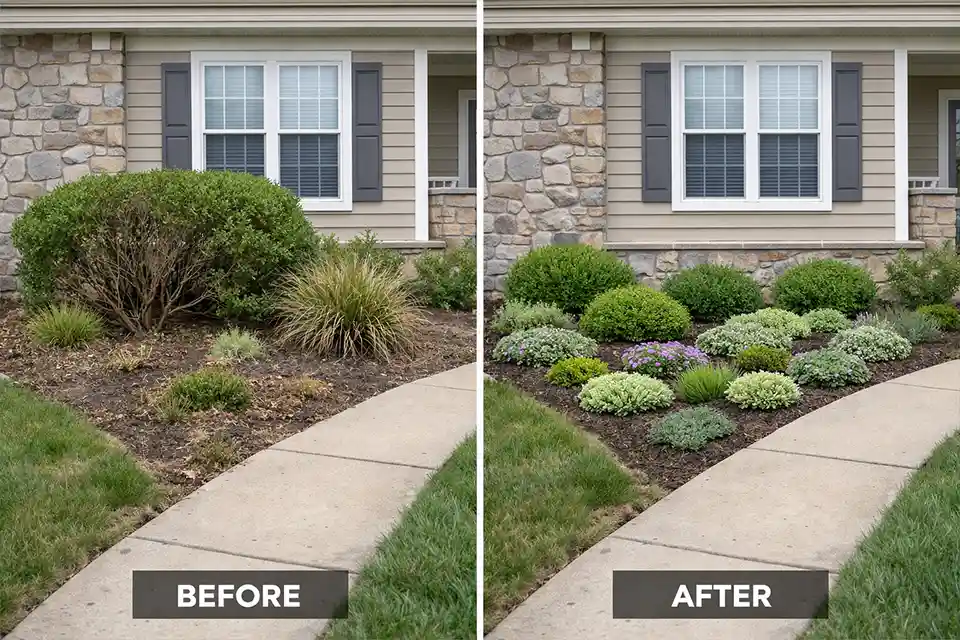
A better move is to accept the site’s root-space limit and design around it. That usually means fewer oversized focal plants, more repeated low drifts, and stronger use of simple massing.
What changes under different US conditions
Shallow topsoil does not fail the same way everywhere, and this is one place generic articles usually stay too broad.
In hot, dry regions
In Arizona, inland California, and similar climates, shallow soil heats fast and dries fast. Even acceptable plants may need to be chosen smaller and used more sparingly near paving.
In humid southern climates
In the Southeast and parts of Florida, shallow soil can create unstable moisture rather than simple dryness. Plants that dislike repeated wet-dry swings can fade faster than expected, especially if air circulation is weak.
In colder northern states
Thin root zones are more exposed to freeze-thaw movement. Plants can heave, crowns can loosen, and winter survival can become less reliable than summer performance suggests.
That is also why Best Front Yard Plants for Late Spring Frost fits naturally here. Thin soil often magnifies cold stress even when frost is not the only issue.
When the standard fix stops making sense
This is where the article needs to be blunt.
The practical cutoff
If most of the bed has only about 4 to 5 inches of usable soil, larger plants have already failed within 1 to 2 seasons, and the area needs rescue watering every 2 to 3 days in summer, forcing a full-size in-ground planting plan usually stops making sense.
What to do instead
At that point, the smarter options are usually:
- a lower, tougher planting palette
- a modest built-up bed or berm
- more repeated groundcover coverage
- fewer specimen plants and cleaner spacing
This is the point where many people keep tweaking plant selection when the real answer is to change planting scale or build more root depth.
If shallow topsoil also overlaps with perched water or slow drainage, Small Garden Drainage Problems is the better next step, because drainage can override otherwise smart shallow-soil plant choices.
A simple comparison guide
| Site condition | What usually works | What often fails | Better move |
|---|---|---|---|
| 4–6 inches, sunny and fast-draining | Sedums, thyme, moss phlox, sempervivums | Most shrubs, thirsty perennials | Use repeated low mats and clear edging |
| 6–8 inches, decent drainage | Compact perennials, low grasses, heuchera | Large cottage-style fillers | Keep most plants under about 18 inches |
| 8–12 inches, moderate exposure | Select dwarf shrubs, sturdier perennials | Fast-growing screen plants | Use shrubs sparingly as accents |
| Thin soil over clay | Carefully chosen shallow-root-tolerant plants | Deep-root-demanding plants | Reduce plant size and improve grading |
| Thin soil beside pavement | Heat-tough low growers | Soft foliage, high-water bloomers | Simplify the palette and widen mulch zones |
The planting strategy that usually wins
The best shallow-topsoil front yards do not try to imitate deep, lush foundation beds. They look better when they accept the site’s limit early: lower plant heights, repeated masses, fewer oversized statements, and accents only where the depth is truly better. Shallow topsoil rewards plants chosen by root demand, not visual ambition.
For a more direct look at which plants actually suit shallow, rocky soil, see Missouri Botanical Garden.