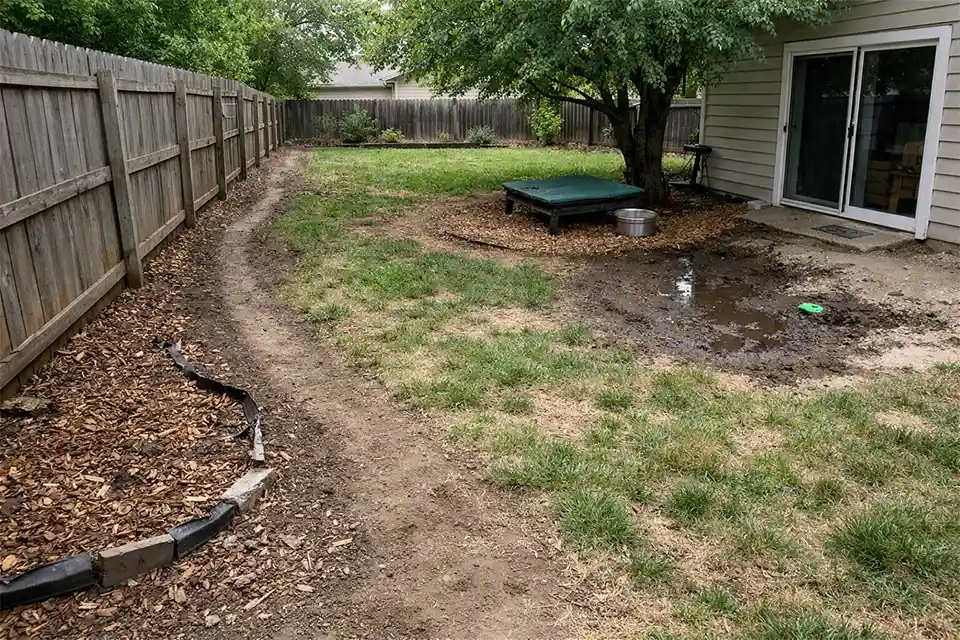
Most backyard landscaping problems in pet homes are not random plant failures. They usually start with repeated traffic, compacted soil, wet cleanup zones, and surface choices that cannot handle daily use. In practice, most of that outdoor wear is dog-driven, because dogs create fixed routes from the door to the fence, gate, shade spot, and preferred potty corner in a way cats and smaller pets usually do not.
If one lane gets used 10 to 20 times a day, the top 2 to 3 inches of soil often harden before the plants fail. If a potty area stays damp for more than 24 hours, odor and muddy paws become a bigger problem than the lawn itself.
And if you are patching the same worn area every 6 to 8 weeks, the issue is no longer “bad grass.” It is a layout and surface mismatch.
That distinction matters. A pet-damaged yard can look like poor soil, weak turf, or bad plant selection, but the more useful first question is simpler: where is the pressure repeating, and what is that surface being asked to do?
Quick Diagnostic Checklist
Before you reseed, replant, or refresh mulch, check for these signals:
- One route is visibly more worn than the rest of the yard
- Bare spots feel firm or crusted within the top 2 to 3 inches
- Mud or odor lingers longer than 24 hours after rain or rinse-down
- Bed edges fail first while deeper plants still look fine
- Urine spots cluster in one zone instead of appearing evenly across the lawn
- The first 8 to 12 feet outside the back door look worse than the rest of the yard
If the damage is concentrated, the problem is usually traffic and use pattern, not a general planting failure.
What People Usually Misread First
The most overestimated problem is urine burn. Urine can absolutely discolor turf, especially in summer heat or on already stressed grass. But in many pet yards, urine is not the first failure. Compaction is. Once soil tightens up, water moves through it more slowly, roots stay shallow, and recovery drops off.
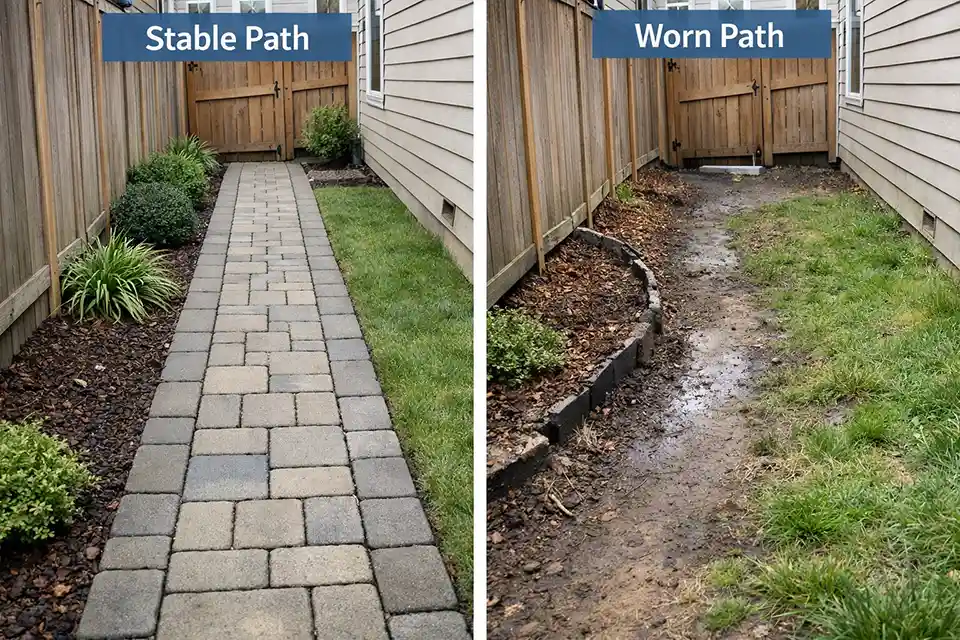
The most underestimated problem is route predictability. Dogs rarely use the whole yard evenly. They build loops: door to fence, fence to gate, gate to patrol corner, then back to shade. Once that loop is obvious, treating it like a decorative lawn or a soft planting edge usually wastes time.
A 12-pound dog may mostly discolor turf. A 70-pound dog usually changes traffic patterns, edge stability, and surface performance. That difference is easy to miss when people talk about “pet-friendly landscaping” too generally.
Why the Obvious Fix Fails
The standard repair sequence usually goes like this: reseed the lawn, top-dress the soil, replace the mulch, add a few “tough” plants, and hope the pet adjusts. In light-use areas, that may hold for a few weeks. In active pet lanes, it usually fails again within 2 to 6 weeks.
The reason is simple. Decorative fixes do not reduce pressure. A 3-foot path still carries the same movement whether it is covered with fresh bark, new seed, or sturdy perennials. In fact, some fixes make things worse. Fresh mulch scatters, loose gravel migrates, and brittle plants collapse right where paws cut the corner.
That is also why some low-maintenance-looking materials become high-maintenance in pet yards. Loose surface problems already show up in Backyard Landscaping Gravel Maintenance Problems even before daily pet traffic adds more movement and scatter.
The Problems That Matter Most
1. Compacted run paths
This is usually the main structural issue. Soil in pet routes becomes dense near the surface, which reduces infiltration and weakens recovery. If water still sits on a worn lane 30 minutes after a normal sprinkler cycle, that area is underperforming.
The right fix is usually a durable circulation strip, not another planting attempt. Use stable pavers, reinforced turf, or a contained surface that can handle turning, braking, and repeat passes. In high-use lanes, routes narrower than about 30 inches often fail because pets clip the edge at speed.
2. Mud around doors, gates, and potty zones
This is where landscaping problems become household problems. Dirt gets tracked inside, odors rise, and cleanup gets harder every week. The wrong response is often to add more absorbent material. The better response is to ask whether that zone drains fast enough and whether the surface can be washed down without turning sloppy.
A useful threshold is simple: if the potty area still feels wet into the next day, it is in the wrong place, using the wrong surface, or both. Potty zones do not need to be your prettiest corner. They need to be your easiest-to-rinse corner.
That usually means keeping them away from the patio, away from the main entertaining zone, and in a part of the yard that sheds or drains water within 24 hours. When that basic drainage logic is missing, the issue starts to overlap with the broader failures covered in Backyard Drainage Problems Homeowners Ignore.
3. Bed-edge collapse
Pets rarely destroy the whole bed first. They break the edge first. Once that line softens, mulch spills outward, paws cut through more often, and perimeter plants start failing. This is why shallow plastic edging often disappoints in active pet yards. It looks finished at install, then shifts, loosens, or gets stepped over.
Heavier edging, low retaining edges, or slightly raised beds work better because they change behavior as well as appearance.
4. Unsafe or impractical materials
Not every pet-yard issue is wear and tear. Some are simply poor material choices. Thorny shrubs at eye height, cocoa mulch, sharp-edged wood mulch, slick large pavers, and dark surfaces that overheat in full sun all create avoidable problems.
This is one place where readers sometimes overcorrect. You do not need to remove every hard surface or every ornamental plant. But you do need to remove materials that stay unsafe under normal use. If a surface is too hot to keep your hand on for 5 to 7 seconds in direct summer sun, it is too hot for routine paw traffic.
If a mulch type gets lodged in fur, scatters into the lawn, or invites chewing, it stops being a practical landscape choice even if it looks good for the first month.
Pro Tip: In pet yards, judge materials after rain, after a hot afternoon, and after a normal week of use. The right-looking material on install day is often the wrong-performing material by week four.
The Layout Shift That Usually Solves It
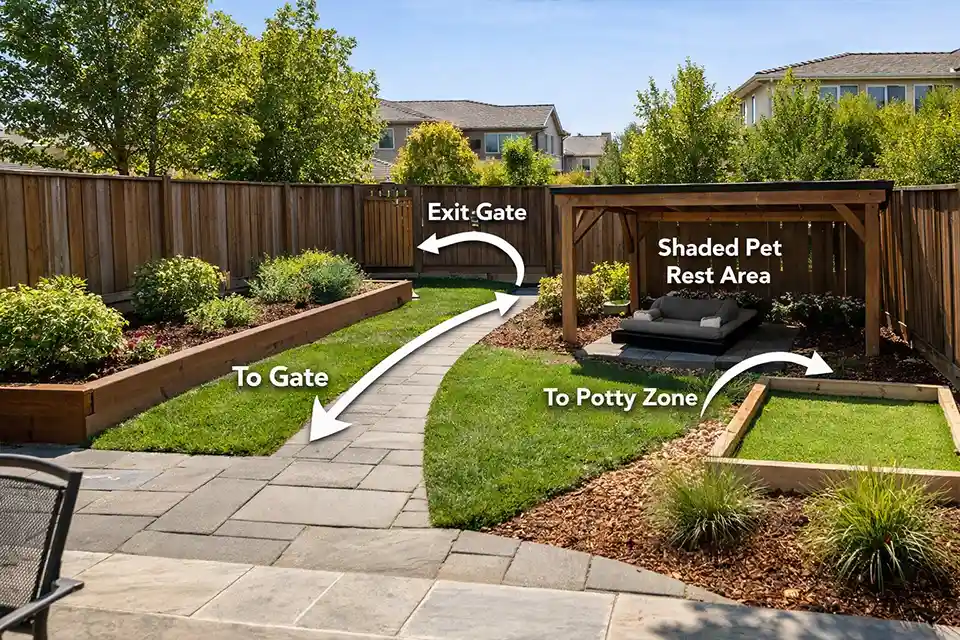
The best pet-friendly backyards stop asking one surface to do everything. Instead, they separate functions.
| Zone | Main Job | Better Choice | What Usually Fails |
|---|---|---|---|
| Run lane | Daily movement and patrol | Pavers, reinforced turf, stable screenings | Loose mulch, soft lawn edge |
| Potty zone | Cleanup and drainage | Washable surface or contained small stone in a fast-draining area | Soggy turf beside patio |
| Rest zone | Cooling and comfort | Shade with soft but protected ground surface | Full-sun heat trap |
| Display zone | Plants and visual interest | Beds placed outside turn lines and patrol routes | Decorative planting on the pet path |
This is where some homeowners make the next mistake and remove all lawn too quickly. That can work, but only if the replacement surface can handle temperature, sanitation, drainage, and daily movement. Otherwise, you trade patchy turf for hardscape that stays dirty or overheats. That tradeoff is part of the same decision logic behind Backyard Landscaping Without Grass: Common Problems and Fixes.
The same goes for overall yard organization. A surprising number of pet-related landscape problems are really circulation problems in disguise. When routes, resting areas, and planting zones overlap, the yard wears down faster. That broader layout issue connects naturally with Backyard Zoning Mistakes That Kill Outdoor Flow.
What Changes in Hot Weather
Heat changes the material decision more than many people expect. Artificial turf, dark stone, exposed gravel, and fully unshaded potty areas become much less forgiving in places with long summer heat. Natural grass has limits, but it also cools the space in a way many hard surfaces do not.
That does not mean every pet yard needs a large lawn. It means you should be more careful with heat-retaining surfaces in full sun and more deliberate about where shade is placed. If the hottest part of the yard is also the main route or potty zone, pets will avoid it and create a new damage pattern somewhere else.
That is why hot-climate surface behavior matters here more than readers often assume, and why Backyard Design Problems in Hot Summer Climates becomes relevant once surface temperature starts changing how the yard gets used.
When the Standard Fix Stops Making Sense
There is a clear point where patching stops being maintenance and becomes denial.
That point usually arrives when at least two of these are true:
- you are repairing the same zone more than 3 times in one growing season
- pet traffic is visible from the back door without having to look for it
- muddy cleanup returns within 48 hours
- bed-edge breakdown keeps spreading outward
- the damage is now affecting the patio, walkway, or indoor floor
- you already know exactly where the pet will run before the door opens
Once you are there, stop treating it like a planting issue. Redesign the route, the surface, or the wet zone. Most yards do not need more “pet-friendly plants” at that stage. They need a better operating layout.
High-Impact Fixes for Pet-Damaged Yards
If you want one fast action layer, focus on the fixes that change daily performance rather than the ones that only improve appearance.
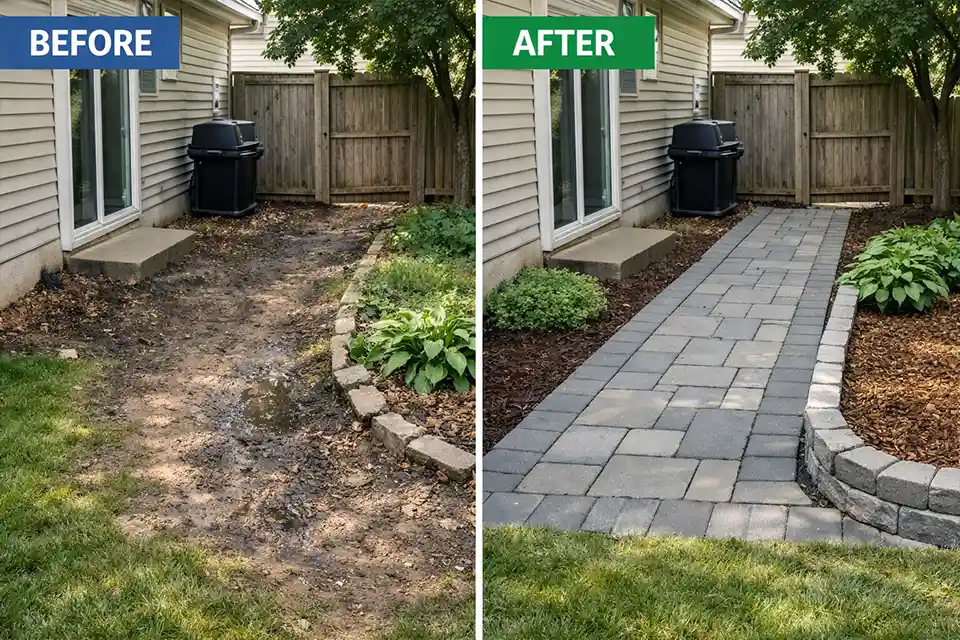
- Turn the main pet route into a durable surface. In heavy-use lanes, stable pavers, reinforced turf, or another contained surface usually outperform repeated replanting.
- Put the potty zone where it drains fast and rinses clean. A useful pet relief area should stay out of the main seating zone and recover quickly after washdown or rain.
- Remove unsafe materials from active pet zones first. Thorny plants, chew-risk mulch, and heat-trapping surfaces create more trouble than they are worth once pets use that area every day.
Pro Tip: If you can only afford one correction, fix the first 8 to 12 feet outside the back door first. That area usually takes the heaviest wear and determines how much dirt gets into the house.
What Actually Changes the Outcome
Watch the yard for 3 to 5 days before changing anything. Not your intended layout. The real one. Where the pet accelerates, cuts corners, pauses, marks, patrols, and rests. Then build around that behavior instead of fighting it.
Protect the route first. Move delicate planting out of turn lines. Put the potty area where it can drain and be rinsed easily. Use materials that stay safe in heat, do not scatter under paws, and do not punish you with constant cleanup. Reserve your best-looking ornamental planting for the places pets do not need to cross.
That is the shift that makes a pet yard feel easier. Not a prettier version of the same failure pattern, but a yard designed for actual use, with fewer weak surfaces, fewer false repairs, and less daily friction.
For broader official guidance, see Penn State Extension’s Petscaping: Creating a Pet-Friendly Garden.