Last updated: June 19, 2026
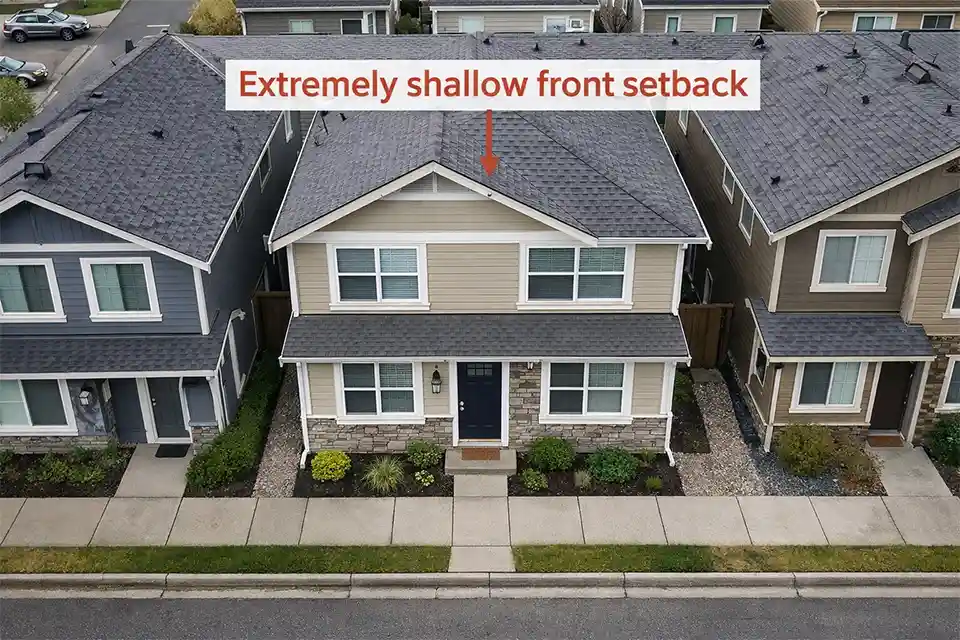
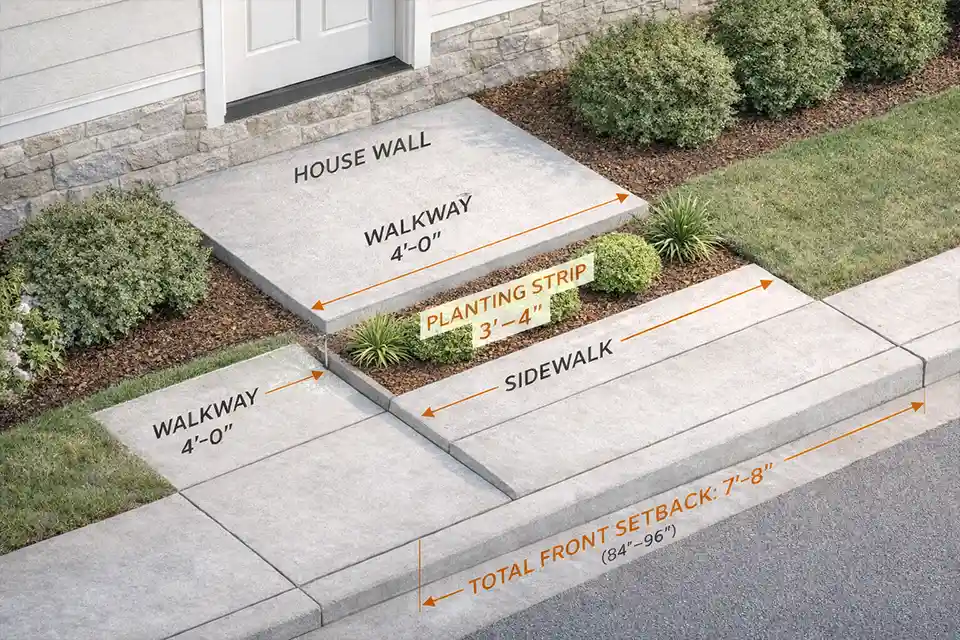
When a house sits close to the street, the front yard stops behaving like a normal front yard. It becomes a clearance zone. That is the core design constraint, and it changes almost every decision. Once the distance from the front wall to the sidewalk or curb falls into the roughly 4- to 8-foot range, the usual front-yard formula starts failing for spatial reasons long before it fails aesthetically.
The first three checks matter more than plant style: measure the true bed depth after subtracting the walkway, check whether mature plant spread would leave at least 12 to 18 inches of breathing room at the edge, and see whether water still sits there 24 hours after a typical rain. Those three checks usually tell you whether you are designing a plant bed, a narrow threshold, or a problem you should stop trying to soften with plants alone.
People often misread this as a small-yard issue. It usually is not. A small yard can still hold depth, layers, and screening. A minimal-setback yard usually cannot, because the same shallow strip has to absorb access, visual order, plant growth, street exposure, and maintenance.
That is why the strongest front yards in this situation tend to look calmer than homeowners first expect. They are not under-designed. They are correctly sized to the site.
The First Call to Make: Is This a Planting Problem or a Space Problem?
The most useful decision happens early: decide whether the site has enough room for planting to be the main design tool. If it does not, every later choice gets worse.
A simple threshold helps. If the usable planting depth is under 4 feet after you account for walkway width, door swing, and the strip of space plants should not invade, stop thinking in terms of a layered foundation bed.
That is the point where “adding more landscaping” usually means adding future trimming, blocked sightlines, and edge crowding.
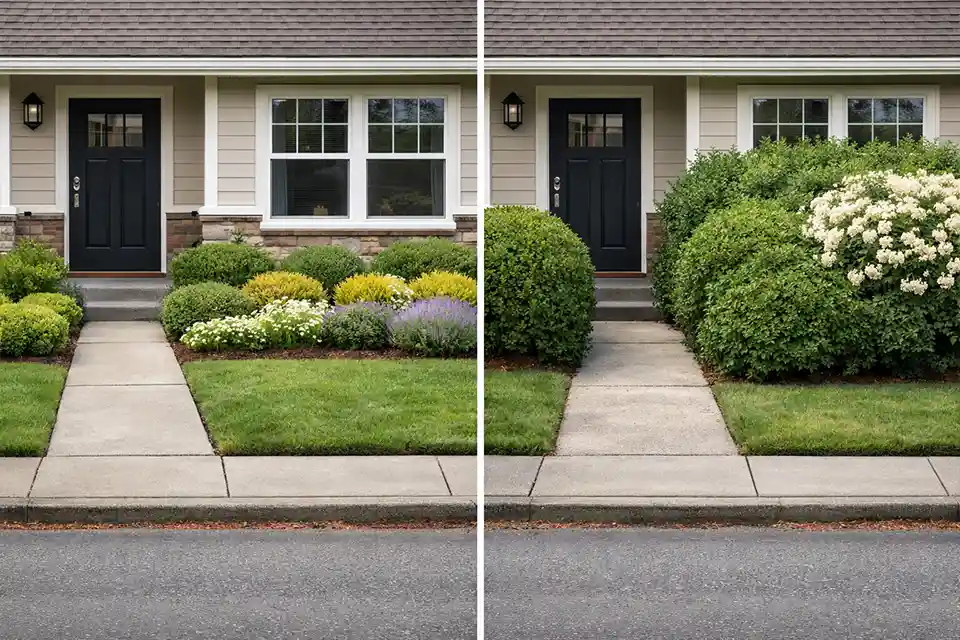
That is also why homeowners commonly overestimate shrub height and underestimate shrub width. A plant that looks upright in a nursery pot often matures 3 to 5 feet wide. In a bed that is only 3 feet deep, that width matters more than the label photo.
By year two or three, the plant is either being sheared into a bad shape or spilling into the front walk. That is not a maintenance issue that appears later. It is a design mismatch that was built in from the start.
In shallow setbacks, packed planting also tends to become the same kind of false economy covered in Cheap Front Yard Ideas That Cost More Later. Fast fill looks satisfying in the first season. Then it starts charging rent in pruning time, replacement costs, and visual clutter.
What People Usually Misread First
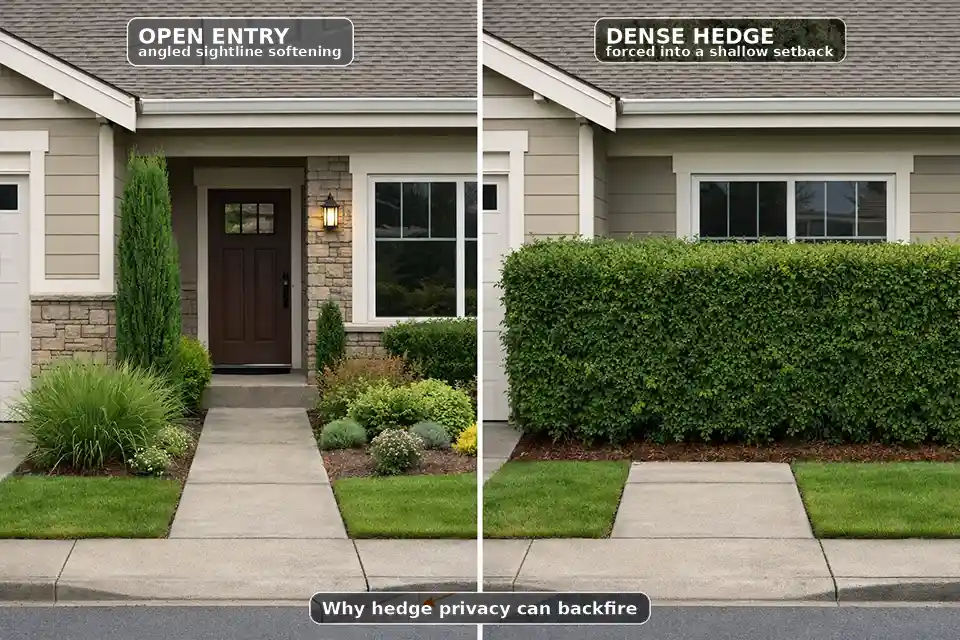
The first wrong turn is privacy. The house feels exposed, so people reach for screening. That instinct is understandable, but in a shallow setback it usually produces mass instead of privacy.
A hedge only works when there is enough depth to keep it off the wall, off the walk, and still let it become tall enough to matter. In a 4-foot bed, that math usually breaks. A hedge kept at 30 to 36 inches is too low to screen much.
A hedge allowed to reach 5 feet can soften views, but it also darkens the frontage, swallows the window line, and creates trimming cycles every 6 to 8 weeks in warm growing weather. The issue is not that privacy planting is always wrong.
The issue is that the site often does not have the depth to support privacy planting at hedge scale.
The better move is usually to interrupt sightlines instead of trying to block them outright. One narrow upright form, one offset focal plant, or one carefully placed cluster can reduce direct exposure without turning the frontage into a wall.
That is why readers dealing with the same privacy impulse often get more value from Front Yard Landscaping for Privacy Without Fences than from articles that just list screening shrubs.
The second thing people misread is complexity. Curved bed lines, mixed accents, and too many plant layers do not make a shallow front yard feel richer. They make it feel busier. In this type of frontage, calm reads as intentional. Fussy reads as cramped.
Quick Diagnostic Checklist
- The remaining bed depth is less than 4 feet once walkway width is subtracted
- Mature plant spread would occupy more than one-third of the total setback
- The front walk is under about 42 to 48 inches wide and already feels visually tight
- Water remains in the bed for more than 24 hours after ordinary rain
- A utility box, downspout outlet, or root zone interrupts the only workable planting area
- Lower front windows need softening, but the bed is too shallow for a real hedge
- The curb edge takes road splash, salt, or dust often enough to damage soft planting
The Layout That Usually Works Best
Minimal-setback front yards are usually strongest when they are reduced to three jobs: guide people to the door, soften the front of the house, and hold one clear focal point. That is enough.
This is one of the few situations where a plan that looks slightly sparse on paper often looks exactly right on site. The reason is perspective. From the street, from the walk, and from the window, every inch of horizontal growth reads larger than expected.
Use depth, not style labels, to make decisions:
| Usable Bed Depth | What Usually Works | What Usually Fails | Best Priority |
|---|---|---|---|
| Under 3 feet | Ground-hugging plants, gravel, one container or accent | Traditional shrub border | Keep clearance clear |
| 3 to 4 feet | Low mounding plants under 24 to 30 inches, one narrow focal form | Layered bed with medium shrubs | Protect path and sightlines |
| 5 to 6 feet | One focal shrub or small ornamental form plus low underplanting | Full hedge across the frontage | Keep the house readable |
| 6 feet or more | Selective layering with strict mature-size discipline | Dense instant-fill planting | Avoid future crowding |
| Any depth with runoff | Stable edge, durable surface, limited soft material | Loose mulch-only finish | Control water first |
That last column matters most. Homeowners tend to judge a new front yard by how complete it looks in week one. Minimal setback design should be judged by whether it still works in year three. That is when width, runoff, and maintenance tell the truth.
Another thing people underestimate is path clarity. If the walkway is already narrow, soft planting spilling 8 to 12 inches into the edge can make the entry feel pinched even when the concrete width itself has not changed.
In those cases, the path deserves design priority over plant fullness. That same principle is why clean path framing often outperforms richer planting in the kinds of compressed layouts discussed in Front Yard Walkway Ideas That Feel Inviting.
The Hidden Constraints That Usually Decide the Layout
In normal front yards, obstacles can sometimes be absorbed. In minimal setback yards, they tend to dictate the entire plan.
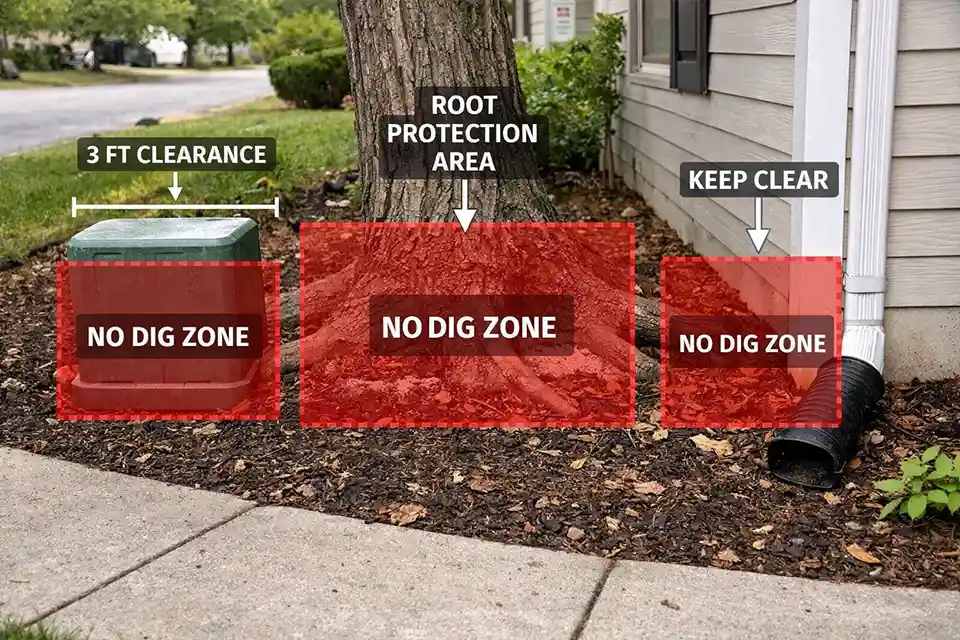
A utility box that requires 30 inches of service access is not a minor interruption inside a 5-foot strip. It can remove half the usable bed in that section. A downspout release point can turn the only good planting pocket into a wash path.
A driveway flare can take the corner that would otherwise hold the focal plant. A street tree root zone can eliminate digging where the owner thought the main bed would go.
These are not details to decorate around later. They are the plan.
That is why front yards with service hardware usually benefit from the problem-first approach in Front Yard Design Around Utility Boxes in the Yard. The layout has to respect clearance before it can look polished.
The same goes for trees. In a deeper yard, root conflicts are annoying. In a shallow one, they become structural. The same root-zone planning mistakes described in Front Yard Design Near Tree Root Zones become more severe when there is no backup planting area to shift into.
Slope also matters more than people think. Even a 2% to 5% grade change across a short setback can direct water through the only soft planting zone. In Florida-style summer downpours, Midwestern storm bursts, or northern freeze-thaw cycles that push water toward the walk, that is enough to move mulch, expose feeder roots, and stain the curb edge.
Pro Tip: If the curb-side edge looks rough again within one or two storms, stop refreshing mulch and trace the water path. Surface failure usually shows the real design priority faster than plant decline does.
When Plants Stop Being the Main Answer
This is the decision point that usually saves the most money: know when the project has stopped being a planting problem.
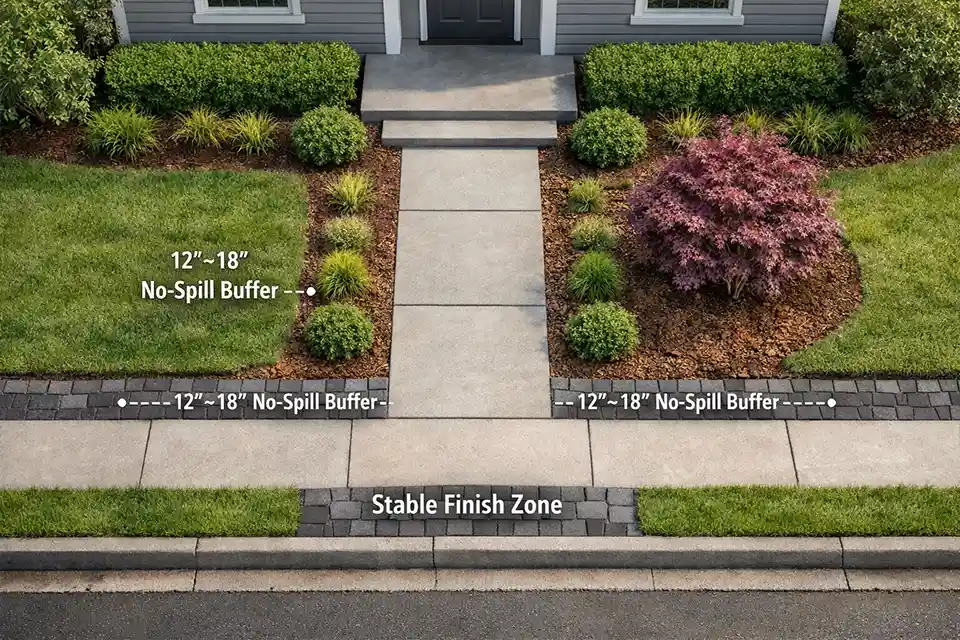
If most of the frontage has less than 3 feet of usable bed depth, stop trying to build a traditional foundation planting scheme. That is usually the wrong project. A narrow threshold like that is better served by cleaner architecture: a stable path edge, one controlled focal element, limited plant mass, and a finish material that can handle splash and compression.
The same shift should happen when water remains active, when road salt repeatedly damages the curb side, or when traffic dust keeps coating the front strip. In those cases, plant stress is only the symptom. The mechanism is exposure. Replanting over and over is not persistence. It is misdiagnosis.
Mulch is another place people overestimate the easy fix. Mulch can finish a bed, but it does not correct a bad edge, stabilize runoff, or make a shallow front yard feel larger.
In exposed frontages, loose bark can move after a single 1-inch rain event, especially where the walk, curb, or downspout concentrates flow. Once that starts happening, tighter surface treatment or mineral mulch often makes more sense than refreshing bark again.
What a Good Outcome Actually Looks Like
A successful front yard in a minimal setback does not look lush first. It looks controlled first.
That usually means judging the design by harder standards than “Does it look full?” A better checklist is this: the path stays clear, the windows are softened without being buried, the focal point still feels intentional after two growing seasons, runoff does not undo the finish material, and the maintenance cycle stays seasonal instead of constant.
That last point is the easiest one to ignore and the most useful one to respect. If the frontage needs touch-up pruning every month, curb-edge repairs after each storm, and recurring replacement of stressed plants near the street, the design is not refined. It is unstable.
The best minimal-setback front yards accept the truth of the site early. They stop pretending the house has room for a full front garden and instead design the frontage as a narrow, highly visible threshold.
Once that shift happens, the right answers usually become obvious: fewer plants, clearer edges, stronger spacing, and more discipline than decoration.
For broader official guidance, see the NC State Extension landscape design handbook.