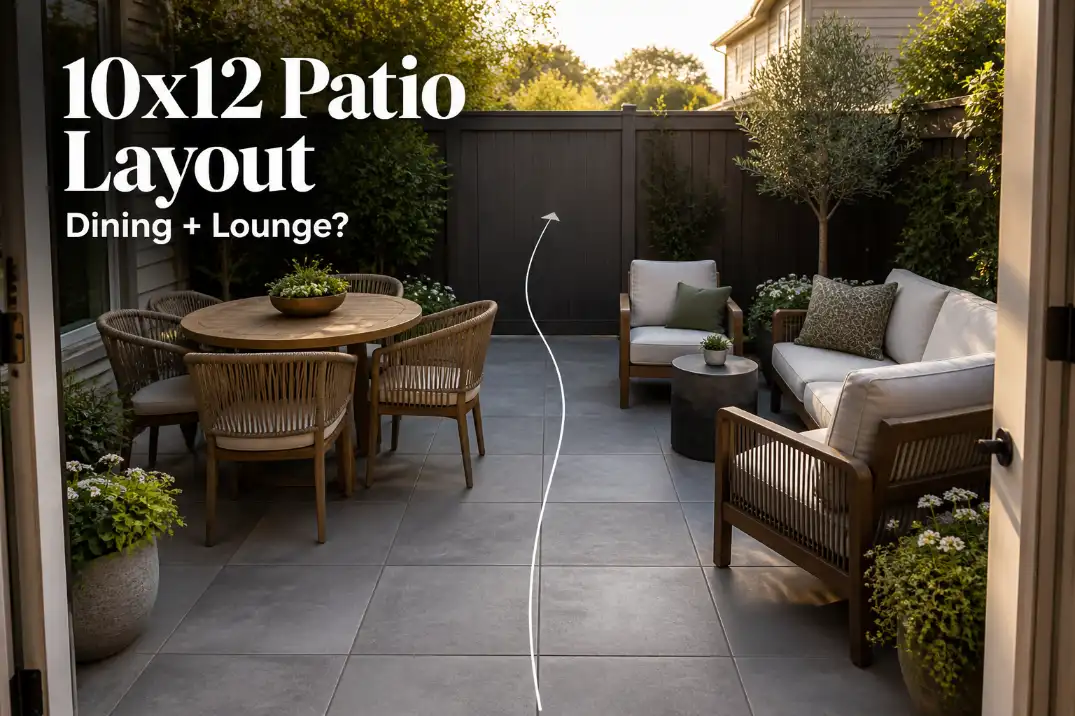
A 10×12 patio has 120 square feet, which sounds generous until dining chairs, lounge depth, and the main walking path all compete for the same middle space.
The safest rule is to give one use about 60–70% of the patio and keep the second use compact. If dining and lounging both get treated as full-size zones, the walkway usually fails first.
Start with three checks: keep a main path at least 30 inches wide, leave 24–36 inches behind dining chairs where people need to sit and stand, and avoid lounge pieces deeper than about 34 inches unless lounging is the whole point of the patio.
This is different from an 8×10 patio, where the real question is often dining or lounging. On a 10×12 patio, the better question is which activity gets priority and which one becomes lighter.
The 10×12 Rule: One Main Zone, One Compact Zone
The best 10×12 patio layouts are not perfectly balanced. They are biased in the right direction. A patio used for weeknight dinners should not sacrifice chair clearance just to squeeze in a loveseat. A patio used mostly for evening sitting should not be dominated by a six-chair dining set that gets used twice a month.
Why 120 Square Feet Still Gets Tight
The furniture footprint is only part of the problem. A 48-inch round table may look reasonable on a plan, but once chairs pull out and people move around it, the active dining area can claim close to 8 feet across. A loveseat that is 32 inches deep may still need another 18 inches for a coffee table and legroom.
A healthy layout has one obvious route through the patio. A failing layout has several tiny gaps that technically connect but make people turn sideways with plates, drinks, cushions, or a serving tray.
Door Location Changes the Whole Layout
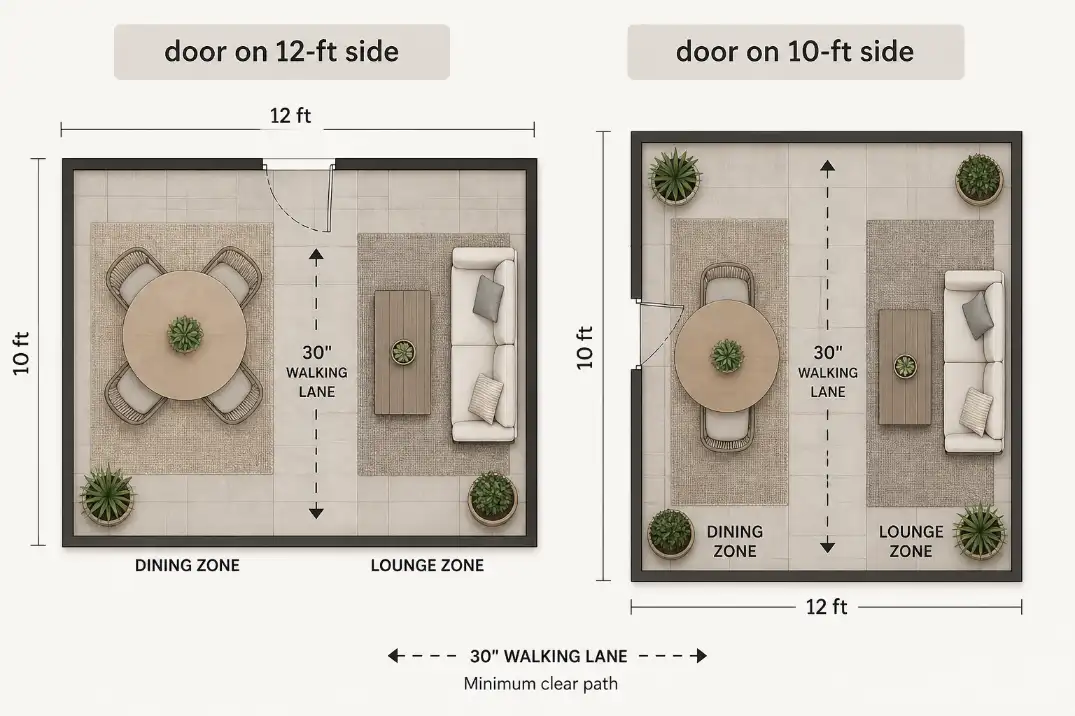
If the patio door opens onto the 12-foot side, side-by-side zones usually work best: dining on one side, lounging on the other, with a walking lane through the middle or along the edge.
If the door opens onto the 10-foot side, a lengthwise layout is usually stronger. In that setup, one zone sits closer to the house and the other sits farther out toward the yard. Trying to split the patio evenly from left to right can interrupt the natural route.
The smaller-space logic in 8×10 Patio Furniture Layout Ideas That Feel Open still applies here, but the extra 2 feet in a 10×12 patio gives you just enough room for a compact second function if the path stays protected.
6 Smart 10×12 Patio Layout Ideas
These layouts assume a patio that needs both dining and lounging, not a showpiece space filled for a catalog photo. The right choice depends on door location, traffic, and which activity happens most often.
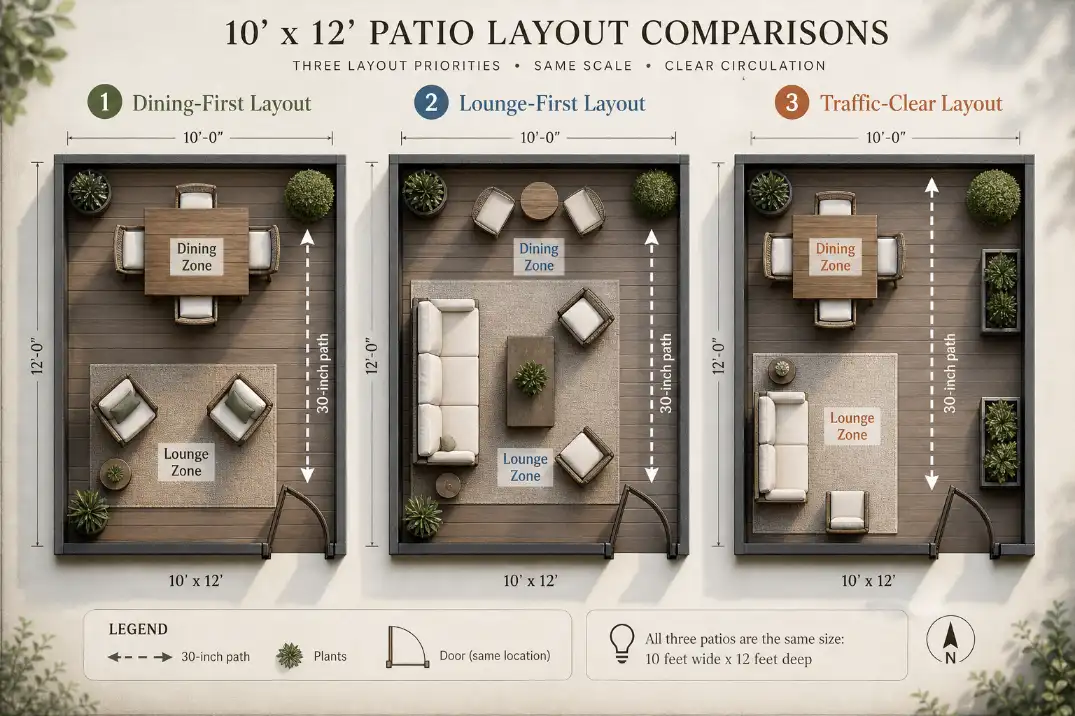
1. Dining-First Corner Layout
Choose this layout when meals happen more often than long lounging sessions. Place a 42- to 48-inch round table near one corner, ideally close enough to the house for easy serving but not directly blocking the door. Use four chairs, then keep the lounge side limited to a narrow bench, two compact chairs, or one slim lounge chair with a small side table.
The reason this works is simple: dining needs active clearance. People stand, pull chairs out, pass plates, and move around more than they do in a lounge area. If the dining zone is cramped, the whole patio feels awkward.
Avoid a 72-inch rectangular table here unless dining is the only real use. It can look elegant, but once chairs pull out, the lounge zone becomes leftover space.
2. Lounge-First Long-Side Layout
Choose this when sitting outside matters more than serving full meals. Put a compact loveseat along the 12-foot side, add one or two movable chairs, and use a small coffee table or drink table instead of a large fire table.
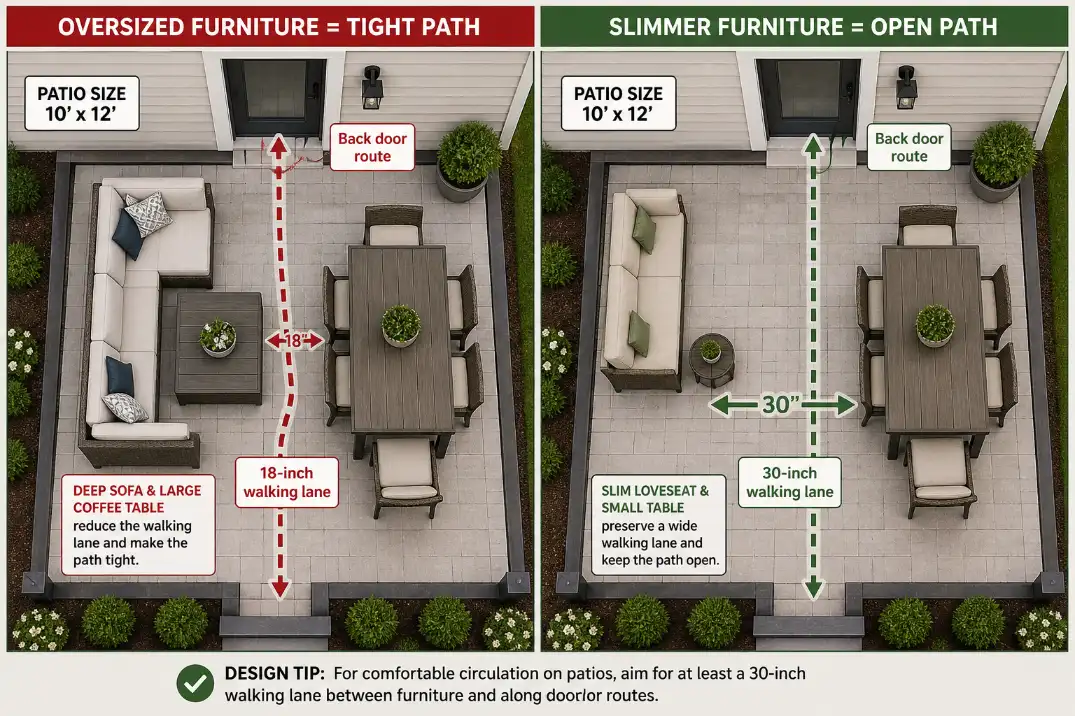
Keep the loveseat around 30–34 inches deep if dining also needs to fit. Oversized outdoor sofas often reach 38 inches deep or more, and that extra depth steals the lane people need to move through the patio.
A 30- to 36-inch bistro table can handle casual meals without pretending to be a full dining room. That tradeoff is often better than forcing a four-person dining set into a patio where lounging is the real daily use.
For more detail on why cushion depth changes the whole footprint, Deep Seating on Small Patios is a useful companion before buying lounge furniture.
3. Bistro Table + Loveseat Layout
This is the best small-household layout when meals are casual but comfort still matters. Use a 30- to 36-inch bistro table with two chairs for breakfast, lunch, or weeknight dinners, then give the better view or shade to a loveseat and one small side table.
The bistro table should sit where it does not interrupt the door-to-yard path. If the patio door opens near the middle, push the bistro set toward one corner. If the door opens at the edge, the bistro table can sit closer to the house while the loveseat faces the yard.
The common mistake is adding two extra dining chairs “just in case.” Those chairs usually live in the walking lane and make the patio feel unfinished. Store extras elsewhere and bring them out only when needed.
4. Bench Dining + Two Lounge Chairs
Use this layout when you want real four-person dining without giving up the lounge function entirely. Put a bench on the side of the table closest to the patio edge or wall, then use chairs only on the more open sides.
A bench works because it can tuck in tighter than individual chairs. It also creates a cleaner visual edge, which matters in a small rectangle. Pair that dining setup with two lounge chairs angled toward each other instead of a bulky sofa.
Pro Tip: Use the bench on the least active side of the table. If people need to climb over it every meal, the space-saving benefit starts to feel like a daily annoyance.
5. Four-Chair Conversation Layout With Casual Dining
Choose this setup if hosting drinks, snacks, and conversation matters more than formal meals. Skip the dining set and use four comfortable but slim chairs around a low table. The table should be large enough for glasses and small plates, not so large that it becomes the center obstacle.
This layout works best when chairs are lightweight enough to shift. Two chairs can pull closer for lounging; all four can gather when guests visit. A tray-top table or slightly taller coffee table can handle casual food without requiring a separate dining zone.
The limit is chair bulk. Four deep club chairs can overwhelm a 10×12 patio quickly. Four slimmer lounge chairs usually work better than two oversized chairs that leave no flexible space.
6. Traffic-Clear Layout Between House and Yard
Choose this layout when the patio is also a route to the lawn, driveway, shed, pool, or grill area. In this setup, movement is not secondary. It is the main feature that keeps the patio usable.
Keep one side of the patio mostly open and place furniture along the opposite edge. A round table, edge bench, and two stackable or movable chairs can work well. If lounging matters, use one bench or compact loveseat against the edge instead of a floating sofa.
This is the layout where a centered coffee table often fails. It may look balanced from above, but it interrupts the most-used route. If people cross the patio more than a dozen times during a normal backyard gathering, the open lane is more valuable than another decorative surface.
Best Furniture Sizes for a 10×12 Patio
The right furniture mix depends less on style and more on depth, clearance, and how often each zone gets used.
| Patio Goal | Best Furniture Mix | Useful Size Range | What to Avoid |
|---|---|---|---|
| Outdoor dinners most nights | Round table, 4 chairs, slim bench or side chair | 42–48 inch round table | 6-chair rectangular sets |
| Lounging first | Loveseat, 1–2 chairs, bistro table | 30–34 inch deep seating | Deep sectionals |
| Flexible family use | Bench dining, movable chairs, small side table | 48 inch table, tuck-in bench | Heavy fixed furniture |
| Guest conversation | 4 slim lounge chairs, low table | 14–18 inch table gap from seats | Oversized fire tables |
| Heavy foot traffic | Edge bench, round table, stackable chairs | 30–36 inch clear path | Centered furniture cluster |
Chairs Pulled Out Matter More Than Chairs Tucked In
Judge the layout with chairs pulled out. A dining set that looks fine when tucked in may fail the moment someone sits down. Leave 24 inches behind chairs for tight areas and closer to 36 inches where people need to walk behind seated guests.
This is also why round tables usually beat rectangular ones on a 10×12 patio. They soften corners, make movement easier, and are more forgiving when the layout has to share space with lounging.
Benches Help Only When They Tuck In
Benches are useful when they sit against an edge, slide under a table, or replace two chairs in a dining setup. They are less useful when they float in the middle of the patio.
A bench along the 12-foot side can create a clean dining edge. A bench facing the yard can also become the lounge piece if paired with one chair and a small table. The comparison in Bench Seating vs Patio Chairs is especially relevant when the patio needs both seating capacity and open floor space.
What Usually Makes a 10×12 Patio Feel Cramped
Most cramped patios do not fail because the owner chose the wrong style. They fail because too many fixed-depth pieces are fighting for movement space.
Deep Seating That Steals the Walking Lane
The symptom is “the patio feels small.” The mechanism is often furniture depth. A deep loveseat, thick club chairs, and a coffee table can quietly consume the center of the patio even when the seating count seems modest.
This is where rearranging often wastes time. Moving oversized pieces from one side to another does not change their footprint. If the 30-inch path keeps disappearing, the fix is usually fewer pieces or shallower pieces, not another layout attempt.
The Grill or Storage Box Nobody Planned For
A grill changes the math. An open lid, side shelf, heat clearance, and serving traffic can claim several feet. A storage box can do the same if it sits near the door or blocks the path to the yard.
If cooking is a regular part of the patio, plan it before finalizing the dining and lounge zones. The grill should not become a leftover object squeezed into the only open corner. For a patio where cooking, prep, and seating overlap, Patio Layout for Grill, Prep, and Dining goes deeper into that conflict.
Extra Pieces That Only Serve Occasional Guests
The most overestimated need is permanent guest seating. A 10×12 patio does not need to hold every possible chair all season. It needs to work well on normal days.
If two folding chairs, an unused ottoman, a plant stand, and a storage bin live on the patio for rare gatherings, they are probably costing more comfort than they add. When the furniture count has crept up, What to Remove When Patio Furniture Makes a Small Space Feel Cramped can help sort what should stay.
Surface, Sun, and Drainage Details That Change the Layout
Furniture placement is not only about measurements. The patio surface and exposure can decide which zone belongs where.
Hot or Exposed Patio Surfaces
On west-facing patios, the lounge zone can become uncomfortable after 20–30 minutes of direct afternoon sun, especially on dark pavers, concrete, or metal furniture frames. If one side gets shade earlier, put the lounge seating there and let the dining zone take the less comfortable spot if meals are shorter.
If the patio gets too hot to stand on comfortably in bare feet, the lounge zone should not sit in the most exposed area. The heat patterns explained in Why Some Patio Surfaces Get Too Hot in Summer can help decide where seating will actually get used.
Damp, Slick, or Slow-Drying Corners
If cushions stay damp for more than 24 hours after rain in warm weather, the issue may be airflow, shade, or water collecting in one corner. Avoid placing the main lounge piece in the slowest-drying part of the patio.
A narrow walking lane also becomes more noticeable when the surface is slick after rain, irrigation overspray, algae, or leaf debris. Do not let furniture pinch the main route down to 18–24 inches if that path is also the wettest part of the patio. That condition may only show up during weather, but it is exactly when people are more likely to slip, hurry, or carry things awkwardly.
Quick 10×12 Patio Layout Checklist
- Keep the main walking lane at least 30 inches wide.
- Use 36 inches where people carry food, drinks, or trays often.
- Give the primary use about 60–70% of the patio.
- Keep round dining tables around 42–48 inches for four people.
- Use a 30–36 inch bistro table when dining is secondary.
- Avoid lounge pieces deeper than about 34 inches in mixed-use layouts.
- Test the layout with dining chairs pulled out, not tucked in.
Final Takeaway
A 10×12 patio can handle dining and lounging, but not as two full-size outdoor rooms. The strongest layouts choose a priority, protect one clear path, and make the secondary zone compact on purpose.
In a 10×12 space, the win is not fitting more furniture. It is making the patio easy to move through when the furniture is actually being used.
For a broader look at planning outdoor living areas around comfort, shade, and everyday use, see University of Florida IFAS Extension.